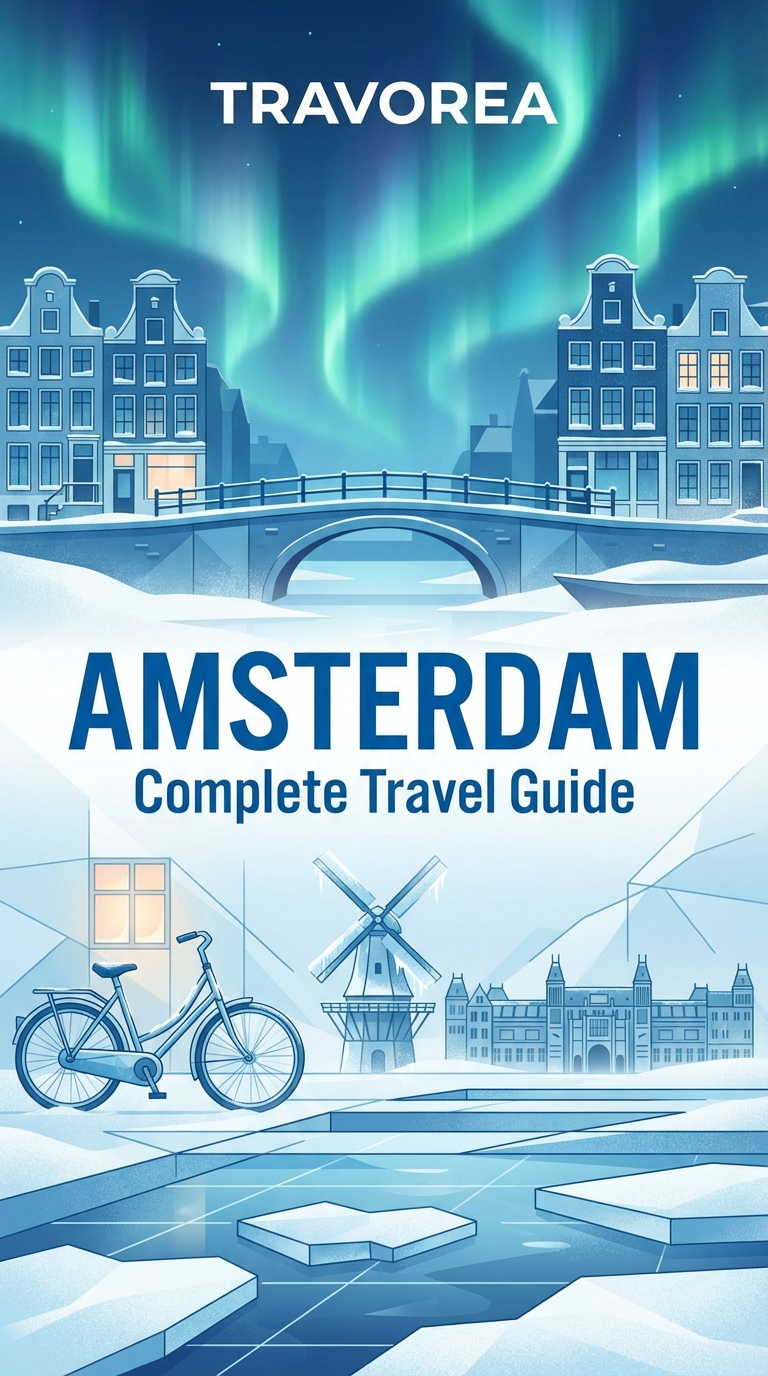

Amsterdam
Travorea

Amsterdam

The Venice of the North

Canal RingRijksmuseumAnne Frank HouseCycling CultureDutch Masters
84
Pages
2026 Edition

Contents

Plan Your Trip

Welcome to Amsterdam4
Amsterdam at a Glance5
Top 20 Experiences6
Need to Know9
Month by Month11

Itineraries

3-Day Itinerary12
Extended Itineraries13

Explore Amsterdam

Jordaan14
De Pijp18
Amsterdam-Noord22
Grachtengordel (Canal Ring)26
Museumplein & Oud-Zuid30
De Wallen (Old Centre)34
Oud-West & De Hallen38
Plantage & Oost42
Nieuwmarkt & Waterlooplein46
Westerpark50
Eastern Docklands54
Centrum & Dam Square58
Haarlemmerbuurt62
Watergraafsmeer & Frankendael66

Special Sections

Food Guide70
Day Trips75
History & Culture73

Survival Guide

Directory A–Z77
Transport79
Language80

Quick Reference

Top 10 Picks81
Packing List82
Credits83
2
Amsterdam

Amsterdam

Where golden-age canals meet freewheeling modern culture

3

Welcome to Amsterdam

The Venice of the North

Amsterdam is a city that fits in the palm of your hand yet contains multitudes. Its 165 canals, lined with 1,550 monumental buildings, form a UNESCO World Heritage crescent that hasn’t changed much since the Dutch Golden Age. But look beyond the gabled facades and you’ll find a city that’s radically modern — a place where world-class museums sit next to street markets, where cycling is a religion, and where tolerance and creativity have been civic values for 400 years.

The best Amsterdam reveals itself slowly: in the flicker of candlelight through a brown café window, in the reflection of a 17th-century warehouse on a still canal, in the sudden burst of colour at the Bloemenmarkt. Walk or cycle the Jordaan’s narrow lanes at dusk, stand before Rembrandt’s Night Watch in the Rijksmuseum, and eat fresh herring from a harbour stall — and you’ll understand why this small city casts such an outsized spell on everyone who visits.

WHY I LOVE AMSTERDAM
Rent a bike from MacBike or Swapfiets on your first morning. Amsterdam is flat, compact, and built for cycling — you’ll cover three times the ground and see the city like a local.
4

Amsterdam at a Glance

Population921,000 (city), 2.5 million (metro)
Area219 km²
LanguageDutch
Currency€ (EUR)
Time ZoneUTC+1 (CET)
Best TimeApril–September
VisaSchengen visa
Emergency112
Amsterdam Amsterdam

Built on reclaimed marshland at the mouth of the Amstel river, Amsterdam has been a global trading hub since the 1600s. Its concentric canal ring is one of the most beautiful urban landscapes on earth. Two to three days covers the highlights; a week lets you discover the city’s quieter, deeper pleasures.

Money-Saving Tips
Amsterdam is moderately expensive. A canal-side café beer costs €5–6. Museum cards (Museumkaart, €67.90) give unlimited access to 400+ museums across the Netherlands for a year — it pays for itself in three visits.
5
01

Top 20 Experiences

The essential sights and experiences

Rijksmuseum

1. Rijksmuseum

Museumplein | €22.50

The Netherlands’ national museum: Rembrandt’s Night Watch, Vermeer’s Milkmaid, and 8,000 objects spanning 800 years of Dutch art and history.

Anne Frank House

2. Anne Frank House

Prinsengracht 263 | €16

The secret annex where Anne Frank hid for two years during WWII. Her original diary is on display. Book online — tickets sell out weeks ahead.

Van Gogh Museum

3. Van Gogh Museum

Museumplein | €20

The world’s largest collection of Van Gogh’s works: 200 paintings, 500 drawings, and 700 letters, including Sunflowers and The Bedroom.

Canal Ring (Grachtengordel)

4. Canal Ring (Grachtengordel)

City centre | Free

UNESCO World Heritage site: three concentric canals — Herengracht, Keizersgracht, Prinsengracht — lined with 1,550 monumental buildings.

Jordaan

5. Jordaan

West of centre | Free

Amsterdam’s most charming neighbourhood: narrow lanes, hidden courtyards (hofjes), independent boutiques, and cosy brown cafés.

Vondelpark

6. Vondelpark

Oud-Zuid | Free

Amsterdam’s green lung: 47 hectares of lawns, ponds, and open-air theatre. Bring a picnic and join the locals on a sunny day.

INSIDER TIP
Buy the Museumkaart (€67.90) if visiting 3+ museums — it covers the Rijksmuseum, Van Gogh, Stedelijk, Anne Frank House, and 400+ others across the Netherlands.
6
7

7. Royal Palace (Koninklijk Paleis)

Dam Square | €12.50

The 17th-century palace on Dam Square, built during the Golden Age. The Citizens’ Hall has stunning marble floors and painted ceilings.

8

8. Stedelijk Museum

Museumplein | €22.50

Amsterdam’s modern art museum: Mondrian, Malevich, Warhol, and De Stijl, housed in a striking building nicknamed “the bathtub.”

9

9. Albert Cuyp Market

De Pijp | Free entry

Amsterdam’s largest and liveliest street market: 260 stalls selling stroopwafels, cheese, flowers, and everything Dutch.

10

10. Begijnhof

Spui | Free

A hidden medieval courtyard of almshouses dating to 1346, including Amsterdam’s oldest surviving house (wooden, c.1425).

11

11. NDSM Wharf

Amsterdam-Noord | Free

Post-industrial creative hub across the IJ river: street art, festivals, craft breweries, and the monthly IJ-Hallen flea market.

12

12. Heineken Experience

Stadhouderskade | €23

Interactive tour of the original 1867 brewery. Includes two beers, a tasting session, and a canal boat ride voucher.

Must-Know Numbers
€22.50: Rijksmuseum entry
8,000: Objects in the Rijksmuseum
165: Canals in Amsterdam
7
13

13. Bloemenmarkt

Singel canal | Free entry

The world’s only floating flower market, operating since 1862. Buy tulip bulbs, but check export regulations first.

14

14. Oude Kerk

Oudekerksplein | €15

Amsterdam’s oldest building (c.1306), now hosting contemporary art exhibitions inside its Gothic nave. A fascinating contrast.

15

15. A’DAM Lookout & Swing

Amsterdam-Noord | €16 / €7.50 swing

Panoramic observation deck atop the A’DAM Tower with “Over the Edge” — Europe’s highest swing, 100m above the IJ river.

16

16. Museum Het Rembrandthuis

Jodenbreestraat | €17.50

Rembrandt’s actual home from 1639–1658, restored to its Golden Age appearance. Daily etching demonstrations.

17

17. Artis Zoo

Plantage | €27

One of Europe’s oldest zoos (1838) with a planetarium, aquarium, and beautiful 19th-century grounds in the Plantage quarter.

18

18. Westerkerk

Prinsengracht | Free (tower €9)

The landmark church with Amsterdam’s tallest tower (85m). Rembrandt is buried here. Climb the tower for canal ring views.

19. Nine Streets (De Negen Straatjes) (Canal Ring, Free): Nine tiny streets crossing the main canals, packed with vintage shops, independent boutiques, and cafés in canal houses.

20. Museumplein (Oud-Zuid, Free): Amsterdam’s cultural heart: the Rijksmuseum, Van Gogh Museum, Stedelijk Museum, and the I amsterdam letters (now removed but the square remains iconic).

8
02

Need to Know

Essential practical information

Money

Cards accepted almost everywhere. Many places are cashless. Albert Heijn supermarkets and market stalls may prefer PIN/debit cards over credit cards.

Safety

Very safe city. Watch for pickpockets at Centraal Station and on trams. The biggest danger is stepping into a bike lane — cyclists have right of way and won’t slow down.

Bikes

Cycling is the primary transport. Stay out of bike lanes when walking. Look both ways — bikes are silent and fast. Rent from MacBike (€12/day) or Swapfiets (€17/month).

Weather

Maritime climate: rain is possible any day, any season. Pack layers and a rain jacket. Summers are mild (18–25°C); winters are cold and damp (0–7°C).

Coffee Shops

Coffee shops (two words) sell cannabis; cafés sell coffee. Cannabis is tolerated for personal use (5g max). Hard drugs are illegal.

Smoking

Banned indoors. Cannabis smoking not allowed in most restaurants, bars, or public spaces.

Water

Tap water is excellent and free at restaurants (ask for kraanwater). Amsterdam’s canal water is not drinkable.

Tipping

Not expected but appreciated. Round up the bill or leave 5–10% for good service. No tipping at cafés or bars.

Budget LevelDaily CostIncludes
Budget€70–110/dayHostel, market lunch, supermarket dinner, cycling
Mid-Range€180–300/dayCanal-house hotel, brown café lunches, restaurant dinners
Luxury€400+/dayFive-star hotel, Michelin dining, private canal boat
Essential Apps
Download 9292 (best Dutch transit app), GVB (Amsterdam trams/metro), and Tikkie (the Dutch payment app everyone uses to split bills).
9
03

Getting Around

Navigate the city like a local

From the Airport

Schiphol Airport is 15 km southwest. Direct train to Centraal Station (€5.70, 15 min, every 10 min). Taxis cost €40–50. The Connexxion shuttle bus (€7.50) serves hotels.

Tram

The backbone of Amsterdam transit. 15 lines covering the city centre and beyond. Runs 6 AM–midnight. Cost: €3.40/ride, day pass €9

Metro

Four lines, mostly serving suburbs and Amsterdam-Noord. The Noord-Zuidlijn (line 52) connects Centraal to the south. Cost: €3.40/ride

Bus

Covers areas trams don’t reach. Night buses run after midnight on weekends. Cost: €3.40/ride

Ferry

Free ferries cross the IJ river from Centraal Station to Amsterdam-Noord every 5–10 minutes. No ticket needed. Cost: Free

Bicycle

The real Amsterdam transport. 515 km of bike paths. Rent from MacBike, Swapfiets, or OV-fiets (at train stations). Cost: €12–17/day

Transport Tips
Buy an OV-chipkaart (€7.50 + credit) for all public transport, or use contactless bank cards. But honestly, rent a bike — it’s faster, cheaper, and more fun than any other transport.
10

Month by Month

When to go and what to expect

Apr–May

Tulip season perfection (10–18°C). Keukenhof gardens in bloom, King’s Day (April 27) transforms the city into an orange street party. Best time to visit.

Jun–Aug

Warm and long days (18–25°C). Open-air concerts in Vondelpark, canal-side dining, and festival season. Busy with tourists.

Sep–Nov

Autumn brings golden light on the canals (8–16°C). Fewer crowds, cosy brown café season begins. November gets dark and wet.

Dec–Mar

Cold and damp (0–7°C). Amsterdam Light Festival illuminates the canals (Dec–Jan). Ice skating on Museumplein. Cosy and atmospheric.

Best Time to Visit
Late April to May is magical: tulips bloom, King’s Day parties, and pleasant weather. September is ideal for fewer crowds and golden canal light.
AmsterdamAmsterdam — best experienced in April–September
11
04

Itineraries

Make the most of your time

Day 1: Golden Age Amsterdam
9:00 AMRijksmuseum — arrive at opening to see the Night Watch before crowds (€22.50)
12:00 PMLunch at Foodhallen, a covered food market in Oud-West (€10–18)
1:30 PMVan Gogh Museum — Sunflowers, The Bedroom, and Almond Blossom (€20)
4:00 PMStroll through Vondelpark and grab coffee at Blauwe Theehuis
5:30 PMCanal cruise — 1-hour boat tour through the Grachtengordel (€16)
7:30 PMDinner at De Foodhallen or Café Restaurant Amsterdam in the Watergraafsmeer (€20–35)
Day 2: Canals, Anne Frank & the Jordaan
9:00 AMAnne Frank House — pre-booked timed entry, arrive early (€16)
11:00 AMWander the Jordaan — explore hofjes (hidden courtyards), vintage shops, and galleries
12:30 PMLunch at Winkel 43 for the best apple pie in Amsterdam (€8–15)
2:00 PMNine Streets (De Negen Straatjes) — boutique shopping across the canal ring
4:00 PMWesterkerk tower climb for panoramic views (€9)
5:30 PMBrown café Café ’t Smalle on Egelantiersgracht — canal-side beers
7:30 PMDinner at Moeders (“Mothers”) for traditional Dutch home cooking (€18–28)
Day 3: Noord, Markets & Hidden Amsterdam
9:30 AMFree ferry to Amsterdam-Noord — A’DAM Lookout and “Over the Edge” swing (€16)
11:00 AMNDSM Wharf — street art, creative studios, and cafés in old shipyard buildings
12:30 PMLunch at Pllek, a beach bar made from shipping containers on the IJ (€12–20)
2:00 PMAlbert Cuyp Market in De Pijp — stroopwafels, Dutch cheese, and people-watching
4:00 PMHeineken Experience interactive brewery tour (€23, includes 2 beers)
6:00 PMExplore the Plantage quarter — Hortus Botanicus and quiet canal-side walks
8:00 PMDinner at Restaurant Blauw for Indonesian rijsttafel (€30–45)
TIMING TIP
Book Anne Frank House tickets exactly 6 weeks before your visit date — they release online at 10 AM CET and sell out within hours.
12

More Itineraries

Extended stays and themed routes

Five Days

Add a day trip to Keukenhof tulip gardens (spring only) or Zaanse Schans windmills, plus a full day exploring De Pijp, the Plantage, and the Eastern Docklands architecture.

One Week

Include the Stedelijk Museum, a cycling trip to Waterland villages north of Amsterdam, the NDSM flea market (monthly), and day trips to Haarlem, Leiden, or Utrecht.

Family Itinerary

Kids love NEMO Science Museum (€17.50), Artis Zoo (€27), the Pancake Boat (€20), and cycling through Vondelpark. The Miffy Museum is in nearby Utrecht.

Food Lover's Route

Start at Albert Cuyp Market for stroopwafels, take an Indonesian rijsttafel at Blauw, tour the Heineken Experience, and finish with craft beers at Brouwerij ’t IJ under the windmill.

Booking Essentials
Anne Frank House and Van Gogh Museum require advance booking. Rijksmuseum is bookable but walk-ups are possible on weekdays. Hotels near the canal ring book up months ahead in spring.
13
Jordaan

Jordaan

Where hidden courtyards and brown cafés preserve Amsterdam’s village soul

14
Jordaan

Jordaan

Amsterdam’s Most Charming Quarter

The Jordaan was built in the early 17th century as a working-class neighbourhood for immigrants and artisans. Today it’s Amsterdam’s most desirable address — a labyrinth of narrow lanes, hidden courtyards (hofjes), independent galleries, and cosy brown cafés with candle-lit interiors. The transformation from gritty to genteel happened gradually, but the Jordaan’s character survived: this is still a neighbourhood where locals chat with neighbours on doorsteps and everyone knows the barman by name.

Start at the Noordermarkt (Monday morning flea market, Saturday organic farmers’ market), then zigzag through the lanes exploring hofjes — push open any unlocked door marked ‘hofje’ to discover peaceful inner gardens. Stop for apple pie at Winkel 43, browse vintage shops on Haarlemmerdijk, and end the evening at Café ’t Smalle, a candlelit brown café with a canal-side terrace dating to 1786.

LOCAL SECRET
The Jordaan’s hofjes (almshouse courtyards) are free to enter — the Karthuizerhof (1650) and Claes Claesz Hofje are the most beautiful. Visit quietly and respectfully.
15

Eating & Drinking

Where to eat in Jordaan

Winkel 43 (€5–8): The apple pie here is a citywide obsession — warm, buttery, towering, and served with whipped cream.

Café ’t Smalle (€5–15): Amsterdam’s most beautiful brown café. The canal-side terrace is magical at dusk.

Toscanini (€25–45): Exceptional Italian food in a casual setting. Book ahead — locals pack this place nightly.

Shopping: Noordermarkt (Monday flea market, Saturday organic market), vintage on Haarlemmerdijk, and independent boutiques on the Negen Straatjes.

16

Jordaan by the Numbers

165
Canals in Amsterdam
1,281
Bridges crossing the canals
880,000
Bicycles in the city
Did You Know?
Amsterdam has more bicycles (880,000) than people (921,000). An estimated 12,000–15,000 bikes are fished out of the canals every year by the city’s dedicated bicycle-dredging boat.
Jordaan by the Numbers
Amsterdam’s canal ring was the world’s most ambitious urban planning project of the 17th century, designed as three concentric semicircles radiating from the harbour.
The city has more museums per square kilometre than any other city in the world — over 75 museums in a city of just 219 km².
17
De Pijp

De Pijp

Where 160 nationalities share a single street market

18
De Pijp

De Pijp

Amsterdam’s Melting Pot

De Pijp is Amsterdam’s most multicultural and vibrant neighbourhood. Built in the late 19th century for the working class, its narrow streets are now home to the sprawling Albert Cuyp Market, Surinamese roti shops, Turkish bakeries, trendy wine bars, and the city’s best Indonesian restaurants. The Heineken brewery anchors the northern edge, and the Sarphatipark provides a green oasis at its heart.

The Albert Cuyp Market (Mon–Sat, 260 stalls) is the beating heart of De Pijp. Graze through stroopwafels, raw herring, Surinamese sandwiches, and Dutch cheese, then explore the side streets for cafés, vintage shops, and galleries. Marie Heinekenplein fills with terrace drinkers on sunny evenings, and the area has Amsterdam’s best bar scene after dark.

LOCAL SECRET
For the best Albert Cuyp experience, go on a Saturday morning. Start with a fresh stroopwafel (warm from the press, €3), then graze your way down the entire market.
19

Eating & Drinking

Where to eat in De Pijp

Bazar Amsterdam (€12–22): North African and Middle Eastern cuisine in a spectacularly decorated former church on Albert Cuypstraat.

SLA (€12–16): Amsterdam’s best salad bar — organic, creative, and genuinely delicious.

Brouwerij Troost (€5–18): Craft brewery with excellent beer and bar food in a converted monastery.

Nightlife: Café Gollem (craft beer paradise), Twenty Third Bar (cocktails), and Bar Botanique (tropical greenhouse bar).

20

De Pijp by the Numbers

1,550
Monumental canal-side buildings
1602
Year the world’s first stock exchange opened here
25 km
Length of the canal ring
Did You Know?
The entire city is built on wooden poles driven deep into sandy ground. Amsterdam Centraal station alone rests on 8,687 wooden piles, and the Royal Palace sits on 13,659.
De Pijp by the Numbers
Dutch people are the tallest in the world, averaging 183 cm (6 ft) for men. Doorways in old Amsterdam houses are famously low.
The letters VOC carved into many canal houses stand for the Dutch East India Company (Vereenigde Oostindische Compagnie), the world’s first multinational corporation, founded in Amsterdam in 1602.
21
Amsterdam-Noord

Amsterdam-Noord

Where shipyards became Amsterdam’s most exciting creative playground

22
Amsterdam-Noord

Amsterdam-Noord

The Creative Frontier

Five minutes by free ferry from Centraal Station, Amsterdam-Noord is the city’s most exciting frontier. The former shipyards of NDSM Wharf have been reclaimed by artists, musicians, tech startups, and some of the city’s best restaurants. Street art covers every surface, creative studios fill old industrial buildings, and on weekends, the IJ-Hallen flea market (Europe’s largest) draws thousands. The A’DAM Tower and EYE Film Museum anchor the waterfront.

Take the free ferry from Centraal (every 5 min, 24/7) and start at the EYE Film Museum — the striking white building is worth visiting for the architecture and free exhibitions alone. Walk west to the A’DAM Lookout for panoramic views, then take bus 38 to NDSM Wharf for street art, craft breweries, and a pioneering creative energy you won’t find elsewhere in Amsterdam.

LOCAL SECRET
The free ferry to Noord runs 24/7 and is one of Amsterdam’s best experiences — the views of the city skyline from the water are stunning, especially at night.
23

Eating & Drinking

Where to eat in Amsterdam-Noord

Pllek (€10–20): A beach bar built from shipping containers on the IJ waterfront. Sunsets here are spectacular.

Café Modern (€15–25): Creative Dutch-French cuisine in a converted workers’ canteen at NDSM.

Moon (€45–75): Revolving restaurant atop A’DAM Tower with 360° views. A splurge worth making.

Culture: EYE Film Museum (free exhibitions), Tolhuistuin garden events, and NDSM Loods (concerts and exhibitions in a massive former shipbuilding hall).

24

Amsterdam-Noord by the Numbers

100 km
Total canal length
2,500
Houseboats on the canals
12,000
Bikes retrieved from canals each year
Did You Know?
The narrow, tall canal houses were taxed by width, which is why they’re so slender. Most have a hook at the top (hijsbalk) to hoist furniture through the windows because the staircases are too narrow.
Amsterdam-Noord by the Numbers
Tulips aren’t originally Dutch — they came from the Ottoman Empire in the 1590s. The 1637 “Tulip Mania” was history’s first recorded economic bubble, with single bulbs selling for more than houses.
Amsterdam’s Schiphol Airport sits 3 metres below sea level, making it one of the lowest airports in the world.
25
Grachtengordel (Canal Ring)

Grachtengordel (Canal Ring)

Where 17th-century merchant wealth created the world’s most beautiful canal system

26
Grachtengordel (Canal Ring)

Grachtengordel (Canal Ring)

Amsterdam’s Golden Crescent

The Grachtengordel is Amsterdam’s crown jewel — the UNESCO World Heritage canal ring built during the Dutch Golden Age. Three concentric canals — Herengracht (Gentlemen’s Canal), Keizersgracht (Emperor’s Canal), and Prinsengracht (Prince’s Canal) — arc through the city centre, lined with 1,550 monumental buildings. These were the addresses of the world’s wealthiest merchants, and their grand homes, with ornate gables and hidden gardens, still define Amsterdam’s identity.

Walk along any of the three main canals and you’ll pass centuries of architectural history in a single block: step gables, neck gables, bell gables, and grand corniced façades, each reflecting the era and wealth of its builder. The best canal views are from the bridges — especially the intersection of Reguliersgracht and Herengracht, where you can see seven bridges in a row. By night, the canal houses glow with warm light, and the reflections on the still water create a doubled city.

LOCAL SECRET
The Golden Bend (Gouden Bocht) on Herengracht between Leidsestraat and Vijzelstraat has the grandest canal houses. Many are now banks, offices, or museums — but peek through the windows.
27

Eating & Drinking

Where to eat in Grachtengordel (Canal Ring)

De Belhamel (€25–45): Art Nouveau restaurant overlooking the Brouwersgracht — Amsterdam’s most photogenic canal junction.

Café Papeneiland (€5–12): Brown café since 1642 with exceptional apple pie and canal views from the corner terrace.

Guts & Glory (€45–65): Inventive tasting menus that change themes every few months. Book well ahead.

Experiences: Evening canal cruise through the illuminated Grachtengordel (€16–20), or rent a private electric boat (€75/2hr) for a self-guided floating tour.

28

Grachtengordel (Canal Ring) by the Numbers

165
Canals in Amsterdam
1,281
Bridges crossing the canals
880,000
Bicycles in the city
Did You Know?
Amsterdam has more bicycles (880,000) than people (921,000). An estimated 12,000–15,000 bikes are fished out of the canals every year by the city’s dedicated bicycle-dredging boat.
Grachtengordel (Canal Ring) by the Numbers
29
Museumplein & Oud-Zuid

Museumplein & Oud-Zuid

Three world-class museums and a royal park on a single grand square

30
Museumplein & Oud-Zuid

Museumplein & Oud-Zuid

Amsterdam’s Cultural Powerhouse

Museumplein is Amsterdam’s cultural epicentre: three world-class museums — the Rijksmuseum, Van Gogh Museum, and Stedelijk Museum — arranged around a grand green square. The surrounding Oud-Zuid (Old South) neighbourhood is Amsterdam’s most elegant, with wide boulevards, stately homes, and the 47-hectare Vondelpark. The Concertgebouw, one of the finest concert halls in the world, anchors the square’s southern end.

Devote a full day to Museumplein. Start at the Rijksmuseum at opening (9 AM) for Rembrandt’s Night Watch before the crowds, then cross to the Van Gogh Museum (book ahead). After lunch, the Stedelijk Museum offers a change of pace with modern art. End the afternoon in Vondelpark — Amsterdam’s favourite place to picnic, people-watch, and listen to free open-air concerts in summer.

LOCAL SECRET
Free lunchtime concerts at the Concertgebouw every Wednesday at 12:30 PM (October–June). Arrive early — seats fill fast for one of the world’s best free musical experiences.
31

Eating & Drinking

Where to eat in Museumplein & Oud-Zuid

The Seafood Bar (€18–35): Fresh oysters, lobster, and fish — no reservations, expect a queue at peak times.

Rijks (€35–55): Michelin-starred restaurant inside the Rijksmuseum serving modern Dutch cuisine. Lunch is the best value.

Blauwe Theehuis (€5–12): A flying-saucer-shaped café in the heart of Vondelpark. Perfect for afternoon coffee.

Parks: Vondelpark has a children’s playground, open-air theatre (summer), and the elegant Vondel CS restaurant in the former 19th-century pavilion.

32

Museumplein & Oud-Zuid by the Numbers

165
Canals in Amsterdam
1,281
Bridges crossing the canals
880,000
Bicycles in the city
Did You Know?
Amsterdam has more bicycles (880,000) than people (921,000). An estimated 12,000–15,000 bikes are fished out of the canals every year by the city’s dedicated bicycle-dredging boat.
Museumplein & Oud-Zuid by the Numbers
33
De Wallen (Old Centre)

De Wallen (Old Centre)

Where Amsterdam’s medieval origins and modern complexity coexist

34
De Wallen (Old Centre)

De Wallen (Old Centre)

Amsterdam’s Medieval Heart

De Wallen is Amsterdam’s oldest quarter — a medieval maze of narrow alleys, ancient churches, and canal-side buildings that predates the famous canal ring by centuries. Yes, it contains the Red Light District, but De Wallen is far more than that: the Oude Kerk (c.1306), the city’s oldest building; Zeedijk, the original Chinatown; and quiet residential streets where laundry dries between 15th-century buildings. The contrast between the medieval architecture and the modern city creates Amsterdam’s most complex neighbourhood.

Start at Dam Square, then walk east along Warmoesstraat — one of Amsterdam’s oldest streets. The Oude Kerk hosts world-class contemporary art exhibitions inside its Gothic interior. Zeedijk, once notorious, is now a lovely multicultural street with excellent Chinese, Thai, and Indonesian restaurants. For context on the Red Light District, take a guided walking tour that explains the history, regulations, and social dynamics.

LOCAL SECRET
The Oude Kerk hosts excellent contemporary art exhibitions. The juxtaposition of 14th-century Gothic architecture with cutting-edge installations is uniquely Amsterdam.
35

Eating & Drinking

Where to eat in De Wallen (Old Centre)

Nam Kee (€10–18): Legendary Chinese restaurant on Zeedijk. The oyster sauce beef is famous citywide.

Cafe In ’t Aepjen (€5–10): One of Amsterdam’s oldest bars, housed in a 15th-century building where sailors once paid with monkeys.

Bird (€12–22): Thai street food in a cramped, buzzing space on Zeedijk. Authentic and exceptional.

History: The Amsterdam Museum (formerly Historical Museum) and the Ons’ Lieve Heer op Solder (hidden Catholic church in an attic, c.1663) are two of the city’s most fascinating museums.

36

De Wallen (Old Centre) by the Numbers

165
Canals in Amsterdam
1,281
Bridges crossing the canals
880,000
Bicycles in the city
Did You Know?
Amsterdam has more bicycles (880,000) than people (921,000). An estimated 12,000–15,000 bikes are fished out of the canals every year by the city’s dedicated bicycle-dredging boat.
De Wallen (Old Centre) by the Numbers
37
Oud-West & De Hallen

Oud-West & De Hallen

Where locals go when they want to eat well and avoid the tourist trail

38
Oud-West & De Hallen

Oud-West & De Hallen

Amsterdam’s Local Favourite

Oud-West is where Amsterdammers eat, drink, and socialise without a tourist in sight. The neighbourhood centres on the Foodhallen — a spectacular covered food market in a converted 1902 tram depot — and the surrounding De Hallen complex of cinema, library, craft workshops, and boutiques. The streets around Kinkerstraat and Overtoom are packed with neighbourhood restaurants, Turkish bakeries, and some of the city’s best café terraces.

Start at the Foodhallen for a grazing lunch (20+ stalls from Vietnamese bao to Dutch bitterballen), then explore De Hallen’s craft shops, independent cinema, and the beautiful public library. Walk north along Kinkerstraat for neighbourhood shopping, then settle into a terrace on Bellamyplein for afternoon drinks. The Ten Katemarkt (Mon–Sat) is a genuine local market that tourists rarely find.

LOCAL SECRET
The Ten Katemarkt on Kinkerstraat is Amsterdam’s most authentic neighbourhood market — fresh produce, flowers, and Turkish groceries at local prices. Almost no tourists.
39

Eating & Drinking

Where to eat in Oud-West & De Hallen

Foodhallen (€8–18): Amsterdam’s best food hall — 20+ stalls in a stunning 1902 tram depot. The Vietnamese Viet View and Frisk are standouts.

Café Thuys (€10–20): Neighbourhood café with a beautiful garden terrace. All-day brunch is excellent.

Ron Gastrobar (€30–50): Michelin-quality dining at accessible prices by chef Ron Blaauw. Book ahead.

Entertainment: De Hallen cinema shows art-house films, and the Melkweg (Milky Way) music venue on Lijnbaansgracht hosts international bands and club nights.

40

Oud-West & De Hallen by the Numbers

165
Canals in Amsterdam
1,281
Bridges crossing the canals
880,000
Bicycles in the city
Did You Know?
Amsterdam has more bicycles (880,000) than people (921,000). An estimated 12,000–15,000 bikes are fished out of the canals every year by the city’s dedicated bicycle-dredging boat.
Oud-West & De Hallen by the Numbers
41
Plantage & Oost

Plantage & Oost

Where botanical gardens, Holocaust history, and multicultural food converge

42
Plantage & Oost

Plantage & Oost

Amsterdam’s Green East

The Plantage is Amsterdam’s most gracious neighbourhood: wide, tree-lined boulevards, the Artis Zoo (1838), the Hortus Botanicus (1638), and the poignant National Holocaust Memorial. This was historically the Jewish quarter, and its cultural heritage is preserved in the Jewish Historical Museum and the Portuguese Synagogue (1675). East of Plantage, the Oost (East) district has become one of Amsterdam’s most diverse and exciting food neighbourhoods.

Start at the Hortus Botanicus — one of the world’s oldest botanical gardens with 6,000 plant species in beautiful glasshouses. Walk through the Plantage Middenlaan to Artis Zoo (wonderful for families), then visit the sobering National Holocaust Memorial and the Jewish Historical Museum. In the afternoon, head east to the Dappermarkt for multicultural street food and the vibrant energy of Amsterdam’s most diverse neighbourhood.

LOCAL SECRET
The Portuguese Synagogue (1675) still has no electricity — winter candlelight concerts by hundreds of candles are Amsterdam’s most atmospheric musical experience. Book well ahead.
43

Eating & Drinking

Where to eat in Plantage & Oost

Café Kadijk (€10–20): Neighbourhood gem on a quiet canal with excellent Dutch-French bistro food and a sunny terrace.

Wilde Zwijnen (€35–55): “Wild Boar” serves farm-to-table Dutch cuisine in a converted garage. Seasonal menus only.

Dappermarkt stalls (€3–8): Surinamese roti, Turkish grill, and Moroccan pastries at one of Amsterdam’s most multicultural markets.

Families: Artis Zoo includes a planetarium, aquarium, and beautiful 19th-century grounds. The Micropia museum (inside Artis) is the world’s only museum of microbes.

44

Plantage & Oost by the Numbers

165
Canals in Amsterdam
1,281
Bridges crossing the canals
880,000
Bicycles in the city
Did You Know?
Amsterdam has more bicycles (880,000) than people (921,000). An estimated 12,000–15,000 bikes are fished out of the canals every year by the city’s dedicated bicycle-dredging boat.
Plantage & Oost by the Numbers
45
Nieuwmarkt & Waterlooplein

Nieuwmarkt & Waterlooplein

Where a 15th-century castle meets Chinatown and the city’s oldest flea market

46
Nieuwmarkt & Waterlooplein

Nieuwmarkt & Waterlooplein

Amsterdam’s Living Crossroads

Nieuwmarkt is one of Amsterdam’s most atmospheric squares, dominated by the imposing Waag (Weigh House, c.1488) — originally a city gate, later the place where Rembrandt watched anatomy lessons. The surrounding streets are a tight-knit mix of Chinese restaurants, independent shops, and some of the city’s oldest brown cafés. Waterlooplein, a short walk south, has hosted a daily flea market since 1893.

Browse the Waterlooplein flea market for vintage finds, then walk to Nieuwmarkt square for coffee at In de Waag inside the 15th-century Waag building. Explore the surrounding Chinatown — the oldest in continental Europe — for dim sum and Asian groceries. The area connects easily to De Wallen (west) and the Plantage (east), making it a natural midday hub between morning and afternoon explorations.

LOCAL SECRET
The Waterlooplein flea market (Mon–Sat) is best on Saturdays. Arrive before 10 AM for the best vintage clothing, vinyl records, and antique curiosities.
47

Eating & Drinking

Where to eat in Nieuwmarkt & Waterlooplein

In de Waag (€12–22): Restaurant inside the medieval Waag building. Candlelit dinners at long wooden tables in a 15th-century castle — extraordinarily atmospheric.

Hoi Tin (€8–15): Authentic dim sum in Amsterdam’s Chinatown. Weekend lunch is the best time for the full trolley experience.

Lastage (€45–65): Michelin-starred restaurant in a quiet street. Inventive Dutch cuisine with exceptional wine pairings.

Museums: The Rembrandt House Museum is a 5-minute walk south. See where the master lived and painted from 1639 to 1658, with daily etching demonstrations.

48

Nieuwmarkt & Waterlooplein by the Numbers

165
Canals in Amsterdam
1,281
Bridges crossing the canals
880,000
Bicycles in the city
Did You Know?
Amsterdam has more bicycles (880,000) than people (921,000). An estimated 12,000–15,000 bikes are fished out of the canals every year by the city’s dedicated bicycle-dredging boat.
Nieuwmarkt & Waterlooplein by the Numbers
49
Westerpark

Westerpark

Where gasworks became Amsterdam’s most vibrant cultural village

50
Westerpark

Westerpark

Amsterdam’s Creative Village

Westerpark is built around a beautiful 14-hectare park and the Westergasfabriek — a stunning former gasworks complex converted into Amsterdam’s most exciting cultural village. The old industrial buildings now house restaurants, theatres, galleries, a microbrewery, and a cinema. On Sundays, the area fills with families, joggers, and visitors to the Sunday Market (first Sunday of each month) or one of the regular food festivals.

Enter through the grand park gates and walk past the ponds to the Westergasfabriek. The Gashouder (a massive circular former gas tank) hosts exhibitions and events. Stop at Brouwerij Troost Westergas for craft beer and pizza, browse the boutiques in the Machinegebouw, and catch an art-house film at Het Ketelhuis cinema. The park itself is beautifully landscaped with walking paths, a children’s farm, and picnic spots.

LOCAL SECRET
The Sunday Market at Westergasfabriek (first Sunday of each month) is Amsterdam’s best curated market — local designers, artisan food, and live music in the stunning industrial setting.
51

Eating & Drinking

Where to eat in Westerpark

Mossel en Gin (€20–35): Mussels and gin in every combination imaginable. The mussel pots are generous and delicious.

Brouwerij Troost Westergas (€10–20): Craft brewery in a converted factory. The IPA and wood-fired pizzas are both excellent.

Pacific (€15–25): Pan-Asian restaurant in a beautiful industrial space. Great for groups.

Culture: Het Ketelhuis (art-house cinema), North Sea Jazz Club (live music), and regular festivals in the Gashouder.

52

Westerpark by the Numbers

165
Canals in Amsterdam
1,281
Bridges crossing the canals
880,000
Bicycles in the city
Did You Know?
Amsterdam has more bicycles (880,000) than people (921,000). An estimated 12,000–15,000 bikes are fished out of the canals every year by the city’s dedicated bicycle-dredging boat.
Westerpark by the Numbers
53
Eastern Docklands

Eastern Docklands

Where former shipping docks became a living museum of Dutch architectural innovation

54
Eastern Docklands

Eastern Docklands

Amsterdam’s Architectural Showcase

The Eastern Docklands — spanning the artificial islands of Java, KNSM, Borneo, and Sporenburg — is Amsterdam’s most ambitious modern architecture project. Built in the 1990s and 2000s on the site of former shipping docks, each island has a distinct architectural character: bold residential buildings, pedestrian bridges, and canal-side apartments that push the boundaries of Dutch design. It’s a living open-air architecture museum that most visitors never discover.

Start at the NEMO Science Museum (the copper-hulled building by Renzo Piano), whose rooftop terrace offers free panoramic views. Walk east along the waterfront past the Lloyd Hotel (a former emigrant hotel with rooms ranging from 1 to 5 stars), across the iconic red Python Bridge on Borneo-Sporenburg, and through the grid of KNSM Island. The architecture changes with every block — bring a camera.

LOCAL SECRET
The NEMO Science Museum rooftop terrace is free to access (no museum ticket needed). The stepped roof is Amsterdam’s largest public urban beach in summer, with paddling pools for children.
55

Eating & Drinking

Where to eat in Eastern Docklands

Scheepskameel (€15–25): Waterfront café on KNSM Island with an enormous terrace, fresh seafood, and harbour views.

Kompaszaal (€25–40): Stunning restaurant in the former compass room of the Royal Dutch Steamship Company. The Art Deco interior is breathtaking.

Lloyd Hotel Restaurant (€18–30): All-day dining in a fascinating former emigrant processing centre with an eclectic interior.

Architecture: Download the ARCAM architecture app for a self-guided walking tour of the Eastern Docklands. The Python Bridge, Whale housing block, and Silodam are highlights.

56

Eastern Docklands by the Numbers

165
Canals in Amsterdam
1,281
Bridges crossing the canals
880,000
Bicycles in the city
Did You Know?
Amsterdam has more bicycles (880,000) than people (921,000). An estimated 12,000–15,000 bikes are fished out of the canals every year by the city’s dedicated bicycle-dredging boat.
Eastern Docklands by the Numbers
57
Centrum & Dam Square

Centrum & Dam Square

Where the original dam on the Amstel river became a global city’s beating heart

58
Centrum & Dam Square

Centrum & Dam Square

Amsterdam’s Historic Core

Dam Square is where Amsterdam began — the original dam on the Amstel river that gave the city its name. Today, the square is dominated by the Royal Palace (1655), the Nieuwe Kerk (New Church, c.1408), and the National Monument commemorating WWII. The surrounding Centrum district is a mix of grand shopping streets (Kalverstraat, Leidsestraat), hidden courtyards (Begijnhof), and the bustling Rokin and Damrak boulevards connecting Dam Square to Centraal Station.

Start at Centraal Station — itself a masterpiece of 19th-century architecture — and walk down Damrak to Dam Square. Visit the Royal Palace interior (€12.50) for its stunning Citizens’ Hall, then duck through the unmarked entrance to the Begijnhof, a medieval courtyard of peace in the city’s busiest area. Explore Kalverstraat for shopping, or head to the Spui square for bookshops and Friday’s book market.

LOCAL SECRET
The Begijnhof is free but easy to miss — the entrance is an unmarked door in the Spui shopping arcade. Inside, you’ll find Amsterdam’s oldest house (wooden, c.1425) and a medieval chapel.
59

Eating & Drinking

Where to eat in Centrum & Dam Square

Café Hoppe (€5–12): One of Amsterdam’s oldest and most famous brown cafés (1670). The standing-room-only bar on Spui is a Friday evening institution.

D&A (€12–20): Popular pan-Asian restaurant near Dam Square with fresh wok dishes and dim sum.

Restaurant Vermeer (€55–85): Fine dining inside the NH Collection Grand Hotel Krasnapolsky on Dam Square. Named after the Dutch master.

Shopping: Kalverstraat (high street), De Bijenkorf (grand department store on Dam), and the Spui book market (Fridays) for rare and second-hand books.

60

Centrum & Dam Square by the Numbers

165
Canals in Amsterdam
1,281
Bridges crossing the canals
880,000
Bicycles in the city
Did You Know?
Amsterdam has more bicycles (880,000) than people (921,000). An estimated 12,000–15,000 bikes are fished out of the canals every year by the city’s dedicated bicycle-dredging boat.
Centrum & Dam Square by the Numbers
61
Haarlemmerbuurt

Haarlemmerbuurt

The local’s Amsterdam — one perfect street of independent shops and hidden restaurants

62
Haarlemmerbuurt

Haarlemmerbuurt

Amsterdam’s Best-Kept Secret

Haarlemmerbuurt is the neighbourhood that Amsterdammers recommend when asked where they’d actually take a friend. Running west from Centraal Station along the Haarlemmerdijk and Haarlemmerstraat, this single long street is packed with independent boutiques, speciality food shops, wine bars, and some of the city’s best small restaurants. It has the charm of the Jordaan without the tourist crowds, and it connects seamlessly to the Westergasfabriek cultural complex.

Walk the full length of Haarlemmerdijk from Centraal Station westward. Stop at Smallepad for coffee, browse the vintage and design shops, pick up Dutch cheese at De Kaaskamer, and continue to the Haarlemmerplein and the beautiful Westpoort gateway. The neighbourhood is at its best on Saturday mornings when locals are out shopping and the terraces fill with brunch crowds.

LOCAL SECRET
The Haarlemmerbuurt connects directly to Westerpark and the Westergasfabriek. Walk the full stretch from Centraal Station to the park for a perfect Amsterdam afternoon.
63

Eating & Drinking

Where to eat in Haarlemmerbuurt

Balthazar’s Keuken (€30–40): Tiny open-kitchen restaurant serving a set three-course menu. Only 20 seats — book days ahead.

Small World Catering (€5–10): Tiny café famous for its homemade cakes, quiches, and soups. Standing room only.

Wine Bar Rayleigh & Ramsay (€8–25): Excellent natural wines and small plates in a cosy, dimly-lit space.

Food shops: De Kaaskamer (artisan Dutch cheese), Ibis (Moroccan deli), and De Bierkoning (over 2,000 beers from around the world).

64

Haarlemmerbuurt by the Numbers

165
Canals in Amsterdam
1,281
Bridges crossing the canals
880,000
Bicycles in the city
Did You Know?
Amsterdam has more bicycles (880,000) than people (921,000). An estimated 12,000–15,000 bikes are fished out of the canals every year by the city’s dedicated bicycle-dredging boat.
Haarlemmerbuurt by the Numbers
65
Watergraafsmeer & Frankendael

Watergraafsmeer & Frankendael

A 17th-century country estate and Amsterdam’s best farm-to-table restaurant, hidden in the east

66
Watergraafsmeer & Frankendael

Watergraafsmeer & Frankendael

Amsterdam’s Village Escape

Just east of the Oost district, Watergraafsmeer feels like a small town within the city. Centred around Park Frankendael — the last surviving country estate from Amsterdam’s 17th-century ‘Golden Mile’ — this neighbourhood offers a genuine escape from the tourist centre. Tree-lined streets, community gardens, family-friendly parks, and a growing food scene make it the Amsterdam that tourists rarely see but locals love.

Visit Park Frankendael for its beautiful formal gardens, the elegant Frankendael House (free to visit), and the greenhouse café De Kas — widely considered one of Amsterdam’s best restaurants. The nearby Betondorp (“Concrete Village”), built in the 1920s as experimental social housing, has a quirky charm and is where Johan Cruyff, the Netherlands’ greatest footballer, grew up.

LOCAL SECRET
De Kas requires booking weeks ahead for dinner, but lunch is easier to secure and equally stunning. The greenhouse setting, surrounded by the herbs and vegetables you’re eating, is unforgettable.
67

Eating & Drinking

Where to eat in Watergraafsmeer & Frankendael

De Kas (€55–75): Amsterdam’s most acclaimed farm-to-table restaurant. Set in a 1926 municipal greenhouse, the daily menu depends entirely on what’s grown in the surrounding gardens.

Café Restaurant Amsterdam (€18–30): Housed in a spectacular renovated 1897 water pumping station with soaring ceilings and a canal-side terrace.

De Kas Greenhouse Café (€8–15): Casual sibling of De Kas, perfect for lunch among the plants.

Nature: Park Frankendael has a children’s farm, community gardens, and free guided garden tours on Sunday mornings (April–October).

68

Watergraafsmeer & Frankendael by the Numbers

165
Canals in Amsterdam
1,281
Bridges crossing the canals
880,000
Bicycles in the city
Did You Know?
Amsterdam has more bicycles (880,000) than people (921,000). An estimated 12,000–15,000 bikes are fished out of the canals every year by the city’s dedicated bicycle-dredging boat.
Watergraafsmeer & Frankendael by the Numbers
69
05

Food Guide

What to eat and where to find it

Dutch food has a reputation for simplicity, but Amsterdam’s dining scene tells a different story. The city’s colonial history means Indonesian cuisine is essentially a second national food, and the multicultural De Pijp neighbourhood offers everything from Surinamese roti to Turkish pide. Add world-class cheeses, fresh North Sea herring, and a booming craft beer scene, and Amsterdam is a far more exciting food city than its reputation suggests.

Bitterballen (€6–9): Deep-fried crispy beef ragout balls served with mustard. The essential Dutch bar snack — order them with your first beer.

Raw Herring (Haring) (€4–6): Fresh raw herring served with chopped onions and pickles. Eat it the Dutch way: tilt your head back and lower it in.

Stroopwafel (€3–5): Two thin waffles sandwiching warm caramel syrup. Best fresh from a market stall, never from a supermarket.

Rijsttafel (€25–40): Indonesian rice table: 12–20 small dishes served family-style. Amsterdam’s most unique culinary experience.

Stamppot (€12–18): Mashed potatoes mixed with vegetables (kale, carrot, sauerkraut) topped with rookworst smoked sausage. Dutch comfort food.

Poffertjes (€5–8): Tiny fluffy pancakes dusted with icing sugar and butter. A Dutch fairground classic, now found at market stalls citywide.

Kroketten (€2–4): Deep-fried meat ragout in a crunchy casing. Grab one from a FEBO vending machine wall for the authentic Amsterdam experience.

Apple Pie (Appeltaart) (€5–8): Dense, buttery, and loaded with cinnamon apples. Winkel 43 in the Jordaan serves the gold standard.

70

Where to Eat

Best restaurants, markets, and street food

Top Restaurants

Restaurant Blauw (€30–45): The city’s best rijsttafel — 20 dishes of Indonesian perfection. Book ahead.

Moeders (€18–28): “Mothers” serves traditional Dutch home cooking. The walls are covered in photos of customers’ mothers.

De Kas (€55–75): Farm-to-table dining in a stunning 1926 greenhouse. The daily menu depends on what’s growing outside.

Café Restaurant Amsterdam (€18–30): Renovated water pumping station with high ceilings and excellent modern Dutch cuisine.

Street Food & Markets

Albert Cuyp Market (De Pijp): Amsterdam’s biggest street market — stroopwafels, raw herring, Surinamese sandwiches, and Dutch cheese.

Foodhallen (Oud-West): Covered food hall in a former tram depot with 20+ stalls serving Vietnamese, Mexican, sushi, and Dutch bitterballen.

Noordermarkt (Jordaan): Saturday organic farmers’ market with artisan breads, cheeses, and the best bio produce in Amsterdam.

FOODIE TIP
For the cheapest lunch in Amsterdam, visit a FEBO vending-machine wall and pull a warm kroket or frikandel from behind a little glass door — it’s a beloved Dutch institution since 1941.
71

Food by the Numbers

880
Varieties of Dutch cheese
€3
Fresh stroopwafel at market
1679
Year Wynand Fockink opened
Did You Know?
The Dutch invented gin (jenever) in the 16th century as a medicinal drink. Amsterdam still has traditional “proeflokalen” (tasting houses) where you can sample jenever — Wynand Fockink (since 1679) is the most famous.
Food by the Numbers
Food by the Numbers
Food by the Numbers
Tulips aren’t originally Dutch — they came from the Ottoman Empire in the 1590s. The 1637 “Tulip Mania” was history’s first recorded economic bubble, with single bulbs selling for more than houses.
Amsterdam’s Schiphol Airport sits 3 metres below sea level, making it one of the lowest airports in the world.
72
06

History

Understanding the story of Amsterdam

Amsterdam began as a small fishing village at the mouth of the Amstel river. In 1275, Count Floris V of Holland granted the settlement toll-free status, and by the 14th century, it had become a busy trading port. The real transformation came during the Dutch Golden Age (1580–1672), when Amsterdam became the richest city in the world. The Dutch East India Company (VOC), founded here in 1602, was the world’s first multinational corporation, and its wealth funded the construction of the iconic canal ring, the Rijksmuseum’s masterpieces, and a culture of tolerance that attracted persecuted Jews, Huguenots, and freethinkers from across Europe.

73

Culture & Identity

The 19th century brought industrialisation and the beautiful Rijksmuseum and Concertgebouw. The darkest chapter came during World War II, when Nazi occupation led to the deportation and murder of 75% of Amsterdam’s Jewish population — 100,000 people, including Anne Frank. Post-war Amsterdam became a centre of counterculture in the 1960s and 70s (the Provo movement, squatter culture) and developed its reputation for progressive social policies. Today, the city balances its Golden Age heritage with forward-looking urban planning, sustainability, and a creative economy.

Culture & People

Amsterdam’s culture is defined by gezelligheid — a uniquely Dutch concept combining cosiness, conviviality, and warmth. It’s found in brown cafés with candle-lit tables, in the ritual of afternoon borrel (drinks and bitterballen with colleagues), and in the city’s famous directness and tolerance. King’s Day (April 27) is the biggest cultural event: the entire city turns orange for a massive street party with flea markets on every canal. The Amsterdam Dance Event (October) is the world’s largest electronic music conference.

Cultural Etiquette
Be direct — the Dutch value honesty over politeness. Always greet with “Hoi” or “Hallo.” Don’t stand in bike lanes. Split the bill (going Dutch is real). Be on time — punctuality matters.
74
07

Day Trips

Excursions from Amsterdam

The Netherlands is tiny and flat, with excellent rail connections. Most day trips from Amsterdam take 15–40 minutes by train.

Keukenhof Gardens (35 km (30 min by bus))

The world’s largest flower garden: 7 million tulips in bloom from mid-March to mid-May. Book ahead — 850,000 visit annually. Entry: €19.50

Zaanse Schans (20 km (20 min by train))

Historic windmill village with working mills, a clog factory, and cheese makers. Touristy but genuinely beautiful. Entry: Free (mills €5–15)

Haarlem (20 km (15 min by train))

Amsterdam’s smaller, quieter sibling with a stunning Grote Markt, the Frans Hals Museum, and excellent shopping. Entry: Free

Utrecht (40 km (25 min by train))

University city with a beautiful old town, unique canal-side wharves turned cafés, and the Miffy Museum for families. Entry: Free

75
Amsterdam day trip
Getting There
Keukenhof: Direct bus 397 from Schiphol (€5, 30 min). Zaanse Schans: Train to Zaandijk-Zaanse Schans (€3.70, 20 min). Haarlem: Direct train (€4.60, 15 min). Utrecht: Direct train (€8.40, 25 min). Buy tickets via NS.nl or 9292 app.
76
08

Directory A–Z

Practical information from A to Z

Alcohol

Legal age 18. Beer and wine available at supermarkets. Spirits at liquor stores (slijterij). Dutch beer culture is excellent — try Brouwerij ’t IJ.

ATMs

Widespread. Many places are cashless — PIN/debit cards preferred over credit cards. ING, ABN AMRO, and Rabobank have the most ATMs.

Clinics

Call 0900-1515 for a GP. For emergencies, call 112 or go to OLVG Hospital (Oosterpark). EU citizens should bring an EHIC card.

Electricity

230V/50Hz, Type C/F plugs (two round pins). Same as most of Europe. UK/US visitors need an adapter.

Internet

Free Wi-Fi in most cafés, hotels, and public spaces. KPN, Vodafone, and T-Mobile offer tourist SIMs from €15.

LGBTQ+

Amsterdam is one of the world’s most LGBTQ+-friendly cities. The Homomonument is the world’s first LGBTQ+ memorial. Amsterdam Pride canal parade is legendary.

Mail

PostNL post offices and pick-up points across the city. Orange mailboxes for post. International mail takes 5–7 days.

77

Markets

Albert Cuyp (daily), Noordermarkt (Mon/Sat), Waterlooplein flea market (daily), Bloemenmarkt (daily), IJ-Hallen (monthly).

Museums

Over 75 museums. Most open 10 AM–5 PM. Museumkaart (€67.90) covers 400+ museums nationwide.

Pharmacies

Apotheek (green cross). Open Mon–Fri 8:30–5:30. Dam Apotheek is centrally located.

Red Light District

De Wallen is a legal, regulated area. Photography of workers is strictly prohibited and deeply disrespectful. Tours are available for context.

Smoking

Tobacco banned indoors. Cannabis tolerated in licensed coffee shops only. No smoking in restaurants, bars, or public transport.

Taxes

21% VAT included in prices. Non-EU visitors can claim tax refunds on purchases over €50 at participating stores.

Tipping

Not expected. Rounding up or 5–10% for good restaurant service is appreciated. No tipping at bars.

Toilets

Public toilets (often €0.50–1). Department stores and museums have free facilities. The famous open-air urinals (krul) are only for men.

78

Transport

Getting to and around Amsterdam

From Schiphol Airport: Direct train to Centraal Station (€5.70, 15 min, every 10 min). Taxis €40–50 (fixed price). Connexxion shuttle bus €7.50.

Within Amsterdam: Trams are the main public transport. Lines 2, 5, and 12 connect major attractions. The free ferry to Noord is excellent. But cycling is king — rent a bike and join the 880,000 Amsterdammers who pedal daily.

ModeDetailsCost
TramThe backbone of Amsterdam transit. 15 lines covering the city centre and beyond. Runs 6 AM–midnight.€3.40/ride, day pass €9
MetroFour lines, mostly serving suburbs and Amsterdam-Noord. The Noord-Zuidlijn (line 52) connects Centraal to the south.€3.40/ride
BusCovers areas trams don’t reach. Night buses run after midnight on weekends.€3.40/ride
FerryFree ferries cross the IJ river from Centraal Station to Amsterdam-Noord every 5–10 minutes. No ticket needed.Free
BicycleThe real Amsterdam transport. 515 km of bike paths. Rent from MacBike, Swapfiets, or OV-fiets (at train stations).€12–17/day
TRANSPORT TIP
Buy an OV-chipkaart (€7.50 + credit) for all public transport, or use contactless bank cards. But honestly, rent a bike — it’s faster, cheaper, and more fun than any other transport.
79

Language

Essential phrases for travelers

Almost everyone in Amsterdam speaks excellent English — the Dutch have the highest English proficiency of any non-native country. But learning a few Dutch words shows respect and brings smiles.

EnglishDutch
HelloHallo / Hoi
Good morningGoedemorgen
Thank youDank je wel
PleaseAlsjeblieft
GoodbyeDag / Doei
Yes / NoJa / Nee
How much?Hoeveel kost het?
The bill, pleaseDe rekening, alsjeblieft
Where is...?Waar is...?
I don’t understandIk begrijp het niet
Do you speak English?Spreekt u Engels?
Cheers!Proost!
DeliciousLekker
Cosy/niceGezellig
BeerBier
Language Note
Almost all Amsterdammers speak fluent English. Attempting Dutch will earn you a warm smile, but they’ll likely switch to English to help you out.
80

Top 10 Picks

Our favourite experiences in Amsterdam

Best Sunrise

Magere Brug (Skinny Bridge)

The slender white drawbridge glows golden as the sun rises over the Amstel

Best Sunset

NDSM Wharf

The industrial waterfront and IJ river turn amber as the sun sets behind Centraal Station

Best Food

Restaurant Blauw

The city’s finest Indonesian rijsttafel — 20 dishes of colonial-era fusion

Best Street Food

Albert Cuyp Market

Fresh stroopwafels, raw herring, and Surinamese broodjes at Amsterdam’s biggest market

Best Luxury

Hotel The Dylan

A 17th-century canal house transformed into an intimate luxury hotel on Keizersgracht

Best History

Anne Frank House

The secret annex where Anne Frank wrote her diary — one of the most moving museum experiences in the world

Best Hidden Gem

Begijnhof

A medieval courtyard of almshouses hidden behind an unmarked door off the Spui

Best Photo

Reguliersgracht Seven Bridges

Stand on the bridge and see seven arched bridges receding into the distance

Best Shopping

Nine Streets

Nine tiny lanes crossing the canals, packed with vintage, design, and independent boutiques

Best Free Experience

Ferry to Amsterdam-Noord

The free ferry crossing offers stunning skyline views and leads to NDSM’s creative wonderland

81

Packing List

Everything you need for Amsterdam

Essentials

☐ Passport & Schengen visa (if required)
☐ European power adapter (Type C/F)
☐ OV-chipkaart or contactless card
☐ Travel insurance documents
☐ Museum tickets (pre-booked)

Clothing

☐ Waterproof jacket (essential year-round)
☐ Layers (weather changes fast)
☐ Comfortable walking/cycling shoes
☐ Scarf and gloves (Oct–Apr)
☐ One smart outfit for restaurants

Health & Comfort

☐ Sunscreen (summer)
☐ Prescription medications
☐ European Health Insurance Card (EU citizens)
☐ Blister plasters
☐ Lip balm (windy winters)

Before You Go

☐ Book Anne Frank House 6 weeks ahead
☐ Reserve Van Gogh Museum tickets
☐ Download 9292 transit app
☐ Arrange bike rental
☐ Check King’s Day date if visiting in April
PACKING TIP
Pack a compact rain jacket, not just an umbrella — Amsterdam wind makes umbrellas useless. Flat shoes are essential for cobblestones and cycling.
82

About This Guide

About Travorea

Travorea creates comprehensive, beautifully designed travel guides that combine insider knowledge with practical information. Our guides are crafted to help you experience destinations like a local, not just a tourist.

This Guide

This premium guide to Amsterdam was researched and written to give you everything you need for an unforgettable trip. All prices and information were verified at the time of writing (2026) but may change — always confirm locally.

Photography

All photographs in this guide are sourced from free-to-use image libraries (Pexels, Unsplash) and original Travorea photography. Infographics are original Travorea creations.

Image Credits

Explore More Guides

Visit www.travorea.com/ebooks for premium guides to 50+ destinations worldwide.

83
Travorea

Amsterdam

The Venice of the North

• Canal Ring
• Rijksmuseum
• Anne Frank House
• Cycling Culture
• Dutch Masters
2026 Edition | www.travorea.com
© 2026 Dreamadsdigital. All rights reserved. Content may not be reproduced without permission.