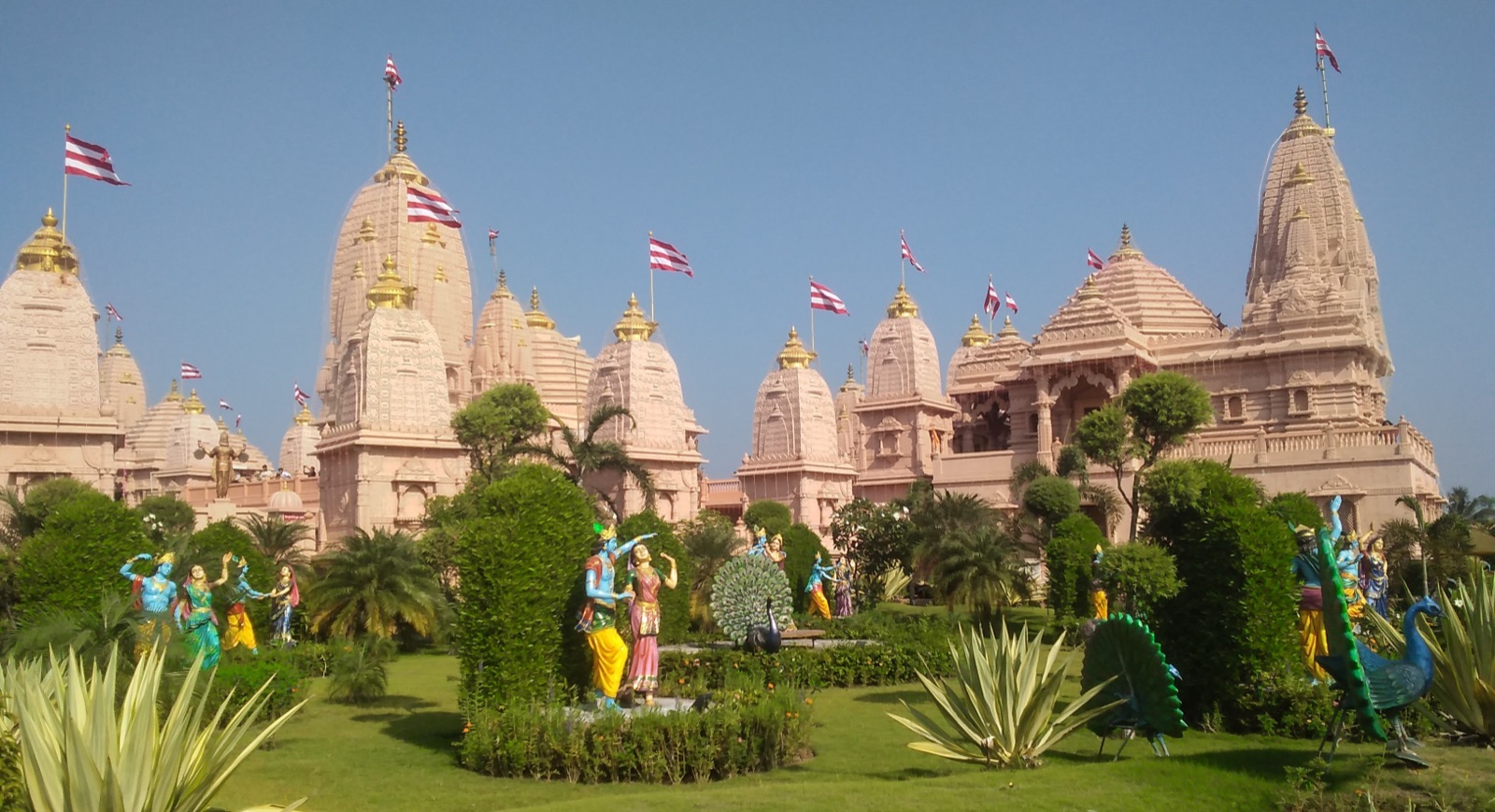

Birthplace of Lord Ram
The sacred city where the epic Ramayana began and a magnificent new temple rises
Birthplace of Lord Ram
Ayodhya is one of the seven holiest cities in Hinduism — the birthplace of Lord Ram, the hero of the Ramayana, and now home to the magnificent Ram Janmabhoomi Temple inaugurated in January 2024. This ancient city on the banks of the Saryu River has been a pilgrimage destination for thousands of years, drawing devotees who come to walk the land where Ram, Sita, Lakshman, and Hanuman once walked. The newly developed temple complex and infrastructure have transformed Ayodhya into one of India's most visited religious destinations.
Beyond the Ram Mandir, Ayodhya is a deeply atmospheric city of hundreds of temples, ashrams, and ghats lining the Saryu. The city comes alive during Deepotsav (Diwali), when hundreds of thousands of earthen lamps are lit along the riverbank, setting a Guinness World Record. Walk through the old streets, visit the ancient Hanuman Garhi fortress-temple, take a boat on the Saryu at sunset, and feel the devotion that has sustained this city for millennia.
Ayodhya
Ayodhya sits on the banks of the Saryu River in Uttar Pradesh, about 135 km from Lucknow. It is believed to be the birthplace of Lord Ram and one of Hinduism's seven sacred cities (Sapta Puri). The city has undergone massive redevelopment since the Ram Mandir consecration in January 2024, with new infrastructure, hotels, and a modern airport.
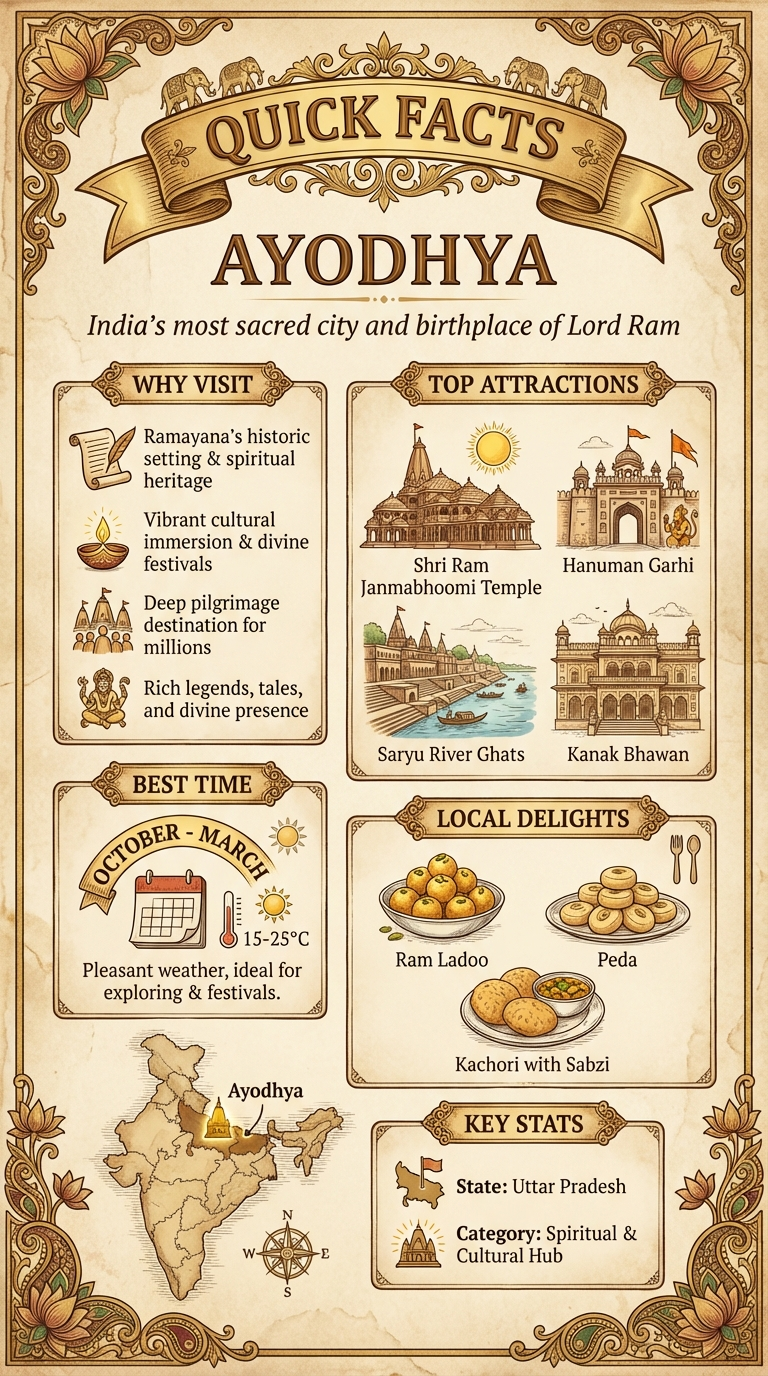
The essential sights and experiences
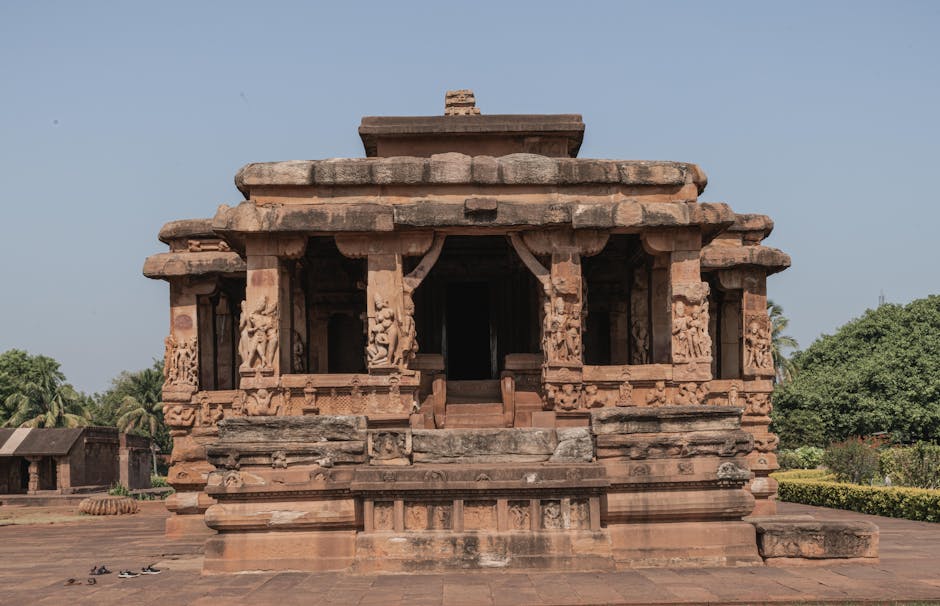
Ram Janmabhoomi Complex | Free
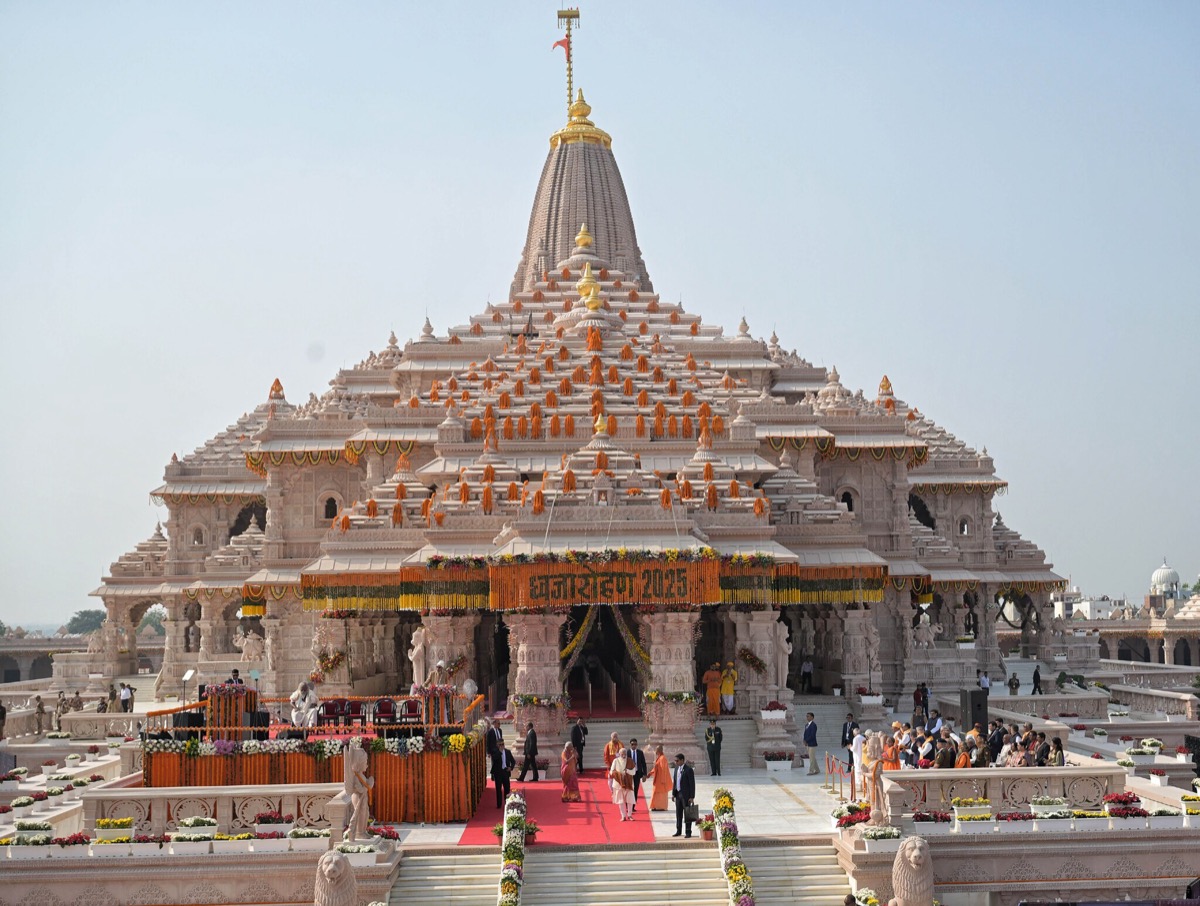
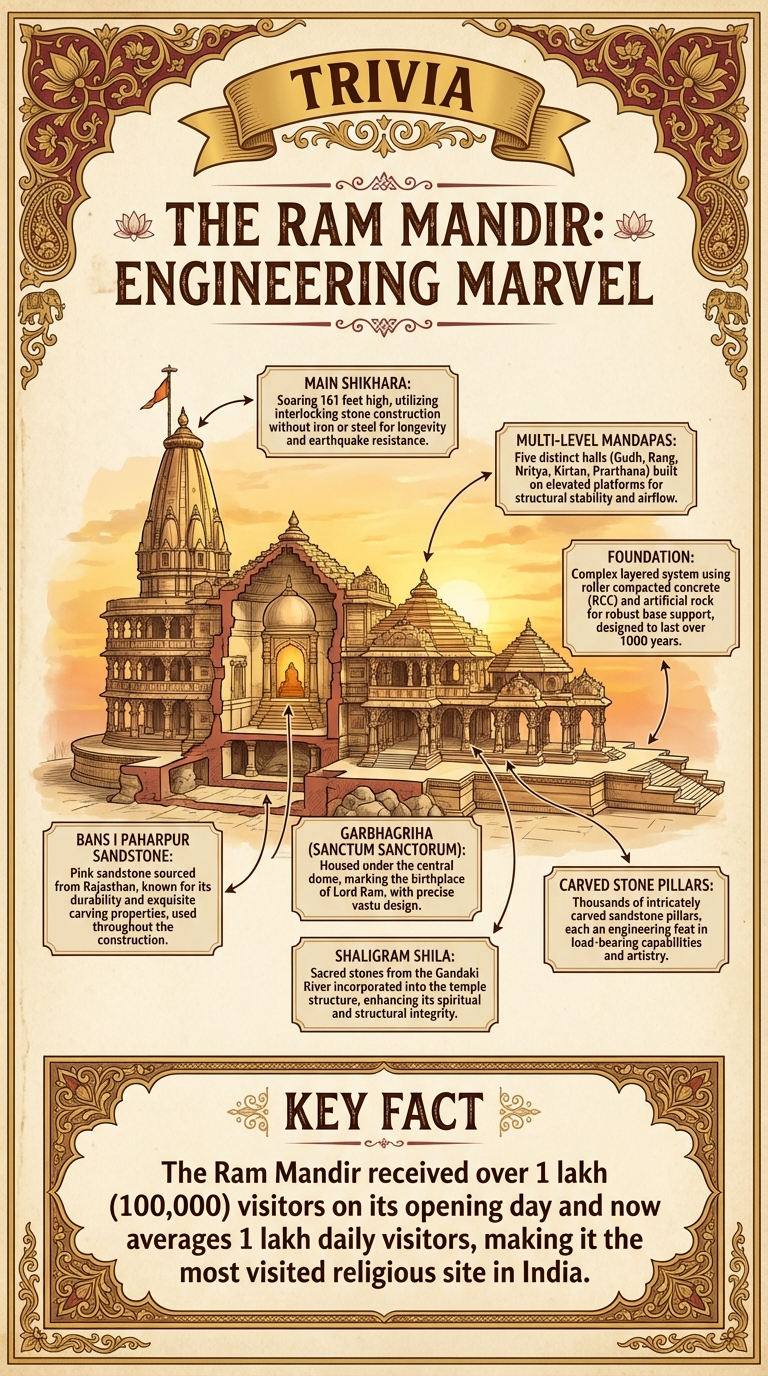
The magnificent new temple inaugurated on January 22, 2024, built in Nagara style architecture with pink sandstone. Houses the Ram Lalla idol.
Central Ayodhya | Free
10th-century fortress-temple dedicated to Hanuman, accessed by climbing 76 steps. Houses a powerful idol of Hanuman with baby Ram.
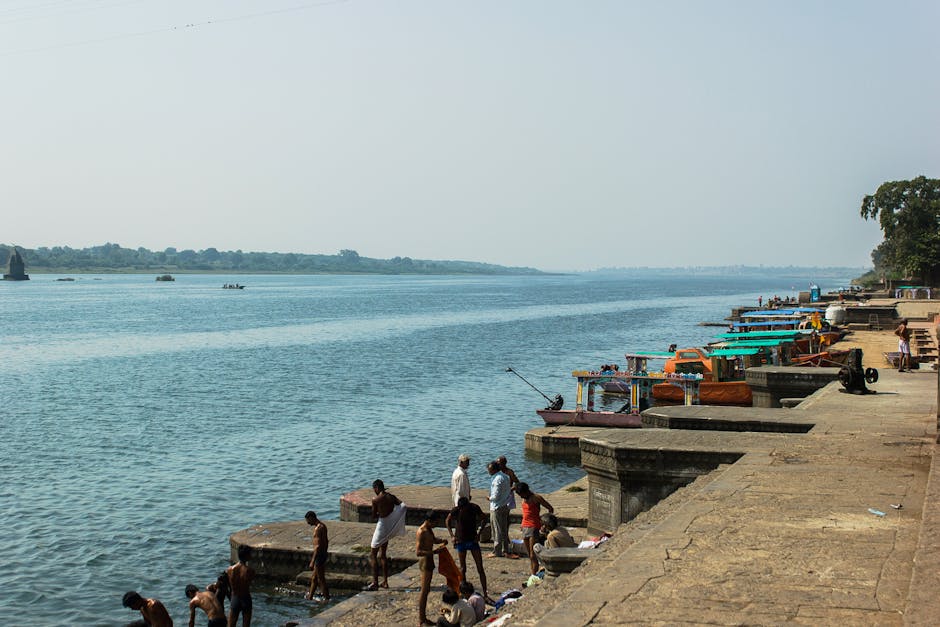
Along the Saryu River | Free
Series of ancient ghats for holy bathing. Ram Ki Paidi, the main ghat, is beautifully renovated with colored fountains.
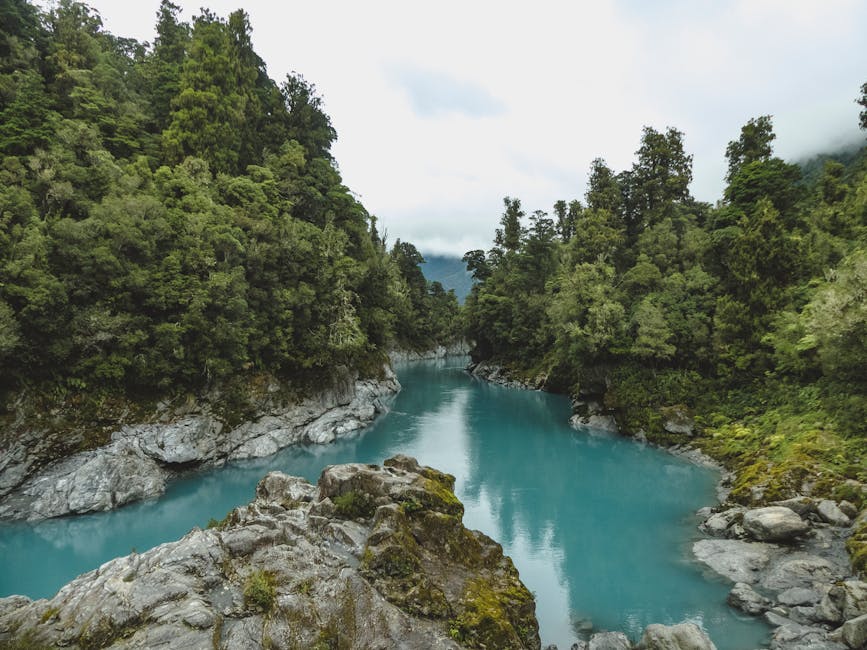
Near Ram Janmabhoomi | Free
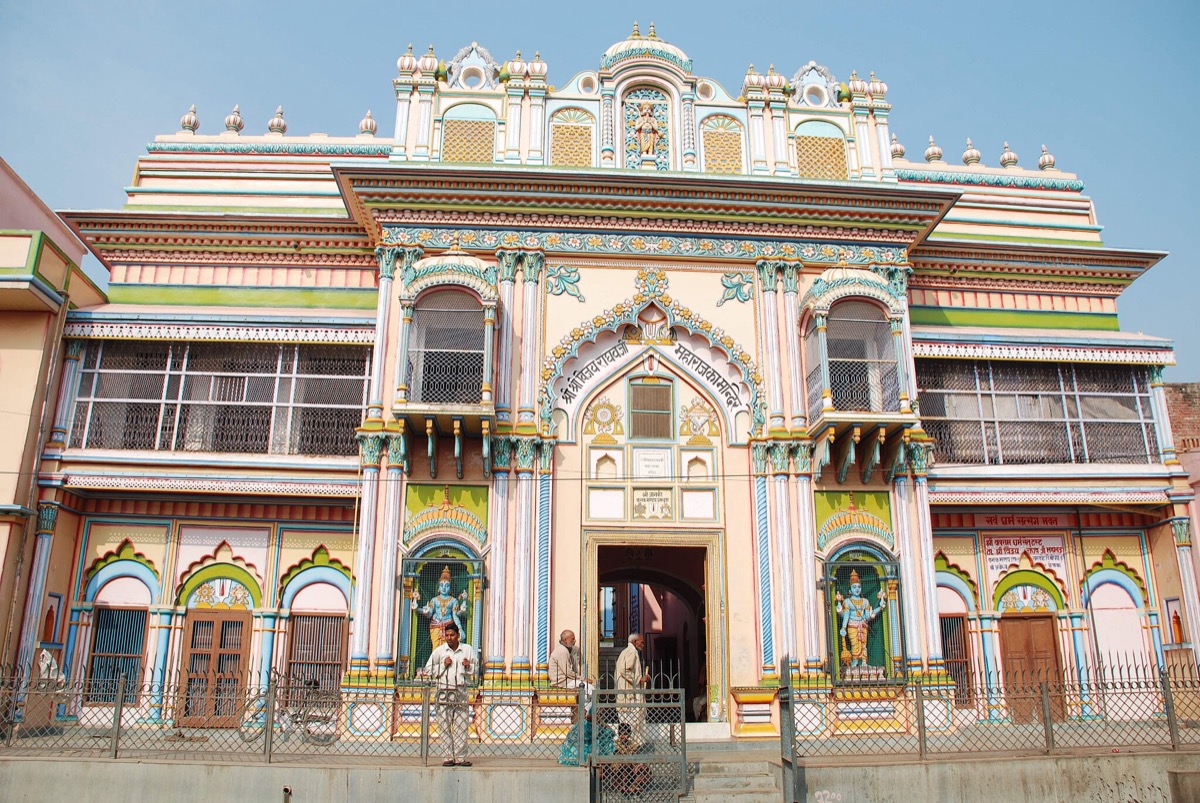
Ornate temple believed to be a wedding gift to Sita and Ram. The gold-crowned idols and intricate architecture are stunning.
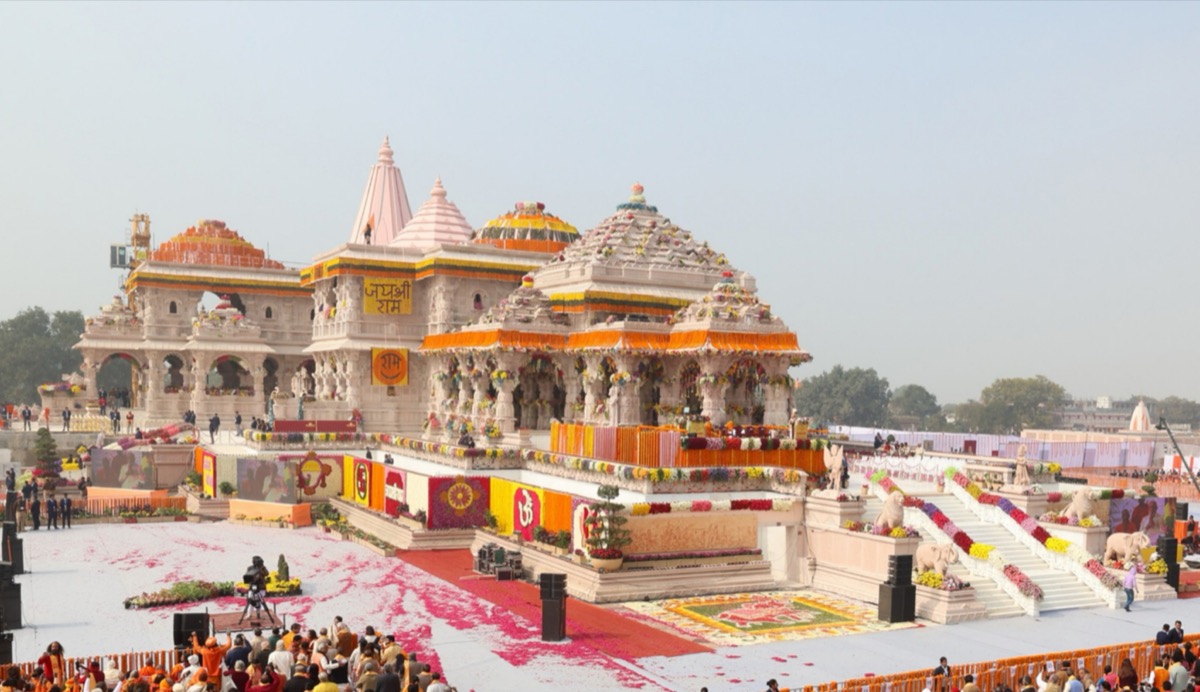
Main riverfront | Free
The primary ghat complex with renovated steps, gardens, and a spectacular light-and-sound show in the evenings.
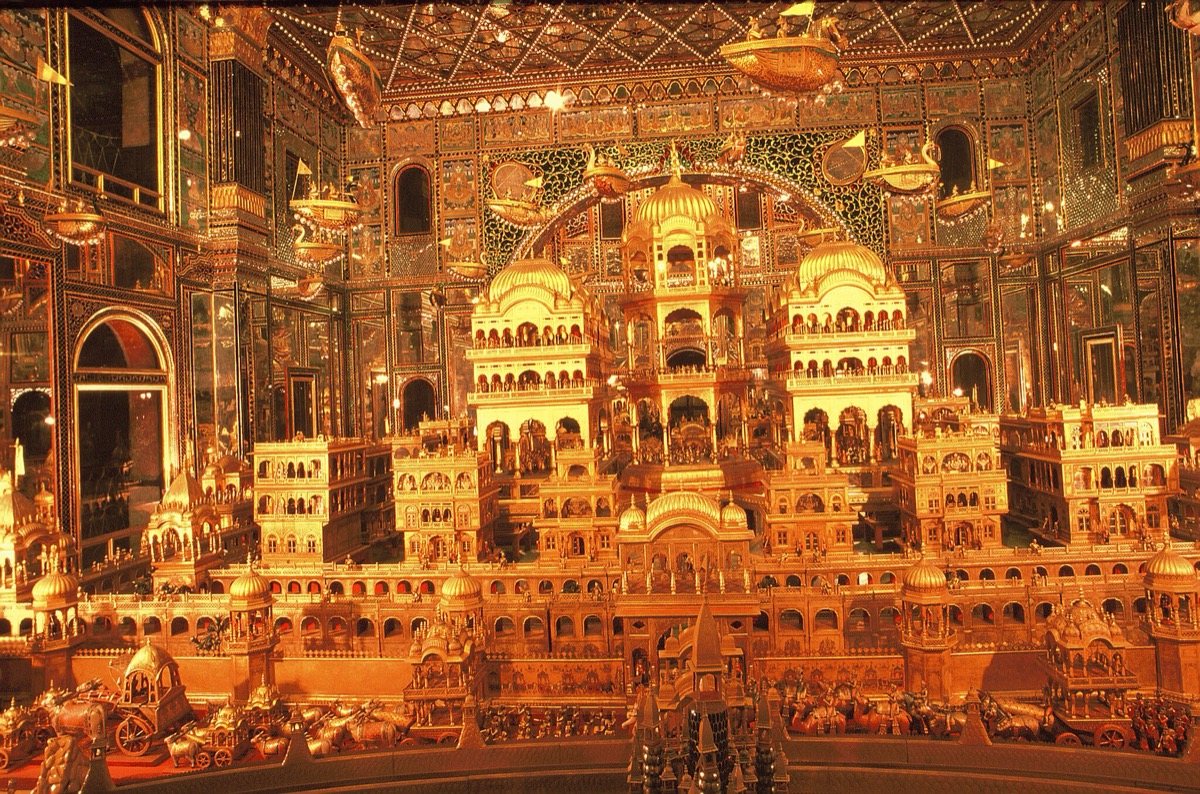
Near Ram Ki Paidi | Free
Ancient Shiva temple believed to have been established by Kush, son of Lord Ram. One of the oldest temples in Ayodhya.
Naya Ghat area | Free
Temple marking the spot where Ram performed the Ashwamedha Yajna (horse sacrifice). Contains unique black stone idols.
Near Hanuman Garhi | Free
Temple built at the site believed to be the palace of King Dashrath, Ram's father. Beautiful paintings of Ramayana scenes.
Faizabad (4 km) | ₹25
Mughal-era rose garden and tomb complex of Nawab Shuja-ud-Daula. Peaceful gardens with Mughal architecture.
Tulsi Nagar | ₹10
Museum dedicated to poet Tulsidas who wrote the Ramcharitmanas. Houses manuscripts and Ramayana artifacts.
South Ayodhya | Free
Sacred hillock believed to be a piece of the Sanjeevani mountain carried by Hanuman. Ancient Buddhist stupa remnants.
Near Ram Ki Paidi | Free
Newly developed park with Ramayana-themed sculptures, gardens, and walking paths along the riverfront.
Faizabad (5 km) | ₹25
Called the "Taj of the East" — an 18th-century Mughal tomb with a 43-meter dome. Often overlooked by visitors.
Ram Ki Paidi or Guptar Ghat | ₹50–100/person
Scenic boat ride on the holy Saryu River, especially beautiful at sunset when the ghats are illuminated.
North Ayodhya | Free
Tranquil ghat believed to be the spot where Lord Ram took jal samadhi (ascended to heaven through the river).
Old City | Free
Small but ancient temple dedicated to Lord Vishnu with beautiful carvings dating to the Gupta period.
Tulsi Nagar | Free
Houses rare manuscripts, sculptures, and artifacts from Ayodhya's multi-millennial history.
Near Hanuman Garhi | Free
Vibrant temple with detailed Ramayana murals covering every wall. A visual retelling of the epic.
19. Deepotsav Festival Experience (Ram Ki Paidi & citywide, Free): During Diwali, the entire city glows with lakhs of diyas. Deepotsav has set multiple Guinness Records.
20. Sita Ki Rasoi (Near Ram Janmabhoomi, Free): Tiny temple housing what is believed to be Sita's kitchen. Prasad is distributed to all visitors.
Essential practical information
ATMs are available on main roads. UPI is widely accepted. The temple area is mostly cash-free with digital payment options. Carry cash for street food and boats.
Ayodhya is very safe for tourists. Heavy security around the Ram Mandir. Follow instructions from security personnel at the temple.
Dress modestly at all times — this is a deeply religious city. Cover shoulders and knees. Remove shoes at all temples.
Photography is prohibited inside the Ram Mandir sanctum. Exterior photos are allowed. Ghats and other temples generally allow photography.
Navigate the city like a local
Maharishi Valmiki International Airport (AYJ) is 10 km from the city centre (₹200–400 by taxi, 20 min). Daily flights from Delhi, Mumbai, and Ahmedabad. Ayodhya Junction railway station is central.
Primary transport. Most of Ayodhya is covered within ₹50–100 by auto. Cost: ₹10–15/km
Battery-powered rickshaws on fixed routes. Very common and cheap. Cost: ₹10–20/person
Available in the old city. Good for short distances near the temples. Cost: ₹20–40/ride
The temple area and ghats are best explored on foot. Distances are manageable. Cost: Free
When to go and what to expect
Best time. Pleasant weather (20–30°C). Deepotsav and Diwali transform the city into a sea of light. Book months ahead.
Cool and pleasant (8–20°C). Republic Day events. Ram Mandir darshan queues are shorter. Carry warm layers for early mornings.
Warm to hot (25–42°C). Ram Navami (Mar/Apr) is the biggest festival — massive crowds. Very hot by May.
Monsoon season. Hot and humid. The Saryu swells. Fewer visitors. Some festivals continue despite the rain.
Ayodhya — best experienced in October–MarchMake the most of your time
Extended stays and themed routes
Add Naimisharanya (90 km, ancient forest pilgrimage site) and a full day exploring the smaller temples and ashrams along the Saryu's southern bank.
Combine with Prayagraj (160 km, Triveni Sangam), Varanasi (200 km, Ganga Aarti), and Lucknow (135 km, Awadhi cuisine and Bara Imambara) for the ultimate UP spiritual-heritage circuit.
Kids enjoy the boat rides, the Ramkatha Park sculptures, and the Hanuman Garhi climb. The evening light show at Ram Ki Paidi is magical for all ages.
Try the iconic peda sweets, kachori-sabzi breakfasts, Awadhi food in Faizabad, and the fresh prasad at Sita Ki Rasoi and other temples.
Where India's most awaited temple stands on the most sacred ground
The Sacred Heart
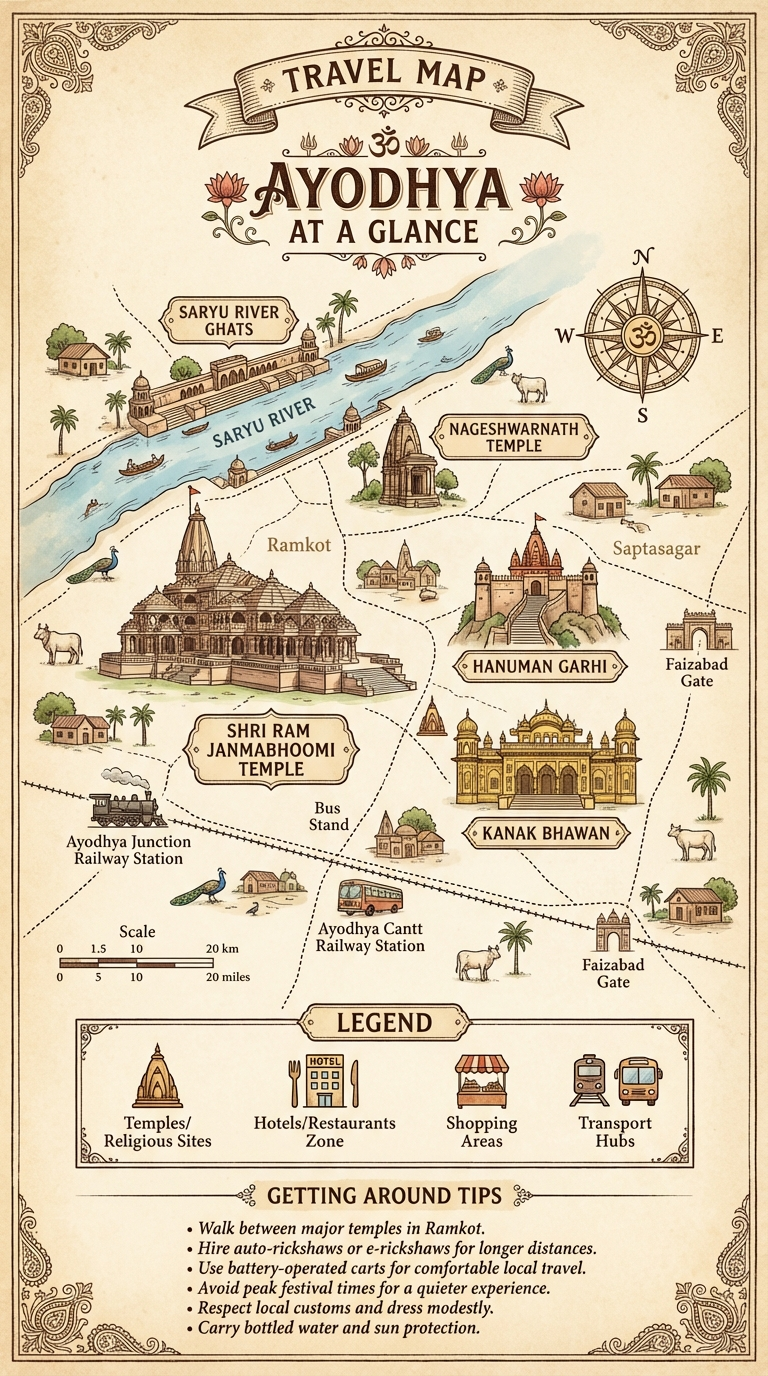
The area surrounding the Ram Janmabhoomi Temple is the spiritual epicentre of Ayodhya. The magnificent new temple, built in pink sandstone in the Nagara architectural style, rises 161 feet above the sacred site believed to be Lord Ram's exact birthplace. The surrounding complex covers 360 acres with beautifully landscaped gardens, a pilgrim facilitation centre, and walking paths. Kanak Bhawan, Sita Ki Rasoi, and Dashrath Mahal are all within walking distance.
The lanes leading to the temple are lined with shops selling religious items — Ram figurines, rudraksha malas, tulsi beads, and bright orange cloth. Security is tight but well-organized, with designated entry points and queuing systems. The atmosphere is one of deep devotion mixed with the excitement of a city reborn — pilgrims from across India stream through, many visiting for the first time since the temple's inauguration.
Where to eat in Ram Janmabhoomi & Temple Area
Saket Restaurant (₹80–200): Clean vegetarian restaurant near the temple with thalis and North Indian dishes.
Laxman Bhog (₹60–150): Popular for fresh puris, sabzi, and sweets near Hanuman Garhi.
Prasad stalls (₹20–50): Fresh pedas and laddoos at temple gate shops.
Shopping: Ram figurines (₹50–500), religious calendars, rudraksha beads, tulsi malas, sindoor, and temple prasad on the lanes approaching the temple.


Where the sacred Saryu flows past stone steps lit by a million lamps
The Sacred Riverfront
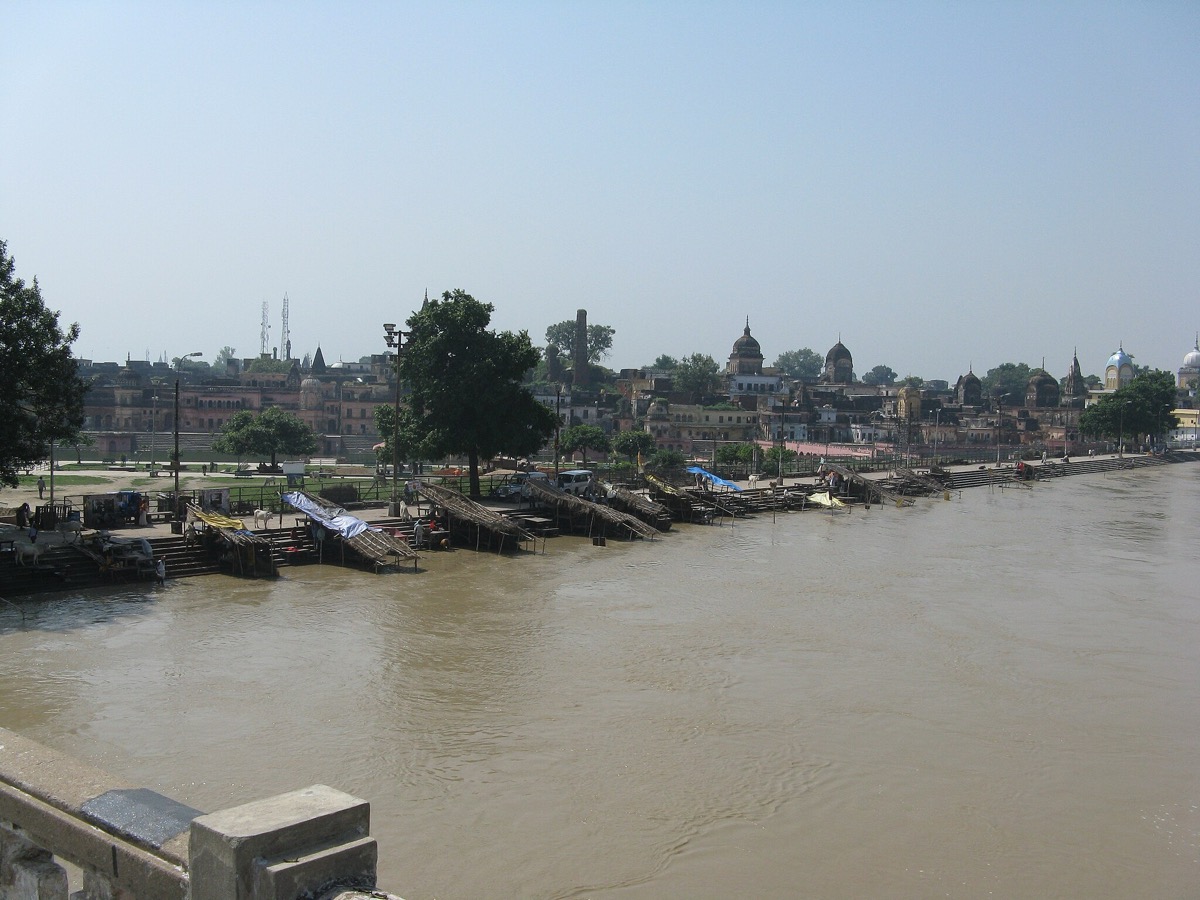
Ram Ki Paidi is Ayodhya's main ghat complex on the Saryu River — a grand staircase of stone steps descending to the holy waters where pilgrims bathe to wash away sins. The entire ghat area has been beautifully renovated with colored fountains, LED lighting, and landscaped gardens. In the evening, a spectacular light-and-fountain show transforms the waterfront. During Deepotsav, this is where hundreds of thousands of diyas are lit.
The ghats stretch for several kilometres along the Saryu, each with its own significance. Guptar Ghat, further upstream, is believed to be where Lord Ram ascended to heaven. Boating from Ram Ki Paidi offers beautiful views of the temple skyline and is especially magical at sunset. The area around the ghats is the best place in Ayodhya for street food — vendors sell piping hot kachori, jalebi, and the city's famous pedas.
Where to eat in Ram Ki Paidi & Ghats
Ghat-side tea stalls (₹10–30): Chai and samosas while watching the river life.
Sweet shops on Naya Ghat Road (₹50–200/box): Ayodhya's famous pedas and laddoos.
Sugriv Restaurant (₹100–250): Vegetarian meals near the ghat area.
Shopping: Religious items, brass diyas, Saryu river water in brass vessels, and Ayodhya pedas from the Naya Ghat Road sweet shops.


Where Nawabi elegance whispers a different chapter of the same ancient story
The Mughal-Awadhi Heritage Quarter
Faizabad, just 4 km from Ayodhya's temple district, was the first capital of the Nawabs of Awadh before they moved to Lucknow. This twin city preserves a fascinating layer of Mughal and Awadhi heritage that complements Ayodhya's Hindu sacred landscape. The Gulab Bari (Rose Garden) contains the ornate tomb of Nawab Shuja-ud-Daula set among fragrant rose gardens. The Bahu Begum Ka Maqbara, with its 43-meter dome, is one of the largest Mughal-era tombs in UP.
Faizabad's Chowk area is a lively market district with excellent Awadhi food — biryani, kebabs, and korma that reflect the Nawabi culinary tradition. The contrast between Ayodhya's vegetarian devotion and Faizabad's Awadhi richness makes for a fascinating cultural juxtaposition within a short auto ride.
Where to eat in Faizabad
Chowk area food stalls (₹50–150): Biryani, kebabs, and Awadhi dishes.
Chand Sweet House (₹30–100): Famous for Faizabad's mawa sweets and rasgullas.


What to eat and where to find it
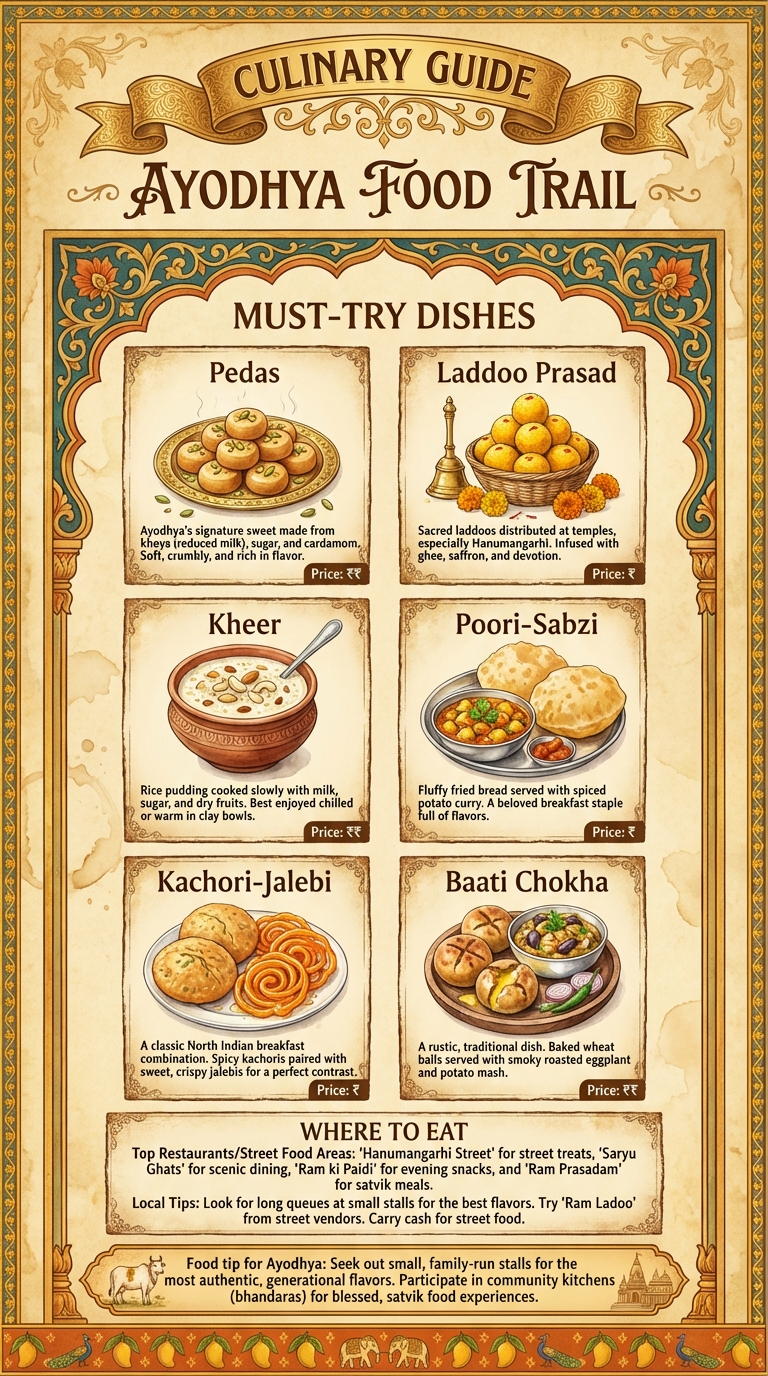
Ayodhya's food is purely vegetarian and deeply tied to its religious identity. The city is famous for its pedas (milk sweets), kachori-sabzi breakfasts, and the elaborate prasad cuisine served at temples. Nearby Faizabad adds Awadhi flavors to the mix. Don't expect gourmet restaurants — Ayodhya's charm lies in simple, soulful food served at street stalls and temple kitchens.
Ayodhya Peda (₹200–400/kg): The city's signature sweet — a soft, crumbly milk fudge flavored with cardamom and saffron.
Kachori-Sabzi (₹20–40): Crispy fried bread with spicy potato curry — the standard Ayodhya breakfast at every ghat-side stall.
Jalebi (₹20–40/plate): Hot, syrupy spirals of fried batter. Best eaten fresh from the pan at street stalls.
Puri-Sabzi (₹30–50): Puffed fried bread with aloo sabzi — served at every temple area restaurant.
Temple Prasad (₹10–30): Laddoos, pedas, and panchamrit offered at temples. Sita Ki Rasoi distributes free prasad.
Chole Bhature (₹40–60): Spicy chickpea curry with fried bread — a popular lunch option at local restaurants.
Lassi (₹20–40): Sweet or salted yogurt drink, especially refreshing in the warmer months.
Awadhi Biryani (₹80–200): Available in Faizabad — fragrant rice layered with spices in the Lucknawi dum style.
Best restaurants, markets, and street food
Saket Restaurant (₹80–200): Reliable vegetarian restaurant near the temple with North Indian thalis.
Ram Bhawan (₹60–150): Simple, clean meals near Hanuman Garhi.
Sugriv Restaurant (₹100–250): Popular vegetarian restaurant with a range of North Indian dishes.
Faizabad Chowk stalls (₹50–150): For non-vegetarian Awadhi food — biryani and kebabs.
Naya Ghat Road sweet shops: Pedas, laddoos, and jalebis from shops that have been operating for generations (₹200–400/kg).
Ram Ki Paidi ghat stalls: Kachori, samosa, and chai — the perfect pilgrim fuel (₹20–40).
Hanuman Garhi lane vendors: Hot jalebis, chaat, and fresh sugarcane juice (₹20–50).


Understanding the story of Ayodhya
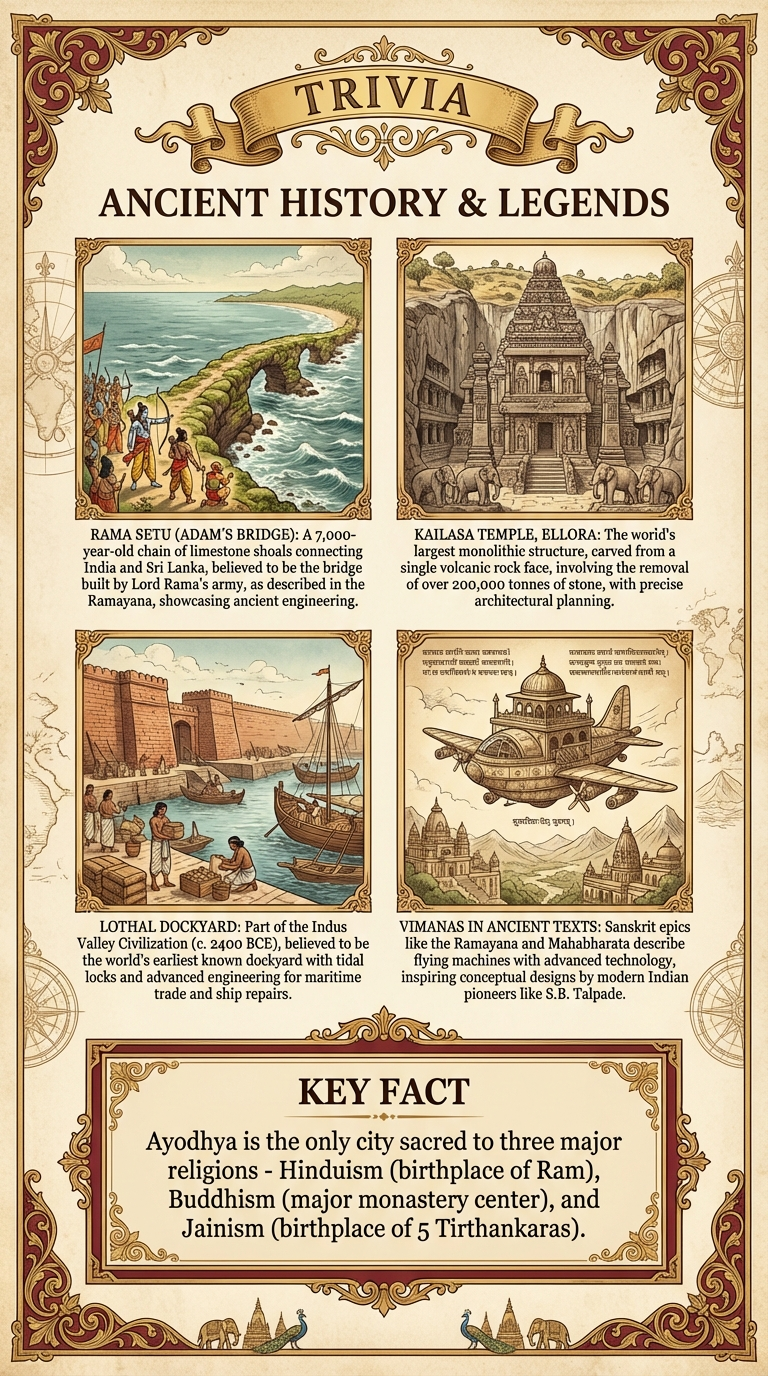
Ayodhya's history stretches into the realm of mythology — Hindu tradition dates the city to the Treta Yuga, millions of years ago, when Lord Ram ruled as king. Historically, archaeological evidence confirms settlement from at least the 7th century BCE. The city was the capital of the ancient Kosala kingdom and finds mention in Buddhist texts as Saketa, a prosperous city where the Buddha himself taught. Jain tradition also claims Ayodhya as the birthplace of five Tirthankaras.
The medieval period saw Mughal rule, during which a mosque (Babri Masjid) was built in 1528 at a site many Hindus believed was Ram's exact birthplace. This became the centre of one of India's longest and most contentious disputes. In 2019, the Supreme Court of India ruled in favor of building a Ram temple at the site, and the Ram Janmabhoomi Temple was consecrated on January 22, 2024, marking a new chapter in Ayodhya's ancient story. The city is now undergoing rapid development with a new airport, railway station, and tourism infrastructure.
Ayodhya's culture is inseparable from the Ramayana — every festival, every ritual, every street name echoes the epic. Ram Navami (March/April) celebrates Ram's birthday with massive processions. Deepotsav (Diwali) is the grandest event, when the city recreates the homecoming of Ram, Sita, and Lakshman with millions of earthen lamps. The Ramlila performances during Navratri bring the epic to life. Awadhi folk music, devotional bhajans, and the recitation of the Ramcharitmanas are part of daily life.
Excursions from Ayodhya
Ayodhya is centrally located in Uttar Pradesh with easy access to other major pilgrimage and heritage cities.
Ancient forest pilgrimage site where sages performed tapasya. The Chakra Tirtha lake and Vyasa Gaddi are sacred landmarks. Entry: Free
Awadhi capital with the Bara Imambara (₹50), Chota Imambara, and legendary kebab culture at Tunday Kababi. Entry: Varies
The sacred Triveni Sangam and Anand Bhawan (Nehru family home museum, ₹75). Combine with Varanasi. Entry: Free (Sangam)
Where Buddha spent 24 rainy seasons. Jetavana Monastery ruins and the Anandabodhi tree are key Buddhist pilgrimage sites. Entry: ₹25/₹300

Practical information from A to Z
Not available in the temple area. Limited availability in Faizabad hotels and licensed shops on the outskirts.
SBI, PNB, and Bank of Baroda ATMs on main roads. Carry cash as the old city has limited ATM coverage.
District Hospital Faizabad and private clinics on Civil Lines Road. Pharmacies near Hanuman Garhi.
220V/50Hz with Type C/D/M plugs. Power cuts are common; newer hotels have inverters.
4G coverage is good. Jio/Airtel SIMs available. Most new hotels have Wi-Fi. Old city coverage can be patchy.
Very conservative religious city. Discretion strongly advised. Hotels are professional and welcoming to all.
India Post office in Faizabad. Courier services (DTDC, Blue Dart) available on main roads.
Ram Mandir: 7am–11pm (darshan). Temples: generally 6am–9pm. Shops: 8am–9pm. Government offices: 10am–5pm Mon–Sat.
Air quality is generally good. Dust during construction (ongoing development). Water quality — drink only bottled water.
E-rickshaws are the standard transport. ₹10–20 for most routes. Auto-rickshaws: ₹50–100 within city.
GST applies. Most small eateries don't charge separately. Hotels charge 12% GST. Donation receipts available at major temples.
New public toilets at Ram Ki Paidi and near the Ram Mandir complex. Hotels and restaurants have western toilets.
Drink only bottled water (₹20). RO filtered water available at new pilgrim facilities. The Saryu is sacred — do not drink river water.
Heavy police and CRPF presence around Ram Mandir. Follow all security instructions. No large bags allowed near the temple.
Official guides available through UP Tourism (₹300–800/day). Avoid unofficial guides at temple gates.
Getting to and around Ayodhya
From Delhi: Flights to Ayodhya Airport (AYJ, since Dec 2023, 1.5 hours, ₹3,000–6,000). Trains to Ayodhya Junction (9–12 hours, ₹300–1,000). By road: 630 km via Lucknow Expressway (10 hours).
From Lucknow: Trains (2.5–3 hours, ₹150–400) or road (135 km, 3 hours by taxi ₹2,500–3,500).
Within Ayodhya: E-rickshaws and autos. The temple zone is pedestrian-only. Distances between major sites are walkable (1–3 km).
| Mode | Details | Cost |
|---|---|---|
| Auto-Rickshaw | Primary transport. Most of Ayodhya is covered within ₹50–100 by auto. | ₹10–15/km |
| E-Rickshaw | Battery-powered rickshaws on fixed routes. Very common and cheap. | ₹10–20/person |
| Cycle Rickshaw | Available in the old city. Good for short distances near the temples. | ₹20–40/ride |
| Walking | The temple area and ghats are best explored on foot. Distances are manageable. | Free |
Essential phrases for travelers
Hindi and Awadhi are spoken in Ayodhya. English is limited outside hotels. Basic Hindi phrases are very helpful for navigating the city and interacting with locals.
| English | Hindi |
|---|---|
| Hello / Greetings | Namaste |
| Thank you | Dhanyavaad |
| Yes / No | Haan / Nahin |
| How much? | Kitna hai? |
| Too expensive | Bahut mehnga hai |
| Water | Paani |
| Food | Khana |
| Where is...? | ...kahan hai? |
| Help | Madad |
| Good | Accha |
| Beautiful | Sundar |
| Please | Kripya |
| I don't understand | Mujhe samajh nahin aaya |
| Taxi/auto | Auto-rickshaw |
| How far? | Kitni door hai? |
Our favourite experiences in Ayodhya
Saryu River Boat Ride
Watch the temple skyline glow gold as the sun rises over the Saryu
Ram Ki Paidi Light Show
The evening fountain and light display against the darkening sky
Naya Ghat Road Pedas
Ayodhya's iconic milk sweet — soft, crumbly, and fragrant
Hanuman Garhi Lane Stalls
Hot jalebis and kachori fresh from the pan
Ramada by Wyndham Ayodhya
Modern comfort in the newly developing city
Tulsi Smarak Bhawan
Manuscripts and artifacts from the Ramayana tradition
Bahu Begum Ka Maqbara
The "Taj of the East" in Faizabad — spectacular and almost empty
Ram Mandir at Dawn
Pink sandstone glowing in the first morning light
Temple Lane Shops
Religious souvenirs, Ram figurines, and tulsi malas
Deepotsav
Millions of diyas lighting up the Saryu — a once-in-a-lifetime sight
Everything you need for Ayodhya
Travorea creates comprehensive, beautifully designed travel guides that combine insider knowledge with practical information. Our guides are crafted to help you experience destinations like a local, not just a tourist.
This premium guide to Ayodhya was researched and written to give you everything you need for an unforgettable trip. All prices and information were verified at the time of writing (2026) but may change — always confirm locally.
All photographs in this guide are sourced from free-to-use image libraries (Pexels, Unsplash) and original Travorea photography. Infographics are original Travorea creations.
Visit us at www.travorea.com for more destinations, interactive trip planners, and the latest travel tips.
Explore More Guides
Visit www.travorea.com/ebooks for premium guides to 50+ destinations worldwide.
Birthplace of Lord Ram