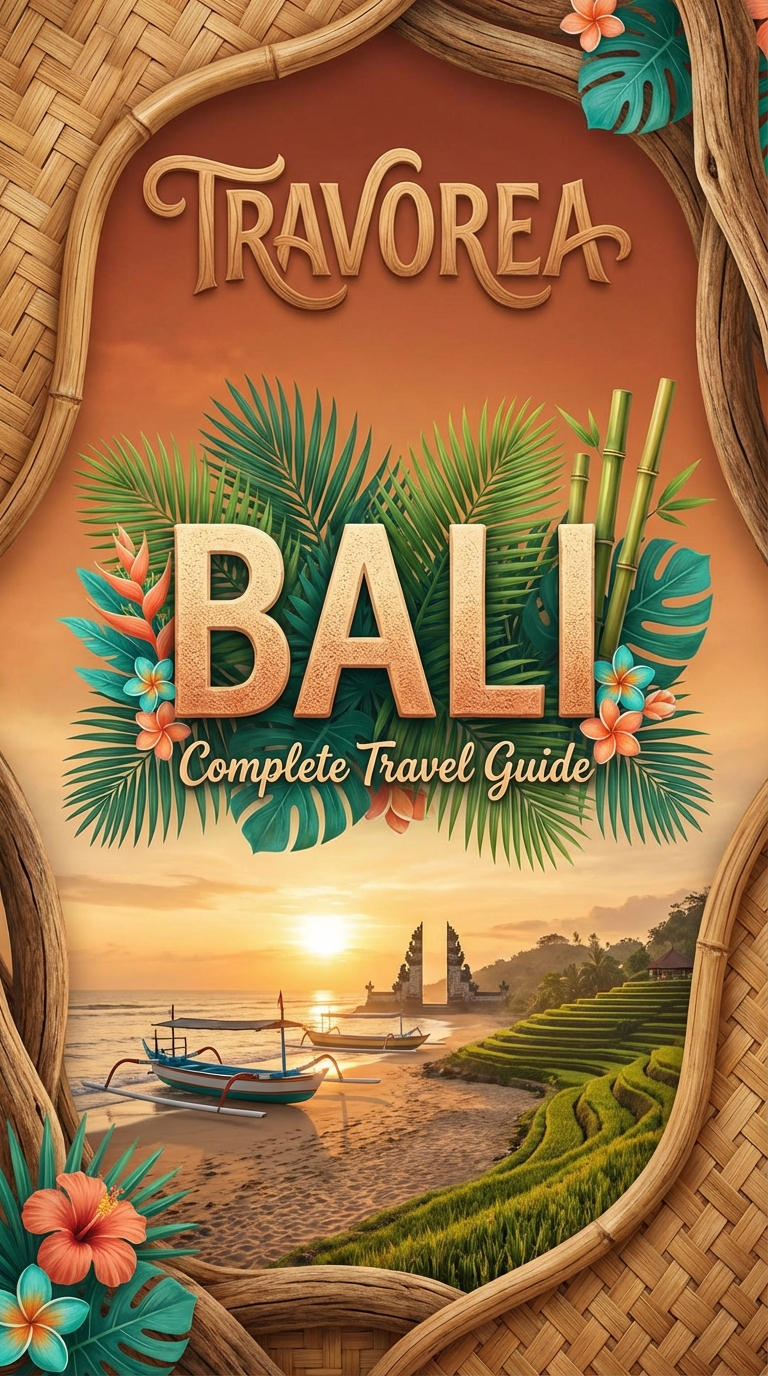

Bali
Travorea

Bali

Island of the Gods

Sacred TemplesRice TerracesSurf & BeachesUbud ArtsHindu Culture
76
Pages
2026 Edition

Contents

Plan Your Trip

Welcome to Bali4
Bali at a Glance5
Top 20 Experiences6
Need to Know9
Month by Month11

Itineraries

3-Day Itinerary12
Extended Itineraries13

Explore Bali

Ubud14
Seminyak18
Canggu22
Uluwatu & Bukit Peninsula26
Jimbaran30
Nusa Penida34
Sanur38
Sidemen & East Bali42
Kintamani & Highlands46
Lovina & North Bali50
Tabanan & West Bali54
Munduk & Central Highlands58

Special Sections

Food Guide62
Day Trips67
History & Culture65

Survival Guide

Directory A–Z69
Transport71
Language72

Quick Reference

Top 10 Picks73
Packing List74
Credits75
2
Bali

Bali

Where ancient temples, emerald rice terraces, and surf breaks create a tropical paradise

3

Welcome to Bali

Island of the Gods

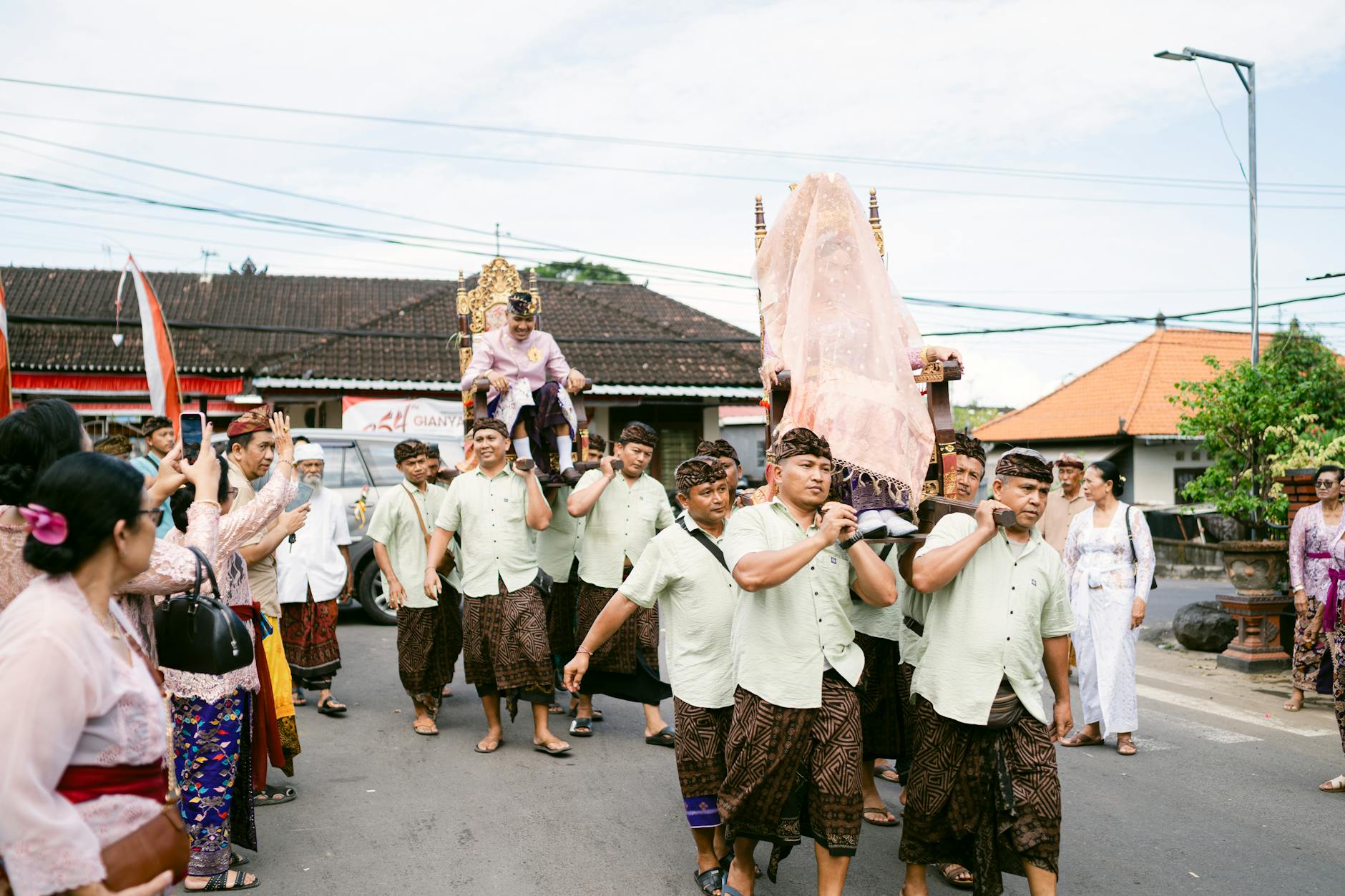
Bali is an island that operates on a different frequency. While the rest of Indonesia is predominantly Muslim, Bali follows its own unique form of Hinduism — a faith woven so deeply into daily life that every morning begins with offerings of flowers, rice, and incense placed on doorsteps, dashboards, and ATMs. Over 20,000 temples dot an island smaller than Delaware, and on any given day, a procession of villagers in white and gold carries towers of fruit to a ceremony at the nearest pura. The sacred and the everyday are inseparable here.

Beyond the spirituality, Bali offers an astonishing range of experiences for an island of its size: world-class surf at Uluwatu, artist colonies in Ubud, volcanic sunrise treks up Mount Batur, underwater worlds off the north coast, and rice terraces so perfectly sculpted they look computer-generated. The south coast buzzes with beach clubs and nightlife; the north is quiet and undeveloped; the east hides traditional villages where time moves slowly. Bali’s magic is that all of this coexists on a single island you can drive across in three hours.

WHY I LOVE BALI
Avoid Kuta and southern Bali on Nyepi (Balinese New Year, usually in March) — the entire island shuts down for 24 hours: no flights, no driving, no lights, no leaving your hotel. It’s an extraordinary experience if you’re prepared for it.
4

Bali at a Glance

Population4.3 million
Area5,780 km²
LanguageIndonesian, Balinese
CurrencyIDR (Rupiah)
Time ZoneUTC+8 (WITA)
Best TimeApril–October (dry season)
VisaVisa on arrival (30 days, $35)
Emergency112 / 118 (ambulance)
Bali Bali

Bali sits 8 degrees south of the equator in the Indonesian archipelago, between Java and Lombok. Its volcanic peaks, terraced hillsides, and coral reefs create one of the most diverse landscapes in Southeast Asia. Five days covers the highlights; two weeks lets you slow down to Bali’s natural rhythm.

Money-Saving Tips
Bali is extremely affordable. A local warung meal costs 25,000–45,000 IDR (£1.30–£2.30). Private villas with pools start at £40/night. Budget travellers can live comfortably on £25–35/day.
5
01

Top 20 Experiences

The essential sights and experiences

Uluwatu Temple

1. Uluwatu Temple

Uluwatu, South Bali | 50,000 IDR

Dramatic clifftop temple perched 70m above the Indian Ocean. The sunset Kecak fire dance performance here is Bali’s most unforgettable cultural experience.

Tegallalang Rice Terraces

2. Tegallalang Rice Terraces

Ubud | 15,000 IDR

Iconic cascading rice terraces using the ancient subak irrigation system (UNESCO). Best visited at sunrise before the Instagram crowds arrive.

Ubud Monkey Forest

3. Ubud Monkey Forest

Ubud | 80,000 IDR

Sacred sanctuary of 1,260 long-tailed macaques living among ancient temple ruins and towering banyan trees in the heart of Ubud.

Tanah Lot

4. Tanah Lot

Tabanan | 60,000 IDR

Bali’s most photographed sea temple, perched on a rocky islet and accessible only at low tide. Sunset here is magnificent.

Mount Batur Sunrise Trek

5. Mount Batur Sunrise Trek

Kintamani | 450,000–600,000 IDR

Climb the active volcano (1,717m) in darkness to watch the sunrise over Lake Batur and Mount Agung. Start at 3:30 AM, reach the summit by dawn.

6

6. Tirta Empul Temple

Tampaksiring | 50,000 IDR

Sacred water temple where Balinese Hindus purify themselves in holy spring water. Visitors can join the purification ritual — bring a sarong.

INSIDER TIP
Always carry a sarong (available at temple entrances for free/small fee). Knees and shoulders must be covered at all Balinese temples. Women are not permitted to enter temples during menstruation.
6
7

7. Seminyak Beach

Seminyak | Free

Bali’s most cosmopolitan beach: boutique hotels, upscale restaurants, beach clubs, and spectacular sunsets over the Indian Ocean.

8

8. Ubud Art Market

Ubud | Free entry

Daily market selling handcrafted goods: batik, wood carvings, paintings, silver jewelry, and woven baskets. Haggle — start at 30% of the asking price.

9

9. Nusa Penida

Off southeast coast | 150,000 IDR (boat)

Dramatic island with Kelingking Beach (T-Rex cliff), Angel’s Billabong natural pool, and Crystal Bay snorkelling with manta rays.

10

10. Besakih Temple (Mother Temple)

Mount Agung | 60,000 IDR

Bali’s holiest and largest temple complex: 23 separate temples on the slopes of Mount Agung, the island’s highest volcano.

Uluwatu Beach & Surf

11. Uluwatu Beach & Surf

Bukit Peninsula | Free

World-class reef break and dramatic cliff-backed beach. Watch pro surfers from the clifftop bars or take a lesson at Padang Padang.

12

12. Tirta Gangga Water Palace

Karangasem | 50,000 IDR

Former royal water palace with ornate fountains, stepping-stone paths over fish ponds, and lush gardens against a volcanic backdrop.

Must-Know Numbers
20,000+: Temples on Bali
1,717m: Height of Mount Batur
50,000 IDR: Average temple entry fee
7
13

13. Jatiluwih Rice Terraces

Tabanan | 40,000 IDR

UNESCO-listed terraces far less crowded than Tegallalang. Cycling or walking through the paddies here is pure Bali.

14

14. Canggu

North Seminyak | Free

Bali’s digital nomad capital: surf breaks, rice-field yoga studios, smoothie bowls, and a booming café scene.

15

15. Goa Gajah (Elephant Cave)

Near Ubud | 50,000 IDR

9th-century cave temple with a menacing carved entrance, bathing fountains, and Buddhist rock-cut reliefs in a jungle setting.

16

16. Waterbom Bali

Kuta | 550,000 IDR

Asia’s best waterpark: tropical gardens, 22 rides, and a lazy river. Perfect for families or a break from temple-hopping.

17

17. Lempuyang Temple (Gates of Heaven)

Karangasem | 50,000 IDR

The famous split-gate photo with Mount Agung framed behind. The full temple complex involves climbing 1,700 steps.

18

18. Sidemen Valley

East Bali | Free

Bali’s most beautiful valley: emerald rice terraces, quiet homestays, and Mount Agung views without the crowds.

19. Amed & Tulamben (East coast, Free (diving from 500,000 IDR)): Black-sand beaches and world-class diving: the USAT Liberty shipwreck at Tulamben is a coral-encrusted WWII wreck in just 5–30m of water.

20. Pura Luhur Batukaru (Tabanan highlands, 50,000 IDR): Remote jungle temple on the slopes of Mount Batukaru. Misty, atmospheric, and rarely visited — the Bali the tourists miss.

8
02

Need to Know

Essential practical information

Money

Cash is still king outside tourist areas. ATMs are widespread in south Bali and Ubud. Carry small bills for warungs and temples. Money changers on the street often scam — use banks or ATMs.

Safety

Bali is very safe. Petty theft occurs in tourist areas — don’t leave valuables on the beach. Motorbike accidents are the biggest risk — wear a helmet and drive slowly.

Temples

Always wear a sarong and sash at temples. Remove shoes before entering. Women cannot enter temples during menstruation. Never stand higher than a priest or sacred object.

Scams

Common scams: rigged money changers, “free” transport to shops, inflated taxi meters, and fake tour guides. Use Grab or Blue Bird taxis.

Water

Do NOT drink tap water. Bottled water is cheap (5,000 IDR). Avoid ice in drinks at local warungs unless it’s tube-shaped (factory-made and safe).

Drugs

Indonesia has extremely strict drug laws, including the death penalty. Do not buy, carry, or use any illegal substances.

Offerings

Don’t step on the small canang sari offerings placed on sidewalks and doorsteps. They’re sacred daily offerings to the gods.

Haggling

Expected at markets (start at 30–40% of asking price). Not appropriate at restaurants, supermarkets, or shops with fixed prices.

Budget LevelDaily CostIncludes
Budget£25–40/dayGuesthouse, warung meals, motorbike rental, local transport
Mid-Range£70–150/dayBoutique hotel with pool, restaurants, private driver for day trips
Luxury£250+/dayPrivate villa, fine dining, spa treatments, helicopter tours
Essential Apps
Download Grab (ride-hailing, much cheaper than taxis), GoFood (food delivery), and Google Maps offline (cellular data can be patchy in rural Bali).
9
03

Getting Around

Navigate the city like a local

From the Airport

Ngurah Rai Airport (DPS) is in southern Bali near Kuta. Official airport taxi to Seminyak (20 min, 150,000 IDR), Ubud (1.5 hrs, 350,000 IDR). Pre-book Grab outside the airport or use the official taxi counter. Do NOT accept offers from touts in the arrivals hall.

Motorbike

The quintessential Bali transport. Rent from 70,000–100,000 IDR/day. International driving permit technically required. Wear a helmet. Cost: 70,000–100,000 IDR/day

Grab / Gojek

Ride-hailing apps covering most of Bali. Much cheaper and more reliable than taxis. Not always available in very rural areas. Cost: 15,000–80,000 IDR/ride

Private Driver

Hire a driver for a full day of sightseeing. Comfortable, knowledgeable, and surprisingly affordable. Cost: 500,000–700,000 IDR/day

Blue Bird Taxi

The only reliable metered taxi company in Bali. Look for the blue bird logo and insist on the meter. Cost: 7,000 IDR/km

Shuttle Bus

Perama and Kura-Kura buses connect major tourist areas (Kuta–Ubud–Sanur–Lovina). Cost: 50,000–150,000 IDR

Transport Tips
Hiring a private driver for a full day (500,000–700,000 IDR / £25–35) is Bali’s best-value transport option. They know the roads, can navigate narrow village lanes, and double as guides.
10

Month by Month

When to go and what to expect

Apr–Jun

Early dry season (27–30°C). Clear skies, lower humidity, and fewer crowds than July–August. The best time to visit Bali overall.

Jul–Aug

Peak dry season (26–29°C). Best weather but busiest and most expensive. Ubud and south Bali are packed. Book everything ahead.

Sep–Oct

Late dry season (27–30°C). Crowds thin, prices drop, and the weather is still excellent. Best value months.

Nov–Mar

Wet season (27–31°C). Daily tropical downpours (usually afternoon, 1–2 hours). Lush green landscapes, dramatic skies, and 30–50% lower hotel prices.

Best Time to Visit
April to June and September to October offer the best combination of dry weather, manageable crowds, and reasonable prices. Avoid Christmas/New Year (peak prices, fully booked).
BaliBali — best experienced in April–October (dry season)
11
04

Itineraries

Make the most of your time

Day 1: Ubud — Art, Culture & Rice Terraces
6:00 AMSunrise at Tegallalang Rice Terraces before the crowds arrive (15,000 IDR)
8:30 AMBreakfast at Clear Café or Milk & Madu in central Ubud (60,000–90,000 IDR)
10:00 AMUbud Monkey Forest — walk through the sacred temple ruins among 1,260 macaques (80,000 IDR)
12:00 PMLunch at Locavore To (modern Indonesian) or Ibu Oka for babi guling roast pork (40,000–80,000 IDR)
2:00 PMUbud Art Market — browse batik, woodcarvings, and silver jewellery
4:00 PMTirta Empul holy spring purification ceremony (50,000 IDR, bring a sarong)
7:00 PMDinner at Mozaic, Ubud’s finest restaurant, or Warung Biah Biah for local food (£10–60)
Day 2: South Bali — Temples, Beaches & Sunset
8:00 AMVisit Tanah Lot sea temple at low tide (60,000 IDR)
10:30 AMDrive to Uluwatu — explore the clifftop temple and spot monkeys (50,000 IDR)
12:30 PMLunch at Single Fin, the famous clifftop bar overlooking the surf break (80,000–150,000 IDR)
2:30 PMPadang Padang Beach — swim at the beautiful cove from “Eat Pray Love”
4:00 PMSeminyak Beach — beachfront cocktails at Potato Head or Ku De Ta
6:00 PMKecak fire dance at Uluwatu Temple at sunset (150,000 IDR) — the most spectacular performance in Bali
8:00 PMDinner at Sarong or Mama San in Seminyak (200,000–400,000 IDR)
Day 3: Adventure — Volcano, Waterfalls & East Bali
3:30 AMMount Batur sunrise trek — summit by 6 AM for spectacular views (450,000–600,000 IDR with guide)
9:00 AMHot springs at Toya Devasya after the trek (150,000 IDR)
11:00 AMDrive to Tirta Gangga Water Palace — stepping stones over fish ponds (50,000 IDR)
1:00 PMLunch at a warung in Sidemen Valley with Mount Agung views (30,000–50,000 IDR)
3:00 PMTukad Cepung Waterfall — light beams through a cave onto a hidden waterfall
5:00 PMReturn to Ubud or south Bali
7:30 PMDinner at Locavore (Ubud’s Michelin-recognized restaurant) or La Favela (Seminyak) (200,000–600,000 IDR)
TIMING TIP
Bali’s roads are narrow and traffic can be terrible, especially between Ubud and south Bali. Allow 1.5–2 hours for drives that look short on the map.
12

More Itineraries

Extended stays and themed routes

Five Days

Add a day trip to Nusa Penida (Kelingking Beach, Angel’s Billabong, snorkelling with manta rays) and a day exploring Canggu’s surf scene, yoga studios, and café culture.

One Week

Include snorkelling or diving at Amed/Tulamben (USAT Liberty shipwreck), the Jatiluwih rice terraces (UNESCO), Lempuyang Temple “Gates of Heaven,” and a traditional Balinese cooking class.

Family Itinerary

Kids love Waterbom Bali (Asia’s best waterpark), the Ubud Monkey Forest, Bali Safari & Marine Park, and beach days at Sanur (calm, shallow water). Hire a private driver for flexibility.

Food Lover's Route

Take a cooking class in Ubud, eat babi guling at Ibu Oka, try lawar at a village ceremony feast, explore Jimbaran seafood BBQ at sunset, and splurge on Locavore’s tasting menu.

Booking Essentials
Book Mount Batur treks and Nusa Penida boats 2–3 days ahead. Locavore needs 2–4 weeks’ notice. Villas in Seminyak/Canggu sell out months ahead for July–August and Christmas.
13
Ubud

Ubud

Where Balinese art, spirituality, and rice terraces create an unforgettable creative sanctuary

14
Ubud

Ubud

Bali’s Spiritual & Artistic Heart

Ubud is the cultural soul of Bali — a town of artists, dancers, healers, and rice terraces that became world-famous after Elizabeth Gilbert’s Eat Pray Love. But Ubud was an artistic centre long before the book: the royal family has patronised painting, dance, and music since the 1930s, when European artists Walter Spies and Rudolf Bonnet established a colony here. Today, the town balances its spiritual heritage with a booming wellness industry of yoga retreats, vegan cafés, and meditation centres.

Start early to beat the crowds at Tegallalang Rice Terraces, then return to central Ubud for the Monkey Forest and Art Market. Ubud’s magic is in its side streets: hire a bicycle and ride through the surrounding rice paddies to tiny villages where gamelan orchestras practice on open-air pavilions. At night, attend a traditional dance performance at the Ubud Palace — the Legong and Barong dances are mesmerising.

LOCAL SECRET
Attend the free Ubud Palace evening dance performances (Tuesdays and Thursdays, 80,000 IDR). The Legong dance, performed by young girls in gold costumes, is extraordinarily beautiful.
15

Eating & Drinking

Where to eat in Ubud

Locavore (800,000+ IDR): Bali’s most acclaimed restaurant, serving a hyper-local tasting menu with Indonesian ingredients reimagined. Book weeks ahead.

Ibu Oka (40,000–60,000 IDR): The legendary babi guling (suckling pig) warung made famous by Anthony Bourdain. Go at 11 AM.

Clear Café (60,000–90,000 IDR): Healthy, creative breakfasts and lunches in a beautiful garden setting.

Wellness: Yoga Barn (daily classes from 130,000 IDR), Taksu Spa, and the Ubud Traditional Healing Centre for a session with a Balinese balian (healer).

16

Ubud by the Numbers

20,000+
Hindu temples on the island
4.3M
Population of Bali
1,717m
Height of Mount Batur
Did You Know?
Bali’s Nyepi (Day of Silence) is the only day in the world when an entire island’s airport shuts down for 24 hours. No flights land or depart, no vehicles move, no lights are turned on, and everyone — including tourists — must stay indoors.
Ubud by the Numbers
Ubud by the Numbers
Ubud by the Numbers
Every Balinese person has one of only four first names: Wayan (1st born), Made (2nd), Nyoman (3rd), or Ketut (4th). The cycle repeats for the 5th child.
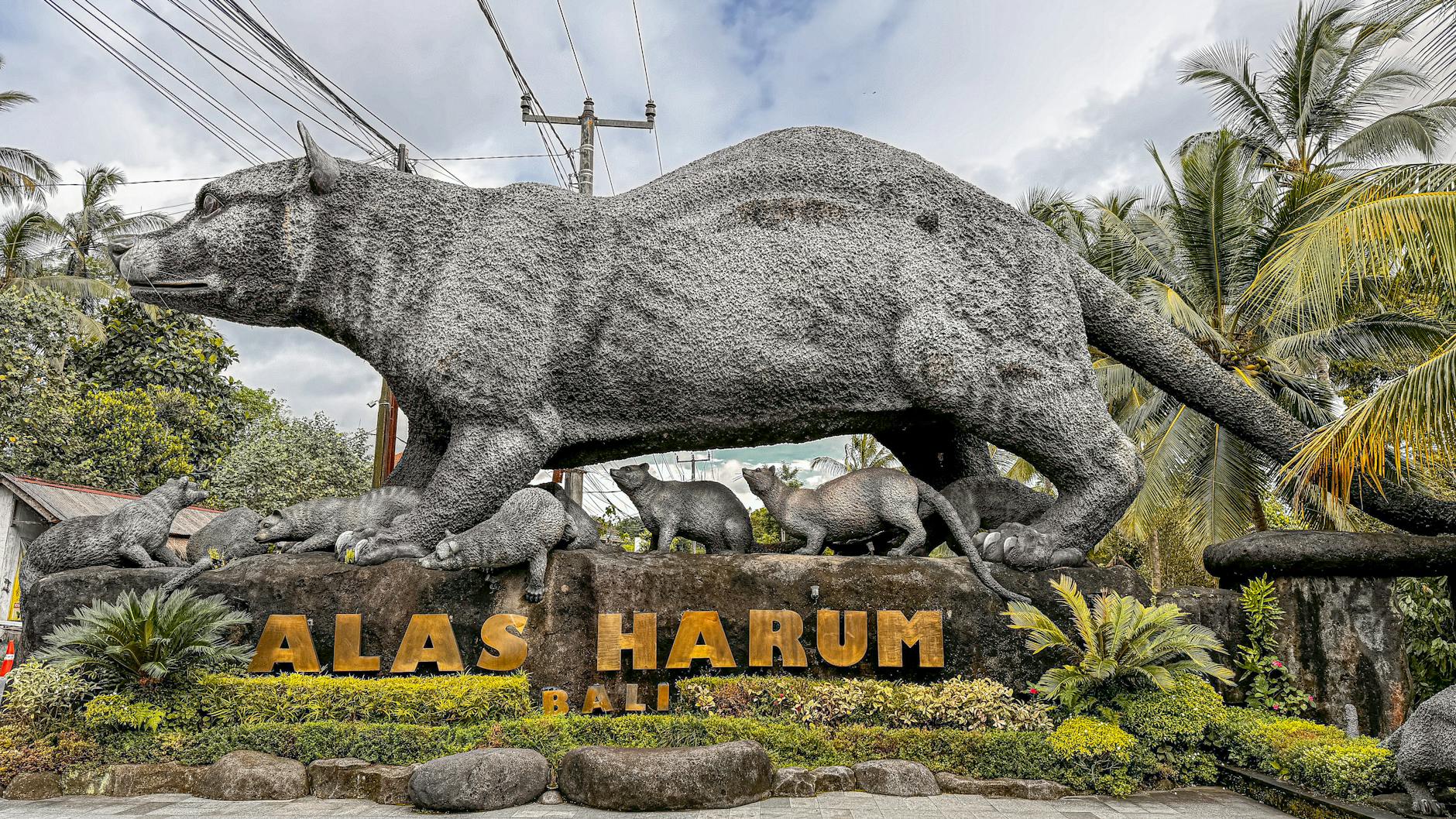
Bali produces some of the world’s most expensive coffee — Kopi Luwak (£30–80/cup) — made from beans eaten and excreted by the Asian palm civet. Ethical sourcing is a concern.
17
Seminyak

Seminyak

Where sunset beach clubs and world-class restaurants define Bali’s glamorous side

18
Seminyak

Seminyak

Bali’s Cosmopolitan Beach Strip

Seminyak is Bali’s most polished beach town: a strip of upscale boutique hotels, designer shops, world-class restaurants, and legendary beach clubs lining a wide grey-sand beach. Sunset here is a daily ritual — crowds gather at beanbag-strewn bars to watch the sky turn orange over the Indian Ocean while DJs spin low-key house music. Seminyak has the best dining scene in Bali, from Indonesian fine dining to international cuisine.

Spend mornings on the beach (the waves are good for beginner surfers), then explore Jalan Laksmana (Eat Street) for boutique shopping and lunch. The beach clubs — Potato Head, Ku De Ta, and Mrs Sippy — are Bali’s social hubs. For dinner, Seminyak has Bali’s finest restaurants: Sarong, Mama San, Merah Putih, and La Lucciola all serve exceptional food.

LOCAL SECRET
Skip the expensive beach clubs and grab a bean bag and a Bintang from one of the local bars on the sand. The sunset is exactly the same — and costs a fraction of the price.
19

Eating & Drinking

Where to eat in Seminyak

Sarong (250,000–400,000 IDR): Bali’s best Asian fusion — the duck curry and soft-shell crab are legendary. Book ahead.

Mama San (150,000–300,000 IDR): Pan-Asian dining in a glamorous colonial warehouse. The dim sum is outstanding.

Nook (40,000–70,000 IDR): Budget gem — cheap Indonesian food on a wooden platform overlooking rice paddies.

Shopping: Jalan Laksmana for designer boutiques, Seminyak Village for high-street brands, and the Seminyak Flea Market (Saturdays) for vintage and artisan goods.

20

Seminyak by the Numbers

93%
Balinese who follow Hinduism
5,780
Square kilometres of the island
1,260
Monkeys in Ubud Monkey Forest
Did You Know?
The Balinese calendar has only 210 days. Every temple on the island celebrates its anniversary (odalan) once every 210 days, meaning on any given day, there are ceremonies happening somewhere on the island.
Seminyak by the Numbers
The subak irrigation system used in Bali’s rice terraces dates back to the 9th century and is a UNESCO World Heritage system of democratic water management.
There are more than 20,000 temples on Bali — at least one in every home, every business, and every village intersection.
21
Canggu

Canggu

Where surf culture, co-working spaces, and rice paddies create Bali’s coolest village

22
Canggu

Canggu

Bali’s Surf & Digital Nomad Capital

Canggu has transformed from a quiet rice-paddy village into Bali’s hippest neighbourhood in under a decade. Surfers, digital nomads, yoga practitioners, and café entrepreneurs have created a village where co-working spaces sit next to rice fields, smoothie bowls cost less than a dollar, and the surf breaks are uncrowded compared to Kuta. The vibe is relaxed and creative — tattoo studios, vintage shops, and vegan restaurants line the main road.

Surf at Echo Beach or Batu Bolong in the morning (beginners welcome — lessons from 350,000 IDR), then grab a smoothie bowl at Crate Café or Shady Shack. Afternoons are for yoga, working from a café, or exploring the rice field walks. Sunset at Old Man’s bar on Batu Bolong Beach is a Canggu ritual. The nightlife has exploded: La Brisa, Finns Beach Club, and the Lawn are packed on weekends.

LOCAL SECRET
Rent a surfboard (50,000 IDR/day) and paddle out at Batu Bolong — the mellow wave is perfect for beginners. Sunset surf sessions are magical.
23

Eating & Drinking

Where to eat in Canggu

Shady Shack (50,000–80,000 IDR): Vegan/vegetarian café in a treehouse setting surrounded by rice paddies. The jackfruit tacos are addictive.

Warung Dandelion (30,000–50,000 IDR): Authentic Balinese food at local prices — the nasi campur is exceptional.

The Slow (150,000–250,000 IDR): Boutique hotel restaurant with wood-fired dishes and a cool industrial interior.

Nightlife: Old Man’s (sunset beers), La Brisa (driftwood beach club), Finns Beach Club (pool parties), and The Lawn (live music on the beach).

24

Canggu by the Numbers

24 hrs
Duration of Nyepi silence
3,142m
Height of Mount Agung
210
Days in the Balinese calendar year
Did You Know?
Balinese babies don’t touch the ground for the first 105 days of life (half a Balinese year). They are considered still divine, and a special ceremony marks their first contact with the earth.
Canggu by the Numbers
Bali’s Hindu faith is unique — it blends Indian Hinduism with animist and Buddhist beliefs found nowhere else on earth.
The ogoh-ogoh effigies paraded before Nyepi can weigh over a tonne and take months to build. After the parade, they’re burned to symbolise the destruction of evil spirits.
25
Uluwatu & Bukit Peninsula

Uluwatu & Bukit Peninsula

Where limestone cliffs, world-class surf, and the Kecak fire dance create Bali’s most dramatic coast

26
Uluwatu & Bukit Peninsula

Uluwatu & Bukit Peninsula

Bali’s Dramatic Southern Tip

The Bukit Peninsula is Bali’s most dramatic landscape: towering limestone cliffs plunge into the Indian Ocean, hiding secret beaches accessible only by steep stairways. Uluwatu sits at the western tip, crowned by one of Bali’s most important sea temples. The peninsula’s surf breaks — Uluwatu, Padang Padang, Bingin, and Dreamland — are world-class and draw surfers from around the globe. Luxury clifftop resorts have made this area Bali’s premier high-end destination.

Visit Uluwatu Temple in the late afternoon to combine the dramatic clifftop temple with the sunset Kecak fire dance (6 PM, 150,000 IDR) — the most spectacular performance in Bali. During the day, descend the cliff steps to Padang Padang Beach (the cove from Eat Pray Love) or Suluban Beach for swimming and surfing. Single Fin bar, perched above the reef break, is the best sunset spot in southern Bali.

LOCAL SECRET
The Kecak fire dance at Uluwatu Temple (6 PM daily) is not just a tourist show — 50 bare-chested men chanting in a trance while the sun sets behind them is genuinely hypnotic.
27

Eating & Drinking

Where to eat in Uluwatu & Bukit Peninsula

Single Fin (80,000–150,000 IDR): Legendary clifftop bar directly above the Uluwatu surf break. Sunday sessions with live music and sunset are unforgettable.

Dugong (100,000–200,000 IDR): Fresh seafood on the cliff edge at Suluban. The grilled fish and sunset views are both exceptional.

El Kabron (200,000–400,000 IDR): Spanish-Mediterranean clifftop restaurant with infinity pool and spectacular ocean panoramas.

Beaches: Padang Padang (famous cove), Bingin (surfer village), Dreamland (wide sand), and Green Bowl (secluded, 300 steps down).

28

Uluwatu & Bukit Peninsula by the Numbers

20,000+
Hindu temples on the island
4.3M
Population of Bali
1,717m
Height of Mount Batur
Did You Know?
Bali’s Nyepi (Day of Silence) is the only day in the world when an entire island’s airport shuts down for 24 hours. No flights land or depart, no vehicles move, no lights are turned on, and everyone — including tourists — must stay indoors.
Uluwatu & Bukit Peninsula by the Numbers
29
Jimbaran

Jimbaran

Where fresh-caught seafood, coconut-husk grills, and Indian Ocean sunsets create Bali’s simplest pleasure

30
Jimbaran

Jimbaran

Bali’s Seafood Sunset Coast

Jimbaran is a fishing village that became famous for one thing: seafood barbecue on the beach at sunset. Every evening, dozens of restaurants set up tables directly on the sand, grill the day’s catch over coconut husks, and serve it as the sun drops into the Indian Ocean. Beyond the beach, Jimbaran retains a quieter, more authentic character than its neighbours, with a traditional morning fish market, family-run warungs, and some of Bali’s best luxury resorts.

Visit the Jimbaran fish market early in the morning (6–8 AM) to see the daily catch arrive on colourful jukung boats. In the afternoon, choose one of the beachfront seafood restaurants (they’re all similar — pick by location, not name) and order grilled snapper, prawns, or lobster by weight. As the sun sets and your seafood arrives, you’ll understand why this simple experience is one of Bali’s most beloved traditions.

LOCAL SECRET
At the Jimbaran beach BBQs, ask for the grilled corn on the cob (jagung bakar) with chilli-lime butter — it’s cheap, delicious, and the perfect starter while you wait for your fish.
31

Eating & Drinking

Where to eat in Jimbaran

Jimbaran Seafood Cafes (200,000–500,000 IDR): Choose your fish fresh, have it grilled on the beach, and eat with your feet in the sand at sunset. Magic.

Sundara (300,000–600,000 IDR): The Four Seasons’ beachfront restaurant. World-class cocktails, infinity pool, and impeccable service.

Rock Bar (200,000–400,000 IDR): Perched on natural rocks at the Ayana Resort. Spectacular sunset cocktails 14 metres above the Indian Ocean.

Luxury: Four Seasons Jimbaran Bay and Ayana Resort are two of Bali’s finest hotels, both with private beaches and world-class spas.

32

Jimbaran by the Numbers

20,000+
Hindu temples on the island
4.3M
Population of Bali
1,717m
Height of Mount Batur
Did You Know?
Bali’s Nyepi (Day of Silence) is the only day in the world when an entire island’s airport shuts down for 24 hours. No flights land or depart, no vehicles move, no lights are turned on, and everyone — including tourists — must stay indoors.
Jimbaran by the Numbers
33
Nusa Penida

Nusa Penida

The Instagram-famous island where T-Rex cliffs meet crystal-clear snorkelling waters

34
Nusa Penida

Nusa Penida

Bali’s Untamed Island

Nusa Penida is the wild, dramatic island off Bali’s southeast coast that’s become Instagram-famous for Kelingking Beach — a cliff shaped like a T-Rex dinosaur plunging into turquoise water. But beyond the famous photo spot, Nusa Penida is an adventure island: rugged cliffs, hidden beaches, crystal-clear natural pools, and some of the best snorkelling in Indonesia (manta rays at Manta Point are almost guaranteed). The island is undeveloped, roads are rough, and that’s the charm.

Take the fast boat from Sanur (30 min, 150,000–200,000 IDR one way) and hire a motorbike or driver on arrival. The western coast has the famous viewpoints: Kelingking Beach, Broken Beach (a natural rock arch), and Angel’s Billabong (a crystal-clear tidal pool). The east coast has Crystal Bay for snorkelling and Atuh Beach for a quieter swim. A full day covers the highlights, but staying overnight lets you enjoy the island without the day-trippers.
LOCAL SECRET
Swim with manta rays at Manta Point — snorkelling trips from Crystal Bay cost 350,000–500,000 IDR and sightings are almost guaranteed year-round. An unforgettable experience.
35

Eating & Drinking

Where to eat in Nusa Penida

Penida Colada (50,000–90,000 IDR): Cliff-edge café near Kelingking Beach with stunning views and fresh coconuts.

Amok Sunset Bar (60,000–120,000 IDR): Relaxed bar on Crystal Bay with live music and spectacular sunsets.

Local warungs (25,000–40,000 IDR): Simple but authentic Indonesian food. The nasi goreng and mie goreng are filling and cheap.

Snorkelling: Crystal Bay (reef fish and turtles), Manta Point (manta rays), and Gamat Bay (coral gardens). Bring your own mask for the best experience.

36

Nusa Penida by the Numbers

20,000+
Hindu temples on the island
4.3M
Population of Bali
1,717m
Height of Mount Batur
Did You Know?
Bali’s Nyepi (Day of Silence) is the only day in the world when an entire island’s airport shuts down for 24 hours. No flights land or depart, no vehicles move, no lights are turned on, and everyone — including tourists — must stay indoors.
Nusa Penida by the Numbers
37
Sanur

Sanur

Where Bali’s tourism began and still offers the island’s most relaxed beach experience

38
Sanur

Sanur

Bali’s Relaxed Old Guard

Sanur is the antidote to Kuta’s chaos. This east-coast beach town was Bali’s first tourist destination (the Grand Bali Beach Hotel opened in 1966) and has aged gracefully into a calm, family-friendly alternative to the south coast. A paved beachfront promenade stretches 5 km along a sheltered beach perfect for swimming (no big waves), and the town retains a village atmosphere with local warungs, morning markets, and traditional art galleries.

Walk or cycle the beachfront promenade at sunrise — it’s flat, car-free, and beautifully maintained. The calm, shallow water makes Sanur perfect for families with small children. Visit the Museum Le Mayeur (former home of Belgian painter Adrien-Jean Le Mayeur, married to a Balinese Legong dancer) and browse the traditional art along Jalan Tamblingan. Sanur is also the departure point for fast boats to Nusa Penida and Nusa Lembongan.

LOCAL SECRET
Sanur Night Market (Pasar Sindhu, 5–10 PM daily) is the best place to eat like a local. Grilled corn, satay, nasi goreng, and martabak for 15,000–30,000 IDR.
39

Eating & Drinking

Where to eat in Sanur

Warung Mak Beng (35,000 IDR): Legendary local warung serving one dish only — fried fish with rice, sambal, and soup. The queue is the recommendation.

Three Monkeys Café (80,000–140,000 IDR): Beautiful garden restaurant with creative Indonesian-fusion dishes.

Genius Café (50,000–80,000 IDR): Healthy organic food in a peaceful garden. The smoothie bowls are outstanding.

Families: Calm shallow water, no big waves, beachfront cycling, and Bali Kite Festival (July–August) with massive traditional kites launched from Sanur’s beach.

40

Sanur by the Numbers

20,000+
Hindu temples on the island
4.3M
Population of Bali
1,717m
Height of Mount Batur
Did You Know?
Bali’s Nyepi (Day of Silence) is the only day in the world when an entire island’s airport shuts down for 24 hours. No flights land or depart, no vehicles move, no lights are turned on, and everyone — including tourists — must stay indoors.
Sanur by the Numbers
41
Sidemen & East Bali

Sidemen & East Bali

The Bali postcard come to life — rice terraces, volcanoes, and the warmth of village life

42
Sidemen & East Bali

Sidemen & East Bali

Bali’s Untouched Valley

Sidemen Valley is the Bali you dreamed of before you arrived: emerald rice terraces climbing hillsides, Mount Agung towering overhead, village ceremonies with gamelan orchestras, and almost no other tourists. East Bali has been slower to develop than the south, and that’s its gift. The pace is gentle, the people are warm, and the landscape is Bali at its most jaw-droppingly beautiful. Homestays here cost as little as 200,000 IDR/night with breakfast.

Base yourself in Sidemen for two nights to truly decompress. Wake early to watch the mist lift from the rice terraces as farmers begin their day. Trek through the paddies to nearby villages, take a Balinese cooking class at a family compound, and visit Besakih (the Mother Temple) on Mount Agung’s slopes. For adventure, continue east to Amed for snorkelling or Tulamben to dive the WWII shipwreck.

LOCAL SECRET
Stay in a family-run homestay rather than a hotel. You’ll eat home-cooked Balinese food, learn about daily offerings and ceremonies, and support the local economy directly.
43

Eating & Drinking

Where to eat in Sidemen & East Bali

Warung Padang Kencana (25,000–40,000 IDR): Simple warung with the best view in Sidemen — Mount Agung framed by rice terraces.

Samanvaya Resort Restaurant (100,000–200,000 IDR): Organic farm-to-table dining overlooking the valley. The tasting menu uses ingredients from their own gardens.

Amed Beach Warungs (30,000–60,000 IDR): Fresh grilled fish on the black-sand beach with volcano views.

Diving: Tulamben’s USAT Liberty shipwreck (1942) sits in 5–30m of water, encrusted with coral and teeming with fish. One of the world’s most accessible wreck dives.

44

Sidemen & East Bali by the Numbers

20,000+
Hindu temples on the island
4.3M
Population of Bali
1,717m
Height of Mount Batur
Did You Know?
Bali’s Nyepi (Day of Silence) is the only day in the world when an entire island’s airport shuts down for 24 hours. No flights land or depart, no vehicles move, no lights are turned on, and everyone — including tourists — must stay indoors.
Sidemen & East Bali by the Numbers
45
Kintamani & Highlands

Kintamani & Highlands

Where a pre-dawn volcano climb rewards you with Bali’s most spectacular sunrise

46
Kintamani & Highlands

Kintamani & Highlands

Bali’s Volcanic Heart

The Kintamani highlands offer Bali’s most dramatic scenery: the active volcano Mount Batur (1,717m) rises from a vast caldera lake, its black lava fields contrasting with the emerald crater rim. This is the spiritual and geographical centre of the island — water from Batur’s crater lake feeds the springs and subak irrigation system that sustains Bali’s rice terraces below. The pre-dawn trek to Batur’s summit for sunrise is one of Bali’s defining experiences.

The sunrise trek starts at 3:30 AM from Toya Bungkah village. Guides are mandatory (local regulation) and the 2-hour climb follows a well-worn path to the summit, where you’ll watch the sun rise over Mount Agung and Lake Batur while your guide cooks banana sandwiches on volcanic steam vents. After descending, soak in the hot springs at Toya Devasya. The rim-road drive between Kintamani and Penelokan offers stunning caldera views.

LOCAL SECRET
Book your Mount Batur trek through your hotel or a reputable agency (not touts). The official association sets fixed prices. Bring warm layers — it’s cold at 1,717m before dawn.
47

Eating & Drinking

Where to eat in Kintamani & Highlands

Kintamani Ridge Restaurants (60,000–120,000 IDR): Several restaurants line the crater rim with buffet lunches and jaw-dropping views of Batur and the lake below.

Toya Devasya (150,000 IDR entry): Natural hot springs on the shore of Lake Batur. Perfect post-trek recovery with volcanic views.

Lakeview Restaurant (50,000–90,000 IDR): Simple food with extraordinary panoramic views of the caldera from Penelokan village.

Beyond Batur: Penglipuran Village (one of Bali’s cleanest traditional villages, 30,000 IDR), and Kehen Temple (beautifully carved 11th-century temple in Bangli).

48

Kintamani & Highlands by the Numbers

20,000+
Hindu temples on the island
4.3M
Population of Bali
1,717m
Height of Mount Batur
Did You Know?
Bali’s Nyepi (Day of Silence) is the only day in the world when an entire island’s airport shuts down for 24 hours. No flights land or depart, no vehicles move, no lights are turned on, and everyone — including tourists — must stay indoors.
Kintamani & Highlands by the Numbers
49
Lovina & North Bali

Lovina & North Bali

The quiet coast where dolphins play at sunrise and waterfalls hide in highland jungles

50
Lovina & North Bali

Lovina & North Bali

Bali’s Quiet North Coast

North Bali is the island’s forgotten coast — and that’s exactly why you should visit. Lovina, the main town, has black-sand beaches, calm waters, and none of the crowds that overwhelm the south. The north coast was Bali’s original tourist destination before Kuta took over, and it retains a sleepy, authentic character. Dolphin-watching boat trips at sunrise, hot springs in the hills, and some of Bali’s most impressive waterfalls make this the perfect antidote to southern Bali’s intensity.

Take a sunrise dolphin-watching trip (6 AM, 150,000 IDR) from Lovina’s black-sand beach. After breakfast, drive into the hills to Banjar Hot Springs (natural volcanic pools in a lush jungle setting, 20,000 IDR) and the spectacular Sekumpul Waterfall — often called Bali’s most beautiful. Visit Brahma Vihara Arama, Bali’s only Buddhist monastery, for its peaceful gardens and mountain views.

LOCAL SECRET
Sekumpul Waterfall (50,000 IDR + 10,000 parking) is Bali’s most spectacular — twin falls plunging into a jungle gorge. The walk down is steep (30 minutes) but the reward is extraordinary.
51

Eating & Drinking

Where to eat in Lovina & North Bali

Jasmine Kitchen (40,000–70,000 IDR): The best restaurant in Lovina — Thai and Indonesian food in a lantern-lit garden.

Sea Breeze (50,000–90,000 IDR): Beachfront restaurant with fresh seafood, cold beers, and sunset views over the Bali Sea.

Warung Apple (25,000–45,000 IDR): Local favourite for authentic Balinese food at local prices.

Diving: Menjangan Island (40 min by boat) has Bali’s best wall diving — crystal visibility, untouched coral, and no crowds. Pemuteran Bay also has excellent snorkelling.

52

Lovina & North Bali by the Numbers

20,000+
Hindu temples on the island
4.3M
Population of Bali
1,717m
Height of Mount Batur
Did You Know?
Bali’s Nyepi (Day of Silence) is the only day in the world when an entire island’s airport shuts down for 24 hours. No flights land or depart, no vehicles move, no lights are turned on, and everyone — including tourists — must stay indoors.
Lovina & North Bali by the Numbers
53
Tabanan & West Bali

Tabanan & West Bali

Where UNESCO rice terraces and sea temples showcase Bali’s agricultural and spiritual heritage

54
Tabanan & West Bali

Tabanan & West Bali

Rice Terraces & Sacred Temples

Tabanan regency is Bali’s rice bowl — vast green terraces stretching from the highlands to the coast, watered by the ancient subak irrigation system that UNESCO declared a World Heritage landscape. The famous Jatiluwih terraces are here, along with two of Bali’s most important temples: Tanah Lot (the sea temple) and Pura Luhur Batukaru (the jungle temple). West Bali National Park, covering the island’s northwestern tip, protects the last habitat of the critically endangered Bali starling.

Visit Jatiluwih rice terraces early morning — they’re far less crowded than Tegallalang and equally stunning. The cycling and walking paths through the paddies are well-maintained. Continue to Tanah Lot for sunset — the sea temple perched on its rocky islet, silhouetted against the orange sky, is Bali’s most photographed scene. For adventure, drive further west to Balian Beach (a quiet surf village) or explore West Bali National Park.

LOCAL SECRET
Jatiluwih is best explored by bicycle. Rent one at the entrance (50,000 IDR/hour) and pedal through the terraces on marked paths that wind between rice paddies and palm trees.
55

Eating & Drinking

Where to eat in Tabanan & West Bali

Tanah Lot restaurants (60,000–120,000 IDR): Several warungs and cafés near the temple with ocean views. Best at sunset.

Jatiluwih warung (30,000–50,000 IDR): Simple local food surrounded by UNESCO-listed rice terraces. The setting alone is worth the visit.

Sushi Tei Tanah Lot (80,000–150,000 IDR): Surprisingly good Japanese food with temple and ocean views.

Nature: West Bali National Park offers jungle treks, birdwatching (Bali starling), and snorkelling at Menjangan Island. Entry 60,000 IDR plus guide fees.

56

Tabanan & West Bali by the Numbers

20,000+
Hindu temples on the island
4.3M
Population of Bali
1,717m
Height of Mount Batur
Did You Know?
Bali’s Nyepi (Day of Silence) is the only day in the world when an entire island’s airport shuts down for 24 hours. No flights land or depart, no vehicles move, no lights are turned on, and everyone — including tourists — must stay indoors.
Tabanan & West Bali by the Numbers
57
Munduk & Central Highlands

Munduk & Central Highlands

Bali’s cool mountain village where waterfalls, coffee plantations, and crater lakes await

58
Munduk & Central Highlands

Munduk & Central Highlands

Bali’s Mountain Retreat

Munduk is Bali’s cool mountain retreat — a highland village at 800m where the air is fresh, the forests are thick, and waterfalls tumble through coffee and clove plantations. This is old Bali: no beach clubs or Instagram cafés, just hiking trails, colonial-era Dutch architecture, stunning crater lakes (Tamblingan and Buyan), and homestays where the owner serves you fresh coffee from trees growing outside your window.

Hike from Munduk village to the twin waterfalls — Munduk Waterfall and Red Coral Waterfall — through clove and coffee plantations (1.5 hours round trip). Drive to the viewpoint overlooking the twin lakes of Tamblingan and Buyan, then walk the meditation path through Tamblingan’s forest temple. Visit a coffee plantation to learn about (and taste) Balinese arabica, robusta, and the controversial kopi luwak.

LOCAL SECRET
Stay overnight in Munduk — the highland cool (15–22°C) is a welcome break from the coast, and the morning mist over the lakes and plantations is ethereal.
59

Eating & Drinking

Where to eat in Munduk & Central Highlands

Ngiring Ngewedang (40,000–70,000 IDR): Mountain-view café overlooking rice terraces and lake. The coffee is grown on-site.

Don Biyu (60,000–120,000 IDR): Elegant restaurant at the Munduk Moding Plantation. Farm-to-table dining with highland views.

Warung Classic (25,000–40,000 IDR): Local warung with comfort food and mountain atmosphere. The bakso soup is perfect for cool evenings.

Treks: Munduk Waterfall (easy, 30 min), Lake Tamblingan forest temple trek (moderate, 2 hrs), and Mount Tapak sunrise hike (challenging, 3 hrs). Guides available.

60

Munduk & Central Highlands by the Numbers

20,000+
Hindu temples on the island
4.3M
Population of Bali
1,717m
Height of Mount Batur
Did You Know?
Bali’s Nyepi (Day of Silence) is the only day in the world when an entire island’s airport shuts down for 24 hours. No flights land or depart, no vehicles move, no lights are turned on, and everyone — including tourists — must stay indoors.
Munduk & Central Highlands by the Numbers
61
05

Food Guide

What to eat and where to find it

Balinese cuisine is bold, complex, and utterly addictive. Built on a foundation of rice, coconut, chilli, and an intricate spice paste called bumbu (up to 20 ingredients ground by hand), it’s sharper and more aromatic than the food of neighbouring Java. The island’s Hindu culture means pork is celebrated here (unlike most of Indonesia), and babi guling (spit-roast suckling pig) is the island’s signature dish. The best food is found at simple warungs (family restaurants), not fancy tourist restaurants.

Babi Guling (40,000–70,000 IDR): Bali’s iconic dish: whole suckling pig stuffed with spices and slow-roasted over coals until the skin crackles. Best at Ibu Oka, Ubud.

Nasi Campur (25,000–45,000 IDR): Mixed rice: a mound of rice surrounded by small portions of meat, vegetables, sambal, peanuts, and egg. Every warung’s staple.

Satay (Sate) (20,000–40,000 IDR): Skewered and grilled meat (chicken, pork, or fish) served with peanut sauce. Sate lilit (Balinese minced fish satay) is unique to the island.

Lawar (15,000–25,000 IDR): Ceremonial dish of minced meat, coconut, and spices, sometimes mixed with fresh blood. Rich, complex, and utterly Balinese.

Bebek Betutu (60,000–120,000 IDR): Whole duck stuffed with spice paste, wrapped in banana leaves, and slow-cooked for up to 24 hours. Rich and aromatic.

Nasi Goreng (20,000–40,000 IDR): Indonesia’s national fried rice: wok-fried with kecap manis, garlic, shallots, and topped with a fried egg and prawn crackers.

Pisang Goreng (5,000–15,000 IDR): Deep-fried banana fritters, crispy outside and soft inside. Best from a street cart, dusted with sugar.

Es Campur (10,000–20,000 IDR): Shaved ice dessert with coconut, jelly, sweet beans, fruit, and condensed milk. The ultimate tropical refreshment.

62

Where to Eat

Best restaurants, markets, and street food

Top Restaurants

Locavore (800,000+ IDR): Ubud’s famous restaurant uses only Indonesian ingredients in a creative tasting menu. Two Michelin-recognized. Book weeks ahead.

Sarong (250,000–400,000 IDR): Seminyak’s best — refined Asian cuisine in a stunning colonial setting. The duck curry is legendary.

Ibu Oka (40,000–60,000 IDR): Anthony Bourdain’s favourite babi guling. Simple, no-frills, and extraordinary. Go at 11 AM.

Mozaic (600,000+ IDR): Ubud’s fine dining pioneer. French-Indonesian tasting menus in a tropical garden.

Street Food & Markets

Gianyar Night Market (Gianyar): Bali’s best night market for authentic local food — babi guling, satay, lawar, and sweet martabak.

Ubud Market food stalls (Ubud): Behind the main art market, cheap warungs serve nasi campur, bakso, and fresh juices from 10,000 IDR.

Sanur Night Market (Pasar Sindhu): Evening food stalls serving grilled corn, satay, nasi goreng, and Balinese desserts from 15,000 IDR.

FOODIE TIP
Eat at warungs (local family restaurants) for the best food at the lowest prices. If locals are eating there, it’s good and it’s safe. Tourist restaurants charge 3–5x more for inferior food.
63

Food by the Numbers

20
Spices in babi guling bumbu paste
25,000 IDR
Average warung meal cost
1966
Year Ibu Oka’s babi guling warung opened
Did You Know?
Babi guling (roast suckling pig) is Bali’s most sacred festive food, prepared for temple ceremonies, weddings, and tooth-filing rituals. The spice paste rubbed inside uses up to 20 ingredients including lemongrass, galangal, turmeric, and coriander seeds.
Food by the Numbers
Food by the Numbers
Food by the Numbers
Bali’s Hindu faith is unique — it blends Indian Hinduism with animist and Buddhist beliefs found nowhere else on earth.
The ogoh-ogoh effigies paraded before Nyepi can weigh over a tonne and take months to build. After the parade, they’re burned to symbolise the destruction of evil spirits.
64
06

History

Understanding the story of Bali

Bali’s recorded history begins with the arrival of Hindu Javanese influence around the 1st century AD, though archaeological evidence suggests habitation since 2000 BC. The island flourished under the Majapahit Empire (1293–1527), and when that Hindu-Buddhist kingdom fell to Islam, Bali became the refuge for Javanese priests, artists, and nobles who brought their culture, dance, and religion. This is why Bali is Hindu in a Muslim-majority nation — it’s the last living repository of Java’s Hindu-Buddhist civilisation.

65

Culture & Identity

The Dutch colonial period (1849–1942) brought conflict and tragedy: the puputan (ritual mass suicides) of 1906 and 1908 saw Balinese royalty march into Dutch gunfire rather than surrender. Japanese occupation during WWII was followed by Indonesian independence (1945) and the devastating anti-communist purges of 1965–66, when an estimated 80,000 Balinese were killed. Modern tourism began in the 1970s and transformed the island’s economy. Today, Bali balances its sacred traditions with the pressures of mass tourism, environmental challenges, and a rapidly modernising economy.

Culture & People

Balinese culture is inseparable from religion. The Hindu-Balinese faith (Agama Hindu Dharma) pervades every aspect of daily life: offerings are placed three times daily, temple ceremonies happen constantly, and the Balinese calendar determines auspicious days for everything from planting rice to building houses. Dance and music are sacred arts — the Legong, Barong, and Kecak are performed at temples, not theatres. The subak rice terrace system is both agricultural and spiritual, with each irrigation cooperative having its own water temple.

Cultural Etiquette
Dress modestly at temples (sarong and sash required, available at entrances). Don’t touch people’s heads. Don’t point with your foot. Don’t step on offerings. Ask before photographing ceremonies. Don’t enter temples during menstruation.
66
07

Day Trips

Excursions from Bali

Bali’s small size means most of the island is within day-trip range. Fast boats also connect to neighbouring islands.

Nusa Lembongan (30 min by fast boat)

Tiny island with crystal-clear snorkelling, mangrove tours, and the Instagram-famous Devil’s Tear blowhole. Entry: 150,000–200,000 IDR (boat)

Gili Islands (2.5 hrs by fast boat)

Three car-free islands off Lombok with turquoise water, sea turtles, and a castaway atmosphere. Best as an overnight trip. Entry: 600,000–900,000 IDR (boat)

Mount Agung (East Bali (3,142m))

Bali’s highest and holiest volcano. The sunrise trek (5–7 hours up) is challenging but the views from the summit are otherworldly. Entry: 800,000–1,200,000 IDR (with guide)

Munduk Waterfalls (2 hours north)

Highland village with twin waterfalls, coffee plantations, and the twin crater lakes of Tamblingan and Buyan. Entry: 20,000–30,000 IDR

67
Bali day trip
Getting There
Nusa Penida/Lembongan: Fast boats from Sanur (30 min). Gili Islands: Fast boat from Padang Bai (2.5 hrs). Mount Agung: Private driver + local guide (mandatory). Munduk: Private driver (2 hrs from south Bali). Book boats through your hotel or Klook.
68
08

Directory A–Z

Practical information from A to Z

Alcohol

Beer (Bintang, Bali Hai) is widely available. Arak is the local spirit — drink only from trusted sources (methanol poisoning from bad arak kills tourists every year).

ATMs

Widespread in south Bali and Ubud. Less common in rural areas. BCA and Mandiri ATMs are most reliable. Maximum withdrawal usually 2,500,000 IDR.

Clinics

BIMC Hospital (Kuta and Nusa Dua) is the best private hospital. Carry travel insurance — hospital bills must be paid upfront.

Electricity

230V/50Hz, Type C/F plugs (two round pins). Same as Europe. Power cuts are rare but happen in rural areas.

Internet

Wi-Fi in most hotels and cafés. Buy a local SIM (Telkomsel recommended) at the airport for 50,000–100,000 IDR with data.

LGBTQ+

Indonesia does not criminalise homosexuality, but attitudes are conservative. Bali is more tolerant than other islands. Discretion is advisable.

Monkeys

Ubud Monkey Forest macaques will grab food, sunglasses, and phones. Secure valuables and don’t carry food.

69

Pharmacies

Apotek pharmacies in most towns. Guardian and Kimia Farma are reliable chains. Many medications available without prescription.

Pollution

Plastic waste is a serious issue on beaches, especially in wet season. Some beaches have cleanup programs.

Scooters

Rent from 70,000–100,000 IDR/day. International driving permit technically required. Wear a helmet — head injuries are the leading cause of tourist deaths in Bali.

Smoking

Common in Indonesia. No comprehensive indoor smoking ban. Restaurants may have smoking sections.

Taxes

Most restaurants add 10% government tax + 5–10% service charge. Check the menu for “++” pricing.

Tipping

Not expected but appreciated. 10,000–20,000 IDR for good service. Drivers and guides expect 50,000–100,000 IDR/day.

Water

Do NOT drink tap water. Bottled water everywhere (5,000 IDR). Refill stations reduce plastic waste.

Visa

Visa on arrival ($35 USD, 30 days, extendable once for 30 days). Pay in USD at the airport counter.

70

Transport

Getting to and around Bali

From Ngurah Rai Airport (DPS): Official airport taxi counter inside arrivals — fixed prices to all areas. Grab is available outside the airport grounds. Avoid unofficial touts.

Within Bali: Hire a private driver (£25–35/day) for the best experience. Grab/Gojek for short trips. Motorbike for the adventurous (70,000 IDR/day). Bali has no train system or reliable public buses.

ModeDetailsCost
MotorbikeThe quintessential Bali transport. Rent from 70,000–100,000 IDR/day. International driving permit technically required. Wear a helmet.70,000–100,000 IDR/day
Grab / GojekRide-hailing apps covering most of Bali. Much cheaper and more reliable than taxis. Not always available in very rural areas.15,000–80,000 IDR/ride
Private DriverHire a driver for a full day of sightseeing. Comfortable, knowledgeable, and surprisingly affordable.500,000–700,000 IDR/day
Blue Bird TaxiThe only reliable metered taxi company in Bali. Look for the blue bird logo and insist on the meter.7,000 IDR/km
Shuttle BusPerama and Kura-Kura buses connect major tourist areas (Kuta–Ubud–Sanur–Lovina).50,000–150,000 IDR
TRANSPORT TIP
Hiring a private driver for a full day (500,000–700,000 IDR / £25–35) is Bali’s best-value transport option. They know the roads, can navigate narrow village lanes, and double as guides.
71

Language

Essential phrases for travelers

Bahasa Indonesia is the national language and widely spoken. Balinese is the local language used among family and in ceremonies. English is common in tourist areas but basic Indonesian phrases are appreciated and useful in rural Bali.

EnglishIndonesian / Balinese
HelloHalo
Good morningSelamat pagi
Thank youTerima kasih
PleaseTolong / Silakan
GoodbyeSelamat tinggal
Yes / NoYa / Tidak
How much?Berapa harganya?
Too expensiveTerlalu mahal
Where is...?Di mana...?
DeliciousEnak sekali
WaterAir
Sorry / Excuse mePermisi / Maaf
BeautifulCantik / Bagus
No problemTidak apa-apa
Bill, pleaseMinta bon
Language Note
Learning “Terima kasih” (thank you) and “Selamat pagi” (good morning) will earn you warm smiles throughout Bali.
72

Top 10 Picks

Our favourite experiences in Bali

Best Sunrise

Mount Batur Summit

Watch the sun rise over Lake Batur and Mount Agung from the summit of an active volcano

Best Sunset

Uluwatu Temple

The clifftop temple silhouetted against the orange sky during the Kecak fire dance

Best Food

Ibu Oka, Ubud

Anthony Bourdain’s favourite babi guling — crackling skin, spiced meat, and legendary sambal

Best Street Food

Gianyar Night Market

Bali’s best night market for authentic babi guling, satay, and sweet martabak

Best Luxury

Four Seasons Sayan

Floating lotus pond above the Ayung River valley — Bali’s most dramatic luxury resort

Best History

Besakih Mother Temple

23 temples on the slopes of Mount Agung — Bali’s holiest site

Best Hidden Gem

Sidemen Valley

The most beautiful rice terraces in Bali with almost no tourists

Best Photo

Tegallalang Rice Terraces

Cascading emerald paddies at sunrise — arrive before 7 AM for golden light without crowds

Best Shopping

Ubud Art Market

Handcrafted batik, wood carvings, silver jewellery, and paintings at bargain prices

Best Free Experience

Temple Ceremony

Stumble upon a village procession with gamelan music, flower offerings, and elaborate costumes

73

Packing List

Everything you need for Bali

Essentials

☐ Passport (6+ months validity)
☐ USD for visa on arrival ($35)
☐ Travel insurance with motorbike cover
☐ Sarong for temples (or buy locally)
☐ Reef-safe sunscreen

Clothing

☐ Light, breathable clothing
☐ Swimwear (multiple)
☐ Hiking shoes (for volcano trek)
☐ Rain jacket or poncho (wet season)
☐ Cover-up for temples (shoulders & knees)

Health & Comfort

☐ Strong insect repellent (DEET)
☐ Prescription medications
☐ Anti-diarrhoea tablets
☐ Reef shoes (for rocky beaches)
☐ First-aid kit for motorbike scrapes

Before You Go

☐ Book Locavore 2–4 weeks ahead
☐ Arrange Mount Batur trek
☐ Download Grab app
☐ Buy travel insurance with motorbike cover
☐ Check Nyepi dates if visiting in March
PACKING TIP
Pack light — laundry services are everywhere (10,000–15,000 IDR/kg, returned same day). Sarongs can be bought at any temple entrance. Bring reef-safe sunscreen to protect Bali’s fragile coral.
74

About This Guide

About Travorea

Travorea creates comprehensive, beautifully designed travel guides that combine insider knowledge with practical information. Our guides are crafted to help you experience destinations like a local, not just a tourist.

This Guide

This premium guide to Bali was researched and written to give you everything you need for an unforgettable trip. All prices and information were verified at the time of writing (2026) but may change — always confirm locally.

Photography

All photographs in this guide are sourced from free-to-use image libraries (Pexels, Unsplash) and original Travorea photography. Infographics are original Travorea creations.

Image Credits

Explore More Guides

Visit www.travorea.com/ebooks for premium guides to 50+ destinations worldwide.

75
Travorea

Bali

Island of the Gods

• Sacred Temples
• Rice Terraces
• Surf & Beaches
• Ubud Arts
• Hindu Culture
2026 Edition | www.travorea.com
© 2026 Dreamadsdigital. All rights reserved. Content may not be reproduced without permission.