The Pink City
Where royal palaces painted in terracotta pink line every boulevard
The Pink City
Jaipur is India at its most regal — a city conceived in 1727 by astronomer-king Sawai Jai Singh II with mathematical precision, then painted in terracotta pink to welcome Prince Albert in 1876. Today, the Pink City straddles two worlds: within the old walled city, elephants still plod past havelis and bazaars overflow with block-printed textiles, blue pottery, and silver jewellery. Step outside, and modern Jaipur buzzes with tech startups, craft cocktail bars, and boutique hotels set in restored palaces.
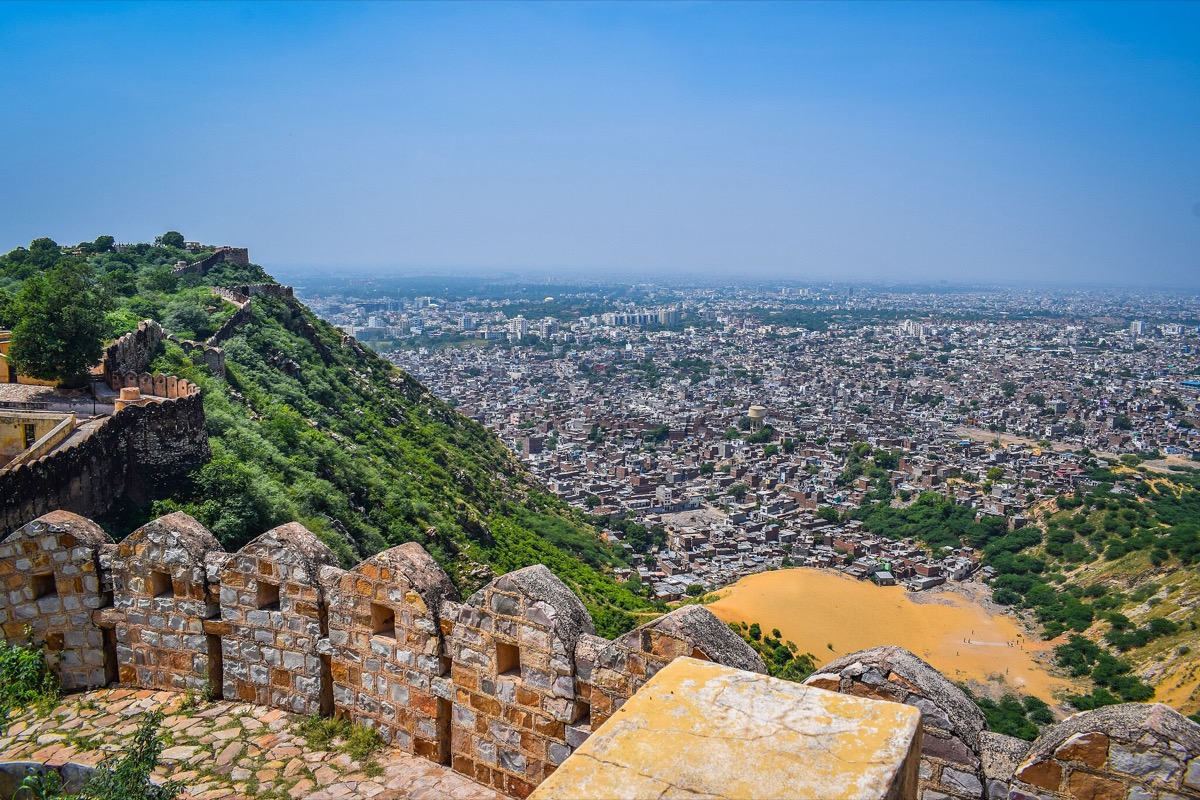
The Golden Triangle's crown jewel rewards those who venture beyond the headline forts. Lose yourself in the labyrinthine lanes of Johari Bazaar, where gem dealers have traded rubies and emeralds for centuries. Watch the sunset from Nahargarh Fort as the city below turns amber. And discover that Jaipur's food scene — from fiery laal maas to sweet ghevar — is one of India's most underrated.
Jaipur
India's first planned city and capital of Rajasthan, Jaipur is a UNESCO World Heritage City known for its distinctive pink architecture, imposing hilltop forts, and vibrant artisan traditions. It forms one point of the Golden Triangle with Delhi and Agra.
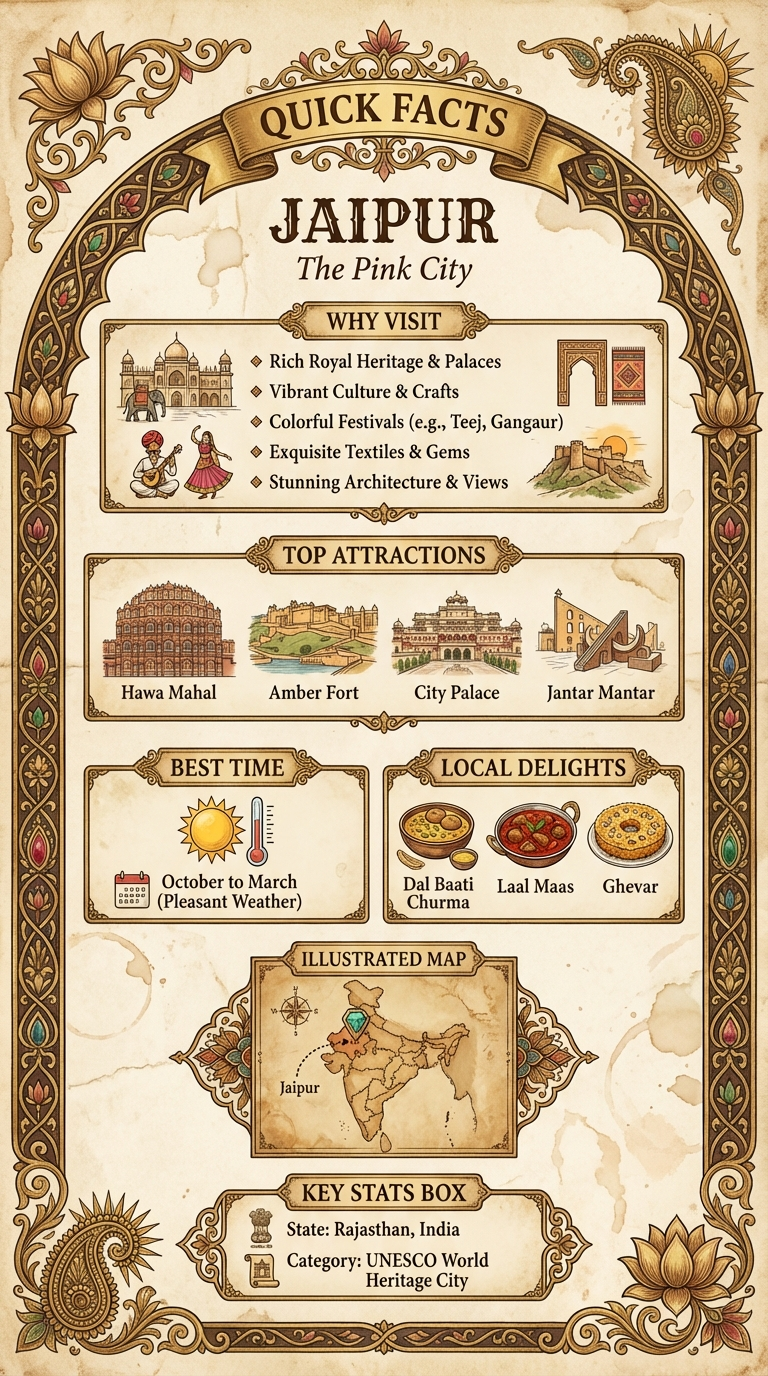
The essential sights and experiences
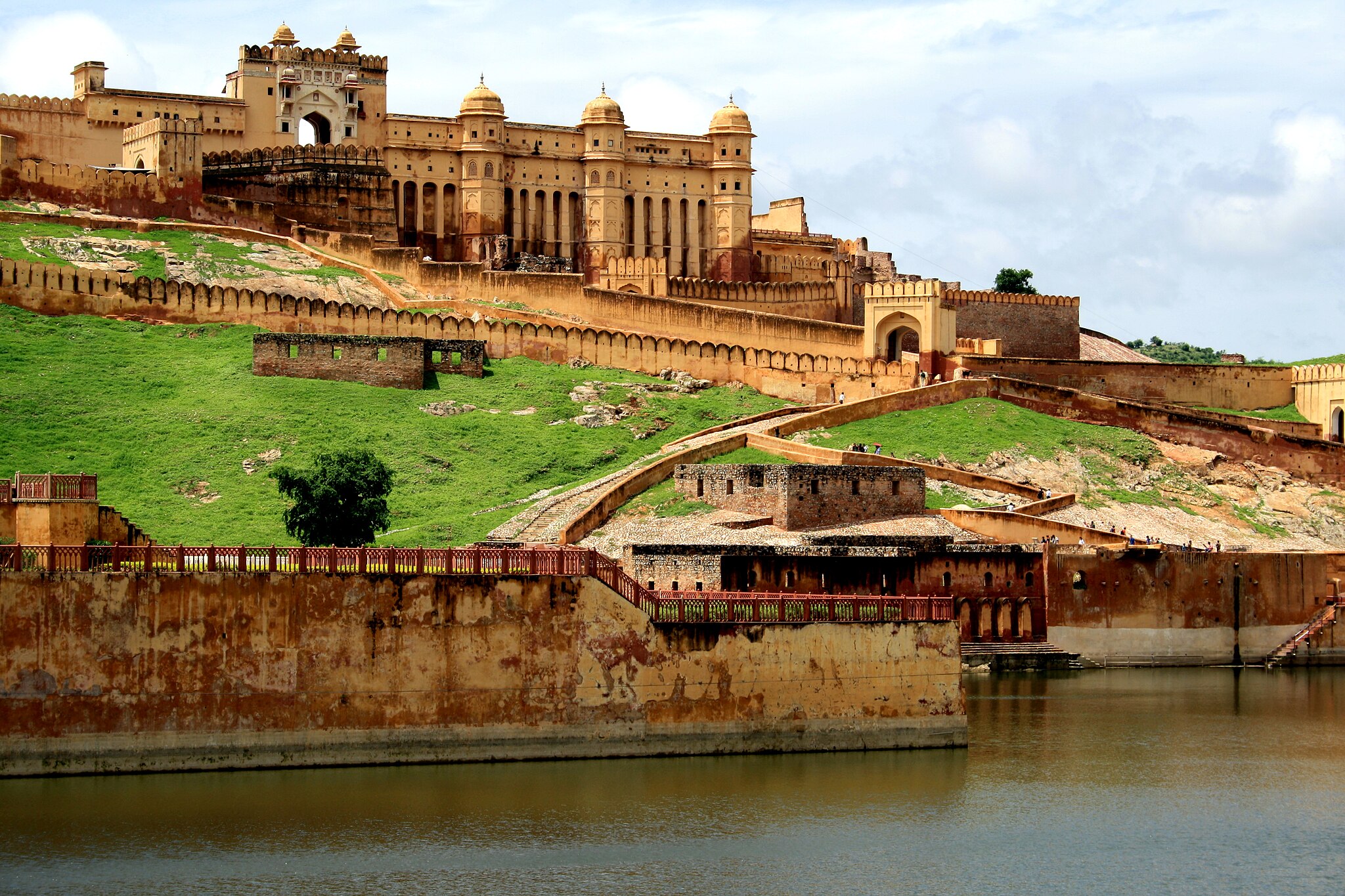
Devisinghpura, 11 km north | ₹100/₹500
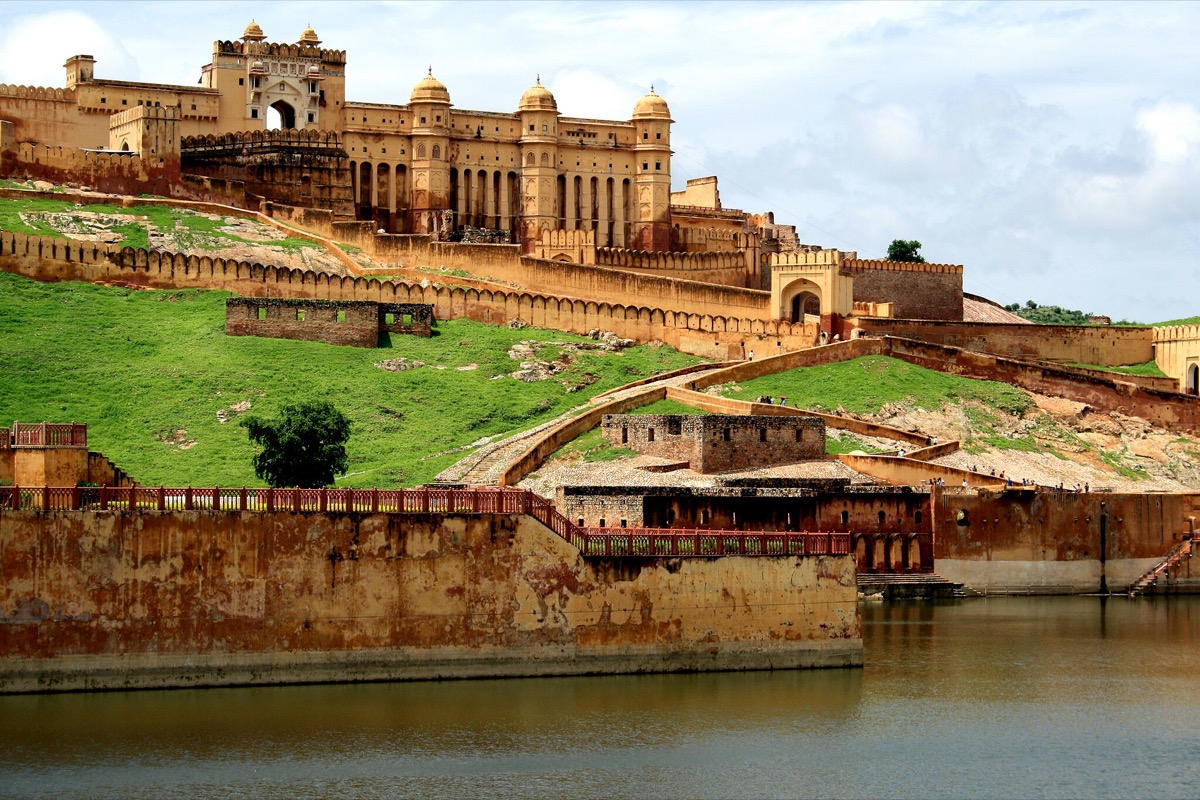
Majestic hilltop fort-palace with the stunning Sheesh Mahal (Mirror Palace). Built 1592. Take the 4x4 up, walk down.
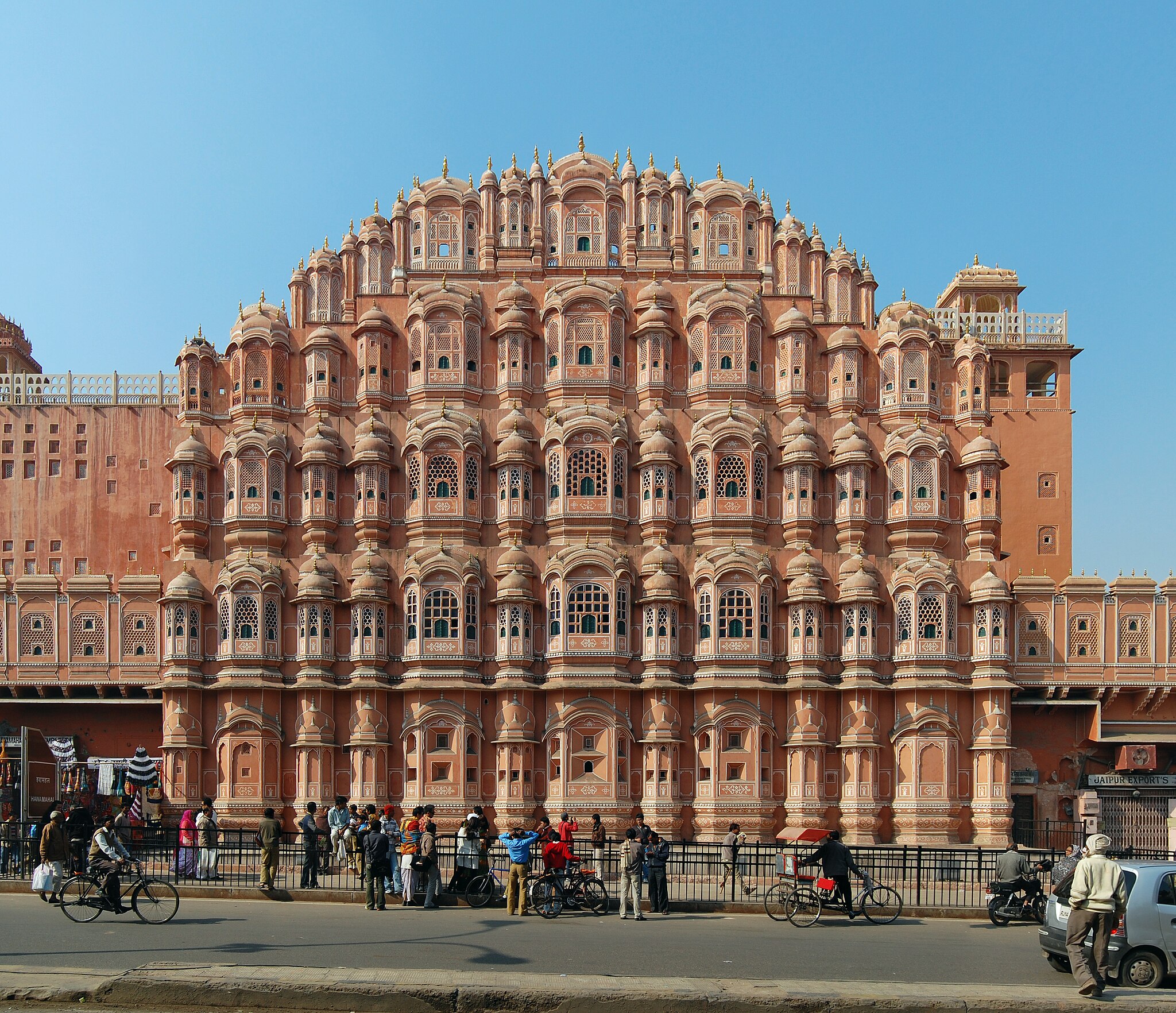
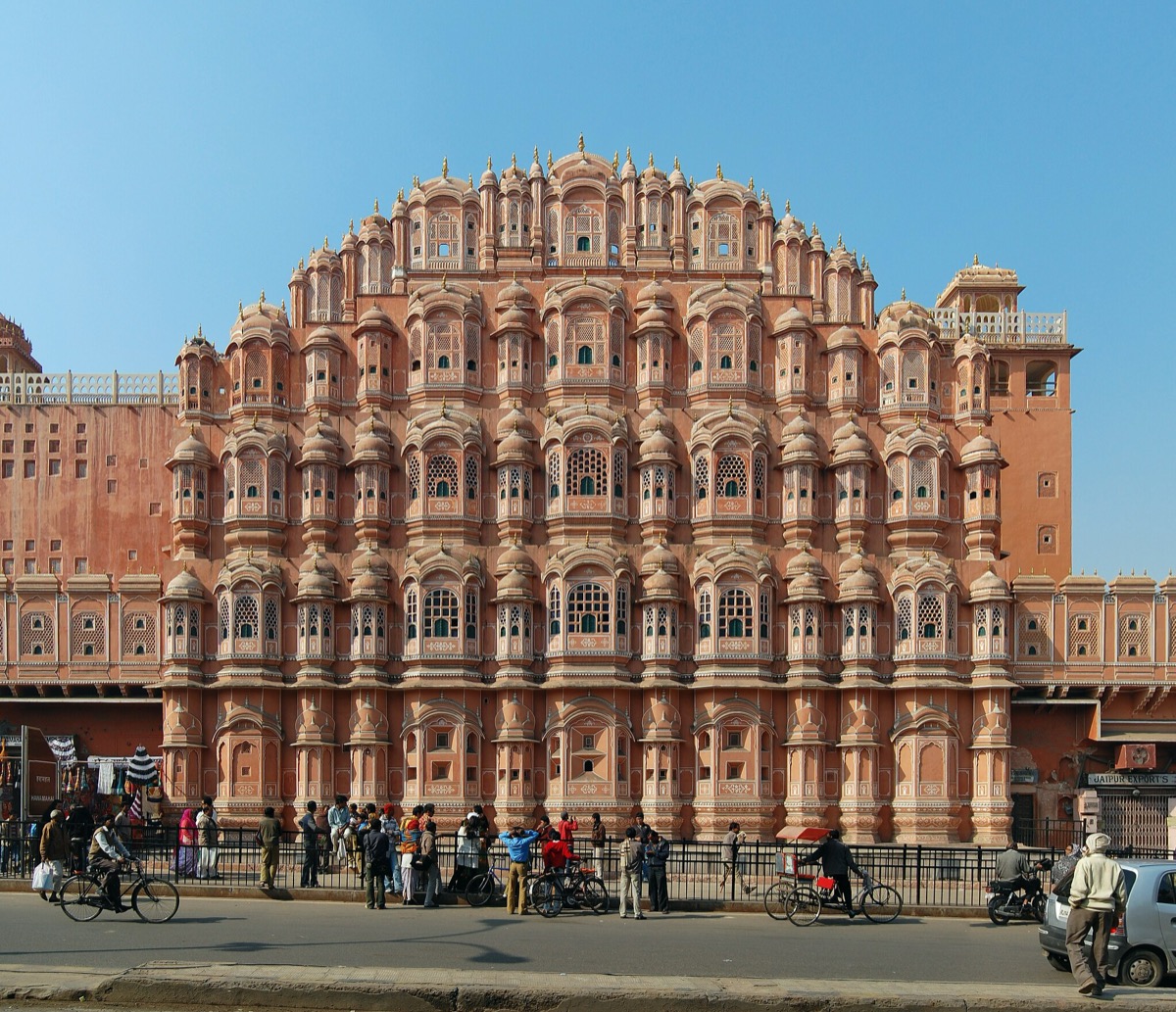
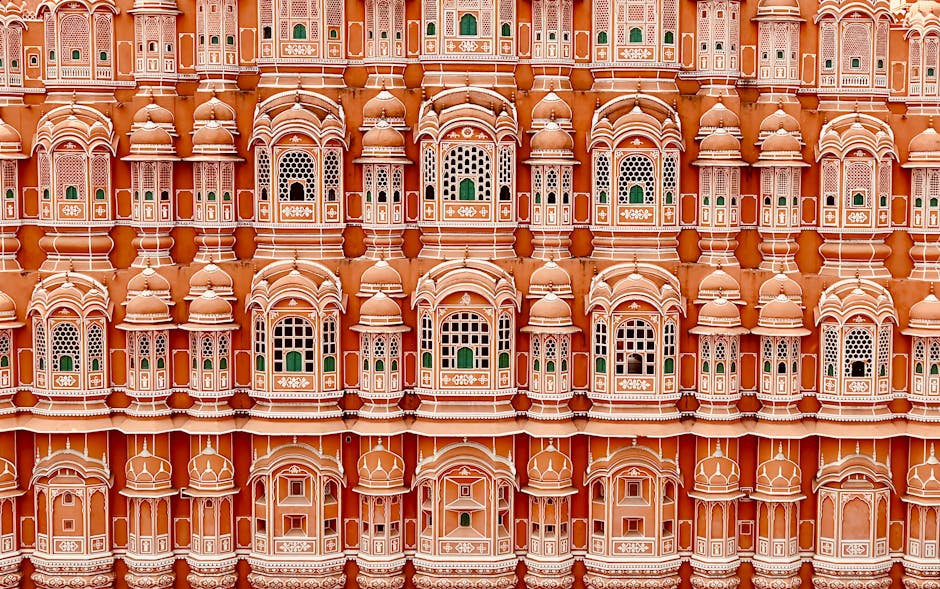
Hawa Mahal Rd, Badi Choupad | ₹50/₹200
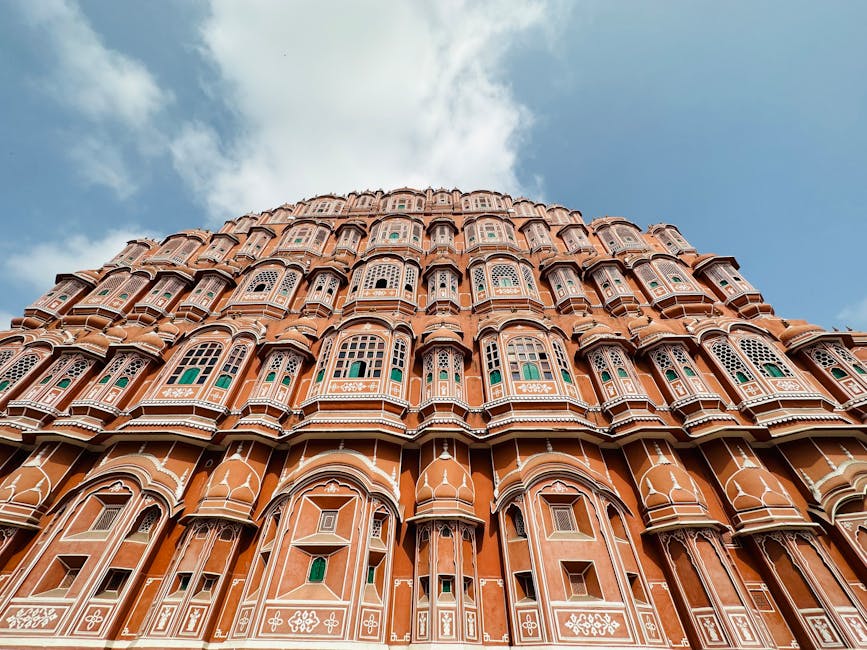
Iconic 1799 pink sandstone facade with 953 honeycomb windows. Best photographed from the café across the street.
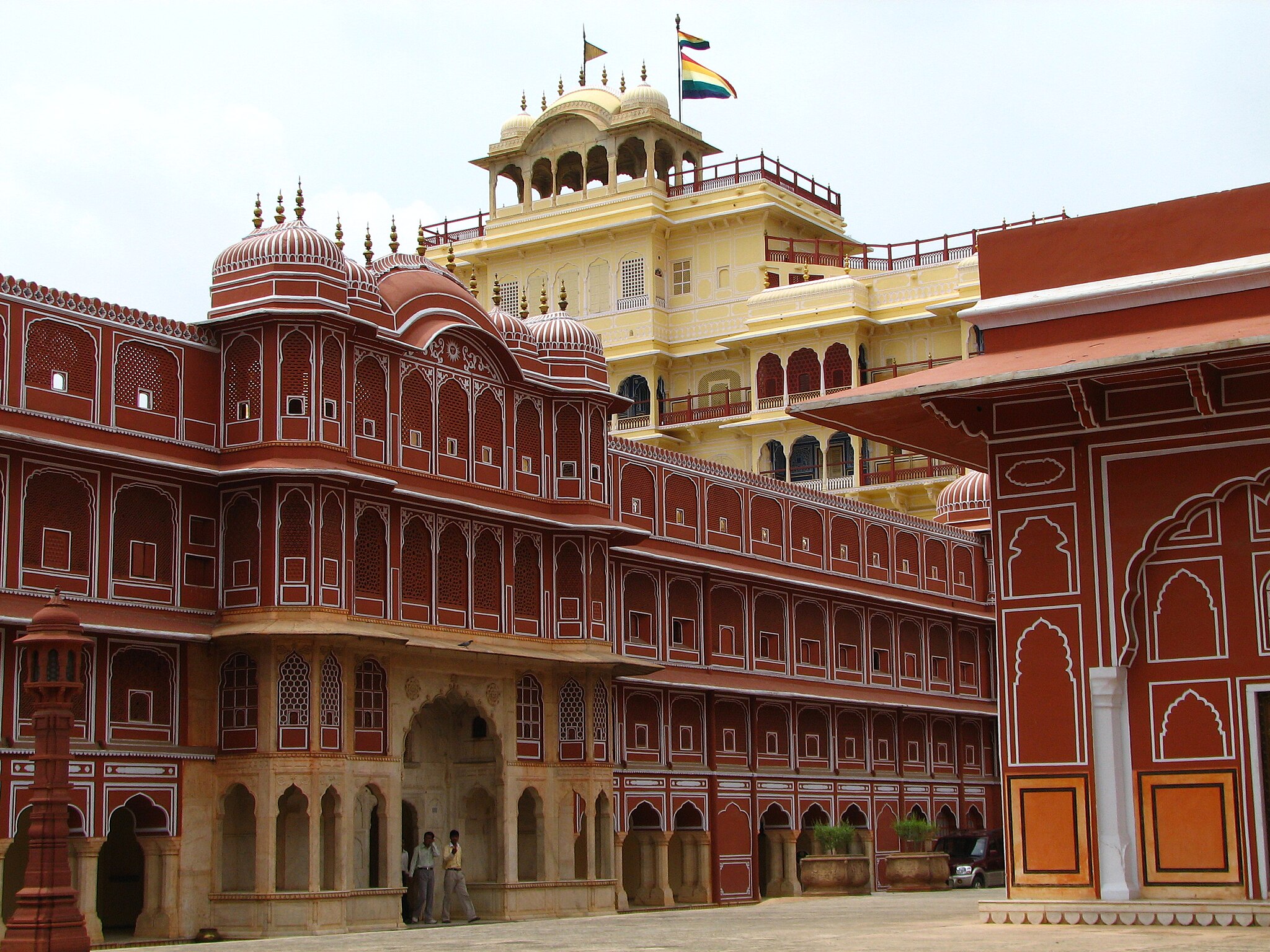
Tulsi Marg, Gangori Bazaar | ₹200/₹700
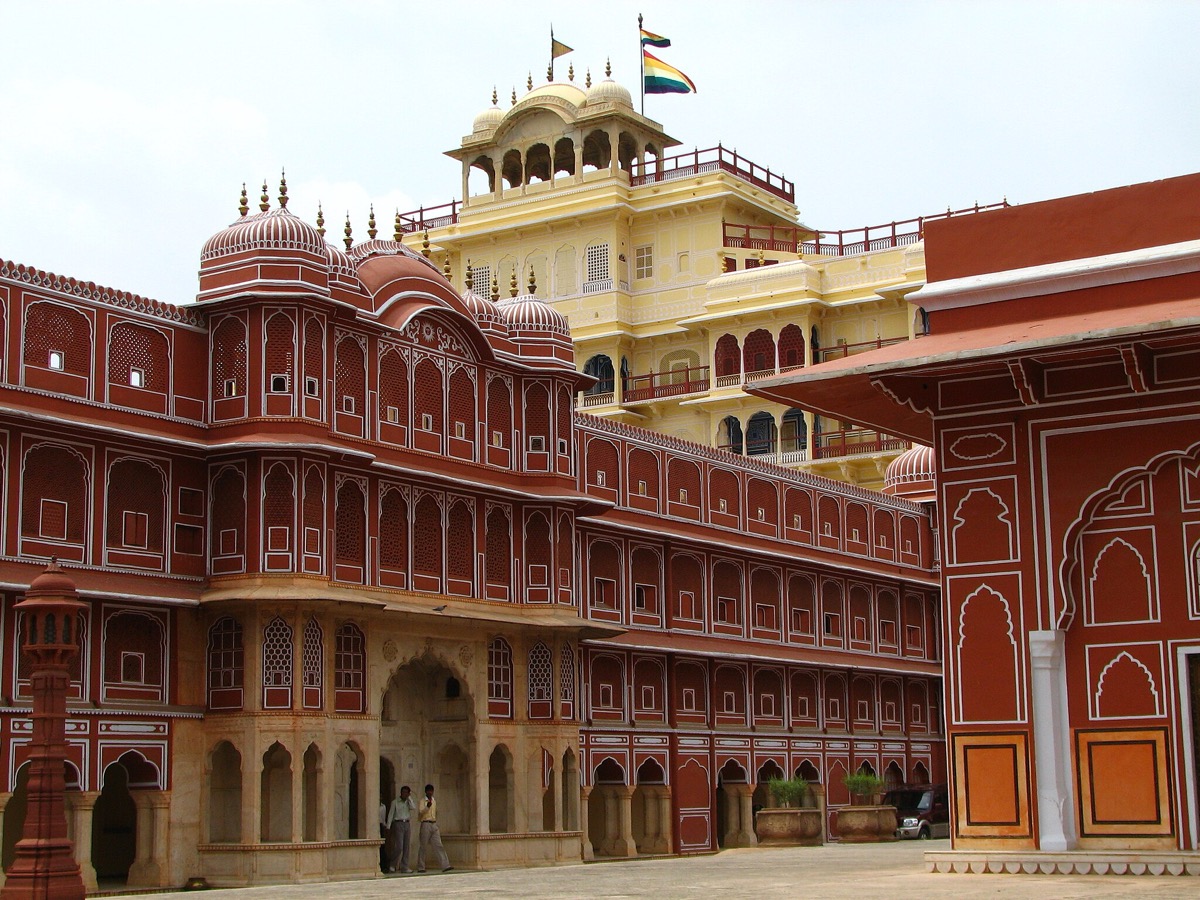
Sprawling royal complex still partly occupied by the Jaipur royal family. Don't miss the massive silver urns in Diwan-i-Khas.
Near City Palace | ₹50/₹200
UNESCO-listed astronomical observatory with the world's largest stone sundial (27m tall). Built 1734 by Jai Singh II.
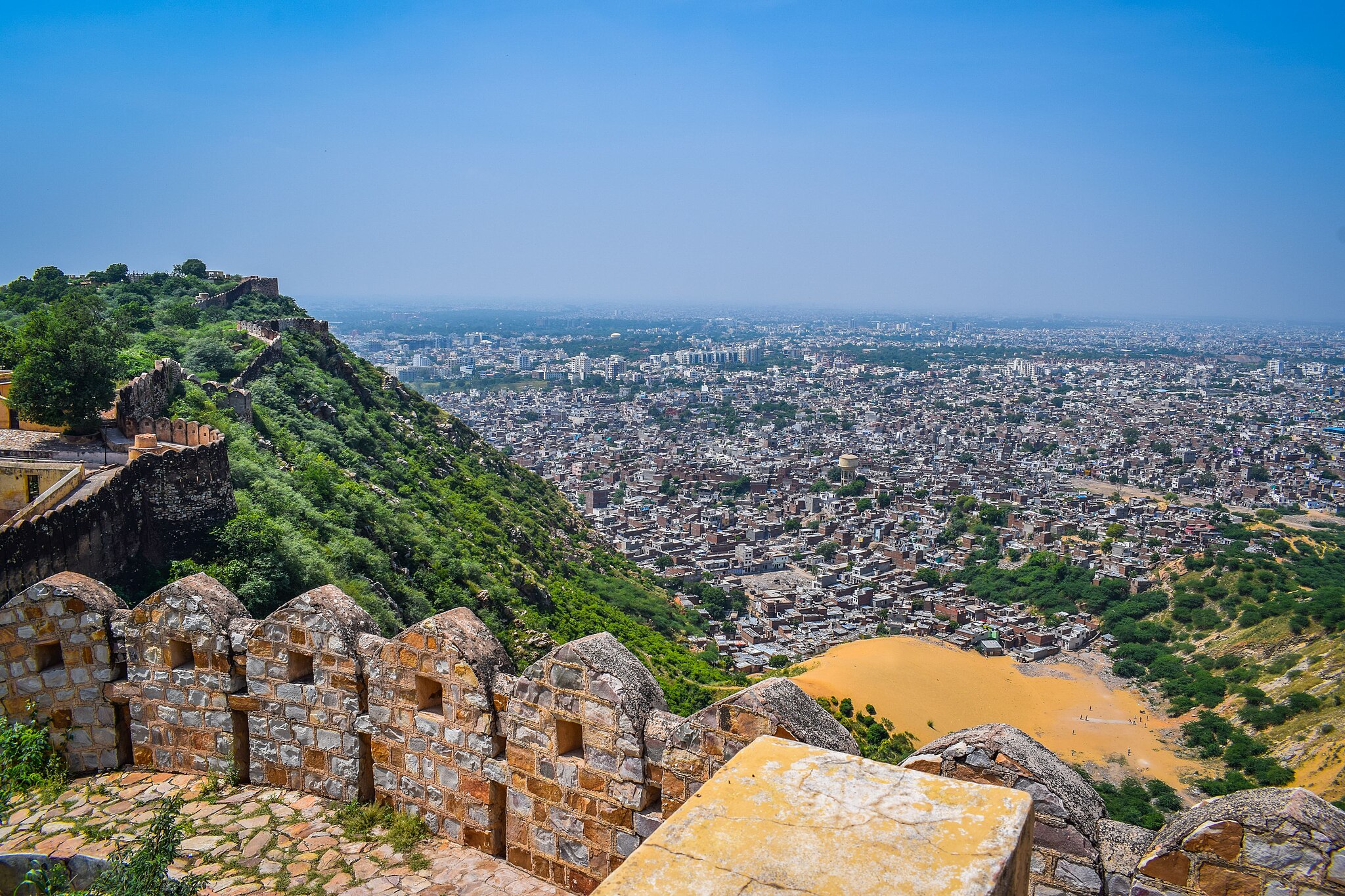
Aravalli Hills | ₹50/₹200
Perched above the city with panoramic sunset views. The Madhavendra Bhawan palace rooms are beautifully preserved.
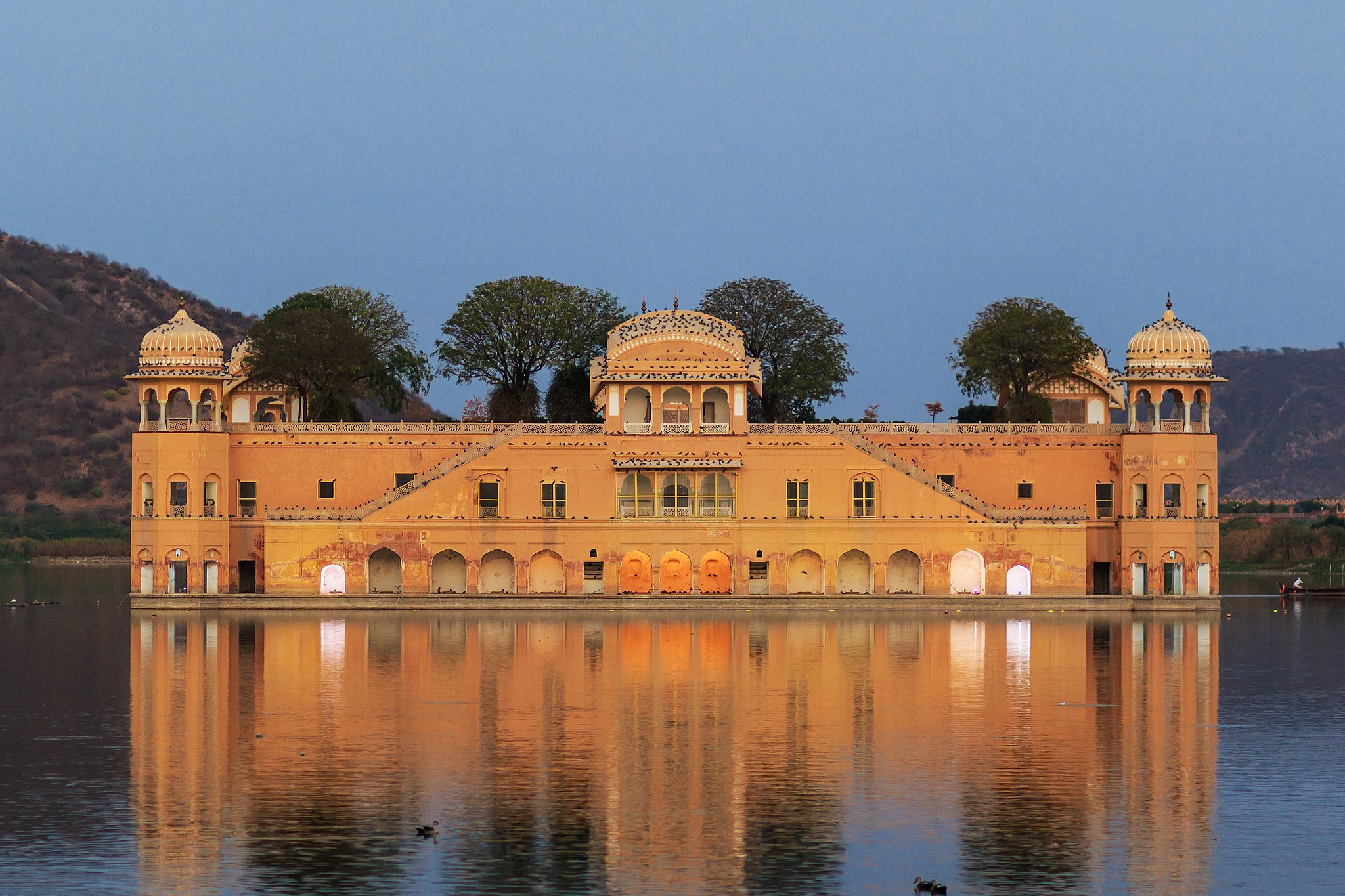
Amer Road | Free (exterior only)
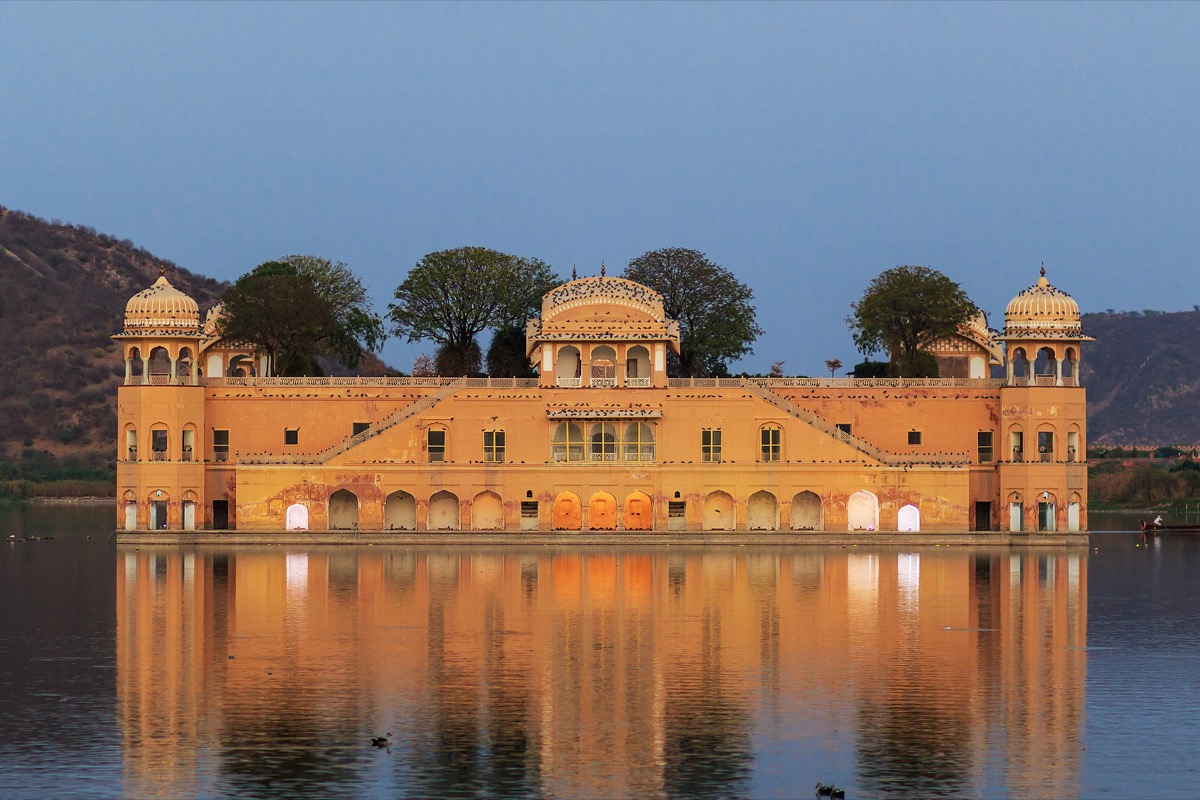
Ethereal "Water Palace" floating in Man Sagar Lake. Best photographed from the road at sunset.
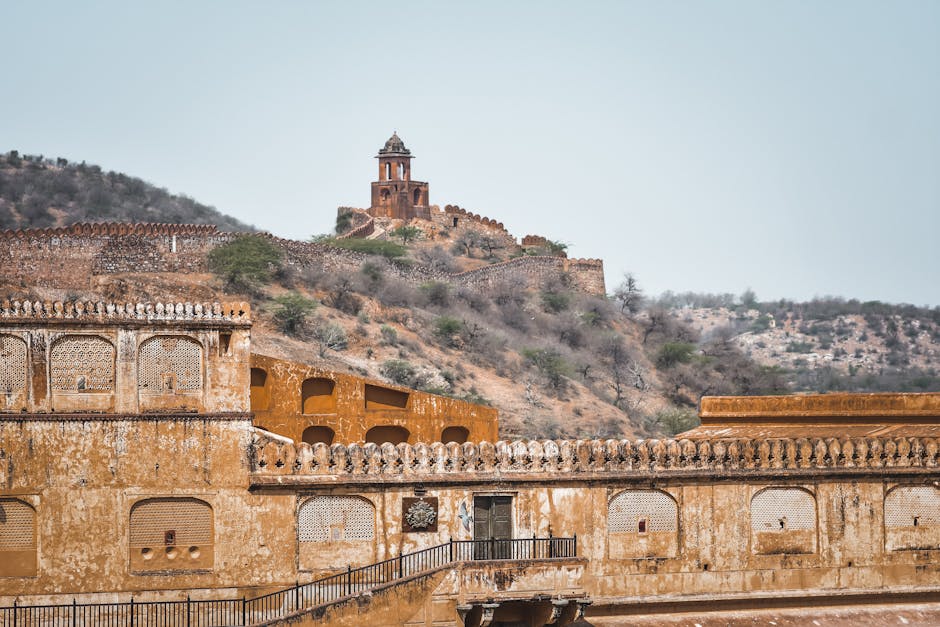
Above Amber Fort | ₹100/₹200
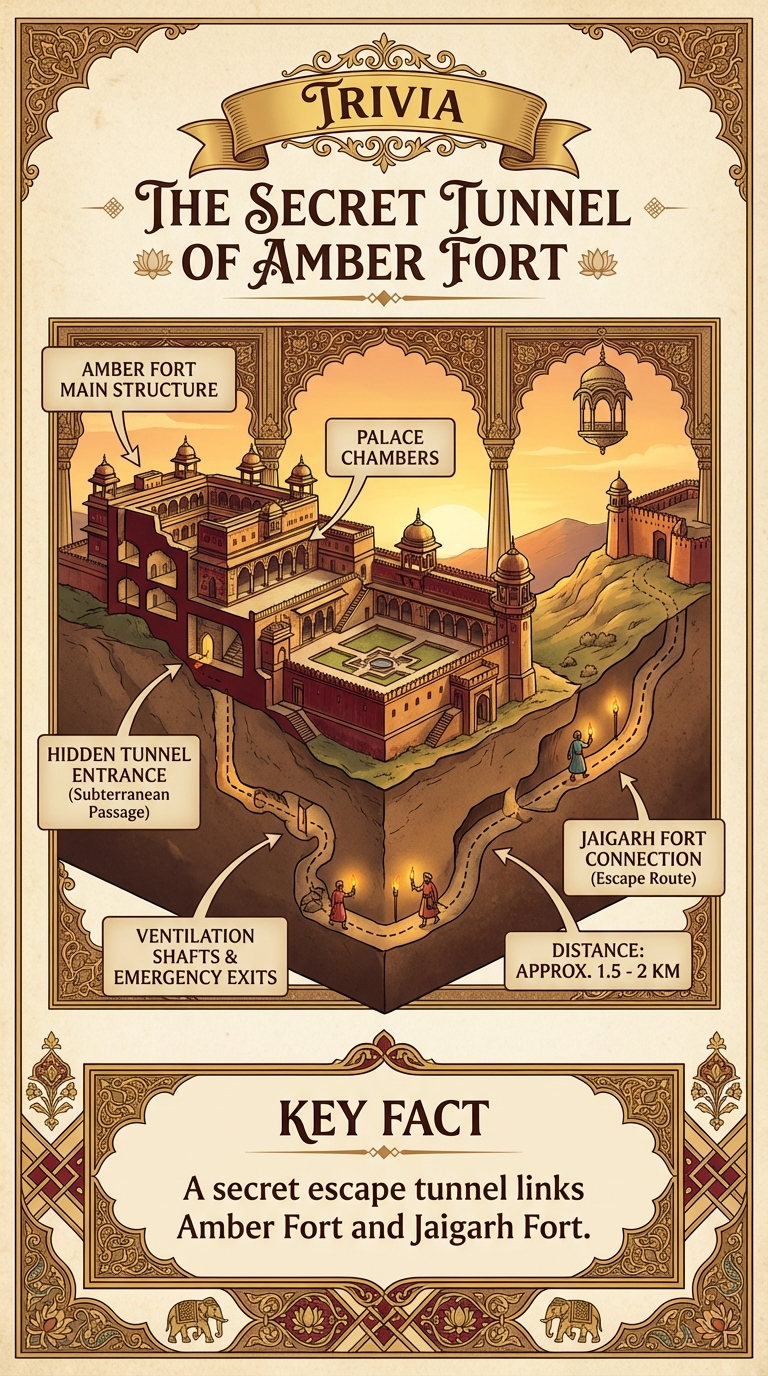
Military fort housing Jaivana — the world's largest wheeled cannon. Connected to Amber Fort by tunnel.
Ram Niwas Garden | ₹40/₹300
Indo-Saracenic museum (1887) with an Egyptian mummy, Mughal miniatures, and decorative arts.
Walled City | Free
The gem dealers' lane — centuries-old jewellery trade. Rubies, emeralds, sapphires, and silver.
Walled City | Free
Best bazaar for textiles, juttis (leather shoes), and lac bangles. Vibrant and overwhelming.
Below Moti Dungri | Free
Stunning white marble temple (1988) dedicated to Lakshmi-Narayan. Beautiful at night when lit up.
10 km east | Free
Ancient temple complex in a mountain pass, known as the 'Monkey Temple' for its resident langurs.
Amber | ₹30
Fascinating museum showcasing Rajasthan's traditional block-printing craft with live demonstrations.
Jawahar Circle | Free
Stunning nine-arch gateway showcasing architectural styles from all Rajasthani regions. Instagram favourite.
8 km from city | ₹50/₹200
Terraced Mughal-style garden built by Sawai Jai Singh II for his queen, with painted pavilions.
20 km south on Tonk Road | ₹800–1,200
Ethnic village resort offering authentic Rajasthani dinner, folk dances, puppet shows, and camel rides.
Amber area | ₹3,000–5,000
Ethical elephant sanctuary where you can feed, bathe, and paint elephants. A responsible alternative to elephant rides.
Bhagwan Das Road | ₹200–350
India's most ornate cinema hall (1976) — watch a Bollywood film in a meringue-shaped auditorium.
19. Panna Meena Ka Kund (Near Amber Fort, Free): Photogenic stepwell with criss-crossing symmetrical stairs. Less crowded than Chand Baori.
20. Rambagh Palace Grounds (Bhawani Singh Road, Free to walk): Stroll the gardens of this former royal palace (now Taj hotel). High tea on the terrace is ₹2,500 per person.
Essential practical information
ATMs everywhere. UPI (Google Pay, PhonePe) widely accepted. Bazaars prefer cash. Gem shops accept cards but add 2% surcharge.
Generally safe. Watch for gem/carpet scam artists who befriend tourists. Female travelers should avoid deserted areas after dark.
Cover shoulders and knees at temples. Remove shoes. Some forts have steep, uneven stairs — wear proper shoes.
Expected at bazaars. Start at 30–40% of asking price. Walk away to get the best deal. Fixed-price shops like Anokhi and Fabindia don't negotiate.
Photography fees apply at most monuments (₹50–200). Video cameras cost extra. Drones banned at forts.
Navigate the city like a local
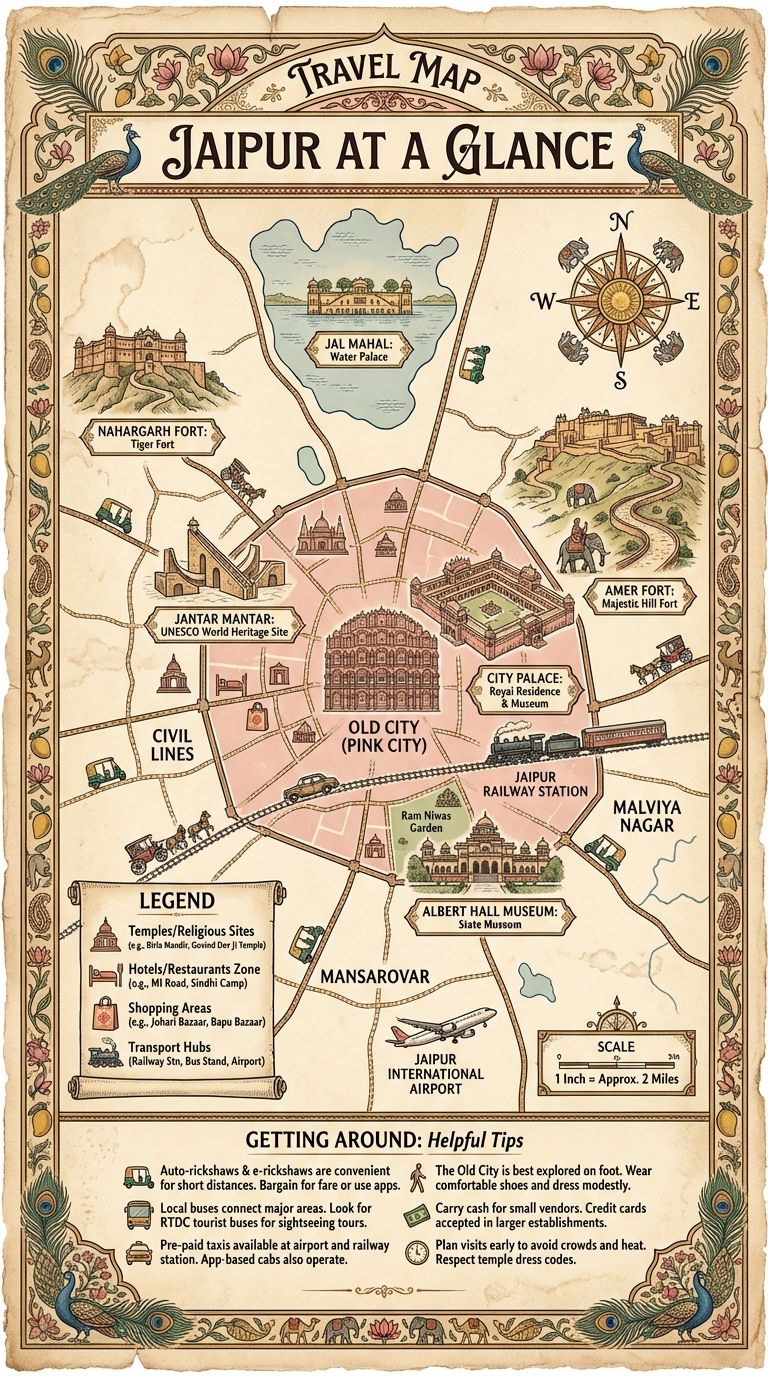
Jaipur International Airport (JAI) is 13 km south. Prepaid taxi ₹400–600, Uber ₹250–400, airport bus ₹100. Takes 30–45 min.
Most common transport. Negotiate or insist on meter. Prepaid autos available at stations. Cost: ₹10–20/km
Two lines connecting Mansarovar to Badi Choupad via railway station. Clean and air-conditioned. Cost: ₹10–25
Reliable app-based cabs available throughout the city. Cost: ₹8–12/km
JCTSL buses connect major areas. Crowded but extremely cheap. Cost: ₹5–15
Best for fort visits. Half-day (₹1,200–1,800) or full-day (₹2,000–3,000) with driver. Cost: ₹2,000–3,000/day
When to go and what to expect
Perfect weather (20–30°C). Diwali celebrations light up the city. Start of tourist season. Book ahead for Diwali week.
Cool and pleasant (8–22°C). Jaipur Literature Festival in January. Kite festival on Makar Sankranti (Jan 14).
Hot season building to 45°C+ by May. Fewer tourists, lower prices. Gangaur festival (March/April).
Monsoon brings welcome rain. Forts look dramatic against cloudy skies. Teej festival (Aug). Lowest hotel rates.
Jaipur — best experienced in October–MarchMake the most of your time
Extended stays and themed routes
Add Pushkar (2.5 hrs) for the sacred lake and Brahma Temple, plus Ajmer's Dargah Sharif. Also explore Samode Palace and the Chand Baori stepwell.
Complete the Golden Triangle: Jaipur (3 days) → Agra (2 days) → Delhi (2 days). Or add Jodhpur and Udaipur for the Rajasthan royal circuit.
Elefantastic elephant sanctuary, Chokhi Dhani village, Raj Mandir Cinema, balloon ride, and the light-and-sound show at Amber Fort (₹200, evenings).
Start with pyaaz kachori at Rawat's, explore Johari Bazaar sweets, take a cooking class at Umaid Bhawan, dine at Peacock Restaurant for rooftop thalis, and end at Suvarna Mahal.
Three centuries of commerce and colour within rose-tinted walls
The Pink Heart
The original Jaipur — Sawai Jai Singh II's 1727 masterpiece of urban planning — is a grid of broad avenues and narrow gullies enclosed within 20-foot walls and entered through grand gates. Every facade is painted in the regulation terracotta pink, from the ornate Hawa Mahal to the humblest shopfront. The main arteries — Johari Bazaar, Tripolia Bazaar, Bapu Bazaar — pulse with commerce: gem dealers, textile merchants, bangle sellers, and spice vendors, all trading as they have for three centuries.
The walled city is best explored on foot. Start at Hawa Mahal, duck into the lanes behind it, and let yourself get lost. You'll stumble upon ancient havelis with painted courtyard walls, tiny temples draped in marigolds, and craftsmen hammering silver or printing fabric. The sensory overload is Jaipur at its finest — chaotic, colourful, and utterly alive.
Where to eat in The Walled City
LMB (Laxmi Mishthan Bhandar) (₹300–600): Operating since 1727, famous for raj kachori and ghevar.
Rawat Mishthan Bhandar (₹100–250): The pyaaz kachori here is legendary — crispy onion-filled pastry with tamarind chutney.
Niros (₹400–800): Continental and Indian since 1949, on MI Road. Try the butter chicken.
Shopping highlights: Gems and jewellery at Johari Bazaar, block-printed textiles at Bapu Bazaar, blue pottery at Kripal Kumbh (near Jain Mandir), juttis (₹200–800) and lac bangles (₹100–500).


Where Rajput warriors built their most magnificent stronghold
The Fort Country
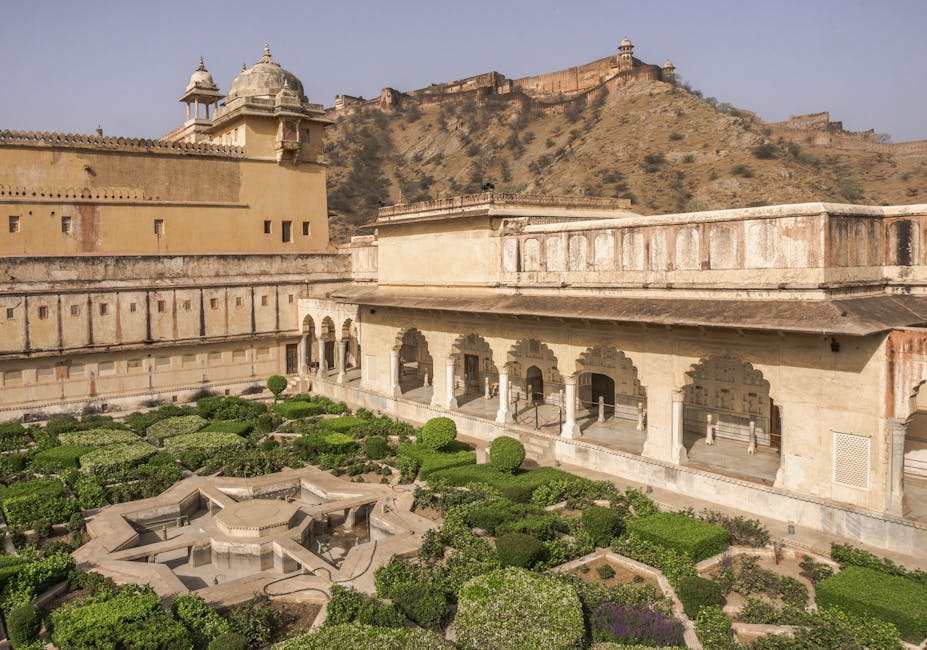
Eleven kilometres north of the walled city, the Aravalli Hills rise sharply, crowned by the magnificent Amber Fort — Jaipur's original seat of power. Built in 1592 by Raja Man Singh, this honey-gold fort-palace is a masterpiece of Rajput-Mughal architecture. The Sheesh Mahal (Mirror Palace) inside is breathtaking: thousands of tiny mirrors embedded in the walls and ceiling create a galaxy of reflected candlelight. Above Amber sits the formidable Jaigarh Fort, connected by a secret tunnel.
The area around Amber has evolved from a sleepy village into a heritage zone with boutique hotels, the excellent Anokhi Museum of Hand Printing, and the photogenic Panna Meena Ka Kund stepwell. The approach road passes Jal Mahal, the ethereal Water Palace floating in Man Sagar Lake. Combine Amber Fort, Jaigarh Fort, and the stepwell in a half-day trip. Have lunch at 1135 AD restaurant inside Amber Fort for a royal dining experience.
Where to eat in Amber & Jaigarh
1135 AD (₹800–1,500): Fine-dining Rajasthani inside Amber Fort. Spectacular setting.
Sharma Dhaba (₹100–200): Local favourite near Amber for dal-baati-churma.
Café Palladio (₹500–1,000): Italian-Mughal fusion café in a stunning blue-and-white setting near Amber.


Where tradition-meets-tomorrow in Rajasthan's modern capital
Modern Jaipur
South and west of the walled city, modern Jaipur spreads across leafy colonial-era cantonments and contemporary residential districts. C-Scheme, Vaishali Nagar, and Malviya Nagar are where Jaipur's growing middle class eats, shops, and socializes. The restaurant scene here is excellent — from craft cocktail bars to authentic Rajasthani thali restaurants — and the shopping shifts from bazaar chaos to curated boutiques selling designer block-prints, organic beauty products, and contemporary jewellery.
This is also where you'll find Jaipur's cultural institutions: the Jawahar Kala Kendra arts centre (designed by Charles Correa), the Rajasthan International Centre, and the upscale Rambagh Palace — once the Maharaja's residence, now a Taj hotel where non-guests can enjoy high tea on the terrace (₹2,500). Birla Mandir, the gleaming white marble temple at the base of Moti Dungri, is most impressive after dark when it's illuminated.
Where to eat in C-Scheme & Civil Lines
Tapri Central (₹100–250): Iconic Jaipur café — chai in clay cups on the terrace. The kulhad chai is a must.
Bar Palladio (₹800–1,500): Stunning Mughal-Italian bar at Narain Niwas Palace.
Peacock Restaurant at Pearl Palace (₹300–600): Rooftop thalis with old city views — backpacker favourite.


What to eat and where to find it
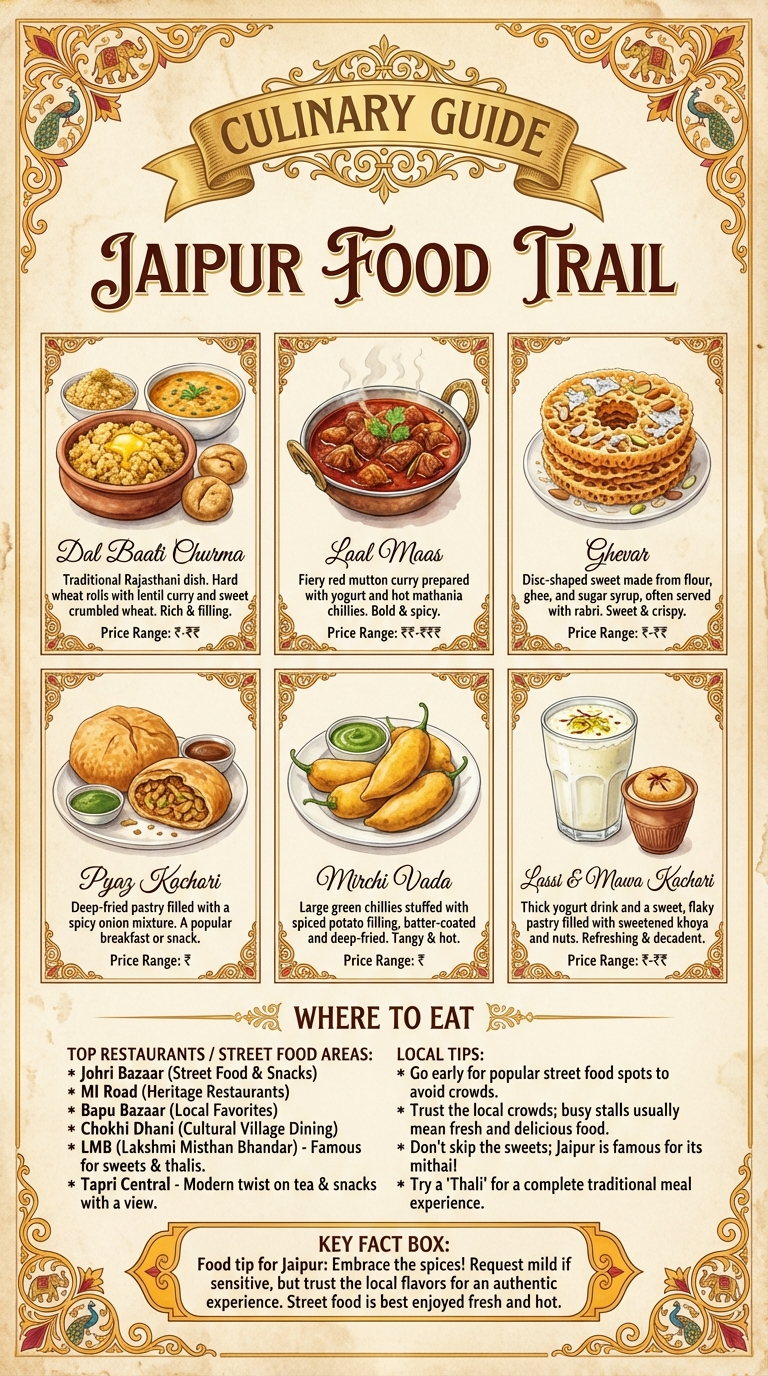
Rajasthani cuisine was born in the desert, where scarcity bred culinary genius. With limited water and fresh vegetables, cooks developed techniques using dried lentils, gram flour, and buttermilk that produced extraordinary flavours. Jaipur, as the royal capital, elevated these rustic traditions into courtly feasts. Today, the city offers everything from ₹30 pyaaz kachori on the street to multi-course thalis at palace hotels.
Dal Baati Churma (₹150–300): Rajasthan's national dish: hard wheat rolls (baati) with spiced dal and sweet crumbled wheat (churma). Best at Chokhi Dhani.
Pyaaz Kachori (₹20–40): Crispy onion-stuffed pastry with tamarind-coriander chutney. Rawat Mishthan Bhandar's version is legendary.
Laal Maas (₹250–500): Fiery red mutton curry made with dried red chillies — Rajasthan's most famous non-veg dish.
Ghevar (₹50–200): Disc-shaped sweet made from flour batter, soaked in syrup. Especially popular during Teej and Raksha Bandhan.
Gatte Ki Sabzi (₹100–200): Gram flour dumplings in a spiced yoghurt gravy — a vegetarian Rajasthani staple.
Ker Sangri (₹100–200): Desert beans and berries cooked with spices — a uniquely Rajasthani delicacy.
Raj Kachori (₹60–100): Large crispy shell stuffed with yoghurt, chutneys, and spices. LMB's version is the city's best.
Mawa Kachori (₹30–50): Sweet kachori stuffed with mawa (reduced milk) and nuts, deep-fried and syrup-soaked.
Best restaurants, markets, and street food
Suvarna Mahal, Rambagh Palace (₹3,000–5,000): Grand dining hall with gold leaf ceiling. The thali royale is an event.
Padao, Nahargarh Fort (₹600–1,000): Dine on fort ramparts with panoramic Pink City views at sunset.
1135 AD, Amber Fort (₹800–1,500): Rajasthani fine dining inside the historic fort.
Handi Restaurant (₹300–600): MI Road institution since 1965, famous for handi gosht (slow-cooked mutton).
Rawat Mishthan Bhandar: The pyaaz kachori shop everyone talks about. Go before noon — they sell out.
LMB (Laxmi Mishthan Bhandar): Johari Bazaar institution since 1727. Famous for raj kachori and ghevar.
Tapri Central: Jaipur's signature chai café — kullhad chai on the terrace.


Understanding the story of Jaipur
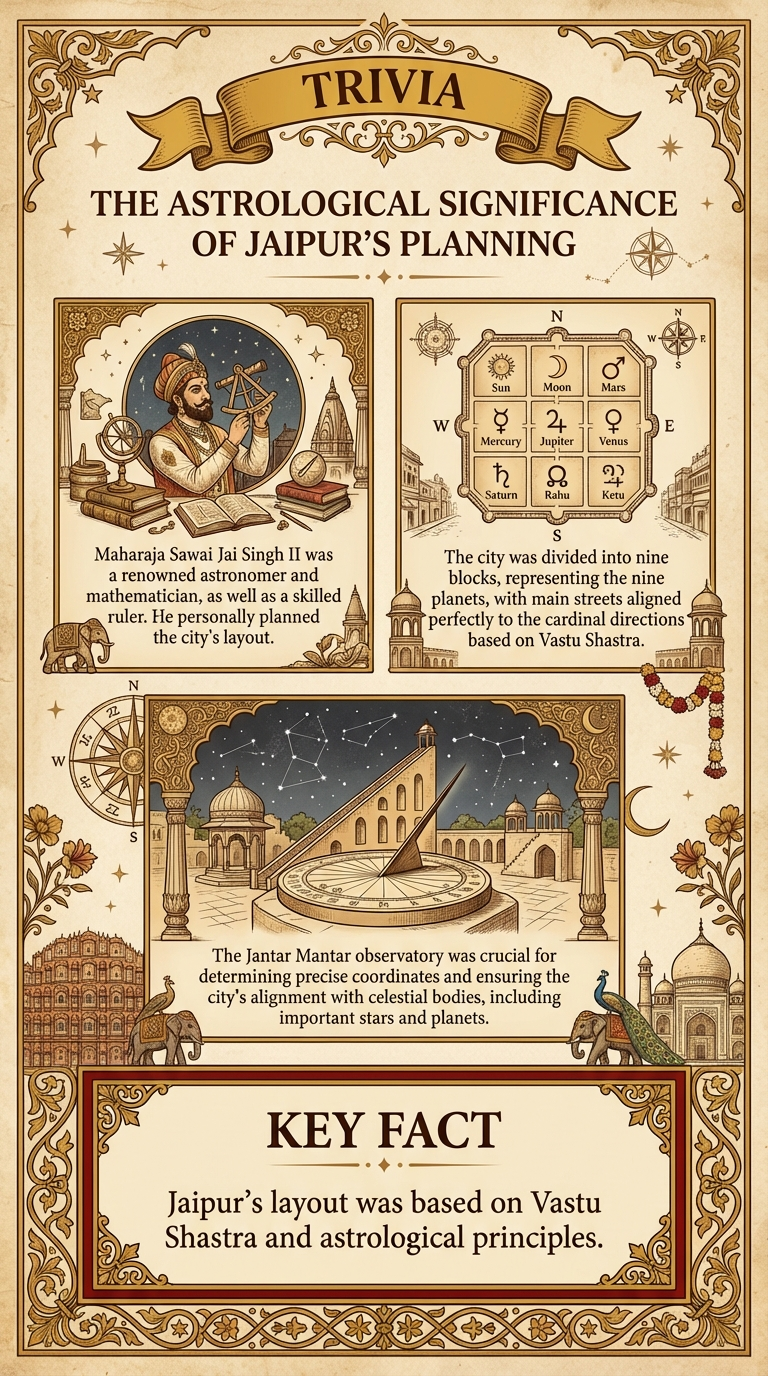
Jaipur was founded on 18 November 1727 by Maharaja Sawai Jai Singh II, a warrior-astronomer who ruled the Kachwaha Rajput kingdom. Dissatisfied with the cramped hilltop capital at Amber, he commissioned Bengali architect Vidyadhar Bhattacharya to design a new city on the plains below, following the Shilpa Shastra principles of Hindu architecture. The result was India's first planned city — a rational grid of wide avenues, uniform building heights, and designated market zones.
In 1876, Maharaja Ram Singh painted the entire city terracotta pink to welcome Queen Victoria's husband, Prince Albert. The tradition stuck, and a municipal law still mandates the pink colour for old city buildings. The princely state merged with India in 1949, and Jaipur became the capital of Rajasthan. In 2019, the walled city was declared a UNESCO World Heritage Site. Today, Jaipur balances its royal heritage with a booming IT sector, luxury hospitality industry, and one of India's richest artisan traditions.
Jaipur is Rajasthan's cultural capital. The block-printing tradition produces the famous Sanganeri and Bagru prints seen on textiles worldwide. Blue pottery, with its distinctive Persian-influenced designs, is a Jaipur specialty taught at the Kripal Kumbh workshop. The city's jewellery trade is worth billions — Johari Bazaar has traded gems for 300 years. Festivals like Teej (monsoon), Gangaur (spring), and the Elephant Festival (Holi) see the city at its most colourful.
Excursions from Jaipur
Jaipur is perfectly positioned for exploring Rajasthan's diverse attractions, from sacred lakes to tiger jungles.
Sacred lake town with the world's only Brahma Temple. Famous for the annual Camel Fair (November). Sunset aarti at the ghats is magical. Entry: Free (ghats)
Home to the Dargah of Sufi saint Moinuddin Chishti — one of India's most important Muslim pilgrimage sites. Often combined with Pushkar. Entry: Free
One of India's best tiger reserves. The ancient Ranthambore Fort rises above the jungle. Book safaris months ahead. Entry: ₹500/₹1,500 + safari ₹1,500+
Stunning 475-year-old palace-hotel with painted chambers. Non-guests can visit the durbar hall and have lunch. Entry: ₹800 day visit
One of India's deepest and most photogenic stepwells with 3,500 steps in a geometric pattern. Entry: ₹25/₹200
Practical information from A to Z
Available at hotels, bars, and government-run wine shops (thekas). No public drinking. Rajasthan has dry days on national holidays.
Widely available on MI Road, C-Scheme, and near tourist sites. HDFC and SBI are most reliable.
Fortis Hospital (Malviya Nagar) and Narayana Hospital for emergencies. SMS Hospital is the main government facility.
220V/50Hz. Power cuts common in summer; hotels have generators. Carry a power bank.
Free Wi-Fi at most hotels and cafés. 4G SIMs from Jio/Airtel available at phone shops (₹200–300 with passport).
India decriminalized homosexuality in 2018 but Jaipur remains conservative. Discretion advised.
Main post office on MI Road. International couriers (DHL, FedEx) in C-Scheme.
Forts/palaces: 9am–5pm daily. Bazaars: 10am–8pm (closed Sundays). Banks: 10am–4pm Mon–Fri.
Tourist police at major sites. Emergency: 112. Tourist helpline: 1363.
Negotiate before boarding. Typical city ride ₹50–150. Insist on direct route — don't let them take you to shops.
GST 5–18%. Most restaurants include taxes. Hotels charge 12–18% GST.
Western toilets at hotels and major restaurants. Sulabh public toilets (₹5) at tourist sites.
Only drink bottled water. Check seals. ₹20 for 1L.
Jaipur is relatively safe but eve-teasing can occur. Avoid deserted areas after dark. Use Ola/Uber for night transport.
Temples generally open 6am–12pm and 4–9pm. Remove shoes and leather items. Cover heads at gurdwaras and dargahs.
Getting to and around Jaipur
From Delhi: Shatabdi Express (4.5h, ₹800) or Ajmer Shatabdi (5h, ₹600). Volvo buses from Kashmere Gate ISBT (5–6h, ₹500–800). Flights from Delhi take 1 hour.
From Agra: Direct trains (3.5–4h, ₹200–500) or drive via NH-21 (4 hours, tolls ₹200).
Within Jaipur: Jaipur Metro covers key routes. Auto-rickshaws are ubiquitous. Ola/Uber are reliable and fair-priced.
| Mode | Details | Cost |
|---|---|---|
| Auto-Rickshaw | Most common transport. Negotiate or insist on meter. Prepaid autos available at stations. | ₹10–20/km |
| Jaipur Metro | Two lines connecting Mansarovar to Badi Choupad via railway station. Clean and air-conditioned. | ₹10–25 |
| Ola/Uber | Reliable app-based cabs available throughout the city. | ₹8–12/km |
| City Bus | JCTSL buses connect major areas. Crowded but extremely cheap. | ₹5–15 |
| Hired Car | Best for fort visits. Half-day (₹1,200–1,800) or full-day (₹2,000–3,000) with driver. | ₹2,000–3,000/day |
Essential phrases for travelers
Hindi is the primary language in Jaipur, with Rajasthani (Marwari dialect) spoken among locals. English is widely understood in tourist areas.
| English | Hindi / Rajasthani |
|---|---|
| Hello | Namaste / Khamma Ghani (Rajasthani) |
| Thank you | Dhanyavaad |
| Yes / No | Haan / Nahin |
| How much? | Kitna hai? |
| Too expensive | Bahut mehnga hai |
| Water | Paani |
| Food | Khana |
| Where is...? | ...kahan hai? |
| Help | Madad |
| Good | Accha |
| Beautiful | Sundar |
| Please | Kripya |
| Let's go | Chalo |
| Stop | Ruko |
| How far? | Kitni door hai? |
Our favourite experiences in Jaipur
Amber Fort
The Sheesh Mahal alone makes the trip worthwhile
Nahargarh Fort
Panoramic Pink City views as the sun drops behind the Aravallis
Rawat's Pyaaz Kachori
The ₹20 kachori that defines Jaipur street food
Johari Bazaar
Three centuries of gem trading in rose-tinted lanes
Rambagh Palace
Sleep where the Maharaja slept — India's grandest heritage hotel
Hawa Mahal at Sunrise
The 953 windows glow pink in the early morning light
Chokhi Dhani
A complete Rajasthani village experience with food, dance, and crafts
Panna Meena Ka Kund
Photogenic stepwell near Amber — fraction of the Chand Baori crowds
Jaipur Literature Festival
World's largest free lit fest every January
Patrika Gate
Instagram-worthy gateway showcasing all Rajasthan architectural styles
Everything you need for Jaipur
Travorea creates comprehensive, beautifully designed travel guides that combine insider knowledge with practical information. Our guides are crafted to help you experience destinations like a local, not just a tourist.
This premium guide to Jaipur was researched and written to give you everything you need for an unforgettable trip. All prices and information were verified at the time of writing (2026) but may change — always confirm locally.
All photographs in this guide are sourced from free-to-use image libraries (Pexels, Unsplash) and original Travorea photography. Infographics are original Travorea creations.
Visit us at www.travorea.com for more destinations, interactive trip planners, and the latest travel tips.
Explore More Guides
Visit www.travorea.com/ebooks for premium guides to 50+ destinations worldwide.
The Pink City