
The Old Smoke
Where centuries of history stand shoulder to shoulder with relentless reinvention
The Old Smoke
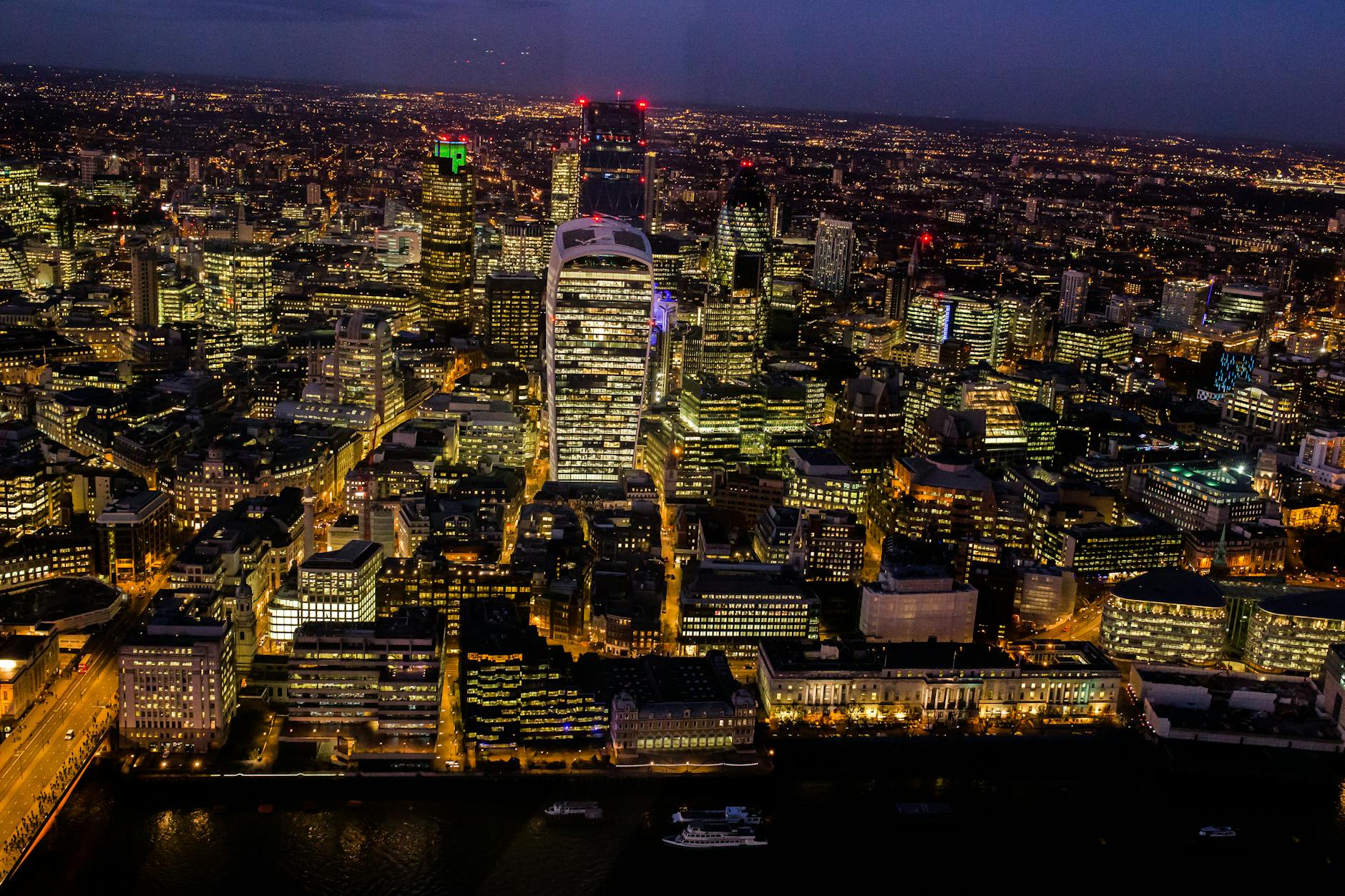
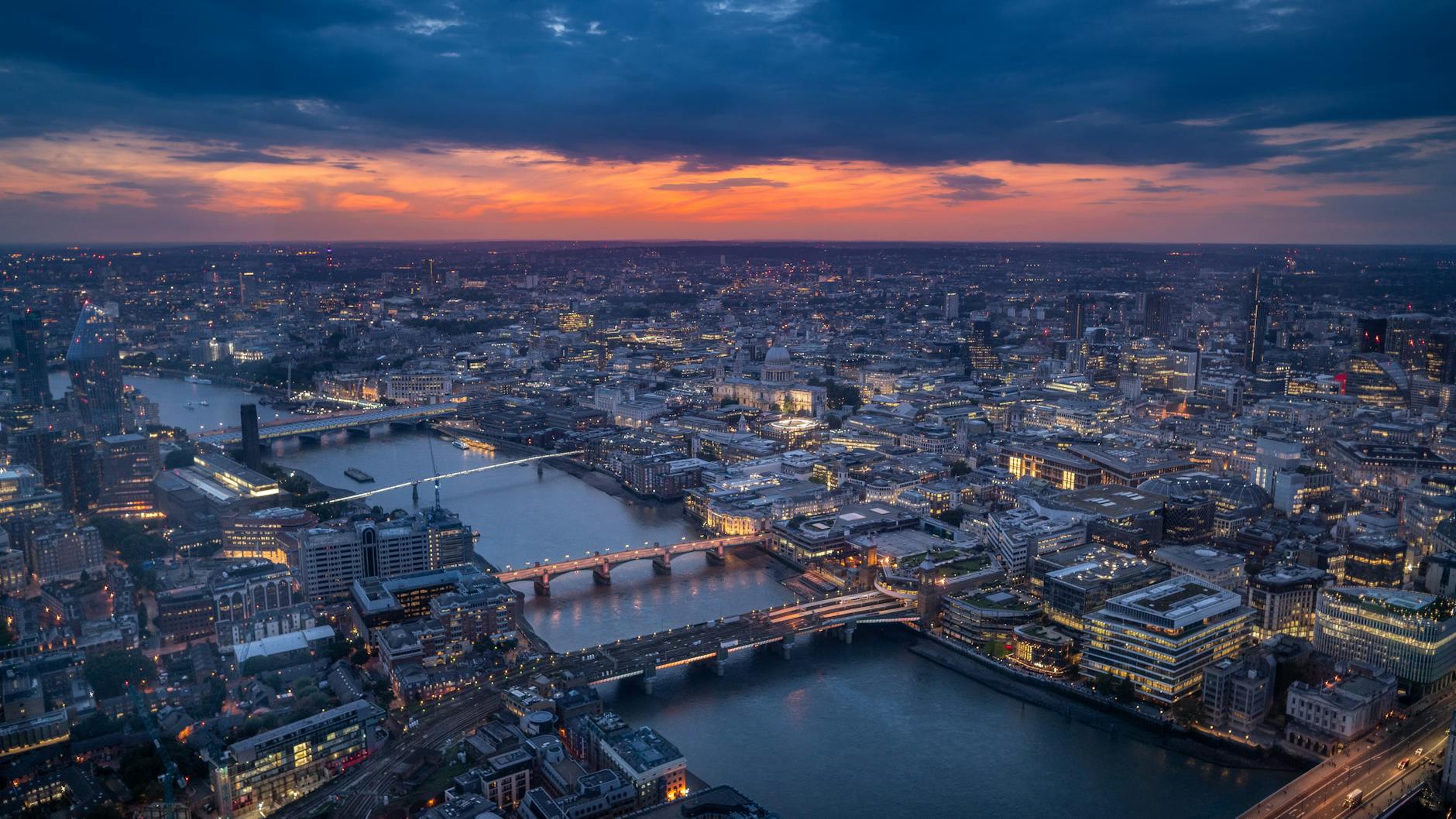
London is a city of layers. A Roman wall runs beneath a medieval church that stands next to a glass skyscraper — and none of it feels out of place. This is a city that has burned, been bombed, and rebuilt itself so many times that reinvention is in its DNA. From the Tower of London's 1,000-year vigil over the Thames to the futuristic Shard piercing the skyline, London tells the story of Western civilization in bricks, stone, and steel.
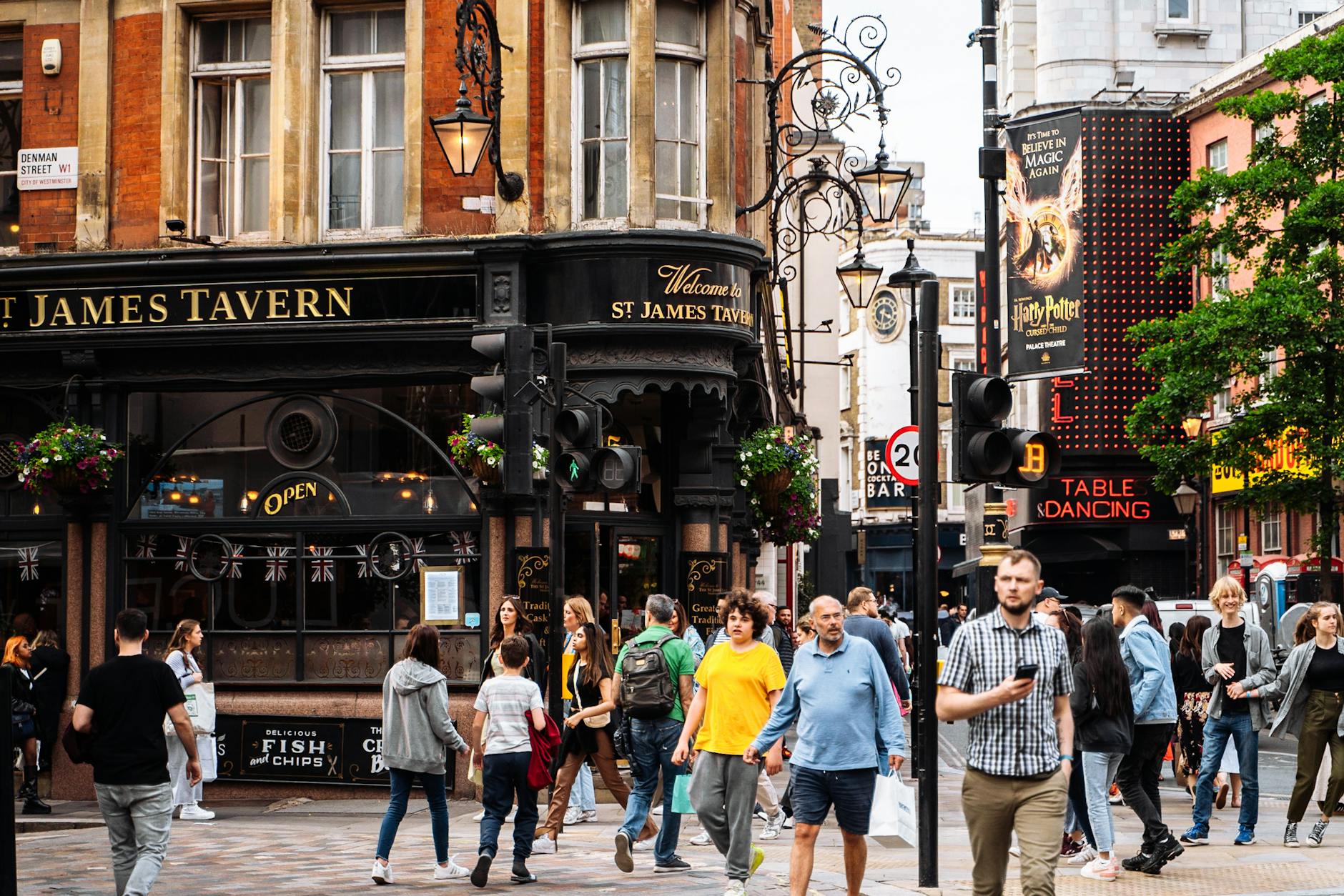
But London's greatest asset isn't its monuments — it's its people. Over 300 languages are spoken here, and every neighbourhood reflects a different corner of the world. Brick Lane smells of Bangladeshi curry, Brixton throbs with Caribbean bass, Chinatown glows with red lanterns, and Notting Hill erupts in August with Europe's largest street carnival. Add world-class theatre, free museums, and a pub on every corner, and you have a city that rewards every kind of traveler.
London
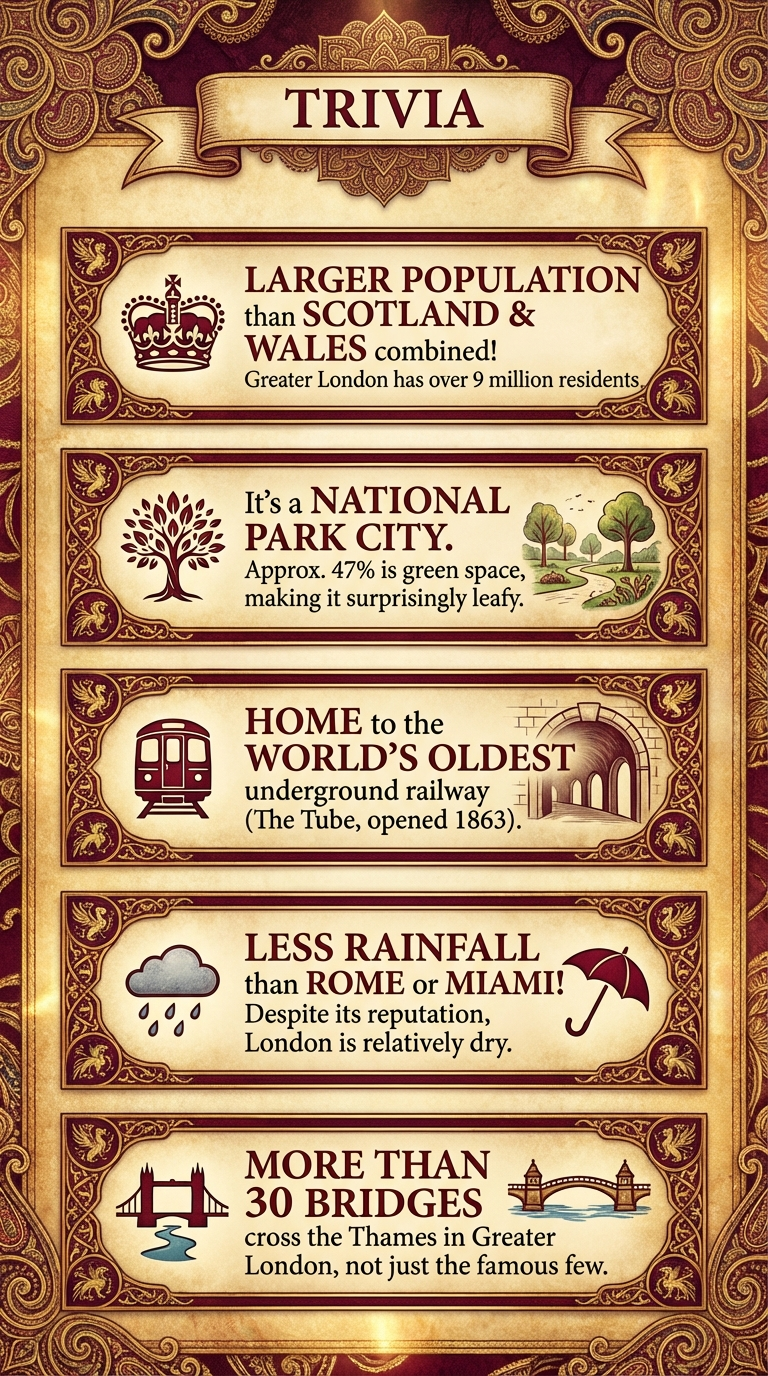
Straddling the Thames in southeast England, London has been a global capital for over a millennium. Its 32 boroughs contain more history, culture, and diversity than most countries. Three to five days covers the essentials; two weeks begins to reveal the city's true depth.
The essential sights and experiences
Bloomsbury, WC1 | Free
The world's greatest collection of human history: the Rosetta Stone, Elgin Marbles, and 8 million other objects spanning 2 million years.
Tower Hill, EC3 | £33.60
William the Conqueror's 1066 fortress: Crown Jewels, Beefeater tours, ravens, and 1,000 years of history.
Westminster, SW1 | £27
Coronation church of every monarch since 1066. Newton, Darwin, Dickens, and Chaucer are buried here.
Westminster, SW1 | £30 (summer only)
The King's official London residence. State Rooms open July–September. The Changing of the Guard is free (11 AM).
Bankside, SE1 | Free
Britain's national modern art gallery in a converted power station. Rothko, Warhol, and Picasso with Thames views.
Trafalgar Square, WC2 | Free
2,300 paintings from the 13th to 19th centuries: Van Gogh's Sunflowers, Turner's Fighting Temeraire, and da Vinci's Virgin of the Rocks.
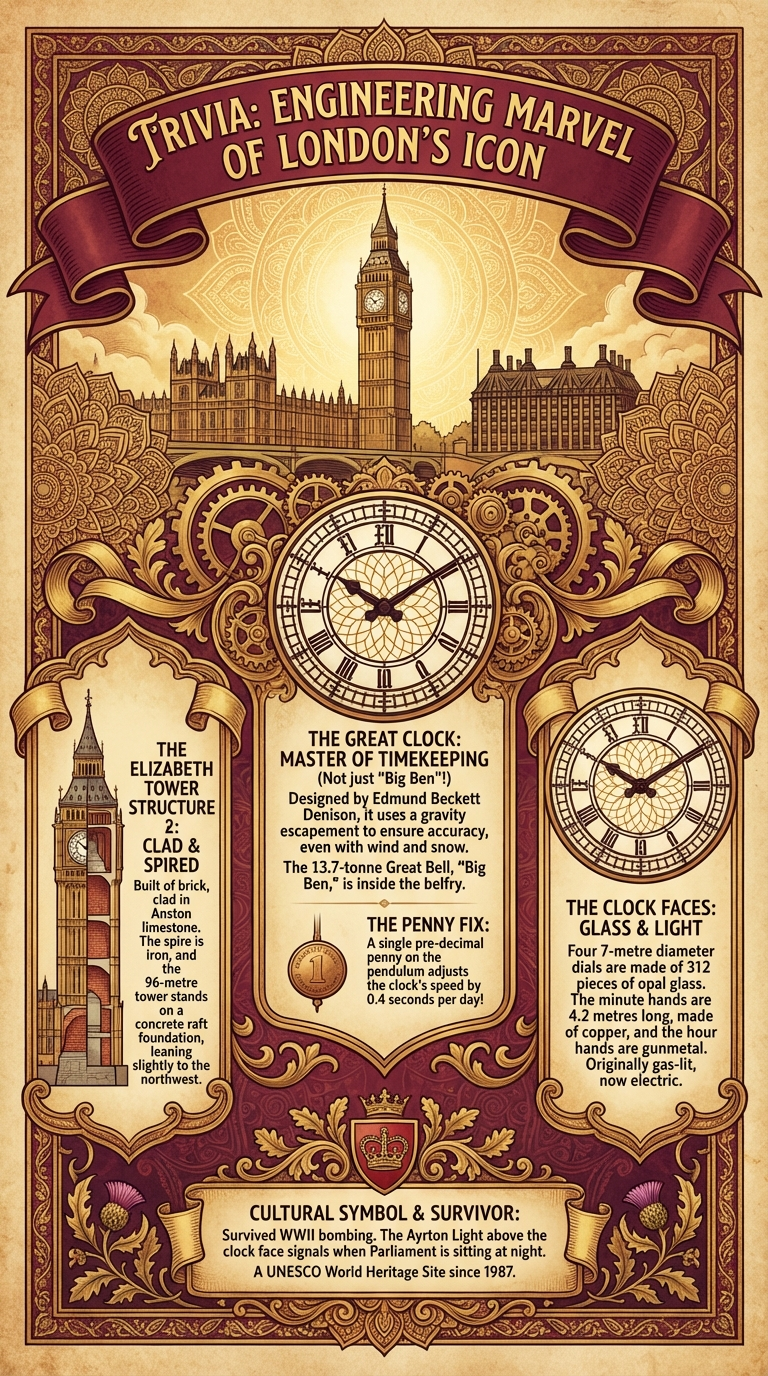
Westminster, SW1 | £28 (tour)
The iconic Gothic Revival seat of British democracy. Big Ben's Elizabeth Tower is London's most recognized silhouette.
City of London, EC4 | £25
Wren's masterpiece (1710). Climb 528 steps to the Golden Gallery for the best panorama of the City.
Southwark, SE1 | Free entry
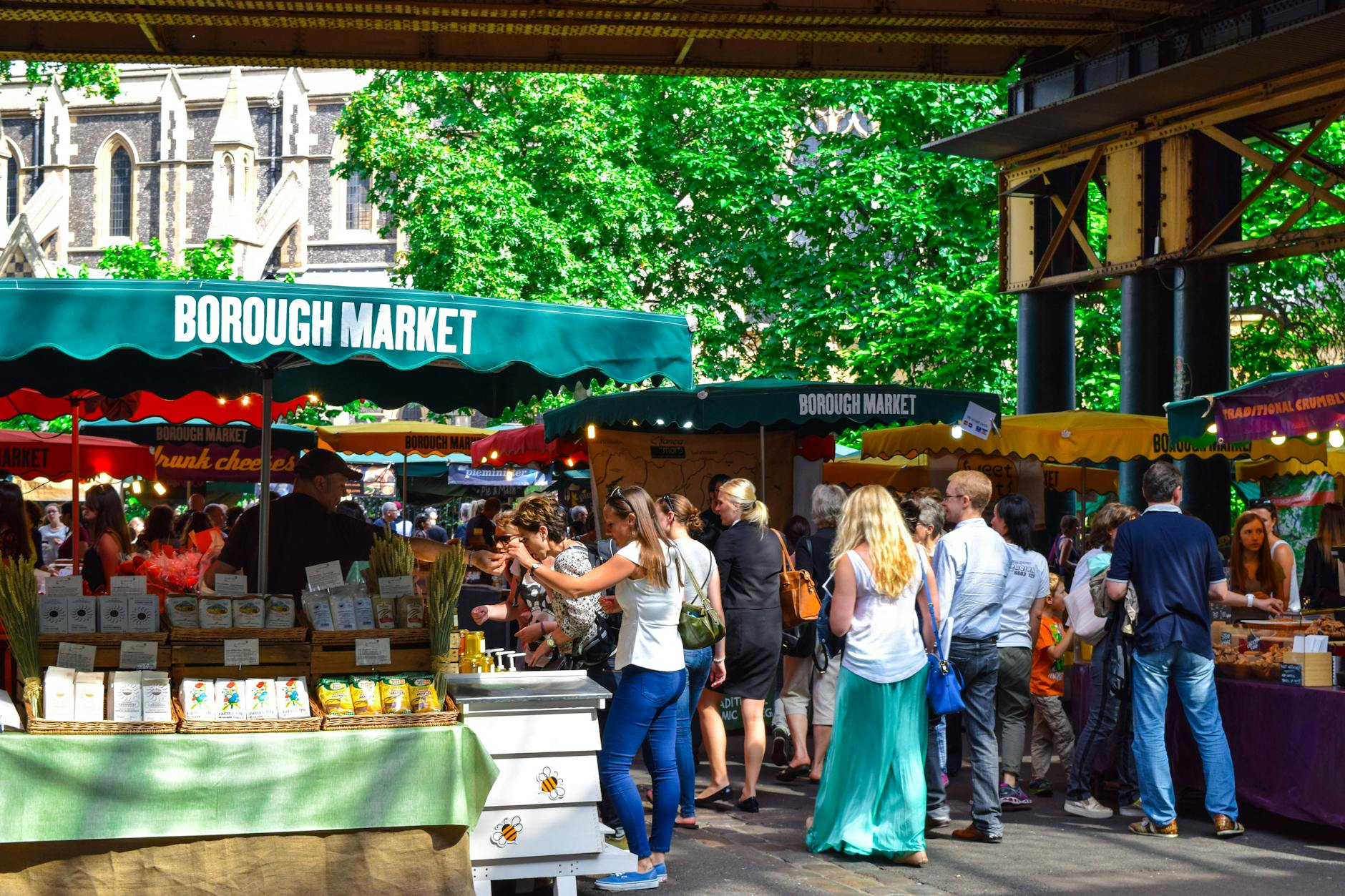
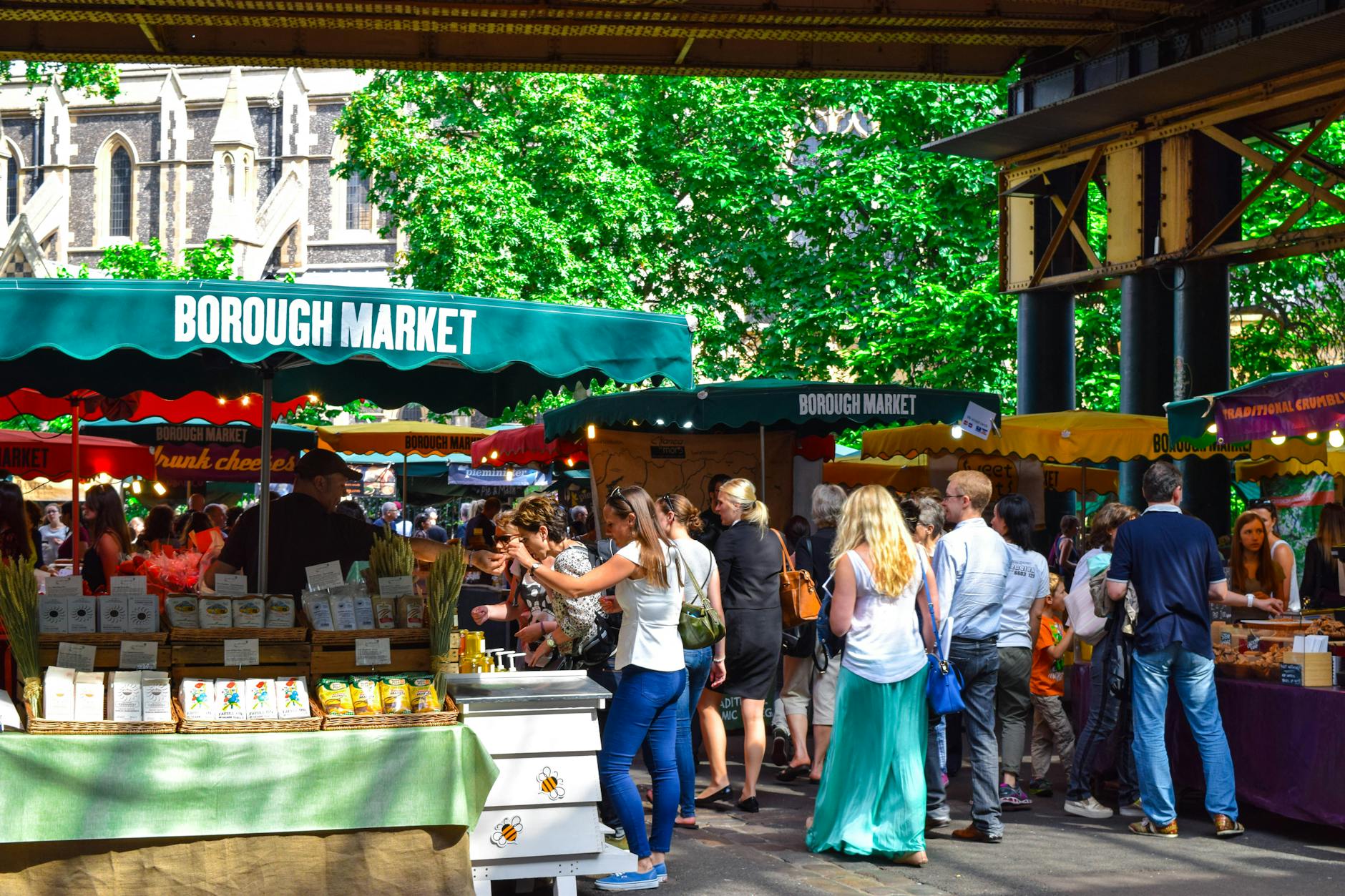
London's oldest food market (1,000+ years). Over 100 stalls selling artisan cheese, charcuterie, and street food.
South Kensington, SW7 | Free
The world's greatest museum of decorative arts and design: 2.3 million objects spanning 5,000 years.
South Kensington, SW7 | Free
Victorian cathedral of science: dinosaur skeletons, a blue whale model, and the spectacular Hintze Hall.
London Bridge, SE1 | £32
Western Europe's tallest building at 310m. The View from The Shard offers 40-mile panoramas on clear days.
Westminster/Kensington | Free
London's green lung: 350 acres with the Serpentine lake, Speakers' Corner, and the Peter Pan statue.
Camden Town, NW1 | Free entry
London's most eclectic market: vintage fashion, global street food, and live music along the Regent's Canal.
Various, WC2/W1 | £20–150
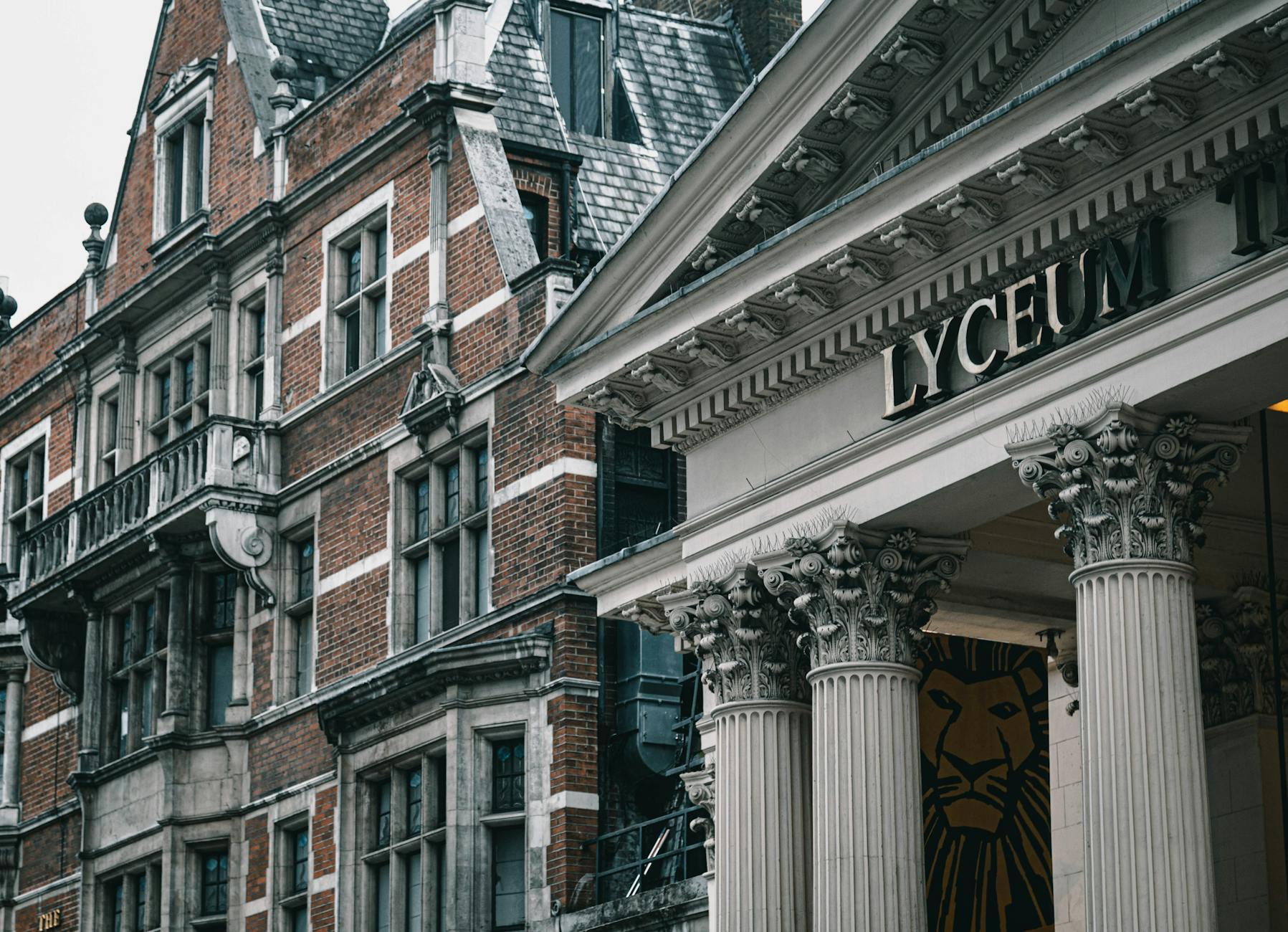
Over 40 theatres staging world-class shows. Les Misérables, Hamilton, and The Mousetrap (since 1952).
Tower Hamlets, SE1 | £12.30
The Victorian drawbridge icon. Walk the glass floor 42m above the Thames for vertigo-inducing views.
Greenwich, SE10 | Free (grounds)
The Prime Meridian, the Cutty Sark, and the Royal Observatory — where time itself begins.
Richmond, TW9 | £21
UNESCO-listed Royal Botanic Gardens with 50,000 plant species, the Palm House, and the Treetop Walkway.
19. Notting Hill & Portobello Road (Kensington, W11, Free): Pastel-coloured houses and the famous Saturday antiques market stretching over a mile.
20. Churchill War Rooms (Westminster, SW1, £28): The underground bunker where Churchill directed WWII. Preserved exactly as it was in 1945.
Essential practical information
Contactless payment is accepted almost everywhere, including on the Tube. Many places no longer accept cash. ATMs are widespread.
London is very safe for tourists. Pickpocketing occurs on the Tube and at major tourist sites. Keep bags zipped and phones secure.
The British queue for everything. Cutting in line is a serious social offence. Join the end and wait your turn.
London's weather is unpredictable. Pack layers and a compact umbrella regardless of season. Rain is frequent but rarely heavy.
Use a contactless bank card or Oyster card on the Tube/bus. Never buy single paper tickets — they cost almost double.
Pubs typically close at 11 PM (later on weekends). Last orders are called 20 minutes before closing. No table service — order at the bar.
Tip 10–15% at restaurants if service charge isn't included. No tipping at pubs, cafés, or for taxi drivers (rounding up is fine).
Major shops have restricted Sunday trading hours (typically 11 AM–5 PM). Supermarkets and small shops may stay open longer.
| Budget Level | Daily Cost | Includes |
|---|---|---|
| Budget | £60–100/day | Hostel, free museums, street food, Tube with daily cap |
| Mid-Range | £150–300/day | Boutique hotel, pub lunches, restaurant dinners, theatre |
| Luxury | £400+/day | Five-star hotel, Michelin dining, private tours, premium theatre |
Navigate the city like a local
Heathrow (LHR) is 24 km west. Elizabeth Line to central London (£12.80, 35 min). Heathrow Express to Paddington (£25, 15 min). Gatwick: Gatwick Express to Victoria (£19.90, 30 min). Stansted: Stansted Express to Liverpool Street (£19.40, 47 min).
London's iconic metro with 11 lines and 270 stations. Runs 5 AM–midnight (24-hr on some lines Fri–Sat). Cost: £1.75–3.40/ride (contactless)
Iconic red double-deckers covering the entire city. Route 11 is a great sightseeing bus. Cash not accepted — contactless only. Cost: £1.75/ride (daily cap £5.25)
Suburban rail and the new Crossrail line connecting Heathrow to east London. Same contactless payment as the Tube. Cost: £1.75–4.70
London's bike-share scheme with 12,000 bikes and 800 docking stations across central London. Cost: £1.65/30 min
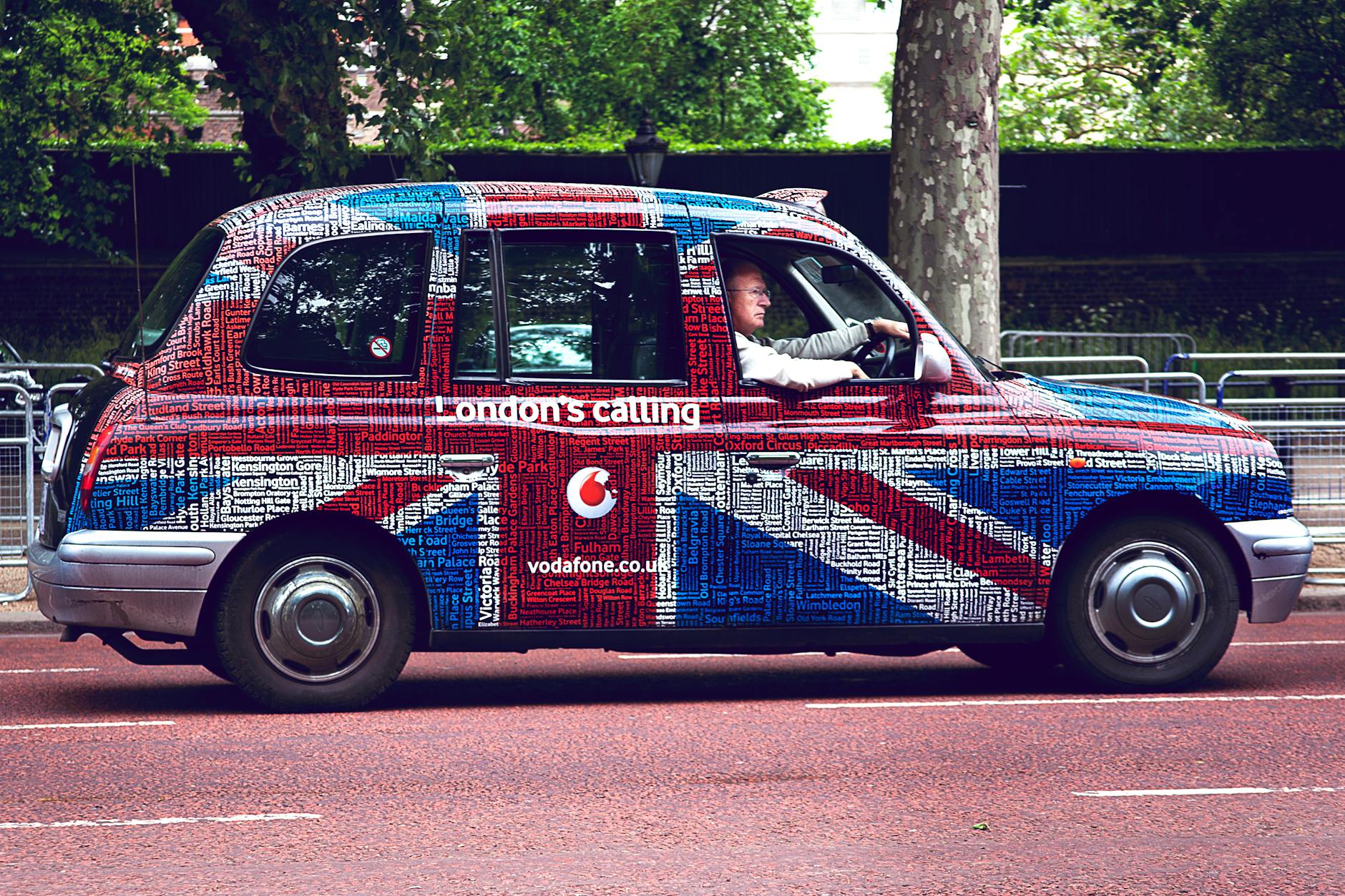
Licensed black cabs are metered and can be hailed on the street. Uber and Bolt are widely available. Cost: £3–4/km (cab), £1.50–2.50/km (Uber)
When to go and what to expect
The best time to visit (15–22°C). Long daylight hours (until 9 PM), blooming parks, and outdoor festivals. Chelsea Flower Show in May.
Warmest (18–28°C) but busiest. Wimbledon, Notting Hill Carnival (August bank holiday), and Proms concerts at the Royal Albert Hall.
Autumn colours in the parks (10–18°C). Theatre season kicks off. Open House London (September) opens 800+ buildings usually closed to the public.
Cold and dark (3–12°C) but festive. Christmas lights on Oxford Street, New Year's fireworks over the Thames. January sales offer big discounts.
London — best experienced in May–SeptemberMake the most of your time
Extended stays and themed routes
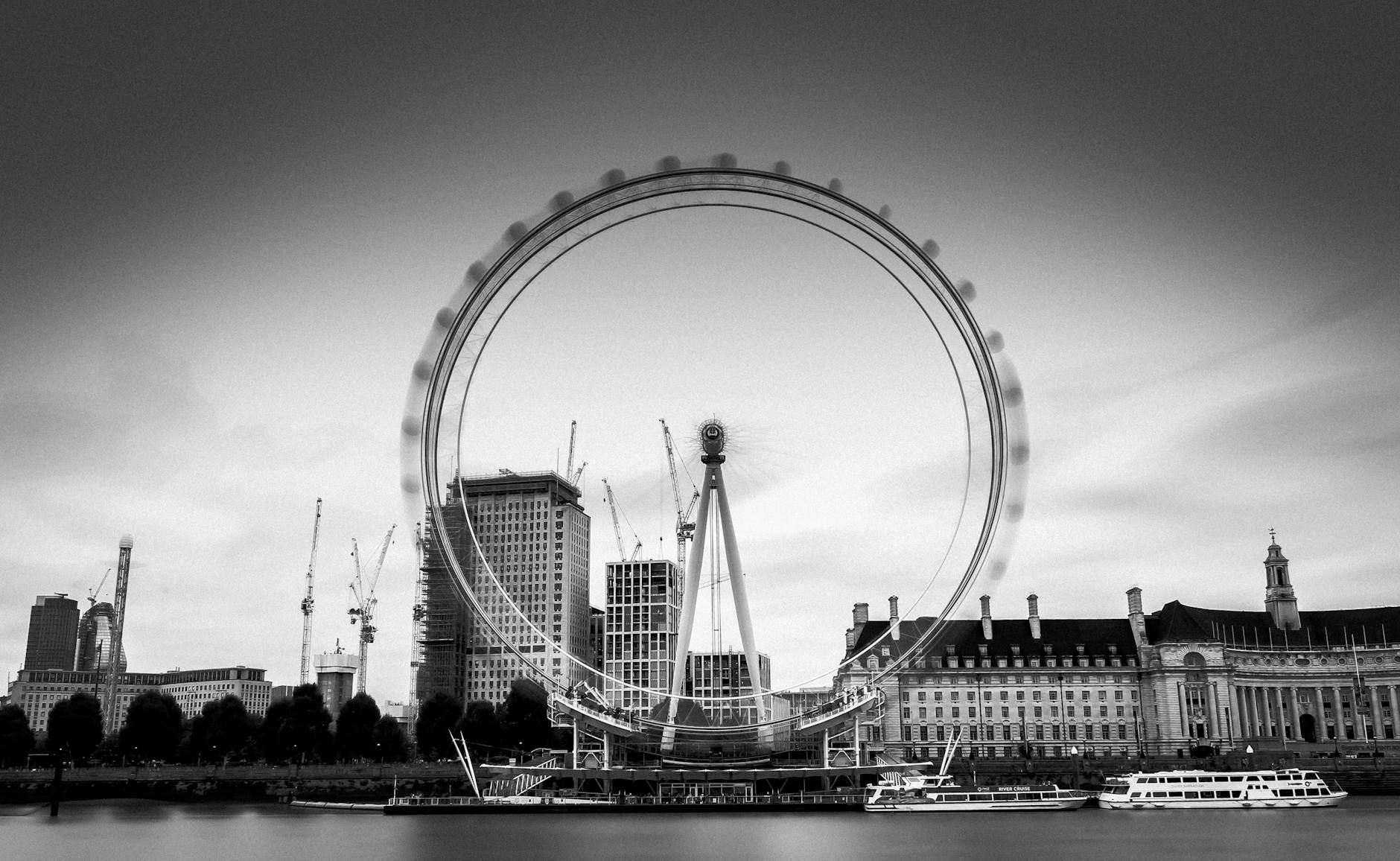
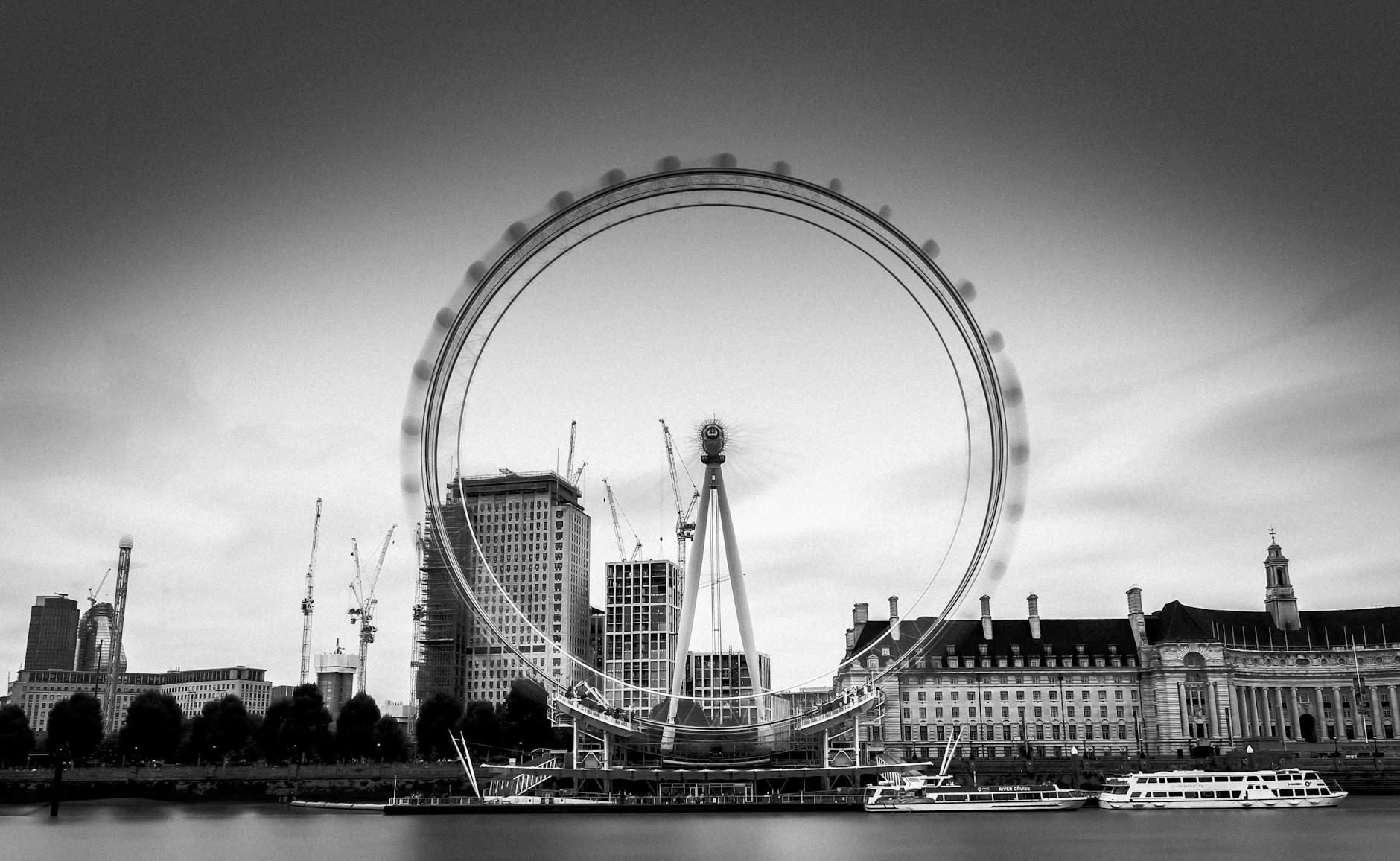
Add Greenwich (Royal Observatory, Cutty Sark, and lunch at the market), Camden Market, and an evening at a comedy club in Soho. Take a day to explore the South Bank from the London Eye to the Design Museum.
Include Kew Gardens, the Churchill War Rooms, Hampton Court Palace, a pub crawl through historic Clerkenwell, and a day trip to Stonehenge or Oxford.
Kids love the Natural History Museum (free), the London Zoo (£27), the Harry Potter Studio Tour (£53, book months ahead), and afternoon tea at The Wolseley.
Start at Borough Market, take a curry on Brick Lane, book afternoon tea at Claridge's (£80), and end with dinner at Bao or Padella (no reservations — queue early).
Where a two-mile walk takes you through 2,000 years of London culture
London's Cultural Waterfront
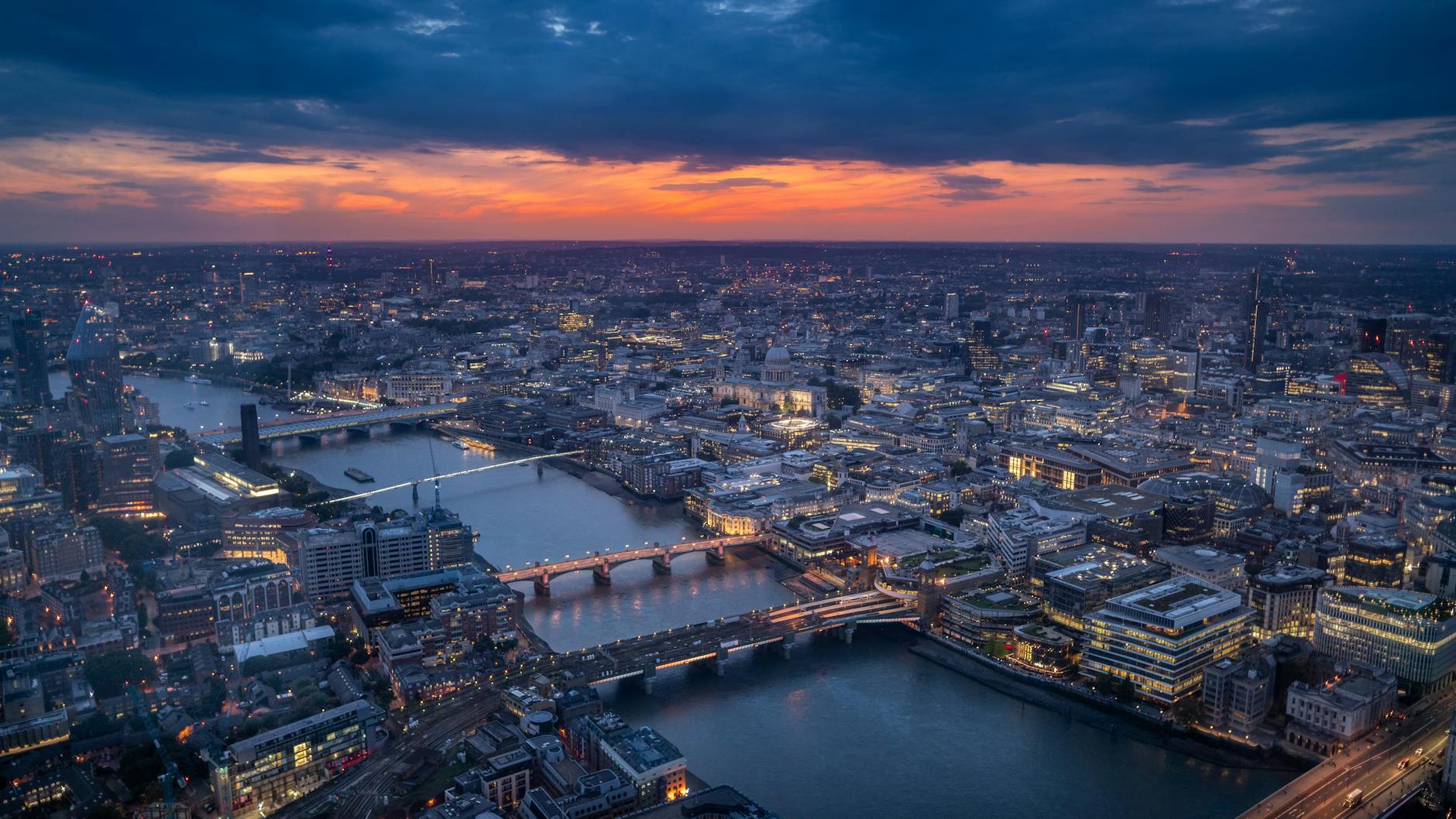
The South Bank of the Thames has transformed from a derelict industrial zone into London's cultural powerhouse. Walking east from the London Eye, you pass the Southbank Centre (Europe's largest arts complex), the National Theatre, the brutalist Hayward Gallery, Shakespeare's Globe, the Tate Modern, and Borough Market — all within a two-mile riverside stroll. Street performers, bookstalls, and food vendors line the walkway, creating a permanent festival atmosphere.
This is London's best walk. Start at Westminster Bridge with Big Ben views, then follow the Thames Path east past the London Eye, under Waterloo Bridge (where the best second-hand book market operates), past the Tate Modern's Turbine Hall, across the Millennium Bridge for St Paul's views, and finish at Borough Market for lunch. In summer, the area buzzes until late with open-air cinema, rooftop bars, and pop-up restaurants.
Where to eat in South Bank & Bankside
Padella (£8–14): Fresh handmade pasta at rock-bottom prices. Queue early or late to avoid the wait.
Borough Market (£5–15): Hundreds of artisan food stalls — Kappacasein raclette, Bread Ahead doughnuts, and Neal's Yard cheese.
OXO Tower Brasserie (£35–60): Thames-view dining on the 8th floor. The views justify the prices.
Entertainment: National Theatre (£15 tickets via NT Live), BFI Southbank for cinema, and free foyer performances at the Southbank Centre daily.


Where London's immigrant history meets its creative future
London's Creative Engine
Shoreditch was London's original hipster neighbourhood before the word existed. Today it's a collision of street art, tech startups, vintage markets, and some of the city's best food. Brick Lane — named for the bricks that once paved this Huguenot, then Jewish, then Bangladeshi street — is a living history of London immigration, now famous for its curry houses, vintage shops, and the Sunday UpMarket.
Start at the famous Shoreditch street art (Banksy's early works were here), then walk down Brick Lane past the Old Truman Brewery (now a creative complex), stop for a salt beef bagel at Beigel Bake (24 hours, 80p), and explore the Vintage Market. At night, Shoreditch transforms into London's liveliest nightlife area with cocktail bars, clubs, and late-night eateries lining Old Street and Kingsland Road.
Where to eat in Shoreditch & Brick Lane
Dishoom (£15–25): Bombay-style café — the bacon naan roll and black daal are legendary. Queue from 8 AM.
Beigel Bake (80p–£4): Open 24 hours. The salt beef bagel is a London institution since 1977.
Smokestak (£20–40): Brisket, ribs, and smoked meats in a stripped-back space. Book ahead.
Street Art: Take a free street art walking tour (tips only) to understand the stories behind Shoreditch's ever-changing murals. Stik, ROA, and Ben Eine are regulars.


Where three world-class free museums sit within 200 metres of each other
London's Museum Quarter
South Kensington is London's intellectual powerhouse — a Victorian vision of public education made manifest in three of the world's greatest museums: the Natural History Museum, the Science Museum, and the Victoria & Albert Museum, all within 200 metres of each other, all completely free. The neighbourhood extends south into Chelsea, with its elegant King's Road shops, the Saatchi Gallery, and the Chelsea Physic Garden.
Beyond the museums, South Kensington is a beautifully preserved neighbourhood of white stucco terraces, garden squares, and some of London's best French patisseries (the area has a large French community). The Royal Albert Hall hosts the famous Proms concerts in summer, and Hyde Park and Kensington Gardens are steps away for a post-museum stroll.
Where to eat in South Kensington & Chelsea
Daquise (£15–25): Polish restaurant open since 1947. The pierogi and borscht are comfort food perfection.
Harrods Food Halls (£10–50): More a spectacle than a shop. The meat hall ceiling alone is worth the visit.
The Ivy Chelsea Garden (£30–55): Beautiful restaurant with a stunning garden terrace on King's Road.
Culture: The Royal Albert Hall (£7–100) hosts the BBC Proms from July to September. Standing tickets (£8) are available on the day — an unforgettable experience.


What to eat and where to find it
London has become one of the world's great food cities. The old joke about terrible British food is long dead — killed by a generation of chefs who transformed the capital into a global dining destination. From Michelin-starred restaurants to street food markets, from centuries-old pie shops to cutting-edge tasting menus, London feeds every appetite and every budget. The city's diversity means you can eat a different cuisine every meal for a month and never repeat.
Fish & Chips (£8–15): Battered cod or haddock with thick-cut chips, mushy peas, and malt vinegar. Best from a proper chippy, not a tourist trap.
Full English Breakfast (£8–14): Bacon, eggs, sausages, baked beans, toast, grilled tomato, mushrooms, and black pudding. Fuel for a day of walking.
Sunday Roast (£15–25): Roast beef, Yorkshire pudding, roast potatoes, gravy, and veg. Best in a traditional pub. Book ahead.
Pie & Mash (£6–10): Traditional East End working-class dish: minced beef pie with mash and liquor (parsley sauce). Try F. Cooke on Broadway Market.
Chicken Tikka Masala (£10–16): Britain's adopted national dish. Brick Lane and Tayyabs (Whitechapel) serve the best.
Scotch Egg (£3–5): Hard-boiled egg wrapped in sausage meat, breaded, and fried. The Ginger Pig makes the gold standard.
Afternoon Tea (£45–80): Finger sandwiches, scones with clotted cream and jam, and pastries. Claridge's, The Ritz, and Sketch are iconic.
Sticky Toffee Pudding (£8–12): Dense date sponge drenched in toffee sauce with vanilla custard. The quintessential British dessert.
Best restaurants, markets, and street food
Dishoom (£15–25): Bombay café chain that has become a London institution. Multiple locations — Shoreditch and King's Cross are the best.
Brasserie Zedel (£15–30): Grand Parisian brasserie hidden beneath Piccadilly. Three-course set menu for £14.75 is London's best deal.
The Wolseley (£25–50): Grand European café on Piccadilly. Perfect for afternoon tea or a glamorous breakfast.
Padella (£8–14): Fresh pasta at Borough Market. No reservations — queue early. Worth every minute.
Borough Market (London Bridge): London's greatest food market. Over 100 stalls open Wed–Sat. Don't miss Kappacasein raclette, Bread Ahead doughnuts, and Neal's Yard cheese.
Maltby Street Market (Bermondsey): Borough Market's cooler, less crowded sibling. Excellent coffee, tacos, and smoked meats on Saturdays.
Camden Market (Camden Town): Global street food in a canal-side setting. The Thai stalls and Mac Factory are highlights.


Understanding the story of London
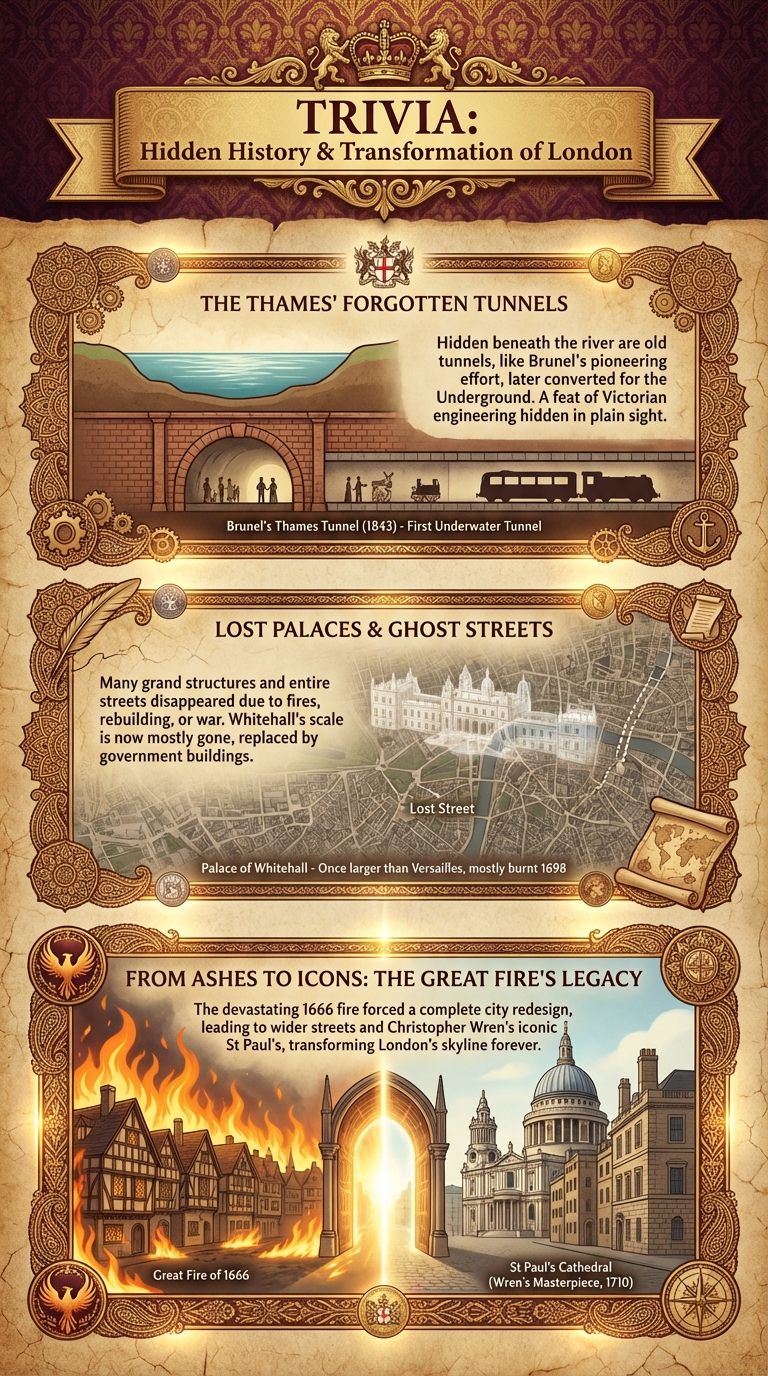
London was founded as Londinium by the Romans in 43 AD, who built a bridge across the Thames, a forum, and a defensive wall whose outline still defines the City of London today. After the Roman withdrawal, the Anglo-Saxons rebuilt the city, and the Normans conquered it in 1066 — William the Conqueror built the Tower of London to keep the populace in check. Medieval London grew into a major trading port, survived the Black Death (1348–1349, killing half its population), and saw the Tudor dynasty transform it into a Renaissance capital.
The Great Fire of 1666 destroyed 80% of the medieval city, allowing Christopher Wren to rebuild with St Paul's Cathedral as his masterpiece. The Victorian era made London the capital of the largest empire in history, with railways, the Underground, and monuments that define the skyline today. The Blitz of 1940–1941 devastated the East End but failed to break London's spirit. Post-war immigration from the Commonwealth created the multicultural metropolis we know today, and the 2012 Olympics marked London's confident entry into the 21st century.
London's culture is defined by diversity and understatement. The British gift for self-deprecating humour pervades everything from pub conversations to stand-up comedy clubs. The West End rivals Broadway for theatre, with over 40 major venues staging everything from Shakespeare to Hamilton. Pub culture remains central to London social life — the pub is the living room of the city, where deals are made, friendships cemented, and Sunday roasts consumed. The Notting Hill Carnival (August bank holiday) is Europe's largest street festival, celebrating Caribbean culture with two million revelers.
Excursions from London
London's position in southeast England and excellent rail connections make day trips easy. Direct trains reach most destinations in under two hours.
The mysterious 5,000-year-old stone circle and the elegant Georgian city with its Roman thermal baths. Entry: £23 (Stonehenge) / £20 (Roman Baths)
The dreaming spires of the world's most famous university. The Bodleian Library and Christ Church are essential. Entry: £5–15 per college
Punting on the Cam, King's College Chapel, and the Fitzwilliam Museum. Quieter and more intimate than Oxford. Entry: £5–12 per college
The oldest and largest occupied castle in the world. The State Apartments and St George's Chapel are magnificent. Entry: £30

Practical information from A to Z
Legal drinking age is 18. Pubs typically open 11 AM–11 PM. Supermarkets sell alcohol. ID may be requested if you look under 25.
Free ATMs are everywhere. Avoid ATMs that charge a fee (usually inside convenience stores). Contactless payment is nearly universal.
NHS walk-in centres and A&E (emergency) are free for emergencies. For non-emergencies, private clinics like Doctorcall provide same-day appointments (£100+).
230V/50Hz, Type G plug (three rectangular pins). UK plugs are unique — bring an adapter.
Free Wi-Fi on the Tube, in most cafés, and at major public spaces. Three, Vodafone, and EE offer tourist SIMs from £10.
London is one of the world's most LGBTQ+-friendly cities. Soho is the historic gay neighbourhood. Same-sex marriage has been legal since 2014.
Royal Mail post offices across the city. Red postboxes on most streets. International mail takes 5–7 working days.
Borough (food), Portobello (antiques, Saturdays), Camden (everything), Columbia Road (flowers, Sundays), Brick Lane (vintage, Sundays).
Most national museums are free. Special exhibitions charge £10–25. Many offer late openings on Fridays.
Use contactless bank cards instead — same fares, no deposit. Oyster still works if you prefer. Always tap in and out.
Boots and Superdrug are on every high street. Zafash Pharmacy (233 Old Brompton Rd) is open 24/7.
Banned in all enclosed public spaces since 2007. Smoking areas exist outside pubs and restaurants.
VAT of 20% is included in displayed prices. Non-UK visitors can claim VAT refunds on purchases over £30 at participating stores.
10–15% at restaurants if no service charge. No tipping at pubs (order at the bar). Rounding up for taxis is appreciated.
Free at major museums and train stations. Some public toilets charge 20–50p. Department stores (John Lewis, Selfridges) have excellent free facilities.
Getting to and around London
From Heathrow: Elizabeth Line (£12.80, 35 min) is the best value. Heathrow Express (£25, 15 min) is fastest. Piccadilly Line (£5.50, 50 min) is cheapest. Taxis cost £50–100.
From Gatwick: Gatwick Express to Victoria (£19.90, 30 min). Thameslink to various central stations (£10–15, 35 min).
Within London: The Tube is the fastest way around. Buses are scenic and cheaper. Walking along the Thames is the best way to connect Westminster, the South Bank, and the City.
| Mode | Details | Cost |
|---|---|---|
| Underground (Tube) | London's iconic metro with 11 lines and 270 stations. Runs 5 AM–midnight (24-hr on some lines Fri–Sat). | £1.75–3.40/ride (contactless) |
| Bus | Iconic red double-deckers covering the entire city. Route 11 is a great sightseeing bus. Cash not accepted — contactless only. | £1.75/ride (daily cap £5.25) |
| Overground & Elizabeth Line | Suburban rail and the new Crossrail line connecting Heathrow to east London. Same contactless payment as the Tube. | £1.75–4.70 |
| Santander Cycles | London's bike-share scheme with 12,000 bikes and 800 docking stations across central London. | £1.65/30 min |
| Black Cab / Uber | Licensed black cabs are metered and can be hailed on the street. Uber and Bolt are widely available. | £3–4/km (cab), £1.50–2.50/km (Uber) |
Essential phrases for travelers
English is the language of London, though you'll hear over 300 others. British English has its own vocabulary and slang that can confuse even native English speakers from other countries.
| English | English |
|---|---|
| Hello | Alright? / Hiya |
| Thank you | Cheers / Ta |
| Excuse me | Sorry / Pardon |
| Tube/Subway | The Underground / The Tube |
| Bill (restaurant) | The bill, please |
| Bathroom | The loo / Toilet |
| Drunk | Pissed |
| Angry | Narked / Miffed |
| Good | Brilliant / Lovely |
| Very | Proper / Well |
| Friend | Mate |
| Money | Quid (£) |
| Food to go | Takeaway |
| Line/Queue | Queue |
| Pleased to meet you | Nice to meet you / Pleased to meet you |
Our favourite experiences in London
Primrose Hill
The London skyline panorama from this Regent's Park hilltop is magical at dawn
Waterloo Bridge
The Thames turns gold as the sun sets between the Houses of Parliament and St Paul's
Borough Market
London's greatest food market — over 100 stalls of artisan food and drink
Maltby Street Market
Borough Market's cooler, less crowded sibling on Saturdays
Claridge's
Art Deco grandeur in Mayfair — afternoon tea here is a London institution
Tower of London
Crown Jewels, Beefeaters, and 1,000 years of dark royal history
Dennis Severs' House
A time-capsule Huguenot house in Spitalfields experienced in candlelit silence
Millennium Bridge
St Paul's Cathedral perfectly framed by the pedestrian bridge — iconic
Columbia Road Flower Market
Sunday morning flower market in Shoreditch — blooms, coffee, and East End charm
Tate Modern
World-class modern art in a dramatic converted power station on the Thames
Everything you need for London
Travorea creates comprehensive, beautifully designed travel guides that combine insider knowledge with practical information. Our guides are crafted to help you experience destinations like a local, not just a tourist.
This premium guide to London was researched and written to give you everything you need for an unforgettable trip. All prices and information were verified at the time of writing (2026) but may change — always confirm locally.
All photographs in this guide are sourced from free-to-use image libraries (Pexels, Unsplash) and original Travorea photography. Infographics are original Travorea creations.
Visit us at www.travorea.com for more destinations, interactive trip planners, and the latest travel tips.
Explore More Guides
Visit www.travorea.com/ebooks for premium guides to 50+ destinations worldwide.
The Old Smoke