
Macau
Travorea

Macau

Las Vegas of Asia

Ruins of St. Paul’sEgg TartsCotai CasinosUNESCO HeritageMacanese Cuisine
80
Pages
2026 Edition

Contents

Plan Your Trip

Welcome to Macau4
Macau at a Glance5
Top 20 Experiences6
Need to Know9
Month by Month11

Itineraries

3-Day Itinerary12
Extended Itineraries13

Explore Macau

Senado Square / Historic Centre14
Cotai Strip18
Taipa Village22
Coloane Village26
NAPE / Outer Harbour30
São Lázaro / Tap Seac34
Inner Harbour / Barra38
Fisherman’s Wharf42
Galaxy Macau Area46
Macau Tower Area50
Hac Sa Beach Area54
University of Macau / Hengqin Border58
Rua da Cunha / Taipa Food Street62

Special Sections

Food Guide66
Day Trips71
History & Culture69

Survival Guide

Directory A–Z73
Transport75
Language76

Quick Reference

Top 10 Picks77
Packing List78
Credits79
2
Macau

Macau

Where 400 years of Portuguese heritage, world-class casinos, and the finest egg tarts on earth collide on a tiny peninsula

3

Welcome to Macau

Las Vegas of Asia

Macau is the most improbable city in Asia. On a sliver of land smaller than Manhattan — just 33.7 square kilometres — Portuguese colonial churches stand in the shadow of casino towers that generate more gambling revenue than Las Vegas. The Ruins of St. Paul’s, the carved stone facade of a 17th-century Jesuit church, gazes across a skyline punctuated by the gilded lotus of the Grand Lisboa and the shimmering curves of the Cotai Strip mega-resorts. In between, narrow lanes wind past pastel-painted colonial buildings, incense-filled A-Ma Temple, and bakeries turning out the finest egg tarts in the world. Macau is where East met West four centuries before Hong Kong, and the fusion runs deeper here than anywhere else in Asia.

But Macau’s deepest charm lies beyond the casino floors. The UNESCO-listed Historic Centre of Macau preserves an extraordinary collection of Portuguese baroque churches, Chinese temples, colonial squares, and Macanese shophouses that tells the story of 450 years of cultural exchange. Walk from the neoclassical Holy House of Mercy to the incense-coiled Kun Iam Temple, eat African chicken at a family-run Macanese restaurant in Taipa Village, and finish with an egg tart at Lord Stow’s in Coloane — and you’ll understand why this tiny territory earned UNESCO World Heritage status. Macau is a city of layers, where every alley reveals a new collision of Portuguese tiles and Chinese calligraphy.

WHY I LOVE MACAU
The Macanese Pataca (MOP) is pegged to the Hong Kong Dollar at roughly 1:1, and HKD is accepted everywhere. Don’t bother changing currency — just use your Hong Kong dollars. You’ll get MOP in change, which you can spend locally.
4

Macau at a Glance

Population687,000
Area33.7 km²
LanguageCantonese, Portuguese
CurrencyMOP (Macanese Pataca)
Time ZoneUTC+8 (MST)
Best TimeOctober–December
Visa14–90 days visa-free for most passports
Emergency999
Macau Macau

Macau sits on the western side of the Pearl River Delta, connected to mainland China at the Barrier Gate border and linked to Hong Kong by a one-hour ferry or the 55-km Hong Kong–Zhuhai–Macau Bridge. The territory comprises the Macau Peninsula, Taipa island, Cotai (reclaimed land), and Coloane island. Two days covers the highlights; three to four days lets you explore every neighbourhood and day-trip to Hengqin Island.

Money-Saving Tips
Macau is moderately expensive in tourist areas but very affordable in local neighbourhoods. A local meal costs MOP$40–80. Casino hotels offer incredible deals on rooms to attract gamblers. Tipping is not expected at local restaurants but 10% service charge is common at hotel restaurants.
5
01

Top 20 Experiences

The essential sights and experiences

Ruins of St. Paul’s

1. Ruins of St. Paul’s

Historic Centre | Free

The iconic carved stone facade of the 1602 Jesuit church Mater Dei, destroyed by fire in 1835. The elaborate carvings blend Christian and Asian motifs — chrysanthemums alongside angels, a Chinese dragon beneath the Virgin Mary. The crypt museum behind holds sacred art and the bones of Japanese and Vietnamese martyrs.

Senado Square (Largo do Senado)

2. Senado Square (Largo do Senado)

Historic Centre | Free

Macau’s grand civic heart: a wave-patterned Portuguese limestone plaza surrounded by pastel neoclassical buildings housing the Leal Senado (Loyal Senate), Holy House of Mercy, and the General Post Office. The square has been the centre of Macau life since the 16th century.

A-Ma Temple

3. A-Ma Temple

Barra, Macau Peninsula | Free

Macau’s oldest temple (1488), predating the Portuguese arrival. Dedicated to the sea goddess Mazu, its incense-filled halls, carved boats, and hillside pavilions overlook the Inner Harbour. Macau’s name is believed to derive from A-Ma-Gau (Bay of A-Ma).

Macau Tower

4. Macau Tower

Macau Tower Area | MOP$165 (observation deck)

The 338-metre tower offers panoramic views of the Pearl River Delta, Cotai Strip, and mainland China. The AJ Hackett bungee jump (233m, highest commercial bungee in the world) and SkyWalk are for adrenaline seekers.

The Venetian Macao

5. The Venetian Macao

Cotai Strip | Free entry

Asia’s largest casino resort: 3,000 suites, 800 gaming tables, a 15,000-seat arena, and a Venice-inspired shopping mall with gondola rides on indoor canals. The sheer scale is staggering.

6

6. Guia Fortress & Lighthouse

Guia Hill | Free

The oldest lighthouse on the China coast (1865), sitting atop the highest point on the Macau Peninsula. The fortress (1638) and Chapel of Our Lady of Guia contain recently discovered 17th-century frescoes blending Western and Chinese painting techniques.

INSIDER TIP
The Ruins of St. Paul’s are mobbed by tour groups from 10 AM–4 PM. Visit at dawn (7–8 AM) for photographs without crowds, or after dark when the facade is beautifully illuminated.
6
Taipa Village

7. Taipa Village

Taipa | Free

A charming web of narrow streets, pastel-painted colonial houses, and traditional shops selling almond cookies, beef jerky, and egg rolls. Rua da Cunha is the pedestrianised food street at its heart.

8

8. Mount Fortress (Fortaleza do Monte)

Historic Centre | Free

The 17th-century Jesuit fortress adjacent to the Ruins of St. Paul’s, with cannons still pointing over the city. Houses the excellent Macau Museum, which traces the territory’s extraordinary cultural fusion.

9

9. St. Dominic’s Church

Historic Centre | Free

A stunning baroque church (1587) with a cream-and-green facade, ornate altarpiece, and a treasury museum of 300 sacred art objects. The evening lighting makes the church glow against the night sky.

Coloane Village

10. Coloane Village

Coloane | Free

Macau’s sleepy southern tip: a quiet waterfront village with the Chapel of St. Francis Xavier, pastel shophouses, and Lord Stow’s Bakery — birthplace of the Macanese egg tart.

Grand Lisboa Casino

11. Grand Lisboa Casino

NAPE | Free entry

The lotus-flower-shaped golden tower is Macau’s most recognisable modern landmark. Inside, the Star of Stanley Ho (218.08-carat diamond) is displayed, and the hotel houses eight Michelin-starred restaurants.

12

12. Mandarin’s House

St. Lawrence Parish | Free

A sprawling 4,000 m² Qing Dynasty compound (1869) built by the literary figure Zheng Guanying. Its blend of Chinese and Western architectural elements — moon gates meeting louvred shutters — perfectly symbolises Macau.

Must-Know Numbers
MOP$165: Macau Tower entry
33.7 km²: Total area of Macau
25+: UNESCO Heritage sites
7
13

13. Hac Sa Beach

Coloane | Free

Macau’s largest natural beach, named for its distinctive black sand. The beachfront Fernando’s restaurant is legendary for its Portuguese food, sangria, and barefoot atmosphere.

14

14. Lou Kau Mansion

Historic Centre | Free

An exquisite 1889 merchant’s townhouse with grey brick walls, carved wooden screens, and stained glass windows. One of the finest examples of traditional Chinese residential architecture in Macau.

15

15. The Parisian Macao

Cotai Strip | MOP$100 (Eiffel Tower observation)

A half-scale replica of the Eiffel Tower rises above this Cotai mega-resort. The observation deck offers dazzling views of the entire Cotai Strip lit up at night.

16

16. Chapel of Our Lady of Penha

Penha Hill | Free

A hilltop church (1622) offering the finest panoramic views in Macau — the Inner Harbour, Macau Tower, Cotai skyline, and mainland China spread before you. Especially beautiful at sunset.

17

17. Macau Museum of Art

NAPE | Free

Five floors of Chinese calligraphy, Macanese art, historical paintings of early Macau, and rotating international exhibitions in a striking waterfront building.

18

18. Studio City

Cotai Strip | Free entry (rides extra)

Hollywood-themed mega-resort with a figure-8 Ferris wheel (Golden Reel, MOP$100) woven through the building’s facade, a Batman dark ride, and a 40,000-seat arena.

19. Na Tcha Temple (Behind Ruins of St. Paul’s, Free): A tiny 1888 temple dedicated to the child-god Na Tcha, squeezed against the old city wall directly behind the Ruins of St. Paul’s. The juxtaposition of Chinese temple and Portuguese church facade perfectly captures Macau.

20. Taipa Houses–Museum (Taipa, Free): Five mint-green colonial houses (1921) on the Taipa waterfront, restored as museums showcasing Macanese domestic life, traditions, and the territory’s Portuguese-Chinese cultural heritage.

8
02

Need to Know

Essential practical information

Money

The Macanese Pataca (MOP) is pegged to HKD at roughly 1:1. Hong Kong Dollars are accepted everywhere. Credit cards work at casinos, hotels, and larger restaurants. Carry cash for local eateries and markets. ATMs are widespread.

Safety

Extremely safe city with very low crime. Pickpocketing is rare but watch valuables in crowded casino areas. Typhoon signals T8 and above will shut down ferries and some businesses.

Language

Cantonese is the dominant language. Portuguese signage is everywhere but few locals speak it. English is limited outside hotels and casinos. Basic Cantonese or Mandarin is very helpful in local restaurants.

Casinos

Gambling age is 21 (not 18). Dress code is casual at most casinos. Free shuttle buses run between casinos, ferry terminals, and the border gate. Non-gamblers can enjoy the architecture, restaurants, and shows for free.

Weather

Subtropical climate. Hot and humid summers (Jun–Sep, 28–32°C) with typhoon season. Cool, dry winters (Dec–Feb, 12–18°C). Autumn (Oct–Dec) is the best season with clear skies and comfortable temperatures.

Budget LevelDaily CostIncludes
BudgetMOP$400–700/dayGuesthouse or casino hotel deal, local restaurant meals, bus transport, free heritage sites
Mid-RangeMOP$1,200–2,500/dayCotai resort, Macanese restaurants, taxi transport, Macau Tower visit
LuxuryMOP$4,000+/dayFive-star Cotai suite, Michelin-starred dining, spa treatments, VIP gaming
Essential Apps
Download Macau Bus (real-time bus tracking, essential for navigating the peninsula), Google Maps offline (cell coverage can be patchy in old streets), MPay (Macau’s local mobile payment app), and Google Translate (with Cantonese offline pack).
9
03

Getting Around

Navigate the city like a local

From the Airport

Macau International Airport (MFM) is on Taipa, very close to the Cotai Strip. Free casino shuttles to major resorts (5–10 min). Bus AP1 to the peninsula (MOP$6, 20 min). Taxis to the Historic Centre MOP$60–80 (15 min). Most visitors arrive by ferry from Hong Kong (TurboJet/CotaiJet, 1 hour, HK$160–360) or bus over the HK–Zhuhai–Macau Bridge.

Public Bus

Macau’s backbone: extensive bus network covering the peninsula, Taipa, Cotai, and Coloane. Runs 6 AM–midnight. MOP$6 flat fare (MOP$3.20 with Macau Pass). Cost: MOP$3.20–6 per ride

Free Casino Shuttles

Free shuttle buses operated by major casinos connecting the ferry terminal, border gate, airport, and Cotai Strip resorts. No purchase necessary — just board. Cost: Free

Taxi

Black taxis with cream roofs. Metered and generally honest. English is limited — have your destination written in Chinese. Short waits at casino taxi ranks. Cost: MOP$19 flag fall + MOP$2/240m

Light Rail (LRT)

Macau’s new light rail connects Taipa Ferry Terminal, Cotai casinos, and the Macau Peninsula via the Barra station. Clean and modern. Cost: MOP$6–10

Walking

The Macau Peninsula Historic Centre is best explored on foot — most UNESCO sites are within a 30-minute walk of each other. Cost: Free

Transport Tips
Take advantage of the free casino shuttle buses — they connect the ferry terminal, border gate, and all major Cotai resorts every 5–15 minutes. You don’t need to gamble to ride. Buy a Macau Pass card (MOP$130, including MOP$100 credit) for discounted bus fares.
10

Month by Month

When to go and what to expect

Oct–Dec

The best time to visit. Clear skies, low humidity, comfortable temperatures (18–26°C). The Macau Grand Prix (November) and Macau Light Festival (December) add excitement.

Jan–Mar

Cool and occasionally cold (12–18°C). Chinese New Year (Jan/Feb) brings fireworks and festive atmosphere but larger crowds and higher prices.

Apr–May

Warm and increasingly humid (22–28°C). Occasional rain showers. The Drunken Dragon Festival (May) is a colourful Macau tradition.

Jun–Sep

Hot, humid, and rainy (28–32°C). Typhoon season. Best for indoor attractions — casinos and museums. Hotel rates are lowest.

Best Time to Visit
October to December is ideal: clear skies, pleasant temperatures, the Macau Grand Prix (mid-November), and the Macau Light Festival (December) which illuminates heritage buildings across the peninsula.
MacauMacau — best experienced in October–December
11
04

Itineraries

Make the most of your time

Day 1: Historic Centre — UNESCO Heritage Walk
9:00 AMStart at Senado Square — admire the wave-patterned limestone plaza and pastel neoclassical facades
9:30 AMHoly House of Mercy and St. Dominic’s Church — baroque splendour and the treasury museum
10:30 AMWalk up to the Ruins of St. Paul’s — explore the crypt museum and the Na Tcha Temple behind
11:30 AMMount Fortress and Macau Museum — cannons, panoramic views, and the story of Macau’s cultural fusion
12:30 PMLunch on Rua da Cunha in Taipa Village — pork chop buns and almond cookies (MOP$30–60)
2:30 PMMandarin’s House and Lou Kau Mansion — exquisite examples of East-meets-West domestic architecture
4:00 PMA-Ma Temple — Macau’s oldest temple, overlooking the Inner Harbour
5:30 PMChapel of Our Lady of Penha for sunset panoramic views over the city
7:00 PMDinner at A Lorcha for authentic Macanese-Portuguese cuisine (MOP$150–300)
Day 2: Cotai Strip, Coloane & Macau Tower
9:30 AMFree casino shuttle to The Venetian — explore the Grand Canal Shoppes and gondola rides
11:00 AMWalk the Cotai Strip — Galaxy Macau, City of Dreams, The Parisian (Eiffel Tower observation deck MOP$100)
12:30 PMLunch at Fernando’s in Hac Sa Beach — legendary Portuguese food, sangria, and beach atmosphere (MOP$150–250)
2:30 PMColoane Village — stroll the quiet waterfront, Chapel of St. Francis Xavier, and Lord Stow’s Bakery for the original egg tart
4:30 PMMacau Tower — observation deck for 360° views, or the 233m bungee jump for the brave (MOP$165–3,568)
6:00 PMTaipa Houses–Museum — five restored colonial houses on the old waterfront
7:30 PMDinner at The Eight at Grand Lisboa — three Michelin-starred Cantonese cuisine (MOP$800+)
Day 3: São Lázaro, Local Macau & Departure
9:00 AMWalk the São Lázaro and Tap Seac neighbourhoods — pastel streets, art galleries, and Portuguese-tiled buildings
10:30 AMGuia Fortress and Lighthouse — the oldest lighthouse on the China coast with panoramic views
12:00 PMLunch at Chan Seng Kei for authentic Macanese noodle soup (MOP$40–60)
1:30 PMInner Harbour — walk along the waterfront and through the Barra district’s colonial streets
3:00 PMLast egg tarts and almond cookies for gifts before departure
TIMING TIP
Macau’s Historic Centre is compact and walkable, but the hills are steep. Wear comfortable shoes. The casino shuttle system is the easiest way to travel between the peninsula and Cotai — it’s free and runs constantly.
12

More Itineraries

Extended stays and themed routes

Four Days

Add an evening of casino exploration (even if you don’t gamble, the architecture is extraordinary), the Macau Museum of Art, and a walk through the Fisherman’s Wharf waterfront complex. The extra day lets you revisit favourite food spots.

Five Days

Include a day trip to Hengqin Island (connected by bridge, home to Chimelong Ocean Kingdom — the world’s largest aquarium), explore the University of Macau’s Hengqin campus, and spend an evening at one of the Cotai Strip’s world-class shows.

Food Lover’s Route

Start with egg tarts at Lord Stow’s and Margaret’s Café, eat African chicken at A Lorcha, try Macanese minchi at Riquexó, pork chop buns at Tai Lei Loi Kei, dim sum at The Eight, and finish with serradura (sawdust pudding) at a Taipa Village bakery.

Family Itinerary

Kids love the Venetian’s gondola rides, Studio City’s Golden Reel Ferris wheel and Batman ride, Macau Tower’s glass floor observation deck, Hac Sa Beach, and Chimelong Ocean Kingdom on Hengqin Island.

Booking Essentials
Casino hotels offer incredible room deals during weekdays to attract gamblers — five-star Cotai suites can cost as little as MOP$800 midweek. Book The Eight or Robuchón au Dôme at least two weeks ahead. Ferry tickets can be bought online via TurboJet’s app.
13
Senado Square / Historic Centre

Senado Square / Historic Centre

Where wave-patterned Portuguese limestone meets 450 years of cultural fusion at Macau’s UNESCO heart

14
Senado Square / Historic Centre

Senado Square / Historic Centre

The UNESCO Heart of Macau

Senado Square is the pulsing heart of Macau — a grand wave-patterned Portuguese limestone plaza surrounded by pastel neoclassical buildings that together form the nucleus of the UNESCO World Heritage Historic Centre. The Leal Senado (Loyal Senate) building, Holy House of Mercy, and the General Post Office frame the square, while narrow pedestrianised streets radiate outward past souvenir shops, traditional pharmacies, and almond cookie bakeries. From here, Macau’s most famous walk leads uphill through St. Dominic’s Church to the Ruins of St. Paul’s — a journey through 450 years of cultural fusion in under 500 metres.

Start at the Leal Senado building and step into its serene blue-and-white tiled courtyard — a pocket of Lisbon in southern China. Walk through the square to St. Dominic’s Church (1587), whose cream-and-green baroque facade conceals an ornate interior and a treasury of 300 sacred objects. Continue uphill to the Ruins of St. Paul’s, pausing at the Na Tcha Temple and section of the Old City Wall directly behind. The Macau Museum on Mount Fortress above offers the best contextual overview of the territory’s extraordinary history.

LOCAL SECRET
Visit the Ruins of St. Paul’s at 7 AM or after 8 PM to avoid tour groups. The illuminated facade at night is arguably more atmospheric than in daylight.
15

Eating & Drinking

Where to eat in Senado Square / Historic Centre

Wong Chi Kei (MOP$35–55): Famous for its congee and shrimp-roe noodles. A Senado Square institution packed with locals at lunchtime.

Koi Kei Bakery (MOP$30–80): The most famous almond cookie and jerky shop in Macau. Free samples are generous — try the peanut candy and egg rolls.

Café Nam Ping (MOP$25–50): A classic Macanese cha chaan teng serving milk tea, pork chop buns, and thick toast with condensed milk since the 1960s.

Shopping: Rua de São Paulo for traditional Chinese medicine and curiosities, the streets around Senado Square for almond cookies, egg rolls, and beef jerky — the essential Macau edible souvenirs.

16

Senado Square / Historic Centre by the Numbers

$36.7B
Annual casino revenue (2023)
33.7 km²
Total area — smallest in the world for a casino capital
450+
Years of Portuguese presence
Did You Know?
Macau’s casino revenue is roughly five times that of Las Vegas. In 2019, the territory’s 41 casinos generated US$36.7 billion — making this tiny 33.7 km² peninsula the undisputed gambling capital of the world.
Senado Square / Historic Centre by the Numbers
Macau is the most densely populated region in the world, with approximately 20,400 people per square kilometre — making Hong Kong look spacious by comparison.
The Macau Grand Prix, held annually since 1954, is the only street circuit in the world where both car and motorcycle races take place. The tight Guia Circuit weaves through the city’s streets at terrifying speeds.
17
Cotai Strip

Cotai Strip

Where billion-dollar casino palaces create a fantasy world of canals, Eiffel Towers, and Michelin stars

18
Cotai Strip

Cotai Strip

The Casino Mega-Strip

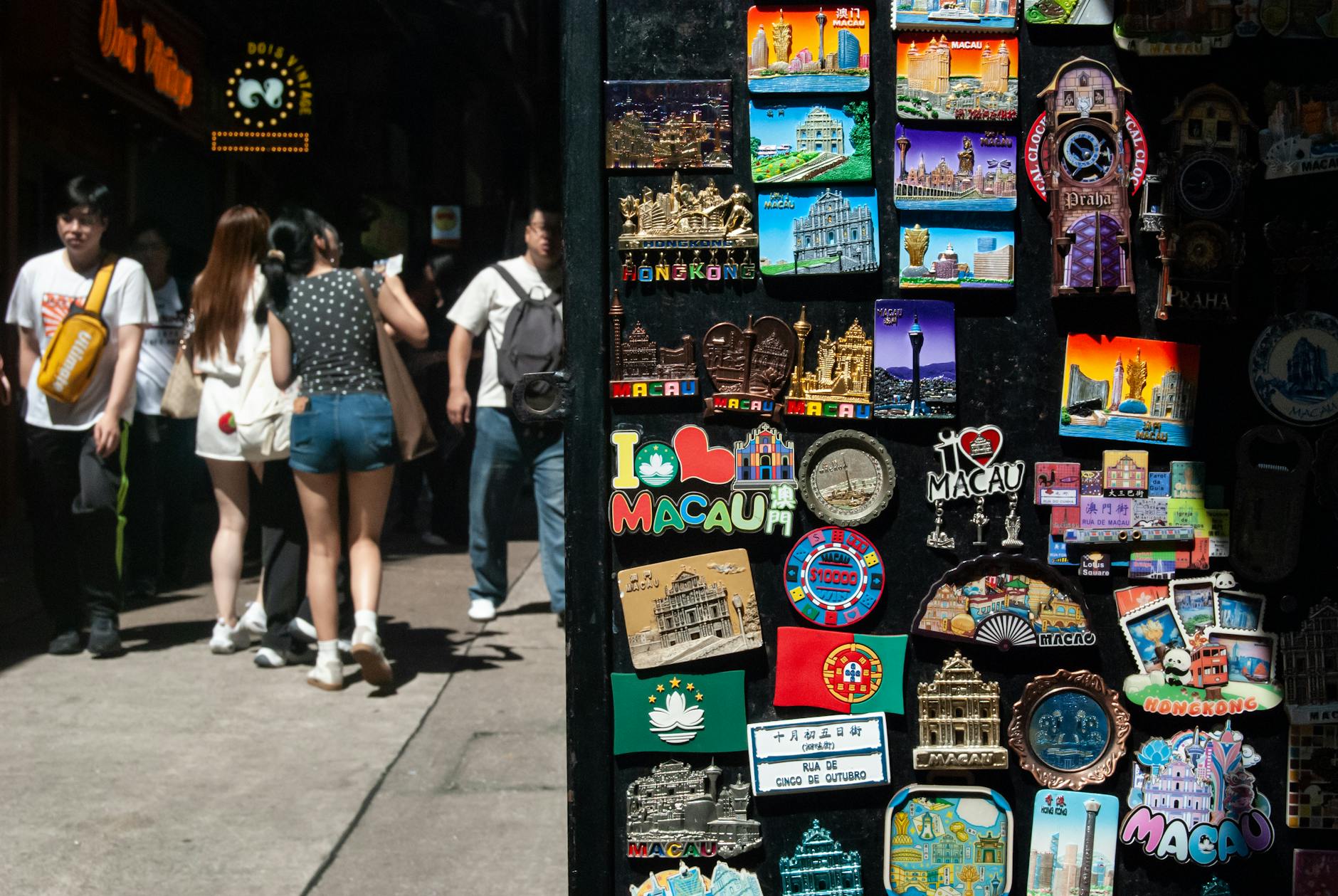
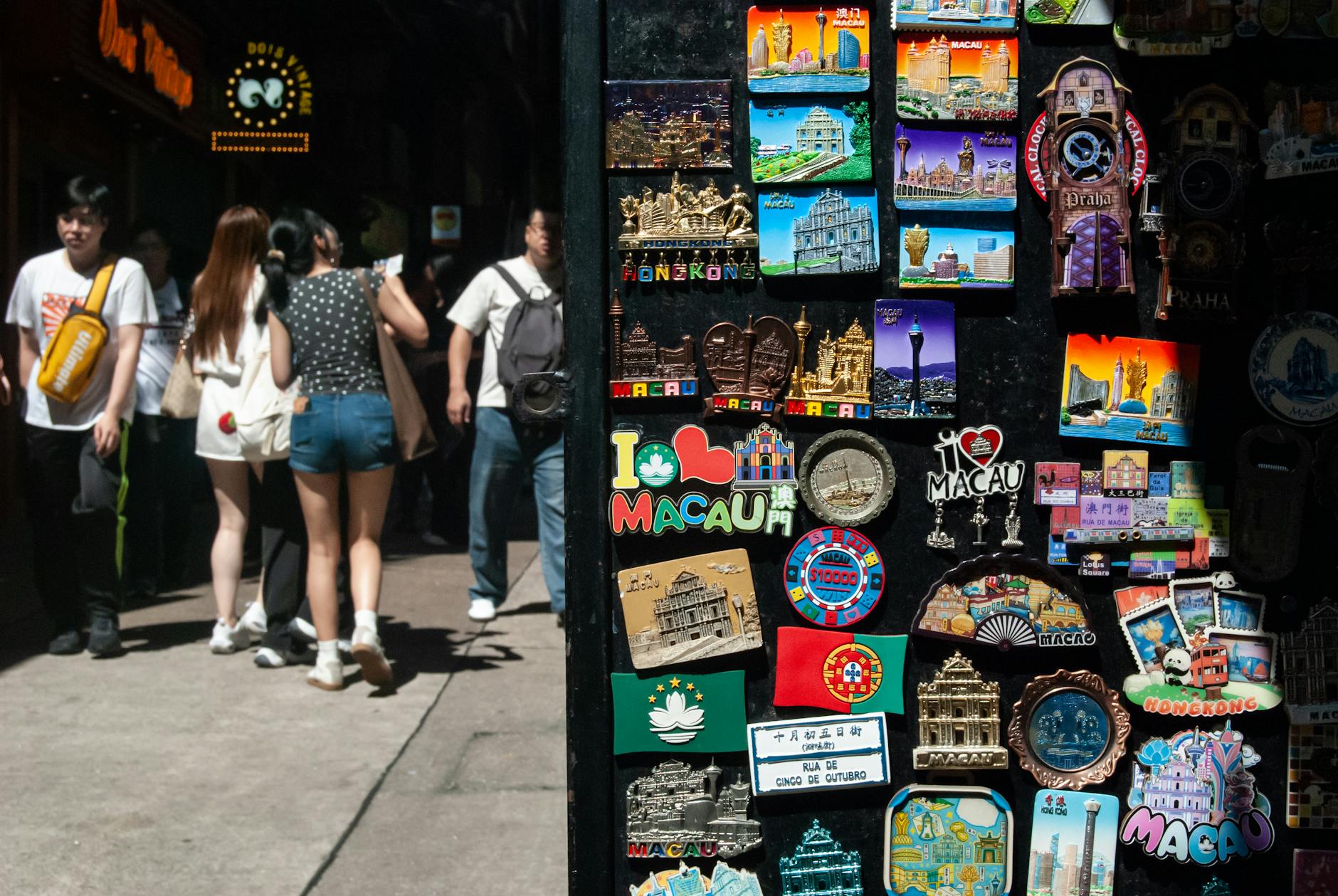
The Cotai Strip is what happens when Las Vegas meets Asia on reclaimed land between the islands of Taipa and Coloane. This 5-km boulevard of mega-resorts — The Venetian, Galaxy Macau, City of Dreams, The Parisian, Wynn Palace, and Studio City — generates more gambling revenue than the entire Las Vegas Strip. But even non-gamblers are staggered by the sheer scale: indoor canals with singing gondoliers, a half-scale Eiffel Tower, a figure-8 Ferris wheel threaded through a building, and restaurants helmed by Michelin-starred chefs from around the world.

Take a free casino shuttle from the ferry terminal or border gate. The Venetian alone is worth a morning: the Grand Canal Shoppes replicate Venice’s canals, bridges, and piazzas under a perpetually sunset-painted sky. Walk to The Parisian for the Eiffel Tower observation deck (MOP$100, dazzling at night), then explore Galaxy Macau’s rooftop beach and wave pool. City of Dreams houses the House of Dancing Water show — a US$250 million aquatic spectacular. At night, the Wynn Palace’s dancing fountains rival those of its Las Vegas counterpart.
LOCAL SECRET
The free casino shuttles are Macau’s best-kept transport secret. Hop between the Venetian, Galaxy, Wynn Palace, and City of Dreams without spending a pataca.
19

Eating & Drinking

Where to eat in Cotai Strip

The Eight (MOP$800+): Three Michelin-starred Cantonese restaurant at Grand Lisboa. The barbecued Iberian pork and dim sum are extraordinary. Book weeks ahead.

Robuchón au Dôme (MOP$1,500+): Three Michelin-starred French fine dining atop the Grand Lisboa. Joël Robuchon’s Macau outpost with dazzling city views.

North by Square Eight (MOP$200–400): Northern Chinese cuisine at City of Dreams. The hand-pulled noodles and Peking duck are exceptional.

Shows: House of Dancing Water at City of Dreams (MOP$580–1,480) is an extraordinary US$250 million aquatic show with acrobatics, diving, and motorcycles — book ahead.

20

Cotai Strip by the Numbers

687,000
Population in one of the world’s densest territories
25+
UNESCO World Heritage sites
1602
Year St. Paul’s Church was built
Did You Know?
The name “Macau” likely derives from A-Ma-Gau (“Bay of A-Ma”). When Portuguese sailors landed in 1553 near the A-Ma Temple and asked locals the name of the place, they were told “A-Ma-Gau” — the name of the temple, not the territory.
Cotai Strip by the Numbers
Lord Stow’s Bakery in Coloane sells over 13,000 egg tarts per day. Andrew Stow, an English pharmacist, created the Macanese egg tart in 1989 by adapting the Portuguese pastel de nata, and it became Macau’s most famous food export.
Macau’s per-capita GDP is among the highest in the world — over US$80,000 — largely thanks to the casino industry, which employs roughly 15% of the workforce.
21
Taipa Village

Taipa Village

Where colonial charm, food streets, and Portuguese-tiled lanes survive in the shadow of Cotai’s towers

22
Taipa Village

Taipa Village

The Charming Colonial Heart of Taipa

Taipa Village is old Macau distilled into a handful of charming streets. Before the Cotai Strip was built on reclaimed land, Taipa was a separate island of colonial villas, Chinese temples, and family-run bakeries. The village survives beautifully: pastel-painted houses line narrow lanes, traditional shops sell almond cookies and peanut candy, and small restaurants serve authentic Macanese food. The pedestrianised Rua da Cunha is the food street at the village’s heart, always bustling with locals and visitors sampling pork chop buns and egg tarts.

Enter the village from Rua da Cunha and eat your way down the street: a pork chop bun from Tai Lei Loi Kei, almond cookies from Koi Kei, and an egg tart from Lord Stow’s Garden Café. Beyond the food street, explore the quieter lanes to find Pak Tai Temple, the Taipa Houses–Museum (five mint-green colonial villas on the old waterfront), and the Our Lady of Carmel Church perched on a hill above the village. The contrast between the village’s gentle pace and the Cotai Strip towers visible just beyond is pure Macau.

LOCAL SECRET
The Taipa Houses–Museum (free) is one of Macau’s most photogenic spots — five mint-green colonial villas from 1921 with period interiors showing how Macanese families lived.
23

Eating & Drinking

Where to eat in Taipa Village

Tai Lei Loi Kei (MOP$38–48): The original and best pork chop bun in Macau — a marinated bone-in pork chop in a crispy bun. Queues are long but move fast.

Antonio (MOP$200–400): Widely considered Macau’s finest Portuguese restaurant. The bacalhau (salt cod) and African chicken are exceptional. Book ahead.

Lord Stow’s Garden Café (MOP$11 per tart): The Taipa branch of the famous Coloane bakery. The egg tarts are warm, custardy, and perfect.

Festival: During Chinese New Year and the Mid-Autumn Festival, Taipa Village hosts lantern displays, dragon dances, and food stalls that transform the narrow streets into a vibrant celebration.

24

Taipa Village by the Numbers

233 m
Height of the world’s highest bungee jump
41
Casinos in the territory
1999
Year of handover from Portugal to China
Did You Know?
Macau has the longest-surviving European presence in Asia. The Portuguese established a permanent settlement in 1557 — 442 years before the 1999 handover to China — making it older than any other European colonial outpost in the Far East.
Taipa Village by the Numbers
The Hong Kong–Zhuhai–Macau Bridge, opened in 2018, is the longest sea-crossing bridge in the world at 55 kilometres. It reduced the travel time between Hong Kong and Macau from one hour by ferry to about 40 minutes by bus.
Portuguese is still an official language of Macau, but fewer than 1% of residents actually speak it. The true linguistic heritage survives in Patuá — a creole blending Portuguese, Cantonese, Malay, and Sinhalese — now spoken by fewer than 50 people worldwide.
25
Coloane Village

Coloane Village

Where egg tarts were born, pirates once hid, and Macau reveals its quietest, most Mediterranean soul

26
Coloane Village

Coloane Village

Macau’s Sleepy Southern Escape

Coloane is where Macau exhales. This southernmost settlement feels like a Mediterranean fishing village transplanted to the South China Sea: a tiny waterfront square with the Chapel of St. Francis Xavier, pastel-painted shophouses, a single temple, a handful of cafés, and an overwhelming sense of quiet. Coloane was once a pirate hideout and later a firecracker-manufacturing centre. Today, it’s famous for two things: Hac Sa Beach (Macau’s only natural beach, with distinctive black sand) and Lord Stow’s Bakery — where the Macanese egg tart was invented in 1989.

Take Bus 25 or 26A from the peninsula to Coloane Village. Walk the tiny waterfront — the Chapel of St. Francis Xavier (1928) houses a bone relic of the saint. Browse the pastel lanes, then queue at Lord Stow’s Bakery (the original) for an egg tart warm from the oven. Continue to Hac Sa Beach for lunch at Fernando’s — the legendary open-air Portuguese restaurant where sangria flows, prawns sizzle, and shoes are optional. The black sand, while not pristine, has an atmospheric charm.

LOCAL SECRET
Lord Stow’s Bakery opens at 7 AM. Come early to eat warm egg tarts without the queue. The original bakery is on Rua da Tassara — don’t confuse it with the café branch.
27

Eating & Drinking

Where to eat in Coloane Village

Lord Stow’s Bakery (MOP$11 per tart): The birthplace of the Macanese egg tart. Andrew Stow created the recipe in 1989, and the bakery still uses the original method. Warm, flaky, and perfect.

Fernando’s (MOP$150–300): Macau’s most beloved restaurant. No reservations, no menu at dinner — just outstanding Portuguese food, cold sangria, and a barefoot beach atmosphere. The grilled prawns and clams are legendary.

Café Nga Tim (MOP$40–80): Village café on the main square with outdoor seating, cold beers, and Macanese comfort food. Perfect for people-watching.

Nature: The Coloane Trail (8 km) loops through the island’s green hills with views of mainland China. The A-Ma Cultural Village at the island’s highest point has a large Mazu statue and panoramic views.

28

Coloane Village by the Numbers

$36.7B
Annual casino revenue (2023)
33.7 km²
Total area — smallest in the world for a casino capital
450+
Years of Portuguese presence
Did You Know?
Macau’s casino revenue is roughly five times that of Las Vegas. In 2019, the territory’s 41 casinos generated US$36.7 billion — making this tiny 33.7 km² peninsula the undisputed gambling capital of the world.
Coloane Village by the Numbers
29
NAPE / Outer Harbour

NAPE / Outer Harbour

Where the golden Grand Lisboa rises over the harbour and Michelin stars cluster like nowhere else in Asia

30
NAPE / Outer Harbour

NAPE / Outer Harbour

The Glittering Gateway

NAPE (Novos Aterros do Porto Exterior — New Reclaimed Land of the Outer Harbour) is Macau’s waterfront entertainment district and the first impression for many visitors arriving by ferry. The golden lotus-shaped Grand Lisboa tower dominates the skyline, flanked by the Wynn Macau, MGM Macau, and StarWorld Hotel. The Outer Harbour Ferry Terminal connects Macau to Hong Kong, making this the arrival and departure point for most travellers. Beyond the casinos, the Macau Science Center (designed by I.M. Pei), the Cultural Centre, and the Macau Museum of Art form a cultural triangle along the waterfront.

If arriving by ferry, step outside the terminal and the casino shuttles are lined up. For those staying in the area, the waterfront promenade offers a pleasant walk from the Science Center (MOP$25) past the Cultural Centre to the Museum of Art (free). The Grand Lisboa’s lobby displays the 218.08-carat Star of Stanley Ho diamond and houses eight restaurants including three with Michelin stars. The Wynn Macau’s Performance Lake fountain show runs every 15 minutes and is free.

LOCAL SECRET
The Wynn Macau’s Performance Lake is free and runs a water-and-light show every 15 minutes from noon until midnight. The Tree of Prosperity and Dragon of Fortune inside the lobby are also free and spectacular.
31

Eating & Drinking

Where to eat in NAPE / Outer Harbour

The Eight (MOP$800+): Three Michelin stars at the Grand Lisboa. The dim sum at lunch is more accessible than the dinner tasting menu. Book well ahead.

Robuchón au Dôme (MOP$1,500+): Three Michelin-starred French gastronomy in a rooftop dome above the Grand Lisboa. Macau’s most exclusive dining experience.

Wing Lei (MOP$400–800): One Michelin-starred Cantonese restaurant at the Wynn. Refined dim sum and Cantonese classics in an opulent setting.

Culture: The Macau Science Center (designed by I.M. Pei) has a planetarium, exhibition galleries, and a convention centre on the waterfront. Entry MOP$25.

32

NAPE / Outer Harbour by the Numbers

$36.7B
Annual casino revenue (2023)
33.7 km²
Total area — smallest in the world for a casino capital
450+
Years of Portuguese presence
Did You Know?
Macau’s casino revenue is roughly five times that of Las Vegas. In 2019, the territory’s 41 casinos generated US$36.7 billion — making this tiny 33.7 km² peninsula the undisputed gambling capital of the world.
NAPE / Outer Harbour by the Numbers
33
São Lázaro / Tap Seac

São Lázaro / Tap Seac

Where pastel Portuguese streets and azulejo tiles create Macau’s most Lisbon-like quarter

34
São Lázaro / Tap Seac

São Lázaro / Tap Seac

The Artistic Portuguese Quarter

São Lázaro is Macau’s most atmospheric neighbourhood — a hillside grid of pastel-painted Portuguese buildings, azulejo-tiled facades, and tree-lined streets that feels more like Lisbon’s Alfama than southern China. The neighbourhood grew around the São Lázaro Church and was historically home to Macau’s Macanese community — the mixed-heritage descendants of Portuguese settlers and local Cantonese, Malay, and Indian women. Today, the area has attracted artists, café owners, and cultural organisations, creating a quiet creative quarter.

Walk along Rua de São Lázaro (the most photogenic street in Macau) with its terracotta-roofed Portuguese buildings and azulejo tile panels. Continue to Tap Seac Square, Macau’s largest public square, lined with yellow colonial buildings housing the Cultural Affairs Bureau and the Central Library. The Tap Seac Gallery hosts contemporary art exhibitions. Nearby, the Ox Warehouse (a converted slaughterhouse) is Macau’s leading alternative art space.

LOCAL SECRET
Rua de São Lázaro is best photographed in the morning when warm light illuminates the pastel facades. The street is quiet and residential — respect the neighbourhood’s atmosphere.
35

Eating & Drinking

Where to eat in São Lázaro / Tap Seac

Terra Coffee House (MOP$40–70): Specialty coffee in a beautifully restored Portuguese building on Rua de São Lázaro. The perfect café for absorbing the neighbourhood’s charm.

Riquexó (MOP$80–150): No-frills Macanese restaurant famous for its minchi (minced meat with fried potatoes and egg) — the quintessential Macanese comfort dish.

Gelatina Mok Yi Kei (MOP$15–30): Traditional Macanese coconut and serradura (sawdust pudding) ice cream. A local institution since the 1930s.

Art: Ox Warehouse (free) hosts rotating contemporary art exhibitions, film screenings, and performances in a converted slaughterhouse. Tap Seac Gallery shows local and international art.

36

São Lázaro / Tap Seac by the Numbers

$36.7B
Annual casino revenue (2023)
33.7 km²
Total area — smallest in the world for a casino capital
450+
Years of Portuguese presence
Did You Know?
Macau’s casino revenue is roughly five times that of Las Vegas. In 2019, the territory’s 41 casinos generated US$36.7 billion — making this tiny 33.7 km² peninsula the undisputed gambling capital of the world.
São Lázaro / Tap Seac by the Numbers
37
Inner Harbour / Barra

Inner Harbour / Barra

Where Macau’s story began — ancient temples, Portuguese warehouses, and the harbour that built an empire

38
Inner Harbour / Barra

Inner Harbour / Barra

The Ancient Waterfront

The Inner Harbour is where Macau began. This western waterfront, facing mainland China across the narrow Pearl River channel, was the original anchorage for Portuguese carracks and Chinese junks that made Macau Asia’s first global trading port. The A-Ma Temple (1488), which gave Macau its name, sits at the Barra headland. The surrounding streets — Rua da Barra, Rua do Almirante Sérgio — are lined with colonial warehouses, maritime heritage buildings, and the elegant Moorish Barracks (1874). The Maritime Museum opposite A-Ma Temple traces Macau’s seafaring history.

Start at A-Ma Temple in the early morning when incense smoke drifts through the ancient halls without the crowds. Walk north along the Inner Harbour waterfront — the views across to Zhuhai on the mainland are evocative of Macau’s border-town identity. Visit the Maritime Museum (MOP$10, excellent), then climb to the Chapel of Our Lady of Penha for the finest panoramic views in Macau. The Moorish Barracks (exterior only) and Lilau Square (Macau’s oldest residential square) are nearby.

LOCAL SECRET
The Chapel of Our Lady of Penha on Penha Hill is Macau’s best-kept secret viewpoint. The panorama at sunset — Inner Harbour, Macau Tower, and Cotai skyline — rivals any in the territory.
39

Eating & Drinking

Where to eat in Inner Harbour / Barra

A Lorcha (MOP$150–300): Macau’s most acclaimed Macanese-Portuguese restaurant, famous for its African chicken, clams Bulhão Pato, and bacalhau. Book ahead — it’s always full.

Litoral (MOP$120–250): Authentic Macanese cuisine in a colonial building near A-Ma Temple. The Macanese duck rice and curried crab are exceptional.

O Santos (MOP$100–200): Simple, honest Portuguese food in the Barra district. The grilled sardines and caldo verde (green soup) are perfect.

Heritage: The Maritime Museum (MOP$10) is small but excellent, tracing Macau’s role as a vital link in the Portugal–India–China–Japan trade route from the 16th century onward.

40

Inner Harbour / Barra by the Numbers

$36.7B
Annual casino revenue (2023)
33.7 km²
Total area — smallest in the world for a casino capital
450+
Years of Portuguese presence
Did You Know?
Macau’s casino revenue is roughly five times that of Las Vegas. In 2019, the territory’s 41 casinos generated US$36.7 billion — making this tiny 33.7 km² peninsula the undisputed gambling capital of the world.
Inner Harbour / Barra by the Numbers
41
Fisherman’s Wharf

Fisherman’s Wharf

A waterfront world tour from Roman amphitheatres to Cape Town harbours on Macau’s reclaimed shore

42
Fisherman’s Wharf

Fisherman’s Wharf

The Waterfront Entertainment District

Fisherman’s Wharf is Macau’s waterfront theme park and entertainment complex on the Outer Harbour. Built on reclaimed land, it recreates architectural styles from around the world: a Roman amphitheatre, Cape Town-style harbour buildings, a Tang Dynasty fort, and New Orleans-inspired facades. While the concept is unashamedly artificial, the waterfront setting is pleasant, the Legend Wharf area houses the Rocks Hotel (Macau’s only Victorian-themed hotel), and the complex serves as a popular gathering spot for locals, especially in the cooler evening hours.

Fisherman’s Wharf is best visited in the late afternoon and evening when the waterfront catches the sunset and the buildings are illuminated. The Roman amphitheatre hosts occasional outdoor events and concerts. The harbour-facing restaurants offer views of the Outer Harbour and arriving ferries. The complex is free to enter and walk around, making it a pleasant waterfront stroll between the ferry terminal and NAPE’s casino district.

LOCAL SECRET
Fisherman’s Wharf is free to enter and rarely crowded. It’s a good early-evening option for a waterfront walk and casual dining before heading to the Cotai Strip.
43

Eating & Drinking

Where to eat in Fisherman’s Wharf

Afonso III (MOP$120–250): Portuguese restaurant in the Fisherman’s Wharf complex with outdoor terrace seating and harbour views. The piri-piri chicken and Portuguese stew are reliable.

Japanese restaurants (MOP$100–200): Several Japanese eateries in the complex serve sushi, ramen, and izakaya dishes — popular with Macau’s Japanese visitor community.

Waterfront bars (MOP$40–80): The harbour-facing bars are pleasant for an afternoon beer with views of the ferry terminal activity.

Events: The Roman amphitheatre hosts occasional outdoor concerts, Chinese opera performances, and festival celebrations. Check the Macau tourism website for schedules.

44

Fisherman’s Wharf by the Numbers

$36.7B
Annual casino revenue (2023)
33.7 km²
Total area — smallest in the world for a casino capital
450+
Years of Portuguese presence
Did You Know?
Macau’s casino revenue is roughly five times that of Las Vegas. In 2019, the territory’s 41 casinos generated US$36.7 billion — making this tiny 33.7 km² peninsula the undisputed gambling capital of the world.
Fisherman’s Wharf by the Numbers
45
Galaxy Macau Area

Galaxy Macau Area

A US$4.1 billion resort universe with wave pools, white-sand beaches, and Michelin-starred kitchens

46
Galaxy Macau Area

Galaxy Macau Area

The Resort Mega-Complex

Galaxy Macau is one of the world’s largest integrated resort complexes — a US$4.1 billion property spanning 550,000 m² with a JW Marriott, The Ritz-Carlton, Banyan Tree, and the flagship Galaxy Hotel under one dazzling roof. The centrepiece is the Grand Resort Deck: a 75,000 m² outdoor paradise featuring the world’s longest Skytop Adventure Rapids ride, a wave pool with 1.5-metre waves, and a white-sand beach imported from the South Pacific. For non-guests, the retail, dining, and entertainment offerings are open to all.

Even if you’re not staying here, Galaxy Macau is worth a half-day visit. The Broadway Macau area features a food street with Macanese, Cantonese, and Southeast Asian restaurants at more accessible prices than the hotel fine dining. The Grand Resort Deck (hotel guests only) is the resort’s crown jewel. The Promenade shops include luxury brands and local designers. The Crystal Lobby’s diamond-shaped fountain show runs regularly.

LOCAL SECRET
Broadway Food Street at Galaxy Macau is the best affordable dining option on the Cotai Strip. Skip the hotel restaurants and eat here for authentic local food at one-third of the price.
47

Eating & Drinking

Where to eat in Galaxy Macau Area

Lai Heen (MOP$500–800): One Michelin-starred Cantonese restaurant at The Ritz-Carlton. Exquisite dim sum and Cantonese classics with impeccable service.

Broadway Food Street (MOP$40–100): Casual outdoor food street with stalls and restaurants serving Macanese, Cantonese, Thai, and Japanese food at reasonable prices.

Terrazza (MOP$250–500): Italian fine dining at Galaxy with a terrace overlooking the resort pool complex.

Wellness: The Banyan Tree Spa at Galaxy Macau offers world-class treatments. The Ritz-Carlton Spa and the JW Marriott spa are also excellent options for a day of pampering.

48

Galaxy Macau Area by the Numbers

$36.7B
Annual casino revenue (2023)
33.7 km²
Total area — smallest in the world for a casino capital
450+
Years of Portuguese presence
Did You Know?
Macau’s casino revenue is roughly five times that of Las Vegas. In 2019, the territory’s 41 casinos generated US$36.7 billion — making this tiny 33.7 km² peninsula the undisputed gambling capital of the world.
Galaxy Macau Area by the Numbers
49
Macau Tower Area

Macau Tower Area

Where a 233-metre bungee jump and revolving restaurant deliver Macau’s most vertigo-inducing thrills

50
Macau Tower Area

Macau Tower Area

The Sky-High Viewpoint

The Macau Tower Convention and Entertainment Centre (338 metres) dominates the southern end of the Macau Peninsula like a giant needle. Designed by Gordon Moller (who also designed Auckland’s Sky Tower), it offers the territory’s most dramatic views from its observation deck (MOP$165) and revolving restaurant. But the tower is equally famous for its AJ Hackett extreme adventures: the 233-metre bungee jump (the world’s highest commercial bungee), the SkyJump (a controlled descent), and the SkyWalk (an open-air walk around the rim without handrails).

Take a taxi or Bus 9A/18 to the tower. The observation deck on the 58th floor (MOP$165) offers 360° views of the peninsula, Cotai Strip, Taipa, Coloane, and mainland China — on clear days you can see Hong Kong. The glass floor section tests your nerve. For the brave, the bungee jump (MOP$3,568) is genuinely terrifying and unforgettable. The revolving 360° Café serves buffet lunch and dinner with views that constantly change.

LOCAL SECRET
Book the bungee jump online for a 10% discount. Weekday mornings have shorter waits. The jump includes a certificate, photos, and a membership card for repeat jumpers (yes, people do it more than once).
51

Eating & Drinking

Where to eat in Macau Tower Area

360° Café (MOP$200–350): Revolving buffet restaurant at 188 metres. The food is decent but you’re paying for the view — and it’s a good one.

Tromba Rija (MOP$100–200): Portuguese restaurant at the tower’s base with solid bacalhau and grilled meats. Popular with locals.

Café on the 4th floor (MOP$40–70): Simple café with coffee, pastries, and sandwiches. Good for a quick stop before or after the observation deck.

Events: The Macau Tower Convention Centre hosts the annual Macau International Music Festival and various exhibitions. The outdoor area below the tower is pleasant for a waterfront walk along the Nam Van Lake promenade.

52

Macau Tower Area by the Numbers

$36.7B
Annual casino revenue (2023)
33.7 km²
Total area — smallest in the world for a casino capital
450+
Years of Portuguese presence
Did You Know?
Macau’s casino revenue is roughly five times that of Las Vegas. In 2019, the territory’s 41 casinos generated US$36.7 billion — making this tiny 33.7 km² peninsula the undisputed gambling capital of the world.
Macau Tower Area by the Numbers
53
Hac Sa Beach Area

Hac Sa Beach Area

Where black-sand beaches, legendary Portuguese restaurants, and woodland trails create Macau’s most relaxed day out

54
Hac Sa Beach Area

Hac Sa Beach Area

Macau’s Black Sand Retreat

Hac Sa Beach (Black Sand Beach) is Macau’s largest and most popular natural beach, tucked into Coloane’s eastern coast. The distinctive dark sand — made of black minerals washed down from the hills — gives it its name, though sand replenishment with imported yellow sand has lightened the colour. The beach itself is modest by tropical standards, but the real draw is Fernando’s restaurant: a legendary, chaotic, no-reservations Portuguese institution where sangria flows freely, prawns are grilled over charcoal, and diners go barefoot on the terrace.

Take Bus 26A from the peninsula to Hac Sa Beach (MOP$6, 40 min). Arrive before noon to claim a beach spot. The water is calm and suitable for swimming from May to October. After a morning swim, head to Fernando’s (no reservations at dinner, but lunch is calmer) for one of Macau’s most memorable meals. The Hac Sa Reservoir Country Trail (2 km) behind the beach is a pleasant woodland walk. Coloane Village is a short bus ride or 15-minute walk south.

LOCAL SECRET
Fernando’s is cash only and doesn’t take reservations for dinner. Go for lunch on a weekday for the shortest wait. The sangria is dangerously drinkable — pace yourself.
55

Eating & Drinking

Where to eat in Hac Sa Beach Area

Fernando’s (MOP$150–300): Macau’s most famous restaurant. The prawns, clams, suckling pig, and sangria are legendary. No menu at dinner — the waiter tells you what’s available. Cash only.

Hac Sa Beach BBQ area (MOP$30–60 for charcoal rental): Public BBQ pits where families and groups grill their own food. Buy supplies at the nearby convenience store. A weekend local tradition.

La Gondola (MOP$80–150): Italian restaurant near the beach with pizza, pasta, and a relaxed family atmosphere.

Sports: Hac Sa Sports Centre has a public swimming pool, tennis courts, and a sports ground. The Macau Golf and Country Club is adjacent with an 18-hole course.

56

Hac Sa Beach Area by the Numbers

$36.7B
Annual casino revenue (2023)
33.7 km²
Total area — smallest in the world for a casino capital
450+
Years of Portuguese presence
Did You Know?
Macau’s casino revenue is roughly five times that of Las Vegas. In 2019, the territory’s 41 casinos generated US$36.7 billion — making this tiny 33.7 km² peninsula the undisputed gambling capital of the world.
Hac Sa Beach Area by the Numbers
57
University of Macau / Hengqin Border

University of Macau / Hengqin Border

Where Macau’s jurisdiction meets mainland China’s shore on a unique cross-border university island

58
University of Macau / Hengqin Border

University of Macau / Hengqin Border

The Modern Frontier

The University of Macau’s new campus occupies a unique position: it sits on Hengqin Island (administered by mainland China) but operates under Macau’s jurisdiction — a territorial curiosity connected to the main territory by an underwater tunnel. The campus is a striking piece of modern architecture worth visiting for its gardens, lake, and the sense of being in Macau while technically on mainland Chinese soil. The nearby Lotus Bridge border crossing connects to Hengqin’s rapidly developing resort district, home to Chimelong Ocean Kingdom — the world’s largest aquarium.

Take the campus shuttle bus from the Taipa Ferry Terminal or walk across from the Cotai area. The university campus is open to visitors and features pleasant waterfront walking paths, a library with harbour views, and a café. If you have a Chinese visa, cross the Lotus Bridge to Hengqin Island for Chimelong Ocean Kingdom (one of the world’s largest aquariums, with whale sharks and beluga whales) and the developing Hengqin resort area.

LOCAL SECRET
Chimelong Ocean Kingdom on Hengqin requires a Chinese visa for most passport holders. The park is enormous — allow a full day and buy tickets online for a 10% discount.
59

Eating & Drinking

Where to eat in University of Macau / Hengqin Border

University cafés (MOP$30–60): Several canteens and cafés on campus serving cheap Cantonese and Western food. Quality is decent and prices are student-friendly.

Hengqin restaurants (CNY 50–150): Across the border, Hengqin’s resort area has Chinese restaurants at mainland China prices — significantly cheaper than Macau.

Starbucks Reserve (MOP$40–70): A premium Starbucks on campus popular with students and visitors.

Cross-border: The Lotus Bridge border crossing is open 24 hours. The University of Macau tunnel requires a campus shuttle. Hengqin is being developed as a special economic zone with theme parks and resorts.

60

University of Macau / Hengqin Border by the Numbers

$36.7B
Annual casino revenue (2023)
33.7 km²
Total area — smallest in the world for a casino capital
450+
Years of Portuguese presence
Did You Know?
Macau’s casino revenue is roughly five times that of Las Vegas. In 2019, the territory’s 41 casinos generated US$36.7 billion — making this tiny 33.7 km² peninsula the undisputed gambling capital of the world.
University of Macau / Hengqin Border by the Numbers
61
Rua da Cunha / Taipa Food Street

Rua da Cunha / Taipa Food Street

The 200-metre lane where pork chop buns, egg tarts, and almond cookies form Macau’s edible identity

62
Rua da Cunha / Taipa Food Street

Rua da Cunha / Taipa Food Street

Macau’s Tastiest Lane

Rua da Cunha is a narrow pedestrianised lane in the heart of Taipa Village that has become Macau’s most famous food street. Every few metres, a different shop or stall sells something delicious: pork chop buns at Tai Lei Loi Kei, egg tarts at Lord Stow’s, almond cookies at Koi Kei, serradura (sawdust pudding), durian ice cream, beef jerky, and freshly made egg rolls. The street is only about 200 metres long but eating your way from one end to the other is one of Macau’s quintessential experiences.

Come hungry and work your way from south to north. Start with the famous pork chop bun at Tai Lei Loi Kei (MOP$38), then an egg tart at Lord Stow’s Garden Café (MOP$11). Sample free almond cookies and jerky at Koi Kei Bakery. Try the serradura (cream-and-biscuit-crumb dessert) at Gelatina Mok Yi Kei. Venture off the main street for sit-down Macanese restaurants: Antonio for fine Portuguese dining and O Manel for casual Macanese comfort food. Return in the evening when the street is illuminated and the atmosphere is magical.

LOCAL SECRET
The busiest hours are 2–5 PM when day-trip tour groups descend. Visit before 11 AM or after 7 PM for a more relaxed experience. Buy almond cookies and jerky as edible souvenirs — they’re Macau’s signature gift.
63

Eating & Drinking

Where to eat in Rua da Cunha / Taipa Food Street

Tai Lei Loi Kei (MOP$38–48): The pork chop bun that started it all — a thick, bone-in, deep-fried pork chop in a crispy local bun. Simple and perfect.

Lord Stow’s Garden Café (MOP$11 per tart): Warm, flaky egg tarts — the recipe that made Macau’s food scene famous worldwide.

O Manel (MOP$100–200): Cosy Macanese-Portuguese restaurant off Rua da Cunha. The African chicken and minchi are honest, hearty, and full of flavour.

Souvenirs: Koi Kei Bakery and Choi Heong Yuen Bakery sell gift boxes of almond cookies, egg rolls, beef jerky, and peanut candy — the essential edible Macau souvenirs.

64

Rua da Cunha / Taipa Food Street by the Numbers

$36.7B
Annual casino revenue (2023)
33.7 km²
Total area — smallest in the world for a casino capital
450+
Years of Portuguese presence
Did You Know?
Macau’s casino revenue is roughly five times that of Las Vegas. In 2019, the territory’s 41 casinos generated US$36.7 billion — making this tiny 33.7 km² peninsula the undisputed gambling capital of the world.
Rua da Cunha / Taipa Food Street by the Numbers
65
05

Food Guide

What to eat and where to find it

Macanese cuisine is the world’s first fusion food — a 450-year-old blend of Portuguese, Cantonese, Indian, Malay, and African flavours that exists nowhere else on earth. When Portuguese traders sailed between Lisbon, Goa, Malacca, and Macau, their wives (often from mixed marriages along the route) combined ingredients and techniques from every stop. The result is African chicken (not from Africa, but spiced with coconut and piri-piri), bacalhau (Portuguese salt cod), minchi (minced meat with potatoes and a fried egg), and the iconic egg tart — a flaky-pastry adaptation of Portugal’s pastel de nata that has conquered Asia.

Macanese Egg Tart (Pastéis de Nata) (MOP$10–15): Macau’s most famous food: a flaky puff-pastry shell filled with rich egg custard, caramelised on top. Lord Stow’s and Margaret’s Café are the two legendary rival bakeries.

Pork Chop Bun (Porco Bafassá) (MOP$35–50): A thick, bone-in, deep-fried or grilled pork chop stuffed into a crusty local bun. Simple, satisfying, and available on every corner. Tai Lei Loi Kei is the original.

African Chicken (Galinha à Africana) (MOP$100–180): Neither African nor purely Portuguese — chicken baked in a rich sauce of coconut milk, piri-piri chilli, peanuts, and spices. A Lorcha and Litoral serve definitive versions.

Minchi (MOP$60–100): Macau’s most essential Macanese dish: minced pork or beef stir-fried with diced potatoes, soy sauce, and Worcestershire sauce, topped with a fried egg. Comfort food perfected over centuries.

Serradura (Sawdust Pudding) (MOP$15–35): Layers of whipped cream and crushed Maria biscuit crumbs. Named “sawdust” for its appearance, this simple, addictive dessert is found at bakeries and restaurants across Macau.

Bacalhau (Salt Cod) (MOP$120–200): The Portuguese national ingredient, prepared in dozens of ways: grilled, baked in cream, as croquettes (bolas de bacalhau), or in the classic bacalhau à Brás with eggs and potatoes.

Almond Cookies (MOP$30–80 per box): Crumbly, buttery cookies made with ground almonds (or mung beans). Macau’s signature edible souvenir, sold at Koi Kei and Choi Heong Yuen bakeries throughout the territory.

Caldo Verde (MOP$30–60): Portuguese green soup: a silky potato broth with shredded kale and slices of chourico sausage. Simple, warming, and a taste of Lisbon in the South China Sea.

66

Where to Eat

Best restaurants, markets, and street food

Top Restaurants

A Lorcha (MOP$150–300): Macau’s most acclaimed Macanese-Portuguese restaurant. The African chicken, clams Bulhão Pato, and feijoada are extraordinary. Book at least a day ahead.

The Eight (MOP$800+): Three Michelin-starred Cantonese restaurant at the Grand Lisboa. The dim sum is among the finest in the world.

Fernando’s (MOP$150–300): Legendary Portuguese restaurant on Hac Sa Beach. No reservations for dinner, cash only, barefoot welcome. The prawns and sangria are iconic.

Antonio (MOP$200–400): Widely considered Macau’s finest pure Portuguese restaurant, hidden in Taipa Village. The bacalhau and roast suckling pig are sublime.

Street Food & Markets

Rua da Cunha, Taipa Village: Macau’s ultimate food street — pork chop buns, egg tarts, almond cookies, serradura, and beef jerky in a 200-metre pedestrianised lane.

Senado Square area: Wong Chi Kei (congee and noodles), Koi Kei Bakery (free samples), and dozens of bakeries selling traditional Macanese snacks.

Rua do Cunha evening stalls: After dark, temporary stalls sell grilled squid, curry fish balls, and other Cantonese street snacks alongside the permanent shops.

FOODIE TIP
Macau’s food scene divides into two: the Michelin-starred Cotai casino restaurants (expensive) and the family-run Macanese restaurants in Taipa Village and the peninsula (affordable and authentic). The latter are where the real culinary magic lives.
67

Food by the Numbers

13,000+
Egg tarts sold daily at Lord Stow’s
450+
Years of Macanese fusion cooking
8
Michelin-starred restaurants at the Grand Lisboa
Did You Know?
Macanese cuisine is officially recognised by UNESCO as a form of intangible cultural heritage. It is the oldest fusion cuisine in Asia, born from Portuguese trade routes connecting Lisbon, Goa, Malacca, and Macau over 450 years.
Food by the Numbers
Food by the Numbers
Food by the Numbers
The Hong Kong–Zhuhai–Macau Bridge, opened in 2018, is the longest sea-crossing bridge in the world at 55 kilometres. It reduced the travel time between Hong Kong and Macau from one hour by ferry to about 40 minutes by bus.
Portuguese is still an official language of Macau, but fewer than 1% of residents actually speak it. The true linguistic heritage survives in Patuá — a creole blending Portuguese, Cantonese, Malay, and Sinhalese — now spoken by fewer than 50 people worldwide.
68
06

History

Understanding the story of Macau

Macau’s history is one of the most extraordinary cultural encounters in the world. Portuguese traders first arrived in the 1550s, establishing a permanent settlement in 1557 under an agreement with the Chinese Ming Dynasty. For the next four centuries, Macau served as the crucial link in Portugal’s Asia trade route — connecting Lisbon to Goa to Malacca to Macau to Nagasaki. Jesuit missionaries used Macau as a base to enter China and Japan, building churches and schools that still stand. The Ruins of St. Paul’s (1602) represent this era: a church built by Japanese Christian exiles, designed by Italian Jesuits, decorated with Chinese and Japanese motifs. At its peak in the 17th century, Macau was one of the richest cities in Asia.

69

Culture & Identity

Macau’s fortunes declined as Hong Kong rose under British rule in the 19th century, and the territory became known for gambling, which was legalised in 1847. In 1999, Portugal transferred sovereignty to China under the “One Country, Two Systems” framework — the last European colony in Asia returned to its motherland. In 2002, the casino monopoly was broken, and international operators (Las Vegas Sands, Wynn, MGM) transformed the Cotai Strip into the world’s richest gambling district. Today, Macau balances its UNESCO-listed Portuguese heritage, its Chinese identity, and its casino-driven economy in one of the most unique cities on earth.

Culture & People

Macau’s culture is defined by its extraordinary East-West fusion. Portuguese baroque churches stand next to Chinese temples. Macanese cuisine blends ingredients from four continents. The Historic Centre is a living museum of 400 years of cultural exchange. Festivals from both traditions coexist: Chinese New Year and the Feast of Our Lady of Fatima, the Dragon Boat Festival and the Procession of Our Lord of Passos. The Macanese identity — Eurasian descendants of Portuguese settlers and local women — is celebrated in the unique Macanese Patuá language, annual theatre performances, and a cuisine found nowhere else on earth. Macau’s casino culture is layered on top of this heritage, creating a city where incense smoke drifts past neon-lit gaming floors.

Cultural Etiquette
Greet with a nod or handshake. Don’t stick chopsticks vertically in rice (resembles funeral incense). Tipping is not expected at local restaurants. Dress code at casinos is casual but smart casual is appreciated at upscale venues. Avoid photographing casino gaming floors — it is strictly prohibited. Respect temple etiquette: remove shoes where indicated, don’t point at statues, and speak quietly.
70
07

Day Trips

Excursions from Macau

Macau’s position in the Pearl River Delta makes Hong Kong, mainland Chinese cities, and the Hengqin resort area all easily accessible for day trips.

Hong Kong (65 km (1 hour by ferry))

Asia’s World City across the Pearl River Delta. Victoria Peak, dim sum, the Star Ferry, Temple Street Night Market, and one of the world’s great skylines. TurboJet ferries run every 15–30 minutes. Entry: MOP$160–360 ferry

Hengqin Island (Adjacent (connected by bridge))

Mainland China’s Hengqin New Area features Chimelong Ocean Kingdom (the world’s largest aquarium), the International Circus, and a developing resort zone. Requires a Chinese visa for most nationalities. Entry: MOP$30–50 (bus)

Zhuhai (5 km (Barrier Gate border crossing))

The mainland Chinese city across the border. The Lover’s Road waterfront, Zhuhai Fisher Girl statue, Gongbei Underground Market, and authentic Chinese food at mainland prices. Requires a Chinese visa. Entry: MOP$6 (bus to border)

Shenzhen (150 km via HK–Zhuhai–Macau Bridge + HK)

China’s tech capital, reachable via the HK–Zhuhai–Macau Bridge to Hong Kong and onward by MTR. Dongmen shopping, Dafen Oil Painting Village, and incredible Chinese food. Full-day trip. Entry: MOP$300–500 (combined transport)

71
Macau day trip
Getting There
Hong Kong: TurboJet or CotaiJet ferries from Outer Harbour/Taipa terminals (MOP$160–360, 1 hour). Hengqin: Bus or taxi over the Lotus Bridge. Zhuhai: Walk through the Barrier Gate border (open 6 AM–midnight). Shenzhen: Bridge bus to Hong Kong Airport, then cross-border coach or MTR. Most trips require a separate visa for mainland China.
72
08

Directory A–Z

Practical information from A to Z

Alcohol

No alcohol tax in Macau. Beer MOP$10–25 in shops, MOP$40–80 at bars. Wine is very affordable due to the Portuguese connection. Legal drinking age is 18.

ATMs

Widespread, especially in casinos and near tourist sites. BNU and ICBC ATMs are common. Most accept international cards. HKD withdrawal is often possible.

Casinos

Open 24 hours. Minimum gambling age is 21. Free entry and free casino shuttles. Dress code is casual. Photography on gaming floors is strictly prohibited.

Clinics

Centro Hospitalar Conde de São Januário is the main public hospital. Kiang Wu Hospital is the primary private option. Emergency: 999. Carry travel insurance.

Electricity

220V/50Hz, Type G plugs (British three-pin, same as Hong Kong). US/European visitors need an adapter. Most hotels provide universal adapters.

Internet

Free Wi-Fi at major casinos, hotels, and government hotspots (Wi-Fi Go). Buy a local SIM at CTM shops (MOP$50–100 with data). Coverage is good throughout the territory.

LGBTQ+

Homosexuality is legal. Attitudes are more conservative than Hong Kong. No same-sex marriage recognition. Discretion is advisable.

73

Mail

CTT Correios de Macau. International postcards MOP$4.50. The General Post Office in Senado Square is a beautiful colonial building worth visiting.

Museums

Most museums are free or under MOP$15. The Macau Museum, Maritime Museum, and Museum of Art are the best. Many are closed on Mondays.

Pharmacies

Pharmacies throughout the territory. Watson’s is the most common chain. Most common medications available without prescription.

Religion

Buddhist and Taoist temples, Catholic churches, and the Kun Iam Temple coexist peacefully. The A-Ma Temple and St. Dominic’s Church are the most visited.

Shopping Hours

Most shops open 10 AM–10 PM daily. Casino malls may open later. Local shops in Taipa Village close by 7–8 PM. Banks: Mon–Fri 9 AM–5 PM.

Smoking

Banned in indoor public areas, including casinos (designated smoking areas exist). Fines for violations. Outdoor smoking is generally acceptable.

Taxes

No sales tax, no VAT, no GST in Macau. Prices displayed are final. Duty-free shopping on electronics, perfume, and alcohol.

Tipping

Not expected at local restaurants. Most hotel restaurants add 10% service charge. Rounding up taxi fares is appreciated. Casino dealers: tips appreciated but optional.

74

Transport

Getting to and around Macau

From the Ferry Terminal: Free casino shuttles to Cotai Strip (every 5–15 min), taxis to Historic Centre (MOP$30–50, 10 min), Bus 3/3A to Senado Square (MOP$6, 15 min). From the Border Gate: Free casino shuttles, Bus 3 to the peninsula. Within Macau: Buses cover the entire territory (MOP$6 flat, MOP$3.20 with Macau Pass). Walking is best for the Historic Centre. Free casino shuttles connect Cotai resorts. The LRT connects Taipa and Cotai. Taxis are affordable for longer trips.

ModeDetailsCost
Public BusMacau’s backbone: extensive bus network covering the peninsula, Taipa, Cotai, and Coloane. Runs 6 AM–midnight. MOP$6 flat fare (MOP$3.20 with Macau Pass).MOP$3.20–6 per ride
Free Casino ShuttlesFree shuttle buses operated by major casinos connecting the ferry terminal, border gate, airport, and Cotai Strip resorts. No purchase necessary — just board.Free
TaxiBlack taxis with cream roofs. Metered and generally honest. English is limited — have your destination written in Chinese. Short waits at casino taxi ranks.MOP$19 flag fall + MOP$2/240m
Light Rail (LRT)Macau’s new light rail connects Taipa Ferry Terminal, Cotai casinos, and the Macau Peninsula via the Barra station. Clean and modern.MOP$6–10
WalkingThe Macau Peninsula Historic Centre is best explored on foot — most UNESCO sites are within a 30-minute walk of each other.Free
TRANSPORT TIP
Take advantage of the free casino shuttle buses — they connect the ferry terminal, border gate, and all major Cotai resorts every 5–15 minutes. You don’t need to gamble to ride. Buy a Macau Pass card (MOP$130, including MOP$100 credit) for discounted bus fares.
75

Language

Essential phrases for travelers

Cantonese is the dominant language of daily life in Macau. Portuguese is co-official and appears on all signage, but fewer than 1% of residents speak it. English is understood at hotels and casinos but limited in local restaurants and neighbourhoods. Basic Cantonese phrases are very helpful.

EnglishCantonese / Portuguese
HelloNéih hóu (你好)
Thank youM̀h gōi (唔該) / Dō jèh (多謝)
How much?Géi dō chín? (幾多錢?)
Too expensiveTaai gwai la! (太貴啦!)
DeliciousHóu sihk! (好食!)
The bill, pleaseMàaih dāan (埋單)
Where is...?...hái bīn douh? (係邊度?)
Yes / NoHaih / M̀h haih (係/唔係)
Sorry / Excuse meDèui m̀h jùyh (對唔住)
GoodbyeBaaī baaī (拜拜)
Egg tartDaan taat (蛋撓)
Thank you (Portuguese)Obrigado/Obrigada
Language Note
Portuguese signage is everywhere in Macau — street names, government buildings, and menus often appear in both Chinese and Portuguese. Learning “m̀h gōi” (thank you in Cantonese) and “obrigado” (thank you in Portuguese) covers both of Macau’s linguistic souls.
76

Top 10 Picks

Our favourite experiences in Macau

Best Sunrise

Guia Fortress

The oldest lighthouse on the China coast catches the first light, with 360° views of the peninsula, Cotai Strip, and mainland China waking up

Best Sunset

Chapel of Our Lady of Penha

The hilltop church overlooks the Inner Harbour, Macau Tower, and Cotai skyline as the sky turns gold and the casinos begin to glow

Best Food

Lord Stow’s Bakery, Coloane

The birthplace of the Macanese egg tart — warm, flaky, custardy perfection that has defined Macau’s food identity since 1989

Best Street Food

Rua da Cunha, Taipa Village

Pork chop buns, egg tarts, almond cookies, and serradura in a 200-metre pedestrianised lane of deliciousness

Best Luxury

The Venetian Macao

Asia’s largest casino resort with indoor canals, gondola rides, and a scale that defies comprehension

Best History

Ruins of St. Paul’s

The carved stone facade where Christian angels meet Chinese dragons and Japanese chrysanthemums — Macau’s cultural fusion in stone

Best Hidden Gem

São Lázaro District

Pastel Portuguese streets, azulejo tiles, and specialty cafés in Macau’s most photogenic neighbourhood, missed by most visitors

Best Photo

Senado Square at night

The illuminated wave-patterned plaza and pastel facades create Macau’s most iconic image after dark

Best Shopping

Koi Kei Bakery

Free samples of almond cookies, peanut candy, egg rolls, and beef jerky — Macau’s essential edible souvenirs

Best Free Experience

A-Ma Temple at dawn

Incense smoke drifting through the 1488 temple that gave Macau its name, with the morning light filtering through ancient banyan trees

77

Packing List

Everything you need for Macau

Essentials

☐ Passport (valid 6+ months)
☐ Hong Kong Dollars (accepted everywhere, no need for MOP)
☐ Travel insurance documents
☐ Comfortable walking shoes (cobblestone streets and hills)
☐ Universal power adapter (Type G / British)

Clothing

☐ Light, breathable layers (subtropical climate)
☐ Rain jacket or compact umbrella (essential year-round)
☐ Light sweater for aggressive casino air conditioning
☐ Smart-casual outfit for upscale casino restaurants
☐ Sun hat for walking the Historic Centre

Health & Comfort

☐ Sunscreen and hat (summer)
☐ Rehydration salts (humid summers)
☐ Prescription medications
☐ Hand sanitiser
☐ Blister plasters (cobblestone walking)

Before You Go

☐ Book A Lorcha and The Eight restaurants 1–2 weeks ahead
☐ Buy ferry tickets online via TurboJet app
☐ Download Macau Bus app for real-time bus info
☐ Check Macau Grand Prix and festival dates
☐ Arrange casino hotel deals (midweek for best rates)
PACKING TIP
Pack a light sweater for the casinos — the air conditioning is arctic. Comfortable shoes are essential for the cobblestone streets and hills of the Historic Centre. Bring HKD rather than exchanging for MOP — it’s accepted everywhere at 1:1.
78

About This Guide

About Travorea

Travorea creates comprehensive, beautifully designed travel guides that combine insider knowledge with practical information. Our guides are crafted to help you experience destinations like a local, not just a tourist.

This Guide

This premium guide to Macau was researched and written to give you everything you need for an unforgettable trip. All prices and information were verified at the time of writing (2026) but may change — always confirm locally.

Photography

All photographs in this guide are sourced from free-to-use image libraries (Pexels, Unsplash) and original Travorea photography. Infographics are original Travorea creations.

Image Credits

Explore More Guides

Visit www.travorea.com/ebooks for premium guides to 50+ destinations worldwide.

79
Travorea

Macau

Las Vegas of Asia

• Ruins of St. Paul’s
• Egg Tarts
• Cotai Casinos
• UNESCO Heritage
• Macanese Cuisine
2026 Edition | www.travorea.com
© 2026 Dreamadsdigital. All rights reserved. Content may not be reproduced without permission.