
Mecca
The Holiest City in Islam
Masjid al-HaramThe KaabaHajj & UmrahJabal al-NourZamzam Well
80
Pages2026 Edition
The Holiest City in Islam

 Mecca
Mecca
Mecca is the birthplace of the Prophet Muhammad (peace be upon him) and the site of the Kaaba, the most sacred structure in Islam. The city has been a pilgrimage destination for over 1,400 years and today welcomes approximately 15 million pilgrims annually for Hajj and Umrah. The Grand Mosque has been expanded repeatedly and can now accommodate over 2 million worshippers simultaneously. The city is located in a hot, arid valley and has a modern infrastructure built to serve the needs of pilgrims.
The essential sights and experiences

The largest mosque in the world, enclosing the Kaaba. Expanded to accommodate over 2 million worshippers, with stunning marble floors, minarets, and retractable domes. The spiritual heart of Islam.

The cube-shaped structure draped in black silk (kiswah) embroidered with gold Quranic verses. Muslims believe it was originally built by Prophet Ibrahim and his son Ismail. The focal point of every Muslim prayer worldwide.

The two hills between which pilgrims perform sa’i (walking seven times), commemorating Hajar’s search for water for her son Ismail. Now enclosed within the air-conditioned Grand Mosque complex.

The mountain containing the Cave of Hira, where the Prophet Muhammad (PBUH) received the first revelation of the Quran from Angel Jibreel. A steep 1.5–2 hour climb to the summit.

The sacred well believed to have miraculously sprung forth for Hajar and Ismail. Zamzam water is distributed free throughout the mosque. Pilgrims drink it with prayers and reverence.
The vast tent city that accommodates over 2 million pilgrims during Hajj. The Jamarat Bridge, where pilgrims stone the three pillars representing Satan, is the centrepiece of the Mina rituals.
When to go and what to expect
Hajj follows the Islamic lunar calendar, moving 10–11 days earlier each Gregorian year. The city is at maximum capacity. Temperatures depend on which Gregorian month Hajj falls in. Book 6–12 months ahead.
The holiest month brings millions for Umrah and Taraweeh prayers. The Grand Mosque is at its most atmospheric. Extremely crowded, especially in the last 10 nights. Hot if Ramadan falls in summer.
Milder weather (18–30°C). Fewer crowds outside Hajj and Ramadan. Ideal for a more contemplative Umrah experience. Hotels are more affordable.
Extremely hot (40–50°C). Umrah is possible but physically demanding. Heat precautions are essential. Fewer crowds.
 Mecca — best experienced in October–March (outside Hajj)

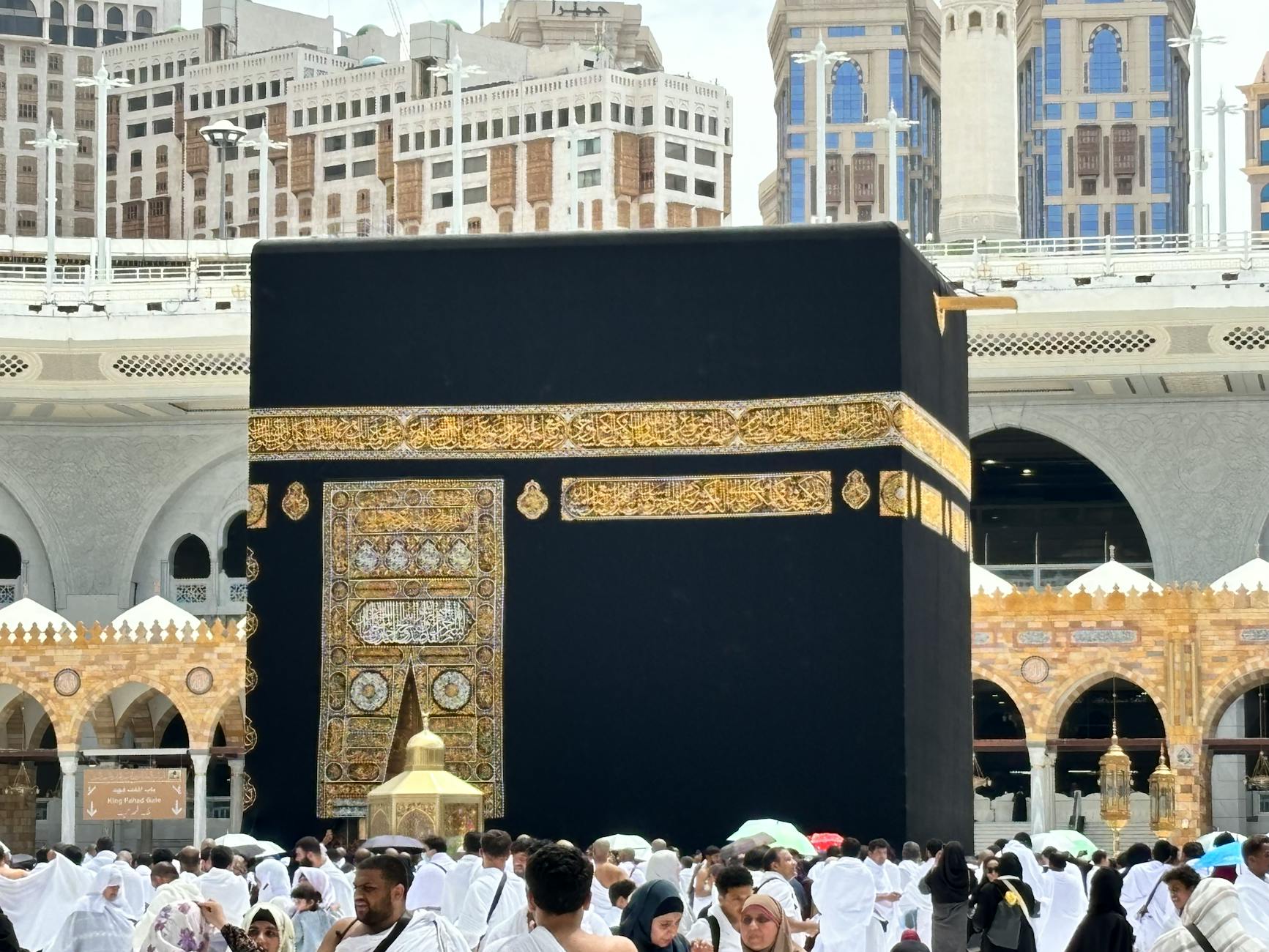
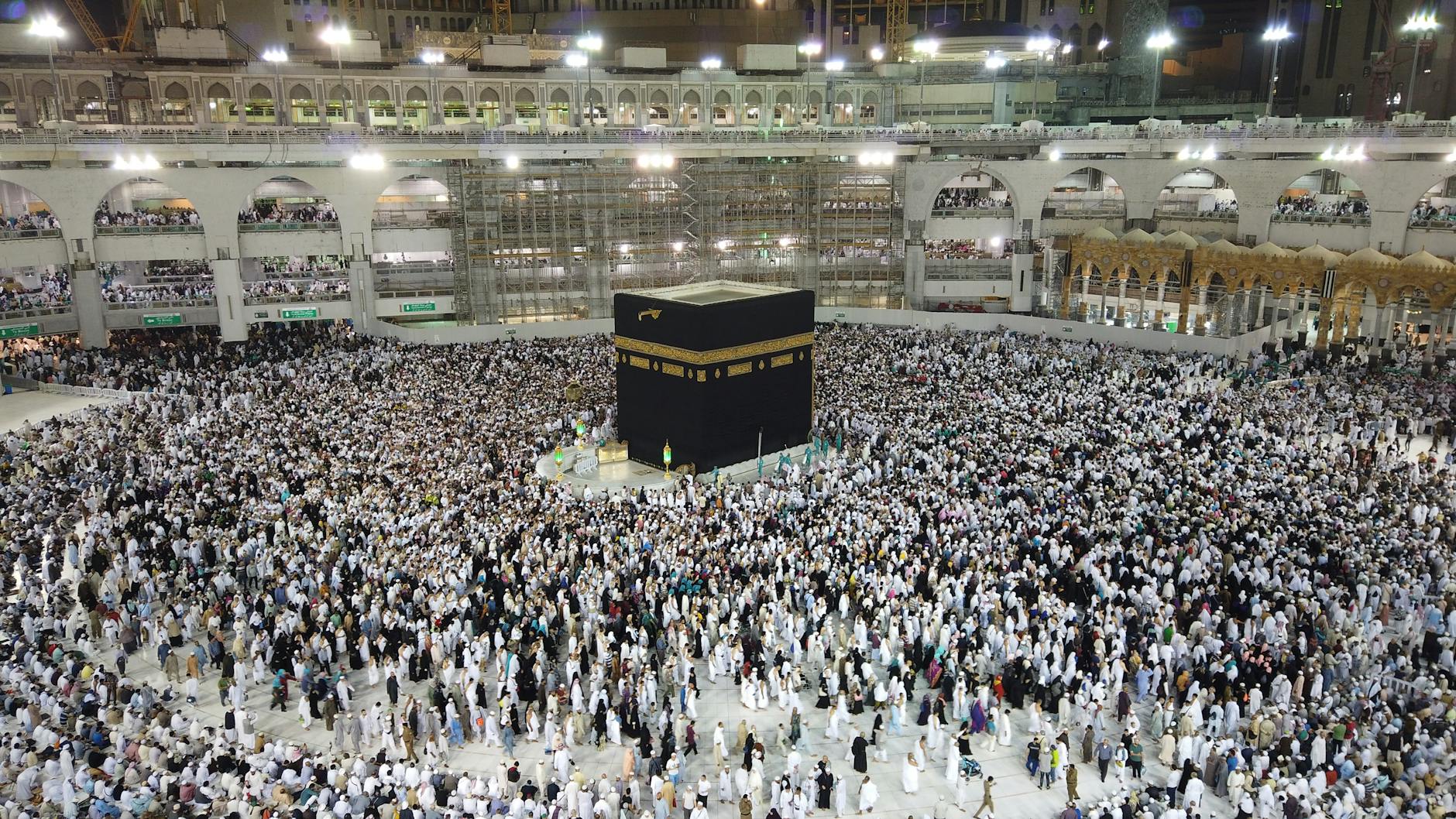
The area immediately surrounding Masjid al-Haram is the beating heart of Mecca. Every street, every building, every line of sight leads towards the Grand Mosque. The precinct has been transformed by massive expansion projects, with the Abraj Al-Bait Clock Tower complex rising directly adjacent to the mosque. The atmosphere here is one of constant devotion — at any hour of the day or night, streams of pilgrims flow towards the mosque gates, their white ihram garments creating a river of faith.
The Haram precinct is best experienced on foot, moving with the natural flow of pilgrims. Enter through one of the 120 gates and follow the corridors towards the central courtyard. The first sight of the Kaaba is overwhelming. After completing your rites, explore the surrounding streets — the area is filled with shops selling prayer beads, dates, Islamic books, attar (perfume oils), and zamzam water containers.


Mina is a valley 5 km east of the Grand Mosque that transforms during Hajj into the largest temporary city on earth. Over 100,000 fire-resistant tents are erected to accommodate more than 2 million pilgrims. The Jamarat Bridge, a multi-level structure where pilgrims perform the symbolic stoning of the devil, is an engineering marvel. Outside of Hajj, Mina is quiet, but its significance in the Hajj rites — pilgrims spend two to three nights here — makes it one of Islam’s most important locations.
During Hajj, Mina is where pilgrims spend the nights of the 10th, 11th, and 12th of Dhul Hijjah. The days are spent performing the stoning ritual at the Jamarat, with pilgrims walking or taking the Mashair Railway to and from the bridge. The experience of sleeping in tents alongside millions of fellow Muslims from around the world — sharing meals, praying together, reciting the Quran — is one of the most powerful communal experiences in human life.



The Plain of Arafat, 20 km southeast of Mecca, is where the most essential ritual of Hajj takes place: the Wuquf (Standing). On the 9th of Dhul Hijjah, all pilgrims must be present on the plain of Arafat from after noon until sunset. The Prophet Muhammad (PBUH) said: “Hajj is Arafat.” At the centre stands Jabal ar-Rahmah (the Mount of Mercy), where the Prophet delivered his Farewell Sermon. The day at Arafat is spent in intense supplication, with many pilgrims weeping in prayer.
Pilgrims arrive at Arafat on the morning of the 9th of Dhul Hijjah. The day is spent in prayer, Quran recitation, and supplication — it is considered the day when Allah is most generous with forgiveness. Masjid Namirah marks the spot where the Prophet prayed, and the combined Dhuhr-Asr prayer is led there. As sunset approaches, the atmosphere becomes electric with emotion. After sunset, pilgrims depart for Muzdalifah.



Muzdalifah is the open plain between Arafat and Mina where pilgrims spend the night of the 9th of Dhul Hijjah after departing Arafat at sunset. It is one of the most memorable experiences of Hajj — millions of people sleeping under the open sky, in a vast expanse lit by stars, sharing this act of worship in absolute simplicity. Here, pilgrims pray Maghrib and Isha combined, rest, and collect the small pebbles they will use for the stoning ritual at Mina.
Arrive after sunset from Arafat. Pray Maghrib and Isha combined (shortened). Rest under the stars or in any available space. Collect 49 pebbles (small, smooth stones, chickpea-sized) for the Jamarat stoning. Depart after midnight or at Fajr for Mina. The simplicity of Muzdalifah — sleeping on the ground with nothing but the sky above — strips away all worldly distinctions.


Aziziyah is the large residential and commercial district southeast of the Haram, and it is where the majority of budget and mid-range Hajj and Umrah pilgrims are housed. The neighbourhood is practical rather than picturesque, with densely packed hotels, apartment buildings, restaurants, and shops catering to pilgrims. During Hajj, Aziziyah buzzes with the energy of millions of visitors from every Muslim country, creating a vibrant, multicultural atmosphere.
Aziziyah is about 4–6 km from the Haram, connected by shuttle buses provided by most Hajj operators. The neighbourhood is packed with affordable restaurants serving cuisines from across the Muslim world — Indonesian nasi goreng, Turkish kebabs, Pakistani biryani, Egyptian koshari, and of course Saudi kabsa. The streets come alive at night after the heat subsides, with pilgrims shopping for gifts and souvenirs.


Al Shisha is a residential neighbourhood northeast of the Haram that offers a glimpse into everyday life in Mecca beyond the pilgrimage. Tree-lined streets, local mosques, and neighbourhood shops give it a quieter, more settled character than the tourist-heavy areas near the Grand Mosque. It is increasingly popular with repeat Umrah visitors who prefer a calmer base.
Al Shisha is a 10–15 minute drive from the Haram. The neighbourhood has good local restaurants, small parks, and a more relaxed pace. It’s an excellent base for those planning a longer stay, offering better value accommodation and a taste of residential Saudi life.


Ajyad is the historic neighbourhood directly south of the Grand Mosque, nestled at the foot of the mountains. Once home to the Ottoman-era Ajyad Fortress (demolished in 2002 for hotel development), the area retains a sense of old Mecca in its narrow lanes and traditional architecture. Its proximity to the Haram makes it a popular mid-range accommodation choice, and the streets are lined with restaurants, money changers, and shops selling Islamic goods.
Ajyad offers some of the closest non-luxury accommodation to the Haram — many hotels are within a 5–10 minute walk. The neighbourhood streets are excellent for exploring after evening prayers, with local restaurants serving fresh shawarma, grilled meats, and Yemeni dishes. The mountain backdrop adds dramatic scenery.


Jarwal is the neighbourhood to the west and northwest of the Grand Mosque, known for its mix of residential housing, commercial activity, and pilgrim accommodation. The area has seen significant development with new hotels and shopping centres. It connects to the main roads leading to Jeddah and offers good transport links.
Jarwal is a practical base with reasonable hotel rates and easy access to the Haram from the western gates. The neighbourhood has a good selection of restaurants and shops. Its position on the Jeddah road makes it convenient for arrival and departure logistics.


Al Rusayfah is a growing neighbourhood north of the city centre that has benefited from Saudi Arabia’s Vision 2030 urban development. New residential complexes, shopping centres, and mosques (including the large Al-Rajhi Grand Mosque) are transforming this area. It offers a modern, less congested alternative to the older districts close to the Haram.
Al Rusayfah is best for visitors with private transport or those comfortable using ride-hailing apps. The neighbourhood has modern amenities, newer hotels, and spacious restaurants. It’s a good option for families looking for more comfortable accommodation at lower prices.


The neighbourhood around Jabal al-Nour (Mountain of Light) is one of the most spiritually significant areas in Mecca. The mountain contains the Cave of Hira, where the Prophet Muhammad (PBUH) received the first revelation of the Quran. The surrounding area is a mix of residential streets and small shops serving the many pilgrims who make the climb. The neighbourhood has a more local, less commercialised feel than the Haram precinct.
The climb to the Cave of Hira takes 1.5–2 hours and involves steep, uneven steps carved into the rock. Start early in the morning to avoid the heat. Wear sturdy shoes, bring water, and pace yourself. The view from the summit — the entire city of Mecca spreading out below, with the Haram visible in the distance — is breathtaking and deeply moving.


Al Misfalah is one of Mecca’s older residential neighbourhoods, located between the Haram and the mountain areas to the northeast. It retains elements of traditional Meccan architecture and street patterns, with narrow alleys, local shops, and neighbourhood mosques. The area offers an authentic glimpse into the daily life of Mecca’s residents beyond the pilgrimage infrastructure.
Walking through Al Misfalah in the early morning or late evening reveals a quieter, more intimate side of Mecca. Local bakeries produce fresh bread, small restaurants serve traditional breakfasts of ful medames (fava beans), and neighbourhood mosques hold their own gentle rhythms of prayer.


Al Zahir is a neighbourhood southwest of the Haram that is home to the Makkah Museum and several historical sites. The area has a more institutional character, with government buildings, hospitals, and cultural facilities. It serves as a window into the civic and cultural life of Mecca beyond its role as a pilgrimage destination.
Visit the Makkah Museum for a well-presented history of the city and the Grand Mosque’s expansions over the centuries. The displays include archaeological finds, historical photographs, and models of the Haram at different stages of its development. The neighbourhood also has good medical facilities and administrative offices.


Al Taneem is the closest miqat (pilgrimage boundary point) to the Grand Mosque, located about 7 km to the northwest. It is home to Masjid Aisha (also called Masjid al-Tan’eem), the mosque from which residents of Mecca and those already in the city enter ihram for Umrah. The area is semi-rural compared to central Mecca, with open spaces and a more relaxed atmosphere.
If you wish to perform an additional Umrah while in Mecca, you must exit the Haram boundary and re-enter in a state of ihram. Most pilgrims take a taxi or bus to Masjid Aisha in Al Taneem, enter ihram there, and then proceed back to the Grand Mosque for the Umrah rites. The entire process takes 2–4 hours.


The Holiest City in Islam