
Medina
Travorea

Medina

The Radiant City of the Prophet

Al-Masjid an-NabawiQuba MosqueMount UhudAl-Baqi CemeteryThe Prophet’s Mosque
80
Pages
2026 Edition

Contents

Plan Your Trip

Welcome to Medina4
Medina at a Glance5
Top 20 Experiences6
Need to Know9
Month by Month11

Itineraries

3-Day Itinerary12
Extended Itineraries13

Explore Medina

Al-Masjid an-Nabawi Area14
Quba18
Uhud22
Al-Baqi26
Al-Qiblatayn30
Al-Aqiq34
Al-Haram District38
As-Salam42
Al-Madinah Old City46
Al-Nakheel50
Al-Shuhadaa54
Bani Hashim58
Al-Rawdah62

Special Sections

Food Guide66
Day Trips71
History & Culture69

Survival Guide

Directory A–Z73
Transport75
Language76

Quick Reference

Top 10 Picks77
Packing List78
Credits79
2
Medina

Medina

Where the Prophet found refuge and Islam found its home

3

Welcome to Medina

The Radiant City of the Prophet

Medina (Al-Madinah al-Munawwarah, “The Radiant City”) holds a place of extraordinary love in the hearts of Muslims worldwide. This is the city that opened its doors to the Prophet Muhammad (PBUH) when Mecca rejected him, the city where the first Islamic community was built, and the city where the Prophet lived, taught, and is buried. Al-Masjid an-Nabawi — the Prophet’s Mosque — is the second holiest mosque in Islam, and a prayer here is worth a thousand prayers elsewhere, according to hadith.

Medina has a gentler, more contemplative character than Mecca. Where Mecca is intensity and awe, Medina is warmth and peace. The Prophet’s Mosque, with its iconic green dome and vast open courtyard shaded by giant mechanical umbrellas, invites long hours of quiet prayer, Quran recitation, and reflection. The city’s streets are cleaner and calmer, its people famously hospitable, and its date farms produce the world’s finest dates. Many pilgrims say that while Mecca changes your relationship with God, Medina changes your heart.

WHY I LOVE MEDINA
Unlike Mecca, non-Muslims are permitted in Medina but cannot enter Al-Masjid an-Nabawi (the Prophet’s Mosque). The city is open to all visitors, though its identity and atmosphere are deeply Islamic. Respect the sacred character of the city at all times.
4

Medina at a Glance

Population1.5 million (city)
Area589 km²
LanguageArabic
Currency﷼ (SAR)
Time ZoneUTC+3 (AST)
Best TimeOctober–March
VisaHajj/Umrah visa or Saudi tourist visa
Emergency911 / 997 (ambulance)
Medina Medina

Medina is the second holiest city in Islam, located 450 km north of Mecca in the Hejaz region of western Saudi Arabia. It was the Prophet Muhammad’s adopted city from the Hijrah (622 CE) until his passing in 632 CE, and is home to his mosque and burial site. The city is an oasis surrounded by lava fields and date palm groves, with a pleasant climate in winter. Most pilgrims visit Medina before or after performing Hajj or Umrah in Mecca.

Money-Saving Tips
Saudi Riyals (SAR) are essential. ATMs are widely available. Hotels and larger shops accept cards. Smaller shops and date vendors prefer cash. Medina is generally less expensive than Mecca, especially for accommodation.
5
01

Top 20 Experiences

The essential sights and experiences

Al-Masjid an-Nabawi (The Prophet’s Mosque)

1. Al-Masjid an-Nabawi (The Prophet’s Mosque)

City centre | Free

The second holiest mosque in Islam, built by the Prophet Muhammad (PBUH) himself in 622 CE. The green dome marks the chamber where the Prophet is buried alongside Abu Bakr and Umar (RA). A prayer here is worth 1,000 prayers elsewhere.

Al-Rawdah al-Sharifah (The Noble Garden)

2. Al-Rawdah al-Sharifah (The Noble Garden)

Inside the Prophet’s Mosque | Free

The area between the Prophet’s tomb and his original pulpit (minbar), described by the Prophet as "a garden from the gardens of Paradise." The most sought-after prayer spot in the mosque, distinguished by its green carpet.

Quba Mosque

3. Quba Mosque

Quba, 5 km south | Free

The first mosque in Islamic history, built by the Prophet upon his arrival in Medina during the Hijrah. A prayer here is equivalent to the reward of an Umrah, according to hadith. Recently expanded with stunning modern architecture.

Mount Uhud

4. Mount Uhud

5 km north | Free

The mountain where the Battle of Uhud (625 CE) took place, and where 70 companions of the Prophet were martyred, including his beloved uncle Hamza (RA). The Prophet said: "Uhud is a mountain that loves us and we love it."

Al-Baqi Cemetery (Jannat al-Baqi)

5. Al-Baqi Cemetery (Jannat al-Baqi)

Adjacent to Prophet’s Mosque | Free

The ancient cemetery where thousands of the Prophet’s companions, family members, and early Muslims are buried, including Uthman (RA) and many of the Prophet’s wives and children. A place of profound reflection.

Masjid al-Qiblatayn

6. Masjid al-Qiblatayn

Northwestern Medina | Free

The Mosque of the Two Qiblas — where the Prophet received the divine command to change the direction of prayer from Jerusalem to Mecca during Dhuhr prayer. A pivotal moment in Islamic history.

INSIDER TIP
The Prophet’s Mosque is open 24 hours. To visit Al-Rawdah (the Noble Garden), women have designated hours (usually morning), and men can visit after Fajr or between Dhuhr and Asr. Arrive early as queues for Al-Rawdah can be very long.
6
7

7. Al-Masjid an-Nabawi Umbrellas

Prophet’s Mosque courtyard | Free

The 250 giant mechanical umbrellas that unfold each morning to shade the mosque courtyard. An iconic image of modern Medina and a marvel of German engineering.

8

8. Martyrs of Uhud Cemetery

Base of Mount Uhud | Free

The burial site of the 70 companions martyred at the Battle of Uhud, including Hamza ibn Abdul-Muttalib, the Prophet’s uncle. A moving place of remembrance and du’a.

9

9. Masjid al-Jumu’ah (Friday Mosque)

2 km south of Prophet’s Mosque | Free

The mosque marking where the Prophet led the first Friday (Jumu’ah) prayer during the Hijrah from Mecca to Medina.

10

10. Seven Mosques (Sab’a Masajid)

Northwestern Medina | Free

A cluster of small historical mosques on the site of the Battle of the Trench (Khandaq, 627 CE). The main one is Masjid al-Fath (Mosque of Victory).

11

11. Date Farms & Markets

Throughout Medina | Varies

Medina is famous for its dates, especially the prized Ajwa variety. Visit the date markets near the Prophet’s Mosque or the date farms on the outskirts for the freshest produce.

12

12. Qur’an Exhibition

King Fahd Complex, outskirts | Free

The King Fahd Complex for the Printing of the Holy Quran produces millions of copies annually. The exhibition displays Qurans in various scripts, sizes, and translations.

Must-Know Numbers
1,000x: Reward multiplier for prayer in the Prophet’s Mosque
250: Giant umbrellas in the mosque courtyard
622 CE: Year the mosque was founded
7
13

13. Medina Old City (Al-Madinah Old City)

Around Prophet’s Mosque | Free

The narrow streets and traditional Hejazi architecture surrounding the Prophet’s Mosque retain echoes of old Medina, though much has been modernised. Turkish-era buildings and stone lanes still exist in pockets.

14

14. Wadi-e-Jinn (Magnetic Valley)

40 km northwest | Free

A valley where vehicles appear to roll uphill due to an optical illusion. Popular with visitors, though the phenomenon has a simple scientific explanation (gravity hill illusion).

15

15. Uhud Mountain Trail

Mount Uhud | Free

A walk around the base of Mount Uhud, visiting the battlefield, the archers’ hill, and the martyrs’ cemetery. Best in the early morning when the mountain glows golden.

16

16. Masjid Abu Bakr

Near Prophet’s Mosque | Free

A small mosque near the Prophet’s Mosque where Abu Bakr (RA), the first caliph and the Prophet’s closest companion, once prayed.

17

17. Al-Noor Mall & Shopping

Central Medina | Free entry

The main shopping area near the Prophet’s Mosque, with malls, date shops, bookstores selling Islamic literature, and shops selling attar, prayer beads, and gifts.

18

18. Bir Uthman (Uthman’s Well)

Northwestern Medina | Free

A historical well purchased by Uthman (RA) at the Prophet’s request and donated for public use. Now surrounded by a garden and agricultural project.

19. Hejaz Railway Station (Central Medina, Free (exterior)): The beautifully restored Ottoman-era railway station, part of the Hejaz Railway that once connected Damascus to Medina (1908). Now a museum and cultural heritage site.

20. Masjid al-Miqat (Abyar Ali) (12 km southwest, Free): The miqat (boundary point) where pilgrims travelling from Medina to Mecca enter ihram for Hajj or Umrah. One of the five designated miqat points around Mecca.

8
02

Need to Know

Essential practical information

Access

Medina is open to all visitors, but the Prophet’s Mosque interior is for Muslims only. The city welcomes tourists of all faiths who wish to experience its history and culture.

Dress Code

Modest dress is required throughout the city. In the mosque, men should wear clean, respectful clothing; women should cover everything except face and hands.

Weather

Hot summers (35–45°C) and pleasant winters (10–25°C). Medina is drier than Mecca and occasionally experiences rainfall in winter. Best visited October–March.

Crowds

The Prophet’s Mosque is very crowded during Hajj season and Ramadan. Al-Rawdah area requires patience and sometimes long queues. Friday prayers are the busiest.

Health

Hospitals and pharmacies are readily available. Stay hydrated and use sun protection in summer. The Al-Madinah General Hospital and private clinics serve the area.

Photography

Photography is permitted in most areas and inside the Prophet’s Mosque courtyards. Be respectful near the tomb chamber and do not photograph people in prayer without consent.

Image Credits

Download Tawakkalna (Saudi digital ID), Nusuk (pilgrimage booking), Uber/Careem (ride-hailing), and Athan or Muslim Pro (prayer times). The Prophet’s Mosque has its own Wi-Fi network.
9
03

Getting Around

Navigate the city like a local

From the Airport

Prince Mohammad bin Abdulaziz International Airport (MED) is 15 km north of the city. Taxis cost SAR 50–80. Uber/Careem SAR 30–60. Some hotels offer free airport transfers. The Haramain High-Speed Railway connects Medina to Mecca (2.5 hours, SAR 150–250) and Jeddah (1.5 hours, SAR 100–170).

Bus

SAPTCO public buses and free shuttle services around the Prophet’s Mosque area during peak pilgrimage seasons. Cost: SAR 2–8

Ride-hailing

Uber and Careem are widely available and the most convenient way to get around Medina. Cost: SAR 10–40

Taxi

Metered and unmetered taxis. Always agree on the fare before boarding for unmetered taxis. Cost: SAR 10–30

Walking

The Prophet’s Mosque area and surrounding sites are walkable. Pedestrian-friendly streets and covered walkways provide shade. Cost: Free

Hotel shuttles

Many hotels near the mosque provide free shuttle services to and from the mosque gates. Cost: Free

Transport Tips
Medina is much more walkable and less congested than Mecca. Most key sites are within walking distance of the Prophet’s Mosque. For Mount Uhud and Quba Mosque, a taxi or ride-hailing service is the easiest option.
10

Month by Month

When to go and what to expect

Hajj Season (varies)

Many pilgrims visit Medina before or after Hajj. Hotels are at peak prices and the mosque is very crowded. The spiritual atmosphere is extraordinary.

Ramadan

The Prophet’s Mosque is at its most beautiful during Ramadan, especially for Taraweeh and the last ten nights. The iftar (fast-breaking) meals shared in the mosque courtyard are a beautiful communal experience.

Oct–Mar (winter)

The best time to visit. Comfortable temperatures (10–25°C), smaller crowds (outside Hajj/Ramadan), and pleasant walking weather. Occasional rain.

Apr–Sep (summer)

Very hot (35–45°C). Fewer visitors but the heat makes outdoor activities like Mount Uhud difficult. The mosque’s air conditioning is a welcome refuge.

Best Time to Visit
Winter (November–February) offers the most comfortable weather for visiting Medina’s outdoor sites like Mount Uhud. The Prophet’s Mosque is air-conditioned and comfortable year-round.
MedinaMedina — best experienced in October–March
11
04

Itineraries

Make the most of your time

Day 1: The Prophet’s Mosque & Spiritual Arrival
Upon arrivalCheck into your hotel, freshen up, and proceed to the Prophet’s Mosque
First visitEnter Al-Masjid an-Nabawi. Pray two rak’ahs of greeting (Tahiyyat al-Masjid). Take in the scale and beauty of the mosque
Visit Al-RawdahQueue to pray in the Rawdah (Noble Garden) — the area described as a garden of Paradise. Be patient; it is the most sought-after spot in the mosque
Send salutationsStand before the Prophet’s tomb chamber and send salutations (salam) to the Prophet, Abu Bakr, and Umar (may Allah be pleased with them)
EveningPray Maghrib and Isha at the mosque. Walk through the courtyard and admire the umbrellas and the illuminated minarets
NightExplore the shops and restaurants near the mosque. Purchase Ajwa dates as gifts
Day 2: Historical Medina
Fajr prayerPray Fajr at the Prophet’s Mosque. The pre-dawn atmosphere is serene and deeply spiritual
MorningVisit Quba Mosque — the first mosque in Islam. Pray two rak’ahs for the reward equivalent to an Umrah
Late morningVisit Al-Baqi Cemetery and send prayers for the companions and family of the Prophet buried there
Dhuhr prayerReturn to the Prophet’s Mosque for Dhuhr prayer
AfternoonVisit Masjid al-Qiblatayn — the mosque where the qibla changed from Jerusalem to Mecca
Late afternoonExplore the Seven Mosques (Sab’a Masajid) at the site of the Battle of the Trench
EveningPray Maghrib and Isha at the Prophet’s Mosque. Dine at a nearby restaurant
Day 3: Mount Uhud & Farewell
Fajr prayerPray at the Prophet’s Mosque
MorningVisit Mount Uhud and the Martyrs’ Cemetery. Walk the battlefield and reflect on the sacrifice of the companions
Late morningVisit the Archers’ Hill and learn about the Battle of Uhud’s strategic turning point
Dhuhr prayerReturn for Dhuhr prayer at the Prophet’s Mosque
AfternoonVisit the date market for Ajwa and other premium varieties. Explore the Hejaz Railway Museum
EveningFinal prayers at the Prophet’s Mosque. Send farewell salutations to the Prophet (PBUH). Depart with a heart full of peace
TIMING TIP
Many scholars recommend visiting Medina before Mecca so that the pilgrimage builds towards the climax of seeing the Kaaba. Women’s access to Al-Rawdah is typically during designated morning hours — check the schedule upon arrival.
12

More Itineraries

Extended stays and themed routes

Five Days

Add time for multiple visits to Al-Rawdah, the King Fahd Quran Complex, Bir Uthman (Uthman’s Well), and a day trip to Wadi-e-Jinn. Spend extra hours in the Prophet’s Mosque for Quran study and reflection.

One Week

Include visits to all the historical mosques, a full day at Mount Uhud exploring the battlefield, date farm visits, the Hejaz Railway Museum, and leisurely evenings in the mosque courtyard absorbing the peaceful atmosphere.

Spiritual Retreat

Spend days in the Prophet’s Mosque reading Quran, making du’a in Al-Rawdah, attending lectures, and performing extra prayers. Medina’s peace makes it ideal for spiritual renewal.

Family Visit

Medina is very family-friendly. The mosque courtyard with its opening umbrellas delights children, the date markets are colourful and fun, and the Mount Uhud area offers space for walking.

Booking Essentials
Hotels within walking distance of the Prophet’s Mosque command premium prices, especially during Hajj and Ramadan. The southern side (Quba direction) generally has better value. Book 2–3 months ahead for peak seasons.
13
Al-Masjid an-Nabawi Area

Al-Masjid an-Nabawi Area

Where the Prophet’s legacy lives in every prayer, every footstep, every heartbeat

14
Al-Masjid an-Nabawi Area

Al-Masjid an-Nabawi Area

The Heart of Medina

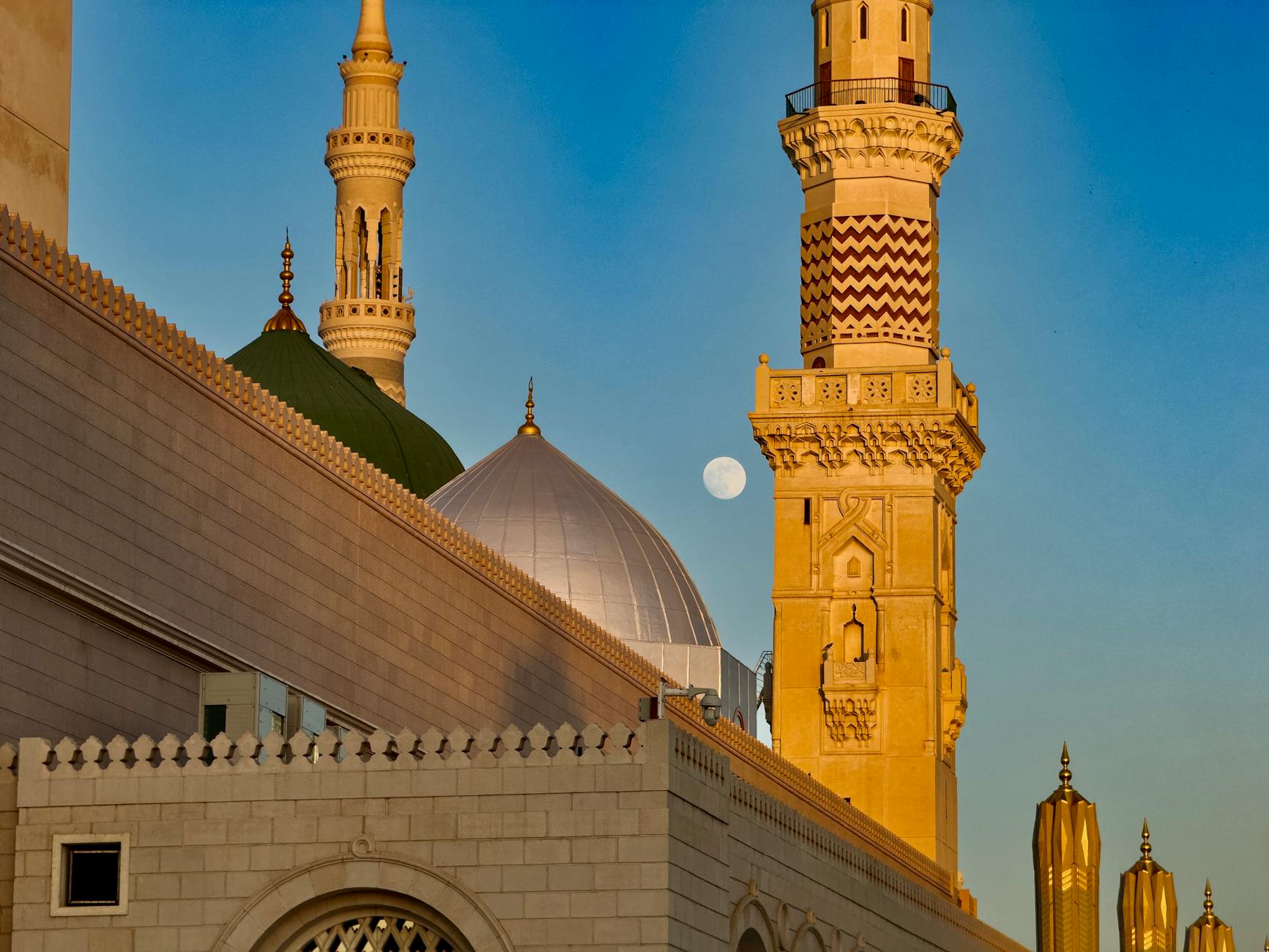
Everything in Medina radiates outward from the Prophet’s Mosque. The immediate surrounding area is a carefully planned precinct of wide pedestrian plazas, hotels, date shops, restaurants, and bookstores. The mosque itself is a city within a city — with its 250 giant umbrellas, 27 moving domes, 10 minarets, and capacity for over 1 million worshippers. The green dome, visible from across the city, marks the most sacred spot: the burial chamber of the Prophet Muhammad (PBUH).

Enter the mosque from any of its many gates and follow the green carpet towards the Rawdah area. Visit the tomb chamber to send salutations. Pray on the rooftop for panoramic views. After prayers, explore the surrounding streets — the date market (selling over 200 varieties), Islamic bookshops, and shops selling attar (perfume oil), miswak (natural toothbrush), and prayer beads. The courtyard at night, with its lit minarets and peaceful atmosphere, is mesmerising.

LOCAL SECRET
The Prophet’s Mosque is magnificent at night. The illuminated minarets and green dome against the dark sky, with the courtyard umbrellas closed to reveal the stars, create an atmosphere of deep tranquillity.
15

Eating & Drinking

Where to eat in Al-Masjid an-Nabawi Area

Date market (SAR 30–400/kg): The world’s finest dates, especially Ajwa, Safawi, Mabroom, and Sukkari varieties. Sample before buying.

Hotel buffets (SAR 50–120): Most mosque-area hotels offer generous international buffets.

Street food stalls (SAR 5–20): Shawarma, fresh juice, ful, and falafel available on the surrounding streets.

Shopping: Date shops, Islamic bookstores, attar (perfume) shops, and prayer accessory stores line every street around the mosque.

16

Al-Masjid an-Nabawi Area by the Numbers

1,000x
Prayer reward multiplier at the Prophet’s Mosque
250
Giant mechanical umbrellas in the courtyard
622 CE
Year the Prophet’s Mosque was founded
Did You Know?
The green dome of the Prophet’s Mosque was not always green. It was originally undomed, then covered with a white dome, then blue-grey, and finally painted green in 1837 during Ottoman times. It has become Islam’s most recognisable architectural feature.
Al-Masjid an-Nabawi Area by the Numbers
When the Prophet arrived in Medina during the Hijrah, he let his camel choose the site for his mosque. The camel knelt at a date-drying yard belonging to two orphans. The Prophet purchased the land and built the mosque with his own hands, laying the first bricks himself.
The original Prophet’s Mosque was tiny — roughly 30 x 35 metres, built of palm trunks and mud bricks, with a roof of palm leaves. It has been expanded many times and now covers over 1 million square metres, but the original location remains at its heart.
17
Quba

Quba

Islam’s first mosque — where the Prophet laid the first stone of a new civilisation

18
Quba

Quba

Where Islam’s First Mosque Stands

Quba is a southern suburb of Medina, 5 km from the Prophet’s Mosque, and is home to the first mosque ever built in Islam. The Prophet Muhammad (PBUH) established Quba Mosque upon his arrival in Medina during the Hijrah. He used to visit it every Saturday, and a hadith states that praying two rak’ahs here earns the reward of an Umrah. The area is a mix of residential streets, date farms, and the beautifully expanded Quba Mosque.

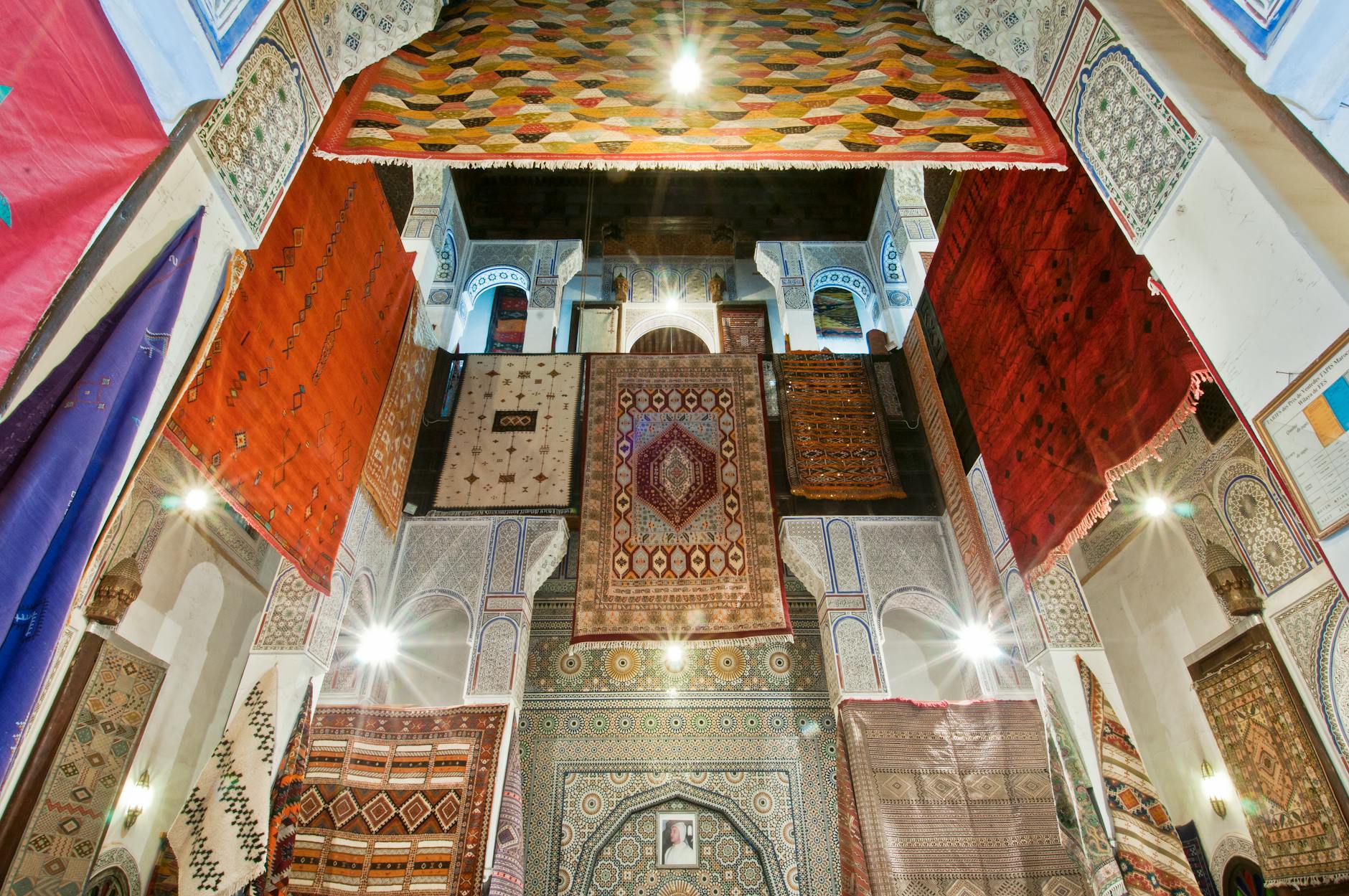
Visit Quba Mosque early in the morning for the most peaceful experience. The modern expansion is architecturally stunning, with white marble, geometric patterns, and open courtyards. The surrounding Quba neighbourhood has local restaurants, date gardens, and a slower pace than central Medina. It’s an excellent area for affordable accommodation.
LOCAL SECRET
The Prophet used to visit Quba Mosque every Saturday. Following this Sunnah, many pilgrims visit on Saturdays. The reward of praying two rak’ahs here is equivalent to an Umrah.
19

Eating & Drinking

Where to eat in Quba

Local restaurants (SAR 15–30): Simple, authentic Medinan cuisine — kabsa, grilled chicken, and fresh bread.

Juice shops (SAR 5–15): Fresh pomegranate, mango, and citrus juices from neighbourhood stalls.

Transport: Taxi or Uber from the Prophet’s Mosque (SAR 10–20, 10 minutes). Some hotels offer shuttle services.

20

Quba by the Numbers

1,020,000 m²
Prophet’s Mosque total area after expansions
10
Minarets of the Prophet’s Mosque
200+
Varieties of dates grown in Medina
Did You Know?
The 250 giant umbrellas of the Prophet’s Mosque courtyard were designed by German firm Sefar and installed in 2010. Each umbrella weighs 16 tonnes, covers 306 square metres, and takes 3 minutes to open, providing shade for 250,000 worshippers.
Quba by the Numbers
Quba by the Numbers
Quba by the Numbers
Medina is one of the world’s top date-producing regions, with over 200 varieties. The annual date harvest is a major cultural event, and the date markets near the Prophet’s Mosque are among the most colourful in the Arab world.
The Battle of the Trench (627 CE) was won when the Prophet ordered a trench dug around Medina on the advice of Salman al-Farisi (the Persian). It was the first time this Persian military tactic was used in Arabia.
21
Uhud

Uhud

Where the Prophet’s love for a mountain became a hadith that echoes through eternity

22
Uhud

Uhud

The Mountain of Love

Mount Uhud rises 1,077 metres above sea level on Medina’s northern edge. It was here that the Battle of Uhud (625 CE) took place — a pivotal moment in early Islamic history where 70 companions were martyred. The Prophet Muhammad (PBUH) said: “Uhud is a mountain that loves us and we love it.” The area includes the mountain itself, the Martyrs’ Cemetery at its base, and the Archers’ Hill where a crucial tactical error changed the battle’s course.

Arrive early morning when the mountain glows golden in the sunrise. Visit the Martyrs’ Cemetery (Shuhada Uhud) to send prayers for Hamza and the other fallen companions. Walk to the Archers’ Hill for a view of the battlefield and an understanding of the battle’s geography. The base of the mountain has vendors selling drinks and refreshments.

LOCAL SECRET
The mountain trail is rocky and uneven. Wear sturdy shoes and bring water. Sunrise is the most beautiful time, and the battlefield is best understood with a knowledgeable guide.
23

Eating & Drinking

Where to eat in Uhud

Vendors at Uhud (SAR 5–15): Simple refreshments — water, juice, corn on the cob, and light snacks from roadside sellers.

History: Bring a book or audio guide about the Battle of Uhud. Understanding the battle transforms the visit from a scenic spot to a deeply moving experience.

24

Uhud by the Numbers

327
Marble columns in the mosque
27
Moving domes on the mosque roof
1908
Year the Hejaz Railway reached Medina
Did You Know?
Medina’s Ajwa dates are mentioned in hadith: "Whoever eats seven Ajwa dates in the morning will not be affected by poison or magic that day." Ajwa dates can cost SAR 200–400 per kilogram, making them the most expensive dates in the world.
Uhud by the Numbers
Uhud by the Numbers
Uhud by the Numbers
The Hejaz Railway, completed in 1908, was an Ottoman project to connect Damascus to Medina for pilgrims. Lawrence of Arabia famously attacked it during WWI. The beautifully restored Medina station is now a heritage museum.
The Prophet’s Mosque has the most advanced crowd-management technology in the world, including AI-powered cameras, digital navigation systems, and climate-controlled prayer halls that maintain a comfortable temperature regardless of outside conditions.
25
Al-Baqi

Al-Baqi

Where the companions of the Prophet rest in the simplest of graves, equal in death as in faith

26
Al-Baqi

Al-Baqi

The Sacred Cemetery

Jannat al-Baqi (The Garden of Al-Baqi) is the most sacred cemetery in Islam, located immediately adjacent to the eastern wall of the Prophet’s Mosque. It contains the graves of thousands of the Prophet’s companions, family members, and early Muslims, including Uthman ibn Affan (RA), many of the Prophet’s wives (Mothers of the Believers), his son Ibrahim, and his daughter Fatimah (RA). The cemetery is simple and unadorned, in keeping with Islamic principles.

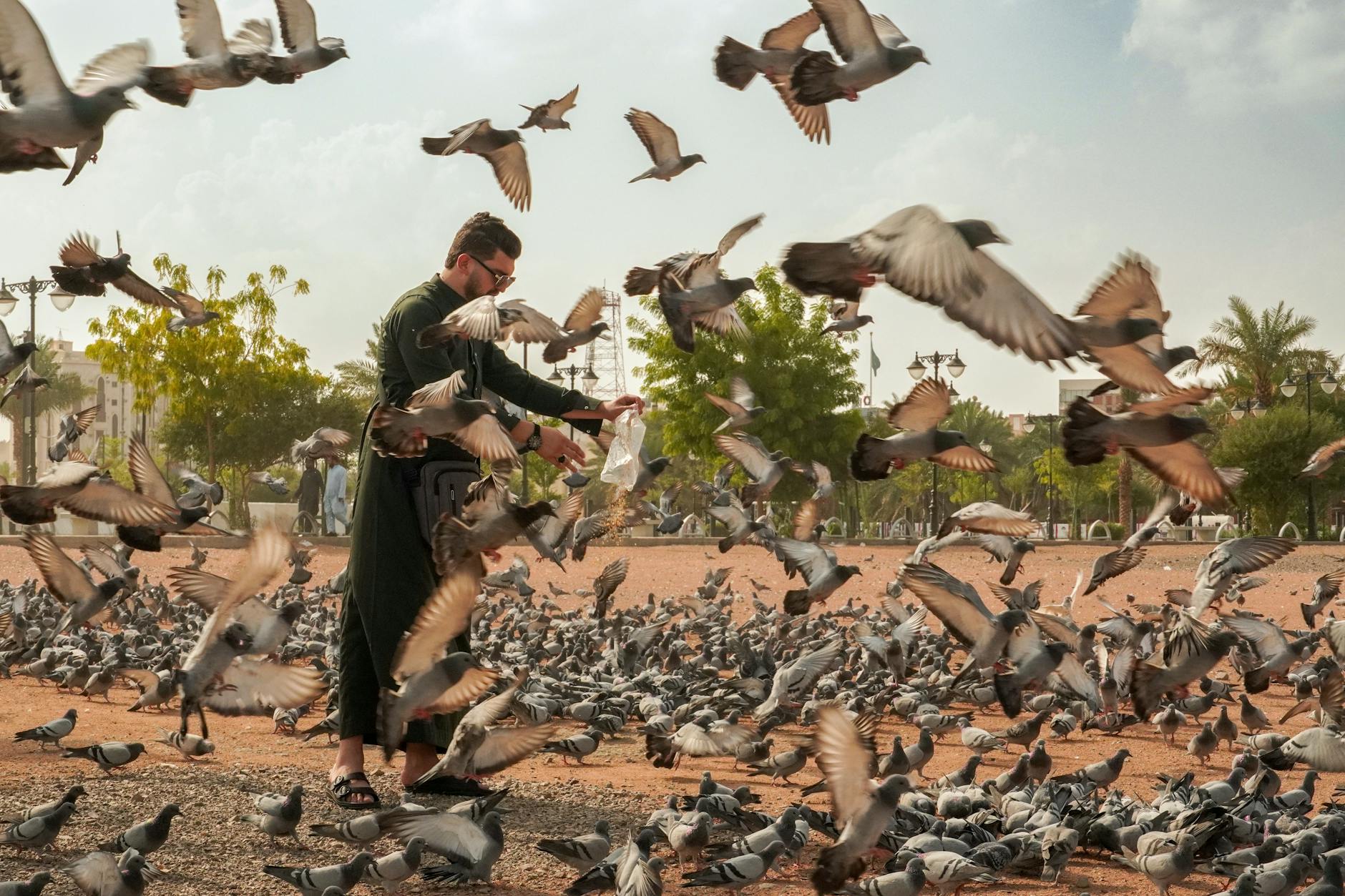
Al-Baqi is open to visitors after Fajr and Asr prayers. Men can enter the cemetery; women may visit from outside the walls. Stand in quiet contemplation and send prayers (du’a) for the deceased. The simplicity of the graves — unmarked stones in sandy ground — is profoundly humbling. A guide or book about who is buried here greatly enriches the visit.
LOCAL SECRET
The Prophet used to visit Al-Baqi at night and pray for the deceased. Visiting and making du’a for the dead is a recommended act in Islam.
27

Eating & Drinking

Where to eat in Al-Baqi

No food or drink facilities within the cemetery. Refreshments are available at the nearby Prophet’s Mosque area.

Etiquette: Maintain silence and reverence. Do not sit on graves or take selfies. Du’a (supplication) for the deceased is the purpose of the visit.

28

Al-Baqi by the Numbers

1,000x
Prayer reward multiplier at the Prophet’s Mosque
250
Giant mechanical umbrellas in the courtyard
622 CE
Year the Prophet’s Mosque was founded
Did You Know?
The green dome of the Prophet’s Mosque was not always green. It was originally undomed, then covered with a white dome, then blue-grey, and finally painted green in 1837 during Ottoman times. It has become Islam’s most recognisable architectural feature.
Al-Baqi by the Numbers
29
Al-Qiblatayn

Al-Qiblatayn

Where the entire direction of Muslim prayer changed in a single, divine moment

30
Al-Qiblatayn

Al-Qiblatayn

The Mosque of Two Directions

The Al-Qiblatayn neighbourhood in northwestern Medina is home to one of Islam’s most historically significant mosques. Masjid al-Qiblatayn is where the Prophet Muhammad (PBUH) received the divine command to change the qibla (direction of prayer) from Al-Aqsa Mosque in Jerusalem to the Kaaba in Mecca — mid-prayer, during the Dhuhr salah. The congregation turned 180 degrees and completed their prayer facing Mecca. The neighbourhood is primarily residential.

The mosque has been recently renovated and expanded. Visit to pray and reflect on this pivotal moment in Islamic history — the changing of the qibla was a declaration of Islam’s distinct identity. The surrounding neighbourhood is quiet and residential, offering a glimpse of everyday Medinan life.

LOCAL SECRET
The mosque originally had two mihrabs (prayer niches) — one facing Jerusalem and one facing Mecca. After renovation, the Jerusalem-facing mihrab was removed, but the historical significance remains.
31

Eating & Drinking

Where to eat in Al-Qiblatayn

Neighbourhood restaurants (SAR 10–25): Simple, family-run restaurants serving rice dishes, grilled meats, and fresh bread.

Getting there: Taxi or Uber from the Prophet’s Mosque (SAR 15–25, 15 minutes).

32

Al-Qiblatayn by the Numbers

1,000x
Prayer reward multiplier at the Prophet’s Mosque
250
Giant mechanical umbrellas in the courtyard
622 CE
Year the Prophet’s Mosque was founded
Did You Know?
The green dome of the Prophet’s Mosque was not always green. It was originally undomed, then covered with a white dome, then blue-grey, and finally painted green in 1837 during Ottoman times. It has become Islam’s most recognisable architectural feature.
Al-Qiblatayn by the Numbers
33
Al-Aqiq

Al-Aqiq

Contemporary Medina — where modern life meets deep-rooted tradition

34
Al-Aqiq

Al-Aqiq

Modern Medina

Al-Aqiq is Medina’s modern commercial and residential district, located west of the city centre. It represents the forward-looking side of Medina, with shopping malls, modern restaurants, parks, and well-planned residential areas. For visitors staying longer or seeking a break from the intensity of the pilgrimage areas, Al-Aqiq offers a contemporary Saudi experience.

Al-Aqiq is where Medinans shop, dine, and relax. The area has modern malls, international restaurant chains, and coffee shops. It’s a good area for picking up practical supplies or enjoying a change of pace from the mosque area.

LOCAL SECRET
Al-Aqiq is the best area for modern shopping malls and international brands. It’s a 10–15 minute drive from the Prophet’s Mosque.
35

Eating & Drinking

Where to eat in Al-Aqiq

Modern restaurants (SAR 25–60): International cuisine including Turkish, Lebanese, Indian, and Italian options. Coffee chains and cafes are plentiful.

Entertainment: Family-friendly parks, modern cafes, and shopping centres provide relaxation after days of spiritual activity.

36

Al-Aqiq by the Numbers

1,000x
Prayer reward multiplier at the Prophet’s Mosque
250
Giant mechanical umbrellas in the courtyard
622 CE
Year the Prophet’s Mosque was founded
Did You Know?
The green dome of the Prophet’s Mosque was not always green. It was originally undomed, then covered with a white dome, then blue-grey, and finally painted green in 1837 during Ottoman times. It has become Islam’s most recognisable architectural feature.
Al-Aqiq by the Numbers
37
Al-Haram District

Al-Haram District

Where every doorstep leads to the Prophet’s Mosque

38
Al-Haram District

Al-Haram District

The Mosque’s Immediate Embrace

The Al-Haram District refers to the immediate zone surrounding the Prophet’s Mosque — the hotels, plazas, and commercial streets within a 5–10 minute walk of the mosque gates. This is where most pilgrims stay, and it buzzes with activity 24 hours a day. The district has the highest concentration of date shops, Islamic bookstores, and restaurants in Medina.

Staying in the Al-Haram District means the mosque is your living room. Step out of your hotel and you’re at the mosque within minutes. The area is fully pedestrianised around the mosque, making walking easy and pleasant. Late-night food stalls and juice shops serve pilgrims returning from Isha and Tahajjud prayers.

LOCAL SECRET
Hotels with ‘Haram view’ rooms offer direct views of the green dome. These rooms command premium prices but provide an unforgettable experience.
39

Eating & Drinking

Where to eat in Al-Haram District

Al Baik (SAR 15–30): The beloved Saudi fried chicken chain has branches here. Always busy, always delicious.

Date shops (SAR 30–400/kg): Dozens of shops competing for your business. Taste before buying and compare prices.

Practical: ATMs, money exchanges, pharmacies, and mobile phone shops are all within easy reach in this district.

40

Al-Haram District by the Numbers

1,000x
Prayer reward multiplier at the Prophet’s Mosque
250
Giant mechanical umbrellas in the courtyard
622 CE
Year the Prophet’s Mosque was founded
Did You Know?
The green dome of the Prophet’s Mosque was not always green. It was originally undomed, then covered with a white dome, then blue-grey, and finally painted green in 1837 during Ottoman times. It has become Islam’s most recognisable architectural feature.
Al-Haram District by the Numbers
41
As-Salam

As-Salam

A practical neighbourhood with good value and honest Medinan hospitality

42
As-Salam

As-Salam

The Northern Quarter

As-Salam is a northern neighbourhood connecting the Prophet’s Mosque area with the road to Mount Uhud. It is a practical residential area with hotels, restaurants, and shops that offer good value compared to the immediate mosque precinct. Its position on the road to Uhud makes it convenient for visiting the battlefield.

As-Salam is a sensible base for budget-conscious visitors who want proximity to the mosque without premium pricing. The main road has restaurants, supermarkets, and services. Walking to the Prophet’s Mosque takes 15–20 minutes, or a quick taxi/Uber ride.

LOCAL SECRET
Many Hajj and Umrah package hotels are located in As-Salam. The walk to the mosque is pleasant in cool weather but take a taxi in summer.
43

Eating & Drinking

Where to eat in As-Salam

Budget restaurants (SAR 10–25): Pakistani, Yemeni, and Saudi restaurants offer generous portions at reasonable prices.

Uhud access: As-Salam is on the road to Mount Uhud, making it a convenient base for visiting the battlefield and Martyrs’ Cemetery.

44

As-Salam by the Numbers

1,000x
Prayer reward multiplier at the Prophet’s Mosque
250
Giant mechanical umbrellas in the courtyard
622 CE
Year the Prophet’s Mosque was founded
Did You Know?
The green dome of the Prophet’s Mosque was not always green. It was originally undomed, then covered with a white dome, then blue-grey, and finally painted green in 1837 during Ottoman times. It has become Islam’s most recognisable architectural feature.
As-Salam by the Numbers
45
Al-Madinah Old City

Al-Madinah Old City

Where carved wooden balconies and stone lanes whisper of centuries of pilgrimage

46
Al-Madinah Old City

Al-Madinah Old City

Echoes of History

Pockets of old Medina survive in the streets surrounding the Prophet’s Mosque, particularly to the south and west. Traditional Hejazi architecture — carved wooden balconies (rawashin), stone walls, and narrow shaded lanes — can still be found, though much has given way to modern development. These remnants offer a glimpse of the Medina that existed for centuries, a city of scholars, date merchants, and pilgrims.

Explore the narrow lanes south and west of the Prophet’s Mosque for remaining old buildings. The Hejazi architectural style is distinct — look for the intricately carved wooden window screens (mashrabiyyah) and stone facades. The old souq areas near the mosque still retain some traditional character.

LOCAL SECRET
Old Medina is disappearing rapidly due to development. The remaining historic buildings are precious — photograph them respectfully as a record of vanishing heritage.
47

Eating & Drinking

Where to eat in Al-Madinah Old City

Traditional eateries (SAR 10–25): Small, family-run restaurants serving classic Medinan dishes — lamb mandi, chicken kabsa, and fresh tamees bread.

Heritage: The Hejaz Railway Station nearby has been restored and offers the best-preserved example of Ottoman-era architecture in Medina.

48

Al-Madinah Old City by the Numbers

1,000x
Prayer reward multiplier at the Prophet’s Mosque
250
Giant mechanical umbrellas in the courtyard
622 CE
Year the Prophet’s Mosque was founded
Did You Know?
The green dome of the Prophet’s Mosque was not always green. It was originally undomed, then covered with a white dome, then blue-grey, and finally painted green in 1837 during Ottoman times. It has become Islam’s most recognisable architectural feature.
Al-Madinah Old City by the Numbers
49
Al-Nakheel

Al-Nakheel

Where date palm groves preserve Medina’s ancient identity as a desert oasis

50
Al-Nakheel

Al-Nakheel

The Palm Gardens

Al-Nakheel (“The Palms”) refers to the residential and agricultural areas of Medina where date palm groves still flourish. Medina has been an oasis city since ancient times, and dates remain central to its economy and identity. The neighbourhood offers green spaces, gardens, and a connection to Medina’s agricultural heritage that contrasts with the urban intensity near the mosque.

Visit during date harvest season (July–September) to see the palm groves at their most productive. Some farms offer tours and tastings. The area’s parks and gardens provide peaceful walking space away from the pilgrim areas.

LOCAL SECRET
Ajwa dates from Medina are the most prized in the Islamic world. Buy directly from reputable farms or certified shops for the best quality and price.
51

Eating & Drinking

Where to eat in Al-Nakheel

Fresh dates from farms (SAR 20–150/kg): Direct from the source — freshly harvested dates at lower prices than the mosque-area shops.

Agriculture: Medina’s date farms have been cultivating for over 1,400 years. Ask your hotel to arrange a farm visit during harvest season.

52

Al-Nakheel by the Numbers

1,000x
Prayer reward multiplier at the Prophet’s Mosque
250
Giant mechanical umbrellas in the courtyard
622 CE
Year the Prophet’s Mosque was founded
Did You Know?
The green dome of the Prophet’s Mosque was not always green. It was originally undomed, then covered with a white dome, then blue-grey, and finally painted green in 1837 during Ottoman times. It has become Islam’s most recognisable architectural feature.
Al-Nakheel by the Numbers
53
Al-Shuhadaa

Al-Shuhadaa

Named for the heroes who gave their lives defending the Prophet and his message

54
Al-Shuhadaa

Al-Shuhadaa

The Martyrs’ Quarter

Al-Shuhadaa (“The Martyrs”) is the neighbourhood near Mount Uhud and the Martyrs’ Cemetery, named after the 70 companions who fell in the Battle of Uhud. The area is on Medina’s northern edge, where the city gives way to the dramatic landscape of Mount Uhud’s red-brown slopes. It is a place of remembrance, sacrifice, and deep connection to early Islamic history.

The neighbourhood serves as the gateway to the Uhud battlefield sites. Start at the Martyrs’ Cemetery, then walk to the Archers’ Hill for battlefield views. The mountain itself looms above, its reddish rock dramatic against the blue desert sky. Local vendors sell refreshments and souvenirs.

LOCAL SECRET
Hire a guide who knows the Battle of Uhud in detail. The battlefield is difficult to understand without context, but with it, the landscape comes alive with history.
55

Eating & Drinking

Where to eat in Al-Shuhadaa

Roadside vendors (SAR 5–15): Fresh corn, juice, water, and simple snacks near the Uhud sites.

Visiting: Best in early morning or late afternoon. The midday sun on the exposed battlefield is intense, especially in summer.

56

Al-Shuhadaa by the Numbers

1,000x
Prayer reward multiplier at the Prophet’s Mosque
250
Giant mechanical umbrellas in the courtyard
622 CE
Year the Prophet’s Mosque was founded
Did You Know?
The green dome of the Prophet’s Mosque was not always green. It was originally undomed, then covered with a white dome, then blue-grey, and finally painted green in 1837 during Ottoman times. It has become Islam’s most recognisable architectural feature.
Al-Shuhadaa by the Numbers
57
Bani Hashim

Bani Hashim

A vibrant neighbourhood carrying the name of the Prophet’s noble lineage

58
Bani Hashim

Bani Hashim

The Prophet’s Clan

Bani Hashim is a neighbourhood named after the Prophet’s clan (the Hashemites) of the Quraysh tribe. Located near the Prophet’s Mosque, it is a bustling commercial area with some of the best shopping and dining options in Medina. The neighbourhood reflects the multicultural character of Medina, with restaurants and shops serving the diverse international community of pilgrims and residents.

Bani Hashim is excellent for shopping and dining. The streets are lined with date shops, Islamic bookstores, clothing stores selling abayas and thobes, and restaurants serving cuisine from across the Muslim world. It’s a vibrant, colourful neighbourhood that comes alive especially after evening prayers.

LOCAL SECRET
This is the best area for buying Islamic gifts — prayer mats, tasbeeh (prayer beads), oud (incense), and attar (perfume oils) at competitive prices.
59

Eating & Drinking

Where to eat in Bani Hashim

Diverse restaurants (SAR 15–40): Turkish kebabs, Indian biryani, Yemeni mandi, and Egyptian koshari all within walking distance.

Fresh juice bars (SAR 5–15): Mango, pomegranate, and mixed fruit juices are a Medina staple.

Shopping: Compare date prices between shops — prices vary significantly. The smaller shops off the main streets often have better deals.

60

Bani Hashim by the Numbers

1,000x
Prayer reward multiplier at the Prophet’s Mosque
250
Giant mechanical umbrellas in the courtyard
622 CE
Year the Prophet’s Mosque was founded
Did You Know?
The green dome of the Prophet’s Mosque was not always green. It was originally undomed, then covered with a white dome, then blue-grey, and finally painted green in 1837 during Ottoman times. It has become Islam’s most recognisable architectural feature.
Bani Hashim by the Numbers
61
Al-Rawdah

Al-Rawdah

Where a piece of Paradise exists on earth, between the tomb and the pulpit of the Prophet

62
Al-Rawdah

Al-Rawdah

The Garden of Paradise

Al-Rawdah refers both to the sacred area inside the Prophet’s Mosque (between the tomb and the pulpit) and to the surrounding neighbourhood. The district is the most spiritually charged in Medina, as it encompasses the mosque’s holiest section. Hotels in the Al-Rawdah area offer the closest possible accommodation to the Prophet’s resting place.

Accessing the Rawdah inside the mosque requires patience and often long queues. Women have designated hours (usually mornings). Men can typically access after Fajr and between Dhuhr and Asr. Once inside, the green carpet marks the boundaries of the Rawdah. Pray with deep concentration and make your supplications — this is described as a garden of Paradise.

LOCAL SECRET
Be patient with the queues for Al-Rawdah. The experience of praying in this sacred space is worth the wait. Go during less busy times for a calmer experience.
63

Eating & Drinking

Where to eat in Al-Rawdah

Nearby restaurants (SAR 15–45): Hotels and restaurants in the immediate vicinity cater to pilgrims with international buffets and Middle Eastern cuisine.

Spiritual: Prepare your du’as (supplications) in advance. Your time in Al-Rawdah may be brief during busy periods, so know what you want to pray for.

64

Al-Rawdah by the Numbers

1,000x
Prayer reward multiplier at the Prophet’s Mosque
250
Giant mechanical umbrellas in the courtyard
622 CE
Year the Prophet’s Mosque was founded
Did You Know?
The green dome of the Prophet’s Mosque was not always green. It was originally undomed, then covered with a white dome, then blue-grey, and finally painted green in 1837 during Ottoman times. It has become Islam’s most recognisable architectural feature.
Al-Rawdah by the Numbers
65
05

Food Guide

What to eat and where to find it

Medina’s cuisine is rooted in the simplicity and generosity of Arabian hospitality. Dates are the city’s signature food — over 200 varieties are grown in the surrounding palm groves, and the date markets near the Prophet’s Mosque are among the most colourful in the Arab world. Beyond dates, the food scene includes traditional Saudi dishes, Yemeni influences, and the diverse cuisines brought by the city’s international pilgrim community. Meals in Medina are communal, generous, and imbued with the spirit of sharing.

Kabsa (SAR 20–40): Fragrant rice with spiced lamb or chicken — Saudi Arabia’s beloved national dish. Every restaurant in Medina serves it, each with their own spice blend.

Mandi (SAR 25–50): Tender meat and rice slow-cooked in a tandoor pit. The Yemeni influence on Medinan cuisine at its most delicious. Best eaten communally from a shared platter.

Ajwa Dates (SAR 200–400/kg): The Prophet’s date — dark, soft, and rich, with reported spiritual and health benefits mentioned in hadith. The most prized and expensive variety.

Shawarma (SAR 5–15): Marinated chicken or lamb carved from a rotating spit, wrapped in bread with garlic sauce and pickles. Available on virtually every street corner.

Ful Medames (SAR 5–12): Slow-cooked fava beans with olive oil, lemon, and spices, served with fresh bread for breakfast. A nourishing, affordable meal loved by pilgrims and locals alike.

Mutabbaq (SAR 5–15): Savoury stuffed pancake filled with meat, egg, and herbs. A popular street snack with roots in South and Southeast Asian Muslim communities.

Tamees Bread (SAR 1–3): Thin, crispy bread baked in a tandoor oven. Fresh from the bakery, it’s irresistible and the perfect accompaniment to any meal.

Harees (SAR 15–30): A comforting porridge of wheat and slow-cooked meat, traditionally prepared during Ramadan. Simple, nourishing, and deeply satisfying.

66

Where to Eat

Best restaurants, markets, and street food

Top Restaurants

Al Baik (SAR 15–30): Saudi’s legendary fried chicken, present in Medina with the same addictive garlic sauce and perfectly crispy chicken.

Al Romansiah (SAR 25–50): Popular Saudi chain serving excellent kabsa, mandi, and grilled meats on communal platters.

Herfy (SAR 15–35): Reliable Saudi fast food chain for burgers, wraps, and quick meals.

Local Yemeni restaurants (SAR 20–45): Small, authentic restaurants in the streets around the mosque serving saltah, fahsa, and mandi.

Street Food & Markets

Prophet’s Mosque streets: Shawarma, falafel, fresh juice, and ful stalls surround the mosque on all sides, operating well into the night.

Date market (Souq al-Tamr): A feast for the eyes and palate — hundreds of varieties of dates piled in golden, amber, and dark brown mounds.

Quba neighbourhood: Local bakeries serving fresh tamees bread and small restaurants with authentic home-style Medinan cooking.

FOODIE TIP
Ask date sellers to let you taste before buying. The difference between varieties is remarkable — Ajwa (dark, rich), Sukkari (golden, caramel-sweet), Mabroom (chewy, date-like toffee), and Safawi (soft, dark, mildly sweet) each have distinct characters.
67

Food by the Numbers

200+
Date varieties in Medina
2.5 million
Date palms in the region
SAR 400/kg
Price of premium Ajwa dates
Did You Know?
The Prophet Muhammad (PBUH) reportedly said: "A household that has dates will not go hungry." Medina produces over 120,000 tonnes of dates annually from its 2.5 million date palms, making it one of the world’s great date-producing regions.
Food by the Numbers
Food by the Numbers
Food by the Numbers
The Hejaz Railway, completed in 1908, was an Ottoman project to connect Damascus to Medina for pilgrims. Lawrence of Arabia famously attacked it during WWI. The beautifully restored Medina station is now a heritage museum.
The Prophet’s Mosque has the most advanced crowd-management technology in the world, including AI-powered cameras, digital navigation systems, and climate-controlled prayer halls that maintain a comfortable temperature regardless of outside conditions.
68
06

History

Understanding the story of Medina

Medina’s place in history was sealed in 622 CE when the Prophet Muhammad (PBUH), persecuted in Mecca, accepted the invitation of Medina’s people and migrated there in an event known as the Hijrah — the beginning of the Islamic calendar. The people of Medina (the Ansar, or “Helpers”) welcomed the Prophet and the Meccan migrants (the Muhajirun), and together they built the first Islamic community. The Prophet constructed his mosque, established the Constitution of Medina (one of history’s earliest social contracts), and from this city governed the rapidly growing Muslim community.

69

Culture & Identity

Medina was the capital of the Islamic state under the Prophet and the first four Caliphs (Abu Bakr, Umar, Uthman, and Ali). The pivotal battles of Badr (624 CE), Uhud (625 CE), and the Trench (627 CE) were fought from Medina. After the capital moved to Damascus under the Umayyads, Medina became a centre of Islamic scholarship, producing many of the great hadith scholars and jurists. The city passed through Abbasid, Fatimid, Mamluk, and Ottoman rule, with each era contributing to the expansion of the Prophet’s Mosque. Under the modern Saudi Kingdom, the mosque has been expanded to accommodate over a million worshippers, while preserving the original site at its core.

Culture & People

Medina’s culture is characterised by warmth, hospitality, and devotion. The people of Medina (Madinans) carry the legacy of the Ansar — the original helpers who welcomed the Prophet — and hospitality to visitors is deeply ingrained. The date harvest is a major cultural event, and dates are offered to guests as a symbol of welcome. The city’s intellectual heritage is equally rich: Medina was home to Imam Malik and the great scholars of hadith, and the Prophet’s Mosque remains a centre of Islamic learning. The atmosphere is notably peaceful and contemplative — many pilgrims describe Medina as having a spiritual serenity distinct from any other place.

Cultural Etiquette
Greet everyone with "As-salamu alaykum." Dress modestly at all times. Maintain quiet reverence in and around the Prophet’s Mosque. Do not push in queues for Al-Rawdah. When visiting Al-Baqi cemetery, stand quietly and make du’a. Do not photograph graves or people in prayer. Show respect for the elderly and those with disabilities.
70
07

Day Trips

Excursions from Medina

Day trips from Medina offer important Islamic historical sites and Saudi Arabia’s emerging tourism attractions. Al-Ula is a longer trip but absolutely extraordinary.

Mecca (for Umrah) (450 km (2.5 hours by train))

The holiest city in Islam and the destination for Umrah or Hajj. The Haramain High-Speed Railway connects the two holy cities comfortably. Many pilgrims visit both cities in a single trip. Entry: SAR 150–250 (train)

Badr (150 km (2 hours by car))

The site of the Battle of Badr (624 CE), the first and most important battle in Islamic history. A battlefield memorial and mosque mark this sacred location. Entry: Free

Khaybar (170 km (2 hours by car))

The ancient oasis and fortress where a pivotal battle took place in 628 CE. Dramatic ruins of the fortress and date palm groves remain. Entry: Free

Al-Ula & Hegra (350 km (4 hours by car))

Saudi Arabia’s most spectacular archaeological site — Nabataean tombs carved into sandstone, similar to Petra. A UNESCO World Heritage Site opened to tourism in 2020. Entry: SAR 95–190

71
Medina day trip
Getting There
Mecca: Haramain High-Speed Railway (2.5 hours, SAR 150–250) from Medina station. Badr: Private car or organised tour (2 hours each way). Khaybar: Private car (2 hours). Al-Ula: Fly (1 hour, AlUla Airport) or drive (4 hours). Al-Ula requires pre-booking through experiencealula.com.
72
08

Directory A–Z

Practical information from A to Z

Access

Medina is open to all visitors. The Prophet’s Mosque interior is for Muslims only. Respect the sacred character of the city at all times.

Alcohol

Strictly prohibited throughout Saudi Arabia. There are no exceptions.

ATMs

Widely available near the Prophet’s Mosque and throughout the city. Al Rajhi Bank and NCB are the most common. International cards accepted.

Clinics

King Fahd Hospital, Al-Madinah General Hospital, and private clinics serve the city. Pharmacies (Al Nahdi, Al Dawaa) are everywhere.

Electricity

220V/60Hz, Type G plugs (three rectangular pins, same as UK). Bring an adapter from continental Europe, Asia, or the Americas.

Internet

Free Wi-Fi in the Prophet’s Mosque and most hotels. STC, Mobily, and Zain offer tourist SIMs from SAR 50.

Laundry

Hotel laundry services and self-service laundromats available in pilgrim neighbourhoods.

Mail

Saudi Post offices in the city centre and major neighbourhoods. International mail takes 7–14 days.

73

Markets

Date market (Souq al-Tamr) near the mosque is a must. Also shops selling Islamic books, prayer accessories, attar, oud, and clothing.

Photography

Permitted in most areas. Be respectful near the Prophet’s tomb, in the mosque, and at cemeteries. Do not photograph worshippers without consent.

Pharmacies

Al Nahdi and Al Dawaa chains are everywhere. Many medications available without prescription. Open late into the evening.

Prayer Times

Change daily. Use Muslim Pro or Athan apps. The Prophet’s Mosque’s call to prayer is broadcast across the city.

Safety

Medina is extremely safe. Saudi security is extensive around the Prophet’s Mosque. Follow crowd management instructions during peak periods.

Smoking

Prohibited in and around the Prophet’s Mosque. Increasingly restricted in public areas across Saudi Arabia.

Toilets

Free washroom and wudu facilities throughout the Prophet’s Mosque complex and at all major sites.

Women

Women can visit all sites. Designated women’s sections in the mosque. Female-only hours for Al-Rawdah access.

74

Transport

Getting to and around Medina

From Medina Airport: Taxis SAR 50–80. Uber/Careem SAR 30–60. Some hotels offer free transfers. The airport is 15 km north of the city.

Within Medina: Walking is excellent for the mosque area. Uber/Careem are the most convenient option for Quba, Uhud, and other sites. Hotel shuttles serve the mosque during peak seasons.

To Mecca: Haramain High-Speed Railway from Medina to Mecca (2.5 hours, SAR 150–250) via Jeddah.

ModeDetailsCost
BusSAPTCO public buses and free shuttle services around the Prophet’s Mosque area during peak pilgrimage seasons.SAR 2–8
Ride-hailingUber and Careem are widely available and the most convenient way to get around Medina.SAR 10–40
TaxiMetered and unmetered taxis. Always agree on the fare before boarding for unmetered taxis.SAR 10–30
WalkingThe Prophet’s Mosque area and surrounding sites are walkable. Pedestrian-friendly streets and covered walkways provide shade.Free
Hotel shuttlesMany hotels near the mosque provide free shuttle services to and from the mosque gates.Free
TRANSPORT TIP
Medina is much more walkable and less congested than Mecca. Most key sites are within walking distance of the Prophet’s Mosque. For Mount Uhud and Quba Mosque, a taxi or ride-hailing service is the easiest option.
75

Language

Essential phrases for travelers

Arabic is the language of Medina and the Quran. English is spoken in hotels and tourist areas, and many workers speak Urdu, Bengali, or other languages of the Muslim world. Islamic Arabic phrases are universally understood.

EnglishArabic
Peace be upon youAs-salamu alaykum
And upon you peaceWa alaykum as-salam
In the name of GodBismillah
God willingIn sha Allah
Praise be to GodAlhamdulillah
God is greatAllahu Akbar
Thank youShukran
PleaseMin fadlak (m) / Min fadlik (f)
Yes / NoNa’am / La
How much?Bikam?
Where is the mosque?Ayna al-masjid?
WaterMaa’
May God acceptTaqabbal Allah
May God reward youJazak Allahu khayran
Excuse meAfwan
Language Note
Medina is an international city during pilgrimage season. You will hear Arabic, Urdu, Turkish, Malay, Indonesian, Hausa, and dozens of other languages. The Islamic greetings are universal — "As-salamu alaykum" is understood everywhere.
76

Top 10 Picks

Our favourite experiences in Medina

Best Sunrise

Mount Uhud

The red-brown mountain glows golden at dawn, with Medina spreading out peacefully below

Best Sunset

Prophet’s Mosque courtyard

Watch the umbrellas close and the minarets light up as dusk settles over the Radiant City

Best Food

Ajwa dates

The Prophet’s date, grown only in Medina — dark, rich, and deeply meaningful

Best Street Food

Fresh tamees bread

Hot from the tandoor, this thin crispy bread is simple perfection

Best Luxury

Dar Al Taqwa Hotel

Elegant hotel with direct access to the Prophet’s Mosque and green dome views

Best History

Battle of Uhud site

Walk the battlefield where 70 companions gave their lives, with Mount Uhud as witness

Best Hidden Gem

Hejaz Railway Station

Beautifully restored Ottoman-era station, a remnant of the Damascus–Medina pilgrimage route

Best Photo

Prophet’s Mosque at night

The green dome and illuminated minarets reflected in the marble courtyard under a starry sky

Best Shopping

Date market (Souq al-Tamr)

Mountains of golden, amber, and dark dates in every variety imaginable

Best Free Experience

Praying in Al-Rawdah

A piece of Paradise on earth — the most spiritually powerful prayer experience in Medina

77

Packing List

Everything you need for Medina

Essentials

☐ Passport & visa
☐ Hajj/Umrah permit (via Nusuk app, if performing pilgrimage)
☐ Comfortable walking shoes
☐ Money belt or secure pouch
☐ Printed hotel address in Arabic

Clothing

☐ Modest, loose-fitting clothing
☐ Light layers for air-conditioned mosque
☐ Comfortable sandals
☐ Warm layer for winter evenings
☐ Sun hat or umbrella

Health & Comfort

☐ Sunscreen SPF 50+
☐ Prescription medications
☐ Blister plasters
☐ Electrolyte sachets
☐ Hand sanitiser

Before You Go

☐ Register on Nusuk platform (if performing Umrah)
☐ Book mosque-area hotel in advance
☐ Download prayer time app
☐ Learn about the historical sites
☐ Prepare physically for walking
PACKING TIP
Medina’s mosque is air-conditioned to near-cold temperatures. Bring a light shawl or extra layer for long prayer sessions inside. A small prayer mat is useful for the courtyard.
78

About This Guide

About Travorea

Travorea creates comprehensive, beautifully designed travel guides that combine insider knowledge with practical information. Our guides are crafted to help you experience destinations like a local, not just a tourist.

This Guide

This premium guide to Medina was researched and written to give you everything you need for an unforgettable trip. All prices and information were verified at the time of writing (2026) but may change — always confirm locally.

Photography

All photographs in this guide are sourced from free-to-use image libraries (Pexels, Unsplash) and original Travorea photography. Infographics are original Travorea creations.

Connect

Visit us at www.travorea.com for more destinations, interactive trip planners, and the latest travel tips.

Explore More Guides

Visit www.travorea.com/ebooks for premium guides to 50+ destinations worldwide.

79
Travorea

Medina

The Radiant City of the Prophet

• Al-Masjid an-Nabawi
• Quba Mosque
• Mount Uhud
• Al-Baqi Cemetery
• The Prophet’s Mosque
2026 Edition | www.travorea.com
© 2026 Dreamadsdigital. All rights reserved. Content may not be reproduced without permission.