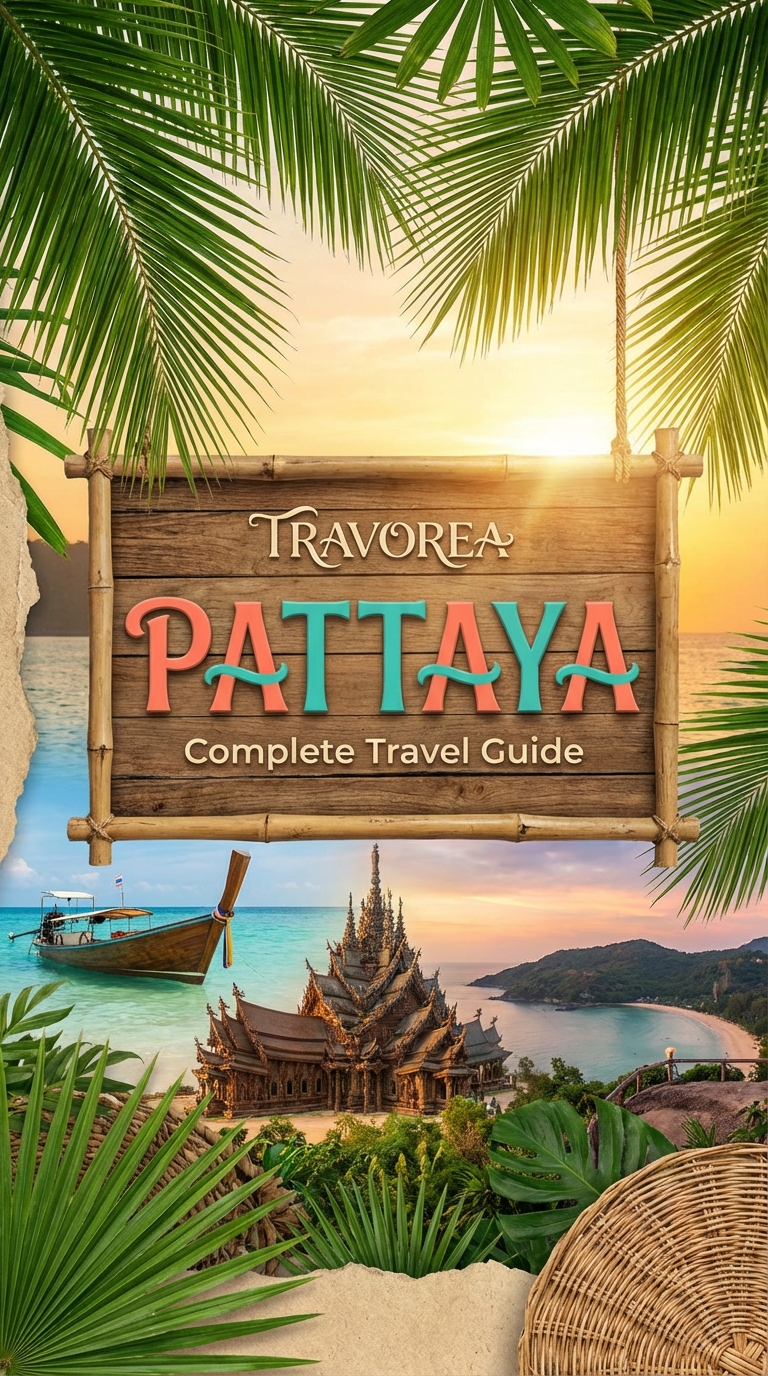

Pattaya
The Riviera of the East
Beach LifeIsland HoppingNightlifeWater SportsThai Temples
80
Pages2026 Edition
The Riviera of the East

 Pattaya
Pattaya sits on the eastern Gulf of Thailand, just 150 km southeast of Bangkok. Once a quiet fishing village, it transformed into a resort city after American GIs discovered its beaches in 1961. Today it offers an extraordinary density of experiences — island beaches, Thai temples, world-class water parks, and legendary nightlife — all within a compact 208 km² footprint. Four days covers the highlights; a week lets you explore the quieter southern coast and offshore islands.
The essential sights and experiences

The world's largest all-wood structure rises from the ocean like a fever dream — 105 metres of hand-carved mythological figures from four Asian civilizations. Master woodcarvers have been working since 1981 and it's still not finished.

A 30-minute ferry or 15-minute speedboat delivers you to six beaches with water so clear you can see fish from the pier. Tawaen and Samae beaches are liveliest; Tien beach is serene.

A 1-km neon canyon closed to traffic after 6pm, packed with clubs, go-go bars, restaurants, and street performers. Love it or avoid it, but it's undeniably a spectacle.

Five hundred acres of themed gardens — French, Stonehenge replicas, topiary dinosaurs — plus traditional Thai dance shows and elephant programs.

The 18-metre golden seated Buddha is Pattaya's most recognizable landmark. The hilltop setting gives 360-degree views from the bay to the eastern seaboard.

Four zones representing each Thai region (North, Northeast, Central, South) connected by wooden walkways. Try northeastern som tam and central boat noodles.

A cleaner, calmer 6-km stretch south of Pattaya proper with better sand, kiteboarding, and a seafood restaurant strip — where residents actually swim.

A 100-metre underwater tunnel passes through tanks of sharks, rays, and tropical fish. The touch pool and feeding shows keep families engaged for hours.

Over 150 interactive 3D paintings trick your eyes and cameras — pose as if you're surfing a wave, falling into an abyss, or escaping a T-Rex.

Southeast Asia's first cartoon-themed waterpark — 30 slides, a lazy river, and a wave pool with Ben 10, Powerpuff Girls, and Adventure Time theming.

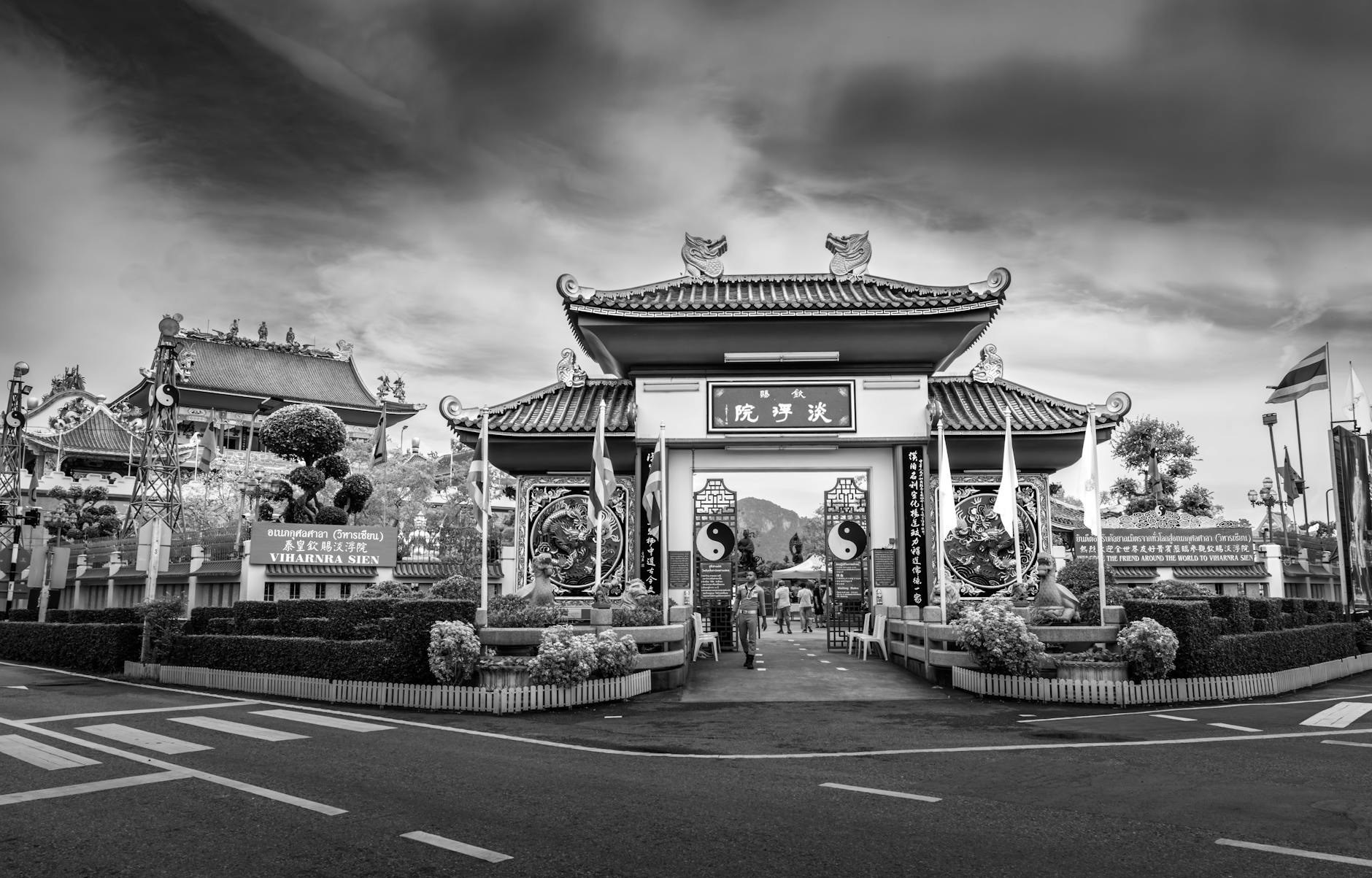
A sprawling 145-acre temple complex with Thai, Chinese, Indian, and even Swiss-style structures. The hillside Viharn Sien houses a museum of Chinese art.

A photogenic lakeside vineyard with Italian-style gardens, a giant "LOVE" sign, and surprisingly drinkable Thai wine. The sunset views rival Tuscany.

Thailand's largest water park with 50 slides across 18 acres of landscaped grounds themed around the Ramayana epic.

A 130-metre laser-carved outline of the Buddha on a limestone cliff face — created with gold-plated lines, visible for miles.

Mimosa is a pastel-colored "city of love" — a European-themed open-air mall perfect for Instagram, with cafés, vintage shops, and street performances.

The PATTAYA sign overlook (like a mini Hollywood sign) offers the definitive panoramic shot of the crescent bay, especially at sunset.

Over 100 miniature replicas of Thai and world landmarks — Wat Arun, Angkor Wat, the Eiffel Tower — at 1:25 scale. Surprisingly charming at night when everything is lit up.

Asia's longest-running ladyboy cabaret — dazzling costumes, Broadway-style choreography, and jaw-dropping production values. Running since 1974.
19. Bali Hai Pier (South Pattaya, Free): The main departure point for island ferries also serves as a seafood dining spot and sunset-viewing deck overlooking the harbour.
20. The Million Years Stone Park (Nong Plalai, ฿500): Bizarre and brilliant — a garden of 100+ million-year-old petrified trees and rocks alongside crocodile shows, a zoo, and Thai cultural performances.
When to go and what to expect
Cool & Dry Season (25–31°C). Minimal rain, comfortable humidity. Peak tourist season with highest prices. Perfect beach and sightseeing weather.
Hot Season (28–38°C). Very humid. April is scorching. Songkran festival (Apr 13-15) turns Pattaya into the world's biggest water fight. Room rates drop.
Rainy Season (27–33°C). Afternoon thunderstorms (usually 1-2 hours). Mornings are often sunny. Best hotel deals, fewer crowds, and everything is lush and green.
 Pattaya — best experienced in November–February (cool & dry)

Central Pattaya is the high-octane core of the city — a dense grid of hotels, malls, restaurants, and entertainment venues sandwiched between Beach Road and Second Road. This is where the iconic Walking Street pulses nightly, where Central Festival mall anchors the shopping scene, and where most first-time visitors base themselves. The energy here is relentless from mid-afternoon until dawn.
Beyond the nightlife, Central Pattaya has genuine personality. Soi Buakhao has evolved from seedy to eclectic, with craft beer bars and international restaurants. The beachfront promenade is undergoing major renovation into a modern seaside walkway. And the street food — particularly along the sois between Beach and Second roads — rivals Bangkok for variety and value.


Jomtien Beach stretches 6 kilometres south of Pratumnak Hill, offering everything that Pattaya Beach doesn't: cleaner water, wider sand, a genuine swimming beach, and a pace that lets you actually relax. The long-stay expat community has shaped the area into a comfortable, unpretentious neighborhood with excellent restaurants, casual bars, and a kiteboarding scene that draws enthusiasts from across Asia.
The Jomtien beachfront road has been transformed with a proper promenade — morning joggers and evening strollers replace the chaos of central Pattaya. The southern end near Dongtan Beach is quieter still, with a famous gay-friendly stretch and excellent seafood restaurants overlooking the sea. Families particularly love Jomtien for its safe swimming, proximity to water parks, and abundance of mid-range condos with sea views.

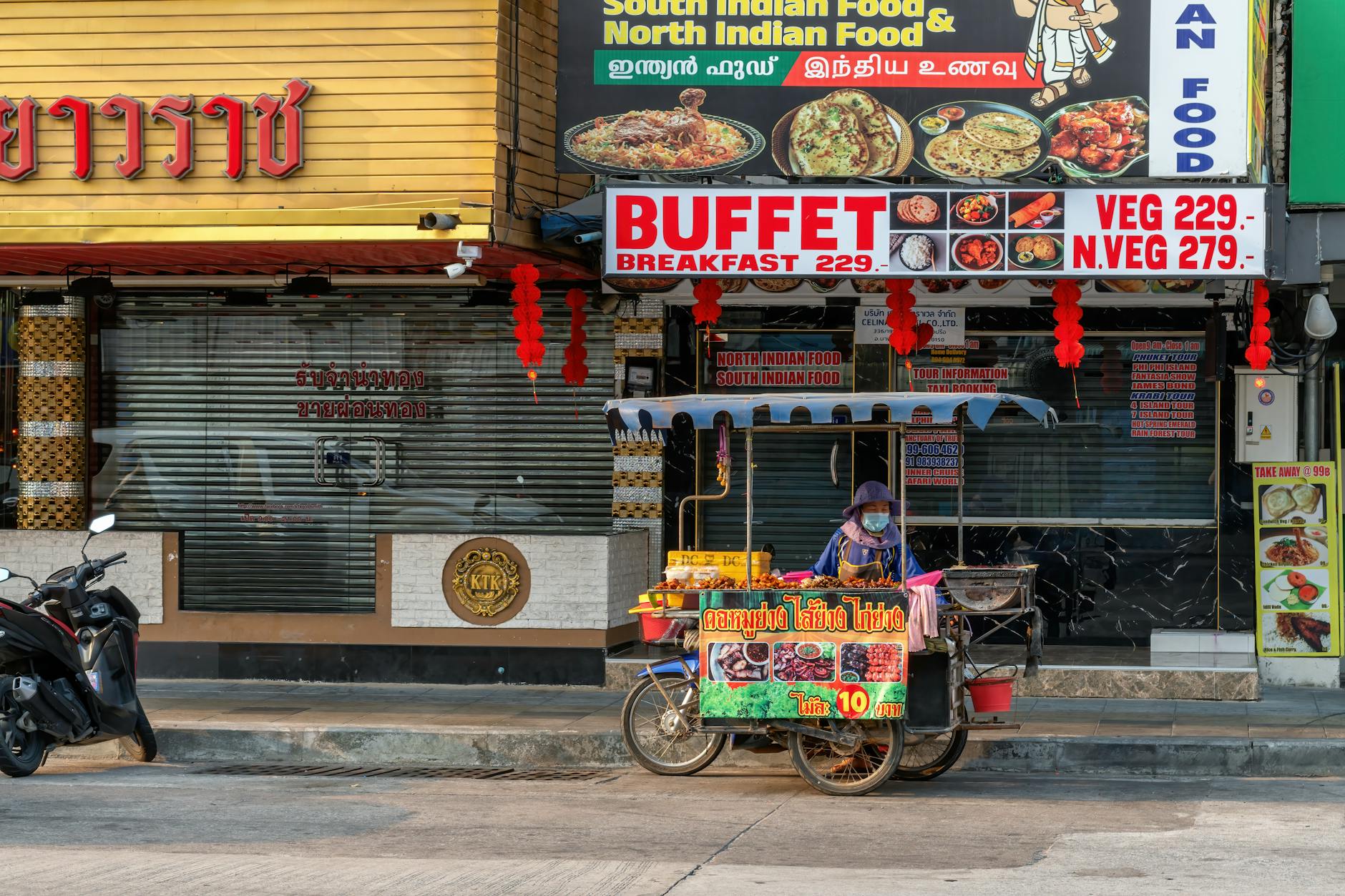


Naklua is what Pattaya was before the soldiers arrived — a Thai-Chinese fishing village where life revolves around the morning market, the temple, and the sea. The neighborhood retains an authenticity that's almost entirely absent from central Pattaya. Russian and Scandinavian expat communities have added an international flavor, but this is still a place where you're more likely to hear Thai than English.
The Naklua seafood market is the real deal — fishermen sell the morning catch directly, and adjacent restaurants will cook it to order for a fraction of tourist-area prices. The Sanctuary of Truth sits dramatically on Naklua's headland, and the residential streets behind the market reveal a quieter, more contemplative Pattaya. This is where Bangkok weekenders with local knowledge prefer to stay.


Pratumnak Hill is the green, breezy ridge that separates Pattaya from Jomtien — and it's become the most desirable residential address in the eastern seaboard. The elevation means ocean views, sea breezes, and a sense of being above the chaos. The Big Buddha temple at the summit is Pattaya's most-visited landmark, and the PATTAYA sign viewpoint delivers the money shot of the crescent bay.
The hill's southern slope is lined with luxury condominiums and boutique resorts that rival anything in Phuket or Koh Samui, but at a fraction of the price. Cosy Beach at the hill's base is one of Pattaya's best swimming spots — a small cove with calm water and rock formations. The area's restaurants lean upscale, and the rooftop bars here serve craft cocktails with 180-degree bay views.


South of Jomtien, the coastline opens into a stretch of beach communities that represent Pattaya's future. Na Jomtien is where the major new developments are rising — luxury condo towers, international schools, and the ambitious Ambassador City hotel complex (one of the world's largest). Further south, Bang Saray is a Thai fishing village that's becoming a foodie destination, with waterfront restaurants serving fish caught hours earlier.
This area is also home to Pattaya's biggest family attractions: Ramayana Water Park (Thailand's largest), Cartoon Network Amazone, and Silverlake Vineyard. The vibe is spacious and suburban — a total contrast to central Pattaya's density. Visitors who rent a car or scooter can explore the area's vineyards, temples (Wat Yan Sangwararam), and the striking Khao Chi Chan Buddha Mountain cliff carving.


If Walking Street is the tourist face of Pattaya, Soi Buakhao is the local one. This busy inland artery has become the epicenter of expat life — a dense strip of restaurants, beer bars, massage shops, and markets that runs parallel to Second Road. The prices here are 30-40% lower than Beach Road, the crowd is more residential, and the atmosphere is refreshingly unpretentious. Third Road, one block further inland, is where serious shopping and local Thai life happens.
The area has gentrified significantly in recent years. Craft beer bars have appeared alongside the traditional beer gardens, international restaurants (German, Indian, Scandinavian, Russian) line the sois, and the massive Buakhao Market operates daily with fresh produce, clothes, and street food at Thai prices. For visitors who want authentic expat Pattaya rather than tourist Pattaya, this is ground zero.


Wongamat Beach is Pattaya's best-kept secret — a relatively pristine 800-metre stretch of sand in the northern section that consistently wins awards for cleanliness. While central Pattaya Beach can feel crowded and commercialized, Wongamat retains a resort-like tranquility. The beach is backed by upscale condominium towers and luxury hotels (The Palm, Centara Grand, Movenpick) rather than beer bars and massage shops.
The Wongamat area is essentially an extension of Naklua — quiet, residential, and popular with well-heeled Thai families on weekends and international guests who prize beach quality over nightlife proximity. The Sanctuary of Truth, Pattaya's most architecturally stunning attraction, stands dramatically at the northern end of the beach. Early mornings here, with the wooden temple silhouetted against sunrise, deliver one of Thailand's most memorable views.


South Pattaya is where the city's energy reaches its most concentrated form. Walking Street begins here at the intersection with Beach Road, and Bali Hai Pier — the departure point for Koh Larn ferries — anchors the harbor area. The district is a fascinating collision of tourism infrastructure and working fishing port, where ferries, speedboats, and longtail boats jostle for space alongside neon-lit entertainment complexes.
Beyond Walking Street (which is just one road), South Pattaya has depth. The streets behind the main strip hide excellent Thai restaurants, backpacker guesthouses, and local markets that serve the neighborhood's Thai residents. The pier area comes alive at sunset as fishing boats return and seafood vendors set up along the harbor wall. Early morning reveals an entirely different character — fishermen mending nets and temple-goers making offerings before the entertainment district stirs.


South Pattaya Road (Pattaya Tai) is the horizontal artery connecting Beach Road to Sukhumvit Highway, and it's evolved into one of the most authentically diverse food streets in the eastern seaboard. Thai, Indian, Middle Eastern, Russian, Chinese, and European restaurants compete for attention along its length, and the side sois hide some of Pattaya's most interesting dining and shopping discoveries.
The area around Tesco Lotus and the intersection with Third Road forms a commercial hub where Thai residents actually shop and eat — prices here reflect local purchasing power rather than tourist inflation. The famous Thepprasit Night Market nearby (Friday-Sunday) is one of Thailand's best night bazaars, with hundreds of stalls selling everything from vintage clothing to grilled crocodile.


East Pattaya — or 'The Darkside' as expats call it — is the sprawling area east of Sukhumvit Highway that most tourists never see. This is where Pattaya's permanent expat community actually lives: gated housing estates, golf courses, international schools, and Thai neighborhoods that operate entirely outside the tourism economy. It's also where many of Pattaya's best attractions are located, including Nong Nooch Garden and several world-class golf courses.
The name 'Darkside' is tongue-in-cheek — it originally referred to the area's lack of street lighting and infrastructure, though that's rapidly changing with new malls (Global House, Makro) and residential developments. For visitors, East Pattaya rewards exploration with authentic Thai villages, orchid farms, go-kart tracks, and shooting ranges. The landscape shifts from urban to semi-rural, with rice paddies and water buffalo appearing alongside modern housing estates.


Second Road runs parallel to Beach Road, one block inland, and serves as Pattaya's primary commercial corridor. If Beach Road is the tourist promenade and Walking Street is the party strip, Second Road is where the city's day-to-day commerce happens. Mike Shopping Mall, Royal Garden Plaza, and Central Festival (Pattaya's biggest mall) all sit on Second Road, along with banks, clinics, and the transport connections that make the city function.
The road itself is less scenic than Beach Road but far more useful. Songthaews running the fixed route head south on Second Road (and north on Beach Road), making it the practical way to navigate central Pattaya. The sois branching off Second Road — particularly Soi 6 to Soi 15 — contain much of Pattaya's mid-range dining scene, with everything from Japanese ramen to Lebanese kebabs to proper Italian pizza within a few blocks.


Koh Larn is the antidote to Pattaya's mainland bustle — a small island just 7.5 kilometres offshore with six distinct beaches, crystal-clear water, and a laid-back fishing village atmosphere. The 30-minute public ferry (฿30) or 15-minute speedboat (฿300) from Bali Hai Pier delivers you to a completely different world: no high-rises, no neon, just white sand, swaying palms, and water clean enough to snorkel in.
Each beach has its own personality. Tawaen is the biggest and busiest, with water sports and beach restaurants. Samae is popular with Chinese and Korean tour groups but has the best snorkeling. Tien is quiet and shady, perfect for reading. Nual (Monkey Beach) is small and cove-like. The island's interior is hilly with viewpoints, and motorbike taxis connect all beaches (฿40-60). Stay overnight in a simple beachfront guesthouse to experience the island after the day-trippers leave.


The area around Mabprachan Lake in Nong Plalai represents Pattaya's semi-rural hinterland — a landscape of lotus ponds, fruit orchards, and lakeside restaurants that feels a world away from the coast. The lake itself is popular for fishing (Bung Sam Ran-style pay ponds are everywhere) and the surrounding roads are perfect for cycling. This is also where many long-term expats settle, attracted by spacious houses with gardens at Bangkok apartment prices.
The attractions here are eclectic: The Million Years Stone Park showcases petrified trees and crocodile shows, fruit farms offer pick-your-own tropical fruit experiences, and the area's Thai-Chinese temples are genuine community worship places rather than tourist attractions. Several excellent Thai restaurants have opened lakeside, drawing Bangkok food bloggers who make the drive specifically for the seafood and the ambiance.


The Riviera of the East