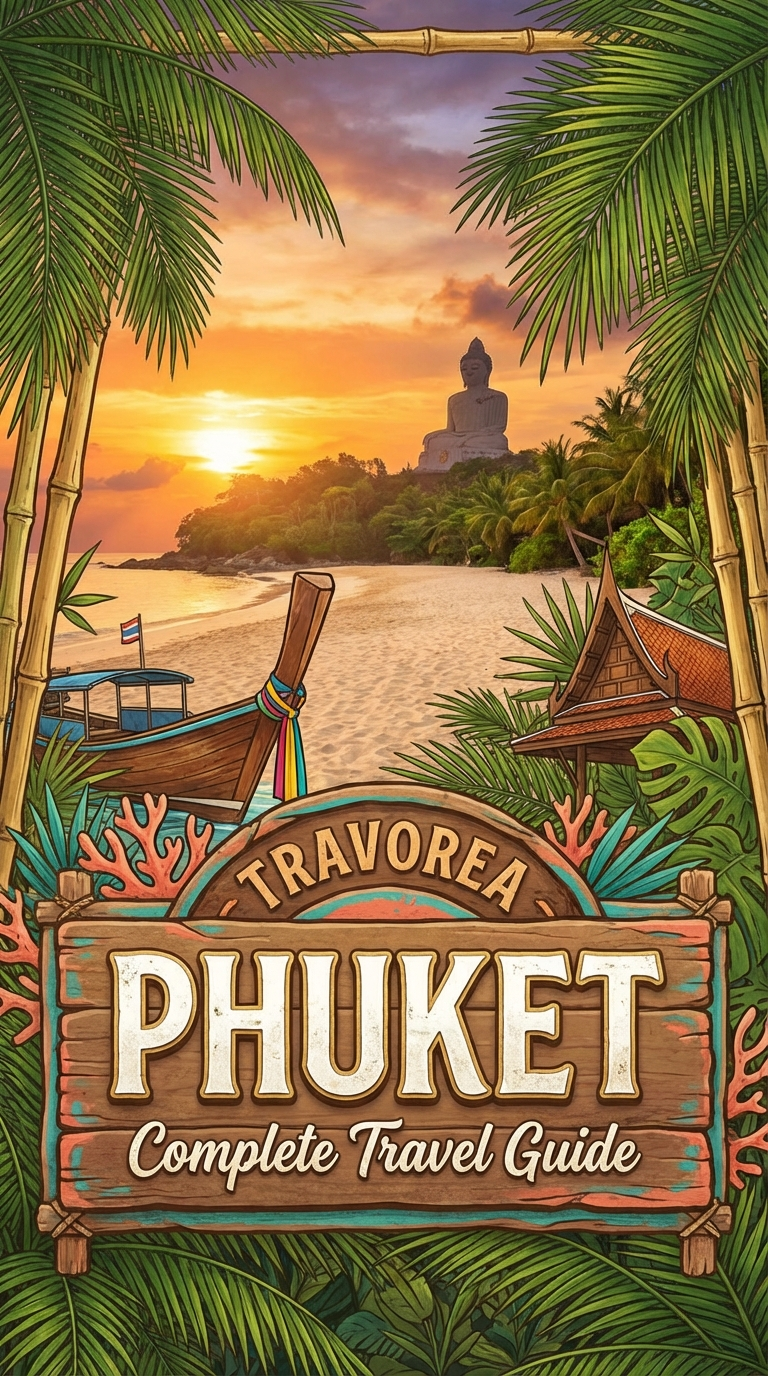

Phuket
The Pearl of the Andaman
Island BeachesThai TemplesDiving & SnorkellingOld Town CultureLuxury Resorts
80
Pages2026 Edition
The Pearl of the Andaman

 Phuket
Phuket lies off Thailand's southwest coast in the Andaman Sea, connected to the mainland by the Sarasin Bridge. At 576 km², it's Thailand's largest island — roughly the size of Singapore. The mountainous, jungle-covered interior rises to 529m at Mai Thao Sip Song peak. The west coast has the famous beaches; the east coast has marinas and Phang Nga Bay views. Five days covers the main beaches and Old Town; two weeks lets you explore the surrounding islands and hidden east coast.
The essential sights and experiences

Stunning Sino-Portuguese shophouses, street art, hipster cafés, and weekend walking street market. The most culturally rich area of the island — a photographer's paradise.

Iconic limestone islands with Maya Bay (The Beach film location), turquoise lagoons, and world-class snorkelling. Accessible by speedboat or ferry from Rassada Pier.

A 45-metre white marble Buddha visible from anywhere on the island. The hilltop setting offers 360-degree panoramas over beaches and Chalong Bay.

Phuket's most important Buddhist temple, with a relic of the Buddha, ornate halls, and a 60-metre pagoda with Andaman Sea views from the top floor.

Phuket's neon-lit party strip — bars, clubs, street performers, and sensory overload. The most famous nightlife street outside of Bangkok.

Dramatic limestone karsts rising from emerald water — including James Bond Island. Sea kayaking through hidden lagoons (hongs) is the highlight.

A beautiful crescent of sand backed by palm trees — arguably Phuket's most attractive beach. Better swimming than Patong, less crowded than Karon.

Phuket's most famous sunset viewpoint — dramatic cliffs, a lighthouse, and unobstructed views over the Andaman Sea and offshore islands.

One of the world's top 10 dive sites — crystal-clear visibility, manta rays, whale sharks, and pristine coral. Open November to May only.

Phuket's busiest and most famous beach — jet skis, parasailing, beach bars, and a 3-km strip of golden sand backed by hotels and restaurants.

A more relaxed alternative to Patong — beautiful sand, good swimming, and a village atmosphere. Home to the luxury Amanpuri and Andara resorts.

The iconic three-beach viewpoint showing Kata Noi, Kata, and Karon beaches in one panoramic sweep. Best at sunset.

A beachfront market where you buy fresh seafood from fishing boats and choose a restaurant to cook it. The freshest and cheapest seafood experience on the island.

A mysterious temple with a half-buried golden Buddha image — legend says anyone who tries to dig it up meets misfortune. The surrounding temple complex is serene.

Beautifully restored Sino-Portuguese mansion tracing Phuket's tin mining history and Chinese immigrant heritage through immersive exhibits.

A protected stretch of coastline with mangroves, coral reefs, and Nai Yang Beach — one of the few places sea turtles still nest on Phuket.

An upscale beach strip with Catch Beach Club and Twin Palms resort. Crystal-clear water, golden sand, and a more sophisticated atmosphere than Patong.

A conservation centre in the jungle that rehabilitates gibbons rescued from the pet trade. One of Thailand's most ethical wildlife experiences.
19. Phuket Weekend Market (Phuket Town, Free): A massive open-air market every Sunday with street food, vintage clothing, Thai crafts, and live music. The best free evening activity on the island.
20. Freedom Beach (West coast, ฿200 longtail): A hidden cove of powdery white sand accessible only by longtail boat from Patong — Phuket's most beautiful and least crowded beach.
When to go and what to expect
Dry season (25-33°C). Clear skies, calm seas, perfect beach weather. Peak tourist season (Dec-Jan highest prices). Similan Islands open for diving.
Shoulder season (27-34°C). Occasional rain but many sunny days. Prices drop 30-40%. Good value with acceptable weather.
Monsoon season (27-32°C). Afternoon storms, rough seas on west coast. Best hotel deals (50-60% off). East coast beaches remain swimmable. Surfing season at Kata.
 Phuket — best experienced in November–April (dry season)

Patong is where most of Phuket's 10 million annual visitors end up — a 3km strip of hotels, restaurants, and entertainment that never sleeps. Bangla Road is the epicentre, transforming nightly into a neon canyon of bars, clubs, and street performers. The beach itself is broad and busy, with jet skis, parasailing, and lounger rentals competing for space on the golden sand.
Look past the obvious and Patong has hidden depths. The backstreets of Soi Bangla contain excellent Thai restaurants, the southern end of the beach near Tri Trang has quieter swimming spots, and the fresh market on Nanai Road serves the Thai community with outstanding street food at local prices. The new Jungceylon and Central shopping complexes add air-conditioned retail therapy.


Kata Beach is what many visitors picture when they imagine Phuket — a gorgeous crescent of golden sand backed by palm trees and green hills, with clear water perfect for swimming. Smaller and more attractive than Patong or Karon, Kata attracts a mix of families, couples, and surf enthusiasts (Kata gets the best waves in monsoon season, June-October).
The Kata area has evolved into one of Phuket's most pleasant residential strips. Beach Road is lined with restaurants, boutiques, and massage shops without Patong's intensity. The southern headland offers great snorkelling at Kata Noi, and the hill road to Karon Viewpoint serves up the island's most photographed panorama — three beaches sweeping in a single frame.
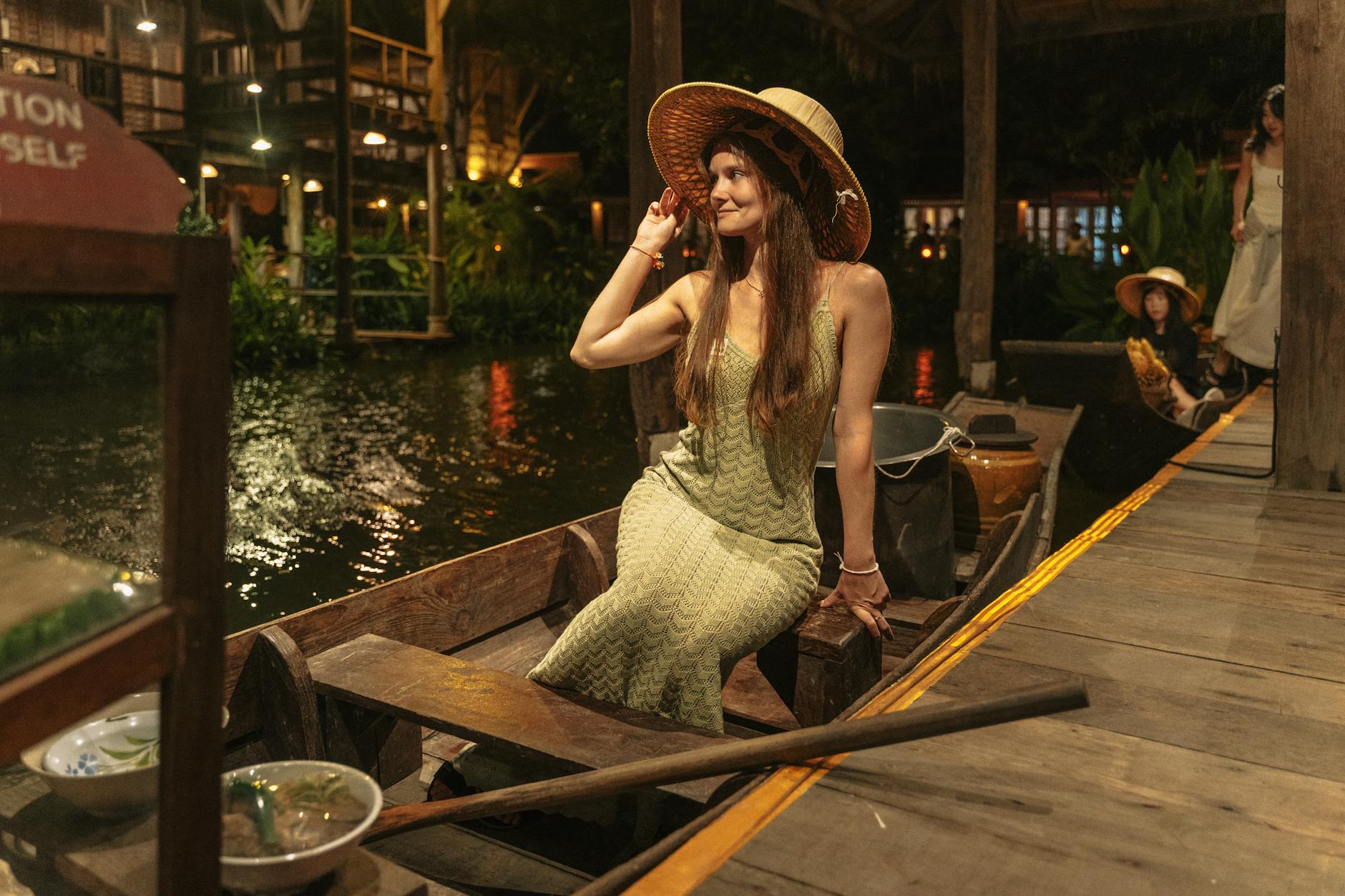


Old Phuket Town is the island's cultural soul — a grid of beautifully restored Sino-Portuguese shophouses that tell the story of the Chinese tin miners who built their fortunes here in the 19th century. The pastel-coloured facades of Thalang Road, Soi Romanee, and Phang Nga Road are adorned with street art, while the interiors have been converted into boutique hotels, hipster cafés, galleries, and museums.
The Sunday Walking Street market (Lard Yai) transforms Thalang Road into a festive strip of food stalls, live music, and craft vendors. During the week, the town operates at a gentler pace — morning dim sum at traditional Chinese restaurants, afternoon coffee in converted shophouse cafés, and evening meals at restaurants like Raya House that serve exquisite Phuket-style Southern Thai cuisine in heritage settings.

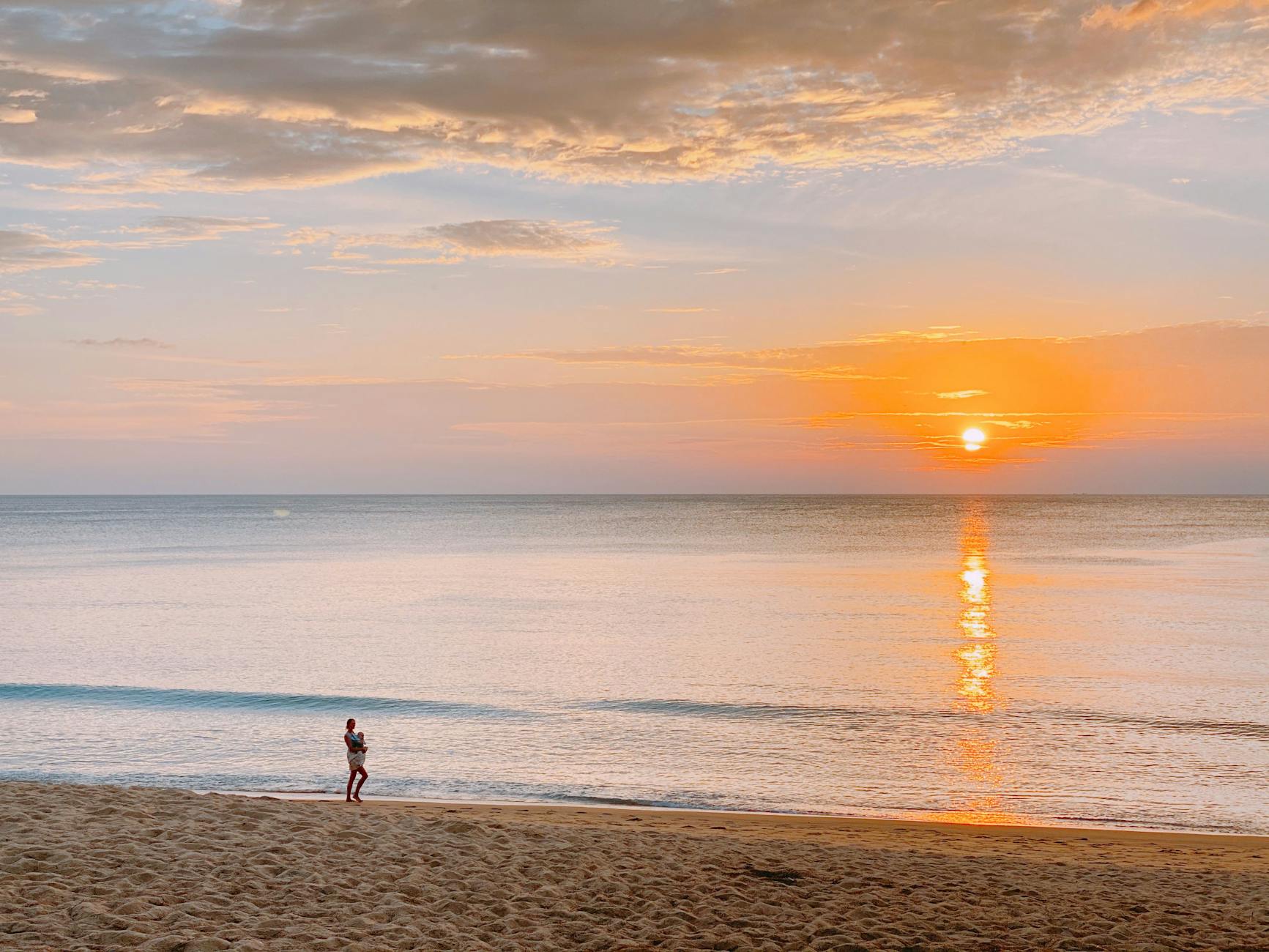


Kamala Beach occupies a sweet spot between Patong's chaos and the remoteness of Phuket's northern beaches. The 2km beach is wide, clean, and backed by a genuine Thai-Muslim fishing village rather than concrete hotel blocks. The luxury end features Amanpuri (one of Asia's most exclusive resorts) and Paresa, while the village end has excellent Thai restaurants and a morning market.
The beach is particularly safe for swimming — the bay is sheltered, the sand slopes gently, and lifeguards patrol during high season. The Kamala village itself retains its fishing community character, with mosques, halal restaurants, and morning markets selling the night's catch. It's the place to stay if you want beautiful beaches, quiet evenings, and easy access to Patong (15 minutes by Grab) when you want action.

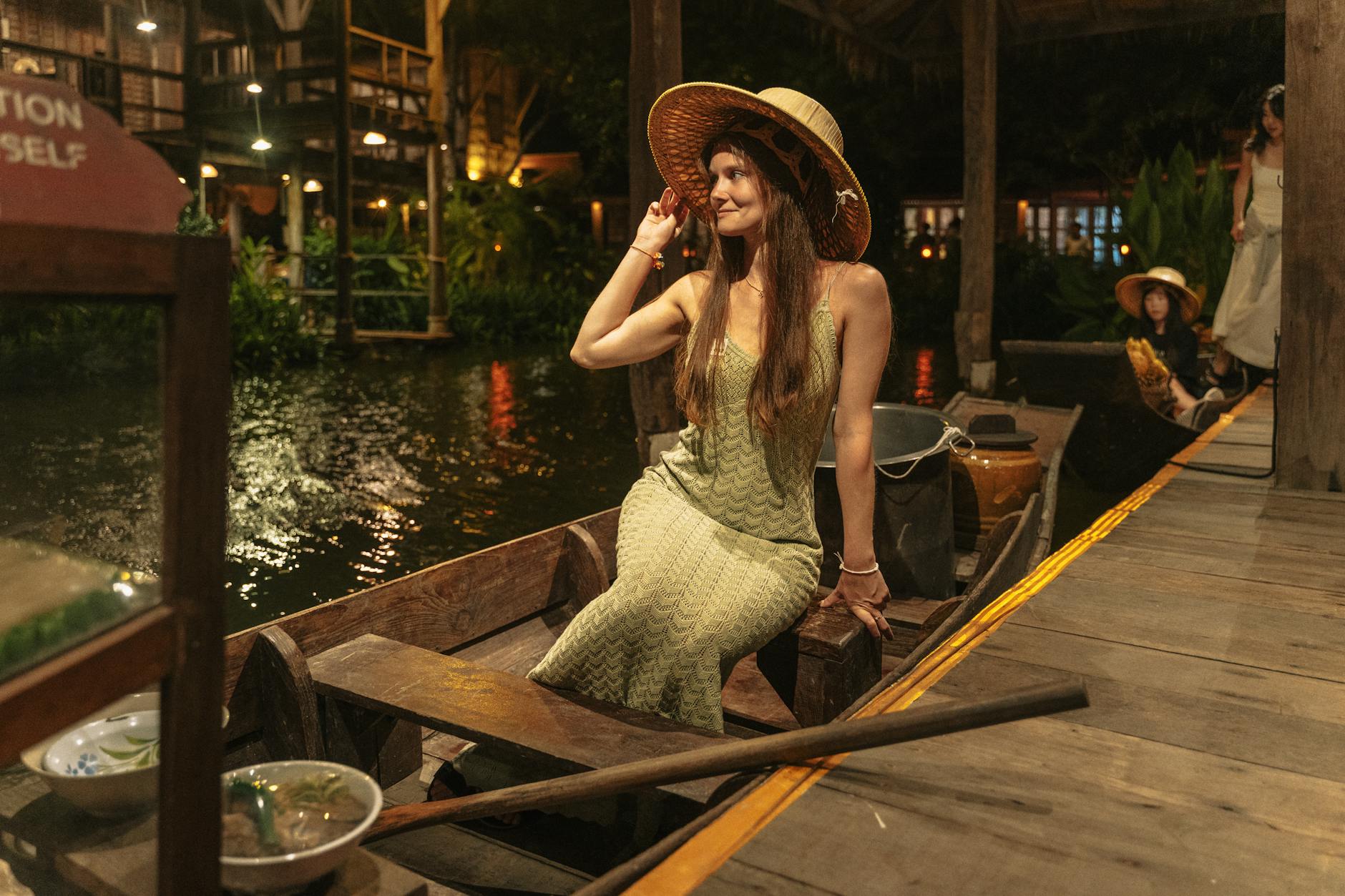


The southern tip of Phuket is where the island feels most authentically Thai. Rawai is a beachfront seafood village where the morning catch is sold directly from fishing boats, and adjacent restaurants cook it to order at astonishingly low prices. Nai Harn Beach, just over the hill, is considered by many to be Phuket's most beautiful swimming beach — a sheltered bay backed by a Buddhist monastery rather than hotels.
This area attracts long-stay expats, digital nomads, and Thai food enthusiasts who appreciate the lower prices and local atmosphere. The Rawai seafood strip is a genuine social hub — Thai families come for Sunday lunch, expats gather for sunset beers, and visitors discover food experiences unavailable on the tourist west coast. Promthep Cape, Phuket's most famous sunset viewpoint, is a five-minute drive south.


Surin and Bangtao represent Phuket's most exclusive beach stretch — home to the Laguna Resort complex (5 interconnected luxury resorts), Catch Beach Club, and some of the island's most expensive real estate. Surin Beach is a compact strip of golden sand with clear water and a sophisticated crowd; Bangtao is a sweeping 6km bay backed by the massive Laguna resort development.
Despite the luxury reputation, both beaches are public and accessible. The northern end of Bangtao (Layan Beach) is genuinely quiet and undeveloped — perfect for those seeking solitude. The area's restaurants lean upscale but the beach food vendors offer the same fried rice and cold beers as anywhere else in Thailand. The real draw is the beach quality — consistently clean, clear water with good swimming conditions in high season.


Karon Beach is Phuket's second-longest beach at 3.5km — a wide, flat expanse of sand that never feels crowded even in peak season. The beach faces due west, catching every last minute of sunset, and the swimming is generally excellent with a sandy bottom and gentle slope. It's the beach that families and returning visitors choose when they want space, beauty, and convenience without Patong's intensity.
The Karon area has a pleasant town centre with restaurants, 7-Elevens, and a round-about that acts as the neighbourhood hub. The southern end connects to Kata via a scenic headland road, and the Dino Park mini-golf at the junction is a retro institution. Karon Temple's twice-weekly market (Tuesday and Saturday) is a lively evening of street food, clothing, and Thai snacks.


Mai Khao Beach is Phuket's longest beach at 11km and its most undeveloped — a protected stretch within Sirinat National Park where sea turtles still nest between November and February. The beach stretches north from the airport, and the northern tip borders the Sarasin Bridge to the mainland. JW Marriott, Renaissance, and SALA Phuket occupy discrete spots along this vast coastline.
The area has a completely different feel from the rest of Phuket — quiet, natural, and spacious. The mangrove forests behind the beach support diverse birdlife, and the coral reefs offshore offer decent snorkelling. The proximity to the airport means planes descend dramatically overhead, but also means you can be on the beach within 10 minutes of landing — a unique advantage for short trips.


Phuket's east coast is the island's least visited but most authentic area — a coastline of mangroves, marinas, and quiet fishing villages facing the calm waters of Phang Nga Bay rather than the open Andaman Sea. Ao Po marina is the departure point for luxury yacht charters and Phang Nga Bay tours. The east coast's sheltered waters mean it's swimmable year-round, even when the west coast has dangerous monsoon waves.
The east coast villages — Baan Pa Khlok, Baan Mae Yen, and Ko Siray — retain traditional fishing community character with morning markets, seafood restaurants that serve locals, and mosques rather than bars. The area is developing rapidly with luxury marinas and residential projects, but for now it offers a glimpse of pre-tourism Phuket that's increasingly hard to find on the west coast.


Chalong sits in Phuket's geographical centre, making it the most convenient base for exploring the entire island. The area is anchored by Wat Chalong — the island's most revered Buddhist temple — and Chalong Bay, where the famous Chalong Bay Rum distillery offers tours and cocktails. The neighbourhood is more residential than touristy, with excellent value accommodation and authentic Thai restaurants.
Chalong's central location means you're never more than 20 minutes from any major beach or attraction. The Big Buddha sits on the hill directly above, Rawai and Nai Harn are 10 minutes south, and the west coast beaches are 15-20 minutes by car. The area attracts long-term visitors and digital nomads who prefer lower prices and a more local atmosphere over beachfront locations.


Nai Yang and Nai Thon are Phuket's best-kept beach secrets — genuinely beautiful stretches of sand with a fraction of the crowds found at Patong or Kata. Nai Yang sits within Sirinat National Park, backed by casuarina trees rather than hotels, while Nai Thon is a 1km cove reached by a steep road that deters the tour bus crowd. Both beaches have clear water, good snorkelling, and a distinctly local atmosphere.
The area has limited tourism infrastructure — which is precisely the appeal. A handful of small resorts and beachfront restaurants serve visitors who've deliberately sought out these beaches. The Slate (formerly Indigo Pearl) resort at Nai Yang is an architectural gem — a luxury property designed around Phuket's tin mining heritage with industrial-chic design and a private beach section.


Thalang occupies Phuket's interior plateau — the historical centre of the island long before tourism arrived on the beaches. The Thalang National Museum tells the story of the two heroines who defended Phuket from Burmese invasion in 1785, and the surrounding countryside reveals a different Phuket: rubber plantations, pineapple fields, waterfalls, and the Khao Phra Thaeo Wildlife Sanctuary where wild gibbons swing through the canopy.
For visitors willing to leave the beach for a day, Thalang rewards with authentic Thai village life, excellent jungle trekking, and the Gibbon Rehabilitation Project — one of Thailand's most ethical wildlife experiences. The area's restaurants are genuinely local, serving Southern Thai cuisine at prices that would seem impossible on the coast. The Heroines' Monument on Route 402 is the most-visited historical landmark on the island.


The southeastern corner of Phuket revolves around two marinas — Royal Phuket Marina and Ao Po Grand Marina — and the historic Cape Panwa peninsula. This is where the sailing and yachting community gathers, particularly during the annual King's Cup Regatta (December) and Phuket International Boat Show. Cape Panwa itself is home to the excellent Phuket Aquarium and the former governor's mansion, now a hotel.
The area offers a sophisticated alternative to Phuket's beach tourism — marina restaurants with yacht views, waterfront cocktail bars, and a generally more upscale crowd. The beaches here are small but pretty, and the calm east coast waters mean they're swimmable year-round. Cape Panwa's Khao Khad viewpoint gives elevated views over Chalong Bay and the offshore islands.


The Pearl of the Andaman