
Prague
The City of a Hundred Spires
Prague CastleCharles BridgeOld Town SquareBohemian BeerArt Nouveau
80
Pages2026 Edition
The City of a Hundred Spires

 Prague
Straddling the Vltava river in the heart of Bohemia, Prague’s historic centre is a UNESCO World Heritage Site encompassing 866 hectares of Gothic, Baroque, Renaissance, and Art Nouveau architecture. Three days covers the highlights; five days lets you discover the city’s creative neighbourhoods and legendary beer culture.
The essential sights and experiences

The largest ancient castle complex in the world, spanning 70,000 m². Home to St. Vitus Cathedral, the Old Royal Palace, Golden Lane, and the Daliborka Tower.

The iconic 14th-century stone bridge lined with 30 Baroque statues. Built by Charles IV in 1357, it’s Prague’s most photographed landmark.

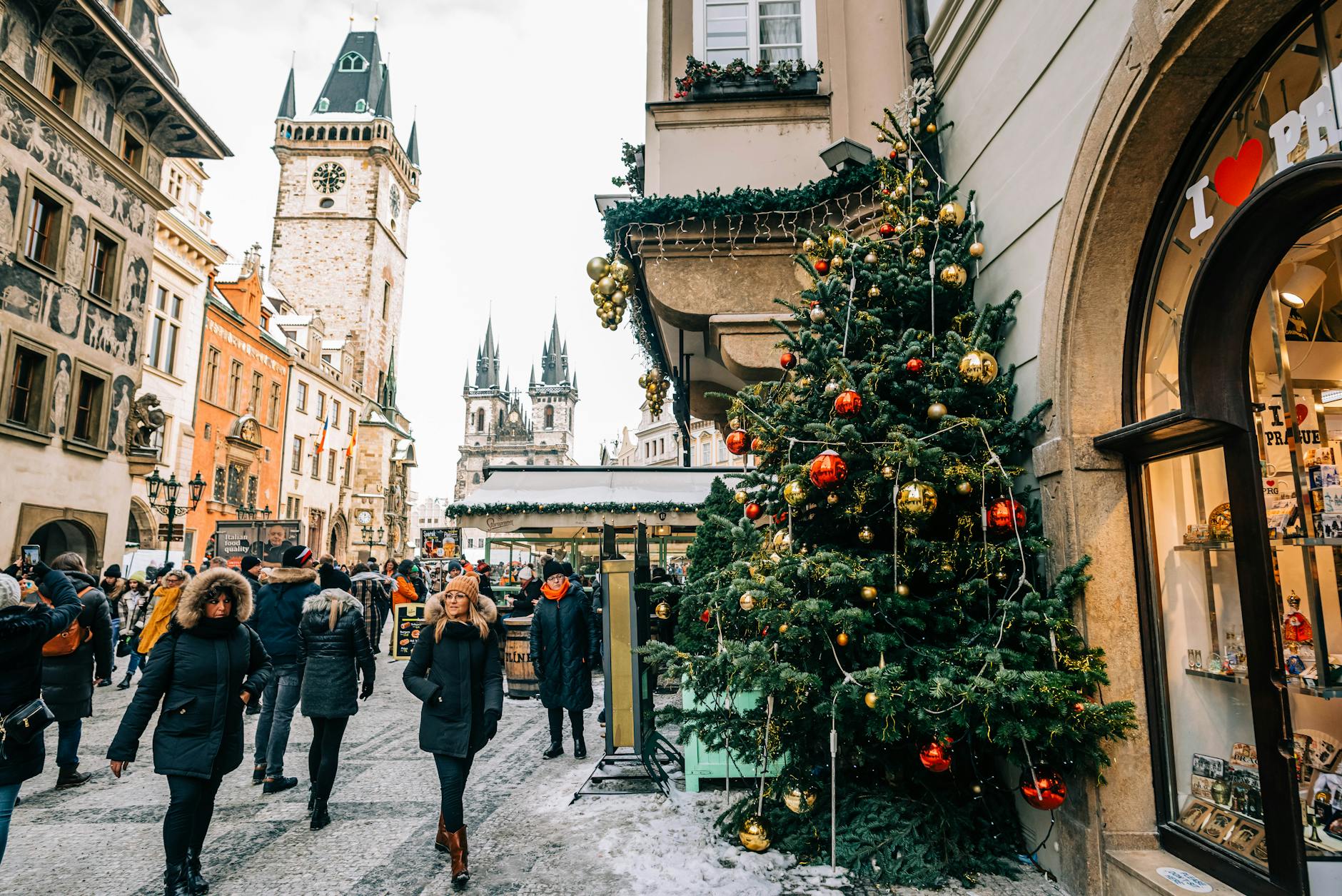
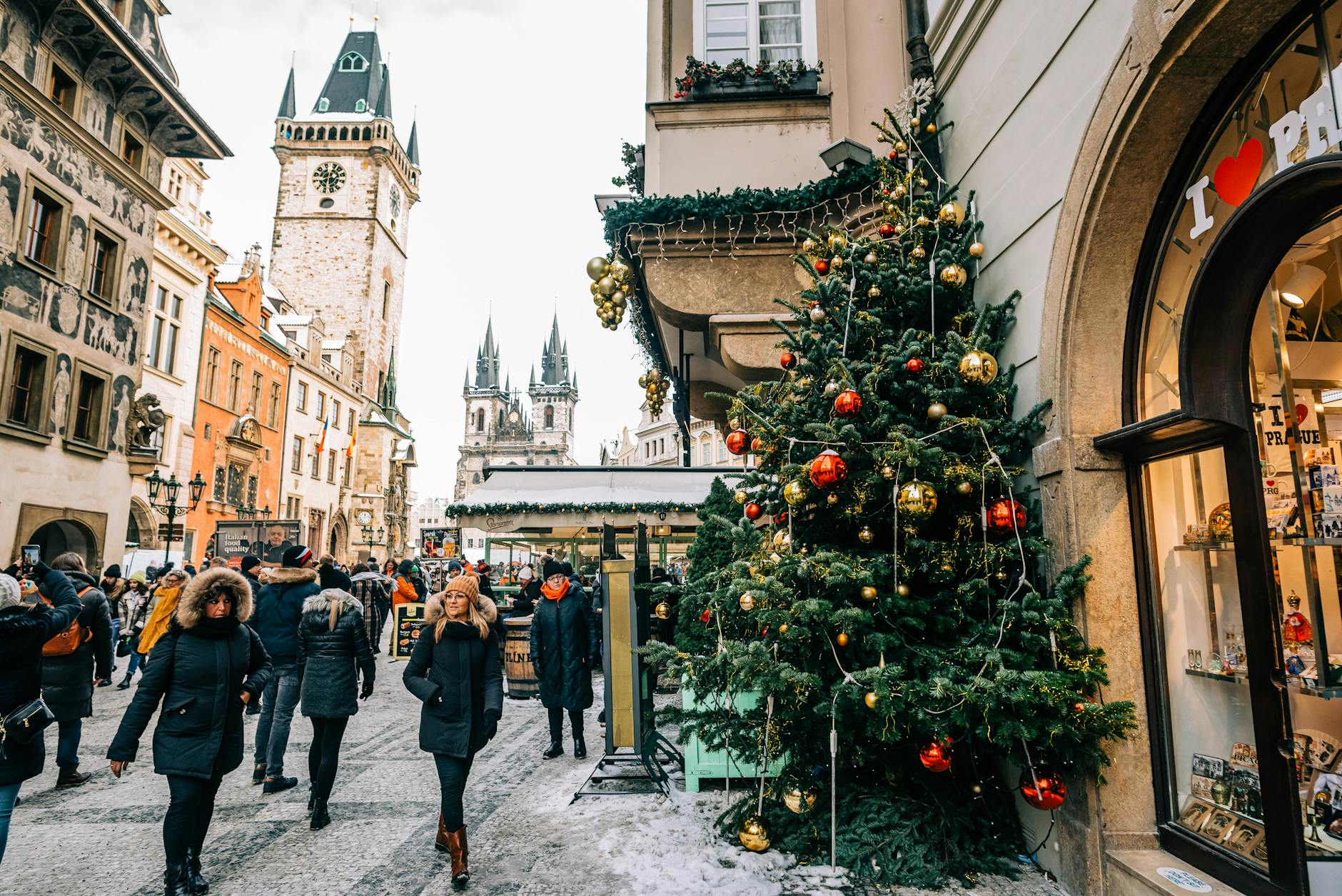
Prague’s medieval heart: the Astronomical Clock (1410), Týn Church twin spires, the Jan Hus Memorial, and pastel Baroque façades.

A Gothic masterpiece 600 years in the making. The stained glass by Alfons Mucha and the 96.5m tower are breathtaking.

One of Europe’s oldest Jewish settlements: the Old Jewish Cemetery (12,000 gravestones stacked 12 layers deep), synagogues, and the Golem legend.
A mini Eiffel Tower atop a forested hill with panoramic views, a mirror maze, rose gardens, and the funicular railway.
When to go and what to expect
Spring is glorious (10–20°C). Cherry blossoms at Petrín Hill, outdoor cafés reopen, and the city is green and buzzing without peak crowds.
Warm and long days (20–30°C). Peak tourist season. Beer gardens thrive, river cruises, and outdoor festivals. Book ahead.
Autumn colours and mild weather (10–20°C). Fewer crowds, golden light on the spires, and the grape harvest festival. Best value.
Cold and atmospheric (-5–10°C). Christmas markets (Nov–Jan) are magical. Snow on Prague Castle is unforgettable. Low-season prices.
 Prague — best experienced in April–June, September–October

Staré Město is where Prague’s story began — a tangle of medieval lanes, Gothic churches, and Baroque palaces radiating from the Old Town Square. The Astronomical Clock has drawn crowds every hour since 1410, the twin Gothic spires of Týn Church pierce the skyline, and the pastel façades lining the square create one of Europe’s most beautiful public spaces. Beneath the cobblestones, a network of Romanesque cellars from the city’s original ground level is open for exploration.
Start at the Old Town Square for the Astronomical Clock’s hourly show, then explore the surrounding lanes. Duck into the Church of Our Lady before Týn (free) for its dramatic Baroque interior, and find the tiny passageways leading to hidden courtyards. The lanes around Karlova street lead directly to Charles Bridge.


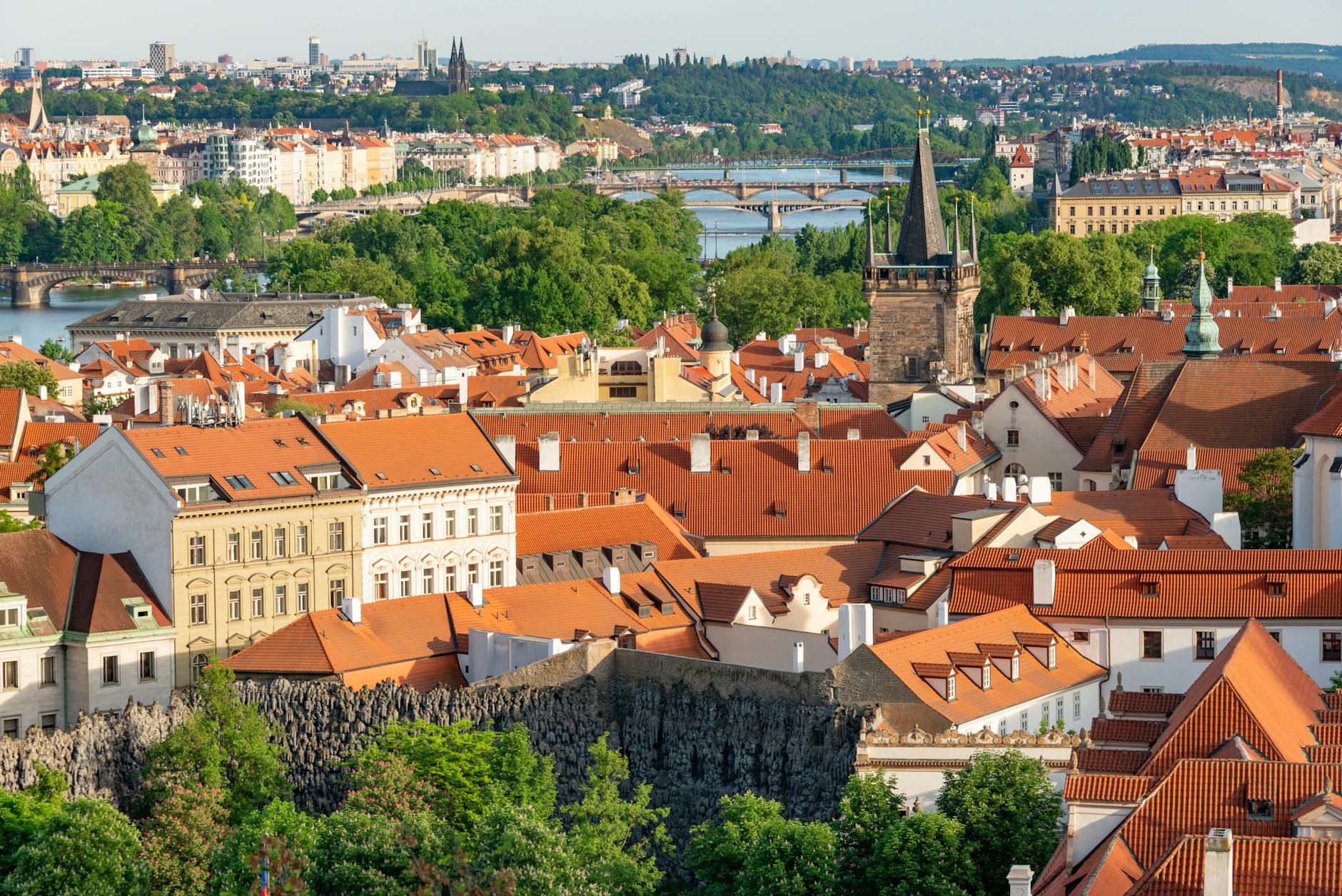
Malá Strana (Lesser Town) is Prague’s most romantic quarter — a cascade of Baroque palaces, hidden gardens, and terracotta rooftops tumbling down from Prague Castle to the Vltava. Largely destroyed by fire in 1541, it was rebuilt in lavish Baroque style by the Catholic nobility. The Lennon Wall adds bohemian colour, and the Church of St. Nicholas boasts one of Central Europe’s finest Baroque interiors.
Cross Charles Bridge into Malá Strana and explore the lanes around Mostecká street. Visit the Church of St. Nicholas, then discover the hidden Vrtba Garden — a terraced Baroque masterpiece with city views. The palace gardens below Prague Castle are free and serene.


Hradčany is the castle district crowning the city — a monumental complex spanning 70,000 m² that has been the seat of Czech power since the 9th century. Within its walls stand St. Vitus Cathedral, the Old Royal Palace, Golden Lane’s miniature houses, and the Lobkowicz Palace with its Beethoven manuscripts. The surrounding streets hold the Strahov Monastery and its two jaw-dropping library halls.
Arrive when the castle opens to beat the crowds. Start with St. Vitus Cathedral — the Mucha stained glass window is the highlight. Walk Golden Lane’s tiny coloured houses (Kafka lived at No. 22), then visit the Lobkowicz Palace. End at Strahov Monastery’s Theological and Philosophical Halls.


Josefov is one of the world’s most significant Jewish heritage sites — a compact quarter where the Old Jewish Cemetery’s 12,000 gravestones, stacked 12 layers deep, bear witness to 700 years of Jewish life in Prague. The Old-New Synagogue (1270) is Europe’s oldest active synagogue, and the legend of Rabbi Loew’s Golem still haunts the quarter. The Spanish Synagogue’s Moorish interior is one of Prague’s most beautiful spaces.
Buy the combined ticket (350 CZK) covering the Old Jewish Cemetery, Spanish Synagogue, Maisel Synagogue, and Pinkas Synagogue (a Holocaust memorial with 77,297 names inscribed on its walls). The Old-New Synagogue requires a separate ticket (200 CZK). Browse the elegant shops on Pařížská street afterwards.



Vinohrady is Prague’s most liveable neighbourhood — a grid of tree-lined streets, Art Nouveau apartment buildings, and a thriving café scene that draws locals rather than tourists. Named for the vineyards that once covered its slopes, it retains an unhurried, elegant character. Náměstí Míru square, with the neo-Gothic Church of St. Ludmila and the Vinohrady Theatre, is its centrepiece.
Start at Náměstí Míru for coffee, then walk the residential streets admiring Art Nouveau façades. Riegrovy sady park’s beer garden offers one of Prague’s best panoramic views of the castle. Browse the independent shops on Mánesova and Korunní streets, and stay for dinner.


Žižkov is Prague’s scruffiest, most authentic neighbourhood. Named after the one-eyed Hussite warrior Jan Žižka (whose enormous statue crowns Vítkov Hill), it has the highest density of pubs per capita in Europe. The streets are gritty, the beer is the cheapest in Prague, and this is where you drink with Czechs, not tourists.
Start at Vítkov Hill for the massive Žižka statue and panoramic views, then descend into Žižkov’s pub territory. Hit U Slavícků for authentic hospoda culture. The Žižkov Television Tower (with David Černý’s crawling baby sculptures) offers 360-degree views.


Holešovice is Prague’s answer to Berlin’s Kreuzberg — a former industrial district now the city’s creative hub. The DOX Centre for Contemporary Art occupies a converted factory, the National Gallery’s Trade Fair Palace holds Czech modern art, and converted warehouses host galleries and craft breweries. Letná Park above provides the city’s best panoramic viewpoint and most popular beer garden.
Start at Letná Park for the famous viewpoint (the giant metronome where Stalin’s statue once stood). Head to DOX Centre (220 CZK), explore the Bubny riverfront, and browse the Vnitroblock creative space. The area has craft beer bars and cocktail lounges for evening.


Smíchov is Prague’s most rapidly transforming district — once gritty and industrial, now a mix of old-school Czech pubs, a major transport hub, and new developments. The Staropramen brewery (Prague’s largest) offers tours, and the Náplavka riverside market is one of the city’s best Saturday morning experiences.
Tour the Staropramen Brewery Visitor Centre (250 CZK, includes tastings). Walk along the Vltava embankment toward Vyšehrad. The Náplavka farmers’ market (Saturday mornings) is outstanding. Smíchov’s hospodas are untouristy and cheap.


Karlín is Prague’s most exciting food neighbourhood. Devastated by floods in 2002, it was rebuilt as a modern, walkable district with the city’s best restaurants clustered along Křižíkova street. Eska (fermented modern Czech), excellent coffee shops, and a growing culinary scene make this the go-to for foodies.
Start with coffee at Místo or Kasárna Karlín. Book lunch at Eska for their fermented tasting menu. The Karlín waterfront is pleasant for afternoon walks, and Forum Karlín hosts concerts.


Nusle is a residential valley hidden between Vinohrady and Vyšehrad, known for the dramatic Nusle Bridge — a 485m viaduct carrying the metro 40m above the valley floor. Below, the Botick creek winds through a park-like valley. Nusle is untouristy, affordable, and home to growing numbers of good pubs and restaurants.
Walk through the Nusle Valley park along the Botick creek. Climb for dramatic views from the bridge. Explore the backstreets for local hospodas. The neighbourhood connects easily to Vyšehrad on foot.


Vyšehrad is Prague’s other castle — an ancient hilltop fortress that predates Prague Castle and is woven into Czech mythology. Legend says Princess Libuše prophesied Prague’s glory from these cliffs. Today the citadel holds the Basilica of St. Peter and Paul, a cemetery where Dvořák, Smetana, and Mucha are buried, and stunning river views. It’s a fraction as crowded as Prague Castle.
Enter through the Taborská gate and walk the ramparts for Vltava panoramas. Visit the Basilica (Art Nouveau interior) and the cemetery with ornate graves of Czech luminaries. The grassy slopes are perfect for a picnic.


Nové Město was founded in 1348 by Charles IV and its grandest feature, Wenceslas Square, is where Czech history was repeatedly made: independence in 1918, Soviet invasion protests in 1968, and the Velvet Revolution in 1989. The National Museum anchors the top, the Art Nouveau Municipal House graces the north, and the Dancing House adds a Gehry flourish on the embankment.
Walk the full length of Wenceslas Square. Visit the Municipal House for its Art Nouveau interiors. Continue to Národní street where the Velvet Revolution began. The Dancing House rooftop bar has excellent views.


Dejvice and Bubeneč form Prague’s embassy district — leafy, residential, with grand villas and the Czech Technical University campus. Stromovka Park, Prague’s largest green space, provides a forested escape. The neighbourhood has an international feel rare in Prague, with diverse dining catering to the diplomatic and student communities.
Walk through Stromovka Park (Prague’s answer to Hyde Park). Explore the diplomatic villas — many are stunning functionalist and Art Deco architecture. Dejvická Náměstí has a Saturday farmers’ market and excellent restaurants.


The City of a Hundred Spires