
Island of Lord Rama
Where Rama built a bridge to Lanka and the longest temple corridor in India stretches into infinity
Island of Lord Rama
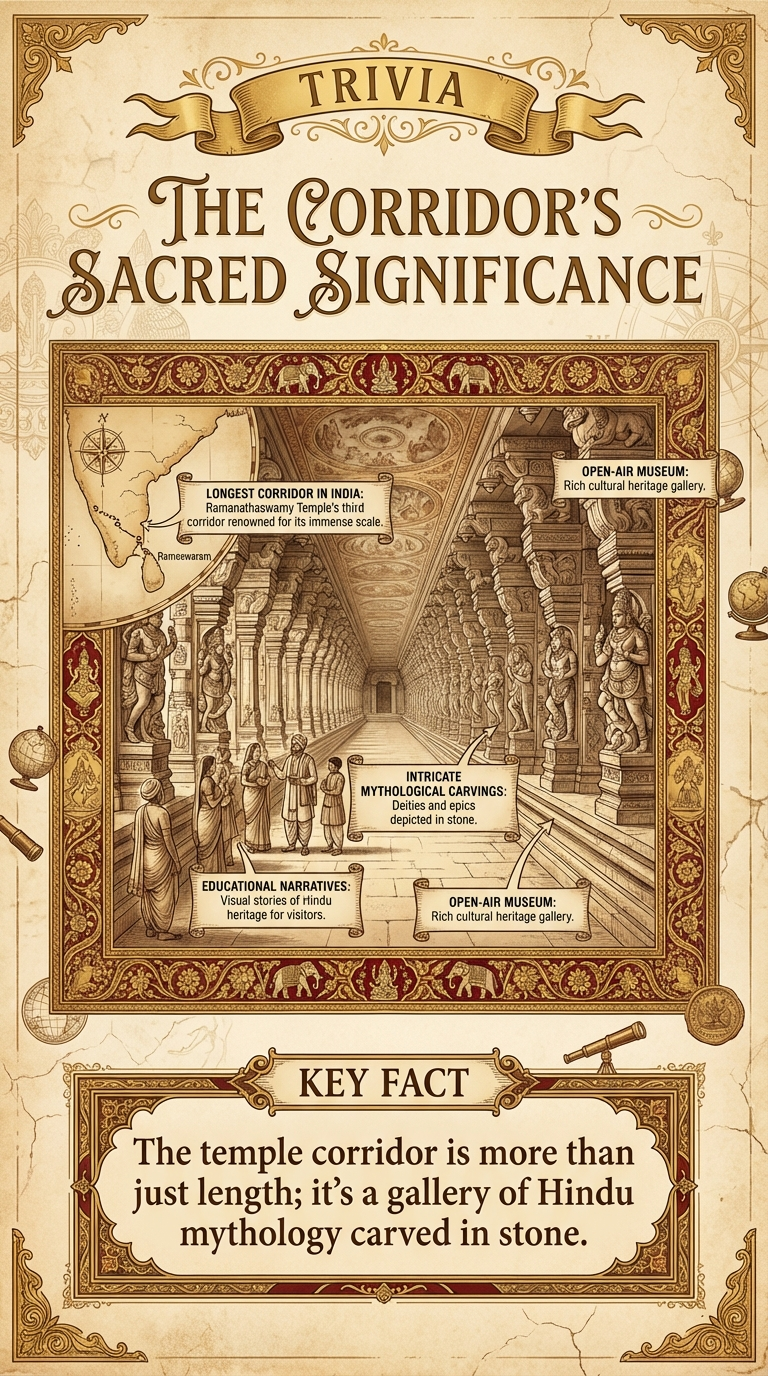
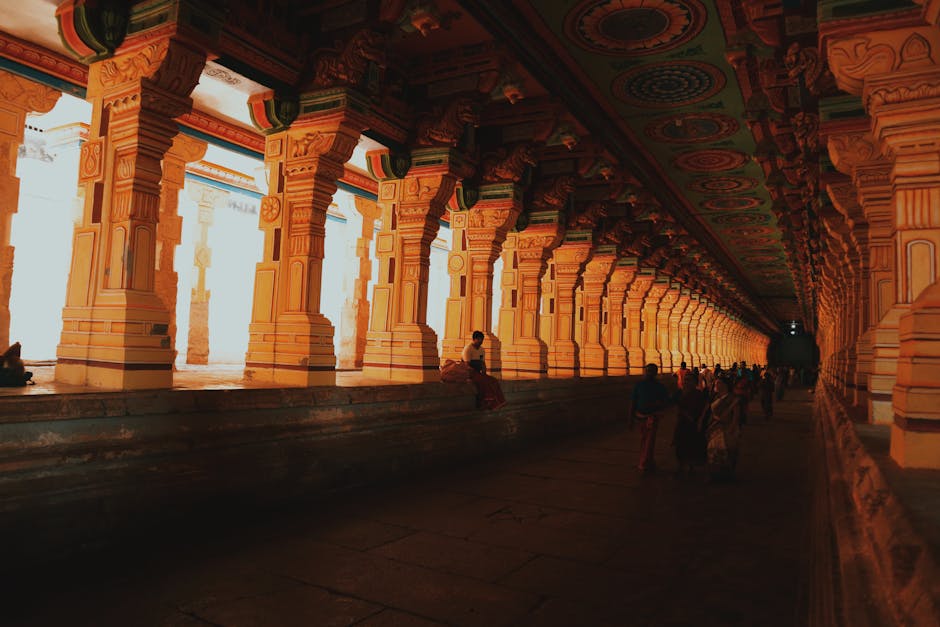
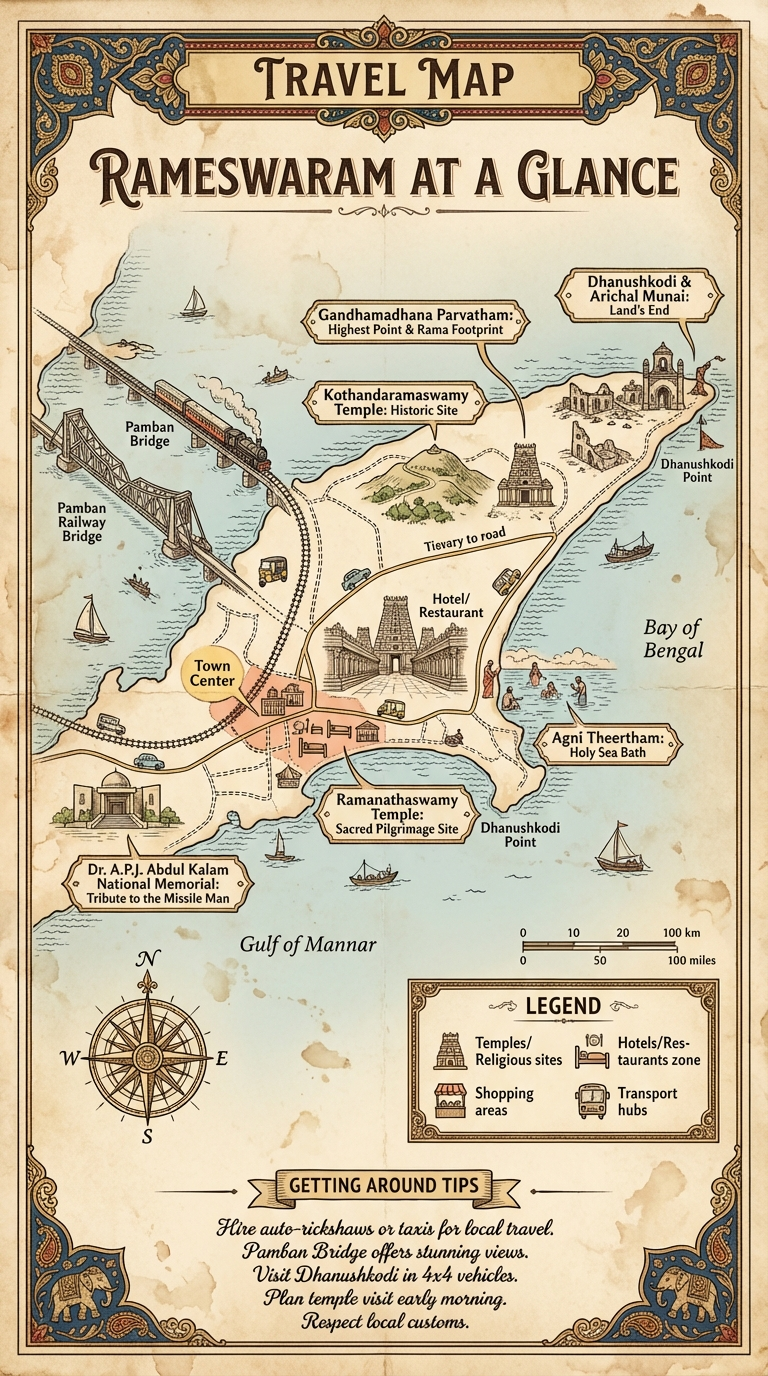
Rameswaram is a sacred island town at the southeastern tip of India, connected to the mainland by the iconic Pamban Bridge. As one of India's Char Dham and the site of a Jyotirlinga, it holds immense significance in Hindu tradition — this is where Lord Rama worshipped Shiva before crossing the sea to Lanka to rescue Sita, as told in the Ramayana. The magnificent Ramanathaswamy Temple, with the longest corridor of any temple in India (over 1,200 meters), is the island's spiritual heart.
But Rameswaram is more than a temple town — it's an island of extraordinary natural beauty. The turquoise waters of the Palk Strait shimmer around the island, the Pamban Bridge is one of India's most dramatic engineering feats, and the remnants of Adam's Bridge (Ram Setu) — the mythical bridge Rama built to Lanka — stretch toward Sri Lanka. The ritual of bathing in the temple's 22 sacred wells (theerthams), the sunrise at Agni Theertham beach, and the fresh seafood make this remote island deeply rewarding.
Rameswaram
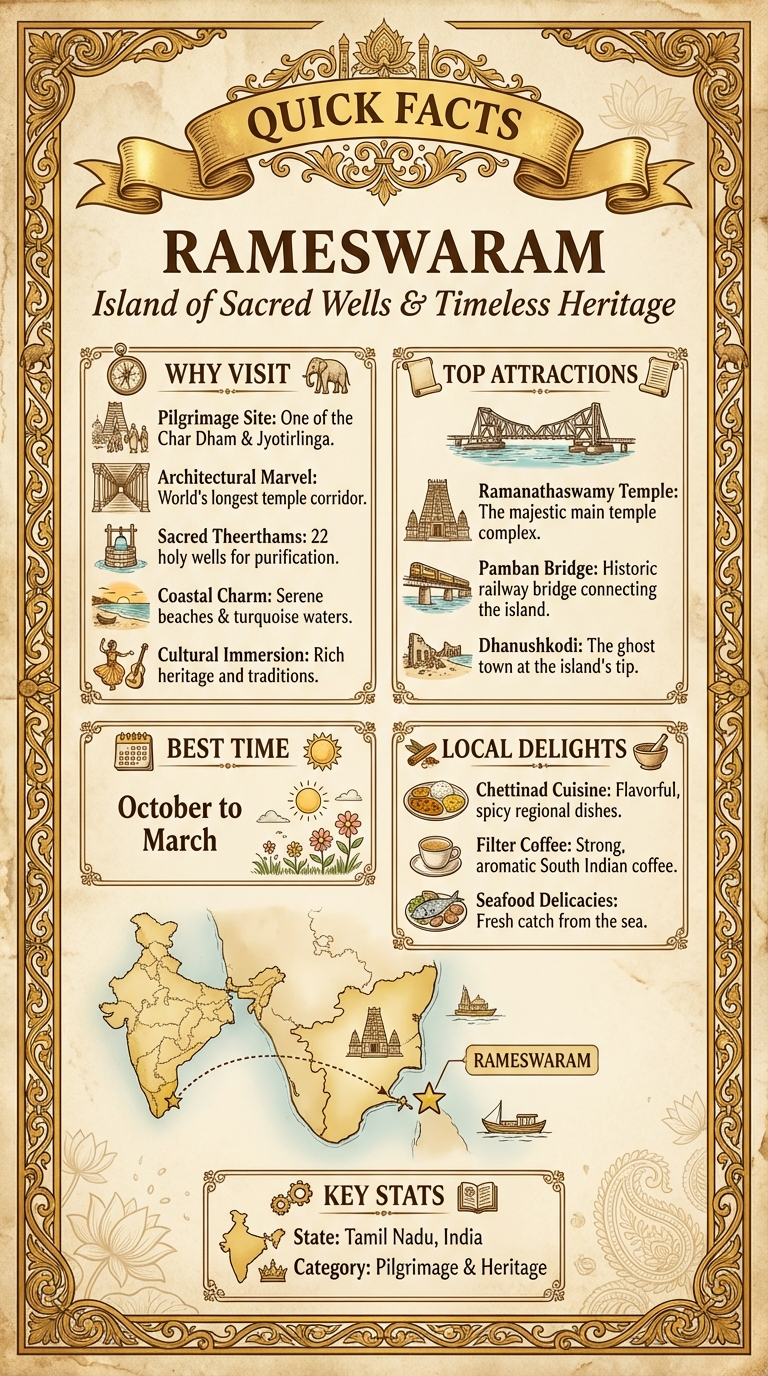
Rameswaram is an island in the Palk Strait, connected to mainland Tamil Nadu by the Pamban Bridge. It is one of the Char Dham and home to one of the 12 Jyotirlingas. The island is about 60 km from Madurai (nearest major city). It is also the closest Indian point to Sri Lanka (just 30 km).
The essential sights and experiences
Temple Town Centre | Free
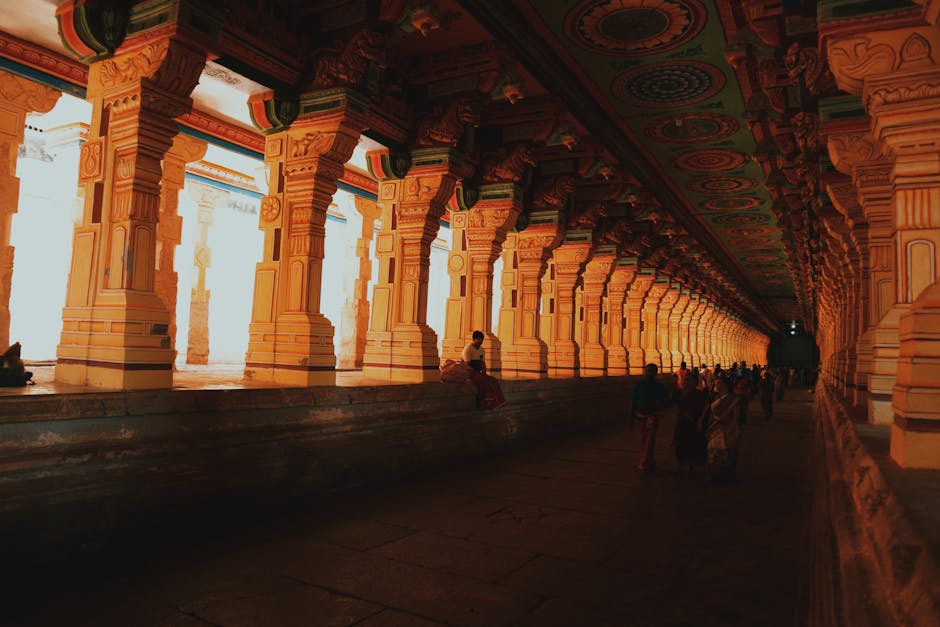
The primary shrine — a Jyotirlinga temple with the longest corridor in India (1,220 m). The 22 theerthams (sacred wells) are unique to this temple.
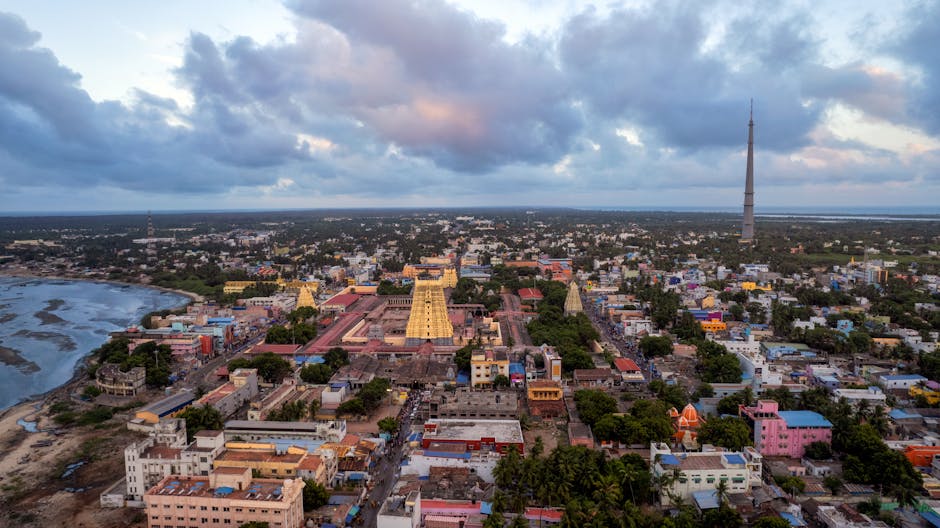
East beach, beside temple | Free
The sacred sea-facing beach where pilgrims bathe at sunrise before entering the temple. The most important of Rameswaram's theerthams.
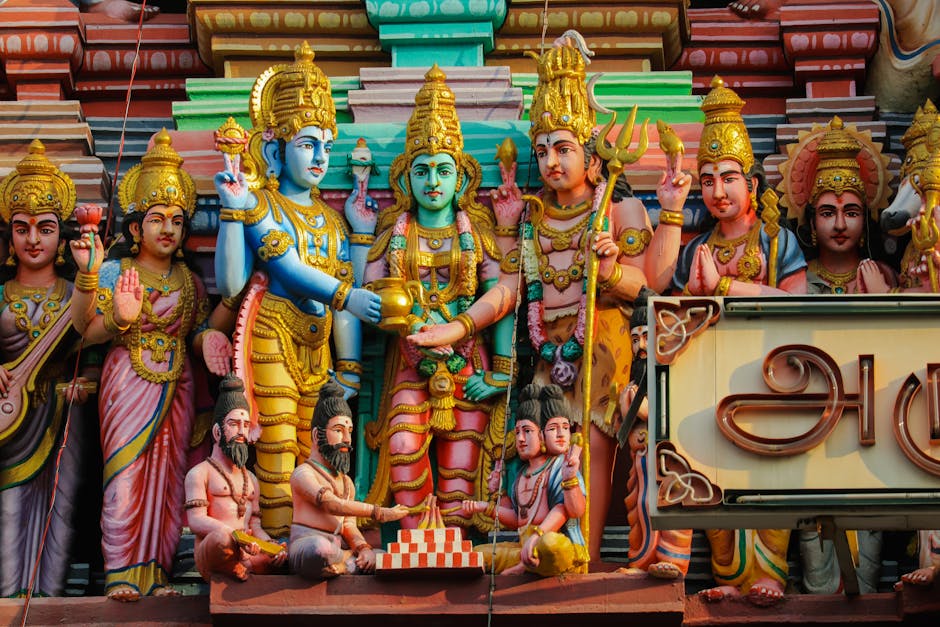
Pamban Channel | Free
India's first sea bridge (1914) — a 2.3 km engineering marvel connecting the island to the mainland. The cantilever section opens for ships.
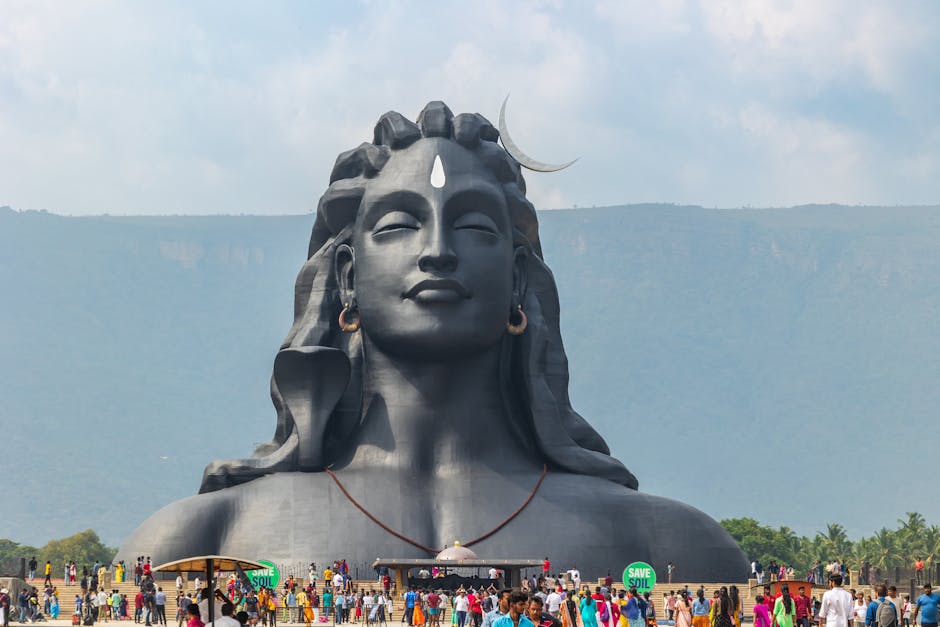
18 km from temple | Free
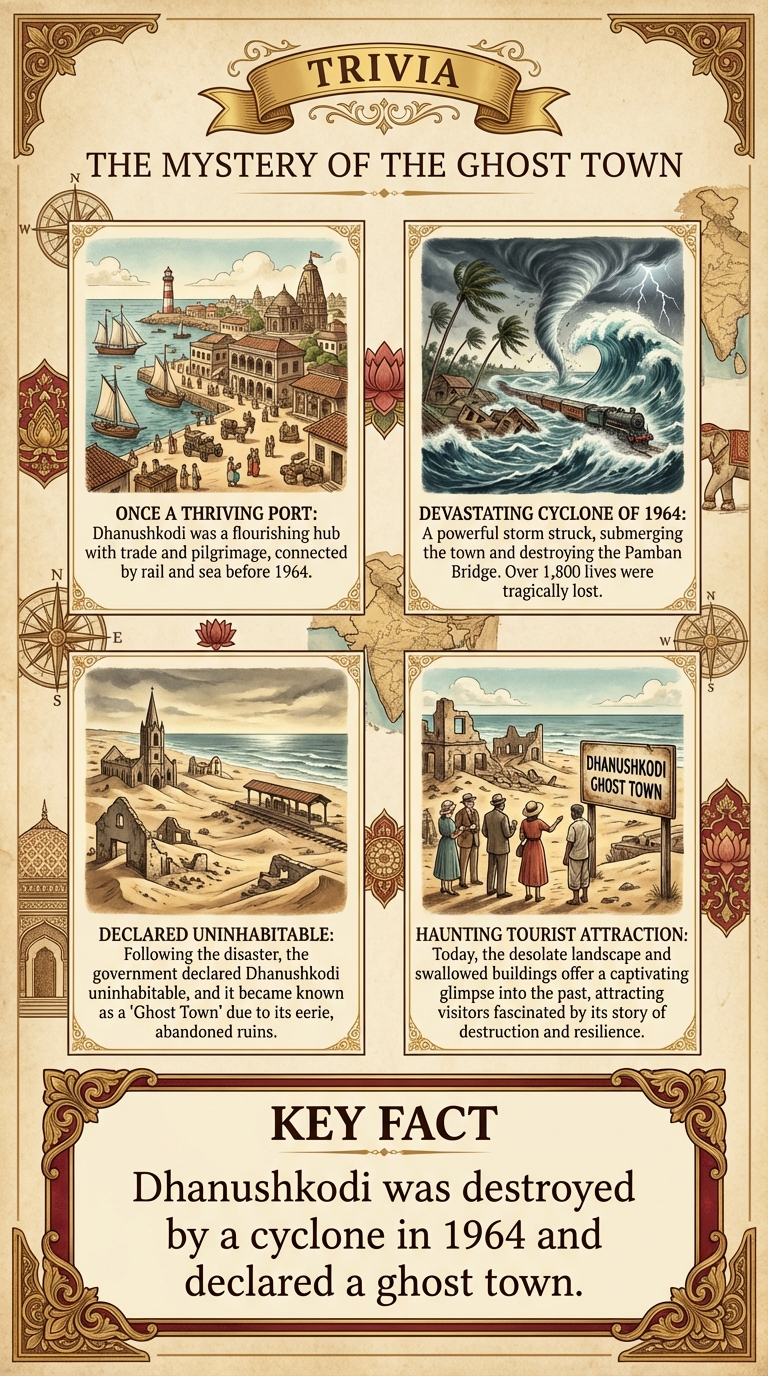
Ghost town at the island's tip — destroyed by a 1964 cyclone. The turquoise waters and the convergence of Bay of Bengal and Indian Ocean are stunning.
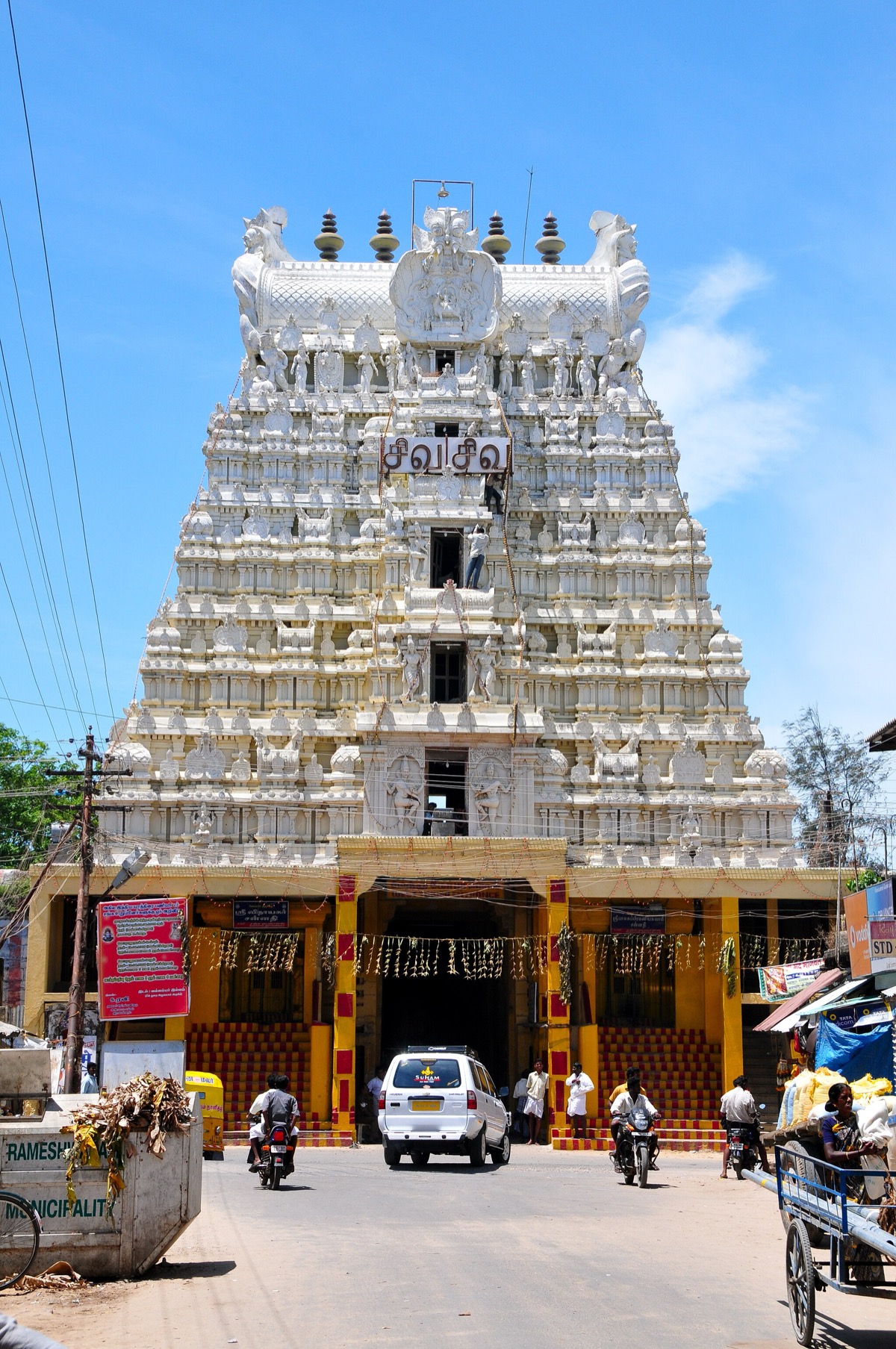
Inside Ramanathaswamy Temple | ₹10 (bucket)
Unique ritual — pilgrims bathe in water from all 22 sacred wells inside the temple, each believed to cure different ailments.
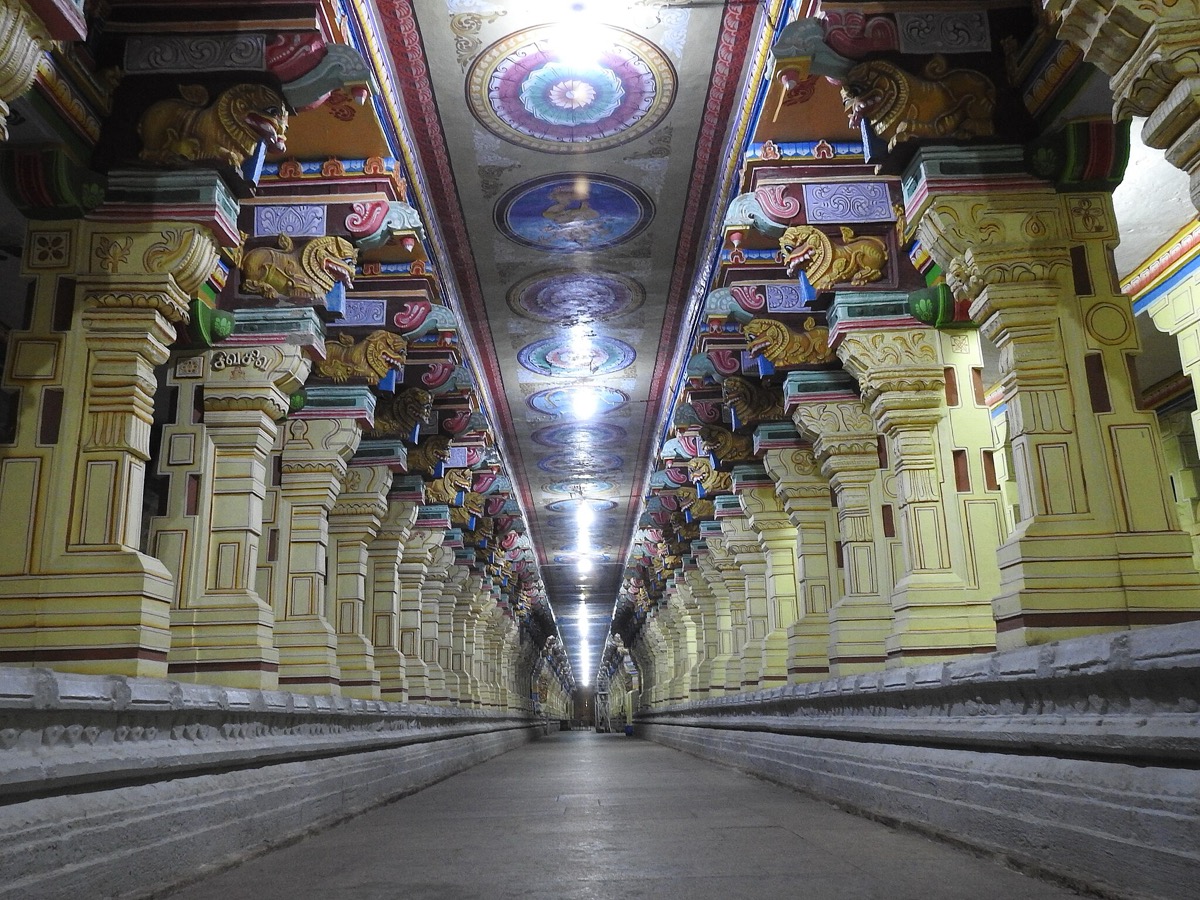
Dhanushkodi area | Free
View the chain of limestone shoals stretching toward Sri Lanka — the mythological bridge Rama's army built.
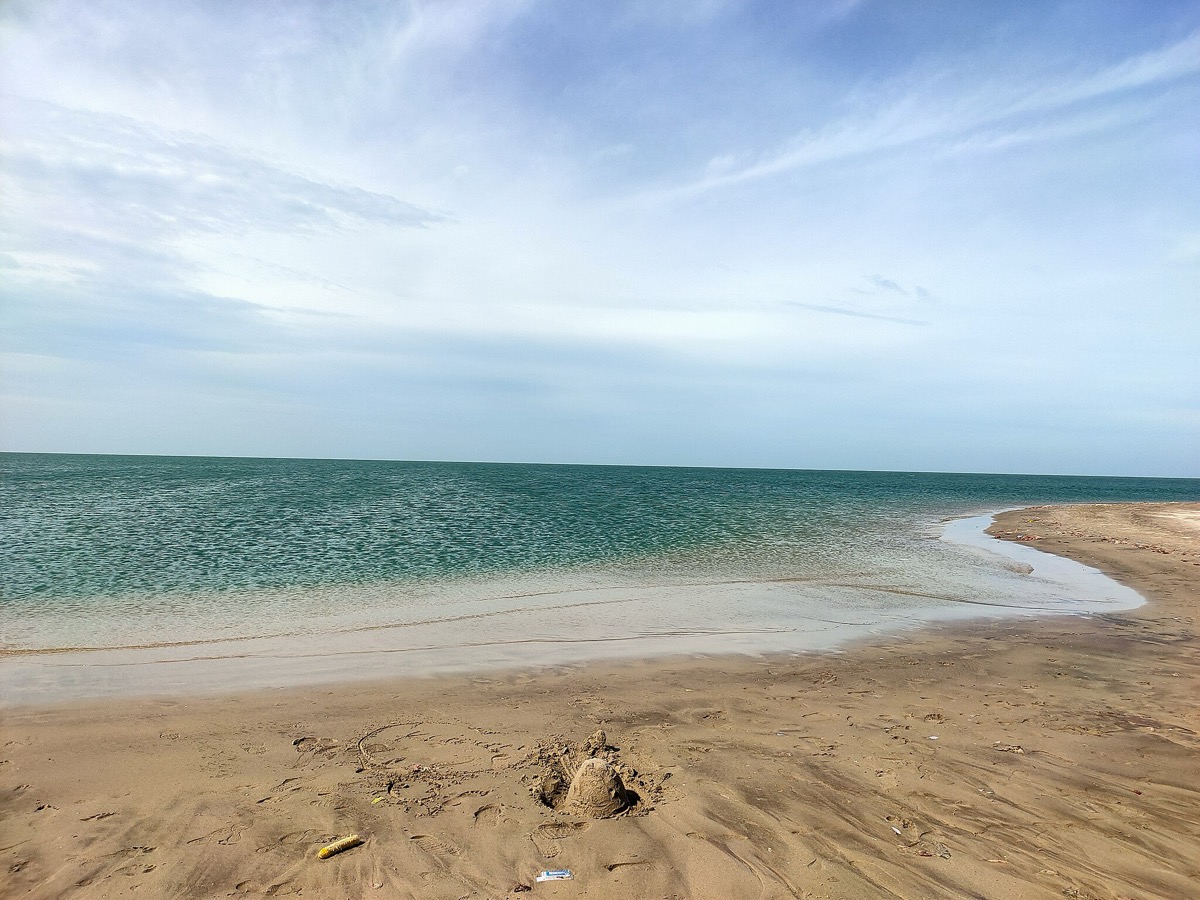
3 km from temple | Free
The island's highest point with a temple housing Rama's footprint. Panoramic views of the island from the rooftop.
Parallel to old bridge | Free (view from old bridge)
India's newest sea bridge (opened 2023) runs parallel to the heritage Pamban Bridge — a striking contrast of old and new.
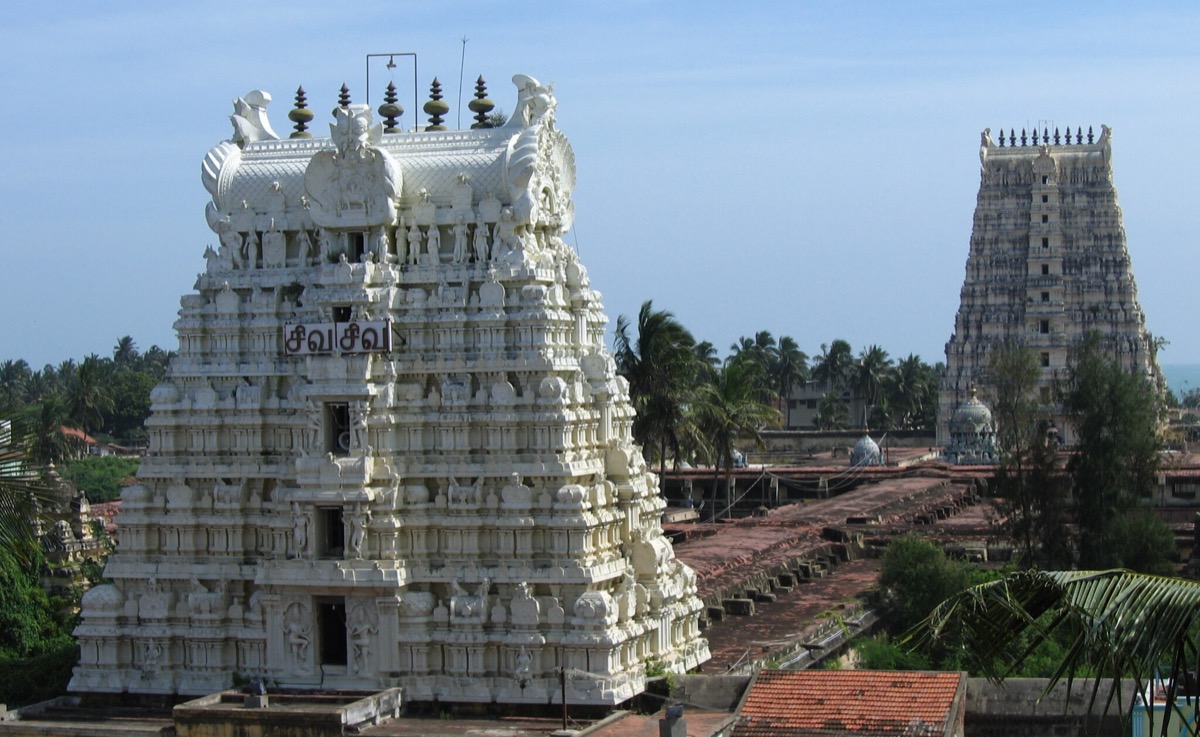
Near Dhanushkodi | Free
Ancient temple that survived the 1964 cyclone — depicts scenes of the surrender of Vibhishana to Rama.
Pamban Channel | Free
The new vertical-lift bridge (2023) — India's longest sea bridge, a modern engineering feat.
15 km from temple | ₹10
Seasonal wetland with flamingos and other waterbirds. Best during Oct–Feb.
Southwest coast | Free
Submerged freshwater spring in the sea — legend says Sita was so thirsty that Rama shot an arrow into the ground.
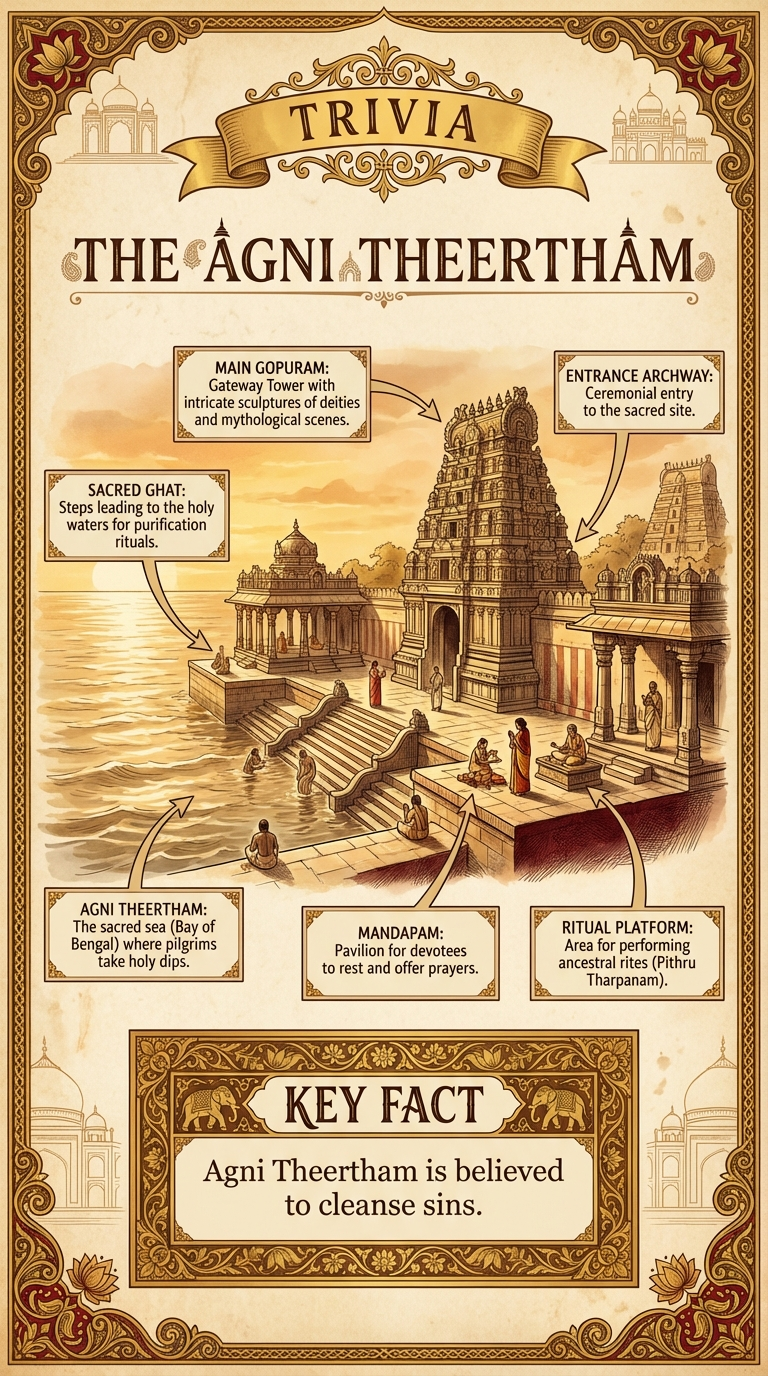
Temple town | Free
Important goddess temple where pilgrims traditionally visit before entering the main Ramanathaswamy Temple.
2 km from main temple | Free
Temple with a unique five-faced (Panchamukhi) Hanuman idol, believed to be where Hanuman brought the Sanjeevani herb.
Near Gandhamadhana | Free
Sacred tank associated with Lakshmana. Less crowded than the main temple wells.
10 km south | Free
Clean, uncrowded beach developed by TTDC with shelters and basic facilities. Good for swimming.
Near main temple | Free
Sacred spot associated with the vulture king Jatayu who tried to save Sita from Ravana.
Dhanushkodi | Free
Haunting ruins of a church destroyed by the 1964 cyclone, standing on the beach as a memorial.
19. Sunrise at Agni Theertham (Temple beach, Free): Spectacular sunrise over the Bay of Bengal with pilgrims bathing in the golden light.
20. APJ Abdul Kalam House (2 km from temple, ₹10): Memorial house museum of India's "Missile Man" and former President, who was born in Rameswaram.
Essential practical information
Very limited ATMs (SBI near the temple). Carry cash from Madurai. UPI accepted at some shops. Most transactions are cash.
Very safe island town. Sea can be rough at Dhanushkodi — don't swim in unguarded areas. Wear sturdy footwear on rocky beaches.
Temple requires men in dhoti/veshti and women in sari/churidar. Western clothes are not allowed inside the temple. Rental available at temple gate.
Photography prohibited inside the temple. Exterior and Pamban Bridge photos are fine. Dhanushkodi is extremely photogenic.
Navigate the city like a local
Nearest airport is Madurai (IXM), 170 km away (₹3,000–4,000 by taxi, 3.5 hours). Rameswaram Railway Station is central with trains from Chennai, Madurai, and Trichy.
Main transport on the island. Most trips within town cost ₹20–50. Cost: ₹10–15/km
TNSTC buses connect Rameswaram to Madurai and Chennai. Local buses to Dhanushkodi. Cost: ₹10–40
Essential for Dhanushkodi (18 km, jeep only for last stretch). Book through hotel. Cost: ₹1,000–1,500/half day
Temple area and Agni Theertham are walkable. The island is small enough for cycling too. Cost: Free
When to go and what to expect
Post-monsoon, pleasant (24–32°C). Clear skies and calm seas. Good for Dhanushkodi and beach visits.
Best weather (22–30°C). Cool mornings. Peak pilgrimage season. Maha Shivaratri celebrations in Feb/Mar.
Hot (30–40°C). Temple visits best early morning. Chittirai festival (Apr/May) at the temple is spectacular.
Monsoon — some rain but less than mainland. Sea can be rough. Temple remains fully operational. Fewer tourists.
Rameswaram — best experienced in October–AprilMake the most of your time
Extended stays and themed routes
Add Madurai (170 km, Meenakshi Temple — one of India's most spectacular), Rameshwaram to Kanyakumari drive (310 km, the southernmost tip of India), and a full beach day at Ariyaman.
Combine with the full Tamil Nadu pilgrimage: Rameswaram → Madurai → Thanjavur (Brihadeeswara Temple) → Trichy (Ranganathaswamy Temple) → Kanyakumari.
Kids love the Dhanushkodi jeep ride, the Pamban Bridge views, and the beach. The APJ Abdul Kalam museum is inspiring for all ages.
Try fresh seafood on the island, the temple prasad, Chettinad food in Madurai, and the filter coffee everywhere.
Where the longest corridor in India leads pilgrims through 22 sacred waters to Lord Shiva
The Sacred Core
The area surrounding the Ramanathaswamy Temple is the heart of Rameswaram — a compact network of streets radiating from the magnificent temple with its towering gopurams. Agni Theertham beach, right beside the temple's east entrance, is where every pilgrim begins their journey with a holy dip in the Bay of Bengal at sunrise. The temple's corridors, stretching over 1,220 meters, contain the 22 sacred wells and create one of the most awe-inspiring spaces in Indian architecture.
The streets around the temple are lined with small lodges, dharamshalas, puja item shops, and restaurants. The atmosphere is deeply devotional — the sound of temple bells, the chanting of 'Jai Shri Ram,' and the sight of pilgrims in wet clothes emerging from the 22-well ritual are the pulse of daily life. Most of Rameswaram's essential services — banks, shops, restaurants — are within walking distance of the temple.
Where to eat in Temple Town & Agni Theertham
Tamil Nadu Hotel (₹60–150): Reliable South Indian meals — dosa, thali, and filter coffee.
Ashok Bhavan (₹50–120): Clean vegetarian restaurant near the temple.
Temple area food stalls (₹20–50): Idli, vada, and sweet pongal for breakfast.
Shopping: Seashell crafts (₹50–500), conch shells, rudraksha beads, and temple prasad boxes near the temple entrance.


Where India's most dramatic bridge spans turquoise waters to a sacred island
India's Gateway Island
Pamban is the mainland village at the foot of the legendary bridge that connects Rameswaram island to the rest of India. The heritage Pamban Bridge (1914) was a marvel of engineering when built — its cantilever section opens to allow ships through the Pamban Channel. The new Annai Indira Gandhi Bridge (2023) runs parallel as a modern counterpart. The view from and of both bridges — turquoise water, fishing boats, and the island stretching ahead — is one of South India's most dramatic sights.
The Pamban Channel itself is remarkable — the water is crystal clear, the fishing activity is constant, and on calm days, you can see the ocean floor from the bridge. The village of Pamban has a small fish market and basic amenities. For most visitors, this is the gateway moment — your first sight of the bridge as you approach Rameswaram is unforgettable.
Where to eat in Pamban & Bridge Area
Limited dining at Pamban. Most visitors eat on the island. Roadside tea stalls serve chai and snacks.


Where a destroyed town, two colliding seas, and a mythical bridge meet at India's edge
The Ghost Town at the End of the World
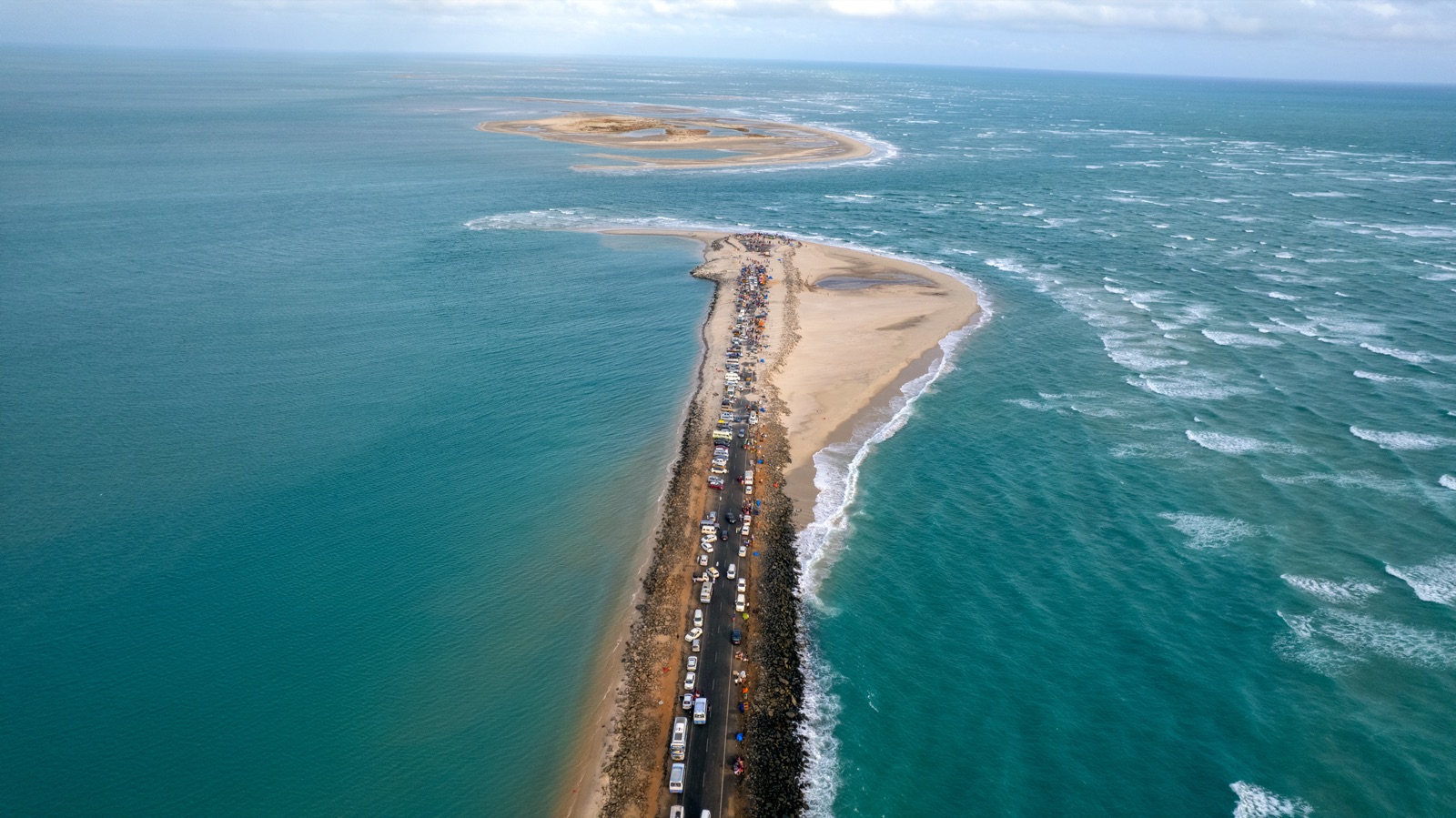
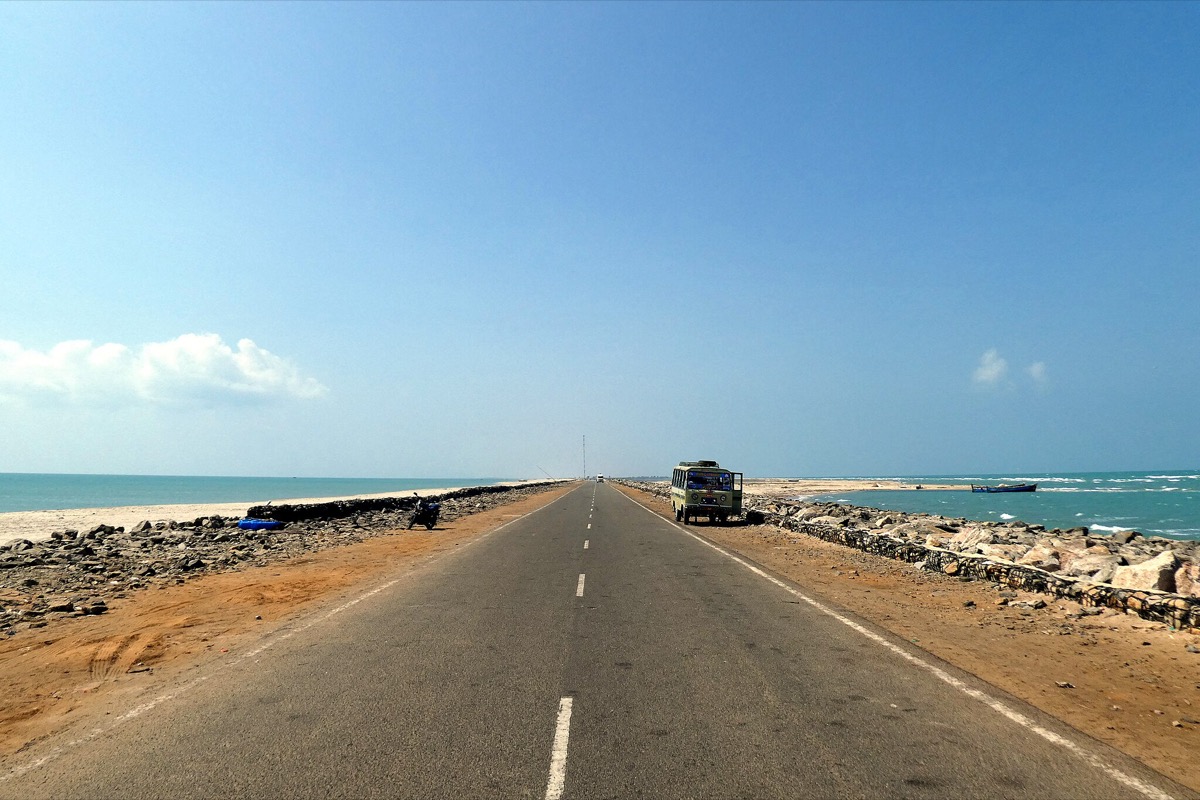
Dhanushkodi is the most hauntingly beautiful spot in Rameswaram — a ghost town at the extreme tip of the island where the Bay of Bengal and the Indian Ocean converge. Once a bustling railway terminus and the closest Indian town to Sri Lanka (just 30 km), it was completely destroyed by a devastating cyclone on December 22, 1964, killing over 1,800 people. The ruins of the railway station, church, and post office stand as skeletal monuments on the white sand.
Today, the journey to Dhanushkodi is an adventure in itself — the road turns to sand, and jeeps navigate through shallow water and beach terrain. At the tip, you can see two seas meeting with different water colours and wave patterns. On clear days, the limestone shoals of Adam's Bridge (Ram Setu) stretch toward the Sri Lankan coast. The turquoise waters, the desolation of the ruins, and the sheer remoteness make Dhanushkodi unlike anywhere else in India.
Where to eat in Dhanushkodi
No restaurants at Dhanushkodi — carry water and snacks. Seasonal vendors sell coconut water and chips.


What to eat and where to find it
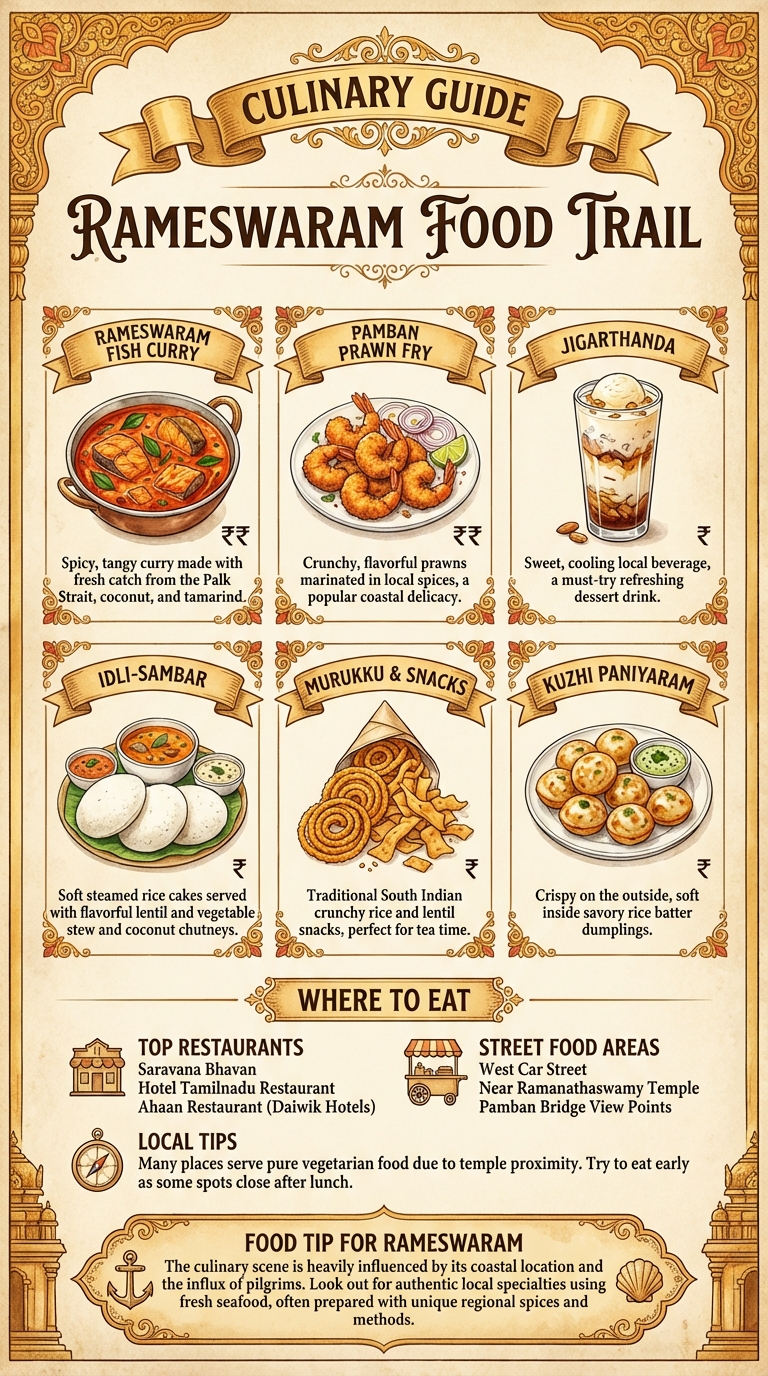
Rameswaram's food is simple, soulful South Indian fare — idli, dosa, and rice meals dominate, but the island's real culinary treasure is its fresh seafood. Being surrounded by the Bay of Bengal and Palk Strait, the catch is exceptionally fresh — prawns, fish, crab, and lobster are available at surprisingly low prices. The temple prasad and the ubiquitous filter coffee complete the picture.
Fish Curry (Meen Kulambu) (₹80–150): Fresh catch in a tangy tamarind and chili gravy — the island's signature dish.
Prawn Fry (₹100–200): Jumbo prawns from the Palk Strait, marinated in chili-turmeric paste and pan-fried crisp.
Idli-Vada-Sambar (₹30–50): The ubiquitous South Indian breakfast — soft rice cakes with lentil doughnuts and sambar.
Crab Masala (₹150–300): Whole crabs in a fiery masala — messy to eat but utterly delicious.
South Indian Thali (₹60–120): Rice, sambar, rasam, kootu, poriyal, curd, and pickle on a banana leaf.
Filter Coffee (₹10–20): Strong, frothy, and served in a steel tumbler — the fuel of South India.
Temple Prasad (₹10–20): Sacred food distributed at the temple — usually sweet rice or laddoo.
Kothu Parotta (₹60–100): Shredded layered bread stir-fried with eggs, vegetables, and spices — a Tamil street food classic.
Best restaurants, markets, and street food
Tamil Nadu Hotel (₹60–150): Best all-round South Indian restaurant on the island.
Ashok Bhavan (₹50–120): Clean vegetarian meals near the temple.
Sri Murugan Mess (₹60–120): Local favourite for non-veg thali and fish curry.
TTDC Restaurant (Hotel Tamil Nadu) (₹80–200): Reliable government-run restaurant with South Indian and North Indian options.
Temple area stalls: Idli, vada, bondas, and hot filter coffee (₹20–40).
Fish market area stalls: Fresh fried fish and prawn — the cheapest seafood meal on the island (₹50–100).
Agni Theertham beach vendors: Coconut water and snacks (₹20–40).


Understanding the story of Rameswaram
Rameswaram's history is woven into the fabric of the Ramayana. According to the epic, Lord Rama established the Shiva lingam here to atone for killing Ravana (a Brahmin) during the Lanka campaign. The current Ramanathaswamy Temple was largely built under the Nayak rulers of the 16th–17th centuries, though the site has been sacred for millennia. The temple's magnificent corridors with over 1,000 granite pillars represent the pinnacle of Dravidian temple architecture.
Historically, Rameswaram was an important port connecting India to Lanka (Sri Lanka). The Pamban Bridge (1914), built by the British, ended the island's dependence on ferries. The devastating cyclone of 1964 destroyed Dhanushkodi and the railway beyond Rameswaram station, changing the island's geography forever. In modern times, Rameswaram gained fame as the birthplace of APJ Abdul Kalam (1931–2015), India's 'Missile Man' and beloved President. The island continues to draw millions of pilgrims annually.
Rameswaram's culture reflects the Tamil Shaiva-Vaishnava synthesis — both Shiva and Vishnu (as Rama) are worshipped at the main temple, a theological bridge rare in Hinduism. The island's culture also reflects its fishing community identity — Hindu and Muslim fishermen coexist peacefully, and the catch from the Palk Strait sustains both communities. The Maha Shivaratri and Chittirai festivals are the grandest celebrations. Tamil classical arts, particularly Bharatanatyam and Carnatic music, are performed at temple festivals.
Excursions from Rameswaram
Rameswaram is the southeastern anchor of Tamil Nadu's temple circuit, with easy connections to Madurai and the tip of India.
Meenakshi Amman Temple — one of India's most spectacular temples with its Hall of 1,000 Pillars and painted gopurams. Entry: Free (Meenakshi Temple)
India's southernmost tip where three seas meet. Vivekananda Rock Memorial and Thiruvalluvar Statue. Entry: Free/₹30 (Vivekananda Rock)
Ancient temple where Rama worshipped the nine planets (Navagraha). Unique stone formations in the sea. Entry: Free
Important Muslim pilgrimage site — the shrine of Sultan Syed Ibrahim Shaheed. Reflects the island's interfaith harmony. Entry: Free

Practical information from A to Z
Available at TASMAC shops (government liquor outlets) on the outskirts. Not sold near the temple area.
SBI and Indian Bank ATMs near the temple. Very limited — withdraw cash in Madurai before visiting.
Government hospital and basic clinics near the temple. For serious cases, Madurai (170 km) is the nearest city.
220V/50Hz. Power cuts common. Most hotels have inverters. Carry a power bank.
4G coverage available (Airtel best on the island). Hotel Wi-Fi can be slow. Download maps offline.
Conservative temple town. Discretion advised. Hotels are professional.
India Post office in temple town. Limited courier services.
Ramanathaswamy Temple: 5am–1pm, 3pm–9pm. APJ Kalam House: 10am–5pm. Dhanushkodi: daylight hours only.
Air quality excellent. Beach cleanliness variable. Drink only bottled water.
Auto-rickshaws are the main transport. ₹20–50 within town. Negotiate for Dhanushkodi (jeep only).
GST applies at hotels and restaurants. Small eateries include tax. Hotels charge 12% GST.
Public toilets at the temple and Agni Theertham. Hotels have western toilets. Carry tissue.
Drink only bottled water (₹20). The island water has high mineral content. Carry extra bottles for Dhanushkodi.
Strictly enforced — men: dhoti/veshti, women: sari/churidar. Rental available at temple gate (₹20–50).
For Dhanushkodi: ₹800–1,200 per jeep (shared jeeps ₹100–150/person). Book at temple area or through hotel.
Getting to and around Rameswaram
From Madurai: Trains (4–5 hours, ₹80–250) or road (170 km, 3.5 hours by taxi ₹3,000–4,000). Buses (₹120–200, 4 hours).
From Chennai: Overnight train (12 hours, ₹300–800). Sethu Express is the most popular.
Within Rameswaram: Auto-rickshaws for town. Jeeps for Dhanushkodi. Walking works for the temple area.
| Mode | Details | Cost |
|---|---|---|
| Auto-Rickshaw | Main transport on the island. Most trips within town cost ₹20–50. | ₹10–15/km |
| Bus | TNSTC buses connect Rameswaram to Madurai and Chennai. Local buses to Dhanushkodi. | ₹10–40 |
| Hired Car/Jeep | Essential for Dhanushkodi (18 km, jeep only for last stretch). Book through hotel. | ₹1,000–1,500/half day |
| Walking | Temple area and Agni Theertham are walkable. The island is small enough for cycling too. | Free |
Essential phrases for travelers
Tamil is the primary language. Hindi is understood by some (due to pilgrimage traffic from North India). English is limited to hotels. Basic Tamil or Hindi phrases are very helpful.
| English | Tamil |
|---|---|
| Hello / Greetings | Namaste |
| Thank you | Dhanyavaad |
| Yes / No | Haan / Nahin |
| How much? | Kitna hai? |
| Too expensive | Bahut mehnga hai |
| Water | Paani |
| Food | Khana |
| Where is...? | ...kahan hai? |
| Help | Madad |
| Good | Accha |
| Beautiful | Sundar |
| Please | Kripya |
| I don't understand | Mujhe samajh nahin aaya |
| Taxi/auto | Auto-rickshaw |
| How far? | Kitni door hai? |
Our favourite experiences in Rameswaram
Agni Theertham Beach
Pilgrims bathing in the golden dawn light — India's most spiritual sunrise
Pamban Bridge Viewpoint
The turquoise channel turning gold as the sun sets behind the bridge
Fresh Island Seafood
Prawns and fish caught hours ago, cooked to order — unbeatable freshness
Temple Area Breakfast Stalls
Idli, vada, and filter coffee at dawn before the 22-well ritual
Hyatt Place Rameswaram
Best hotel on the island with modern amenities
Dhanushkodi Ghost Town
The haunting ruins of a town destroyed by a cyclone in 1964
Villoondi Theertham
A freshwater spring emerging from the sea — mythology made real
Two Seas Meeting at Dhanushkodi
Bay of Bengal and Indian Ocean colliding in different colours at India's tip
Temple Gate Seashell Shops
Conch shells, shell jewelry, and coral crafts from the Palk Strait
The 22-Well Ritual
Being doused in sacred water from 22 different wells inside the temple corridor
Everything you need for Rameswaram
Travorea creates comprehensive, beautifully designed travel guides that combine insider knowledge with practical information. Our guides are crafted to help you experience destinations like a local, not just a tourist.
This premium guide to Rameswaram was researched and written to give you everything you need for an unforgettable trip. All prices and information were verified at the time of writing (2026) but may change — always confirm locally.
All photographs in this guide are sourced from free-to-use image libraries (Pexels, Unsplash) and original Travorea photography. Infographics are original Travorea creations.
Visit us at www.travorea.com for more destinations, interactive trip planners, and the latest travel tips.
Explore More Guides
Visit www.travorea.com/ebooks for premium guides to 50+ destinations worldwide.
Island of Lord Rama