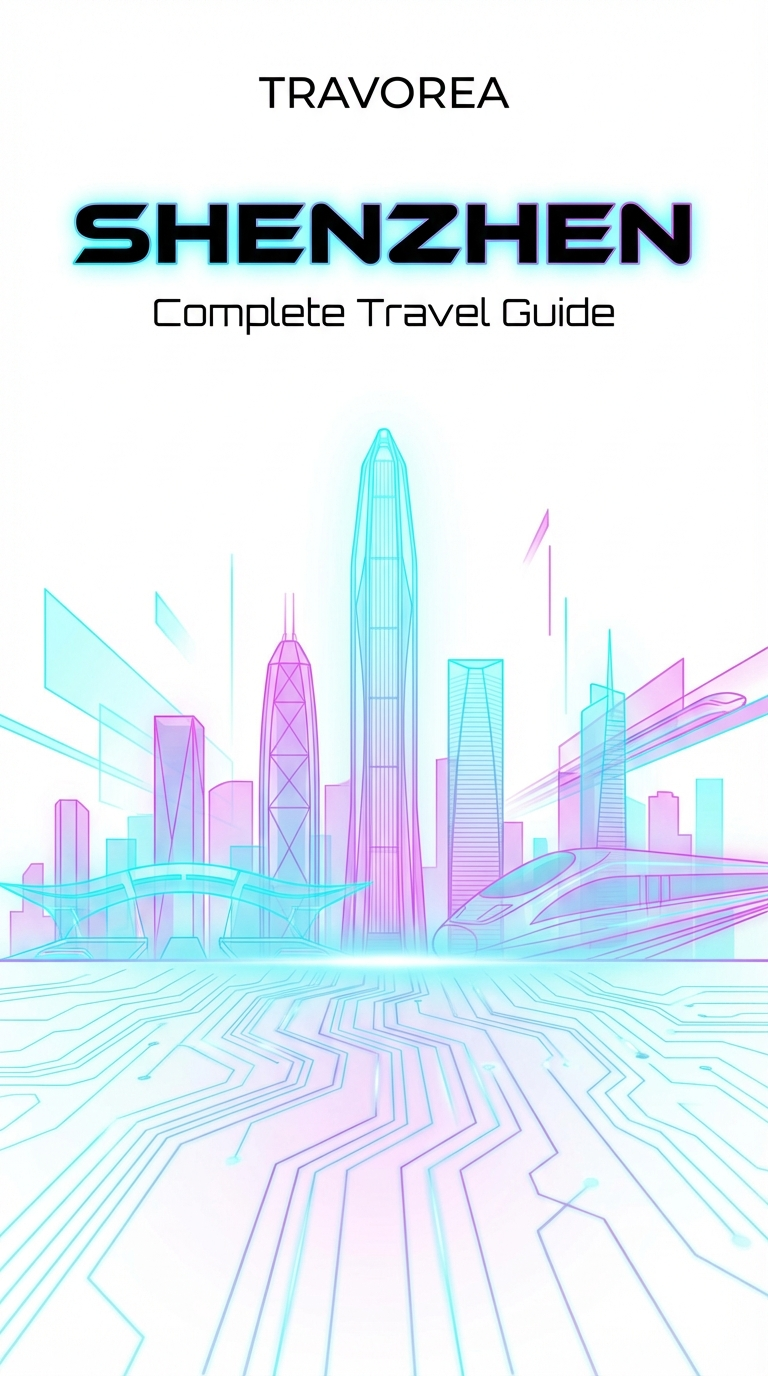

Shenzhen
Travorea

Shenzhen

China's Silicon Valley

Tech CapitalHuaqiangbei ElectronicsShenzhen BayMaker CultureHong Kong Gateway
80
Pages
2026 Edition

Contents

Plan Your Trip

Welcome to Shenzhen4
Shenzhen at a Glance5
Top 20 Experiences6
Need to Know9
Month by Month11

Itineraries

3-Day Itinerary12
Extended Itineraries13

Explore Shenzhen

Futian CBD14
Nanshan / Sea World18
Luohu / Dongmen22
OCT / Huaqiangbei26
Shekou30
Bao’an34
Longhua38
Dapeng Peninsula42
Shenzhen Bay46
Houhai50
Huawei / Bantian54
Meilin / Lianhua58
Buji / Sungang62

Special Sections

Food Guide66
Day Trips71
History & Culture69

Survival Guide

Directory A–Z73
Transport75
Language76

Quick Reference

Top 10 Picks77
Packing List78
Credits79
2
Shenzhen

Shenzhen

Where a fishing village became a 17-million-person tech metropolis in 40 years — the fastest urban transformation in human history

3

Welcome to Shenzhen

China's Silicon Valley

Shenzhen is the city that shouldn’t exist — and yet it’s the most extraordinary urban story of the modern era. In 1980, this was a fishing village of 30,000 people on the muddy banks of the Pearl River Delta. Deng Xiaoping designated it China’s first Special Economic Zone, and what followed was the fastest urbanisation in human history. Today, Shenzhen is a gleaming megacity of 17.6 million people, home to global tech giants Huawei, Tencent, DJI, and BYD, and the hardware capital of the world. The Huaqiangbei electronics market alone does more business than most countries’ entire tech sectors. Every prototype, every drone, every electric vehicle component traces a line back to Shenzhen’s factories and maker spaces.

But Shenzhen is far more than a tech story. The city’s population came from every province in China, bringing their regional cuisines with them — making Shenzhen arguably the best city in China for food diversity. The coastline of Dapeng Peninsula offers pristine beaches and hiking trails just an hour from the CBD. Shenzhen Bay’s waterfront parks rival any in Asia. The art scene at OCT Loft and the architecture of Futian’s skyline are world-class. And with Hong Kong just a 15-minute train ride away, Shenzhen offers a unique window into China’s future at a fraction of Hong Kong’s cost.

WHY I LOVE SHENZHEN
WeChat Pay and Alipay are essential — Shenzhen is effectively cashless. Many shops and restaurants no longer accept cash. Set up a mobile payment account before arriving or use the Alipay Tour Pass for tourists.
4

Shenzhen at a Glance

Population17.6 million
Area1,997 km²
LanguageMandarin (Putonghua), Cantonese
CurrencyCNY (¥ / RMB)
Time ZoneUTC+8 (China Standard Time)
Best TimeOctober – December (cool, dry, clear)
Visa144-hour transit visa-free for 54 nationalities; e-visa available
EmergencyPolice 110, Ambulance 120, Fire 119
Shenzhen Shenzhen

Shenzhen is a sprawling, modern metropolis stretched along China’s southern coast opposite Hong Kong. The city is divided into districts, with Futian as the CBD, Nanshan as the tech hub (home to Tencent and DJI), Luohu as the border crossing area, and Dapeng as the coastal escape. Unlike Beijing or Shanghai, Shenzhen has no ancient history — its oldest building dates from the 1980s. Instead, it offers a vision of China’s future: electric buses, cashless payments, drone deliveries, and 5G-connected everything. The weather is subtropical — hot and humid in summer, pleasantly warm in winter. English is limited outside hotels, but the city is navigable with translation apps and the excellent metro system.

Money-Saving Tips
Shenzhen runs on mobile payments. Most visitors can use Alipay’s Tour Pass or WeChat Pay’s international version. Carry a small amount of cash (CNY 200–500) as backup for street vendors and older shops. ATMs at China Merchants Bank and ICBC accept international cards.
5
01

Top 20 Experiences

The essential sights and experiences

Huaqiangbei Electronics Market

1. Huaqiangbei Electronics Market

Futian District | Free entry

The world’s largest electronics market — multiple multi-storey malls selling everything from LED strips and drone parts to phone components and IoT modules. This is where the global hardware supply chain begins.

Shenzhen Bay Park

2. Shenzhen Bay Park

Nanshan District | Free

A stunning 13-km waterfront park with cycling paths, mangrove trails, and views across the bay to Hong Kong’s New Territories. The sunset here is one of Shenzhen’s defining images.

OCT Loft Creative Culture Park

3. OCT Loft Creative Culture Park

Nanshan District | Free entry

A repurposed industrial complex now filled with galleries, design studios, independent bookshops, cafés, and street art. Shenzhen’s creative heart, especially vibrant on weekends.

Ping An Finance Centre

4. Ping An Finance Centre

Futian District | ¥200

The 4th tallest building in the world (599m) with a sky observation deck on the 116th floor. Views stretch to Hong Kong on clear days. The building is Shenzhen’s defining landmark.

Dapeng Fortress

5. Dapeng Fortress

Dapeng New District | ¥20

A 600-year-old Ming Dynasty coastal fortress — Shenzhen’s only significant historical site. Walled streets, ancestral halls, and the contrast with the modern city are striking.

Dafen Oil Painting Village

6. Dafen Oil Painting Village

Longgang District | Free entry

A village of 8,000 painters who produce 60% of the world’s oil painting reproductions. Watch artists hand-copy masterpieces, commission custom portraits, and buy original art from ¥50.

INSIDER TIP
Shenzhen’s attractions are spread across a large area. Use the metro for CBD sights and budget a full day for Dapeng Peninsula beaches (90 min drive or bus). Most museums and parks are free.
6
Window of the World

7. Window of the World

Nanshan District | ¥220

A 48-hectare theme park featuring 130 miniature replicas of world landmarks — the Eiffel Tower, Taj Mahal, and Pyramids all in one place. Kitsch, fun, and uniquely Shenzhen.

Lianhua Mountain Park

8. Lianhua Mountain Park

Futian District | Free

The hilltop park in the centre of the CBD with the iconic bronze statue of Deng Xiaoping overlooking the city he created. The view of Futian’s skyline is spectacular.

Shenzhen Museum

9. Shenzhen Museum

Futian District | Free

The best museum for understanding Shenzhen’s transformation from fishing village to megacity. Exhibits cover the reform era, the Special Economic Zone, and the city’s rapid growth.

Sea World

10. Sea World

Nanshan / Shekou | Free (plaza area)

A waterfront entertainment district built around a retired French cruise liner. Restaurants, bars, shops, and a lively expat scene around the ship and along the harbour promenade.

11

11. Mangrove Nature Reserve

Futian District | Free

A 368-hectare wetland reserve in the heart of the city. Boardwalk trails through mangroves, birdwatching hides (200+ species), and a peaceful escape from the urban rush.

12

12. Splendid China Folk Village

Nanshan District | ¥200

A cultural theme park showcasing miniature replicas of China’s famous landmarks and folk villages from 56 ethnic groups. Evening performances of ethnic dance and music are a highlight.

Must-Know Numbers
599m: Ping An Tower height
130: Landmark replicas at Window of the World
8,000: Painters at Dafen Village
7
13

13. Shenzhen Concert Hall

Futian District | ¥100–800

A world-class concert hall designed by Arata Isozaki. Home to the Shenzhen Symphony Orchestra, with regular performances of classical, jazz, and world music.

14

14. Dongchong Beach

Dapeng New District | ¥13 (shuttle)

One of Shenzhen’s most beautiful beaches — clear water, soft sand, and far fewer crowds than the better-known Dameisha. Perfect for camping, surfing, and stargazing.

15

15. Shenzhen Library

Futian District | Free

A stunning modern library in the Civic Centre complex. The architecture alone is worth the visit, and the reading rooms offer panoramic city views.

16

16. Overseas Chinese Town (OCT East)

Yantian District | ¥200

A massive eco-resort with a tea valley, Grand Canyon water park, and an Interlaken-themed Swiss mountain village. A full day of outdoor activities and scenery.

17

17. Nanshan Mountains / Nanshan Park

Nanshan District | Free

Hiking trails with views of Shenzhen Bay, the city skyline, and Hong Kong across the water. The Danan Mountain trail is the most popular weekend hike.

18

18. DJI Flagship Store

Nanshan District | Free

The global headquarters showroom of the world’s largest drone company. Test-fly the latest drones, try FPV goggles, and see cutting-edge aerial technology up close.

19. Chiwan Tin Hau Temple (Nanshan District, Free): One of the few pre-modern structures in Shenzhen — a Song Dynasty temple (built 1410) dedicated to the sea goddess Mazu, surrounded by banyan trees and incense smoke.

20. Xichong Beach (Dapeng New District, ¥13 (shuttle)): Shenzhen’s most remote and beautiful beach. Crystal-clear water, dramatic rocky headlands, and excellent snorkelling. A 90-minute drive from the city centre but worth every minute.

8
02

Need to Know

Essential practical information

Visa

144-hour transit visa-free for citizens of 54 countries (including USA, UK, EU, Australia) when transiting through Shenzhen’s airports. E-visa available for longer stays.

Mobile Payments

WeChat Pay and Alipay are essential. Shenzhen is effectively cashless — even street food vendors use QR codes. Tourist-friendly versions: Alipay Tour Pass, WeChat Pay international.

VPN

Google, Instagram, WhatsApp, and most Western social media are blocked in China. Download a VPN before arriving. ExpressVPN and Astrill are popular choices.

Language

Mandarin (Putonghua) is the primary language. Cantonese is spoken by older residents and in cross-border areas. English is very limited — download Google Translate offline and learn key Mandarin phrases.

Getting to Hong Kong

Lo Wu and Futian checkpoints connect to Hong Kong’s MTR system. Journey time: 15–45 minutes. Bring your passport. The Shenzhen Bay Port connects to Hong Kong by bus.

Budget LevelDaily CostIncludes
Budget¥200–400/dayHostel, street food, metro, free parks
Mid-Range¥500–1,000/day3–4-star hotel, restaurant meals, taxis, attractions
Luxury¥1,500+/day5-star hotel, fine dining, private car, premium experiences
Essential Apps
Download WeChat (for messaging and payments), Alipay (payments), DiDi (ride-hailing, like Uber), Baidu Maps (Google Maps doesn’t work well in China), and a VPN before you arrive. Most apps require a Chinese phone number for full functionality — buy a local SIM at the airport.
9
03

Getting Around

Navigate the city like a local

From the Airport

Shenzhen Bao’an International Airport (SZX) is 32km northwest of the CBD. Metro Line 11 reaches Futian in 55 minutes (¥11). Airport buses run to major areas (¥20–30). Taxis to Futian cost ¥100–150 (40 min). DiDi is usually cheaper at ¥80–120.

Metro

12 lines covering 547km. Fast, clean, and cheap. Runs 6:30 AM–11:30 PM. Cost: ¥2–14 per trip

Bus

Extensive network of 100% electric buses covering the entire city. Cost: ¥1–3

DiDi (ride-hailing)

China’s Uber equivalent. Reliable, affordable, and available everywhere. Cost: ¥15–80

Taxi

Red (Futian), green (Nanshan/Bao’an), blue (electric). Metered, starting at ¥11. Cost: ¥11–100

High-Speed Rail

Shenzhen North to Guangzhou South in 30 min, to Hong Kong West Kowloon in 14 min. Cost: ¥75–100

Transport Tips
The Shenzhen Metro is the best way to get around. Buy a Shenzhen Tong transport card (¥50 deposit + top-up) at any metro station for seamless metro, bus, and convenience store payments. DiDi for rides to areas the metro doesn’t reach.
10

Month by Month

When to go and what to expect

October – December

The best time to visit. Cool (18–25°C), dry, and clear blue skies. Perfect for walking, hiking, and outdoor activities. The most comfortable weather of the year.

March – May

Warm and pleasant (20–28°C) but increasingly humid. Spring is beautiful in Shenzhen’s parks, with lychee trees blooming. Occasional rain.

June – September

Hot, humid, and wet (28–35°C). Typhoon season peaks in August–September. Sudden downpours are common. Air conditioning is your friend. Best for indoor attractions and beach days between storms.

January – February

Mild winter (10–20°C) — cold by Shenzhen standards. Chinese New Year (Jan/Feb) sees the city empty as migrant workers return home. Many restaurants and shops close for 1–2 weeks.

Best Time to Visit
October to December offers the best weather. Avoid Chinese New Year (late January/early February) when the city empties out and many businesses close. Summer is hot and humid but has the cheapest hotel rates.
ShenzhenShenzhen — best experienced in October – December (cool, dry, clear)
11
04

Itineraries

Make the most of your time

Day 1 — Futian CBD & Tech Shenzhen
9:00 AMStart at Lianhua Mountain Park for the Deng Xiaoping statue and panoramic skyline views
10:30 AMWalk to the Civic Centre area — visit Shenzhen Museum (free) and Shenzhen Library
12:30 PMLunch at nearby Coco Park mall — diverse food court with regional Chinese cuisines
2:00 PMExplore Huaqiangbei Electronics Market — the SEG Building and surrounding malls
4:30 PMVisit the DJI Flagship Store in Nanshan for drone demos and tech exhibits
6:00 PMDinner at Haidilao Hot Pot (Futian) for the famous service experience
8:00 PMEvening walk along Futian’s illuminated skyline, ending at the Ping An observation deck (open until 10 PM)
Day 2 — Nanshan, OCT & Shenzhen Bay
9:00 AMMorning coffee at OCT Loft Creative Culture Park — explore galleries and street art
11:00 AMVisit Window of the World for miniature global landmarks (allow 2–3 hours)
1:00 PMLunch at Sea World — waterfront restaurants around the retired cruise liner
3:00 PMCycle or walk along Shenzhen Bay Park’s 13km waterfront path
5:30 PMSunset at Shenzhen Bay — views across to Hong Kong’s New Territories
7:00 PMDinner at a Cantonese seafood restaurant in Shekou
9:00 PMEvening drinks at the bars along Sea World’s harbour promenade
Day 3 — Culture, Art & Dapeng
8:00 AMEarly start — take a bus or DiDi to Dapeng Fortress (1 hour)
10:00 AMExplore the 600-year-old Ming Dynasty fortress, the oldest structure in Shenzhen
11:30 AMContinue to Dongchong or Xichong Beach for swimming and seafood lunch
2:00 PMReturn to the city and visit Dafen Oil Painting Village — watch artists at work
4:30 PMExplore Dongmen Pedestrian Street in Luohu for shopping and street food
6:30 PMCross the border to Hong Kong via Lo Wu for dinner and Victoria Harbour views (optional)
8:30 PMReturn to Shenzhen or spend the evening in Hong Kong
TIMING TIP
Shenzhen is spread out — use the metro to cover ground efficiently. Dapeng Peninsula needs a full half-day due to distance (90 min each way). The Hong Kong border crossing at Lo Wu takes 15–45 minutes depending on queues.
12

More Itineraries

Extended stays and themed routes

Day 4–5: Extended Stay

Day 4 — Maker Culture & Tech Deep-Dive: Visit Chaihuo Maker Space, Shenzhen’s most famous hackerspace. Tour a PCB factory (arrange through local contacts). Explore the HAX hardware accelerator. Afternoon at Tencent’s Binhai headquarters in Nanshan. Evening at Coco Park or MixC World for dining and entertainment.

Day 5 — Day Trip to Guangzhou or Hong Kong: High-speed train to Guangzhou South (30 min, ¥75) for dim sum, Chen Clan Academy, and Shamian Island. Or spend a full day in Hong Kong — Victoria Peak, Star Ferry, dim sum, and Temple Street Night Market.

Booking Essentials
Hotel rates drop significantly midweek and during Chinese New Year (when the city empties). Book hotels through Ctrip/Trip.com or Booking.com. For the best Dapeng Peninsula experience, book a beachside guesthouse (minsu) for an overnight stay.
13
Futian CBD

Futian CBD

Where China’s tallest buildings and biggest dreams meet in a skyline that didn’t exist 40 years ago

14
Futian CBD

Futian CBD

The Command Centre

Futian is Shenzhen’s political and financial heart — a forest of glass towers centred on the Civic Centre, the stock exchange, and the 599-metre Ping An Finance Centre that dominates the skyline. This is where China’s economic miracle is most visible: every major bank, tech company, and multinational has offices here. The Civic Centre complex houses world-class cultural institutions — the Shenzhen Museum, Library, and Concert Hall — all free to enter and architecturally stunning.

Start at Lianhua Mountain Park for the iconic Deng Xiaoping statue and a panoramic view of the entire CBD. Walk south to the Civic Centre for the free Shenzhen Museum (the reform-era exhibits are excellent). Explore the massive Coco Park mall for lunch and shopping. In the afternoon, head to Huaqiangbei’s electronics markets — the SEG Building is the most famous. End the day at the Ping An observation deck (¥200, open until 10 PM) for night views.

LOCAL SECRET
The Ping An observation deck is best visited at sunset for the transition from daylight city views to illuminated nightscape. Book online for a 10% discount. Weekday mornings are quietest.
15

Eating & Drinking

Where to eat in Futian CBD

Coco Park Food Hall (¥30–80): Massive food court with regional Chinese cuisines from Sichuan, Hunan, Cantonese, and more. Good quality, fast service.

Haidilao Hot Pot (¥100–200): The famous chain known for extraordinary service (free manicures while you wait, noodle-dancing chefs). The Futian branch is always busy.

Lelecha (¥20–40): Shenzhen’s favourite artisan milk tea chain. Try the dirty tea (zang zang cha) with cheese foam.

Tip: The Futian high-speed rail station is underground beneath the CBD, with direct 14-minute trains to Hong Kong’s West Kowloon station.

16

Futian CBD by the Numbers

40
Years from village to megacity
17.6M
Population (from 30,000 in 1980)
100%
Electric bus fleet (first in world)
Did You Know?
Shenzhen has the world’s first fully electric public bus fleet — all 16,359 buses run on battery power, making it the greenest public transport system on earth. The city also has 22,000 electric taxis.
Futian CBD by the Numbers
Shenzhen went from a fishing village of 30,000 people to a megacity of 17.6 million in just 40 years — the fastest urbanisation in human history.
The city has more electric vehicles per capita than anywhere on earth. Even the taxis, buses, and many private cars are fully electric.
17
Nanshan / Sea World

Nanshan / Sea World

Where Tencent, DJI, and 10,000 startups are building the future beside a retired French cruise liner

18
Nanshan / Sea World

Nanshan / Sea World

The Innovation District

Nanshan is where Shenzhen’s tech giants live. Tencent’s soaring Binhai towers, DJI’s futuristic Sky City headquarters, and countless startups make this China’s answer to Silicon Valley. But Nanshan isn’t all offices — the Sea World waterfront district, built around a retired French cruise liner, is one of Shenzhen’s most vibrant dining and nightlife areas, with a strong international expat community.

Visit the DJI Flagship Store to test-fly drones and experience FPV goggles. Walk through OCT Loft Creative Culture Park for galleries, independent bookshops, and specialty coffee. Lunch at Sea World’s waterfront restaurants. In the afternoon, cycle Shenzhen Bay Park’s stunning 13km coastal path with views across to Hong Kong. End with sunset drinks at a Sea World rooftop bar.
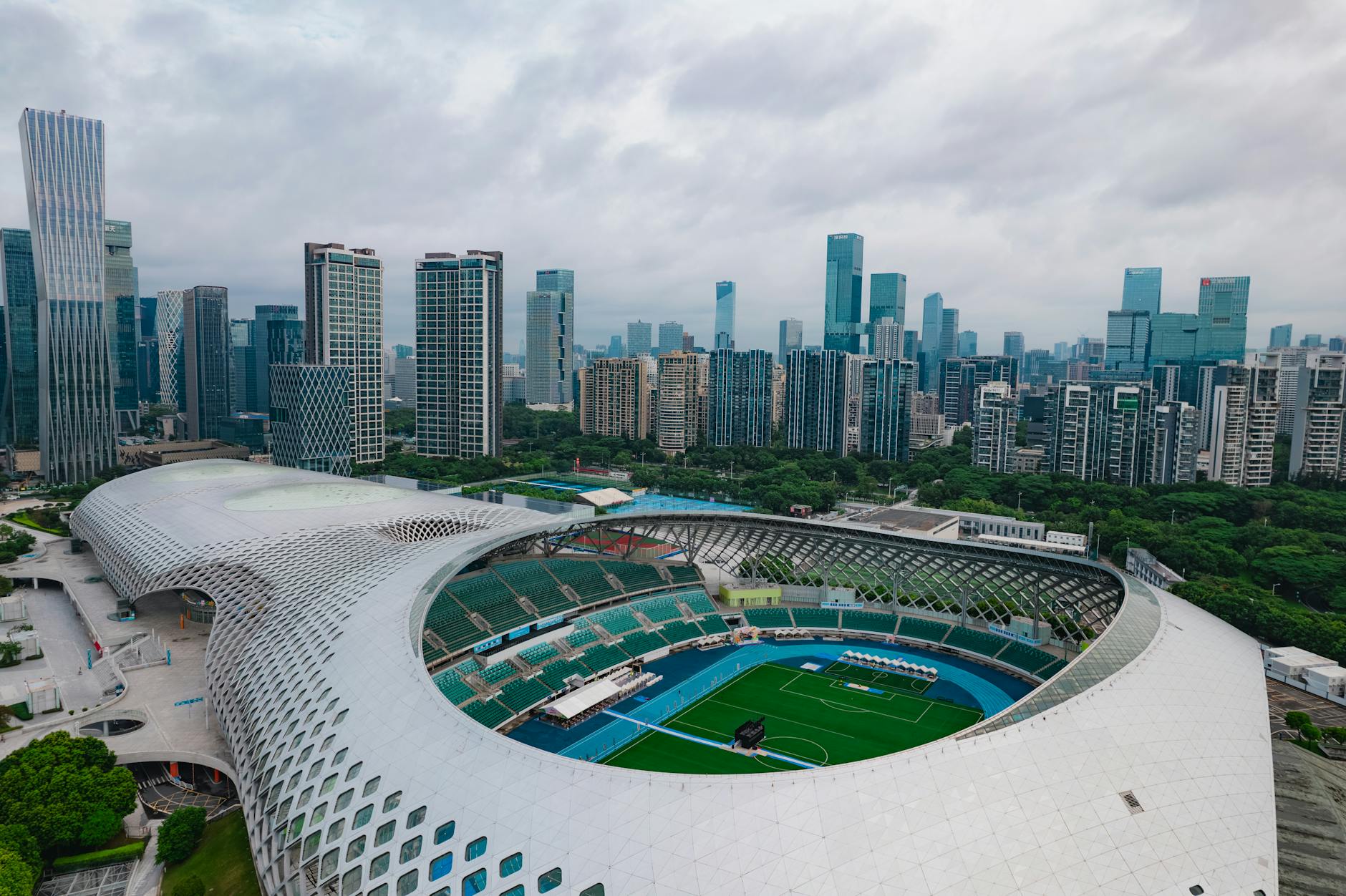
LOCAL SECRET
Nanshan’s tech campuses (Tencent, DJI) have impressive public-facing lobbies and visitor areas. The DJI store is the highlight for most visitors. Sea World is best in the evening when the restaurants and bars come alive.
19

Eating & Drinking

Where to eat in Nanshan / Sea World

Sea World Restaurants (¥60–200): The waterfront plaza has Italian, Japanese, Thai, and Chinese restaurants. The outdoor seating facing the retired cruise liner is atmospheric.

Tap House (¥40–80): Craft beer bar popular with Nanshan’s expat community. Rotating taps of local Chinese craft beers and imports.

Baia Burger (¥50–90): Gourmet burgers and craft cocktails with harbour views at Sea World.

Tech Tourism: The Tencent Binhai Building lobby has interactive tech exhibits. DJI Sky City (opening phase) will be the world’s most dramatic drone company HQ.

20

Nanshan / Sea World by the Numbers

16,000+
Tech companies registered
599m
Ping An Tower — 4th tallest
60%
World’s oil paintings from Dafen
Did You Know?
In 1980, Shenzhen’s GDP was CNY 270 million. By 2024, it exceeded CNY 3.46 trillion — a 12,800-fold increase in 44 years. The city’s economy is now larger than that of Portugal, Ireland, or New Zealand.
Nanshan / Sea World by the Numbers
DJI, the company that makes 76% of the world’s consumer drones, was founded in a Shenzhen apartment in 2006 by a university student.
Shenzhen’s average age is just 33 years old, making it one of the youngest cities in the world. It’s a city of migrants — over 90% of residents were born elsewhere.
21
Luohu / Dongmen

Luohu / Dongmen

Where the Hong Kong border meets Shenzhen’s most chaotic, energetic shopping streets

22
Luohu / Dongmen

Luohu / Dongmen

The Border Bazaar

Luohu is where Shenzhen began and where it still connects to Hong Kong. The Luohu Commercial City, a massive cross-border shopping mall above the Lo Wu checkpoint, is legendary for tailored suits, copied goods, and chaotic bargaining. Dongmen Pedestrian Street is one of China’s busiest shopping areas — a neon-lit maze of fashion stores, street food stalls, and the energy of millions of shoppers.

Cross through Lo Wu from Hong Kong (or start here if already in Shenzhen). Explore Luohu Commercial City for custom tailoring — suits can be made in 24 hours from ¥500. Walk to Dongmen Pedestrian Street for shopping and some of Shenzhen’s best street food: stinky tofu, grilled skewers, bubble tea, and Hunan-style rice noodles. The Old Dongmen area has some of the city’s few remaining pre-reform buildings.
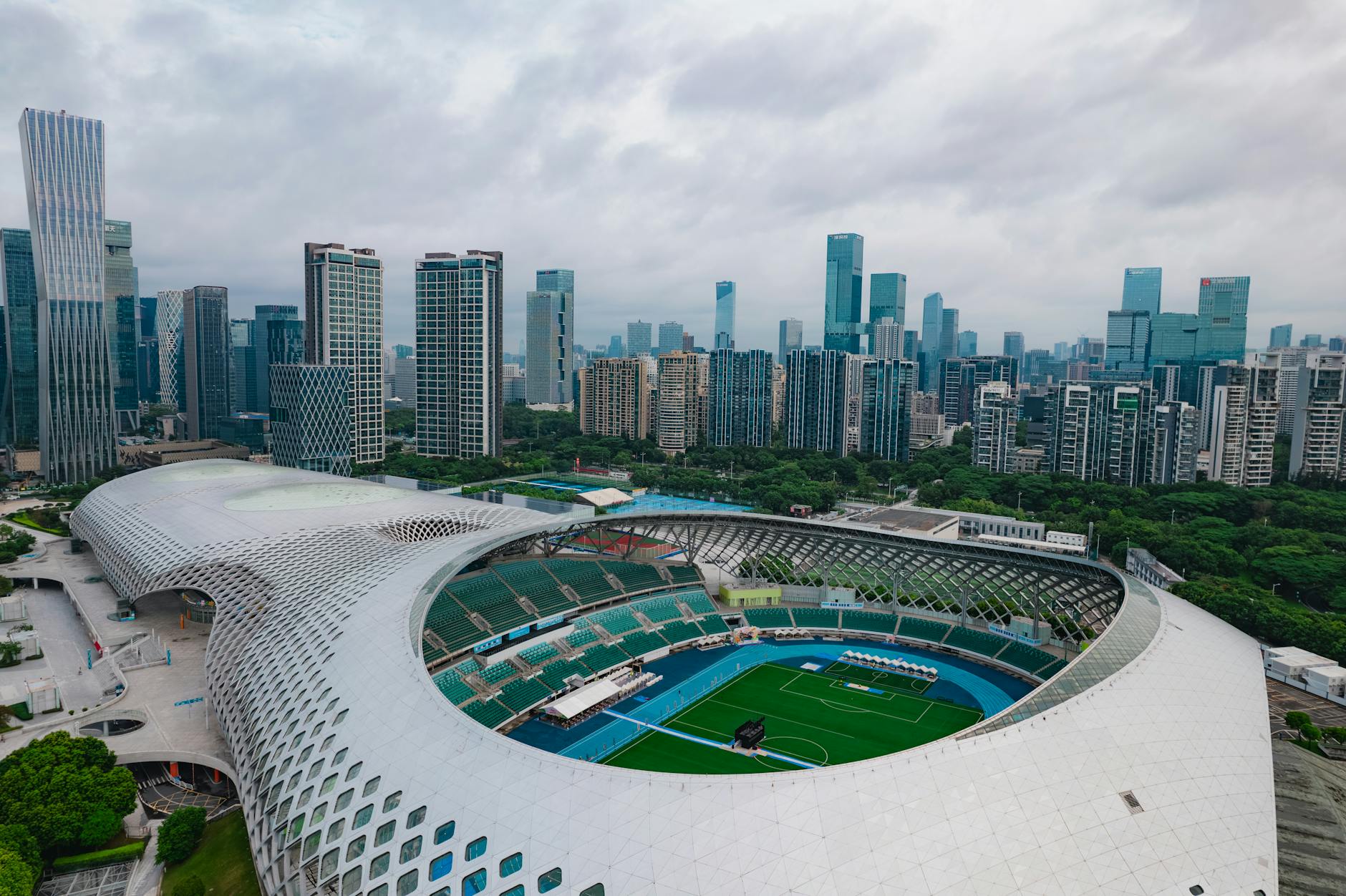
LOCAL SECRET
At Dongmen, eat at stalls with long queues of locals — high turnover means fresh food. In Luohu Commercial City, always bargain. Start at 30% of the asking price and settle around 40–50%. Get suit measurements taken, then collect the next day.
23

Eating & Drinking

Where to eat in Luohu / Dongmen

Dongmen Street Food (¥10–30): Hundreds of stalls selling grilled meat skewers, stinky tofu, fried dumplings, and regional Chinese snacks. Follow the queues.

Luohu Commercial City Tailor Shops (¥500–2,000): Custom suits, shirts, and dresses made to measure in 24–48 hours. Bargain hard — the first price is always 3x the final price.

Mixue Bingcheng (¥3–10): China’s ubiquitous ice cream and milk tea chain. Unbelievably cheap and surprisingly good.

Border Crossing: Lo Wu (walk across) and Futian (underground rail) checkpoints connect to Hong Kong’s MTR. Lo Wu is busier but closer to shopping. Bring your passport.

24

Luohu / Dongmen by the Numbers

12
Metro lines in the network
¥0
Cost to ride public e-bikes
15min
Train to Hong Kong via Lo Wu
Did You Know?
Huaqiangbei, Shenzhen’s electronics market district, is where an estimated 90% of the world’s consumer electronics components are traded. If you need a custom circuit board, a specific LED chip, or a phone screen, this is where the global supply chain begins.
Luohu / Dongmen by the Numbers
The Huaqiangbei SEG Building has more electronic components for sale per square metre than anywhere else on earth. Entire phone models are designed, prototyped, and manufactured within a 5km radius.
Shenzhen has over 1,000 parks — more than any other Chinese city. Despite being a concrete jungle, 45% of the city is covered by greenery.
25
OCT / Huaqiangbei

OCT / Huaqiangbei

Where the world’s electronic supply chain meets contemporary art in converted factories

26
OCT / Huaqiangbei

OCT / Huaqiangbei

The Creative & Electronic Heart

This central corridor combines two of Shenzhen’s most distinctive identities. Huaqiangbei is the world’s largest electronics market — dozens of multi-storey malls selling components, gadgets, drones, and phone parts. A few kilometres west, OCT Loft Creative Culture Park occupies a former industrial complex now filled with galleries, design studios, and cafés. Window of the World and Splendid China theme parks are also in this belt.

Spend a morning at Huaqiangbei — the SEG Electronics Building is the most famous, but explore the smaller surrounding markets for specific components and gadgets. Afternoon at OCT Loft for galleries, specialty coffee, and independent shops. If you have time, visit Window of the World (¥220) for the surreal experience of seeing the Eiffel Tower, Taj Mahal, and Pyramids all in one park.

LOCAL SECRET
Huaqiangbei is overwhelming — go with a specific item in mind (drone parts, LED strips, phone accessories) and vendors will guide you to the right stall. OCT Loft is best on weekends when galleries are all open and markets sometimes pop up.
27

Eating & Drinking

Where to eat in OCT / Huaqiangbei

OCT Loft Cafés (¥30–60): Artisan coffee shops line the park’s lanes. Old Heaven Books + Bar is the most atmospheric — a bookshop and café combined.

Huaqiangbei Food Stalls (¥10–25): Cheap, filling meals in the electronics market basements. Lanzhou noodles, Sichuan spicy noodles, and dumpling shops fuel the traders.

Windows of the World Restaurant Area (¥40–80): Several restaurants near the park entrance offer decent Cantonese and Western dishes.

Maker Culture: Chaihuo Maker Space (in Huaqiangbei area) welcomes visitors and runs weekend workshops on electronics, 3D printing, and robotics. Book online.

28

OCT / Huaqiangbei by the Numbers

40
Years from village to megacity
17.6M
Population (from 30,000 in 1980)
100%
Electric bus fleet (first in world)
Did You Know?
Shenzhen has the world’s first fully electric public bus fleet — all 16,359 buses run on battery power, making it the greenest public transport system on earth. The city also has 22,000 electric taxis.
OCT / Huaqiangbei by the Numbers
29
Shekou

Shekou

Where expat culture, harbour views, and a V&A-designed museum create Shenzhen’s most cosmopolitan corner

30
Shekou

Shekou

The Expat Harbour

Shekou is Shenzhen’s most international neighbourhood, home to a large expatriate community and a distinctly relaxed, cosmopolitan atmosphere. Originally a port town that became the site of China’s first reform-era industrial zone, today it’s known for waterfront dining, craft beer bars, international schools, and the ferry terminal connecting to Hong Kong, Macau, and Zhuhai. The Design Society museum (V&A collaboration) is one of Shenzhen’s best cultural institutions.

Visit Design Society (free entry to ground floor, exhibitions ¥30–60) — a collaboration with London’s V&A museum showcasing design and innovation. Walk along the Shekou waterfront promenade. Explore the local wet market for a glimpse of daily Shenzhen life. Lunch at one of the many international restaurants. In the afternoon, take the ferry to Hong Kong or Macau from the Shekou ferry terminal.

LOCAL SECRET
The Shekou ferry terminal has regular services to Hong Kong Airport, Hong Kong’s city terminals, Macau, and Zhuhai. This is the most convenient Shenzhen-Hong Kong connection if you’re staying in Nanshan.
31

Eating & Drinking

Where to eat in Shekou

Design Society Café (¥40–70): Modern café inside the museum with harbour views. Good coffee and light meals.

Shekou Wet Market Restaurants (¥40–120): Buy fresh seafood from the market and have it cooked at neighbouring restaurants for a small fee. The clams, mantis shrimp, and fish are excellent.

Bionic Brew (¥40–80): One of Shenzhen’s best craft breweries with a taproom in Shekou. Local IPAs and stouts on rotating taps.

Ferry Connections: Shekou to Hong Kong Airport (30 min, ¥260), to Central/Kowloon (1 hr, ¥115–130), to Macau (1 hr, ¥200–260). TurboJet and CKS ferries.

32

Shekou by the Numbers

40
Years from village to megacity
17.6M
Population (from 30,000 in 1980)
100%
Electric bus fleet (first in world)
Did You Know?
Shenzhen has the world’s first fully electric public bus fleet — all 16,359 buses run on battery power, making it the greenest public transport system on earth. The city also has 22,000 electric taxis.
Shekou by the Numbers
33
Bao’an

Bao’an

Where Shenzhen’s factories power the world’s electronics from the city’s industrial west

34
Bao’an

Bao’an

The Airport & Manufacturing Belt

Bao’an is Shenzhen’s western district, home to the international airport and much of the city’s manufacturing base. While less tourist-oriented, it holds surprises: the Bao’an Coastal Cultural Park is a beautifully designed waterfront space, the Phoenix Mountain offers excellent hiking, and the district’s factory-outlet malls offer genuine bargains. BYD, China’s largest electric vehicle manufacturer, has its headquarters here.

Take the metro to Bao’an Centre for the Coastal Cultural Park’s modernist waterfront. Hike Phoenix Mountain (Fenghuang Shan) for panoramic views of the city and bay (2–3 hours, moderate). Visit the Bao’an temples in the old town area. The district’s factory outlets near Shiyan offer clothing and electronics at factory-direct prices.

LOCAL SECRET
Phoenix Mountain is best hiked in the early morning or late afternoon to avoid the heat. The trail is well-maintained with rest stations. Bring water — there are no shops on the trail after the entrance.
35

Eating & Drinking

Where to eat in Bao’an

Bao’an Food Street (¥15–40): Authentic Hakka, Hunan, and Sichuan restaurants serving the factory workers. No frills, big portions, great flavour.

Airport Area Hotels (¥200–500): Convenient for early flights. The Hilton Shenzhen Airport is the pick of the lot.

Factory Outlet Malls (¥50–300): Genuine factory overruns and last-season items at significant discounts.

BYD: Bao’an is home to BYD’s global headquarters. The company’s electric buses, cars, and monorail systems are all designed and tested here. Factory tours are occasionally available for industry visitors.

36

Bao’an by the Numbers

40
Years from village to megacity
17.6M
Population (from 30,000 in 1980)
100%
Electric bus fleet (first in world)
Did You Know?
Shenzhen has the world’s first fully electric public bus fleet — all 16,359 buses run on battery power, making it the greenest public transport system on earth. The city also has 22,000 electric taxis.
Bao’an by the Numbers
37
Longhua

Longhua

Where high-speed rail meets artist villages and Shenzhen’s factories shape global electronics

38
Longhua

Longhua

The Northern Hub

Longhua is Shenzhen’s northern district, anchored by the Shenzhen North Railway Station — the city’s high-speed rail hub connecting to Guangzhou, Wuhan, Beijing, and beyond. The district has grown rapidly around the station, with new malls, residential towers, and the vast Guanlan printmaking village. Foxconn’s massive manufacturing campus is here, as is the emerging Longhua Art District.

Arrive at or depart from Shenzhen North Station — trains to Guangzhou take just 30 minutes (¥75). Visit the Guanlan Original Printmaking Village, a quiet artists’ community in a former Hakka village with studios open to visitors (free). Explore the Longhua Temple, one of the area’s few remaining historical structures. The surrounding malls offer shopping at local prices.

LOCAL SECRET
Guanlan Printmaking Village is a peaceful escape from the city. Visit on a weekday for a quiet experience. Some studios allow you to try printmaking techniques. The village retains its traditional Hakka architecture.
39

Eating & Drinking

Where to eat in Longhua

Shenzhen North Station Food Court (¥20–50): Large food courts on the station’s lower levels with fast, affordable meals from every Chinese region.

Guanlan Village Cafés (¥25–45): Small cafés within the printmaking village serve coffee and light meals in a peaceful setting.

Longhua Mall Food Hall (¥30–70): Modern food hall with quality Cantonese, Sichuan, and Japanese restaurants.

High-Speed Rail: Shenzhen North to Guangzhou South (30 min, ¥75), to Wuhan (4.5 hrs, ¥460), to Beijing (8 hrs, ¥900+). Book tickets on Trip.com or 12306.cn.

40

Longhua by the Numbers

40
Years from village to megacity
17.6M
Population (from 30,000 in 1980)
100%
Electric bus fleet (first in world)
Did You Know?
Shenzhen has the world’s first fully electric public bus fleet — all 16,359 buses run on battery power, making it the greenest public transport system on earth. The city also has 22,000 electric taxis.
Longhua by the Numbers
41
Dapeng Peninsula

Dapeng Peninsula

Where 600-year-old fortresses and crystal-clear beaches prove Shenzhen isn’t just a concrete jungle

42
Dapeng Peninsula

Dapeng Peninsula

The Coastal Escape

Dapeng Peninsula is Shenzhen’s stunning natural counterpoint to its urban core. Just 90 minutes from the CBD, this rocky, hilly peninsula has some of southern China’s most beautiful beaches, a 600-year-old Ming Dynasty fortress, and hiking trails through forested peaks. The water is remarkably clear for a city of 17 million, and on weekdays the beaches are genuinely peaceful. Dongchong and Xichong beaches are the highlights.

Take a bus or DiDi to Dapeng Fortress (¥20 entry) — the only significant historical site in Shenzhen, built in 1394 to defend against pirates. Walk the old stone streets and visit the ancestral halls. Continue to Dongchong Beach for swimming, seafood lunch, and relaxation. For the more adventurous, hike to Xichong Beach (2 hours by trail or 20 min by car) for the clearest water and best snorkelling.

LOCAL SECRET
Budget a full day for Dapeng — the journey takes 90 minutes each way. Go on a weekday to avoid weekend crowds on the beaches. Camping is possible at Dongchong and Xichong with permits. Bring sunscreen and water.
43

Eating & Drinking

Where to eat in Dapeng Peninsula

Dongchong Seafood Restaurants (¥60–150): Beachside restaurants serving the day’s catch — steamed fish, salt-and-pepper shrimp, and clams in garlic sauce. Point at what you want in the tanks.

Xichong Beach BBQ (¥30–60): Simple beachside grills serving skewered seafood, corn, and meat. Bring your own drinks.

Dapeng Ancient Town Restaurants (¥25–60): Small family restaurants inside the fortress serving Hakka tofu, sweet potato noodles, and clay pot dishes.

Camping: Dongchong and Xichong beaches allow camping (bring your own tent or rent on-site). Xichong has basic guesthouses (minsu, ¥200–400/night). Book ahead on weekends.

44

Dapeng Peninsula by the Numbers

40
Years from village to megacity
17.6M
Population (from 30,000 in 1980)
100%
Electric bus fleet (first in world)
Did You Know?
Shenzhen has the world’s first fully electric public bus fleet — all 16,359 buses run on battery power, making it the greenest public transport system on earth. The city also has 22,000 electric taxis.
Dapeng Peninsula by the Numbers
45
Shenzhen Bay

Shenzhen Bay

Where 13 kilometres of waterfront, mangrove forests, and Hong Kong skyline views define Shenzhen’s lifestyle

46
Shenzhen Bay

Shenzhen Bay

The Waterfront Promenade

Shenzhen Bay is less a neighbourhood and more a lifestyle — a stunning 13-kilometre waterfront park stretching along the coast with views across to Hong Kong’s New Territories. The park has cycling paths, jogging tracks, mangrove boardwalks, and outdoor exercise areas used by thousands of residents daily. At sunset, the view of the Shenzhen Bay Bridge and Hong Kong mountains is spectacular. The surrounding area has some of the city’s most expensive residential towers.

Rent a bicycle at the park entrance (¥20/hour or free with Meituan/Hello Bike apps) and ride the full 13km path. Stop at the mangrove boardwalk area for birdwatching (200+ species have been recorded). Time your visit for sunset when the sky turns gold over Hong Kong. The Shenzhen Bay Sports Centre (‘Spring Cocoon’) is an architectural landmark at the eastern end.

LOCAL SECRET
The bay park is best at sunset — arrive by 5 PM for the golden hour. Weekend mornings are popular with runners and cyclists. The mangrove section in the centre of the park is the most peaceful area.
47

Eating & Drinking

Where to eat in Shenzhen Bay

Shenzhen Bay Park Cafés (¥25–50): Small café kiosks along the path serving coffee, juice, and light snacks.

MixC One Mall (¥50–200): The upscale mall near the bay has international restaurants, a cinema, and premium shopping.

Spring Cocoon Area Restaurants (¥40–100): Several restaurants near the sports centre with bay views and outdoor seating.

Border Crossing: Shenzhen Bay Port (at the western end of the park) connects to Hong Kong by cross-border bus. Less crowded than Lo Wu. Open 6:30 AM–12:00 AM.

48

Shenzhen Bay by the Numbers

40
Years from village to megacity
17.6M
Population (from 30,000 in 1980)
100%
Electric bus fleet (first in world)
Did You Know?
Shenzhen has the world’s first fully electric public bus fleet — all 16,359 buses run on battery power, making it the greenest public transport system on earth. The city also has 22,000 electric taxis.
Shenzhen Bay by the Numbers
49
Houhai

Houhai

Where supertall towers and luxury malls rise from reclaimed land to create Shenzhen’s glittering new centre

50
Houhai

Houhai

The New Downtown

Houhai is Shenzhen’s newest and most glamorous district — a cluster of supertall towers, luxury malls, and waterfront apartments between the CBD and Shenzhen Bay. This is where Shenzhen’s new money lives and plays. The shopping is upscale (Hermès, Louis Vuitton), the restaurants are cutting-edge, and the rooftop bars have some of the best views in the city. The area is still developing, with new towers rising constantly.

Shop at the MixC World mall — Shenzhen’s most luxurious retail complex. Walk the Houhai waterfront promenade for skyline views. Visit the Tencent Binhai Building’s public lobby for tech exhibits. Dinner at one of Houhai’s upscale restaurants, followed by cocktails at a rooftop bar with bay views.

LOCAL SECRET
Houhai is best experienced in the evening when the towers light up and the waterfront comes alive. The area is still under construction in parts — expect cranes and building sites alongside finished luxury complexes.
51

Eating & Drinking

Where to eat in Houhai

MixC World Restaurants (¥80–300): Michelin-guide restaurants and international dining in Shenzhen’s most premium mall. The Japanese and Cantonese options are excellent.

One Avenue (¥60–150): A dining and entertainment complex with trendy restaurants, dessert bars, and cocktail lounges.

Rooftop Bars (¥60–120 per drink): Several hotels in Houhai have rooftop bars with panoramic views of the bay and skyline.

Shopping: MixC World, One Avenue, and The Bay are Shenzhen’s premium shopping destinations with international luxury brands and cutting-edge Chinese designer labels.

52

Houhai by the Numbers

40
Years from village to megacity
17.6M
Population (from 30,000 in 1980)
100%
Electric bus fleet (first in world)
Did You Know?
Shenzhen has the world’s first fully electric public bus fleet — all 16,359 buses run on battery power, making it the greenest public transport system on earth. The city also has 22,000 electric taxis.
Houhai by the Numbers
53
Huawei / Bantian

Huawei / Bantian

Where Huawei’s 60,000-person campus built 12 European ‘towns’ in the suburbs of a 40-year-old city

54
Huawei / Bantian

Huawei / Bantian

The Campus City

Bantian, in Longgang District, is dominated by Huawei’s extraordinary global headquarters — a campus so large it has its own train system connecting 12 European-themed ‘towns’ (Verona, Paris, Granada, etc.). The campus is the physical manifestation of Shenzhen’s tech ambitions: 60,000 employees, its own lake, and architecture that blends European classical styles with Chinese garden principles. While the campus requires an invitation to enter, the surrounding area buzzes with tech workers and startups.

The Huawei campus is not open to the general public, but the surrounding Bantian area has tech-themed malls and restaurants catering to the 60,000-person workforce. Visit the Gangtou ruins — a rare piece of old Shenzhen with Hakka watchtowers and traditional village architecture. The Longgang cultural centre has rotating art exhibitions.

LOCAL SECRET
The Huawei campus is only accessible by invitation. However, the Ox Horn campus’s European-themed buildings can be partially glimpsed from public roads. The surrounding tech parks offer a feel for Shenzhen’s startup culture.
55

Eating & Drinking

Where to eat in Huawei / Bantian

Bantian Tech Worker Canteens (¥15–40): Dozens of restaurants around the Huawei campus serve the tech workforce — fast, cheap, and high-quality regional Chinese food.

Gangtou Village Restaurants (¥20–50): Traditional Hakka cuisine in the preserved village area. Clay pot rice and stuffed tofu are specialities.

Longgang Mall Food Courts (¥25–60): Modern food courts with diverse Chinese regional cuisines.

Hakka Heritage: Gangtou and nearby villages preserve Hakka watchtowers (diaolou) and traditional architecture — a rare link to pre-reform Shenzhen.

56

Huawei / Bantian by the Numbers

40
Years from village to megacity
17.6M
Population (from 30,000 in 1980)
100%
Electric bus fleet (first in world)
Did You Know?
Shenzhen has the world’s first fully electric public bus fleet — all 16,359 buses run on battery power, making it the greenest public transport system on earth. The city also has 22,000 electric taxis.
Huawei / Bantian by the Numbers
57
Meilin / Lianhua

Meilin / Lianhua

Where Shenzhen breathes — hilltop trails and reservoir walks in the green heart of the concrete jungle

58
Meilin / Lianhua

Meilin / Lianhua

The Green Lung

Meilin and Lianhua form the green heart of Shenzhen — a belt of parks, hills, and reservoirs surrounded by residential neighbourhoods. Lianhua Mountain Park, with the Deng Xiaoping statue at its summit, is the city’s most symbolically important green space. The Meilin Reservoir and surrounding trails offer peaceful hiking just minutes from the CBD. Bijiashan Park (Pen Holder Mountain) has panoramic 360-degree views.

Hike Lianhua Mountain for the Deng Xiaoping statue and skyline panorama (30 min, easy). Continue to Bijiashan Park for a more challenging trail with 360-degree views of Futian, Luohu, and the distant mountains. Walk through the Meilin greenway for a peaceful, tree-shaded route connecting the parks. The area is popular with local families on weekends.

LOCAL SECRET
Visit Lianhua Mountain at sunrise for the best light on the Deng Xiaoping statue and emptiest trails. The Meilin greenway is flat and shaded — perfect for hot days when hillside hiking is too intense.
59

Eating & Drinking

Where to eat in Meilin / Lianhua

Meilin Village Restaurants (¥20–50): Old Meilin village has authentic Hunan, Sichuan, and Hakka restaurants at local prices. The spicy crayfish stalls are a summer favourite.

Lianhua Mountain Park Snack Shops (¥5–15): Simple refreshment kiosks at the park entrances selling drinks, ice cream, and light snacks.

Bijiashan Area Cafés (¥25–45): Small cafés near the park entrances catering to hikers and walkers.

Hiking: The Lianhua–Bijiashan–Meilin loop takes about 3 hours and offers the best city-centre hiking in Shenzhen. Well-marked trails with rest stations.

60

Meilin / Lianhua by the Numbers

40
Years from village to megacity
17.6M
Population (from 30,000 in 1980)
100%
Electric bus fleet (first in world)
Did You Know?
Shenzhen has the world’s first fully electric public bus fleet — all 16,359 buses run on battery power, making it the greenest public transport system on earth. The city also has 22,000 electric taxis.
Meilin / Lianhua by the Numbers
61
Buji / Sungang

Buji / Sungang

Where handshake buildings and migrant dreams create the most authentic, chaotic neighbourhood in a city of migrants

62
Buji / Sungang

Buji / Sungang

The Urban Village

Buji and Sungang represent the ‘real’ Shenzhen — the densely packed urban villages (chengzhongcun) where the city’s migrant workforce lives. These handshake buildings (so close you can shake hands with your neighbour across the alley) are Shenzhen’s most authentic and chaotic neighbourhoods: narrow lanes packed with street food, barber shops, phone repair stalls, and tiny restaurants serving every regional Chinese cuisine. The Sungang area near the railway station has a famous jade market.

Walk through Buji’s urban village alleys for the most authentic Shenzhen street life. The density is extraordinary — buildings are just 1–2 metres apart, creating a shadowy, atmospheric labyrinth. Eat at the tiny noodle shops, dumpling stalls, and rice plate restaurants that feed the working class. Visit the Sungang jade and jewellery market for wholesale prices on jade, pearls, and gemstones. The area around Shenzhen Railway Station has cheap shopping malls.

LOCAL SECRET
Urban villages are safe but can be disorienting — the alleys are narrow and identical. Use GPS on your phone. These neighbourhoods are being demolished for redevelopment, so visit while they still exist. The food is some of the best and cheapest in Shenzhen.
63

Eating & Drinking

Where to eat in Buji / Sungang

Buji Village Street Food (¥5–20): The cheapest and most diverse food in Shenzhen. Lanzhou hand-pulled noodles, Yunnan rice noodles, Hunan spicy stir-fry, and Sichuan mapo tofu — every Chinese province represented in a single alley.

Sungang Jade Market (free entry): Browse thousands of stalls selling jade, pearls, amber, and gemstones at wholesale prices. Bargain aggressively.

Railway Station Area (¥10–30): Cheap dumpling shops, congee stalls, and noodle houses around the station area.

Urban Villages: Shenzhen’s chengzhongcun are a vanishing urban form. As redevelopment accelerates, these dense, vibrant communities are being replaced by tower blocks. They represent the real story of Shenzhen’s migration-driven growth.

64

Buji / Sungang by the Numbers

40
Years from village to megacity
17.6M
Population (from 30,000 in 1980)
100%
Electric bus fleet (first in world)
Did You Know?
Shenzhen has the world’s first fully electric public bus fleet — all 16,359 buses run on battery power, making it the greenest public transport system on earth. The city also has 22,000 electric taxis.
Buji / Sungang by the Numbers
65
05

Food Guide

What to eat and where to find it

Shenzhen has no native cuisine — and that’s its greatest culinary strength. Because 90% of the city’s population migrated from other provinces, Shenzhen has become the best city in China to eat food from every region. Cantonese dim sum, Sichuan hot pot, Hunan spicy stir-fry, Yunnan rice noodles, Lanzhou hand-pulled noodles, Xinjiang lamb kebabs, Dongbei dumplings, and Fujian seafood — all prepared by people who grew up cooking these dishes. The street food is extraordinary, the restaurant scene is exploding, and the prices are a fraction of Hong Kong’s.

Cantonese Dim Sum (¥40–120): Shenzhen’s Cantonese heritage shines in its dim sum restaurants. Har gow (shrimp dumplings), siu mai, char siu bao, and rice noodle rolls are served with endless pots of tea. Dian Dou De in Futian is exceptional.

Sichuan Hot Pot (¥60–150 per person): Bubbling cauldrons of fiery Sichuan peppercorn broth into which you dip sliced meats, tofu, vegetables, and noodles. Haidilao is the famous chain, but small local shops are often better.

Lanzhou Hand-Pulled Noodles (¥15–25): Freshly pulled wheat noodles in a clear beef broth with chilli oil, radish, and coriander. Prepared by Muslim Hui Chinese noodle-pullers in small shop-front restaurants.

Shenzhen Seafood (¥60–200): Fresh fish, shrimp, crab, and shellfish steamed Cantonese-style or in spicy Sichuan preparations. Order from live tanks at Shekou wet market or Dapeng beachside restaurants.

Chaoshan Beef Hot Pot (¥60–120): Shenzhen’s most obsessive food trend: thinly sliced fresh beef (never frozen) cooked for exactly 8 seconds in a clear bone broth. The beef quality and cutting technique are everything.

Roast Goose / Roast Duck (¥50–120): Cantonese roast meats lacquered with maltose and five-spice, served over rice. The skin should be impossibly crispy, the meat juicy and fragrant.

Coconut Chicken Hot Pot (¥80–150): A Hainan-influenced Shenzhen specialty: whole chicken simmered in fresh coconut water and coconut milk. Sweet, rich, and comforting. Hugely popular in Shenzhen.

Stinky Tofu & Street Snacks (¥5–20): Deep-fried fermented tofu served with chilli sauce and pickled vegetables. The smell is notorious, the taste is addictive. Find it at Dongmen and every urban village night stall.

66

Where to Eat

Best restaurants, markets, and street food

Top Restaurants

Dian Dou De (¥60–120): Excellent Cantonese dim sum chain with multiple locations. The steamed rice noodle rolls and custard buns are outstanding.

Haidilao Hot Pot (¥100–200): The famous chain known for extraordinary service — free snacks, noodle-dancing chefs, and complimentary manicures while you wait.

Da Dong (¥200–400): Beijing’s most famous Peking duck restaurant has a Shenzhen outpost. The crispy-skin duck with sugar and garlic is remarkable.

LiYuan Seafood (¥100–300): Massive Cantonese seafood restaurant where you choose live fish, crab, and shellfish from tanks the size of swimming pools.

Street Food & Markets

Dongmen Pedestrian Street (Luohu): Hundreds of street food stalls selling grilled skewers, stinky tofu, bubble tea, and regional Chinese snacks. Best after 6 PM.

Buji Urban Village (Longgang): The cheapest and most diverse street food in Shenzhen — noodle shops, dumpling stalls, and stir-fry joints from every Chinese province.

Shekou Wet Market (Nanshan): Buy fresh seafood from the market stalls and have it cooked at neighbouring restaurants for a small preparation fee.

FOODIE TIP
Eat where the locals eat — the best food in Shenzhen is often in the most unassuming shopfront restaurants and street stalls in urban villages. If there’s a queue of migrant workers, the food is authentic and good. Avoid tourist-oriented restaurants in malls.
67

Food by the Numbers

¥15
Average Lanzhou noodle bowl
34
Provincial cuisines represented
90%
Residents born outside Shenzhen
Did You Know?
Shenzhen has no indigenous cuisine because the city is only 40 years old. Instead, it has become China’s greatest food melting pot — every one of China’s 34 provincial cuisines can be found here, often prepared by first-generation migrants who brought their family recipes from home.
Food by the Numbers
Food by the Numbers
Food by the Numbers
The Huaqiangbei SEG Building has more electronic components for sale per square metre than anywhere else on earth. Entire phone models are designed, prototyped, and manufactured within a 5km radius.
Shenzhen has over 1,000 parks — more than any other Chinese city. Despite being a concrete jungle, 45% of the city is covered by greenery.
68
06

History

Understanding the story of Shenzhen

Shenzhen’s history before 1980 is minimal — and that’s precisely the point. For centuries, the area was a collection of fishing villages and market towns on the Pearl River Delta, known for oyster farming and salt production. The Dapeng Fortress (1394) was built to defend against Japanese pirates and is the only significant historical structure. Under the Qing Dynasty and into the Republic era, the area was a quiet backwater overshadowed by nearby Guangzhou and Hong Kong. The most significant pre-reform event was the establishment of the Kowloon-Canton Railway, which put the border town of Shenzhen (then called Bao’an County) on the map as a transit point to Hong Kong.

69

Culture & Identity

Everything changed on August 26, 1980, when Deng Xiaoping designated Shenzhen as China’s first Special Economic Zone (SEZ). The experiment was simple but revolutionary: create a zone where capitalism could operate within a communist state. Foreign investment flooded in, factories multiplied, and migrants poured in from every province. In 1980, the population was 30,000; by 1990, it was 1.7 million; by 2020, over 17 million. Shenzhen’s GDP grew from CNY 270 million in 1980 to over CNY 3.4 trillion in 2024 — a 12,800-fold increase. Today, Shenzhen is home to Huawei, Tencent, DJI, BYD, and Foxconn, and produces a significant share of the world’s consumer electronics, drones, and electric vehicles. It is China’s model city and the proof that the reform experiment worked.

Culture & People

Shenzhen’s culture is defined by migration, innovation, and speed. Unlike Beijing or Shanghai, there is no centuries-old cultural tradition here — the city’s culture was built from scratch by 17 million people who came from everywhere else. This creates a unique energy: entrepreneurial, experimental, and unbound by tradition. The maker culture at Huaqiangbei and OCT Loft celebrates tinkering, prototyping, and building things. The art scene at OCT Contemporary Art Terminal and Design Society is young and ambitious. Tech culture pervades daily life — cashless payments, drone deliveries, and autonomous vehicles are normal here. Shenzhen celebrates Chinese New Year with a mass exodus as migrant workers return home, and the city briefly becomes a ghost town before roaring back to life.

Cultural Etiquette
WeChat is essential for social and business communication. Exchange WeChat contacts instead of business cards. Don’t discuss politically sensitive topics. Tipping is not customary. Many restaurants are cashless — have mobile payment ready. Respect queuing culture in public transport. Remove shoes when entering homes.
70
07

Day Trips

Excursions from Shenzhen

Shenzhen’s position in the Pearl River Delta puts Guangzhou, Hong Kong, Macau, and rural Guangdong all within easy day-trip range. The high-speed rail network and the HZMB bridge make connections fast.

Guangzhou (100 km (30 min by high-speed rail))

China’s southern capital — 2,200 years of history, the world’s best dim sum, Chen Clan Academy, Shamian Island, and the Canton Tower. A perfect contrast to Shenzhen’s modernity. Entry: ¥75 one-way

Hong Kong (37 km (15 min by MTR from Lo Wu))

Asia’s World City across the border. Victoria Peak, Star Ferry, dim sum, Temple Street Night Market, and one of the world’s most dramatic skylines. Entry: ¥30–65 MTR fare

Zhuhai & Macau (180 km via HZMB bridge bus)

Take the Hong Kong–Zhuhai–Macau Bridge bus to Zhuhai, then walk across to Macau for Portuguese colonial heritage, egg tarts, and casino glamour. Entry: ¥100–200

Kaiping Diaolou (200 km (2 hrs by car))

UNESCO World Heritage watchtowers built by overseas Chinese returnees in the 1920s–30s. A fascinating architectural fusion of Chinese and Western styles in rural Guangdong. Entry: ¥100–150 entrance

71
Shenzhen day trip
Getting There
Guangzhou: High-speed rail from Shenzhen North to Guangzhou South (30 min, ¥75). Hong Kong: MTR from Lo Wu or Futian checkpoint (15–45 min). Macau: Bus over the HZMB bridge from Shenzhen Bay Port (¥100, 1.5 hrs) or ferry from Shekou (¥200, 1 hr). Kaiping: Hire a car or join a tour (¥300–500/person).
72
08

Directory A–Z

Practical information from A to Z

Alcohol

Widely available at convenience stores and supermarkets. Beer (Tsingtao, Snow) ¥4–10 in shops, ¥20–60 at bars. Legal drinking age is 18.

ATMs

China Merchants Bank, ICBC, and Bank of China ATMs are widespread. Most accept international cards (Visa, Mastercard). Daily limits typically ¥2,500–10,000. WeChat/Alipay preferred.

Clinics

Shenzhen People’s Hospital and Hong Kong University Shenzhen Hospital have English-speaking staff. Private clinics: ¥200–500 per consultation. Emergency: 120.

Electricity

220V/50Hz, Type A/I plugs (two flat pins or three angled pins). US plugs usually fit. European visitors need an adapter.

Internet

Google, Facebook, Instagram, WhatsApp, and most Western social media are blocked. Download a VPN before arriving. Free Wi-Fi at hotels, malls, and Starbucks. Buy a local SIM for ¥50–100 at the airport.

LGBTQ+

Homosexuality is legal but attitudes are conservative. No anti-discrimination protections. Shenzhen is more tolerant than most Chinese cities but discretion is advisable.

Mail

China Post is reliable but slow for international mail. International postcards ¥4.50. EMS for express delivery. Main post offices in every district.

73

Markets

Huaqiangbei (electronics), Dongmen (fashion), Sungang (jade), Luohu Commercial City (cross-border shopping), Dafen (art). Most open 10 AM–9 PM.

Museums

Most are free: Shenzhen Museum, Design Society (ground floor), OCT Art Terminal, Shenzhen Library. Some exhibitions charge ¥20–60.

Pharmacies

Nepstar and Dashenlin pharmacy chains are on every block. Most common medications available without prescription. Hours: 8 AM–10 PM.

Religion

Buddhist temples (Hongfa Temple is the largest), Christian churches, and mosques. Religious practice is less visible than in other Chinese cities.

Shopping Hours

Most shops and malls: 10 AM–10 PM daily. Convenience stores (7-Eleven, FamilyMart): 24 hours. Banks: Mon–Fri 9 AM–5 PM.

Smoking

Banned in all indoor public areas. Enforced in malls and restaurants. Outdoor smoking areas are common. Fines up to ¥500.

Taxes

Prices displayed are final (VAT included). Tax-free shopping is available for foreign tourists at designated stores with receipts over ¥500 — claim refunds at the airport.

Tipping

Not part of Chinese culture. Do not tip at restaurants, taxis, or hotels. Service charges are not added. Simply pay the bill amount.

74

Transport

Getting to and around Shenzhen

From Bao’an Airport (SZX): Metro Line 11 to Futian (55 min, ¥11). Airport buses to major districts (¥20–30). Taxi to Futian (¥100–150, 40 min). DiDi ride-hailing (¥80–120).

Within Shenzhen: The metro (12 lines, ¥2–14) is the backbone of the transport system. DiDi is China’s Uber and covers everywhere the metro doesn’t. Taxis are metered and affordable. 100% electric buses cover the entire city. Shared bikes (Meituan, Hello) are everywhere at ¥1.5 per ride.

ModeDetailsCost
Metro12 lines covering 547km. Fast, clean, and cheap. Runs 6:30 AM–11:30 PM.¥2–14 per trip
BusExtensive network of 100% electric buses covering the entire city.¥1–3
DiDi (ride-hailing)China’s Uber equivalent. Reliable, affordable, and available everywhere.¥15–80
TaxiRed (Futian), green (Nanshan/Bao’an), blue (electric). Metered, starting at ¥11.¥11–100
High-Speed RailShenzhen North to Guangzhou South in 30 min, to Hong Kong West Kowloon in 14 min.¥75–100
TRANSPORT TIP
The Shenzhen Metro is the best way to get around. Buy a Shenzhen Tong transport card (¥50 deposit + top-up) at any metro station for seamless metro, bus, and convenience store payments. DiDi for rides to areas the metro doesn’t reach.
75

Language

Essential phrases for travelers

Mandarin is the dominant language in Shenzhen, with Cantonese spoken by some older residents and in border areas. English is very limited outside international hotels and the Shekou expat area. Translation apps (Google Translate offline, Baidu Translate) are essential. WeChat’s built-in translation feature is useful for communicating with locals.

EnglishMandarin (Putonghua)
HelloNǐ hǎo (你好)
Thank youXièxie (谢谢)
How much?Duōshao qián? (多少钱?)
Too expensiveTài guì le! (太贵了!)
DeliciousHǎo chī! (好吃!)
The bill, pleaseMǎi dān (买单)
Where is...?...zài nǎlǐ? (在哪里?)
I don’t understandWǒ tīng bù dǒng (我听不懂)
Excuse meQǐng wèn (请问)
Yes / NoShì / Bú shì (是/不是)
WaterShuǐ (水)
Cheers!Gān bēi! (干杯!)
Language Note
English signage exists in the metro and major tourist sites but is limited elsewhere. Learning “xièxie” (thank you) and “hǎo chī” (delicious) will earn you smiles. WeChat’s translation feature is your best tool for communicating with non-English-speaking locals.
76

Top 10 Picks

Our favourite experiences in Shenzhen

Best Sunrise

Lianhua Mountain Summit

Watch the Futian skyline emerge from the morning haze beside the Deng Xiaoping statue that overlooks the city he created

Best Sunset

Shenzhen Bay Park

The sky turns gold over the Hong Kong mountains as joggers, cyclists, and couples line the 13km waterfront promenade

Best Food

Chaoshan Beef Hot Pot

Thinly sliced fresh beef cooked for exactly 8 seconds in clear bone broth — Shenzhen’s most obsessive food trend

Best Street Food

Buji Urban Village

Every Chinese province’s cuisine in one dense, chaotic village of noodle shops, dumpling stalls, and stir-fry joints

Best Luxury

The St. Regis Shenzhen

Skyline views from the 75th–99th floors of the KK100 tower, with butler service and one of the city’s finest restaurants

Best History

Dapeng Fortress

The only 600-year-old structure in a city where nothing else predates 1980 — a Ming Dynasty coastal fortress frozen in time

Best Hidden Gem

Guanlan Printmaking Village

A quiet Hakka village of artists making woodblock prints, far from the tech-startup frenzy of central Shenzhen

Best Photo

Ping An Finance Centre, 116th Floor

The 4th tallest building in the world — views stretching from Futian’s towers to Hong Kong’s mountains on clear days

Best Shopping

Huaqiangbei Electronics Markets

The world’s largest electronics market — if it has a circuit board, you can find it here

Best Free Experience

Shenzhen Bay Park cycling

Rent a shared bike and ride 13km of stunning coastline with mangroves, birdlife, and Hong Kong views

77

Packing List

Everything you need for Shenzhen

Essentials

☐ Passport (valid 6+ months)
☐ VPN app (pre-installed before arrival)
☐ WeChat app with payment set up
☐ Power adapter (Type A/I)
☐ Travel insurance documents

Clothing

☐ Light, breathable clothing (subtropical climate)
☐ Rain jacket or compact umbrella (essential May–Sept)
☐ Comfortable walking shoes
☐ Light sweater for aggressive air conditioning
☐ Smart casual for upscale restaurants

Health & Comfort

☐ Sunscreen and hat (summer)
☐ Insect repellent (for hiking)
☐ Anti-diarrhoea tablets
☐ Prescription medications
☐ Face mask (for pollution days)

Before You Go

☐ Download VPN, WeChat, Alipay, DiDi, Baidu Maps
☐ Set up Alipay Tour Pass for payments
☐ Check visa requirements (144-hour transit visa-free)
☐ Buy local SIM at airport on arrival
☐ Book Ping An observation deck tickets online
PACKING TIP
The single most important preparation for Shenzhen is setting up mobile payments (WeChat Pay or Alipay) and downloading a VPN before you arrive. Without these, navigating the city is significantly harder. Shenzhen is effectively cashless — even street food vendors prefer QR code payments.
78

About This Guide

About Travorea

Travorea creates comprehensive, beautifully designed travel guides that combine insider knowledge with practical information. Our guides are crafted to help you experience destinations like a local, not just a tourist.

This Guide

This premium guide to Shenzhen was researched and written to give you everything you need for an unforgettable trip. All prices and information were verified at the time of writing (2026) but may change — always confirm locally.

Photography

All photographs in this guide are sourced from free-to-use image libraries (Pexels, Unsplash) and original Travorea photography. Infographics are original Travorea creations.

Image Credits

Explore More Guides

Visit www.travorea.com/ebooks for premium guides to 50+ destinations worldwide.

79
Travorea

Shenzhen

China's Silicon Valley

• Tech Capital
• Huaqiangbei Electronics
• Shenzhen Bay
• Maker Culture
• Hong Kong Gateway
2026 Edition | www.travorea.com
© 2026 Dreamadsdigital. All rights reserved. Content may not be reproduced without permission.