
Beyond its glittering skyscrapers and luxury resorts, Abu Dhabi holds a trove of fascinating secrets and surprising stories. Prepare to be amazed by the ingenuity, deep history, and unique culture that define this extraordinary emirate, far beyond what meets the eye.
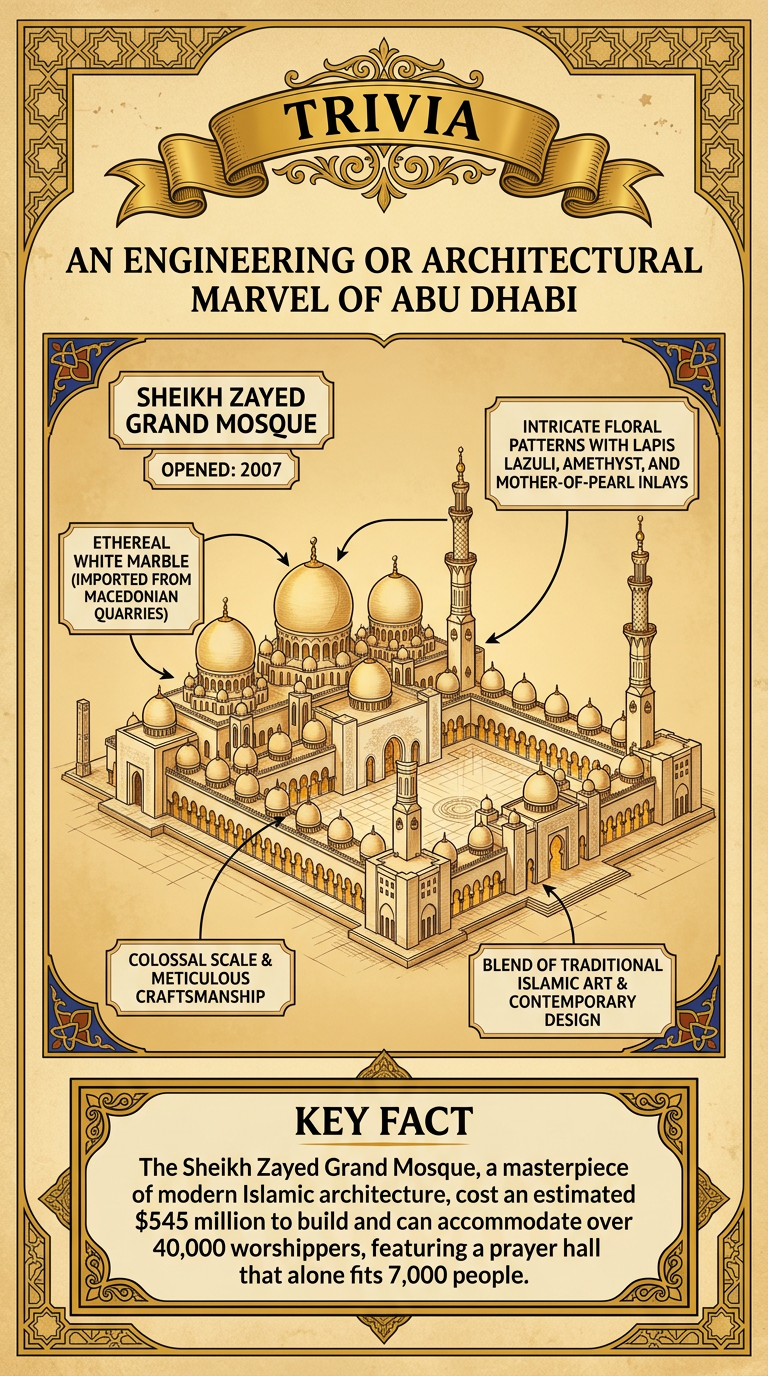
An Engineering or Architectural Marvel of Abu Dhabi
Abu Dhabi is a canvas for architectural grandeur, pushing boundaries in design and scale. One structure, in particular, stands as a breathtaking testament to human artistry and devotion, captivating all who visit.
- The Sheikh Zayed Grand Mosque features the world's largest hand-knotted carpet, measuring an astonishing 5,627 square meters.
- Its 82 domes are adorned with white marble, topped with golden finials, creating a truly majestic skyline.
- More than 1,000,000 crystals decorate the mosque's seven chandeliers, with the largest weighing approximately 12 tonnes.
- Over 30 different types of marble and natural stones, sourced from countries worldwide, were used in its construction and intricate floral designs.
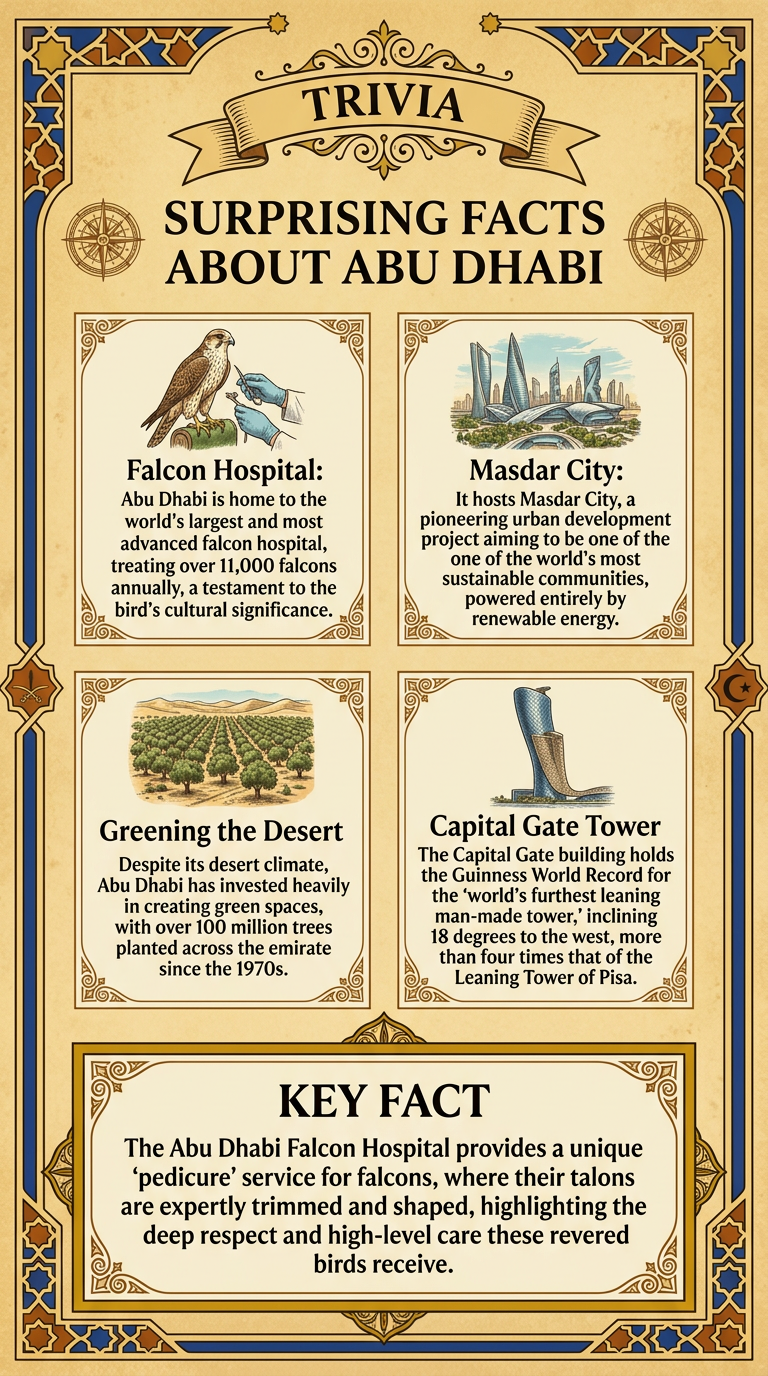
Surprising Facts About Abu Dhabi
Beneath its reputation for opulence, Abu Dhabi harbors a wealth of surprising facts, from its unique wildlife conservation efforts to its pioneering strides in sustainable living.
- **Falcon Hospital:** Abu Dhabi is home to the world's largest and most advanced falcon hospital, treating over 11,000 falcons annually, a testament to the bird's cultural significance.
- **Masdar City:** It hosts Masdar City, a pioneering urban development project aiming to be one of the world's most sustainable communities, powered entirely by renewable energy.
- **Greening the Desert:** Despite its desert climate, Abu Dhabi has invested heavily in creating green spaces, with over 100 million trees planted across the emirate since the 1970s.
- **Capital Gate Tower:** The Capital Gate building holds the Guinness World Record for the 'world's furthest leaning man-made tower,' inclining 18 degrees to the west, more than four times that of the Leaning Tower of Pisa.
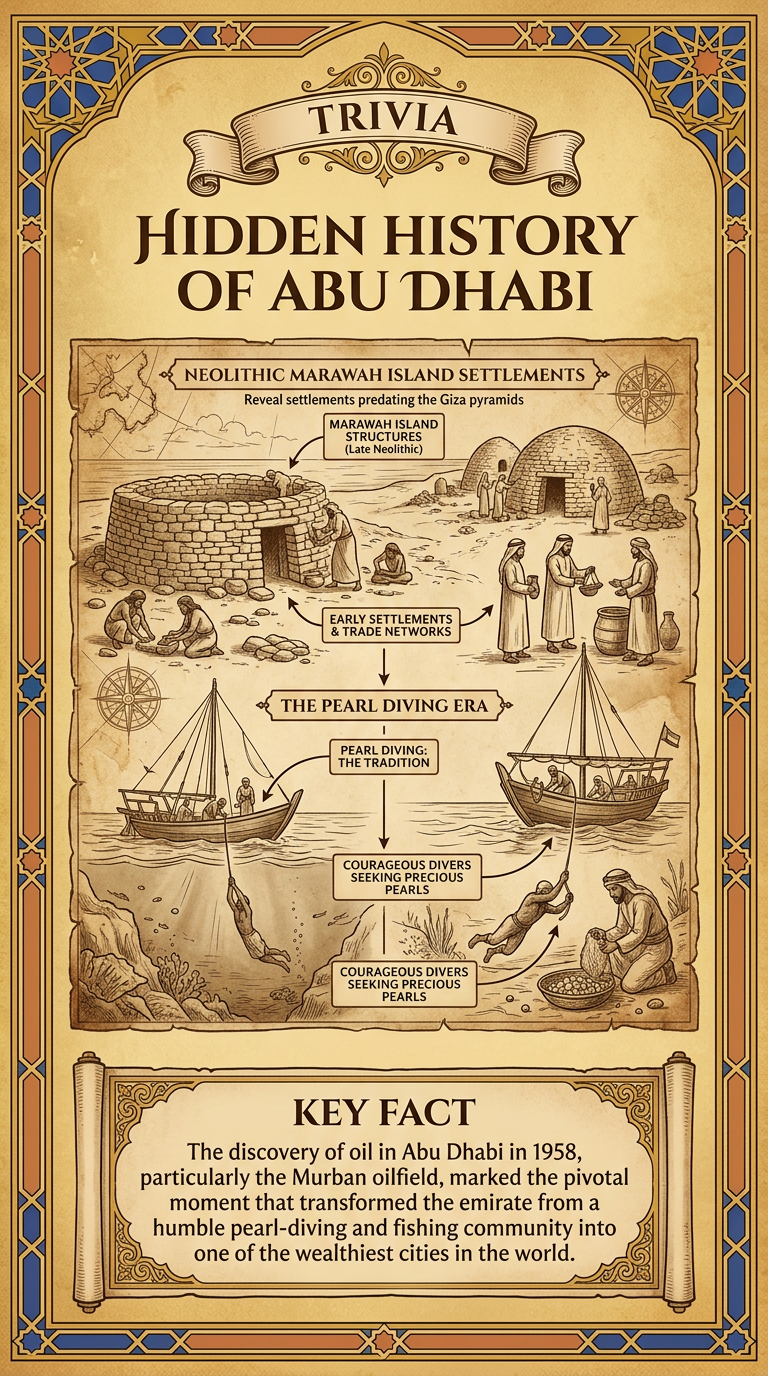
Hidden History of Abu Dhabi
Long before the oil boom, Abu Dhabi's past was rich with stories of ancient civilizations, pearl divers, and nomadic tribes. Delve into the lesser-known historical secrets that shaped this modern metropolis.
- Archaeological evidence points to human habitation on Abu Dhabi's islands dating back over 7,000 years, with significant findings from the Umm al Nar culture.
- Before oil, the pearl diving industry was the backbone of the local economy, with divers risking their lives for precious oysters in the Arabian Gulf.
- Qasr Al Hosn, the oldest stone building in Abu Dhabi, began as a simple watchtower built around 1761 to protect the only freshwater well on Abu Dhabi island.
- The name 'Abu Dhabi' itself is believed to mean 'Father of the Gazelle,' likely referring to a place where gazelles grazed, or a hunting incident involving a gazelle that led nomads to the island.
More Abu Dhabi Secrets
The Art of Falconry
Falconry is deeply ingrained in Emirati culture, far beyond a sport. It's an ancient art form passed down through generations, symbolizing courage, self-reliance, and a connection to the desert environment.
Traditionally, falcons were vital for hunting, providing sustenance in the harsh desert. Today, the practice is revered as a heritage sport, with dedicated breeding programs and highly respected falconers across the UAE.
Date Palm Significance
The date palm, 'Nakhlah' in Arabic, is the national tree of the UAE and holds immense cultural and historical significance. It provided essential sustenance, shade, and building materials for centuries in the arid climate.
Abu Dhabi continues to cultivate vast numbers of date palms, with dedicated festivals celebrating its harvest. The emirate is home to thousands of varieties, each with unique flavors and textures, making dates a staple of local hospitality.
Mangroves of Abu Dhabi
Surprising to many, Abu Dhabi boasts extensive mangrove forests, vital ecosystems that play a crucial role in coastal protection, biodiversity, and carbon sequestration. The Eastern Mangrove National Park is a prime example.
These salt-tolerant trees provide a natural habitat for diverse marine life, birds, and insects, offering a serene escape for kayaking and nature observation amidst the bustling city.
More Abu Dhabi Content Coming Soon
We're crafting a complete guide for Abu Dhabi. Stay tuned!
Explore More Trivia