
Perched atop rugged hills, Aizawl, the capital of Mizoram, is a captivating gem often overlooked on India's travel map. This 'Home of the Highlanders' surprises visitors with its unique blend of vibrant Mizo culture, deep-rooted Christian faith, and remarkably disciplined urban life. Prepare to uncover the fascinating secrets and unexpected marvels of this enchanting northeastern city.
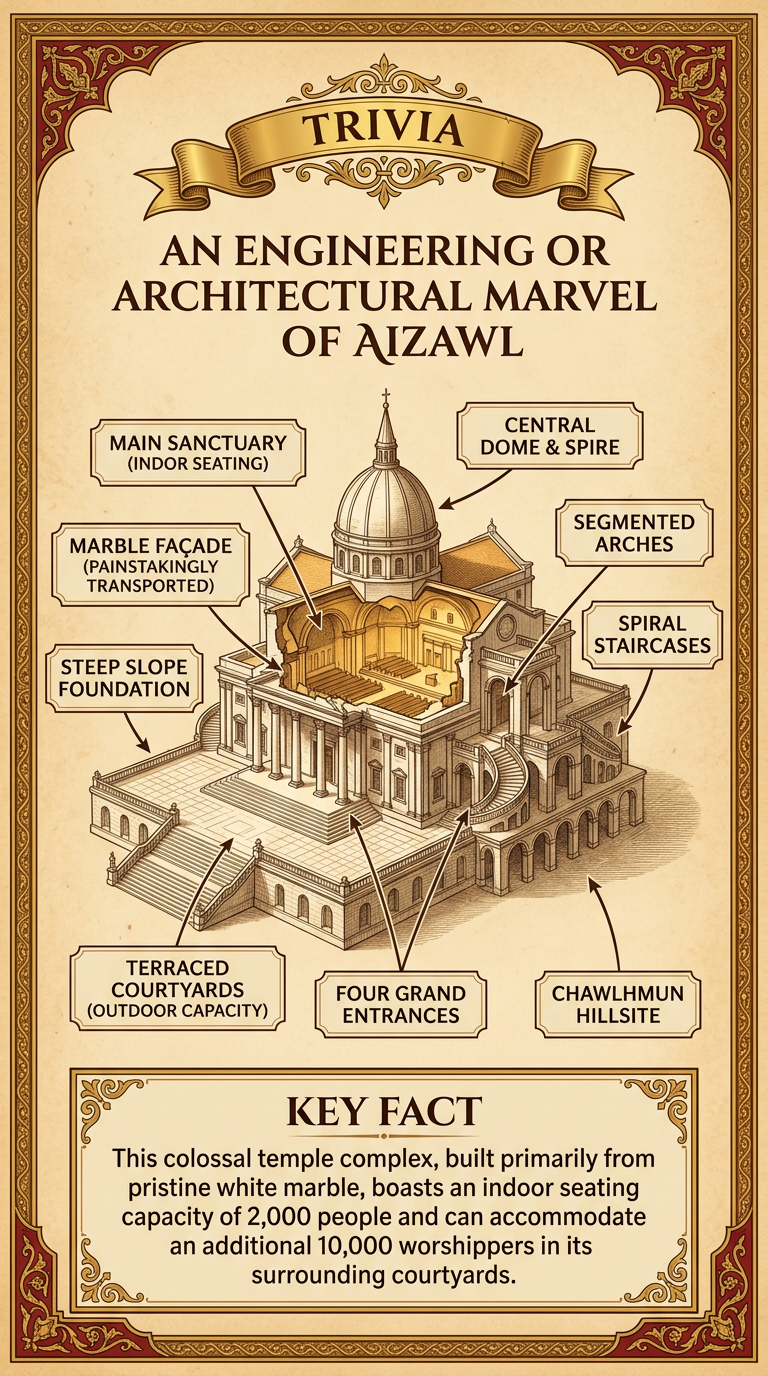
An Engineering or Architectural Marvel of Aizawl
Aizawl's challenging topography makes any significant construction a feat, but one particular structure stands out as an architectural and spiritual landmark, drawing visitors with its gleaming white facade.
- The Solomon's Temple, locally known as Kohhran Thianghlim, is a magnificent white marble structure located in Chawlhmun.
- Its construction began in 1996 and took nearly two decades to complete, finally being inaugurated in December 2014.
- Inspired by the biblical Temple of Solomon, the design incorporates four minarets and a central dome, creating a striking silhouette against the green hills.
- The temple complex is spread over a sprawling 13-acre plot, featuring a large prayer hall, tranquil gardens, and facilities for congregational activities.
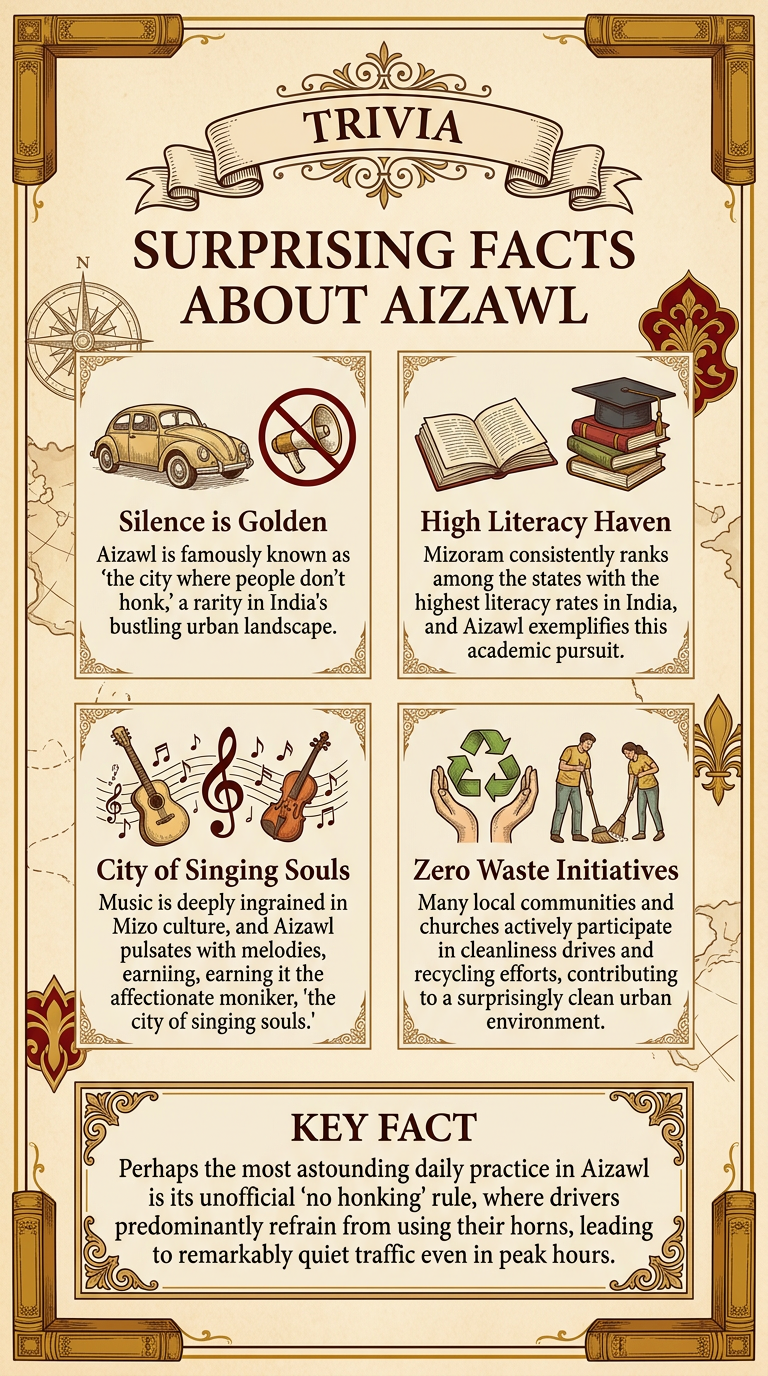
Surprising Facts About Aizawl
Aizawl often defies expectations, presenting a side of urban Indian life that is remarkably unique, particularly in its social norms and civic discipline.
- **Silence is Golden:** Aizawl is famously known as 'the city where people don't honk,' a rarity in India's bustling urban landscape.
- **High Literacy Haven:** Mizoram consistently ranks among the states with the highest literacy rates in India, and Aizawl exemplifies this academic pursuit.
- **City of Singing Souls:** Music is deeply ingrained in Mizo culture, and Aizawl pulsates with melodies, earning it the affectionate moniker, 'the city of singing souls.'
- **Zero Waste Initiatives:** Many local communities and churches actively participate in cleanliness drives and recycling efforts, contributing to a surprisingly clean urban environment.
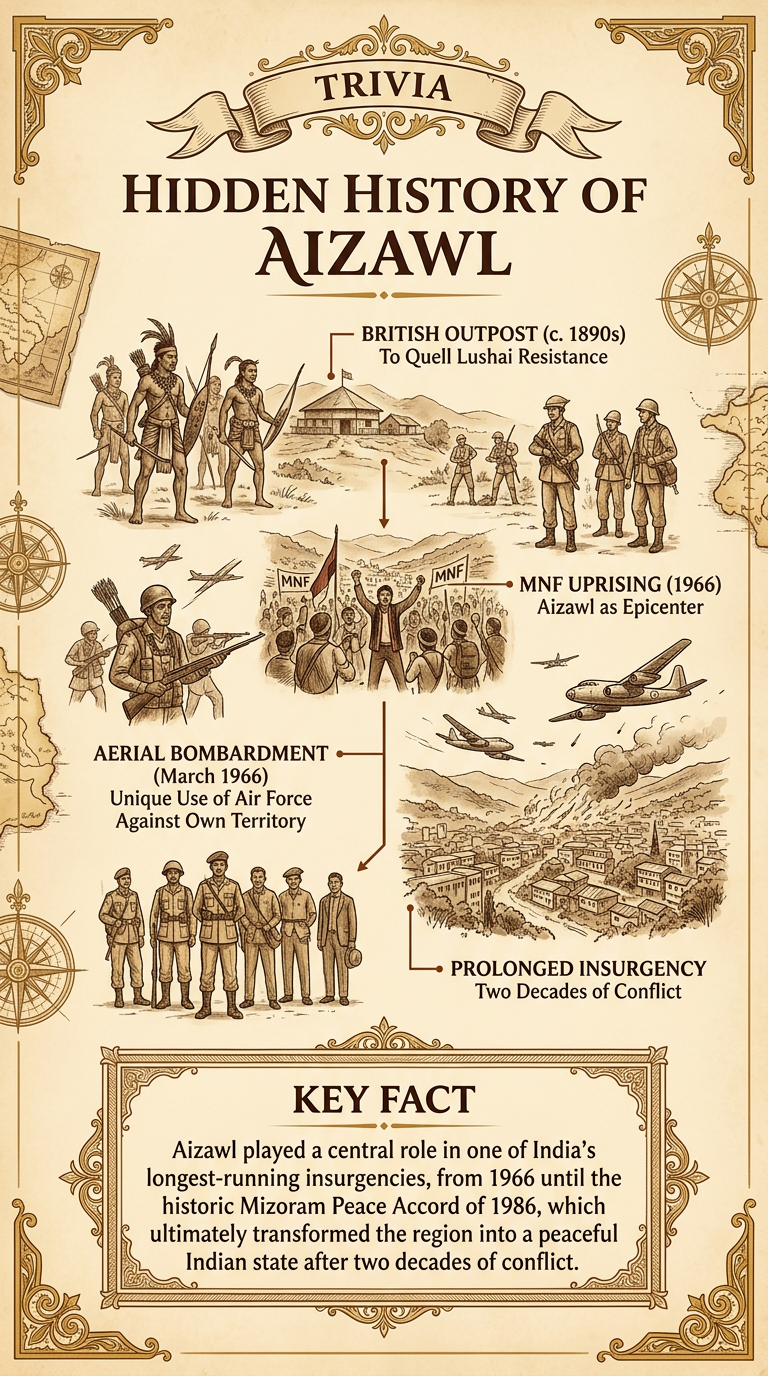
Hidden History of Aizawl
The tranquil hills of Aizawl belie a turbulent past, marked by colonial encounters, tribal uprisings, and a transformative journey towards peace and statehood.
- Aizawl's origins trace back to 1890 when it was established as a British military outpost by Commander Dally, primarily to counter Mizo raids.
- It was initially known as 'Aijal' during the British Raj and served as the administrative headquarters of the Lushai Hills District.
- Aizawl was the epicentre of the Mizo National Front (MNF) uprising in 1966, an armed insurgency demanding greater autonomy and independence.
- During the 1966 uprising, Aizawl experienced the only instance of airstrikes by the Indian Air Force on its own territory, impacting civilian areas.
More Aizawl Secrets
Churches: The Heartbeat of Aizawl
Christianity is not just a religion in Aizawl; it's the very fabric of society. Sundays see the city come alive with churchgoers, dressed in their finest traditional attire, filling the numerous churches that dot the hillsides.
These churches often serve as community centers, organizing social welfare programs, youth activities, and playing a crucial role in maintaining civic order and promoting social harmony.
Bara Bazar: A Taste of Local Life
No visit to Aizawl is complete without exploring Bara Bazar, the city’s bustling main market. It's a sensory delight, offering everything from traditional Mizo garments (like the 'Puan') and handicrafts to exotic local produce, including unique herbs, spices, and dried fish. It’s the perfect place to observe daily Mizo life unfold.
Durtlang Hills: Panoramic Vistas
For breathtaking panoramic views of Aizawl, the Durtlang Hills offer an unparalleled vantage point. From here, you can gaze upon the city spread across the valleys and ridges, with the Tlawng River winding its way through the landscape, providing stunning photographic opportunities, especially at sunrise or sunset.
More Aizawl Content Coming Soon
We're crafting a complete guide for Aizawl. Stay tuned!
Explore More Trivia