
Step into a realm where monumental artistry meets profound spirituality. The Ajanta and Ellora Caves are not merely structures but entire mountains meticulously carved into breathtaking sanctuaries, each echoing centuries of human devotion and ingenuity. Prepare to be astounded by secrets hidden within these ancient rock-cut marvels.
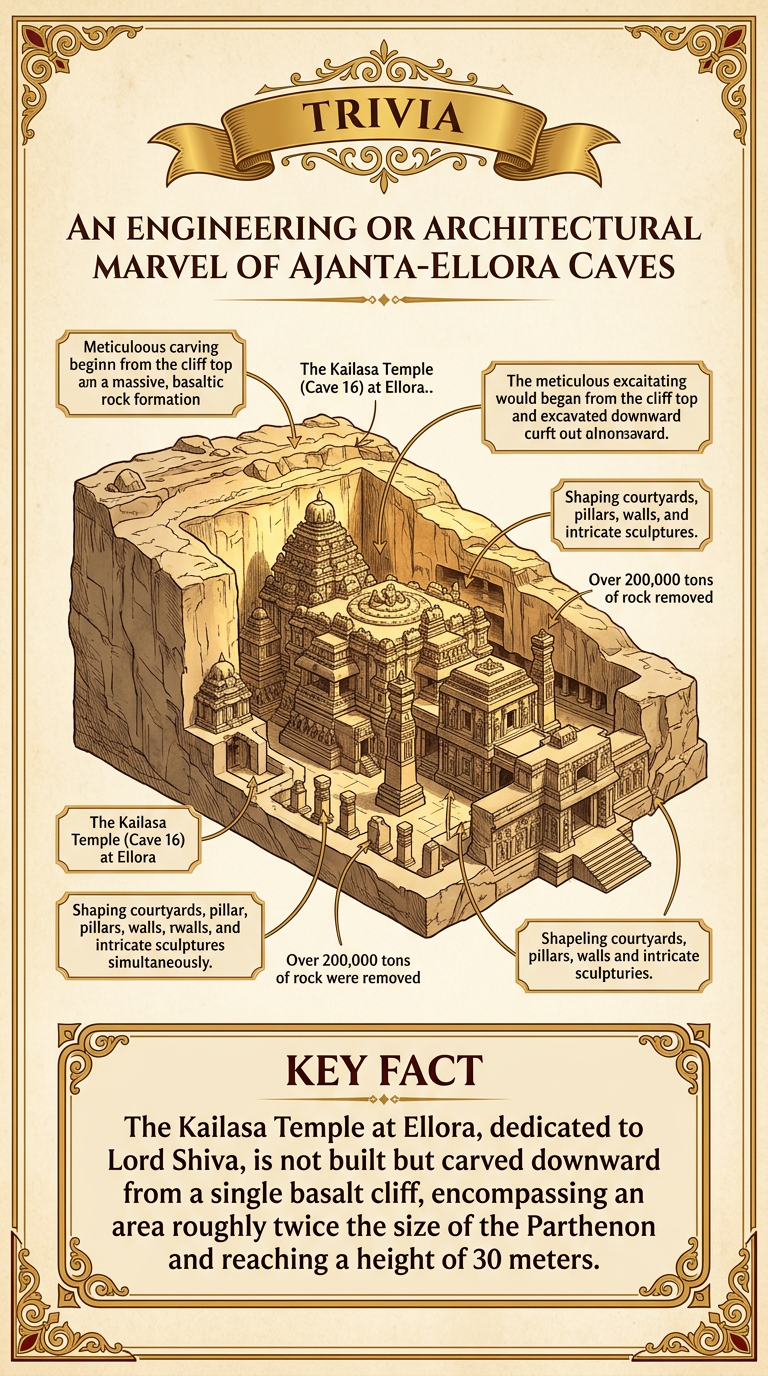
An Engineering or Architectural Marvel of Ajanta-Ellora Caves
Imagine carving entire temples and monasteries out of a solid rock face, not building them up. The sheer scale and precision of the Ajanta-Ellora caves represent an unparalleled feat of ancient engineering.
- The Kailasa Temple (Ellora Cave 16) is the world's largest monolithic structure, carved from a single piece of rock.
- It was excavated top-down, meaning artisans started at the top of the cliff and carved downwards, removing an estimated 200,000 tons of rock.
- Many caves feature complex multi-story structures, intricate facades, and functional rainwater harvesting systems, all sculpted from the living rock.
- The Ajanta caves are renowned for their perfectly aligned Chaityas (prayer halls) and Viharas (monasteries), designed to capture specific natural light conditions throughout the day.
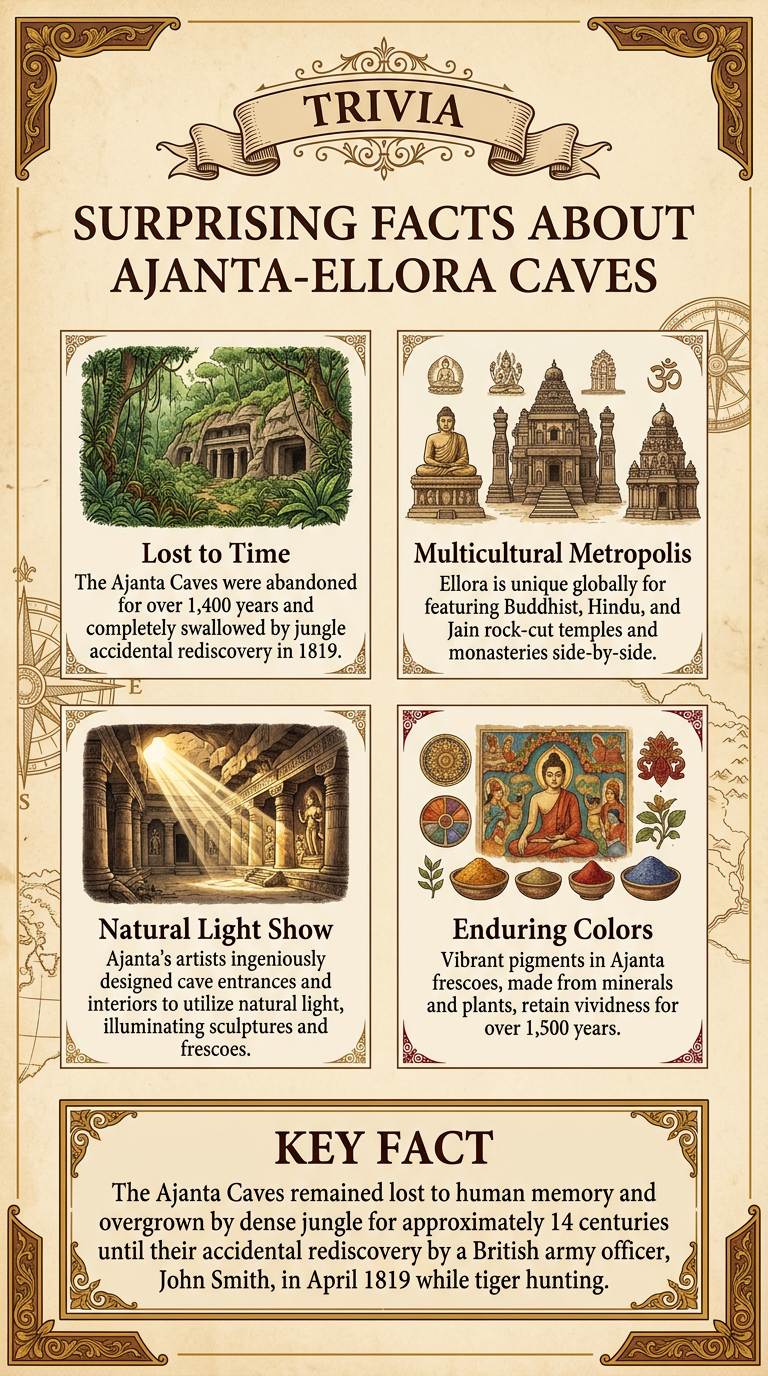
Surprising Facts About Ajanta-Ellora Caves
Beyond their visible grandeur, the Ajanta-Ellora Caves hold secrets and stories that often surprise even seasoned travelers, revealing forgotten histories and remarkable interfaith harmony.
- **Lost to Time:** The Ajanta Caves were abandoned for over 1,400 years and completely swallowed by jungle until their accidental rediscovery in 1819.
- **Multicultural Metropolis:** Ellora is unique globally for featuring Buddhist, Hindu, and Jain rock-cut temples and monasteries side-by-side, reflecting a period of profound religious coexistence.
- **Natural Light Show:** Ajanta's artists ingeniously designed the cave entrances and interiors to utilize natural light, illuminating specific sculptures and frescoes at different times of the day.
- **Enduring Colors:** The vibrant pigments used in Ajanta's frescoes were made from natural minerals and plants, some retaining their vividness for over 1,500 years without modern preservation techniques.
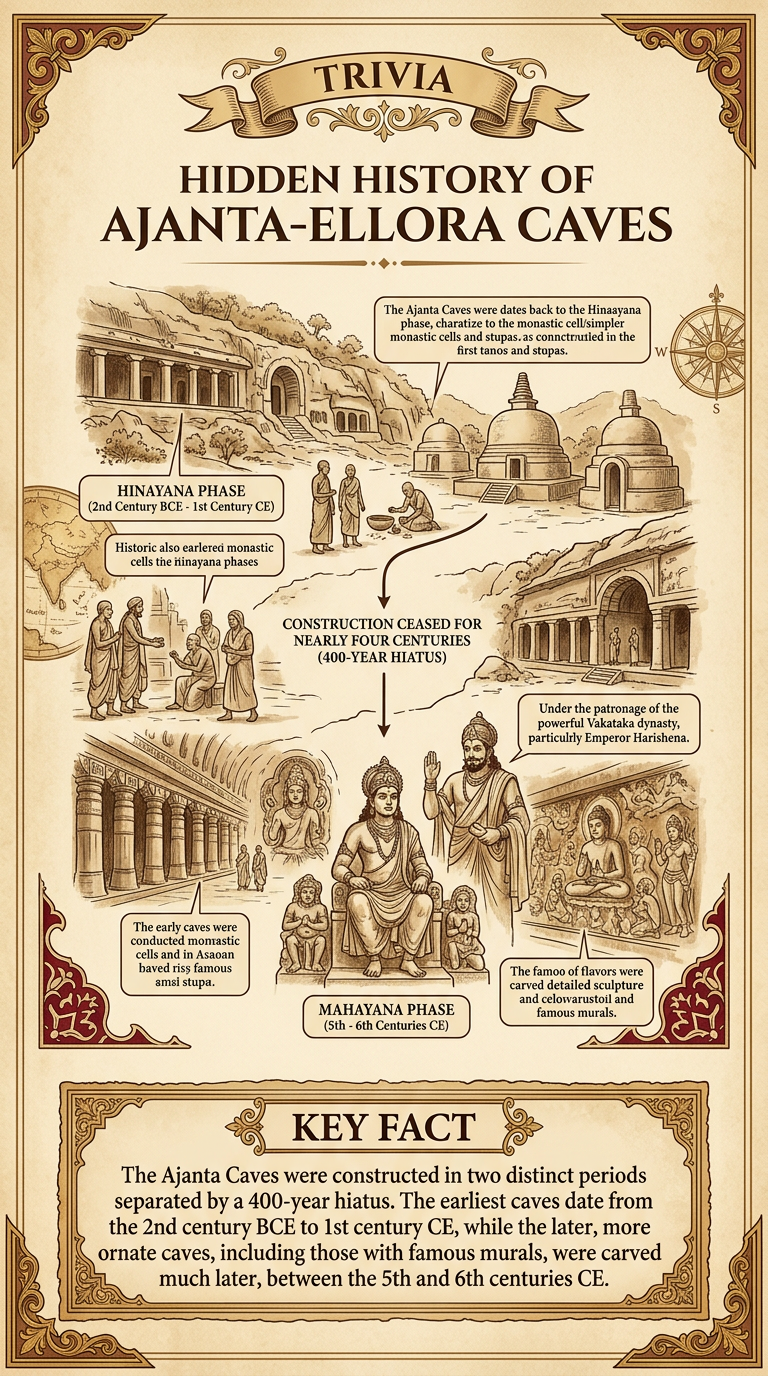
Hidden History of Ajanta-Ellora Caves
Delve deeper into the Ajanta-Ellora Caves to uncover the lesser-known historical narratives, from the powerful dynasties that sponsored their creation to the untold stories etched into their ancient walls.
- The Ajanta Caves were built in two distinct phases, separated by nearly four centuries: an earlier Hinayana phase (2nd century BCE to 1st century CE) and a later Mahayana phase (5th to 6th century CE).
- The patronage for the later Ajanta caves came predominantly from the Vakataka dynasty, especially under Emperor Harishena, and various influential merchants and nobles.
- The Ellora Caves showcase a chronological evolution of religious art, starting with Buddhist caves, transitioning to Hindu, and concluding with Jain, reflecting shifts in ruling dynasties and dominant faiths.
- The intricate frescoes of Ajanta provide a rich historical document of ancient Indian life, depicting royal court scenes, everyday activities, foreign visitors, and elaborate costumes from the 5th and 6th centuries.
More Ajanta-Ellora Caves Secrets
The Master Artisans: Visionaries in Stone
The creation of Ajanta-Ellora caves required not just immense labor, but highly specialized skills passed down through generations. Thousands of nameless artisans, including master sculptors, engineers, painters, and laborers, worked for centuries with only simple hand tools like chisels, hammers, and pickaxes to achieve these monumental works.
Their understanding of geology allowed them to choose the right rock formations, while their spatial awareness enabled them to envision multi-level structures and intricate carvings within a solid cliff face, truly making them ancient architectural geniuses.
Ajanta's Living Murals: A Canvas of Time
The frescoes of Ajanta are not just paintings; they are a vibrant narrative spanning over 1,500 years. Artists utilized a 'fresco-secco' technique, applying pigments to dry plaster, which allowed for greater detail and longer working times. The colors were derived from natural sources: red and yellow ochre, lamp black, kaolin for white, and even lapis lazuli for blues, often imported from Afghanistan. These organic pigments, bound with glues from animal hide or vegetable gum, have surprisingly endured centuries of neglect, offering a unique window into ancient Indian art, culture, and Buddhist philosophy, particularly Jataka tales.
Religious Synthesis: Ellora's Enduring Legacy
Ellora stands as a powerful symbol of religious harmony, unparalleled in ancient Indian art. Within a relatively compact area, Buddhist, Hindu, and Jain rock-cut cave complexes coexist, representing a period of exceptional tolerance and shared patronage between the 6th and 10th centuries CE. This unique blend suggests that despite doctrinal differences, artisans from various faiths likely collaborated or shared techniques, enriching each tradition. The sequential development of these cave groups also offers a fascinating chronological record of religious art and evolving spiritual beliefs in ancient India.
More Ajanta-Ellora Caves Content Coming Soon
We're crafting a complete guide for Ajanta-Ellora Caves. Stay tuned!
Explore More Trivia