
Alappuzha, affectionately known as Alleppey, is a destination that constantly surprises even the most seasoned travelers. Often dubbed the 'Venice of the East', its intricate network of canals, lagoons, and lakes offers a world unlike any other, where life unfolds on tranquil waters. Beyond the postcard-perfect backwaters, Alleppey holds a treasure trove of hidden histories, remarkable engineering feats, and cultural surprises waiting to be discovered.
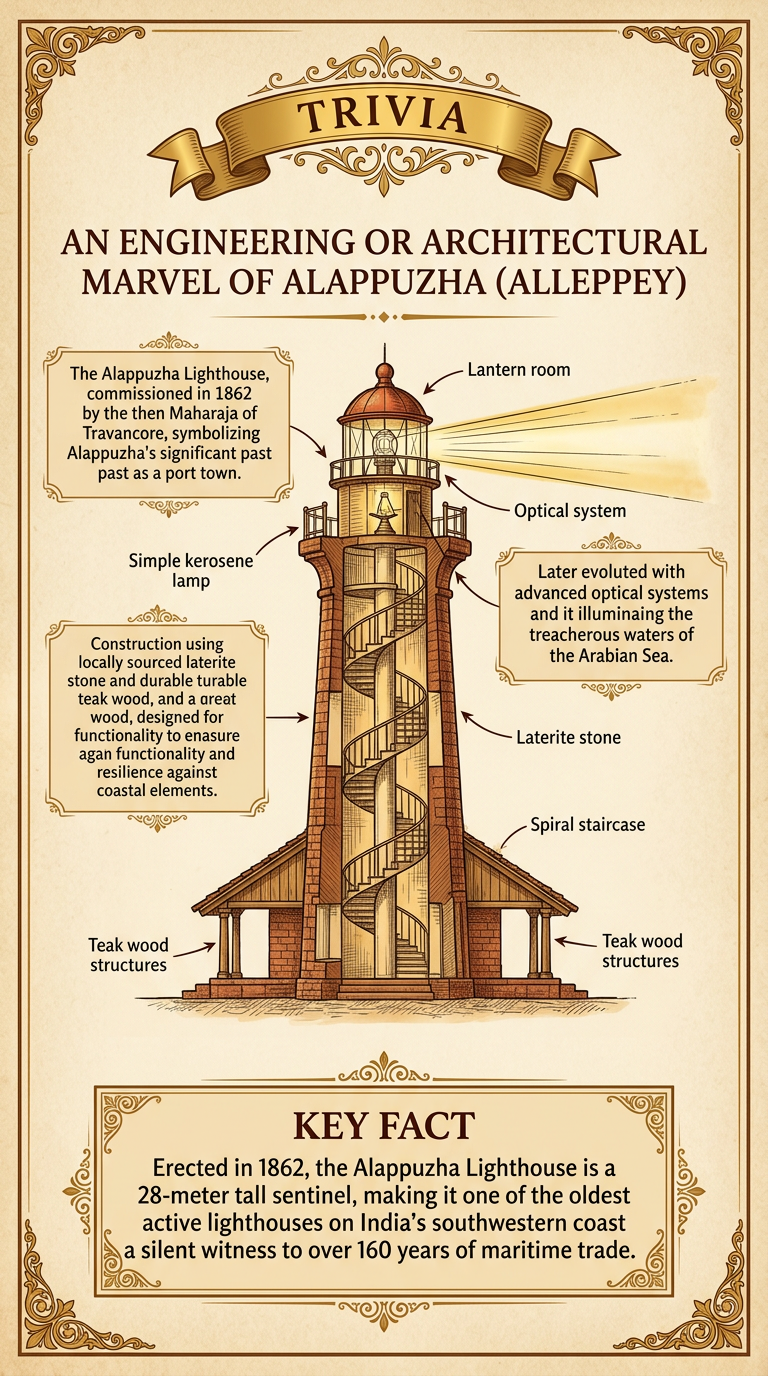
An Engineering or Architectural Marvel of Alappuzha (Alleppey)
While the entire backwater ecosystem is a natural marvel, Alappuzha boasts specific structures that stand as testaments to human ingenuity and its pivotal role in maritime history. One such iconic structure that silently guided countless ships is the Alappuzha Lighthouse.
- The Alappuzha Lighthouse, constructed in 1862, stands as one of the oldest lighthouses on the entire Laccadive Sea (Arabian Sea) coast.
- It rises to an impressive height of 28 meters (approximately 92 feet) and was originally powered by a kerosene lamp, later upgraded to incandescent and then electric lights.
- Built using traditional materials like laterite and teak wood, its design reflects colonial-era engineering robustness meant to withstand the coastal climate.
- Its beacon historically played a crucial role in guiding ships to the once bustling Alappuzha port, which was a vital trading hub for spices and coir.

Surprising Facts About Alappuzha (Alleppey)
Beyond its idyllic canals, Alappuzha holds a wealth of fascinating and often surprising realities that reveal the true depth of its cultural and economic landscape. Prepare to have your perceptions challenged by these unique aspects.
- **Below Sea Level Farming:** Alappuzha is home to Kuttanad, one of the few places in the world where farming is carried out below sea level, utilizing a unique polder system similar to the Netherlands.
- **World's Coir Capital:** The district is globally recognized as the largest producer and exporter of coir products, with a vast industry employing thousands and shaping its local economy.
- **Ancient Buddhist Presence:** Evidence of a strong Buddhist heritage exists, notably through the 9th-11th century Karumadikuttan statue near Karumadi, indicating a vibrant Buddhist community long ago.
- **The Legendary Nehru Trophy:** Alappuzha hosts the most famous snake boat race, the Nehru Trophy Boat Race, an annual spectacle on Punnamada Lake, attracting hundreds of thousands since 1952.
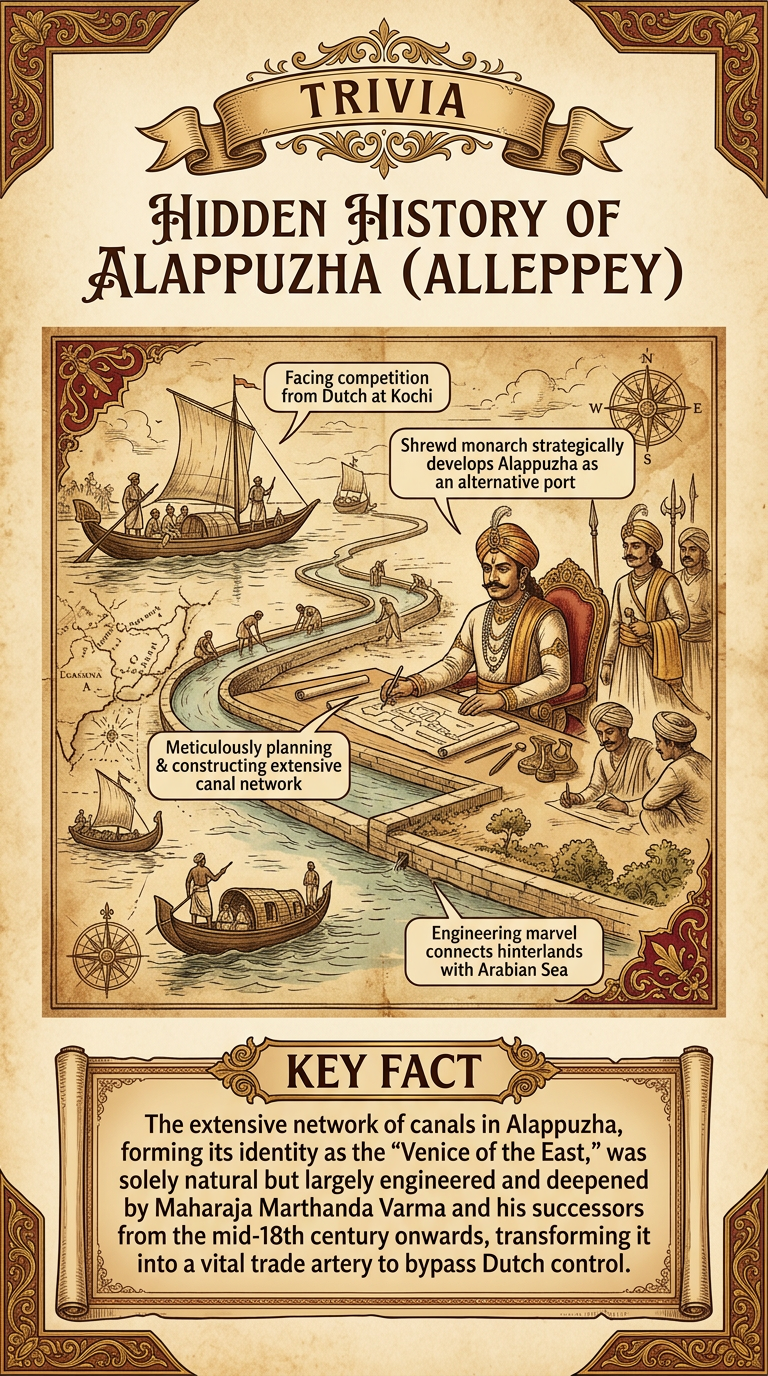
Hidden History of Alappuzha (Alleppey)
Peel back the serene layers of Alappuzha's backwaters, and you'll uncover a rich tapestry of hidden histories, from royal ambitions to colonial rivalries and local uprisings that shaped modern Kerala.
- Alappuzha's strategic importance as a major port was conceived and developed by Maharaja Marthanda Varma of Travancore in the mid-18th century to circumvent Dutch trade monopolies.
- The intricate canal system, often mistaken as purely natural, was meticulously planned and excavated by successive rulers to facilitate trade and transportation across the region.
- Alappuzha was a significant site for the Punnapra-Vayalar uprising in 1946, a pivotal communist-led revolt against the dewan of Travancore, which became a key moment in Kerala's political history.
- Before the advent of colonial powers, Alappuzha (and the larger Malabar Coast) was an ancient hub for the spice trade, attracting merchants from Rome, Arabia, and China millennia ago.
More Alappuzha (Alleppey) Secrets
The Art of Kettuvallams
The iconic houseboats of Alappuzha, known as Kettuvallams, literally mean 'boat with knots' because they were traditionally constructed entirely without nails. Made from local timber like Anjili wood, planks are stitched together with coir ropes and coated with a black resin made from boiled cashew nut shells, ensuring water tightness.
These magnificent vessels, some stretching over 80 feet, have evolved from their original purpose of transporting rice and spices to becoming luxurious floating accommodations, offering a unique way to experience the backwaters.
Ayurveda's Backwater Embrace
Alappuzha is not just about scenic beauty; it's also a significant hub for Ayurvedic wellness. The serene environment of the backwaters, coupled with numerous traditional Ayurvedic centers, provides an ideal setting for rejuvenation and therapeutic treatments. Many resorts offer authentic Ayurvedic massages, panchakarma therapies, and yoga sessions, allowing visitors to reconnect with ancient Indian healing practices amidst nature's tranquility.
A Network of Waterways
The intricate canal system of Alappuzha is its very lifeline. Spanning hundreds of kilometers, these canals and backwaters serve as primary arteries for transportation, trade, and daily life. They connect villages, facilitate the movement of goods, and are essential for the region's unique below-sea-level farming. This vast aquatic network is not merely a tourist attraction but the beating heart of the community, where houseboats, canoes, and ferries are integral to everyday existence.
More Alappuzha (Alleppey) Content Coming Soon
We're crafting a complete guide for Alappuzha (Alleppey). Stay tuned!
Explore More Trivia