
Bali is unlike anywhere else in Indonesia - a Hindu island in the world's largest Muslim country. The Balinese live in a continuous cycle of ceremonies and offerings, maintaining spiritual harmony in ways that seem impossible in the modern world.
Nyepi: The Day the Island Stops
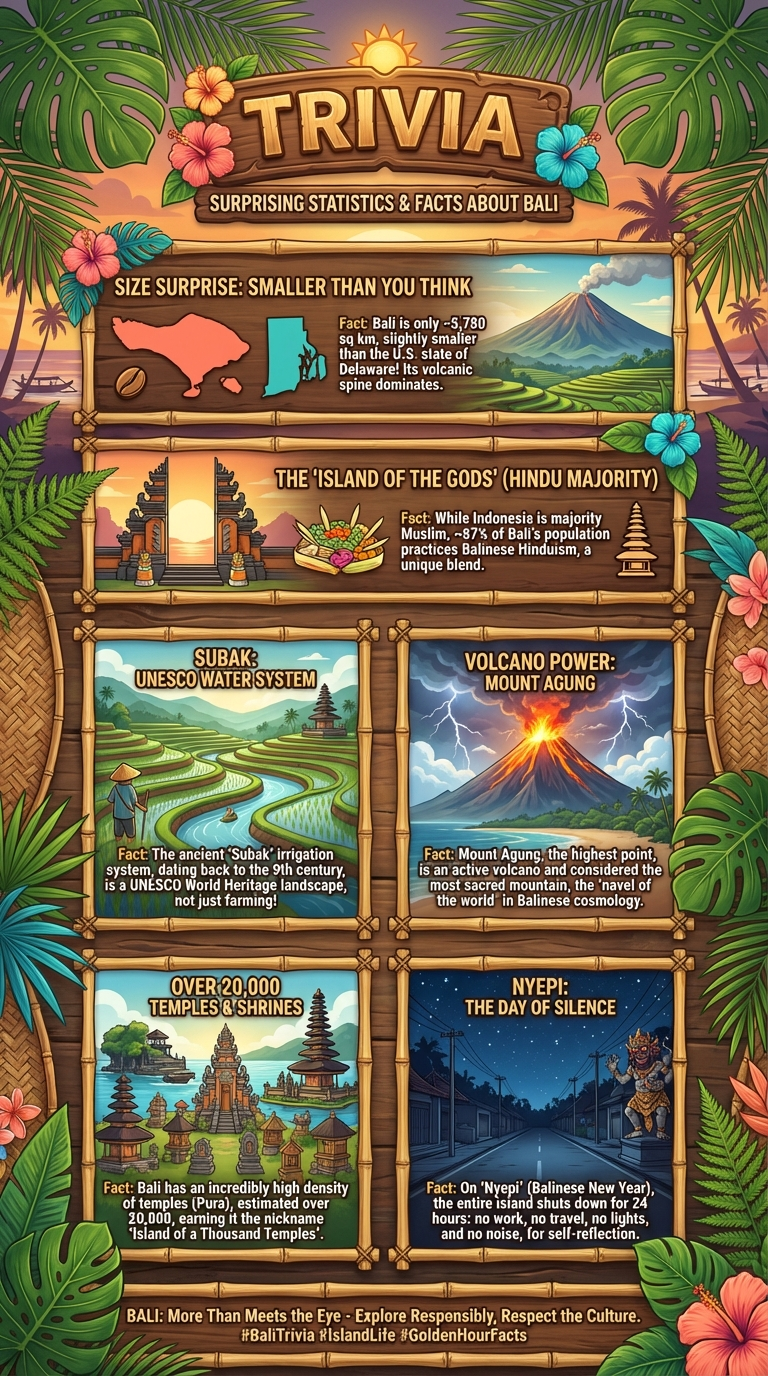
Nyepi is Bali's "Day of Silence" - and they mean it literally. For 24 hours, the entire island shuts down:
- No working, no traveling, no leaving your house
- No lights, no entertainment, no noise
- The airport closes completely for 24 hours
- Traditional guards (pecalang) patrol streets
- Tourists must stay in hotels (with curtains drawn)
3 Million Daily Offerings
Balinese Hinduism requires constant offerings to maintain balance between good and evil spirits:
- Every home, shop, and vehicle gets offerings daily
- Women spend hours each morning making canang sari
- Offerings include flowers, rice, incense, and sometimes money
- Ground offerings are for demons, high ones for gods
- Stepping on offerings is accepted - the spirits take the essence
Hinduism Unlike India
Balinese Hinduism is distinct from Indian Hinduism - it blends Hindu gods with local animist beliefs and ancestor worship:
- Belief in Sang Hyang Widhi Wasa - one supreme god with many manifestations
- Every village has 3 temples (for Brahma, Vishnu, Shiva)
- The dead are cremated, often in elaborate ceremonies
- Teeth are filed at puberty to reduce animal nature
- Children don't touch the ground for 3-6 months after birth
More Bali Secrets
The Naming System
Most Balinese have one of only four first names based on birth order: Wayan/Putu (1st), Made/Kadek (2nd), Nyoman/Komang (3rd), Ketut (4th). If there's a fifth child, the cycle restarts. This means about 90% of Balinese share one of these four names! Nicknames become essential.
Fun fact: Your "name" often just indicates whether you're the 1st, 2nd, 3rd, or 4th child!
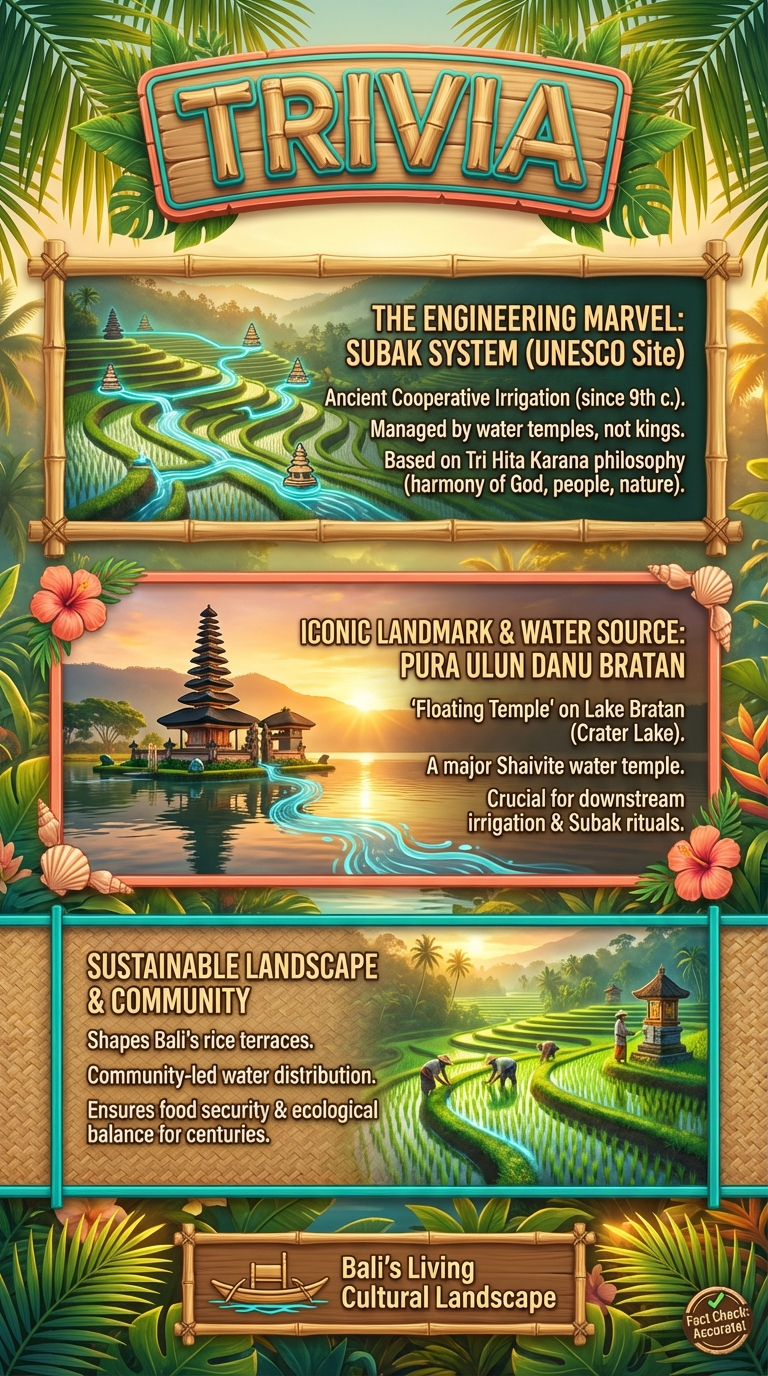
The Subak System (UNESCO Heritage)
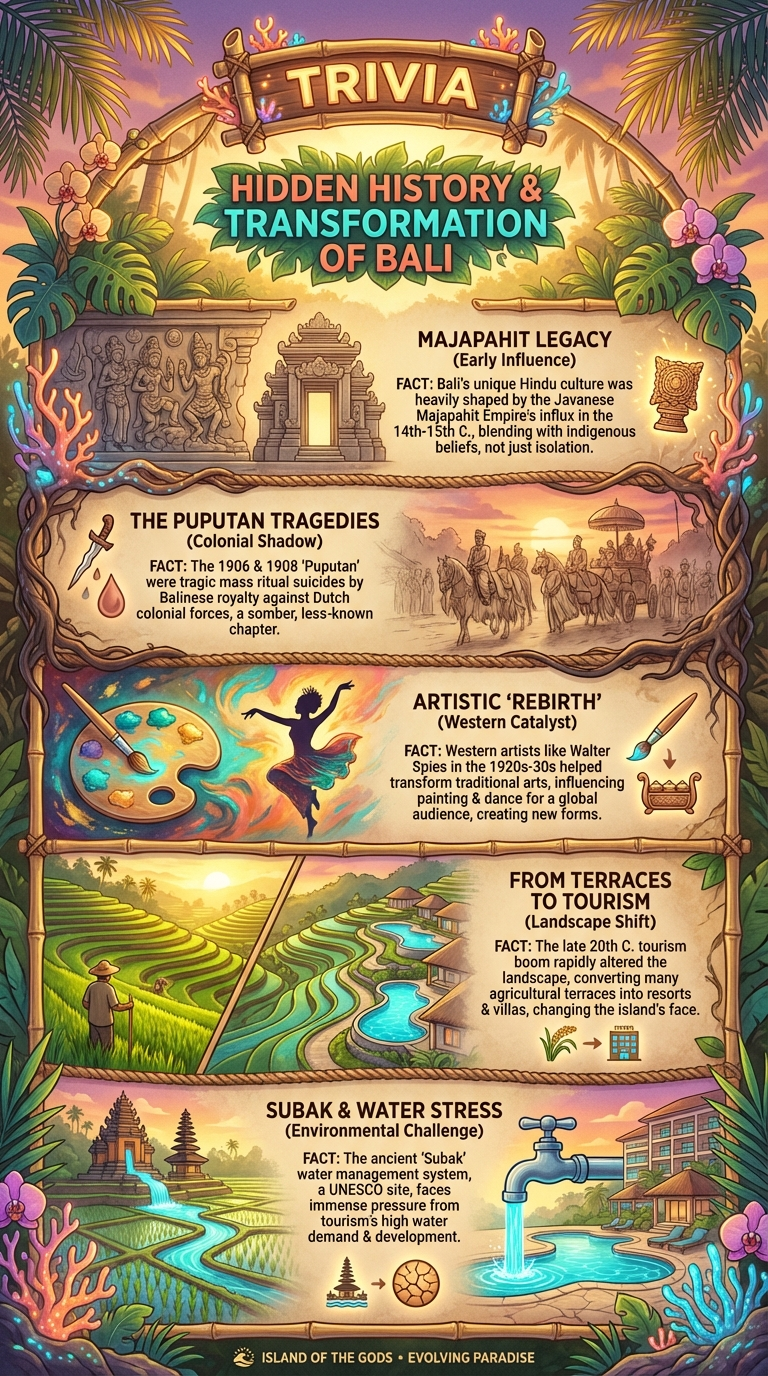
Bali's rice terraces are managed by "subak" - an ancient water management system dating back 1,000 years. Farmers coordinate irrigation through temple networks. UNESCO recognized this as "cultural landscape" heritage because the system is inseparable from Balinese religion and society.
Eat Pray Love Effect
The 2006 book and 2010 film "Eat Pray Love" transformed Ubud from quiet artist village to spiritual tourism hotspot. The medicine man featured in the film, Ketut Liyer, became so famous he had to hire staff to handle tourists. He passed away in 2016, but his descendants continue the practice.
Want More Bali Stories?
Get our complete 80+ page ebook with all the trivia, attractions, and insider tips.
Ebook Coming Soon