
Berlin, a city often defined by its tumultuous past, continuously surprises visitors with its vibrant present and forward-looking spirit. Beyond the iconic landmarks, lies a tapestry of engineering marvels, quirky customs, and hidden histories waiting to be uncovered. Prepare to be astonished by the unexpected facets of this dynamic German capital.
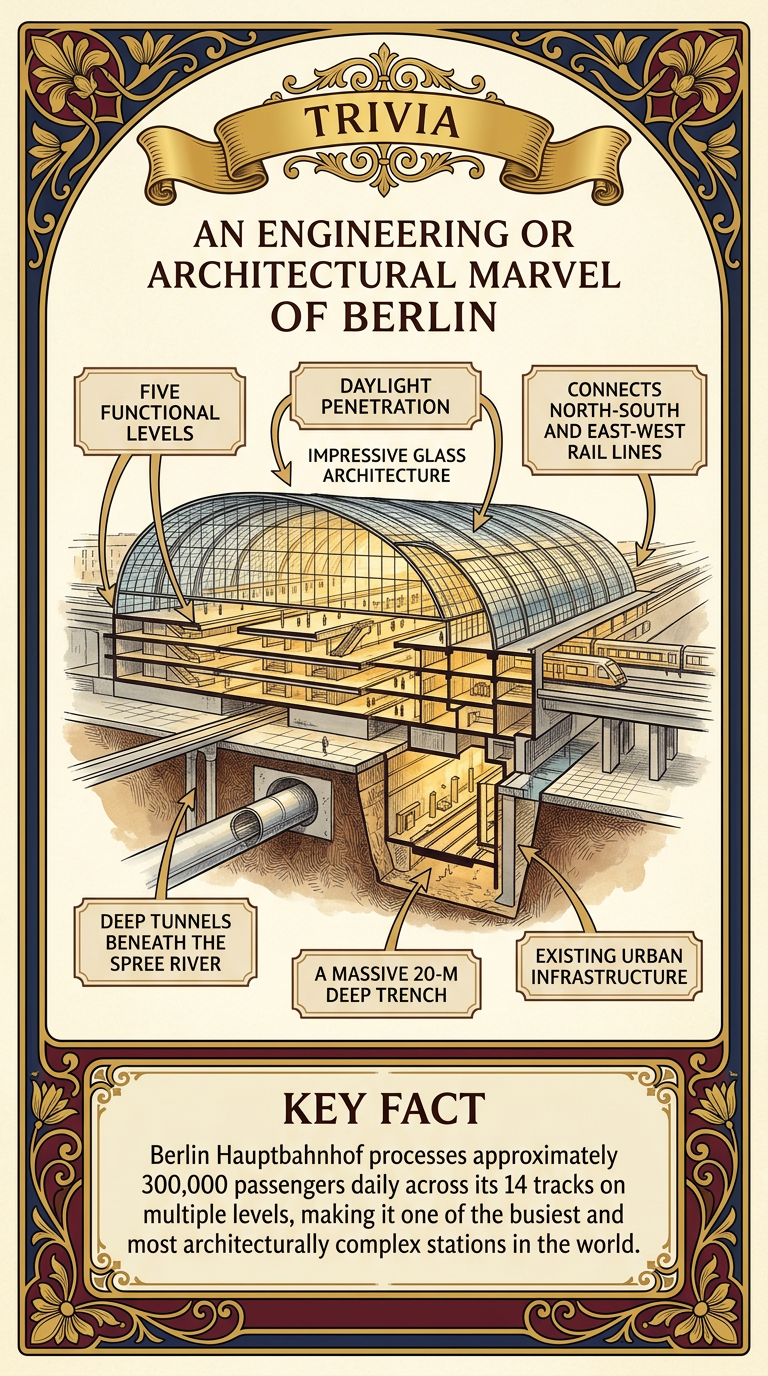
An Engineering or Architectural Marvel of Berlin
Berlin's modern face is punctuated by structures that blend innovative engineering with stunning aesthetics. From futuristic transport hubs to iconic cultural buildings, the city is a testament to architectural ambition and precision.
- Berlin Hauptbahnhof, opened in 2006, is Europe's largest multi-level railway station, spanning five levels and featuring a stunning glass-and-steel design.
- The station's main hall is covered by a massive 321-meter-long curved glass roof, allowing natural light to flood all levels, an engineering feat in itself.
- Below ground, two separate sets of tracks (for north-south and east-west lines) run in parallel tunnels, creating a complex underground labyrinth for train operations.
- The Reichstag Dome, designed by Sir Norman Foster, is a public accessible glass dome offering panoramic views and symbolizing transparency in government, powered by renewable energy.
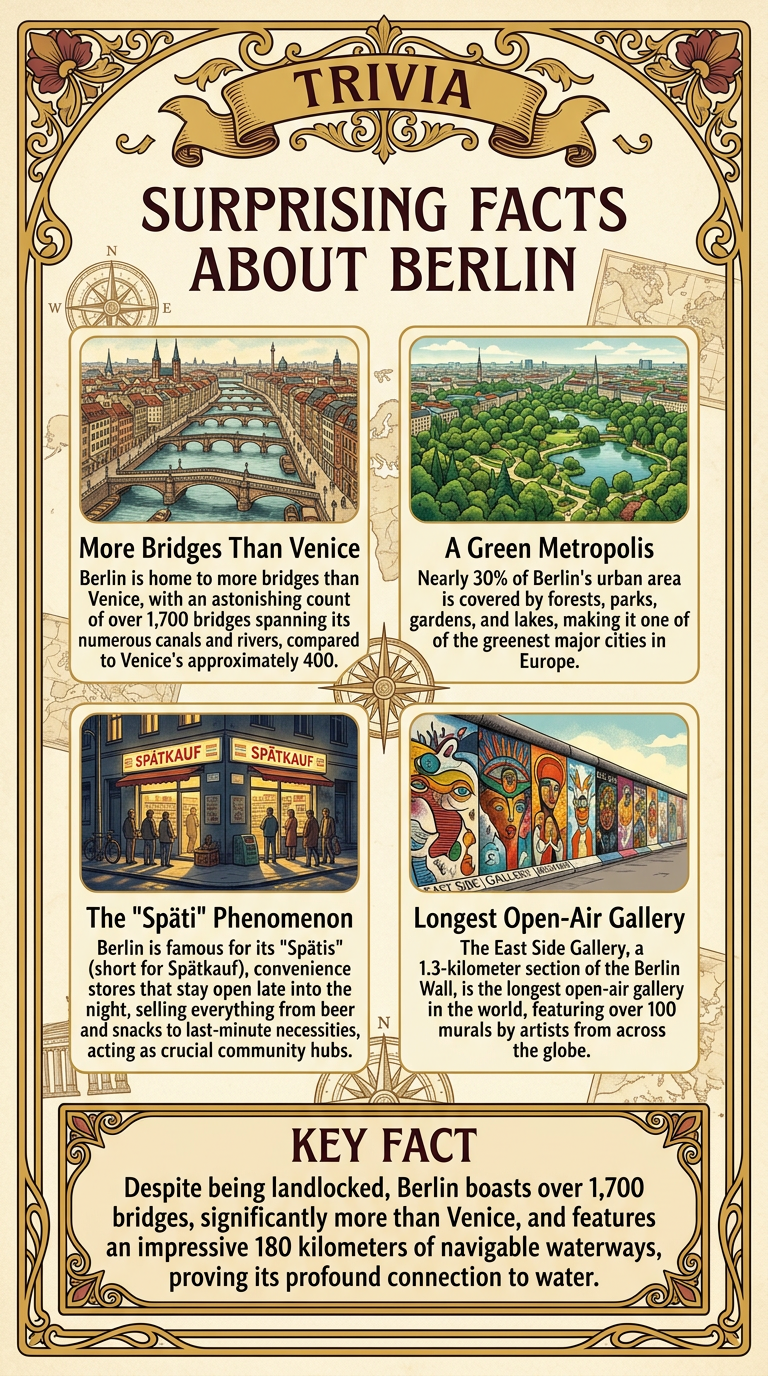
Surprising Facts About Berlin
Berlin defies many expectations, revealing itself as a city full of green spaces, vibrant subcultures, and an unexpected connection to water. Prepare to have your preconceived notions challenged by these fascinating tidbits.
- **More Bridges Than Venice:** Berlin is home to more bridges than Venice, with an astonishing count of over 1,700 bridges spanning its numerous canals and rivers, compared to Venice's approximately 400.
- **A Green Metropolis:** Nearly 30% of Berlin's urban area is covered by forests, parks, gardens, and lakes, making it one of the greenest major cities in Europe.
- **The 'Späti' Phenomenon:** Berlin is famous for its 'Spätis' (short for Spätkauf), convenience stores that stay open late into the night, selling everything from beer and snacks to last-minute necessities, acting as crucial community hubs.
- **Longest Open-Air Gallery:** The East Side Gallery, a 1.3-kilometer section of the Berlin Wall, is the longest open-air gallery in the world, featuring over 100 murals by artists from across the globe.
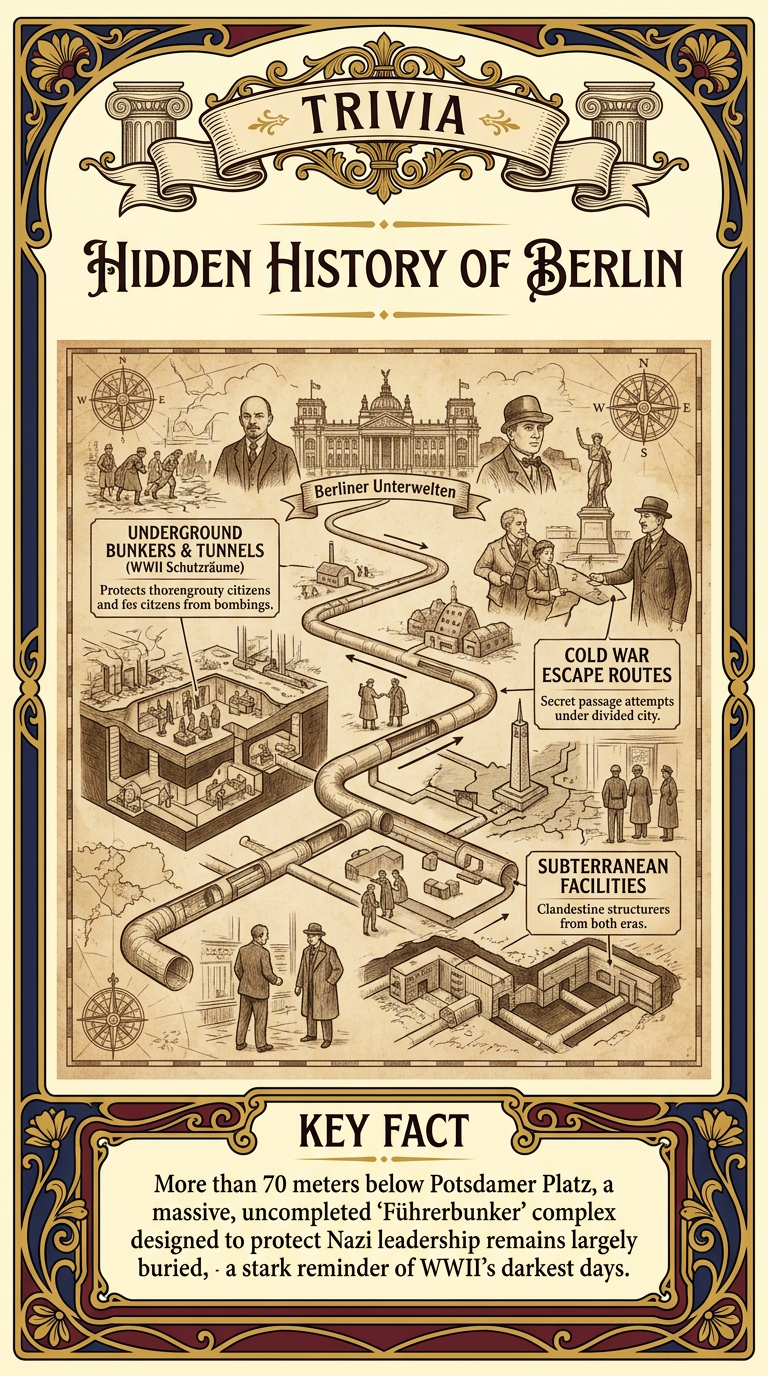
Hidden History of Berlin
Beneath the surface of modern Berlin lie countless stories and forgotten traces of its complex past. The city's history is not always loudly proclaimed but often whispered through subtle clues, underground networks, and preserved remnants.
- The 'Berliner Unterwelten' (Berlin Underworlds) association offers tours of hidden bunkers, tunnels, and air-raid shelters that lie beneath the city, revealing layers of WWII and Cold War history.
- During the Cold War, several U-Bahn and S-Bahn stations in East Berlin became 'ghost stations' (Geisterbahnhöfe) where Western trains passed through without stopping, visible only as dim, guarded platforms.
- The former headquarters of the Stasi (East German secret police) in Lichtenberg is now a museum, offering a chilling insight into surveillance and repression under the GDR regime.
- Traces of Berlin's vibrant pre-WWII Jewish life can be found in the Hackesche Höfe courtyards and the New Synagogue, which survived Kristallnacht and Allied bombing.
More Berlin Secrets
Berlin's Ubiquitous Currywurst Culture
Currywurst, a seemingly simple dish of sliced pork sausage slathered in a unique ketchup-based sauce and dusted with curry powder, is an undisputed culinary icon of Berlin. Invented by Herta Heuwer in 1949, this fast-food staple quickly became a symbol of post-war resilience and ingenuity.
Berliners consume an estimated 70 million Currywurst annually, with dedicated museums and countless Imbiss stands celebrating its enduring popularity. It's more than just a snack; it's a piece of local identity.
The Ampelmännchen: A Quirky Icon
One of Berlin's most charming and distinctive figures is the Ampelmännchen, the unique traffic light symbol from the former East Germany. Created in 1961 by traffic psychologist Karl Peglau, the little 'traffic light man' was designed to be easily recognizable for all pedestrians, including children and the elderly, with his distinctive hat and open-striding posture. After German reunification, many Ampelmännchen were replaced with generic Western European designs, but public outcry led to their reinstatement. Today, he's a beloved symbol of Berlin, adorning souvenirs and street corners, a testament to the city's embrace of its own unique past.
Green Lungs: Tiergarten Park
Tiergarten, Berlin's second-largest urban park at 210 hectares (520 acres), serves as the city's verdant 'green lung' right in its bustling center. Originally a royal hunting ground in the 16th century, it was later transformed into a public pleasure garden in the 18th century. Today, it offers a serene escape with vast lawns, winding paths, shaded groves, and various monuments, including the iconic Victory Column. The park also hosts the Berlin Zoo and is a popular spot for jogging, picnics, and leisurely strolls, truly embodying Berlin's commitment to integrating nature within its urban fabric.
More Berlin Content Coming Soon
We're crafting a complete guide for Berlin. Stay tuned!
Explore More Trivia