
Bodh Gaya, the spiritual heartland where Prince Siddhartha attained enlightenment to become the Buddha, is far more than just a pilgrimage site. Beneath its tranquil surface lies a trove of surprising architectural ingenuity, forgotten histories, and fascinating facts that even seasoned travelers rarely discover. Prepare to delve into the hidden depths of this extraordinary destination.
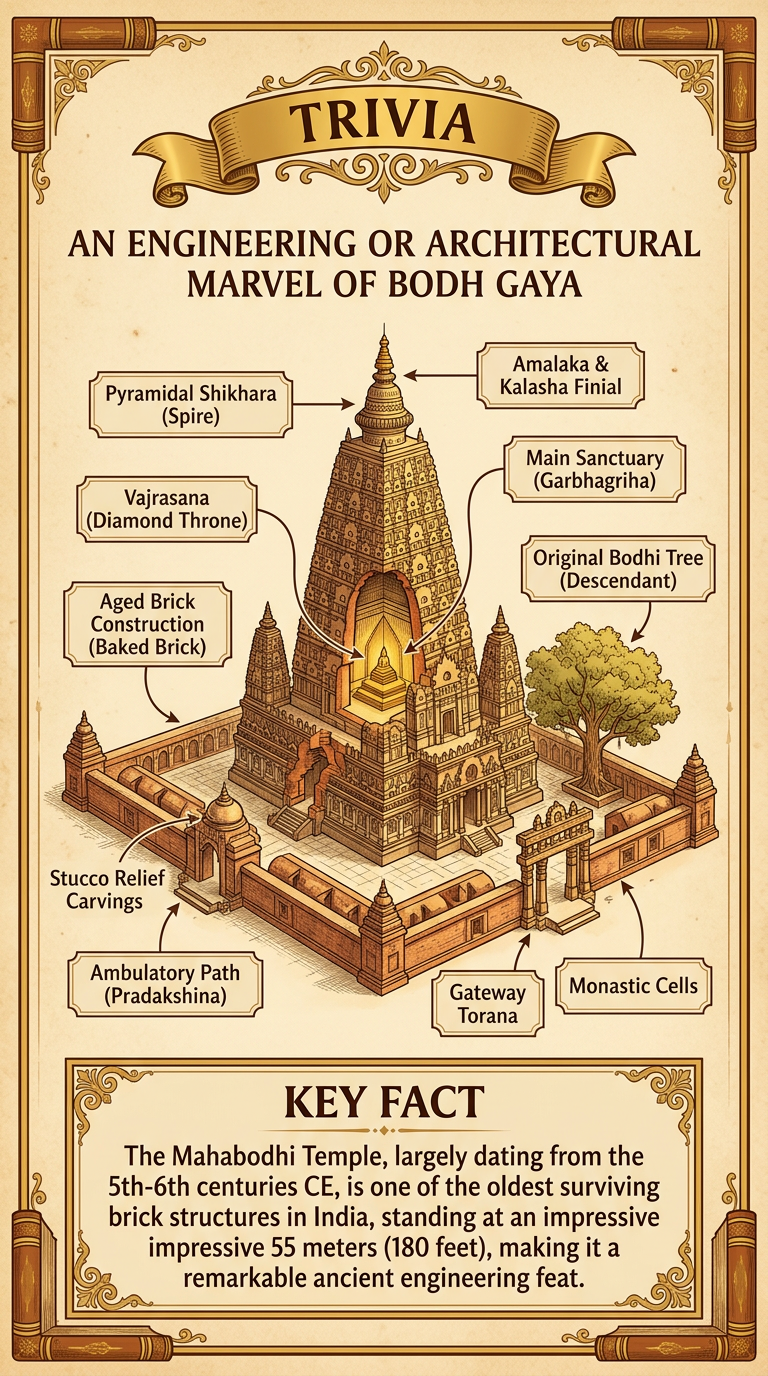
An Engineering or Architectural Marvel of Bodh Gaya
The Mahabodhi Temple Complex stands as a testament to ancient Indian architectural prowess, blending intricate design with enduring structural integrity.
- The Mahabodhi Temple's towering pyramidal spire, approximately 55 meters (180 feet) high, is an exceptionally rare example of an ancient brick structure of such monumental scale in India, predating many of the region's stone temples.
- Its unique architectural style, distinct from both typical Dravidian and Nagara styles, is often referred to as 'Gupta architecture' but incorporates elements that influenced subsequent temple designs across Asia, particularly in Myanmar and Thailand.
- The central structure features four smaller spires at its corners, symbolizing the five Dhyani Buddhas, and is built upon a sturdy plinth, with extensive use of baked bricks meticulously laid with a specific binding mortar.
- Beneath the main altar, the revered Vajrasana (Diamond Throne) marks the precise spot of Buddha's enlightenment, a polished sandstone slab that has been in place since at least Emperor Ashoka's visit in the 3rd century BCE.
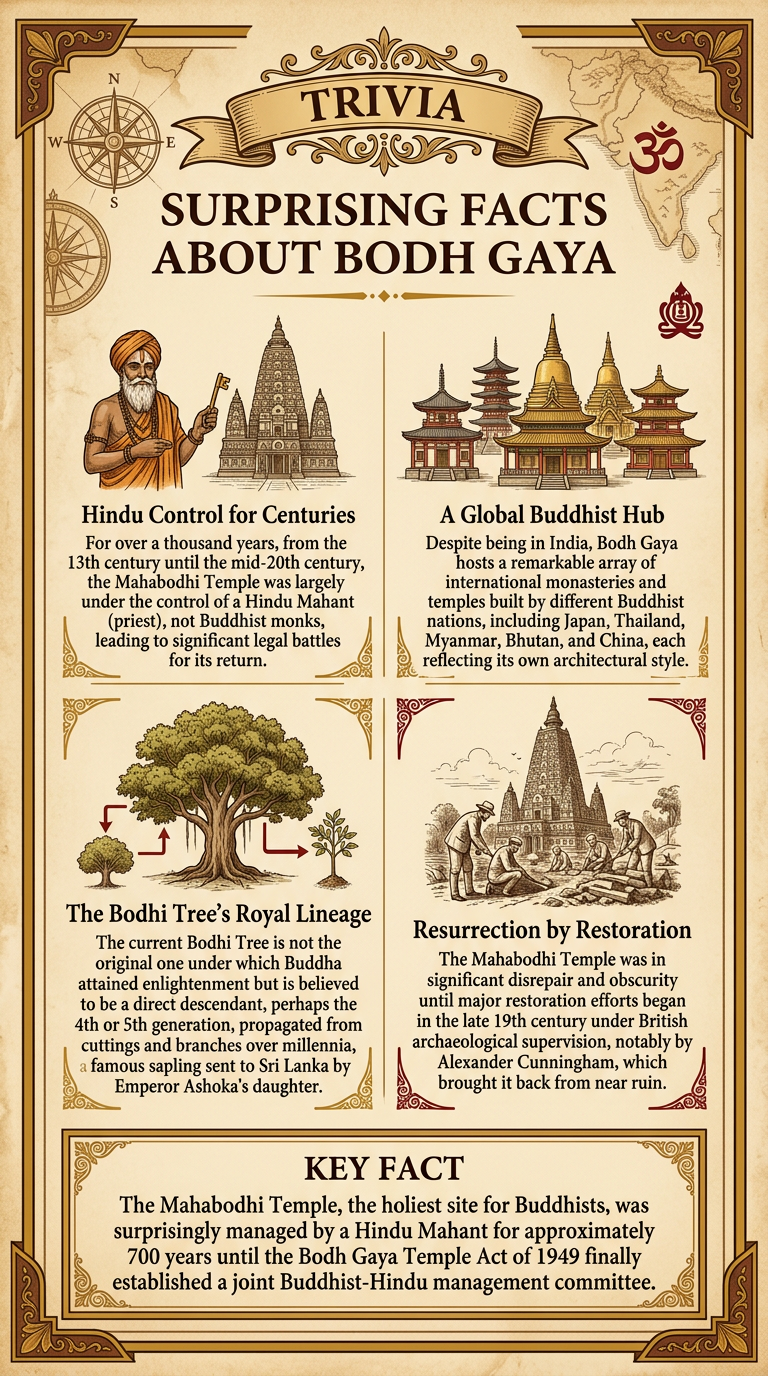
Surprising Facts About Bodh Gaya
Beyond its spiritual reverence, Bodh Gaya holds a myriad of surprising stories, from its complex ownership history to its unique natural treasures.
- **Hindu Control for Centuries**: For over a thousand years, from the 13th century until the mid-20th century, the Mahabodhi Temple was largely under the control of a Hindu Mahant (priest), not Buddhist monks, leading to significant legal battles for its return.
- **A Global Buddhist Hub**: Despite being in India, Bodh Gaya hosts a remarkable array of international monasteries and temples built by different Buddhist nations, including Japan, Thailand, Myanmar, Bhutan, and China, each reflecting its own architectural style.
- **The Bodhi Tree's Royal Lineage**: The current Bodhi Tree is not the original one under which Buddha attained enlightenment but is believed to be a direct descendant, perhaps the 4th or 5th generation, propagated from cuttings and branches over millennia, including a famous sapling sent to Sri Lanka by Emperor Ashoka's daughter.
- **Resurrection by Restoration**: The Mahabodhi Temple was in significant disrepair and obscurity until major restoration efforts began in the late 19th century under British archaeological supervision, notably by Alexander Cunningham, which brought it back from near ruin.
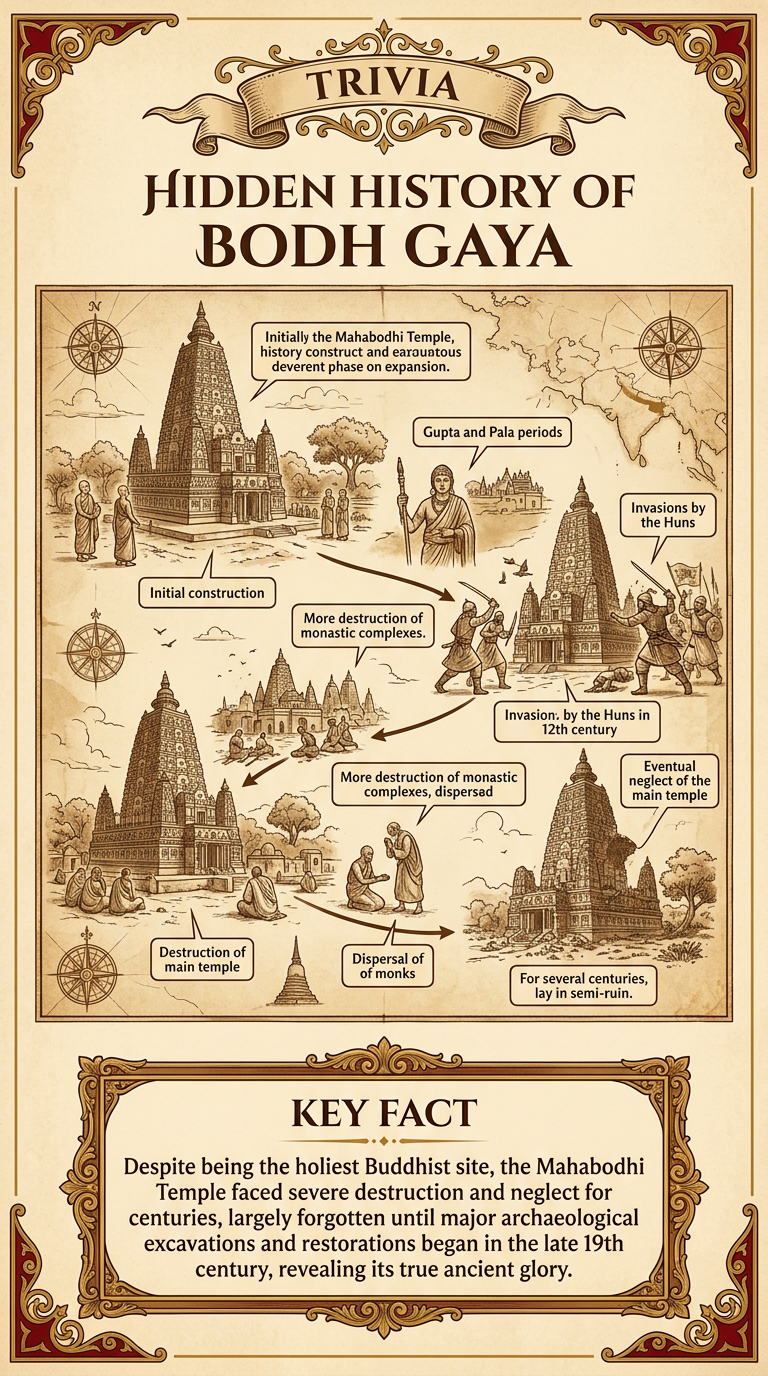
Hidden History of Bodh Gaya
Bodh Gaya's glorious past is punctuated by periods of decline, foreign invasions, and relentless efforts to preserve its sacred heritage against the tide of time.
- Historical records indicate that the site faced multiple destructions and renovations; it was likely devastated by the Hun invasions in the 6th century and later by Turkish invaders around the 12th-13th century, leading to its eventual neglect.
- Emperor Ashoka, in the 3rd century BCE, is credited with erecting the first shrine or 'Diamond Throne' enclosure, long before the present brick temple, indicating a continuous spiritual significance for over 2,300 years.
- The current Bodhi Tree is protected by a descendant lineage, but the original tree was reportedly cut down by Emperor Ashoka's jealous wife, Tishyarakshita, and later revived, demonstrating early threats to its existence.
- Beneath the modern temple's foundation, archaeologists have unearthed remnants of earlier structures, confirming the continuous rebuilding and adaptation of the sacred space over millennia, each layer telling a story of resilience and devotion.
More Bodh Gaya Secrets
The Global Bodhi Tree Network
The current Bodhi Tree in Bodh Gaya is a descendant of the original Ficus religiosa. A sapling from this very tree was famously carried to Anuradhapura, Sri Lanka, in the 3rd century BCE by Sanghamitta, Emperor Ashoka's daughter. This 'Jaya Sri Maha Bodhi' in Sri Lanka is now the oldest living human-planted tree with a known planting date in the world, and saplings from *it* have been replanted back in Bodh Gaya and other places globally.
This intricate network signifies a continuous, living lineage of enlightenment spreading across continents.
International Monasteries: A Cultural Mosaic
Bodh Gaya is unique in that it hosts more than 50 international Buddhist monasteries and temples, each constructed by a different country, including Japan, Thailand, Myanmar, Bhutan, Tibet, China, Vietnam, and Sri Lanka. These temples offer a fascinating architectural and cultural tour, showcasing diverse styles, deities, and monastic traditions from around the world.
Visitors can experience a truly global Buddhist atmosphere, observing different forms of worship and meditation in a single city.
The Great Buddha Statue: A Modern Icon
Erected in 1989, the Great Buddha Statue is a magnificent 80-foot (25-meter) sandstone and granite statue, depicting Buddha seated in meditation. This modern landmark, consecrated by the Dalai Lama, was a decade in the making and involved thousands of stone carvers and laborers. It stands as a powerful symbol of universal peace and compassion, drawing pilgrims and tourists alike.
It is one of the tallest Buddha statues in India, offering a serene counterpoint to the ancient Mahabodhi Temple.
More Bodh Gaya Content Coming Soon
We're crafting a complete guide for Bodh Gaya. Stay tuned!
Explore More Trivia