
Step into Buenos Aires, a city where European grandeur meets Latin American passion, creating an intoxicating blend of culture, history, and vibrant street life. Beyond its iconic tango halls and world-class steakhouses, lies a treasure trove of surprising facts and hidden stories just waiting to be uncovered by the curious traveler.
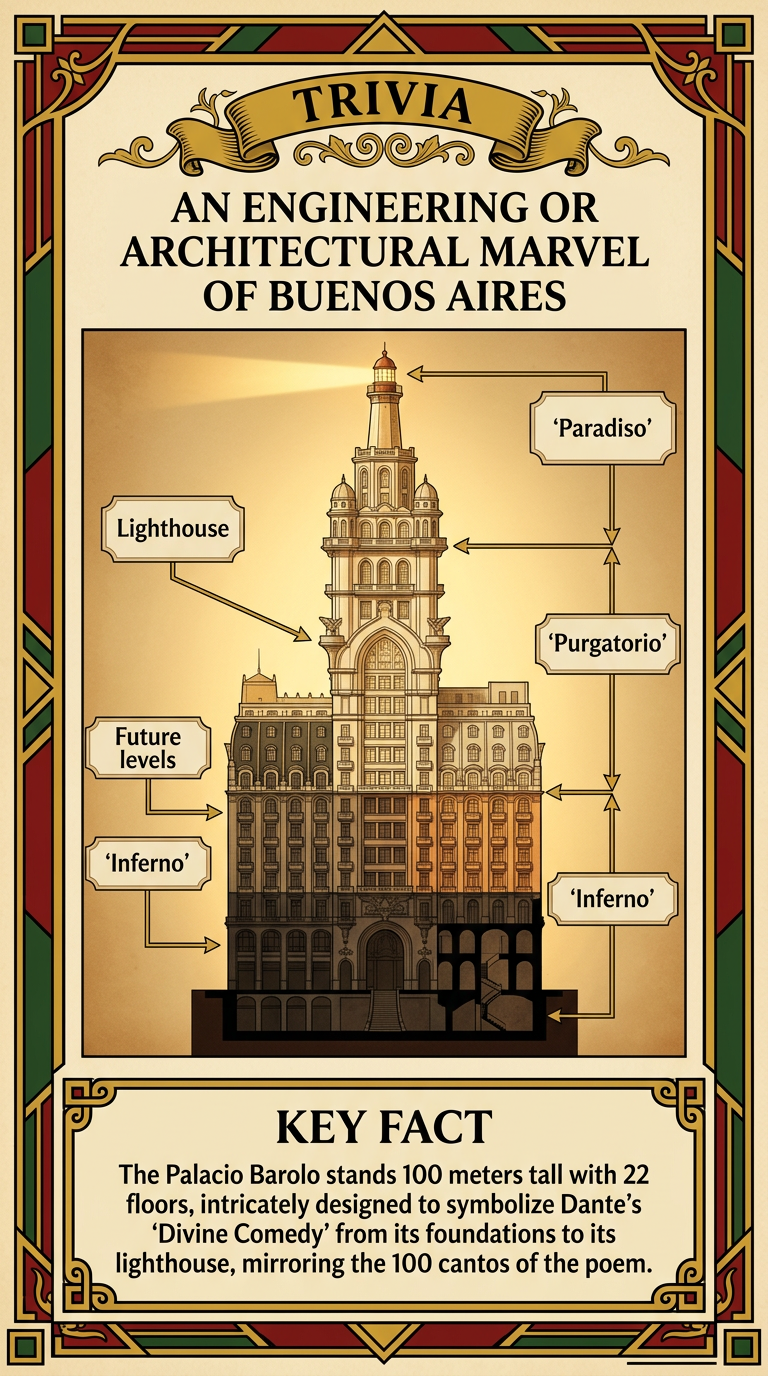
An Engineering or Architectural Marvel of Buenos Aires
Beyond its grand avenues and European-inspired facades, Buenos Aires boasts architectural wonders that are steeped in fascinating stories and unique design philosophies.
- The Palacio Barolo, built between 1919 and 1923, was once the tallest building in South America.
- Its entire design is an architectural allegory of Dante Alighieri's 'Divine Comedy', with 22 floors representing the 'Inferno', 'Purgatorio', and 'Paradiso'.
- The lighthouse at its top, reaching 100 meters, was designed to align with a similar building, Palacio Salvo, in Montevideo, Uruguay, forming a symbolic gateway across the Rio de la Plata.
- The building features specific details, like the number of steps and the use of Latin inscriptions, all correlating to Dante's epic poem.
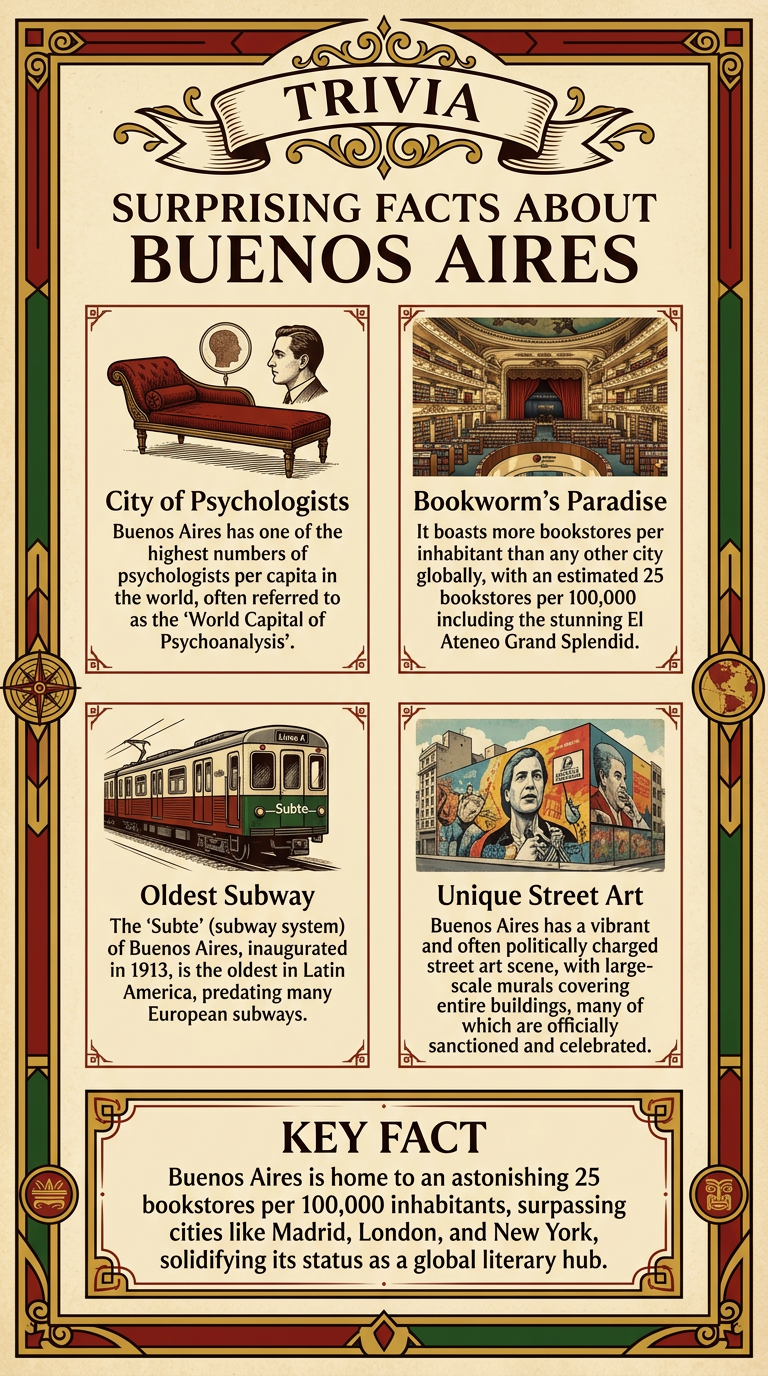
Surprising Facts About Buenos Aires
Dive into the quirky and unexpected facets of Buenos Aires, a city that consistently defies expectations with its unique cultural quirks and historical peculiarities.
- **City of Psychologists**: Buenos Aires has one of the highest numbers of psychologists per capita in the world, often referred to as the 'World Capital of Psychoanalysis'.
- **Bookworm's Paradise**: It boasts more bookstores per inhabitant than any other city globally, with an estimated 25 bookstores per 100,000 people, including the stunning El Ateneo Grand Splendid.
- **Oldest Subway**: The 'Subte' (subway system) of Buenos Aires, inaugurated in 1913, is the oldest in Latin America, predating many European subways.
- **Unique Street Art**: Buenos Aires has a vibrant and often politically charged street art scene, with large-scale murals covering entire buildings, many of which are officially sanctioned and celebrated.
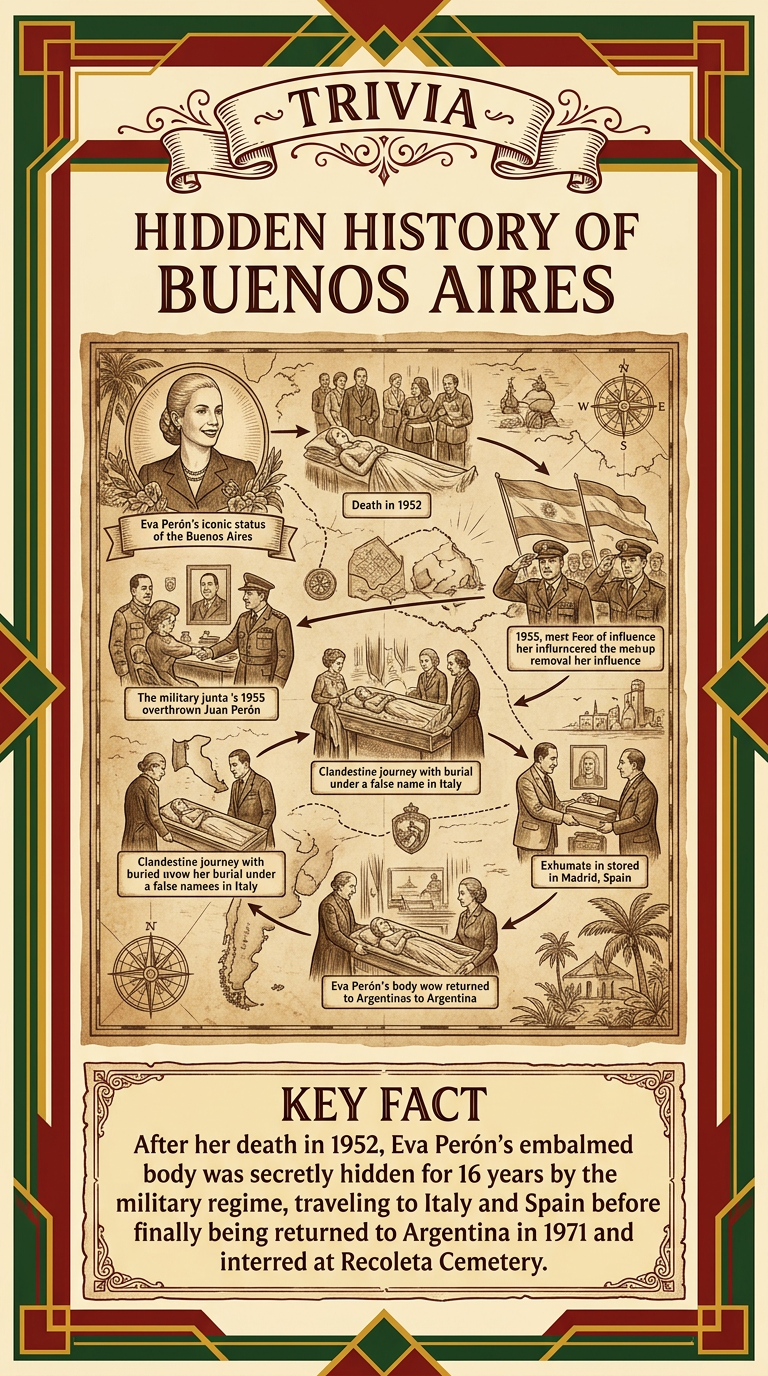
Hidden History of Buenos Aires
Beneath the bustling streets and elegant facades of Buenos Aires lie tales of revolutions, secret tunnels, and the enduring legacies of its diverse inhabitants.
- The underground network of the 'Túneles de Zanjón de Granados' reveals 18th-century waterways and early colonial structures beneath a San Telmo mansion.
- Eva Perón's embalmed body disappeared for 16 years after her death in 1952, a dramatic saga involving military coups and secret burials in Italy.
- The British launched two major invasions of Buenos Aires in 1806 and 1807, both repelled by local militias, strengthening the city's sense of identity and pre-independence fervor.
- The 'Manzana de las Luces' (Block of Lights) features an extensive system of Jesuit-built tunnels and underground passages dating back to the 17th century, connecting churches and public buildings.
More Buenos Aires Secrets
The Enduring Ritual of Mate
More than just a beverage, mate is a central social ritual in Buenos Aires and across Argentina. This traditional infusion, made from the dried leaves of the yerba mate plant, is sipped from a gourd (the 'mate') with a metal straw (the 'bombilla').
Sharing mate signifies friendship, hospitality, and community. It's common to see Porteños (Buenos Aires residents) carrying their mate kits everywhere, from parks to public transport, ready to share with friends and family in an intimate, shared experience.
Fileteado Porteño: The Art of Buenos Aires
Fileteado Porteño is a unique style of artistic drawing and lettering, typically full of colorful lines, stylized plants, and often humorous phrases or philosophical sayings. Originating in the late 19th century as a decorative art for horse-drawn carts, it evolved into an emblem of Buenos Aires culture.
Recognized by UNESCO as an Intangible Cultural Heritage of Humanity in 2015, this vibrant art form adorns everything from shop fronts and buses to tango instruments, capturing the city's spirited aesthetic.
The Pink Hue of Casa Rosada
The iconic Casa Rosada, Argentina's presidential palace, is famed for its distinct pink color. While many legends explain its hue – from the mixing of bull's blood with paint to symbolize unity between warring political factions (red and white), to a simple choice of available pigments – its exact origin remains debated.
Regardless of its true origin, the rosy facade stands as a powerful symbol of Argentine democracy and history, a backdrop to countless political events, including Eva Perón's famous speeches from its balcony.
More Buenos Aires Content Coming Soon
We're crafting a complete guide for Buenos Aires. Stay tuned!
Explore More Trivia