
Cancún, often seen as a modern paradise of sun and sand, holds layers of surprising depth beneath its pristine surface. From its ancient Mayan roots to its astonishingly rapid, government-planned development, this vibrant city offers far more than just breathtaking beaches. Prepare to uncover the extraordinary engineering feats, hidden histories, and unexpected facts that make Cancún a truly remarkable destination.
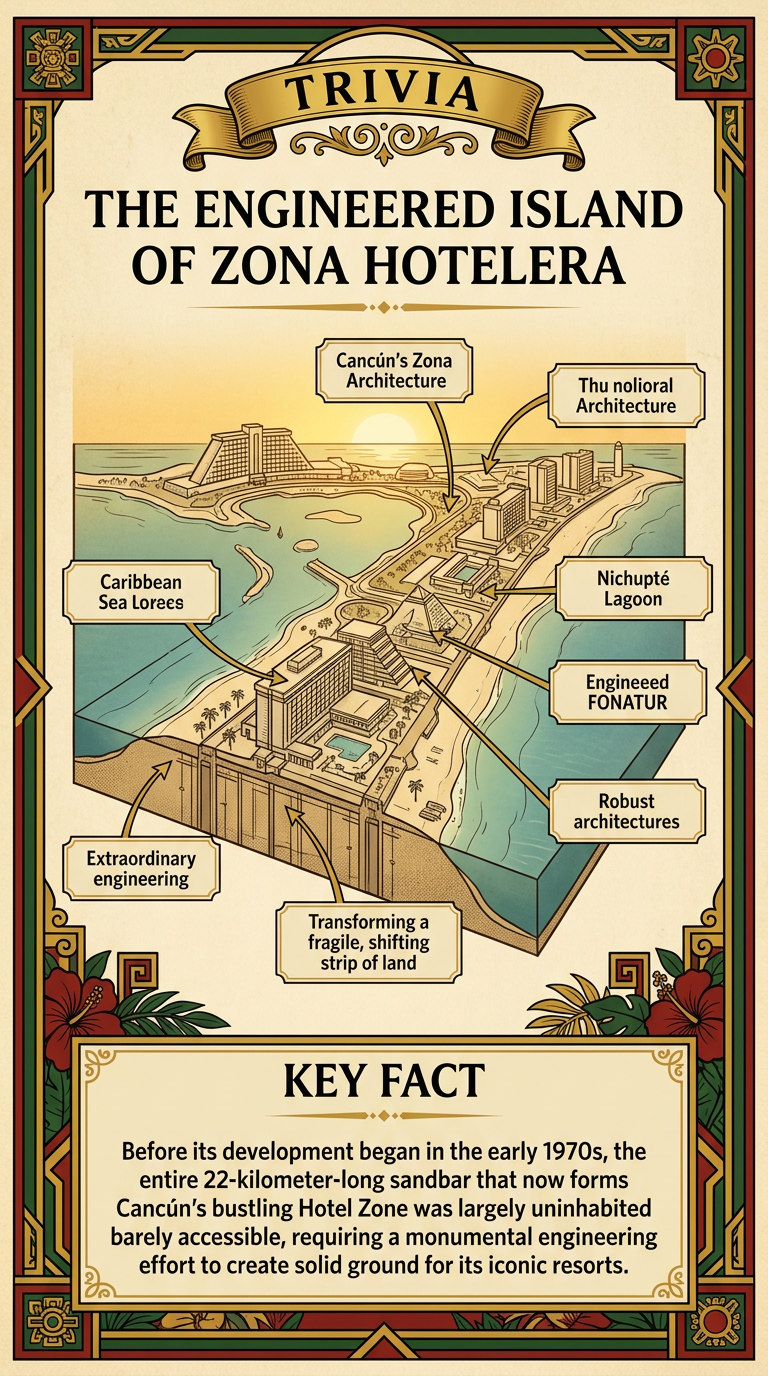
The Engineered Island of Zona Hotelera
The iconic '7' shape of Cancún's Hotel Zone isn't a natural formation, but a testament to ambitious engineering that transformed a narrow sandbar into a world-class destination.
- The Hotel Zone was meticulously designed and constructed on a 22-kilometer-long natural barrier island, separated from the mainland by Nichupté Lagoon.
- Significant dredging and land reclamation projects were undertaken in the 1970s to stabilize the sandbar and create the infrastructure for resorts.
- The complex system of bridges and causeways connecting the various sections of the island and to the mainland required advanced hydrological planning.
- The integration of a sophisticated water treatment and distribution system was paramount for sustaining a large tourist population in a delicate ecosystem.
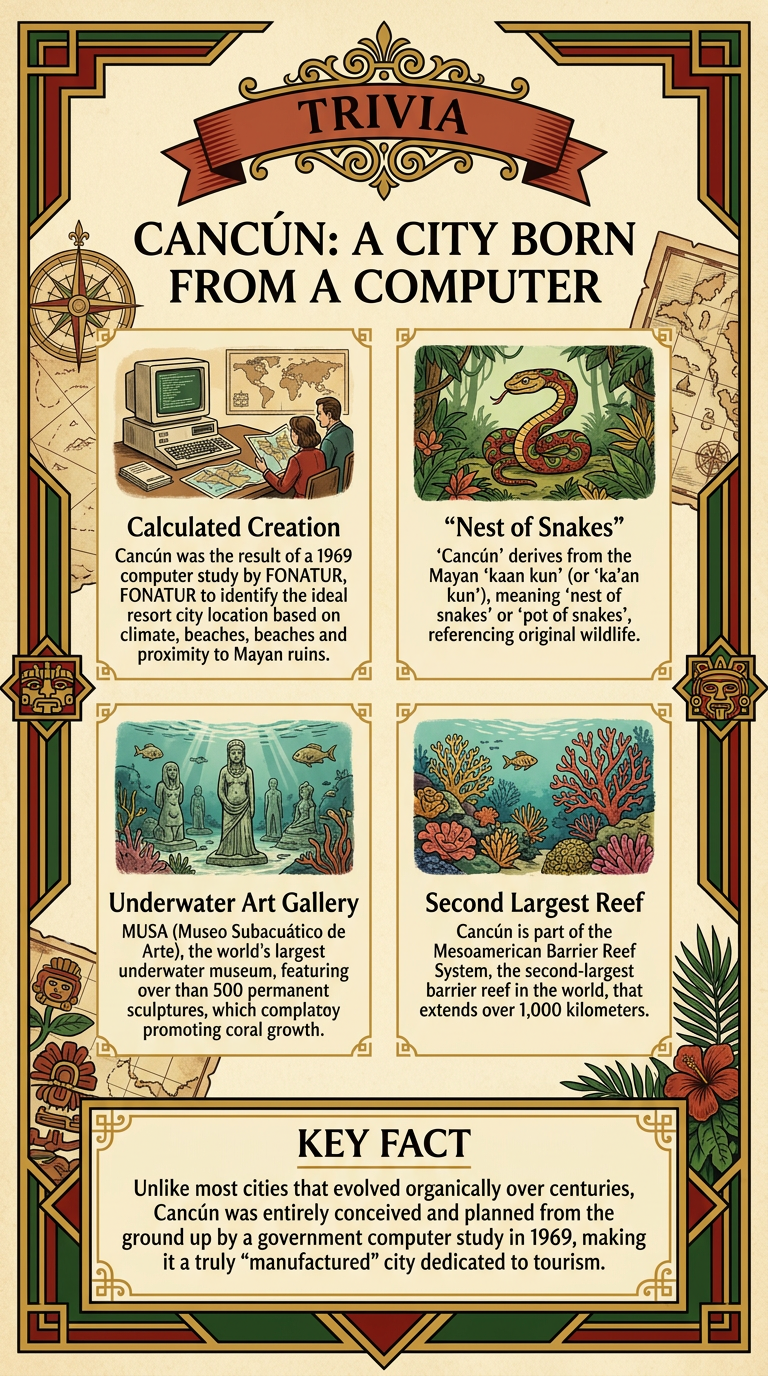
Cancún: A City Born from a Computer
Beyond its reputation as a party hotspot, Cancún holds some truly unexpected secrets, revealing its unique origins and hidden wonders.
- **Calculated Creation:** Cancún was the product of a 1969 computer study by FONATUR (Mexico's National Fund for Tourism Development) to identify the ideal location for a new resort city, chosen for its climate, beaches, and proximity to Mayan ruins.
- **"Nest of Snakes":** The name "Cancún" is believed to derive from the Mayan "kaan kun" (or "ka'an kun"), meaning "nest of snakes" or "pot of snakes," a nod to the area's original wildlife.
- **Underwater Art Gallery:** Home to MUSA (Museo Subacuático de Arte), the largest underwater museum in the world, featuring over 500 permanent sculptures submerged to promote coral growth and protect natural reefs.
- **Second Largest Reef:** Cancún is part of the Mesoamerican Barrier Reef System, the second-largest barrier reef in the world, stretching over 1,000 kilometers from Yucatán down to Honduras.
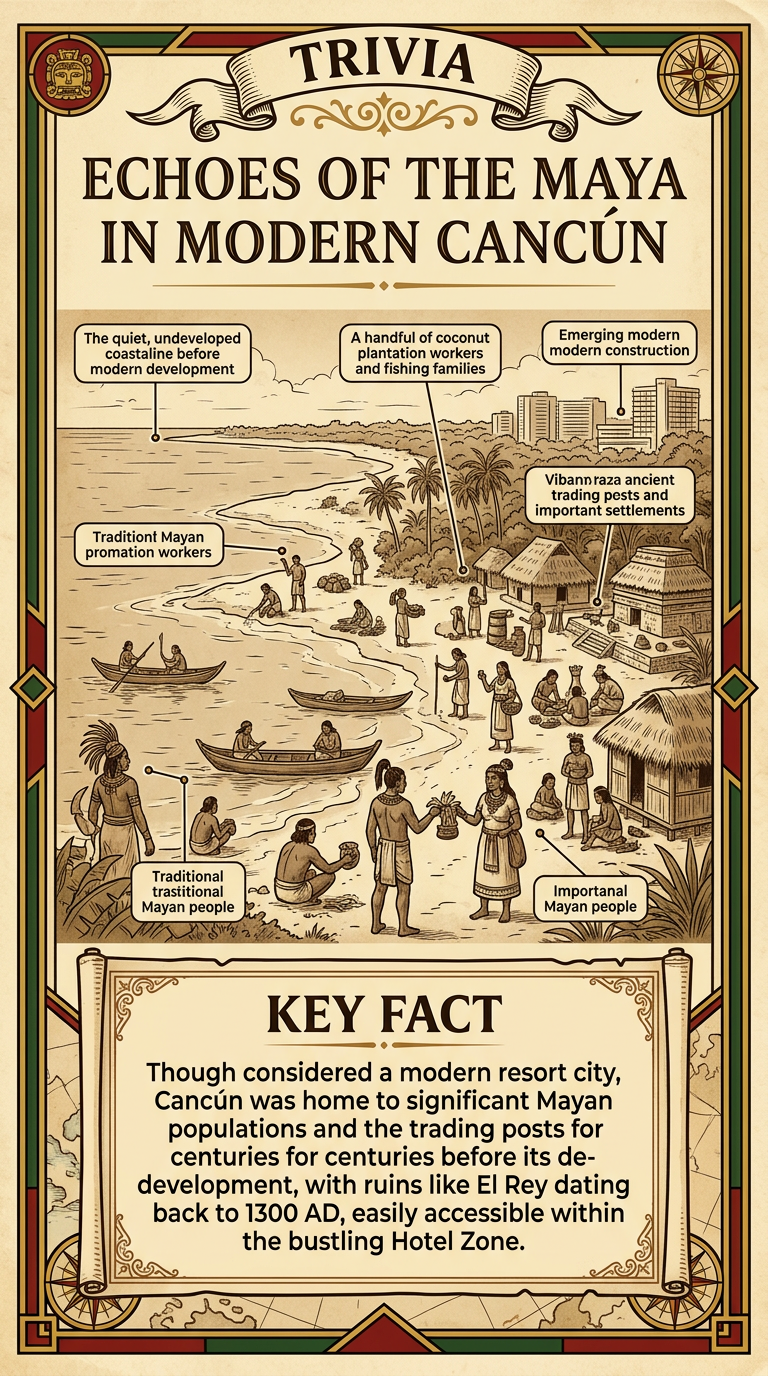
Echoes of the Maya in Modern Cancún
Beneath the vibrant energy of Cancún's modern resorts lies a history far older than its recent development, with whispers of ancient civilizations and untold tales.
- Before 1970, Cancún was a remote, sparsely populated fishing village with only about 120 inhabitants, completely off the tourism radar.
- The area surrounding Cancún was once a significant Mayan maritime trade route, evidenced by numerous small archaeological sites dotting the coastline.
- Within the Hotel Zone itself, you can find the ancient Mayan ruins of El Rey and Yamil Lu'um (also known as the Scorpion's Temple), silent witnesses to a civilization that predates modern Cancún by over a thousand years.
- Hurricane Wilma, a Category 5 storm in 2005, dramatically reshaped Cancún's coastline, uncovering previously buried sections of beach and revealing ancient coral formations, literally rewriting its recent geological history.
More Cancún Secrets
The Mesoamerican Barrier Reef: A Marine Marvel
The waters off Cancún are part of the Mesoamerican Barrier Reef System (MBRS), the second-largest barrier reef in the world after Australia's Great Barrier Reef. Stretching over 1,000 kilometers (620 miles) along the coasts of Mexico, Belize, Guatemala, and Honduras, it is an extraordinary hub of biodiversity.
This vibrant underwater ecosystem supports over 500 species of fish, 60 types of coral, and numerous marine mammals like manatees and dolphins, making it a critical habitat and a diver's paradise. Its protection is paramount for both the environment and the region's tourism.
Cenotes: Gateway to the Underworld
The Yucatán Peninsula, including the Cancún area, is famous for its cenotes – natural sinkholes formed by the collapse of limestone bedrock, revealing an intricate network of underground rivers and caves. The Mayans considered cenotes sacred portals to Xibalba, the underworld, and vital sources of fresh water in a region with no surface rivers.
Today, thousands of these mystical formations dot the landscape, offering unique opportunities for swimming, snorkeling, and diving in crystal-clear, refreshing waters, each with its own unique geological features and cultural significance.
Gastronomy: Beyond the Resort Buffet
While Cancún is famous for its international dining, the authentic culinary scene offers a rich tapestry of flavors, from traditional Yucatecan dishes to fresh seafood. Seek out local taquerias for cochinita pibil (slow-roasted pork), panuchos (fried tortillas with refried beans and toppings), or salbutes (puffed tortillas), and savor the vibrant tastes of regional Mexican cuisine.
More Cancún Content Coming Soon
We're crafting a complete guide for Cancún. Stay tuned!
Explore More Trivia