
Cape Town, a city where two oceans meet and a majestic mountain watches over, consistently surprises with its blend of natural wonder, rich history, and vibrant culture. Prepare to uncover the extraordinary and unexpected, from ancient engineering marvels to ecological secrets hidden in plain sight.
An Engineering or Architectural Marvel of Cape Town
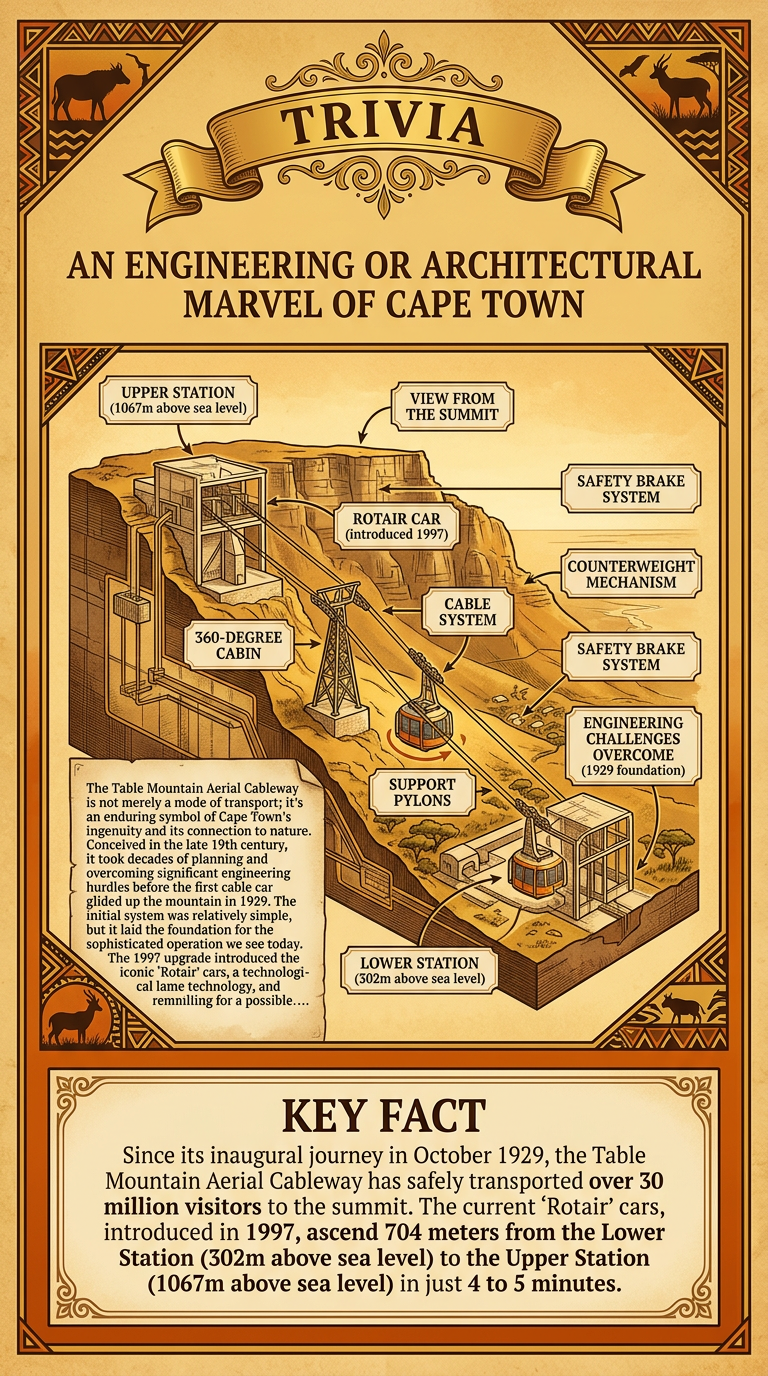
Ascending the iconic Table Mountain is an essential Cape Town experience, made possible by an engineering feat that has captivated visitors for nearly a century.
- The current generation of cable cars features rotating floors, offering all passengers a breathtaking 360-degree view of the city, coastline, and the mountain itself during the ascent and descent.
- When the original cableway opened in 1929, materials were transported up the mountain using rudimentary methods, including mules and manual labor, making its construction a monumental challenge.
- The two cars, named 'Anette' and 'Betty' after the first two cars of the 1929 system, each carry up to 65 passengers and complete the journey in approximately 4-5 minutes.
- The cableway boasts a unique cantilevered station at the top, seemingly suspended over the mountain's edge, designed to withstand extreme weather conditions.
Surprising Facts About Cape Town
Beyond its postcard-perfect vistas, Cape Town harbors a multitude of surprising facts and hidden distinctions that reveal its truly unique character.
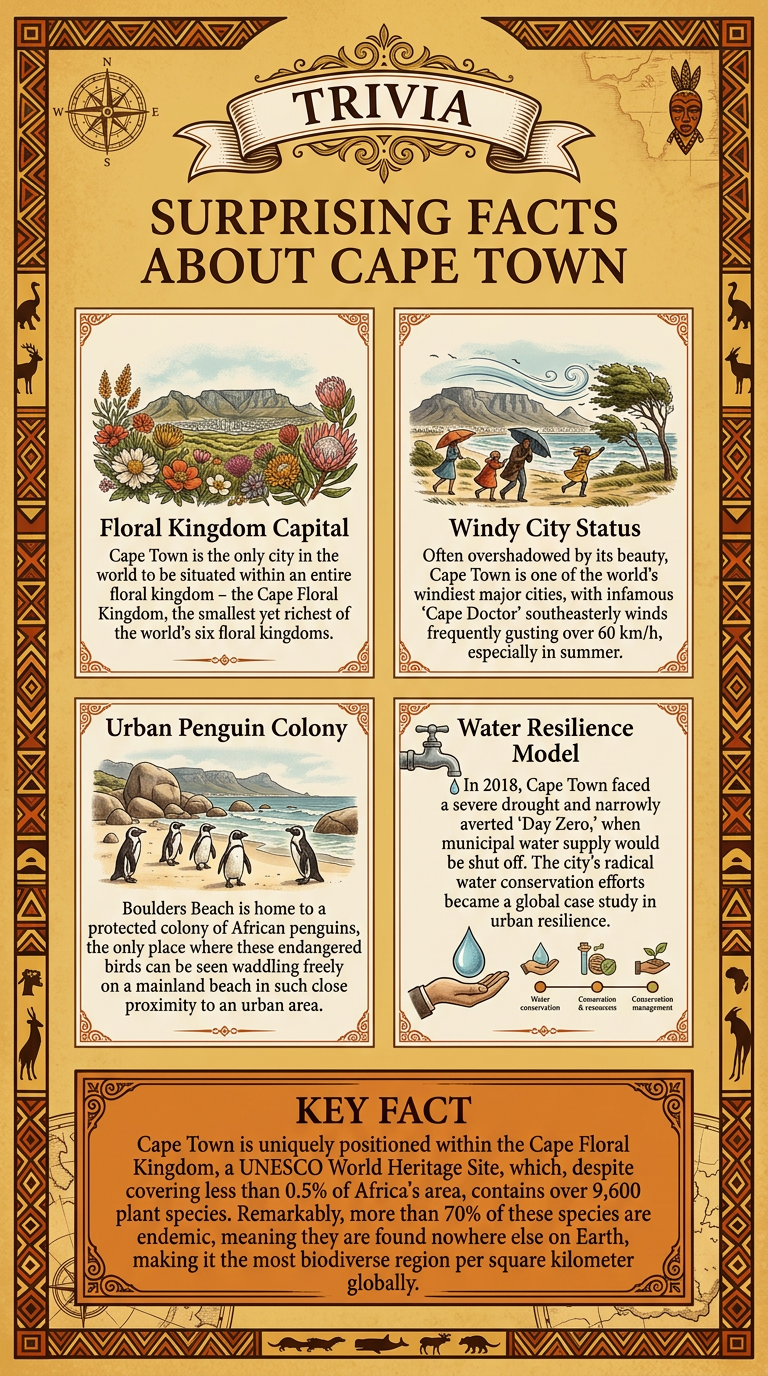
- **Floral Kingdom Capital:** Cape Town is the only city in the world to be situated within an entire floral kingdom – the Cape Floral Kingdom, the smallest yet richest of the world's six floral kingdoms.
- **Windy City Status:** Often overshadowed by its beauty, Cape Town is one of the world's windiest major cities, with infamous 'Cape Doctor' southeasterly winds frequently gusting over 60 km/h, especially in summer.
- **Urban Penguin Colony:** Boulders Beach is home to a protected colony of African penguins, the only place where these endangered birds can be seen waddling freely on a mainland beach in such close proximity to an urban area.
- **Water Resilience Model:** In 2018, Cape Town faced a severe drought and narrowly averted 'Day Zero,' when municipal water supply would be shut off. The city's radical water conservation efforts became a global case study in urban resilience.
Hidden History of Cape Town
Beyond its iconic landmarks, Cape Town holds layers of intriguing, often overlooked history, from ancient forts to vibrant communities with surprising origins.
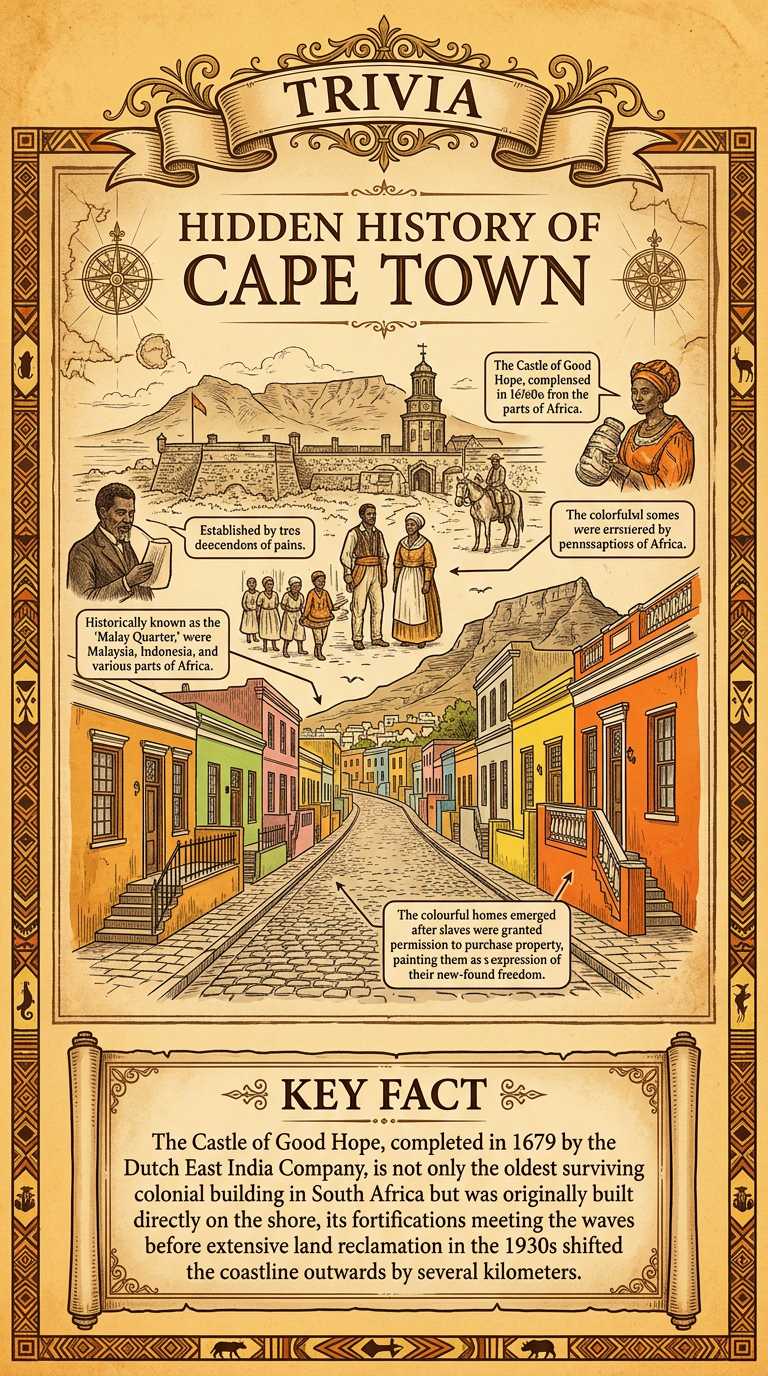
- The colourful houses of Bo-Kaap originally represented a symbol of freedom for enslaved people who were allowed to buy their homes and paint them vibrant colours after the abolition of slavery.
- Robben Island, famously known for Nelson Mandela's imprisonment, also served as a leper colony, a mental asylum, and a military training base at various points in its long, complex history.
- The Castle of Good Hope, the oldest colonial building in South Africa, is reportedly haunted by several ghosts, including the Lady in Grey and Governor van Noodt, whose apparitions have been sighted by staff and visitors.
- District Six, once a vibrant multicultural neighbourhood, was home to a diverse community of freed slaves, merchants, and artisans before 60,000 residents were forcibly removed and their homes bulldozed under apartheid's Group Areas Act from 1966 onwards.
More Cape Town Secrets
Cape Town's Winelands: A Taste of History
Cape Town serves as the gateway to some of the world's most historic and renowned wine routes, including Stellenbosch, Franschhoek, and Paarl. The region's winemaking tradition dates back to the 17th century, making it one of the 'New World's' oldest wine-producing areas.
Visitors can explore grand estates, taste award-winning wines, and learn about the unique terroir that contributes to the distinctive flavours of Cape wines, often just a 30-minute drive from the city center.
The Cape Doctor Wind
The 'Cape Doctor' is the local name for the strong, persistent south-easterly wind that frequently blows during Cape Town's summer months. It's so named because it's believed to 'clear' the city's air of pollution and humidity, bringing clear skies and cooler temperatures.
While it can be quite blustery, challenging hats and disrupting outdoor plans, it also plays a vital role in local ecology, influencing everything from the spread of fynbos seeds to the spectacular waves popular with surfers and kitesurfers.
African Penguin Colony at Boulders Beach
Boulders Beach, located in the suburb of Simon's Town, hosts a unique land-based colony of African penguins that settled there in 1982. From just two breeding pairs, the colony grew to over 3,000 birds by 2011, though numbers have since declined due to environmental factors.
Visitors can observe these endangered birds up close from specially built boardwalks, offering an intimate glimpse into their daily lives of breeding, preening, and fishing, all while maintaining a safe distance for their protection.
More Cape Town Content Coming Soon
We're crafting a complete guide for Cape Town. Stay tuned!
Explore More Trivia