
Dubai transformed from a fishing village to a global metropolis in just 50 years. It's a city where the impossible becomes routine - from the world's tallest building to skiing in the desert. Here are the stories behind the superlatives.
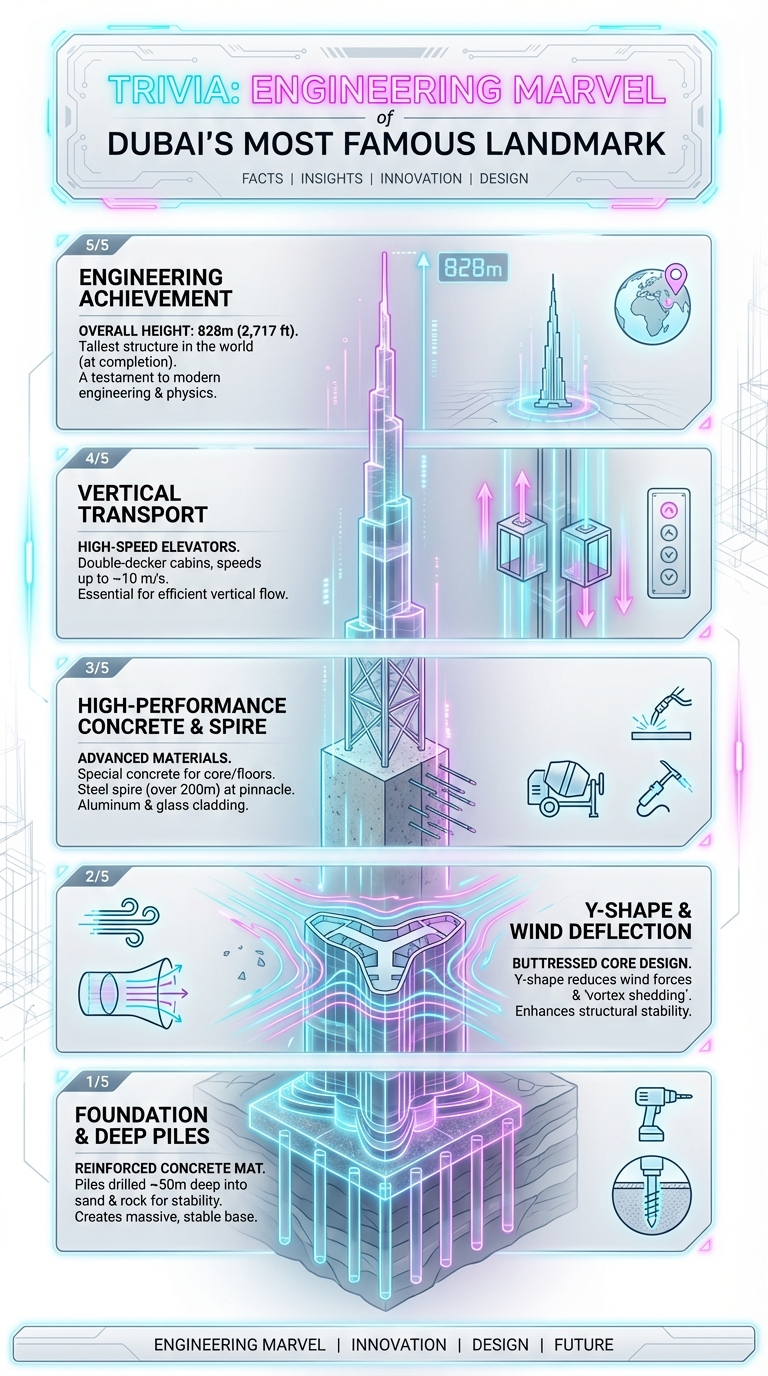
Burj Khalifa: Engineering the Impossible
The world's tallest building pushed engineering to its limits. The numbers behind this vertical city are mind-boggling:
- 828 meters tall - over twice the height of the Empire State Building
- 163 floors with the world's highest observation deck
- Foundation goes 50 meters into the ground with 192 piles
- The elevator travels at 10 meters per second (36 km/h)
- The tip sways up to 1.5 meters in high winds
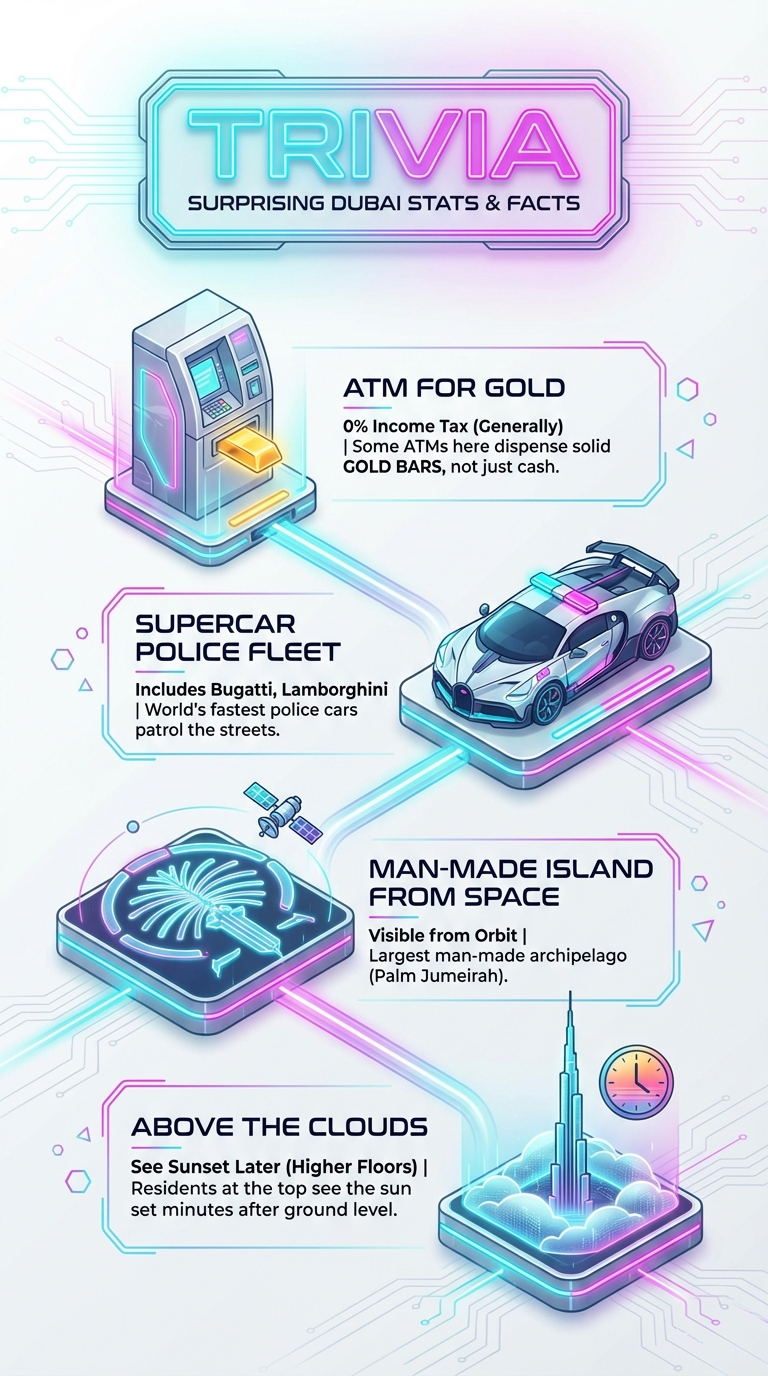
Man-Made Islands from Outer Space
The Palm Jumeirah and World Islands are visible from space - here's how Dubai created land where there was only sea:
- Palm Jumeirah used 94 million cubic meters of sand
- Added 78km of beach to Dubai's coastline
- The World Islands contain 300 private islands
- No cement was used - just rock and sand
- GPS-guided ships placed sand grain by grain
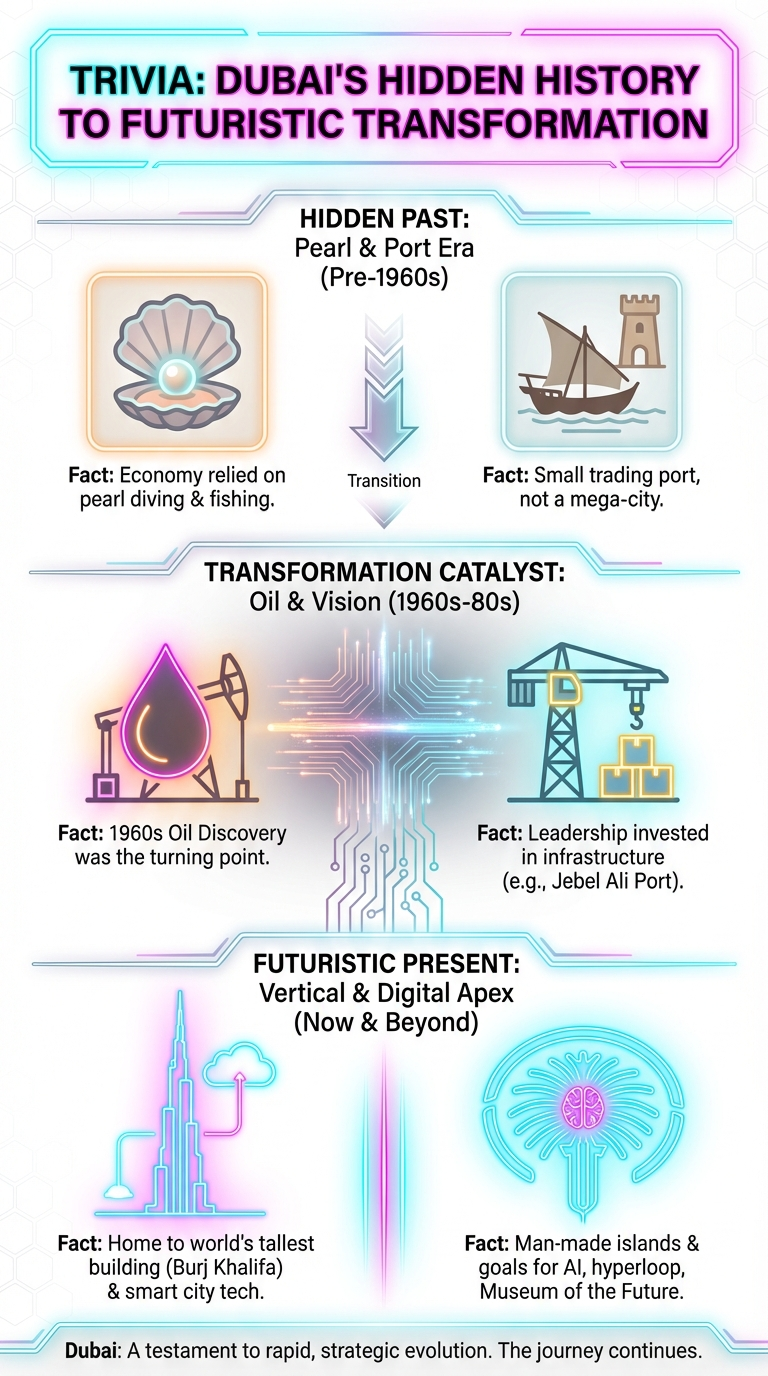
From Desert to Metropolis
Dubai's transformation is the fastest urban development in human history. The contrasts are staggering:
- 1960: Population 40,000 | Today: 3.5+ million
- 1966: Oil was discovered, changing everything
- Today oil is only 1% of GDP - tourism and trade dominate
- Ski Dubai: Indoor skiing where summer hits 50°C
- More construction cranes than any city in history
More Dubai Secrets
The Gold ATM
Dubai has the world's first gold ATM, located in the Emirates Palace Hotel. Insert cash, get gold bars or coins. The machine holds 320 gold items worth millions and updates prices every 10 minutes based on global gold rates. Because why use a regular ATM when you can withdraw gold?
Fun fact: Dubai Gold Souk sells 10 tons of gold at any given time!
The Robot Jockeys
Camel racing is the traditional sport of the UAE, but child jockeys were banned in 2002 due to safety concerns. Solution? Robot jockeys! These small robots sit atop the camels, controlled remotely by owners driving alongside in 4x4s, shouting commands through speakers.
No Street Addresses
Until recently, Dubai had no formal street addresses - buildings were identified by landmarks ("near the big roundabout"). The Makani system was introduced in 2015, assigning unique 10-digit codes to every 10 square meters in the city. Deliveries still often require detailed verbal directions.
Want More Dubai Stories?
Get our complete 80+ page ebook with all the trivia, attractions, and insider tips.
Download Dubai Ebook