
Perched dramatically on the Eastern Himalayas, Gangtok isn't just a picturesque hill station; it's a vibrant tapestry woven with ancient traditions, cutting-edge urban planning, and surprising ecological commitments. Prepare to uncover the hidden marvels and lesser-known tales of this extraordinary capital, where every winding road holds a secret waiting to be discovered.
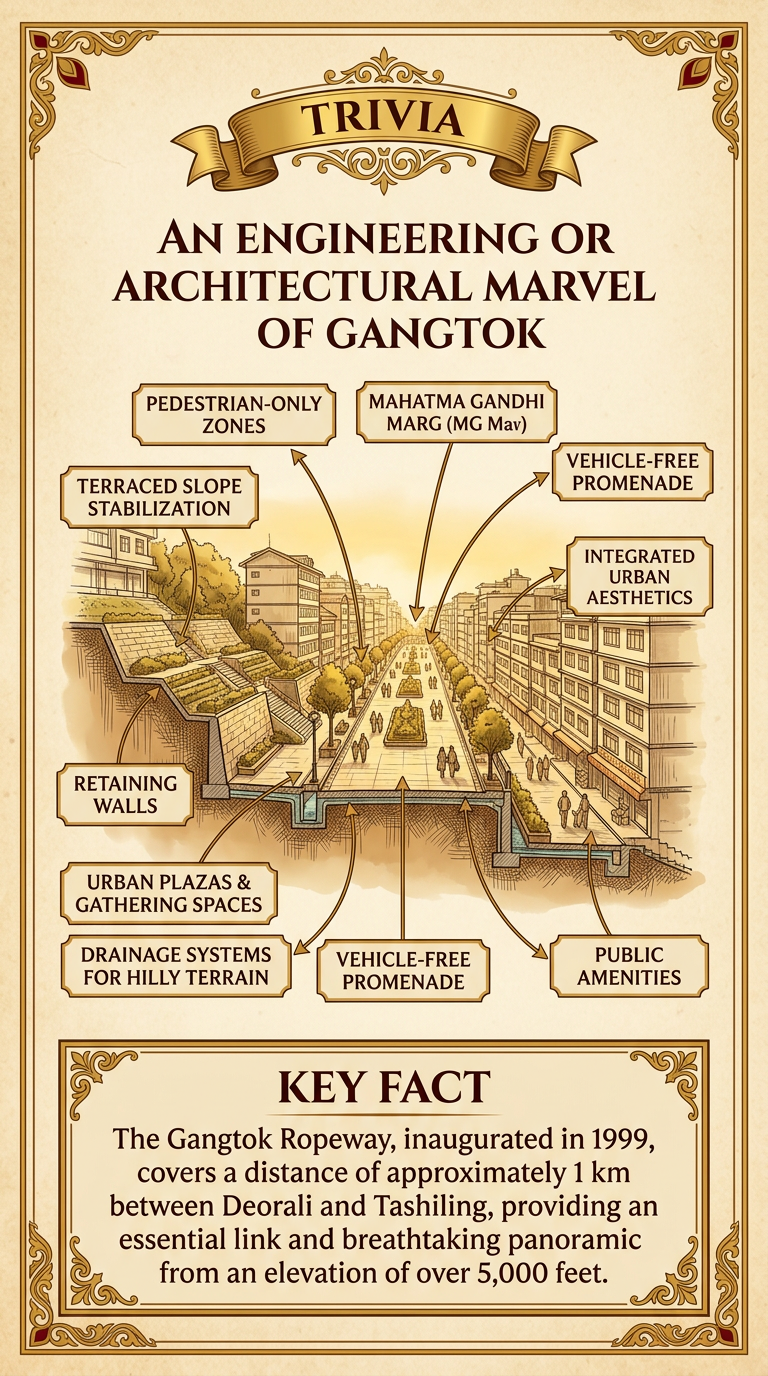
An Engineering or Architectural Marvel of Gangtok
In a city built on steep gradients, engineering ingenuity is not just a luxury, but a necessity. Gangtok's infrastructure blends modern solutions with its challenging terrain, creating unique and functional marvels.
- The Gangtok Ropeway offers stunning aerial views and serves as a vital mode of transport across varying altitudes.
- MG Marg, the city's pedestrian heartbeat, is an architectural triumph of urban planning, completely vehicle-free.
- Many of Gangtok's buildings and monasteries are cleverly constructed on multiple terraces, cascading down hillsides.
- The city's efficient water management and sanitation systems are highly regarded, especially given its mountainous setting.
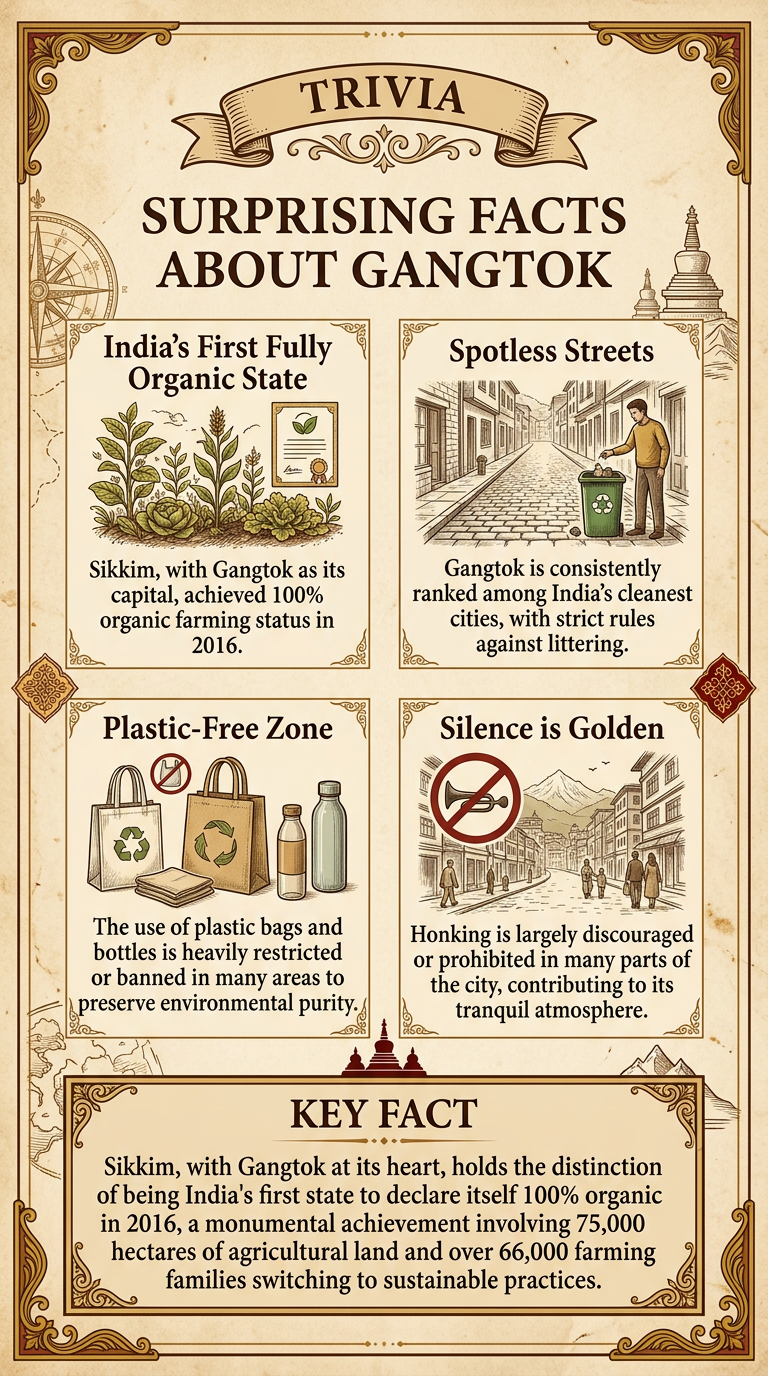
Surprising Facts About Gangtok
Beyond its serene façade, Gangtok harbors an array of surprising facts that challenge conventional notions of a bustling state capital, highlighting its unique identity and progressive outlook.
- **India's First Fully Organic State:** Sikkim, with Gangtok as its capital, achieved 100% organic farming status in 2016.
- **Spotless Streets:** Gangtok is consistently ranked among India's cleanest cities, with strict rules against littering.
- **Plastic-Free Zone:** The use of plastic bags and bottles is heavily restricted or banned in many areas to preserve environmental purity.
- **Silence is Golden:** Honking is largely discouraged or prohibited in many parts of the city, contributing to its tranquil atmosphere.
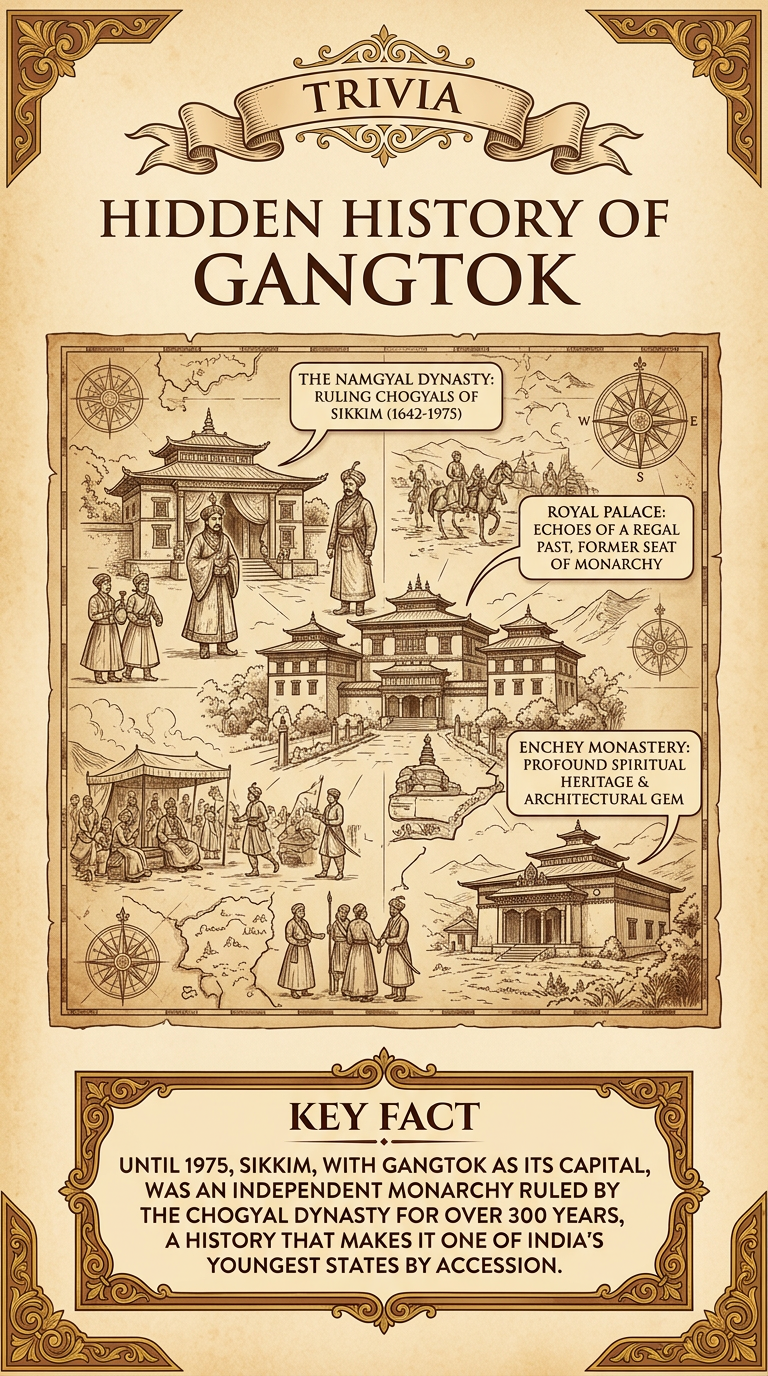
Hidden History of Gangtok
Gangtok's history is far more complex and captivating than its modern appearance suggests, holding centuries of tales involving ancient kingdoms, mystical prophecies, and significant geopolitical shifts.
- Gangtok was once the capital of an independent kingdom, ruled by the Chogyal dynasty for over 300 years.
- The Enchey Monastery, established in 1909, stands on a site blessed by the great Tantric master, Lama Druptob Karpo, in the 18th century.
- Its strategic location made it a crucial trading post on the ancient Silk Route, connecting Tibet with India.
- The city played a role in the Anglo-Bhutanese War and later became a British protectorate, influencing its architecture and administration.
More Gangtok Secrets
The Unique World of Chhurpi
Chhurpi, a traditional Himalayan cheese made from yak or cow's milk, is a staple in Gangtok and a fascinating culinary experience. It comes in soft (fresh) and hard (dried) varieties, offering distinct textures and flavors.
The hard chhurpi is famously chewed for hours, much like a chewing gum, slowly releasing its tangy, earthy taste. It's a testament to the resourcefulness and unique palate of the region's inhabitants.
Orchid Paradise
Sikkim is often called the 'Land of Orchids,' boasting over 500 species of these exquisite flowers, many of which can be seen in and around Gangtok. The Jawaharlal Nehru Botanical Garden and the Flower Exhibition Centre are prime spots to witness this floral diversity.
A Confluence of Languages
Due to its diverse ethnic makeup and historical ties, Gangtok is a melting pot of languages. While Nepali is the most widely spoken, you'll also hear Bhutia, Lepcha, Hindi, and English, reflecting the rich cultural tapestry of the region.
More Gangtok Content Coming Soon
We're crafting a complete guide for Gangtok. Stay tuned!
Explore More Trivia