
Gwalior, a city steeped in millennia of history, often surprises visitors with its blend of ancient architectural prowess, profound cultural legacies, and unexpected historical revelations. Prepare to uncover the secrets of a destination where every stone tells a story, and every corner holds an extraordinary tale.
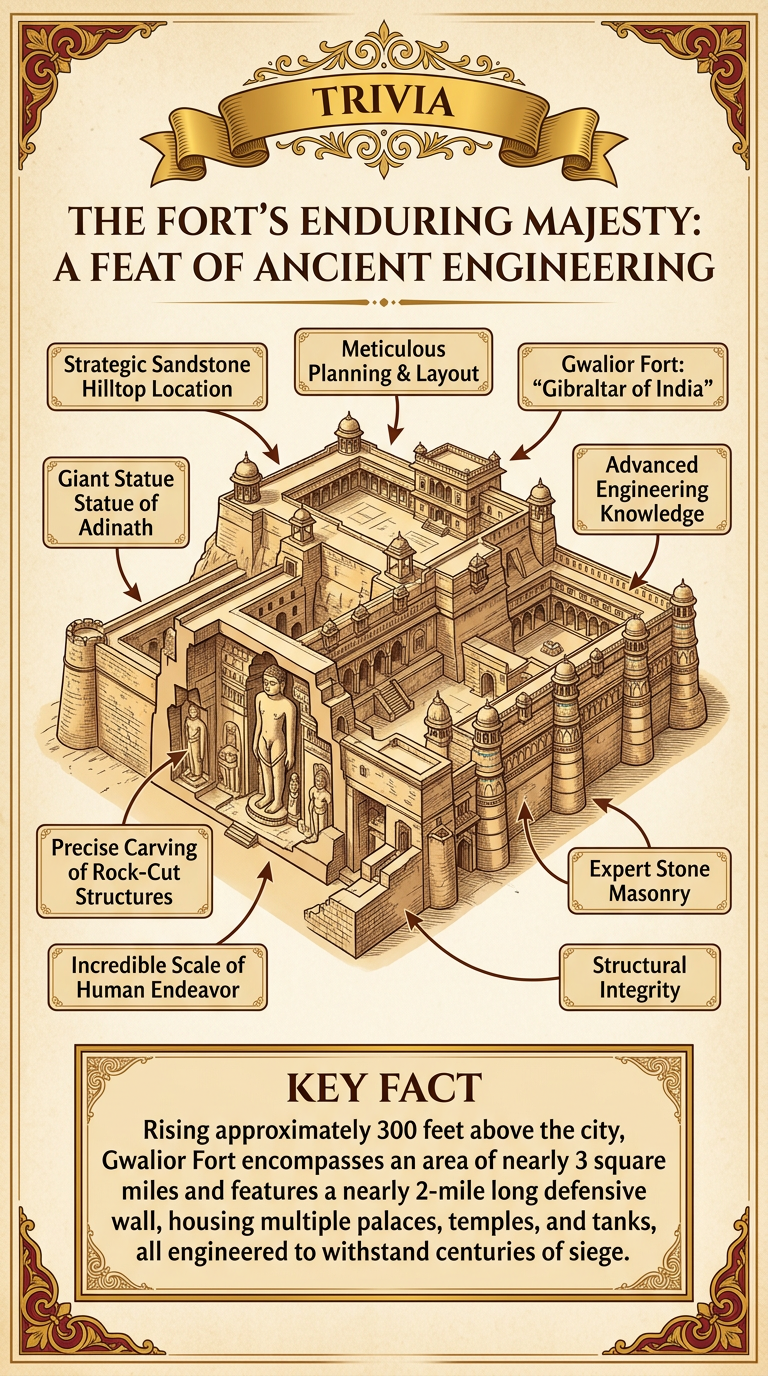
The Fort's Enduring Majesty: A Feat of Ancient Engineering
Towering majestically over the city, Gwalior Fort is not merely a structure but a self-contained universe, showcasing astonishing feats of ancient Indian engineering and architectural brilliance that have defied time.
- **Rock-Cut Giants:** Discover colossal rock-cut Jain Tirthankara statues, some reaching up to 57 feet in height, carved directly into the fort's cliff faces during the Tomar rule in the 15th century.
- **Ancient Water Harvest:** Explore sophisticated rainwater harvesting systems, including numerous rock-cut tanks and reservoirs like the Suraj Kund, ensuring water supply for centuries within the formidable fort walls.
- **Impenetrable Defenses:** Marvel at the fort's series of defensive gates, each with unique architectural features designed to thwart invaders, such as the Hathi Pol (Elephant Gate) and Badalgarh Gate, creating a labyrinthine approach.
- **Vibrant Palaces:** Witness the intricate carvings and vibrant blue tile work of the Man Singh Palace, a 15th-century masterpiece built by Raja Man Singh Tomar, showcasing intricate structural and aesthetic planning.
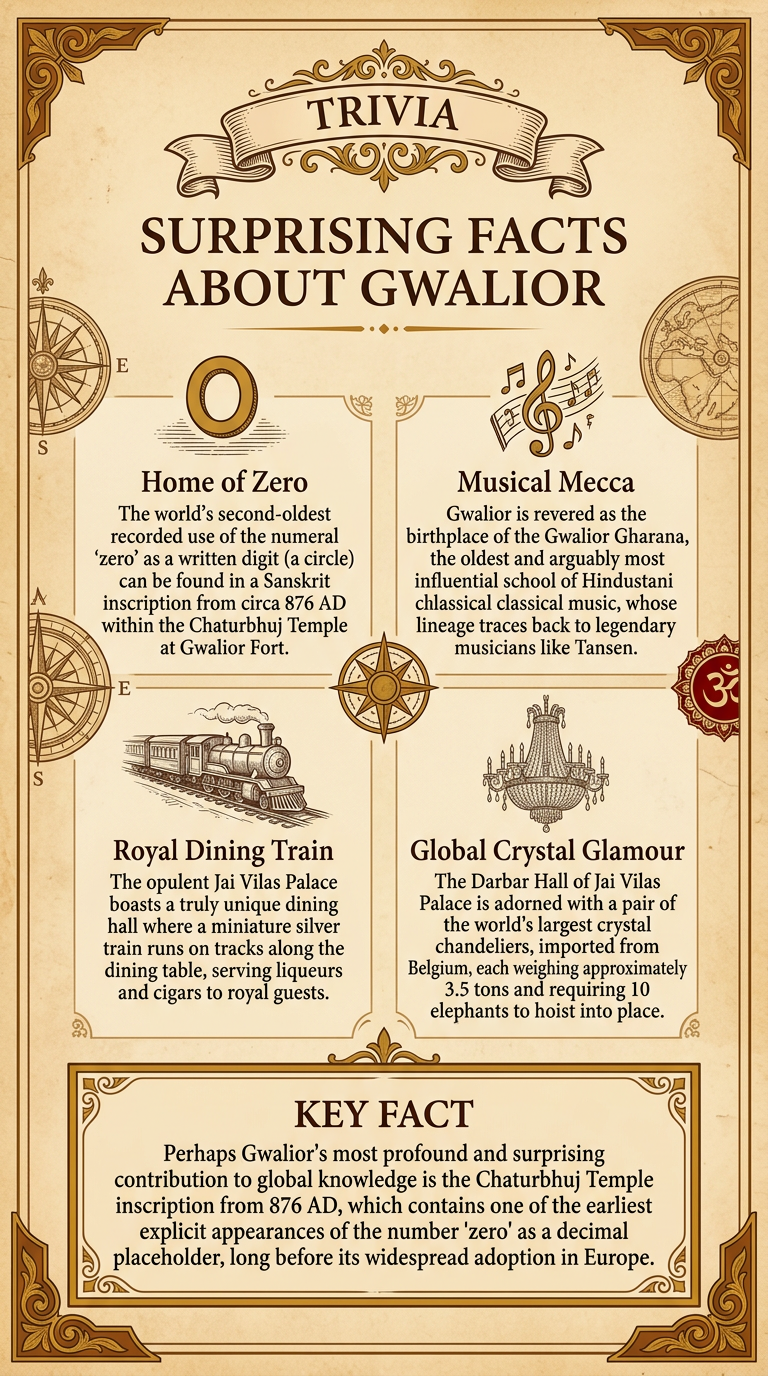
Surprising Facts About Gwalior
Beyond its fort and grandeur, Gwalior harbors a treasure trove of surprising facts that reveal its deep cultural impact and unexpected contributions to world history and heritage.
- **Home of Zero:** The world's second-oldest recorded use of the numeral 'zero' as a written digit (a circle) can be found in a Sanskrit inscription from circa 876 AD within the Chaturbhuj Temple at Gwalior Fort.
- **Musical Mecca:** Gwalior is revered as the birthplace of the Gwalior Gharana, the oldest and arguably most influential school of Hindustani classical music, whose lineage traces back to legendary musicians like Tansen.
- **Royal Dining Train:** The opulent Jai Vilas Palace boasts a truly unique dining hall where a miniature silver train runs on tracks along the dining table, serving liqueurs and cigars to royal guests.
- **Global Crystal Glamour:** The Darbar Hall of Jai Vilas Palace is adorned with a pair of the world's largest crystal chandeliers, imported from Belgium, each weighing approximately 3.5 tons and requiring 10 elephants to hoist into place.
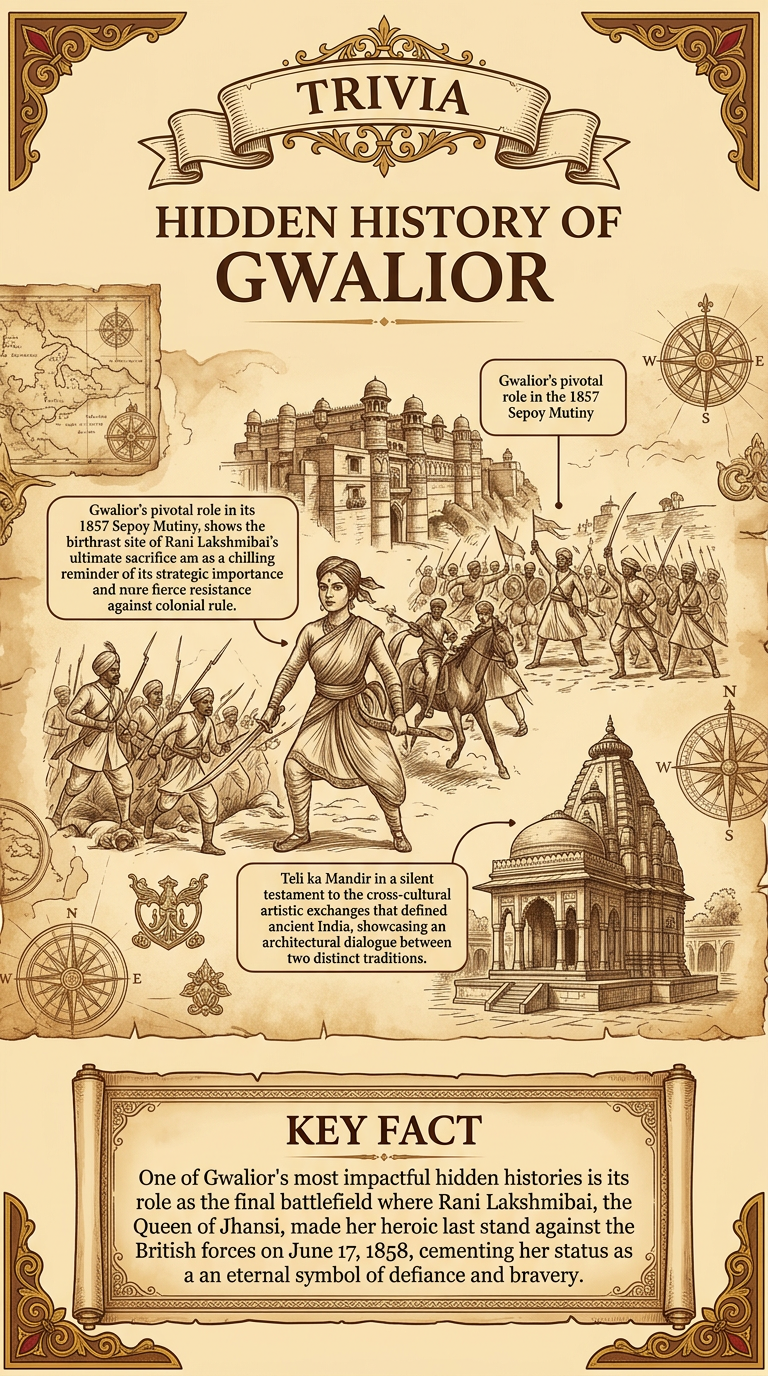
Hidden History of Gwalior
Beneath its well-known landmarks, Gwalior conceals layers of hidden histories, forgotten empires, and intriguing cultural fusions that tell a richer, more complex story of India's past.
- **Queen's Last Stand:** Gwalior was the poignant site of Rani Lakshmibai's final battle against the British in 1858, a decisive moment in India's First War of Independence where the courageous queen met her end.
- **Architectural Anomaly:** The Teli ka Mandir, a 9th-century temple within the fort, is a unique blend of North and South Indian architectural styles, featuring a Dravidian-style shikhara (tower) atop a North Indian ground plan, a rare fusion.
- **Forgotten Empires:** Before the Scindias, Gwalior was a stronghold for numerous dynasties including the Gurjara-Pratiharas, Tomars, and Mughals, each leaving their distinct, often overlooked, imprints on the city's culture and structures.
- **The Elephant's Legend:** The legendary musician Tansen, one of the 'Navratnas' (nine jewels) in Emperor Akbar's court, is said to have possessed the power to make elephants sway and rain fall with his ragas, and his tomb in Gwalior remains a revered pilgrimage site for musicians.
More Gwalior Secrets
The Scindia Dynasty's Grandeur
The Scindia dynasty, a powerful Maratha clan, ruled Gwalior from the 18th century, transforming it into a princely state of immense wealth and influence. Their legacy is most evident in the magnificent Jai Vilas Palace, a true symbol of their European-inspired opulence.
Built in 1874 by Maharaja Jayajirao Scindia, the Jai Vilas Palace still serves as the residence for the descendants of the Scindia family, with a significant portion converted into a museum showcasing their royal artifacts and lavish lifestyle.
Tansen: The Musical Genius of Gwalior
Mian Tansen, one of the greatest musicians in Indian history, was born near Gwalior in the 16th century. His unparalleled mastery of Hindustani classical music earned him a place as a court musician in Emperor Akbar's 'Navratnas' (Nine Jewels).
Legend attributes Tansen with the ability to create fire with his Raga Deepak and bring rain with Raga Miyan Ki Todi. His annual 'Tansen Sangeet Samaroh' music festival held in Gwalior every December attracts classical musicians and enthusiasts from across the globe.
Gwalior's Jain Temple Caves: A Spiritual Gallery
Beyond the fort's main attractions, the cliff faces of Gwalior Fort are adorned with numerous Jain cave temples and colossal rock-cut sculptures, particularly along the Urwahi Valley route. These statues, some reaching incredible heights, depict Jain Tirthankaras.
Carved predominantly between the 7th and 15th centuries, these vibrant sculptures, though damaged by Mughal emperor Babur, were later restored. They represent a significant period of Jain artistic patronage and offer a serene, spiritual journey through the fort's ancient landscape.
More Gwalior Content Coming Soon
We're crafting a complete guide for Gwalior. Stay tuned!
Explore More Trivia