
Hampi isn't just a collection of ancient ruins; it's a testament to human ingenuity and a vibrant forgotten empire that once rivaled global capitals. Prepare to journey through a landscape where colossal boulders balance impossibly, where music emanates from stone, and every intricate carving whispers tales of a glorious past.
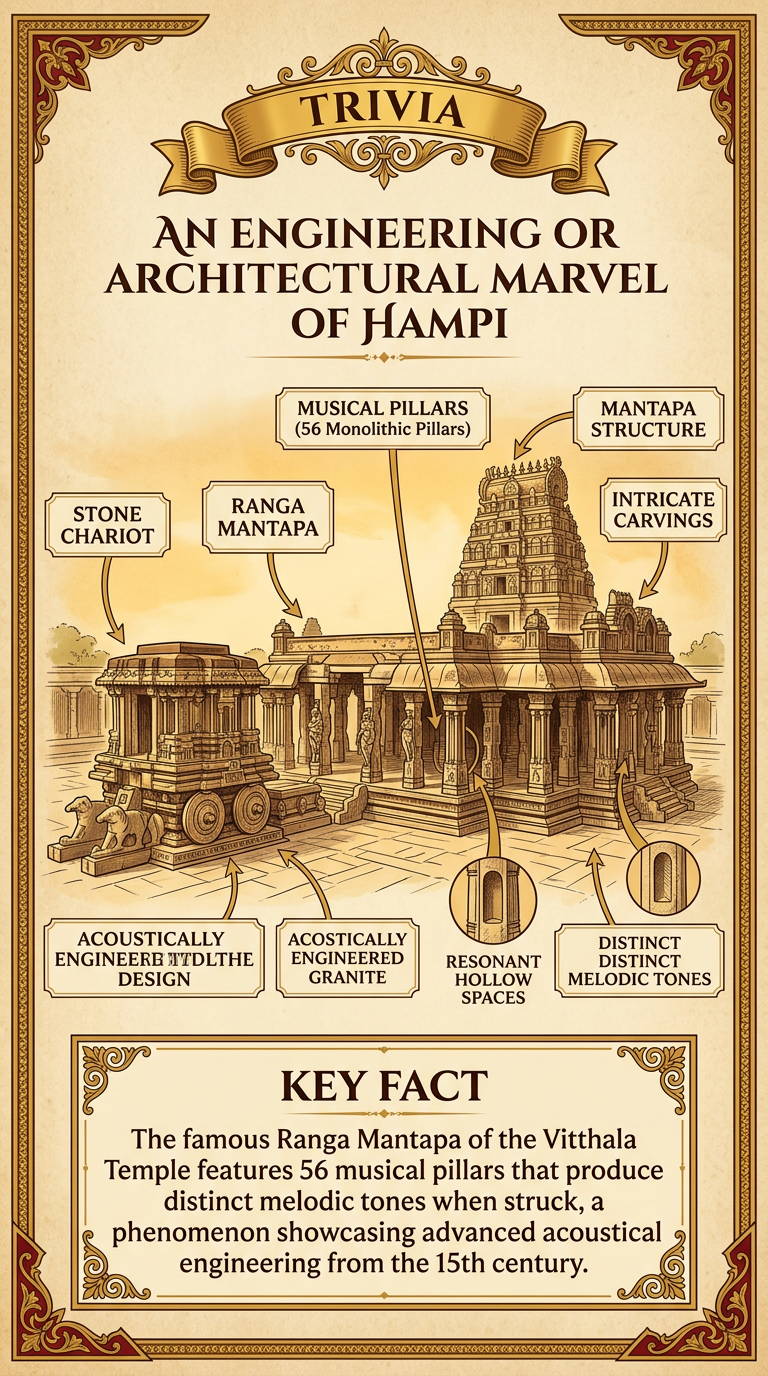
An Engineering or Architectural Marvel of Hampi
The Vijayanagara Empire’s architects and engineers were centuries ahead of their time, creating structures that defy modern explanation and continue to inspire awe.
- The **Musical Pillars** of the Vitthala Temple complex, when gently tapped, resonate with the distinct sounds of various musical instruments.
- Hampi's intricate **hydraulic system** included a network of aqueducts, canals, and stepped tanks (pushkaranis) that efficiently supplied water to the city and royal enclosures.
- The **Stone Chariot** at Vitthala Temple is not just an artistic masterpiece but also a marvel of monolithic sculpture, carved entirely from a single granite block.
- The **Lotus Mahal**, a unique blend of Hindu and Islamic architectural styles, features an innovative natural cooling system through its layered design and ventilation.
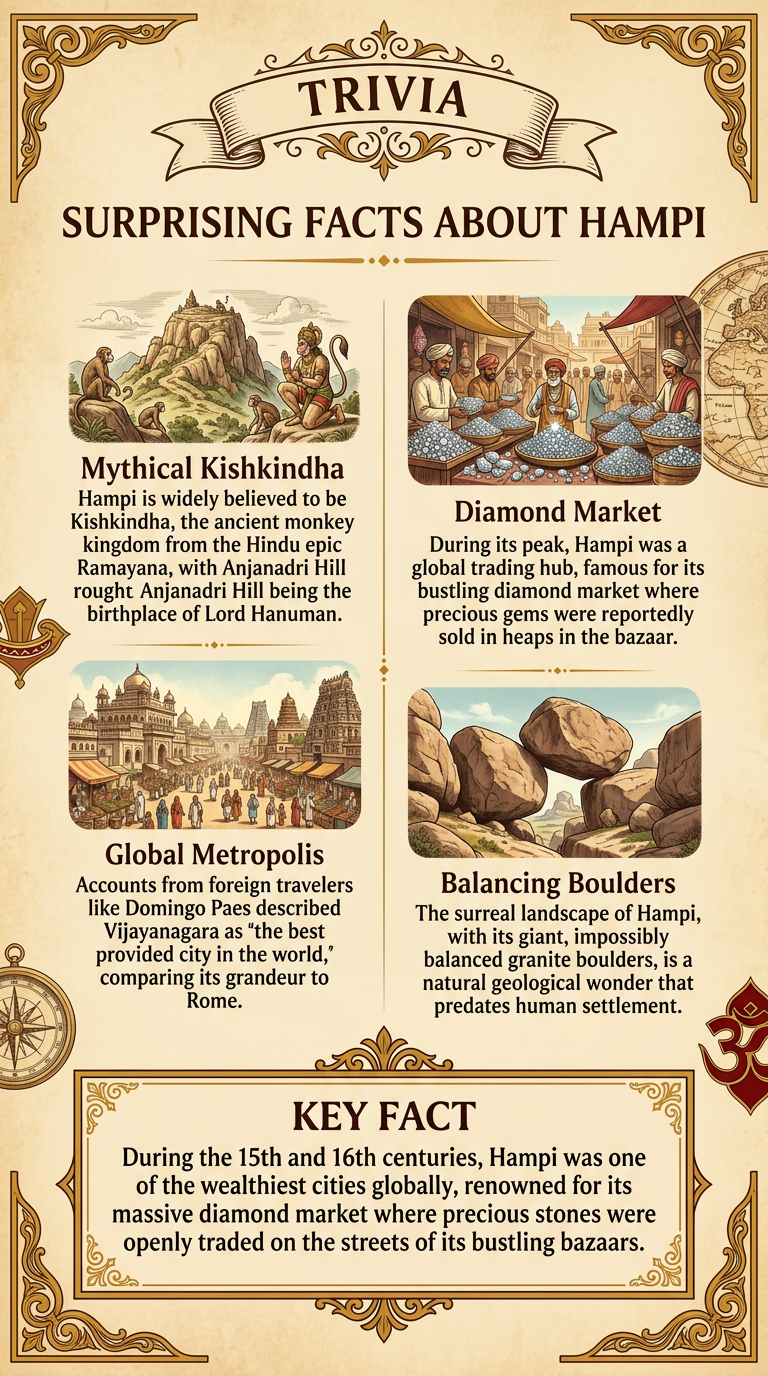
Surprising Facts About Hampi
Beyond its majestic ruins, Hampi holds a treasure trove of unexpected stories and connections that might just redefine your perception of this ancient city.
- **Mythical Kishkindha:** Hampi is widely believed to be Kishkindha, the ancient monkey kingdom from the Hindu epic Ramayana, with Anjanadri Hill being the birthplace of Lord Hanuman.
- **Diamond Market:** During its peak, Hampi was a global trading hub, famous for its bustling diamond market where precious gems were reportedly sold in heaps in the bazaar.
- **Global Metropolis:** Accounts from foreign travelers like Domingo Paes described Vijayanagara as 'the best provided city in the world,' comparing its grandeur to Rome.
- **Balancing Boulders:** The surreal landscape of Hampi, with its giant, impossibly balanced granite boulders, is a natural geological wonder that predates human settlement.
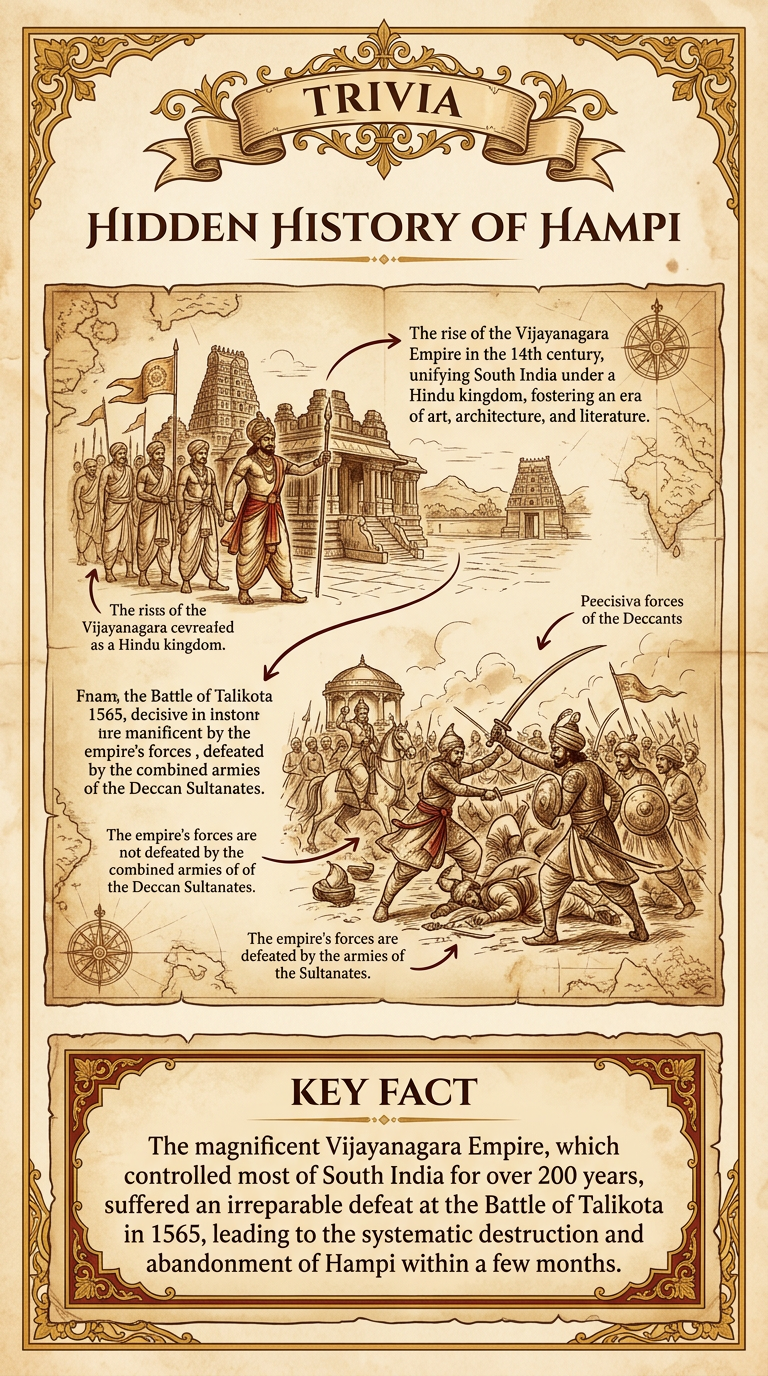
Hidden History of Hampi
Delve into the lesser-known narratives and pivotal moments that shaped Hampi, revealing the dramatic rise and tragic fall of an extraordinary empire.
- **Sudden Demise:** The flourishing Vijayanagara Empire met an abrupt and devastating end after the Battle of Talikota in 1565, leading to the rapid sack and abandonment of its capital, Hampi.
- **Four Dynasties:** The empire wasn't ruled by a single dynasty but by four successive ones—Sangama, Saluva, Tuluva, and Aravidu—each contributing to its growth and architectural legacy.
- **Architectural Plunder:** After its defeat, Hampi was systematically plundered and destroyed over five months by the Deccan Sultanates, leading to the widespread ruins seen today.
- **Revival of Hinduism:** The Vijayanagara Empire played a crucial role in the revival and preservation of Hindu traditions and art forms in South India during a period of significant cultural shifts.
More Hampi Secrets
The Sacred and Royal Centers
Hampi's vast archaeological site is broadly divided into two distinct zones: the Sacred Center and the Royal Center. The Sacred Center, primarily around the Virupaksha Temple, was the spiritual heart of the city, bustling with pilgrims and religious activities and home to many ancient shrines.
In contrast, the Royal Center housed the administrative buildings, elaborate palaces, and royal enclosures, including unique structures like the Lotus Mahal and the Elephant Stables, showcasing the secular power and grandeur of the Vijayanagara rulers.
Coracle Adventures on the Tungabhadra
A unique and quintessential Hampi experience is a coracle boat ride on the Tungabhadra River. These traditional, saucer-shaped boats, woven from bamboo and waterproofed with tar, offer a mesmerizing perspective of Hampi's riverside ruins and the dramatic boulder-strewn landscape. Gliding across the ancient waters, often with a skilled local guide, you might spot ancient temple ruins on the river banks or even exotic birds.
Echoes of the Ramayana
For devotees and history enthusiasts alike, Hampi holds deep connections to the Hindu epic Ramayana. Many believe the region corresponds to Kishkindha, the mythical monkey kingdom and the refuge of Lord Rama and Lakshmana during their search for Sita. Anjanadri Hill, identifiable by its numerous steps and white-washed temple, is revered as the birthplace of Lord Hanuman, making Hampi a sacred pilgrimage site beyond its historical significance.
More Hampi Content Coming Soon
We're crafting a complete guide for Hampi. Stay tuned!
Explore More Trivia