
Hanoi, a city where ancient traditions fuse with a vibrant modern pulse, often surprises visitors with its layers of history and unexpected marvels. Beyond the bustling streets and fragrant street food lies a treasure trove of captivating stories, ingenious designs, and hidden secrets waiting to be unearthed, making every corner a potential discovery for the curious traveler.
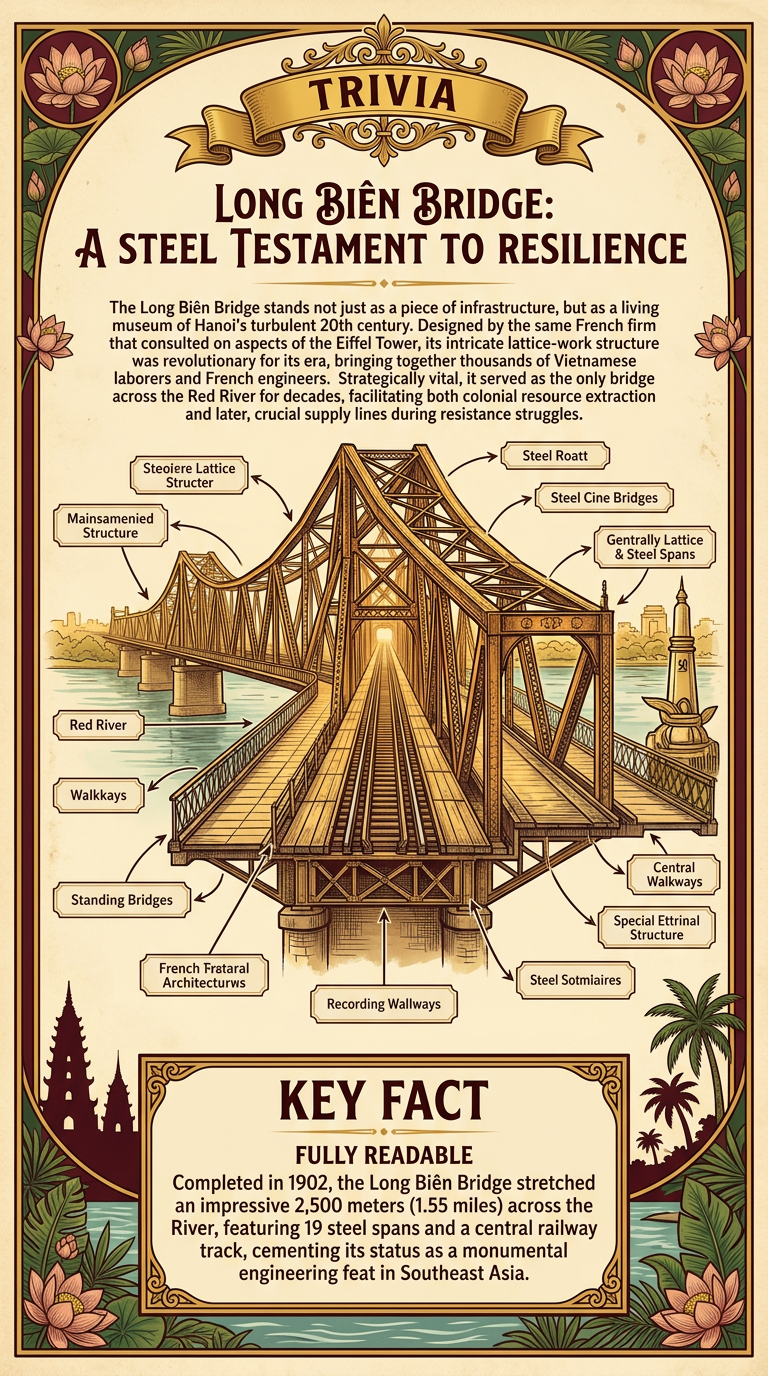
Long Biên Bridge: A Steel Testament to Resilience
Dive into the remarkable story of Hanoi's iconic Long Biên Bridge, a testament to French colonial engineering, Vietnamese resilience, and a vital artery connecting past and present.
- Built by the French company Daydé & Pillé between 1897 and 1902, it was once one of the longest bridges in Asia.
- Originally named Paul Doumer Bridge after the Governor-General of French Indochina, it was a symbol of French colonial power.
- Constructed using over 5,500 tonnes of rolled steel and 186,000 rivets, it was a marvel of its time.
- Despite suffering severe damage from numerous American bombing campaigns during the Vietnam War, particularly in 1967 and 1972, the bridge was continuously repaired and remains operational today.
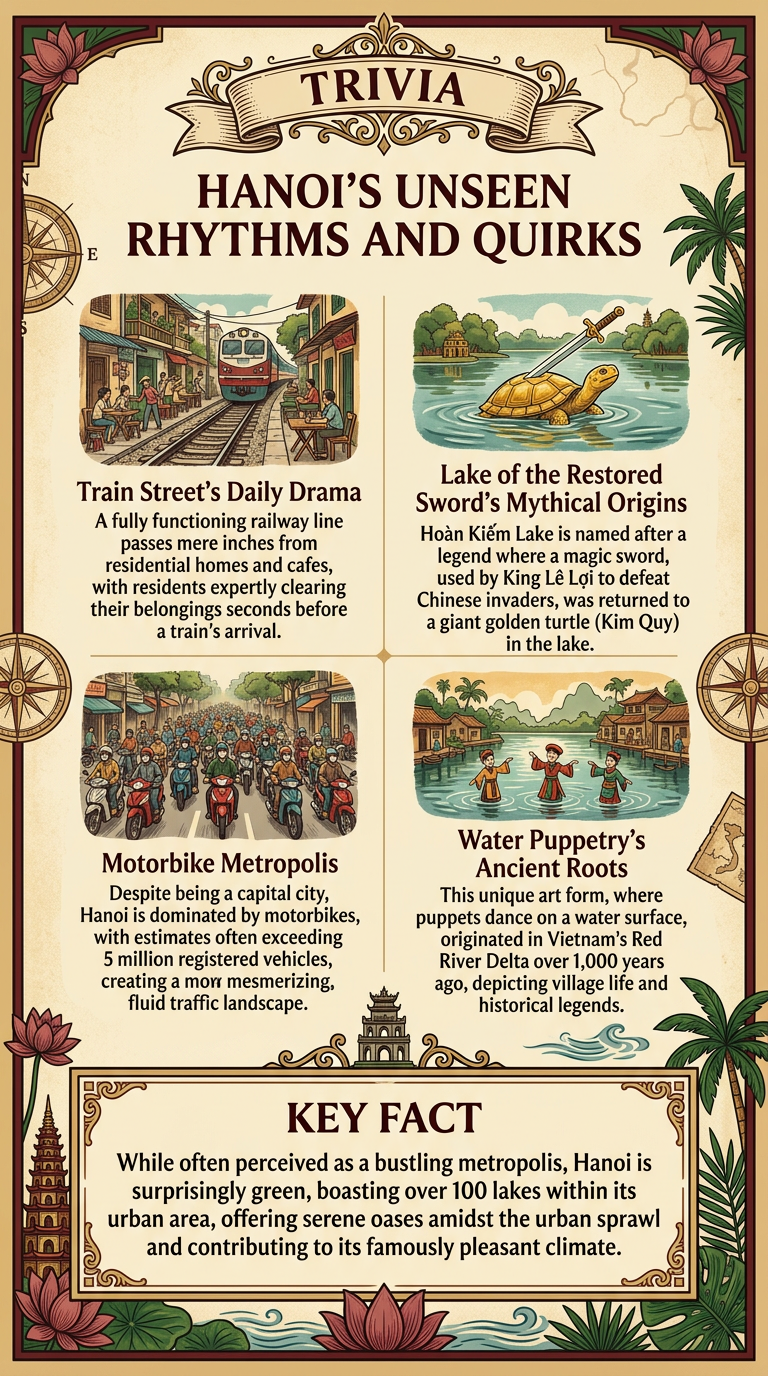
Hanoi's Unseen Rhythms and Quirks
Beyond the well-trodden paths, Hanoi holds a fascinating array of surprising facts that challenge common perceptions and reveal its unique character.
- **Train Street's Daily Drama:** A fully functioning railway line passes mere inches from residential homes and cafes, with residents expertly clearing their belongings seconds before a train's arrival.
- **Lake of the Restored Sword's Mythical Origins:** Hoàn Kiếm Lake is named after a legend where a magic sword, used by King Lê Lợi to defeat Chinese invaders, was returned to a giant golden turtle (Kim Quy) in the lake.
- **Motorbike Metropolis:** Despite being a capital city, Hanoi is dominated by motorbikes, with estimates often exceeding 5 million registered vehicles, creating a mesmerizing, fluid traffic landscape.
- **Water Puppetry's Ancient Roots:** This unique art form, where puppets dance on a water surface, originated in Vietnam's Red River Delta over 1,000 years ago, depicting village life and historical legends.
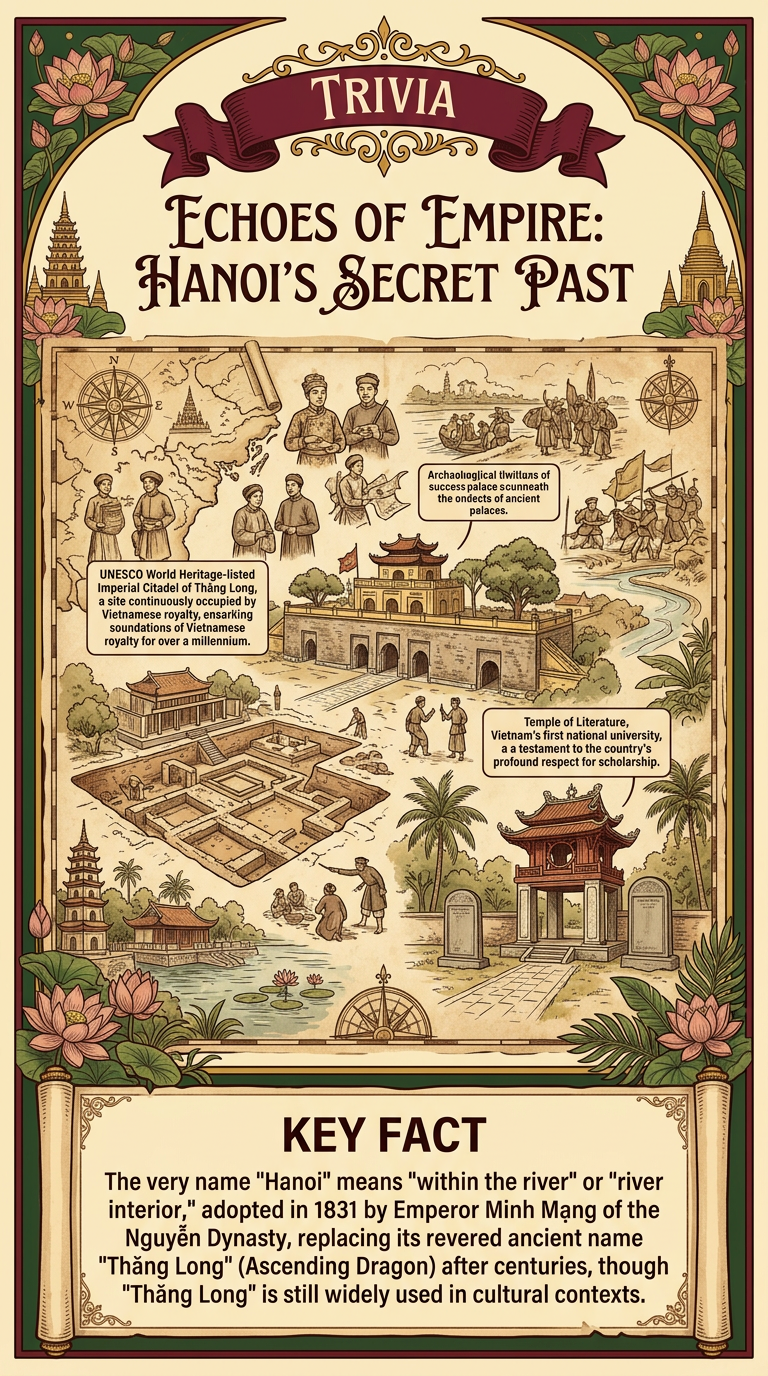
Echoes of Empire: Hanoi's Secret Past
Uncover the clandestine narratives and forgotten tales etched into Hanoi's ancient stones and bustling avenues, revealing layers of a history often overlooked.
- **Thăng Long Citadel's Continuous Legacy:** Excavations beneath the Imperial Citadel of Thăng Long revealed multiple layers of royal palaces, dating back over 1,000 years, built directly on top of each other by successive dynasties.
- **Scholarly Stelae at the Temple of Literature:** The 82 stone stelae mounted on turtle backs at the Temple of Literature record the names and achievements of successful candidates in royal examinations from 1442 to 1779.
- **Hoa Lo Prison's Dual History:** Infamously known as the 'Hanoi Hilton' by American POWs during the Vietnam War, this prison was originally built by the French colonialists in 1896 to incarcerate Vietnamese political prisoners.
- **B-52 Lake's War Relic:** The small 'B-52 Lake' (Hồ Hữu Tiệp) in Ngọc Hà is famous for containing the wreckage of an American B-52 bomber shot down on December 27, 1972, a stark, visible reminder of the 'Christmas Bombing'.
More Hanoi Secrets
The Art of Phở and Bún Chả
Hanoi is widely considered the birthplace of Phở, especially Phở Bò (beef noodle soup). The dish evolved from interactions between Chinese and French culinary influences, adapting local ingredients into a uniquely Vietnamese staple that is now globally renowned.
Bún Chả, another iconic Hanoi dish of grilled pork with vermicelli, gained international fame when Anthony Bourdain and then-President Barack Obama famously shared a meal of it in 2016 at Bún Chả Hương Liên, putting a spotlight on this delicious combination of flavors.
Hanoi's 36 Guild Streets
The Old Quarter of Hanoi, with its narrow streets and traditional tube houses, is historically known as the '36 Guild Streets' or '36 Old Streets.' Each street was traditionally dedicated to a specific craft or trade, like Hang Bac (Silver Street), Hang Gai (Hemp Street), or Hang Quat (Fan Street). While some trades have shifted, the legacy of specialized commerce is still partly visible today, offering a fascinating glimpse into ancient urban planning and economy.
The Enigma of Dong Xuan Market
Dong Xuan Market, Hanoi's largest indoor market, has been a bustling commercial hub for centuries. Originally established by the French in 1889, it has been rebuilt multiple times after fires. Its current multi-story structure is a labyrinth of stalls selling everything from textiles and electronics to fresh produce and street food. More than just a market, it's a vibrant microcosm of Hanoi life and a testament to the city's enduring entrepreneurial spirit, with hidden alleys and vendors specializing in obscure goods.
More Hanoi Content Coming Soon
We're crafting a complete guide for Hanoi. Stay tuned!
Explore More Trivia