
Jodhpur, the magnificent Blue City, holds secrets far deeper than its captivating sapphire hue. Beyond the majestic forts and palaces, this desert jewel conceals a tapestry of unexpected tales, ingenious engineering, and surprising historical twists that will leave any curious traveler spellbound.
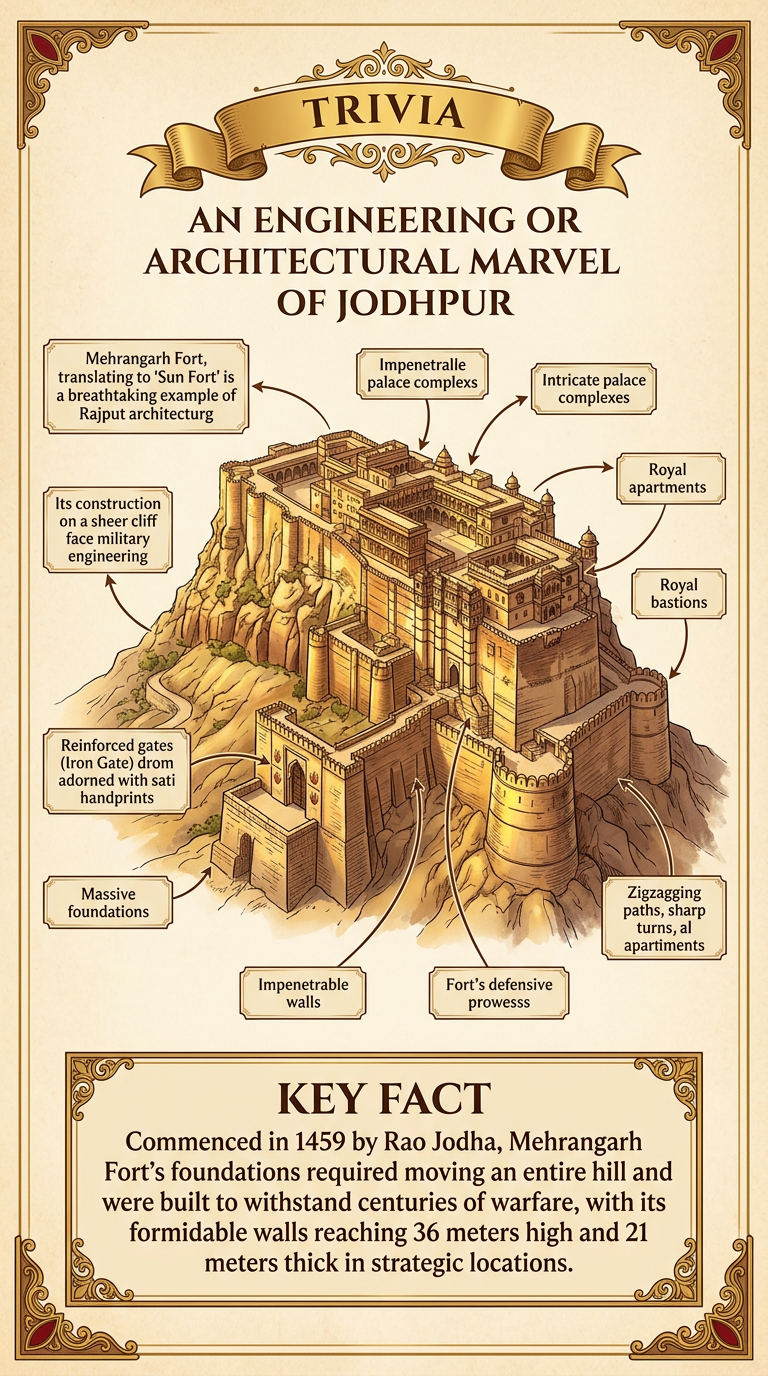
An Engineering or Architectural Marvel of Jodhpur
Towering majestically over Jodhpur, Mehrangarh Fort isn't just a symbol of power, but an unparalleled feat of medieval Indian engineering, seamlessly integrated with its rugged landscape.
- Built atop a 400-foot (122m) high isolated rock hill, making it naturally impregnable from nearly every angle.
- Its colossal walls soar up to 120 feet (36m) high and span 70 feet (21m) in places, appearing to be carved from the very rock it stands upon.
- The fort features seven formidable gates, each a testament to strategic defense, bearing battle scars from cannonball attacks and elephant charges.
- Sophisticated rainwater harvesting systems, including multiple step-wells and reservoirs, allowed the fort to sustain itself even during prolonged sieges in the arid desert climate.
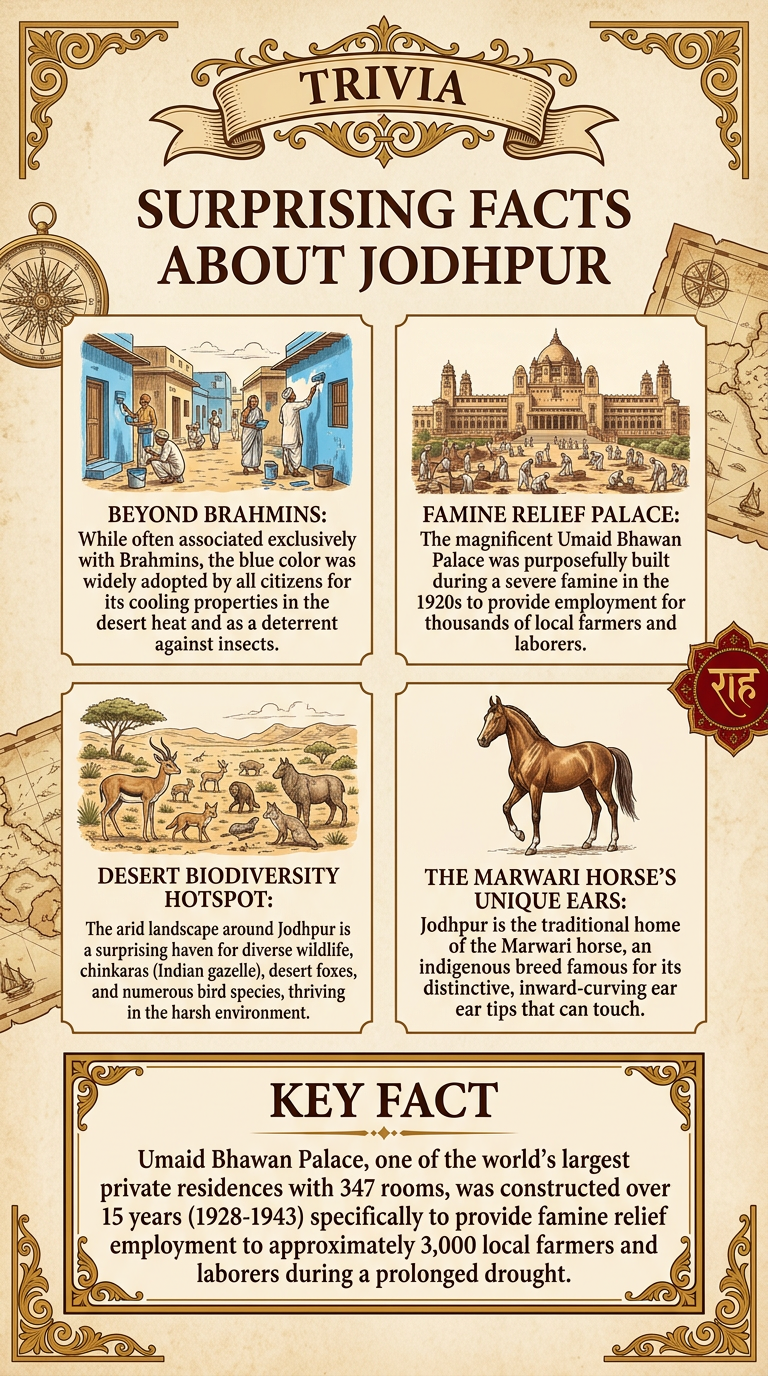
Surprising Facts About Jodhpur
Jodhpur is famous for its blue houses, but the reasons behind this iconic color scheme and many other aspects of the city are far more intriguing than most visitors realize.
- **Beyond Brahmins:** While often associated exclusively with Brahmins, the blue color was widely adopted by all citizens for its cooling properties in the desert heat and as a deterrent against insects.
- **Famine Relief Palace:** The magnificent Umaid Bhawan Palace was purposefully built during a severe famine in the 1920s to provide employment for thousands of local farmers and laborers.
- **Desert Biodiversity Hotspot:** The arid landscape around Jodhpur is a surprising haven for diverse wildlife, including chinkaras (Indian gazelle), desert foxes, and numerous bird species, thriving in the harsh environment.
- **The Marwari Horse's Unique Ears:** Jodhpur is the traditional home of the Marwari horse, an indigenous breed famous for its distinctive, inward-curving ear tips that can touch.
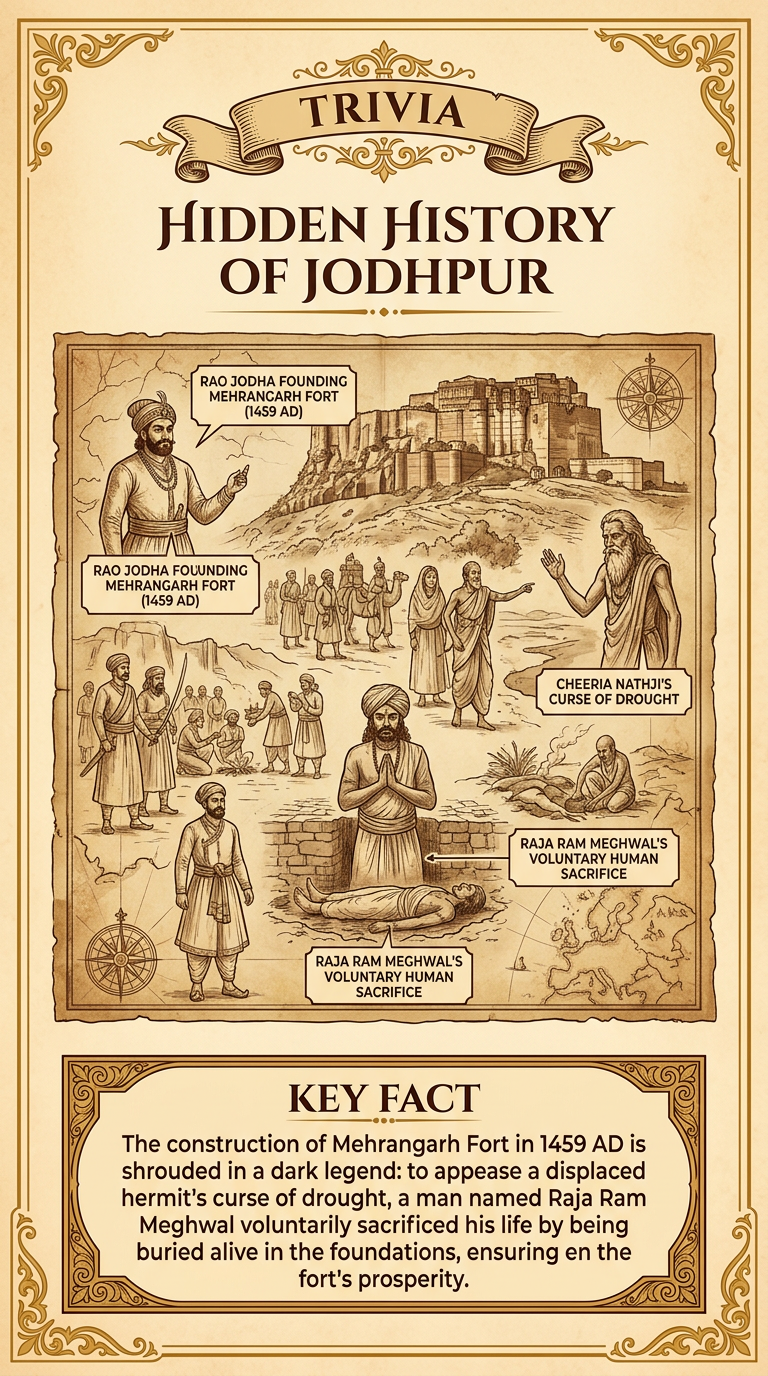
Hidden History of Jodhpur
Beyond the well-trodden paths, Jodhpur's ancient stones whisper tales of curses, human sacrifice, and intriguing social rituals that have shaped its unique identity.
- **The Curse of Cheeria Nathji:** Mehrangarh Fort's foundation involved displacing a hermit, Cheeria Nathji, who cursed the fort with water scarcity, reportedly leading to a human sacrifice to appease him.
- **Jaswant Thada's Spiritual Significance:** This exquisite marble cenotaph isn't just a memorial; it was built on a cremation ground and continues to host sacred rituals, holding a deeper spiritual weight than its serene appearance suggests.
- **Ancient Water Harvesting Secrets:** Beyond the fort, many 'baoris' (step-wells) and 'talabs' (lakes) around Jodhpur, some centuries old, reveal advanced indigenous knowledge of water management in an arid zone.
- **The Royal Practice of 'Amli':** Historically, Rajput nobles engaged in 'Amli' or 'Ryanka', a ceremonial consumption of opium, often before battles or significant social gatherings, as a tradition of camaraderie and courage.
More Jodhpur Secrets
Taste of the Thar: Jodhpur's Culinary Delights
Jodhpur's cuisine is a flavorful journey through the Thar Desert, known for its rich, spicy, and often sweet dishes designed to withstand the arid climate. The iconic 'Mirchi Bada' (spicy chili fritter) is a popular street food snack, while 'Makhaniya Lassi' (creamy, saffron-infused buttermilk) offers a refreshing contrast. Don't miss the traditional 'Dal Bati Churma', a staple Rajasthani thali featuring baked wheat balls, lentil curry, and sweetened crumbled wheat.
For those with a sweet tooth, Jodhpur offers 'Mawa Kachori' (a sweet pastry filled with milk solids and nuts) and 'Ghevar' (a disc-shaped sweet cake), perfect for sampling the region's indulgent desserts.
The Craftsmanship of Jodhpur: Textiles and Handicrafts
Jodhpur is a treasure trove for traditional arts and crafts. Its vibrant textiles are particularly renowned, especially 'Bandhani' (tie-dye) fabrics, which are meticulously handcrafted into colorful sarees, turbans, and dupattas. The city is also famous for its intricate 'Mojari' footwear, exquisitely embroidered leather shoes. Furthermore, the robust wooden furniture, often adorned with traditional carvings and brass inlay work, showcases the skill of local artisans, making Jodhpur a prime spot for unique souvenirs and home decor.
The Bishnoi Community and Desert Conservation
Nestled in villages around Jodhpur, the Bishnoi community stands as an extraordinary example of environmental conservation rooted in ancient spiritual beliefs. Adhering to 29 principles laid down by their 15th-century guru, Jambheshwar, Bishnois are devout protectors of nature and wildlife. They famously revere and protect trees, especially the Khejri, and animals like the blackbuck, often risking their lives to prevent harm to them. Their commitment to ecological preservation is a living testament to sustainable living in harmony with the challenging desert environment, a lesson in conservation centuries ahead of its time.
More Jodhpur Content Coming Soon
We're crafting a complete guide for Jodhpur. Stay tuned!
Explore More Trivia