
Kanha and Bandhavgarh are not just premier tiger reserves; they are ancient lands teeming with untold stories, hidden histories, and natural wonders that go far beyond their magnificent wildlife. Prepare to uncover surprising facts and forgotten tales that reveal the true depth of these incredible Indian destinations, offering a journey through time as much as through nature.
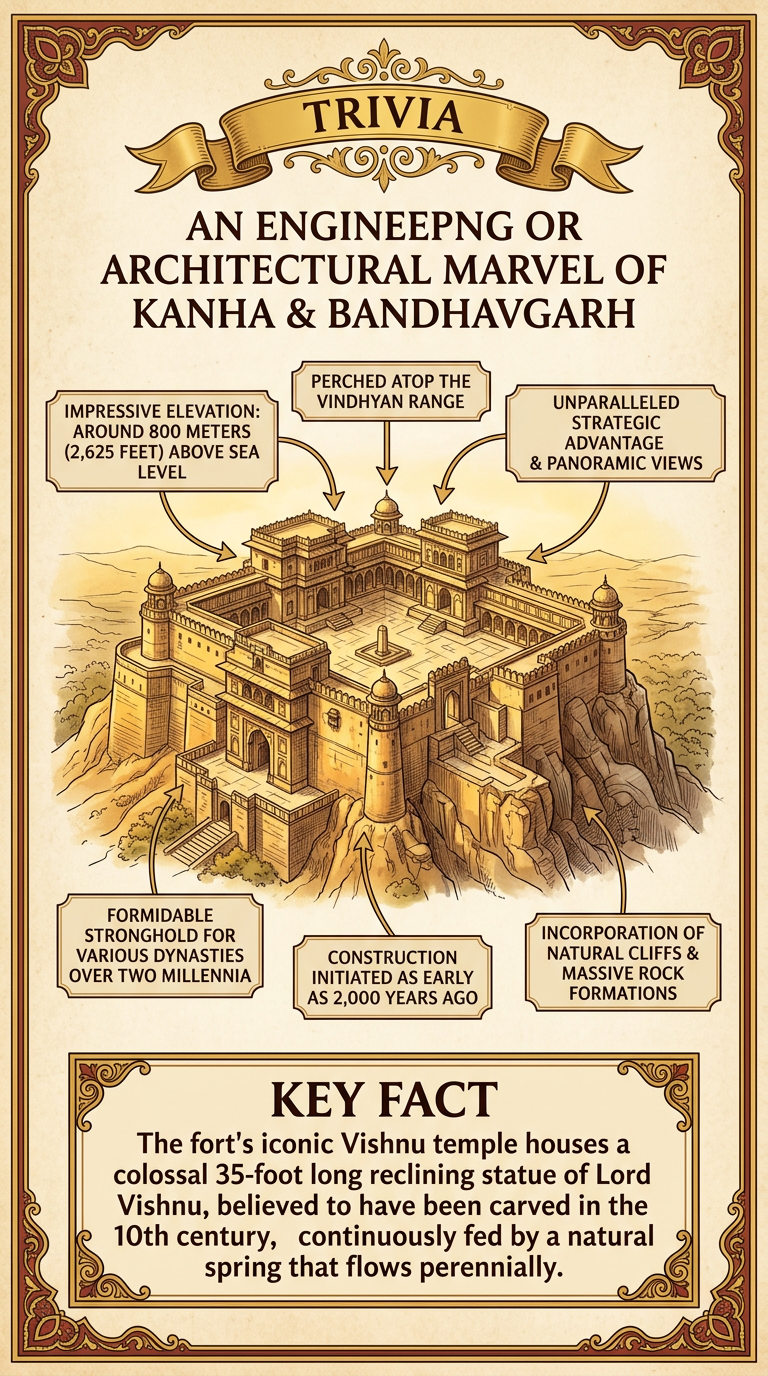
An Engineering or Architectural Marvel of Kanha & Bandhavgarh
Perched atop a towering cliff, the ancient Bandhavgarh Fort is an incredible testament to human ingenuity and resilience, seamlessly integrated with its natural, rugged surroundings, offering a glimpse into centuries of strategic construction.
- The fort stands at an impressive elevation of around 800 meters (2,625 feet) above sea level, offering unparalleled strategic views.
- It encompasses several ancient temples, including the Shesh Shaiya Vishnu temple with a massive reclining Vishnu statue, meticulously carved from a single piece of rock.
- The fort's complex water management system includes multiple ponds and reservoirs, ingeniously designed to sustain its inhabitants during prolonged sieges.
- Its construction dates back approximately 2,000 years, with evidence of various dynasties adding to its structure over centuries.
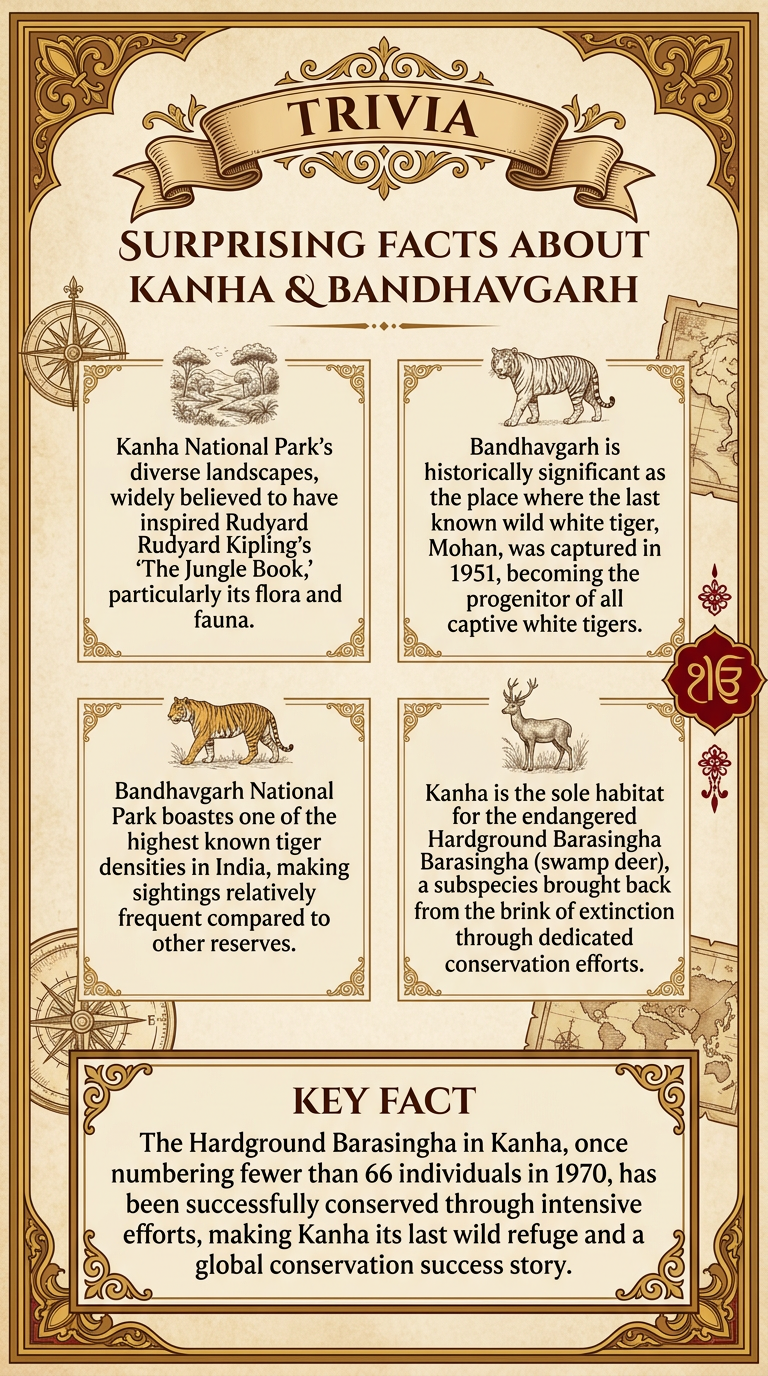
Surprising Facts About Kanha & Bandhavgarh
Beyond the thrill of tiger sightings, Kanha and Bandhavgarh hold a treasure trove of surprising facts that challenge common perceptions and reveal their deeper ecological and historical significance.
- **Kanha's Inspiration:** Kanha National Park's diverse landscapes are widely believed to have inspired Rudyard Kipling's "The Jungle Book," particularly its flora and fauna.
- **White Tiger History:** Bandhavgarh is historically significant as the place where the last known wild white tiger, Mohan, was captured in 1951, becoming the progenitor of all captive white tigers.
- **Highest Tiger Density:** Bandhavgarh National Park boasts one of the highest known tiger densities in India, making sightings relatively frequent compared to other reserves.
- **Ancient Species Relict:** Kanha is the sole habitat for the endangered Hardground Barasingha (swamp deer), a subspecies that was brought back from the brink of extinction through dedicated conservation efforts.
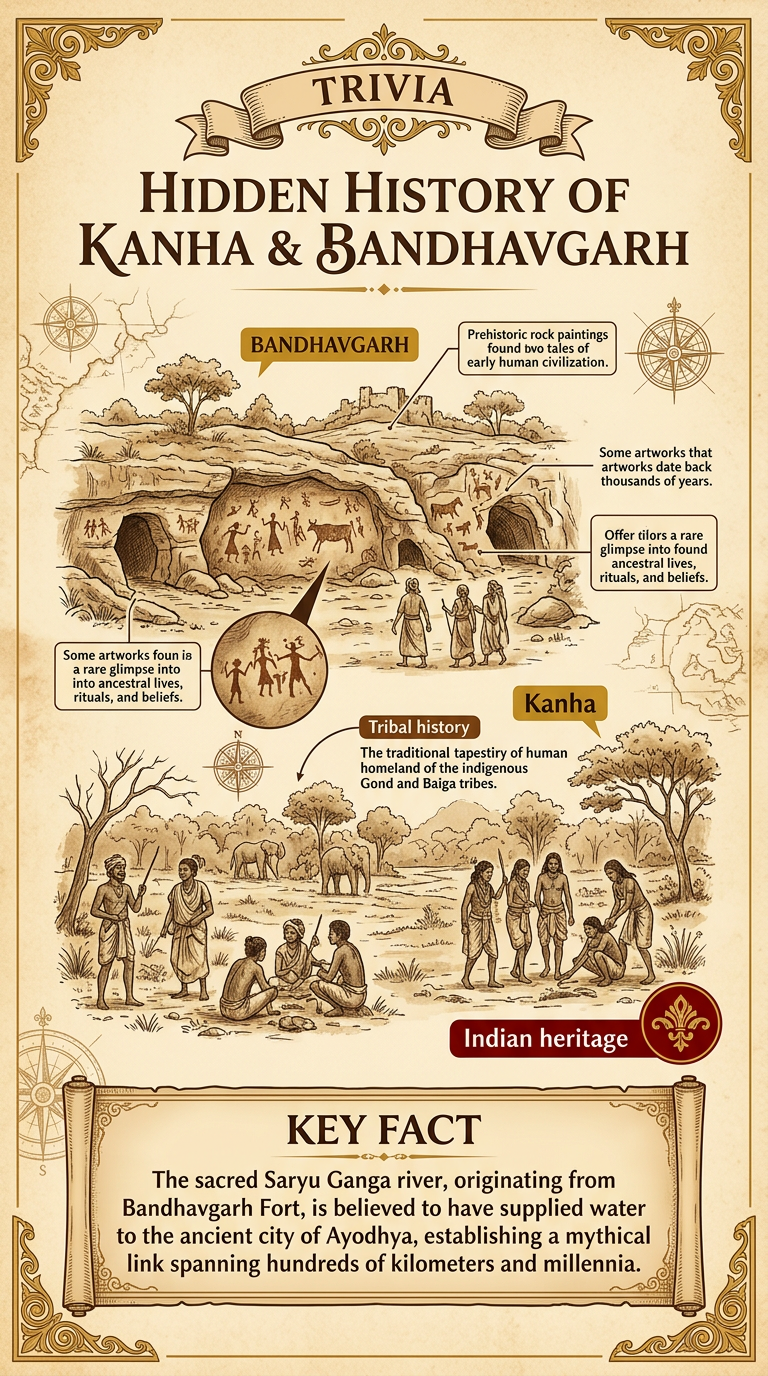
Hidden History of Kanha & Bandhavgarh
These tiger reserves are not just natural wonders; they are living museums, guarding ancient secrets and whispers of bygone eras that offer a glimpse into India's rich and often untold past.
- Prehistoric rock paintings dating back thousands of years have been discovered in caves within Bandhavgarh, indicating ancient human presence.
- The forests of Kanha were historically inhabited by indigenous Gond and Baiga tribes, whose traditional knowledge of the jungle is immense and deeply intertwined with its ecosystem.
- Bandhavgarh Fort served as a significant political and military outpost for various dynasties, including the powerful Baghel dynasty, who ruled from here for centuries.
- Kanha's area was once comprised of multiple distinct princely states, whose diverse hunting practices ultimately led to the decline of wildlife before unified conservation efforts began.
More Kanha & Bandhavgarh Secrets
The "Ghost of the Forest" and Its Haven
Kanha National Park is renowned for its population of leopards, often referred to as the 'ghost of the forest' due to their elusive nature. Despite the focus on tigers, Kanha offers one of the best chances in India to spot these magnificent nocturnal predators. Their cunning camouflage and silent movements make a sighting a truly special event.
The park's diverse terrain, from dense sal forests to open grasslands, provides ideal habitats for leopards, who skillfully adapt to areas with lesser tiger presence.
A Flight Through Time: Birdlife of Bandhavgarh
While tigers dominate the narrative, Bandhavgarh is a haven for over 250 species of birds, including migratory visitors and rare residents. The blend of deciduous forests, grasslands, and wetlands attracts a stunning variety, from majestic raptors like Changeable Hawk-Eagles to vibrant Indian Rollers and elusive Malabar Pied Hornbills. Birdwatchers often discover as much joy here as wildlife enthusiasts, with the opportunity to spot species like the Red Junglefowl and the Crested Serpent Eagle.
Kanha's Conservation Triumph: Relocation & Reintroduction
Kanha National Park has been at the forefront of innovative conservation strategies, including successful village relocation programs to expand critical tiger habitat and reduce human-wildlife conflict. Furthermore, Kanha played a pivotal role in the reintroduction of gaur (Indian bison) to Bandhavgarh National Park in 2011, a landmark initiative demonstrating inter-park cooperation in bolstering endangered species populations across central India and creating a robust gene pool.
More Kanha & Bandhavgarh Content Coming Soon
We're crafting a complete guide for Kanha & Bandhavgarh. Stay tuned!
Explore More Trivia