
Kashmir holds countless fascinating stories and secrets waiting to be discovered. From ancient legends to modern marvels, this destination continues to captivate visitors with its rich heritage.
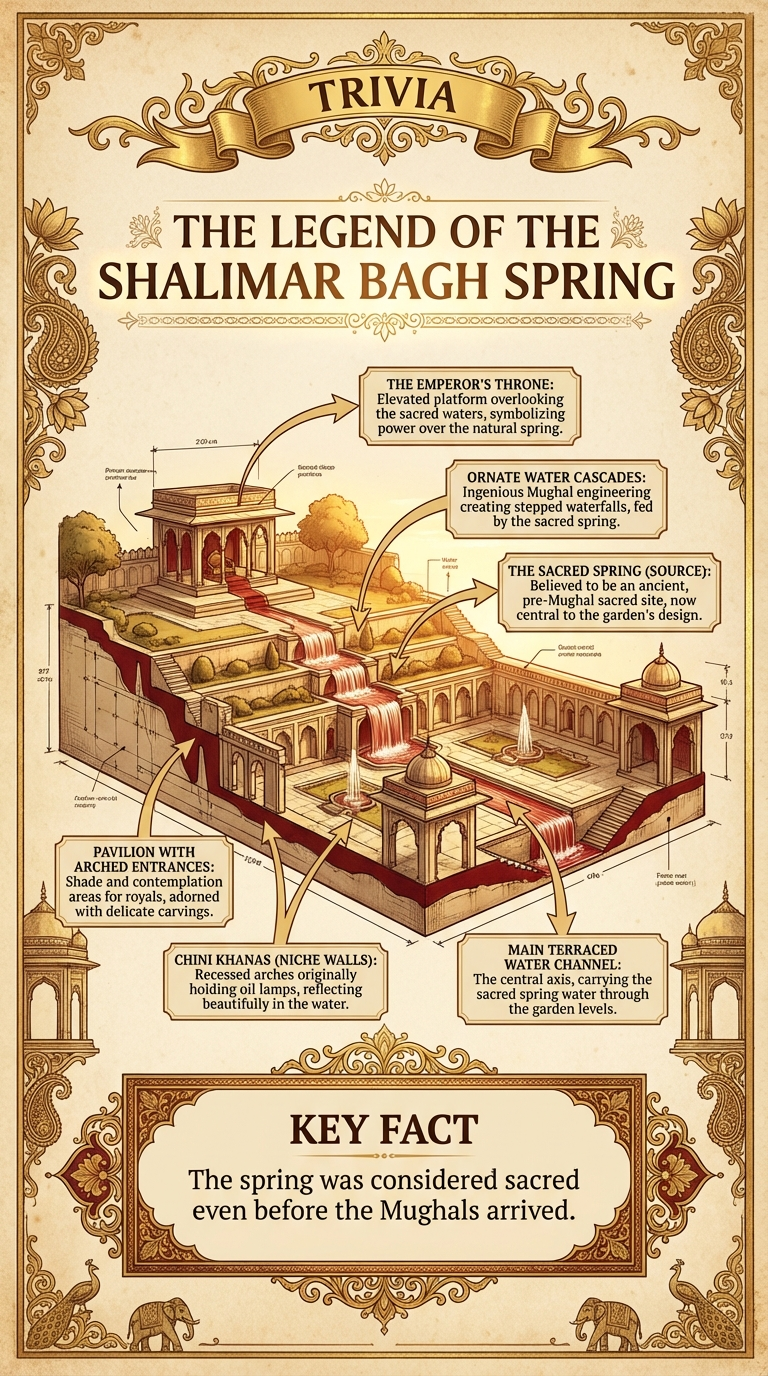
The Legend of the Shalimar Bagh Spring
Legend has it that the spring in Shalimar Bagh, now a meticulously crafted water feature, was once a sacred site even before the Mughals arrived. Local folklore speaks of a hermit who resided by the spring and possessed mystical powers. When Emperor Jahangir expressed his desire to build a garden around the spring, the hermit reluctantly agreed on the condition that the spring's sanctity would be preserved. The Mughals, known for their reverence for nature, honored this request, integrating the spring into their grand design, ensuring its continuous flow and spiritual significance for generations to come. The location of the spring was also considered strategically important for defense. A secret tunnel, now blocked, supposedly connected the garden to a fort overlooking Dal Lake.
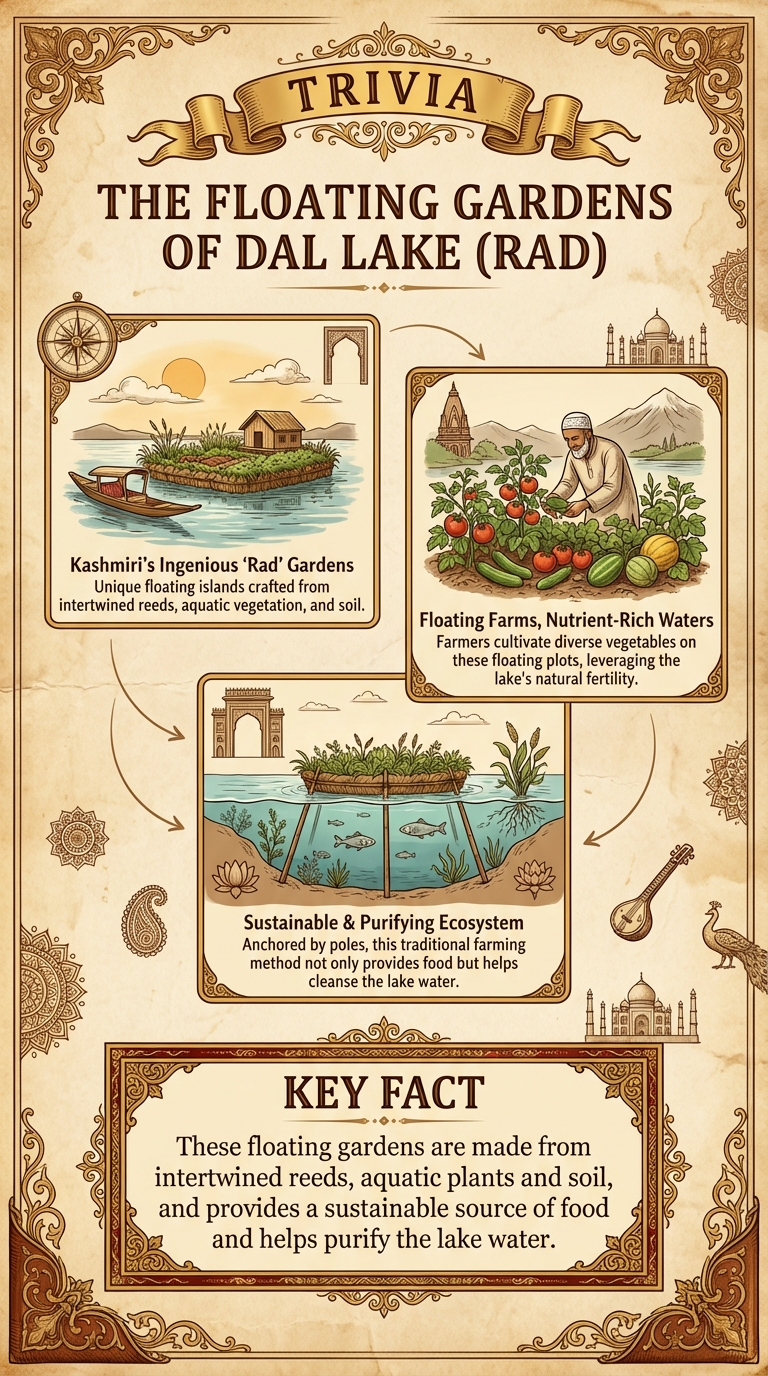
The Floating Gardens of Dal Lake (Rad)
The unique floating gardens of Dal Lake, locally known as 'Rad,' are an ingenious agricultural practice developed by the Kashmiri people. These gardens are essentially floating islands made from intertwined reeds, aquatic plants, and soil. Farmers cultivate vegetables like tomatoes, cucumbers, and melons on these floating plots, taking advantage of the nutrient-rich water of the lake. The 'Rad' are anchored to the lake bed using long poles, preventing them from drifting away. This traditional farming method not only provides a sustainable source of food but also helps to purify the lake water. The practice dates back centuries, showcasing the resourcefulness and adaptability of the Kashmiri people to their environment. The produce grown on these floating gardens are sold in the floating markets adding charm to the lake
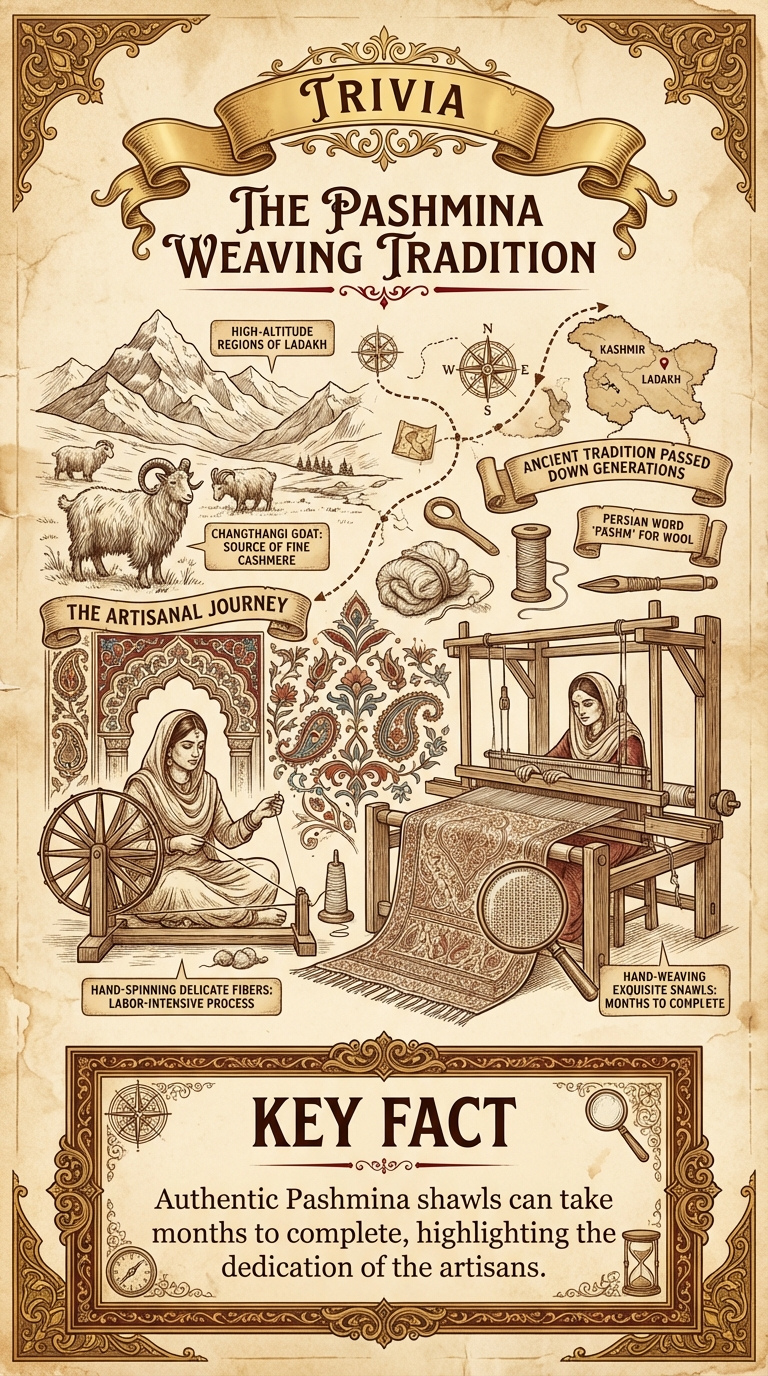
The Pashmina Weaving Tradition
The art of Pashmina weaving in Kashmir is an ancient tradition passed down through generations. Pashmina, derived from the Persian word for wool, is a fine type of cashmere wool sourced from the Changthangi goat found in the high-altitude regions of Ladakh. The process of transforming raw Pashmina wool into exquisite shawls and scarves is incredibly labor-intensive, requiring skilled artisans who meticulously hand-spin and hand-weave the delicate fibers. A single Pashmina shawl can take months to complete, reflecting the dedication and craftsmanship involved. Authentic Pashmina shawls are highly prized for their softness, warmth, and intricate designs, making them a symbol of Kashmiri artistry and luxury. The Geographical Indication (GI) tag ensures the authenticity of hand-spun and hand-woven Pashmina products from Kashmir.
Want More Kashmir Stories?
Get our complete 80+ page ebook with all the trivia, attractions, and insider tips.
Ebook Coming Soon