
Khajuraho isn't just a collection of temples; it's an open-air museum of human expression, where spirituality and sensuality intertwine on sandstone. Prepare to be amazed by the sheer scale of ancient artistry and the surprising stories carved into every inch of these UNESCO World Heritage wonders.
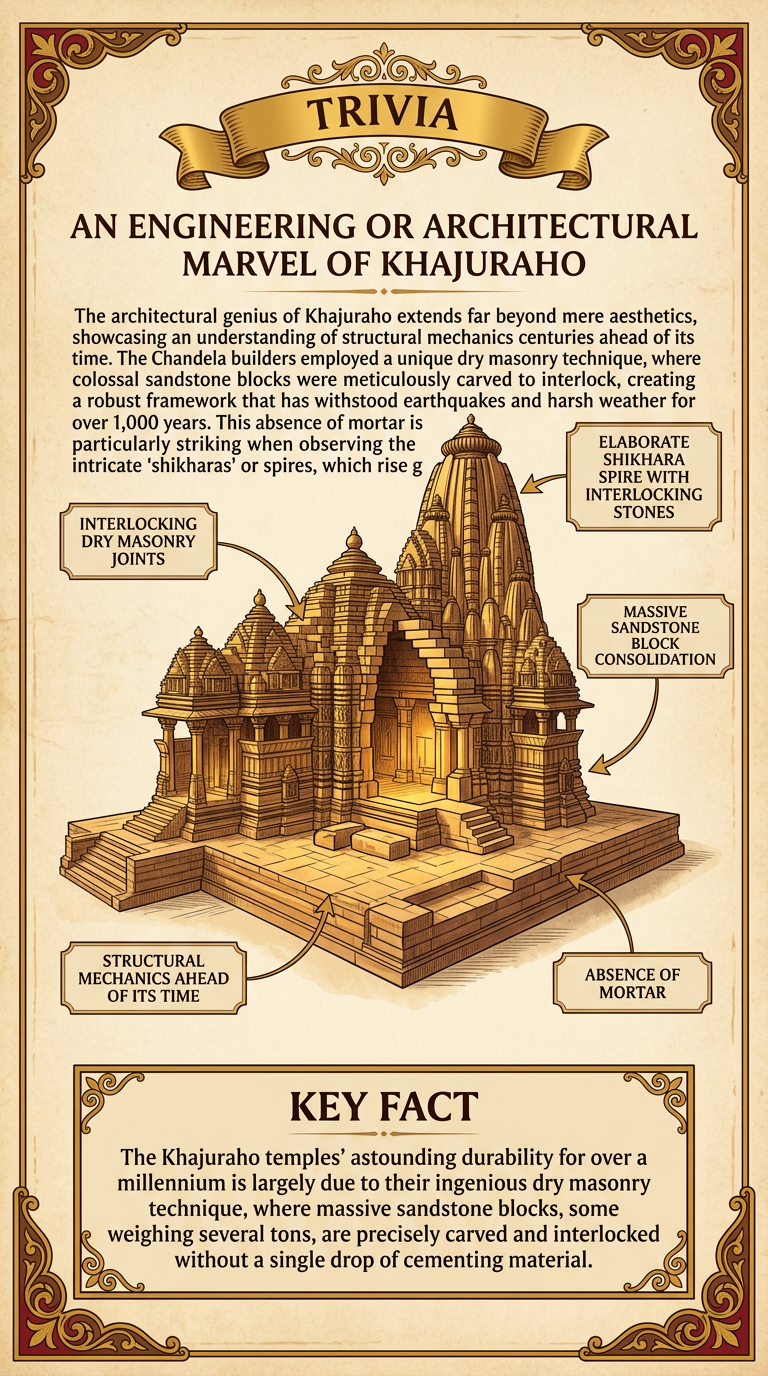
An Engineering or Architectural Marvel of Khajuraho
The temples of Khajuraho stand as a testament to the advanced architectural and engineering prowess of the Chandela dynasty, defying time with their intricate designs and robust construction.
- Mortar-Free Marvel: Temples were constructed using an interlocking technique, where precisely cut sandstone blocks fit together seamlessly without any mortar.
- Intricate Superstructures: The Shikharas (spires) are complex clusters of miniature spires, giving the illusion of mountain ranges and soaring upwards without internal support.
- Elevated Platforms: Each major temple sits atop a high, solid platform (jagati), ensuring structural stability and protecting them from seasonal flooding.
- Precision in Alignment: Most temples are meticulously oriented along an east-west axis, aligning with the rising and setting sun, a common practice in ancient Indian temple architecture.
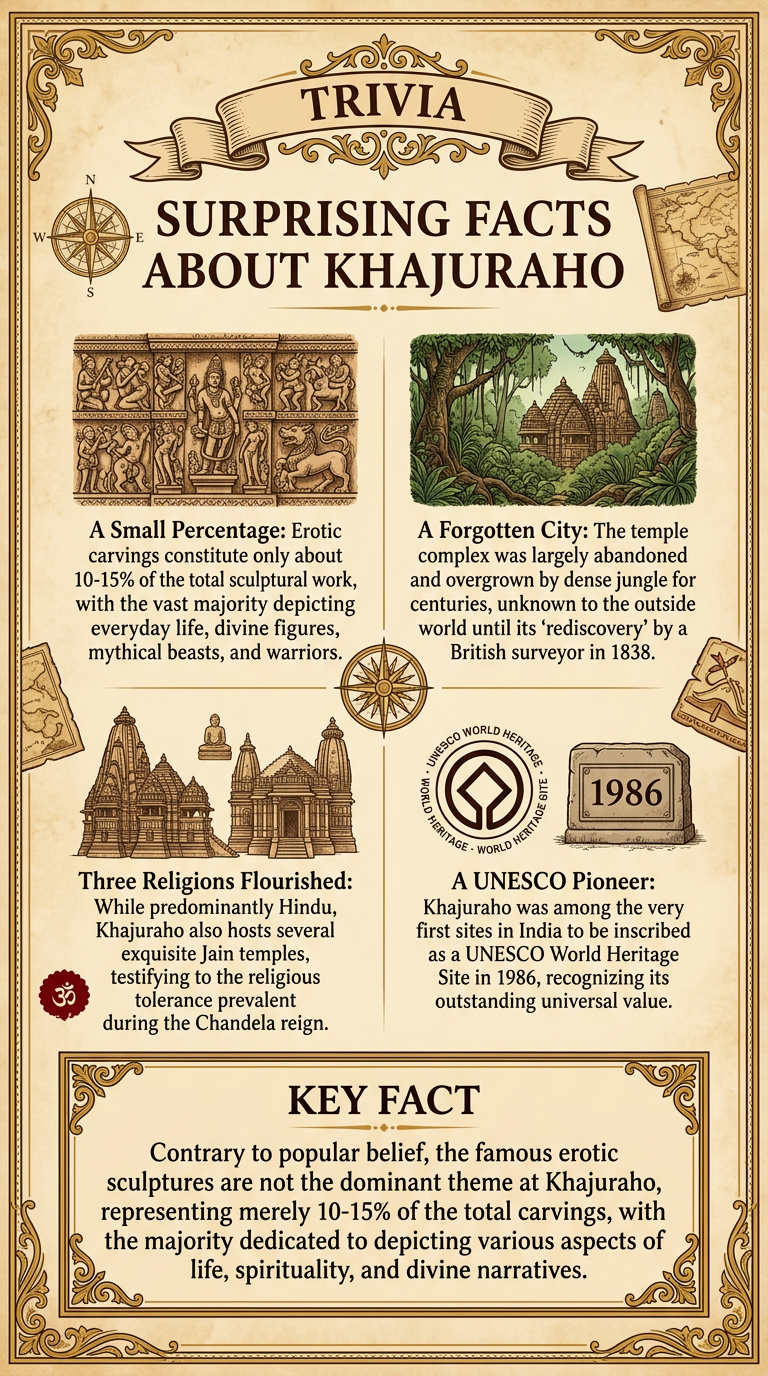
Surprising Facts About Khajuraho
Beyond the widely recognized erotic sculptures, Khajuraho holds a multitude of surprising truths that challenge popular perceptions and reveal a deeper, richer history.
- A Small Percentage: Erotic carvings constitute only about 10-15% of the total sculptural work, with the vast majority depicting everyday life, divine figures, mythical beasts, and warriors.
- A Forgotten City: The temple complex was largely abandoned and overgrown by dense jungle for centuries, unknown to the outside world until its 'rediscovery' by a British surveyor in 1838.
- Three Religions Flourished: While predominantly Hindu, Khajuraho also hosts several exquisite Jain temples, testifying to the religious tolerance prevalent during the Chandela reign.
- A UNESCO Pioneer: Khajuraho was among the very first sites in India to be inscribed as a UNESCO World Heritage Site in 1986, recognizing its outstanding universal value.
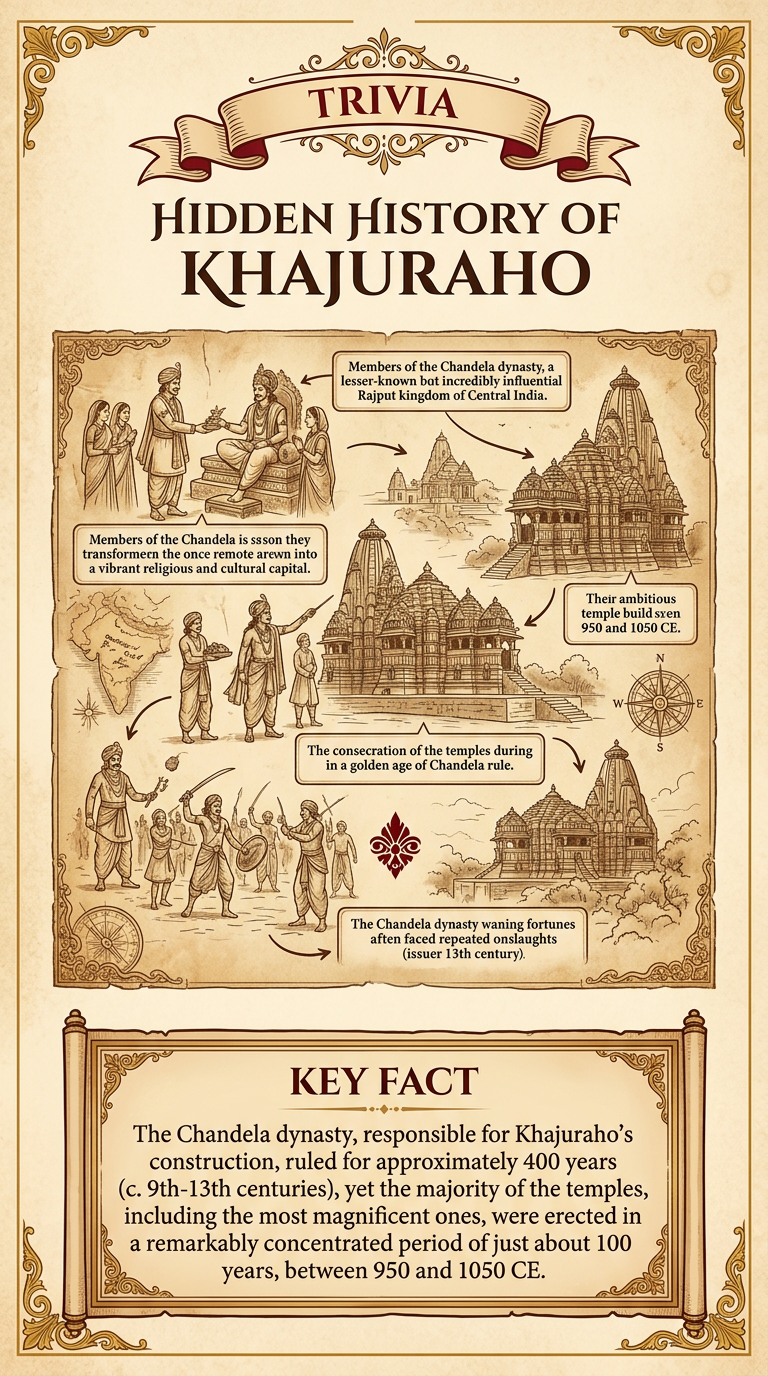
Hidden History of Khajuraho
Delve into the enigmatic past of Khajuraho, uncovering the untold stories of its rise, its period of silence, and the resilient Chandela dynasty that brought these wonders to life.
- The Chandela Legacy: These temples were constructed by the powerful Chandela dynasty, a Rajput clan who ruled parts of Central India between the 9th and 13th centuries, reaching their zenith of power between 950 and 1050 CE.
- Mythical Origins: The Chandela rulers traced their lineage back to Chandravarman, the son of the Moon God (Chandra) and a beautiful Brahmin maiden, a divine connection that imbued their reign with sacred authority.
- An Unforeseen Decline: The decline of the Chandela power began with invasions by the Delhi Sultanate in the early 13th century, leading to the gradual abandonment and eventual obscurity of the temple complex.
- Protected by Nature: Paradoxically, the dense forests that encroached upon Khajuraho after its abandonment acted as its saviour, shielding the temples from further destruction by invading forces over centuries.
More Khajuraho Secrets
The Living Art of Khajuraho
Khajuraho's artisans weren't just sculptors; they were storytellers who etched entire narratives into stone. Each carving, whether depicting a celestial being, a warrior in battle, or a couple in embrace, is a window into the socio-cultural fabric, religious beliefs, and artistic sensibilities of 10th-century India. The level of detail, from individual strands of hair to delicate jewelry, is breathtaking.
Festival of Dances
Every year, typically in February, Khajuraho hosts the famous Khajuraho Dance Festival, celebrating classical Indian dance forms against the stunning backdrop of the Western Group of temples. Renowned dancers perform Bharatnatyam, Kathak, Odissi, Kuchipudi, Manipuri, and Kathakali, bringing the ancient temple art to life. It's a mesmerizing blend of heritage and living culture.
The Western Group: A UNESCO Gem
While Khajuraho boasts several groups of temples, the Western Group is undoubtedly the most famous and well-preserved, housing iconic structures like the Kandariya Mahadeva, Lakshmana, and Vishwanatha temples. These temples, designated a UNESCO World Heritage site, represent the pinnacle of Chandela art and architecture, offering a concentrated experience of the site's grandeur.
More Khajuraho Content Coming Soon
We're crafting a complete guide for Khajuraho. Stay tuned!
Explore More Trivia