
Kuala Lumpur rose from a tin mining settlement to a gleaming metropolis in just 150 years. It's where ancient Hindu caves meet futuristic towers, and where Malay, Chinese, and Indian cultures blend into something uniquely Malaysian. Here are its hidden stories.
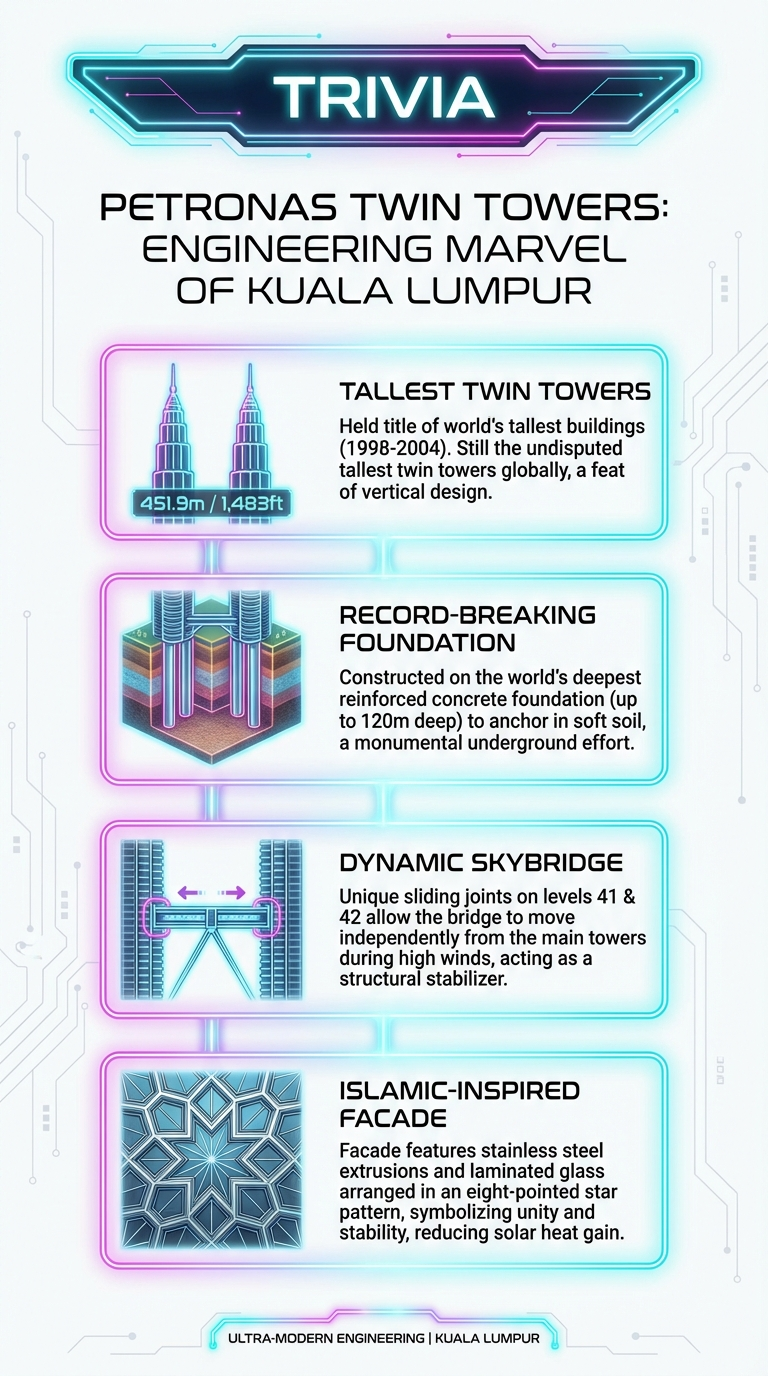
Petronas Towers: The Twin Race
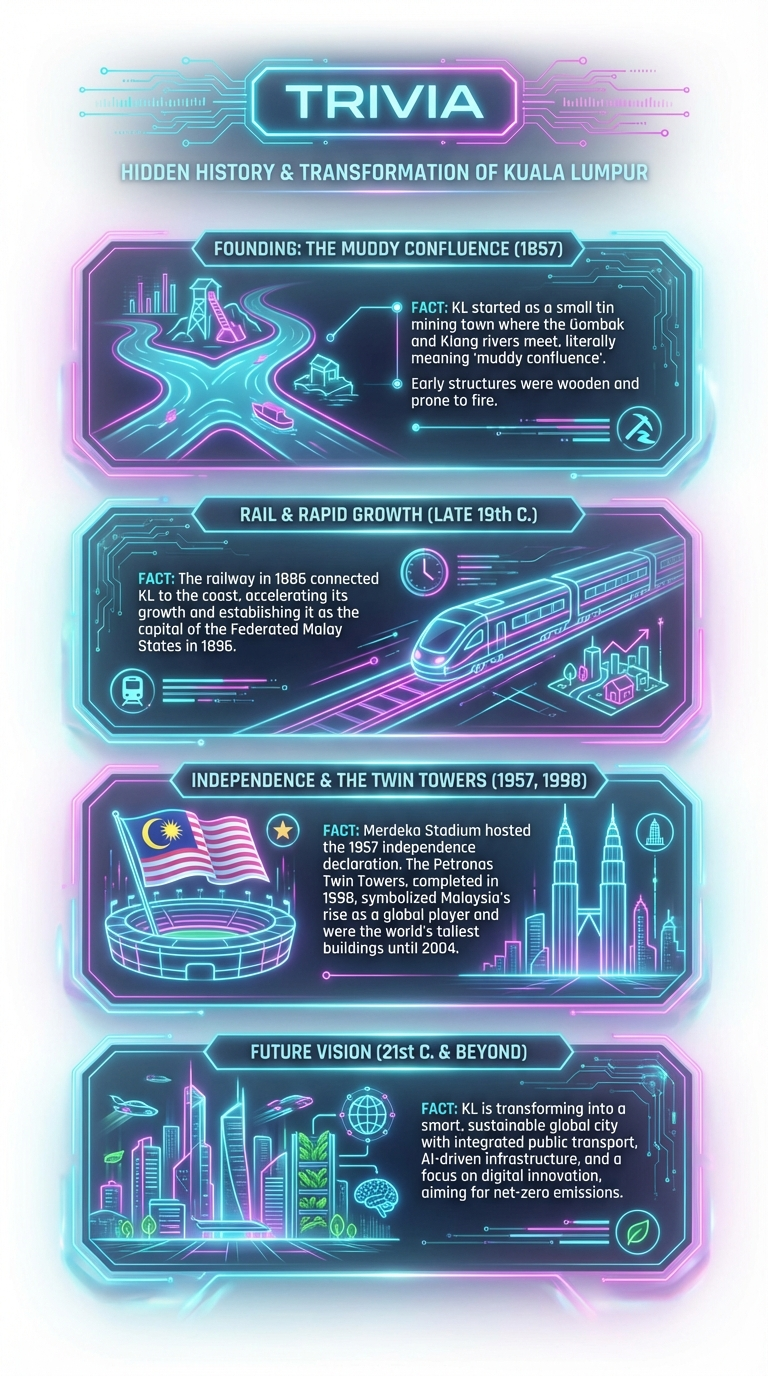
The Petronas Towers were the world's tallest buildings from 1998-2004. Their construction involved a secret competition:
- Two separate construction companies built each tower simultaneously
- Japanese Samsung (Tower 1) vs South Korean Hazama (Tower 2)
- Tower 2 was completed first - a point of national pride for Korea
- The 88 floors represent lucky number 8 doubled
- The sky bridge can slide 23 inches to prevent breakage
Batu Caves: 400 Million Years Old
These limestone caves formed 400 million years ago and have become one of the most important Hindu shrines outside India:
- 272 steps to reach the main Temple Cave
- The giant golden statue is 42.7 meters tall
- Home to 100+ long-tailed macaques (watch your belongings!)
- During Thaipusam, 1.5 million pilgrims climb the steps
- The rainbow stairs were painted in 2018 (controversially)
Three Cultures, One Amazing Cuisine
KL's food is the result of Malay, Chinese, and Indian cultures cooking side by side for centuries. The results are unique:
- Nasi Lemak: Coconut rice is the unofficial national dish
- Roti Canai: Indian flatbread served 24/7 in "mamak" stalls
- Char Kway Teow: Stir-fried noodles with "wok hei" (breath of wok)
- Bak Kut Teh: Herbal pork soup - a Chinese specialty
- Teh Tarik: "Pulled tea" - foamed by pouring between cups
More KL Secrets
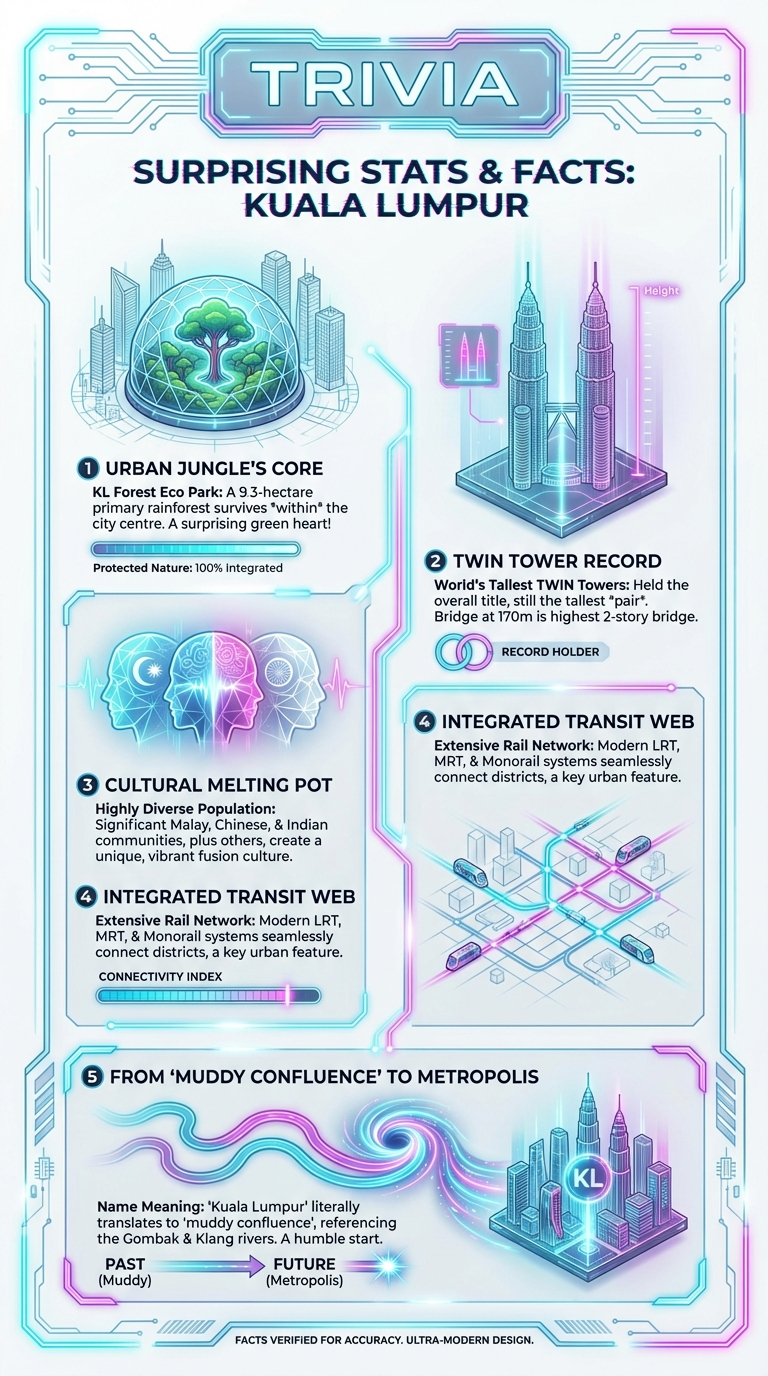
The Muddy Confluence
"Kuala Lumpur" literally means "muddy confluence" - named for the meeting point of the Klang and Gombak rivers. In the 1850s, 87 Chinese tin miners traveled upriver to this spot - only 18 survived the malaria-infested jungle. Those survivors founded the city we know today.
Fun fact: The original settlement was so disease-ridden it was nicknamed "KL - Killed Lots"!
The Moorish Railway Station
KL's old railway station (1911) looks like a palace from Arabian Nights, but it was designed by a British architect. The colonial government wanted an "Eastern" look to impress visitors. The station had to be redesigned twice because the original roof couldn't support snow loads - required by British building codes even in tropical Malaysia!
The Fastest Developing Capital
In 1957, when Malaysia gained independence, KL was a small colonial town. Today it's a metropolis of 8 million with one of Asia's best public transport systems. The city has reinvented itself three times: from tin mining to rubber to manufacturing to services.
Want More Kuala Lumpur Stories?
Get our complete 80+ page ebook with all the trivia, attractions, and insider tips.
Ebook Coming Soon