
Kyoto, a city synonymous with ancient temples and serene gardens, holds far more than meets the eye. Beyond its iconic beauty lies a fascinating tapestry of engineering marvels, surprising historical quirks, and cultural secrets waiting to be unearthed. Prepare to delve into the unexpected layers of Japan's former imperial capital, where every corner reveals a story both grand and intimate.
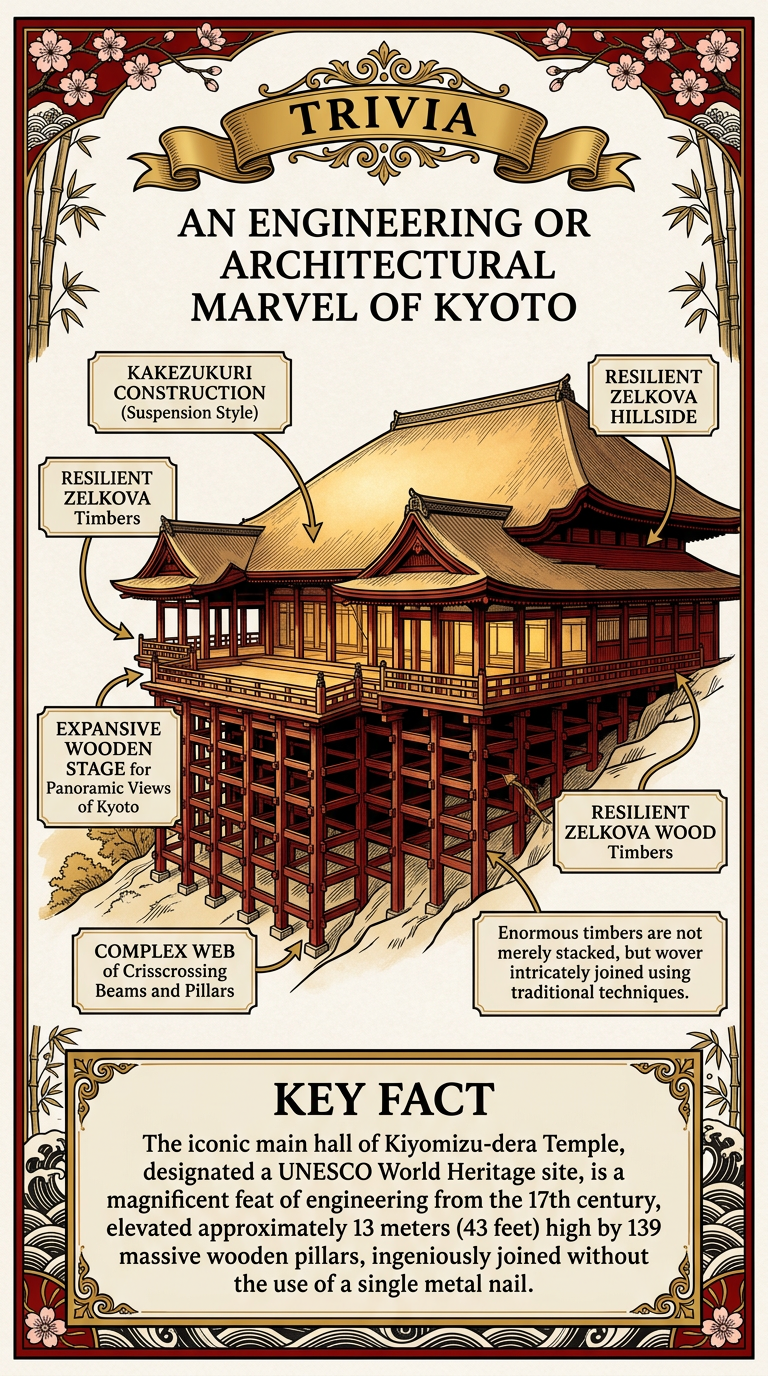
An Engineering or Architectural Marvel of Kyoto
Perched precariously on a hillside, Kiyomizu-dera's main hall is a testament to ancient Japanese ingenuity, built with a revolutionary technique that continues to baffle and impress.
- The entire main hall and its famous wooden stage are constructed without a single nail.
- The stage, known as 'Kiyomizu no Butai,' stands approximately 13 meters (43 feet) above the valley floor.
- It is supported by 139 massive zelkova wood pillars, interlocked with incredible precision in a unique 'kakezukuri' architectural style.
- The robust structure has withstood centuries of earthquakes, typhoons, and the weight of countless pilgrims.
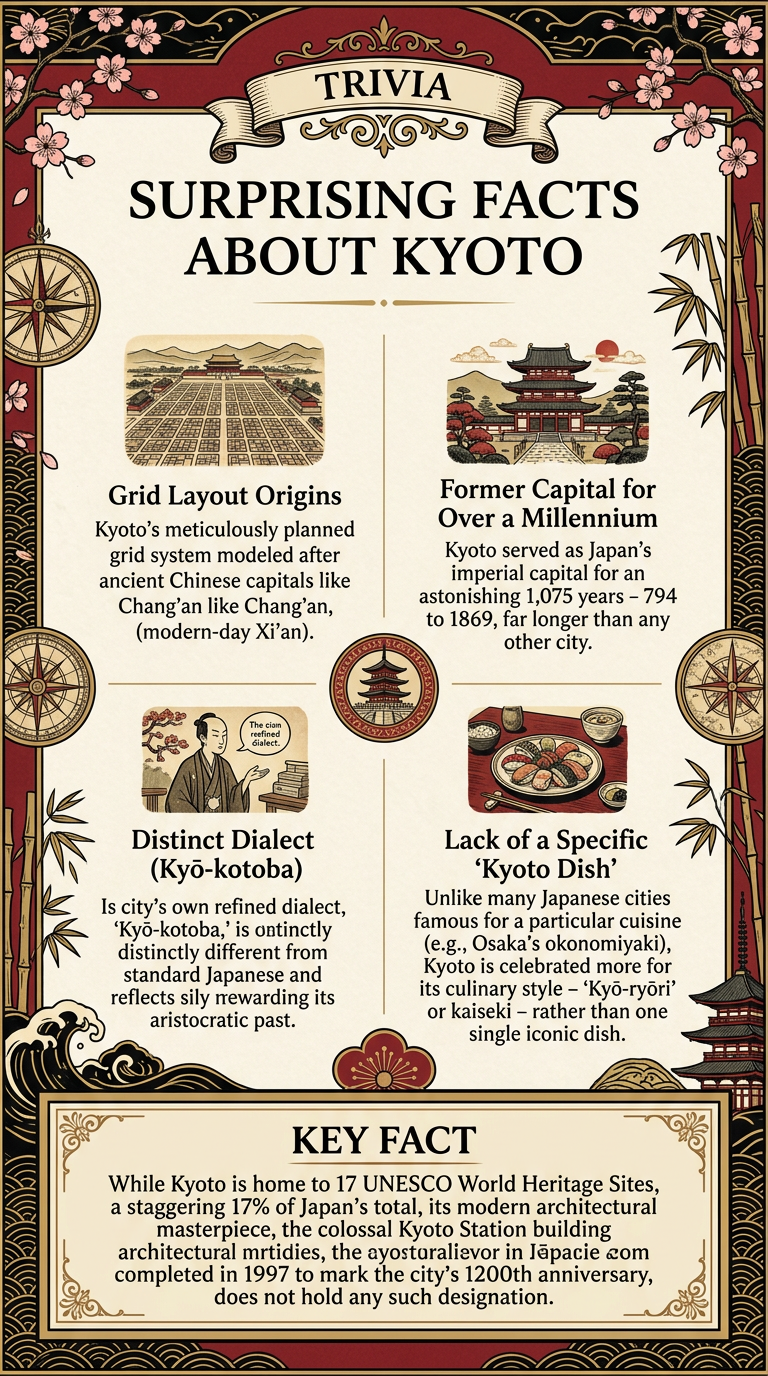
Surprising Facts About Kyoto
Beyond its ancient facade, Kyoto harbors a wealth of surprising facts, from its unique linguistic heritage to hidden modern paradoxes.
- **Grid Layout Origins:** Kyoto's meticulously planned grid system was modeled after ancient Chinese capitals like Chang'an (modern-day Xi'an).
- **Former Capital for Over a Millennium:** Kyoto served as Japan's imperial capital for an astonishing 1,075 years, from 794 to 1869, far longer than any other city.
- **Distinct Dialect (Kyō-kotoba):** The city boasts its own refined dialect, 'Kyō-kotoba,' which is distinctly different from standard Japanese and reflects its aristocratic past.
- **Lack of a Specific 'Kyoto Dish':** Unlike many Japanese cities famous for a particular cuisine (e.g., Osaka's okonomiyaki), Kyoto is celebrated more for its culinary style – 'Kyō-ryōri' or kaiseki – rather than one single iconic dish.
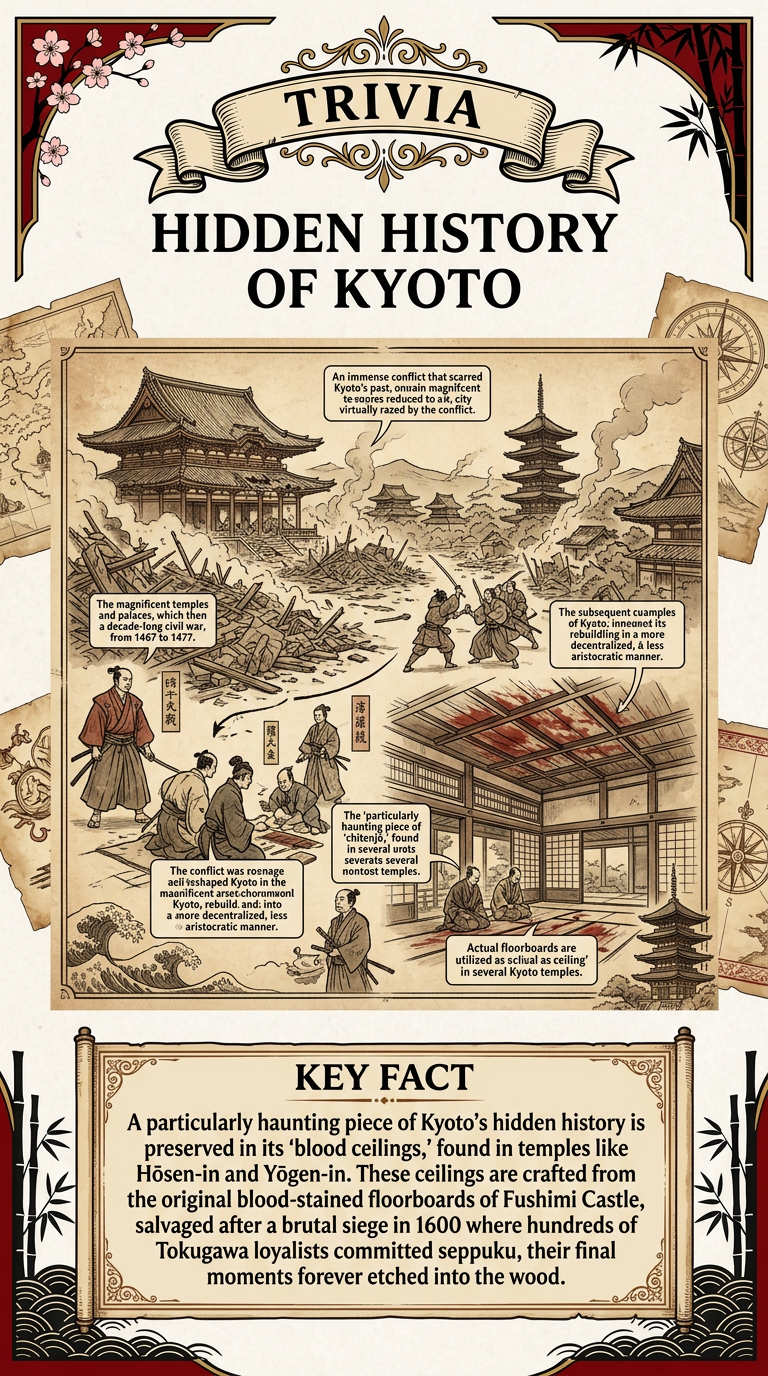
Hidden History of Kyoto
Beneath Kyoto’s tranquil surface lie tales of dramatic conflicts, political intrigue, and chilling architectural relics that speak of a turbulent past.
- The devastating Onin War (1467-1477) left Kyoto almost entirely in ruins, necessitating a complete rebuilding of much of the city.
- Several temples in Kyoto, including Hōsen-in and Yōgen-in, feature 'blood ceilings' (chitenjō) made from the floorboards of Fushimi Castle, stained with the blood of fallen warriors from a 1600 siege.
- The iconic Nijo Castle features 'nightingale floors' (uguisubari) designed to squeak underfoot, acting as an alarm system against assassins in feudal times.
- During World War II, Kyoto was spared from Allied bombing largely due to the personal intervention of U.S. Secretary of War Henry L. Stimson, who admired its cultural significance.
More Kyoto Secrets
Gion's Elusive Geisha Culture
Gion, Kyoto's most famous geisha district, is home to a unique and highly refined world. Here, 'geiko' (Kyoto's term for geisha) and 'maiko' (apprentice geiko) continue to preserve centuries-old performance arts, including traditional dance, music, and tea ceremony.
Access to the exclusive 'ochaya' (tea houses) where geiko entertain is traditionally by invitation only, often requiring an existing connection or introduction, making encounters with this living art form truly special and rare for most visitors.
The Kamogawa River's Hidden Stone Dragons
The Kamogawa River, which flows through the heart of Kyoto, is more than just a scenic waterway. Look closely at its banks, particularly around Shijo Bridge, and you might spot artfully arranged stones forming the shapes of mythical creatures. Local legend suggests these stones are 'guardian dragons,' protecting the city from floods and ill fortune. These subtle artistic touches are easily missed but offer a glimpse into Kyoto's deep connection with nature and folklore.
Nishiki Market: Kyoto's 400-Year-Old Kitchen
Nishiki Market, often called 'Kyoto's Kitchen,' boasts a rich history spanning over 400 years. This vibrant, narrow shopping street is dedicated to food, selling everything from fresh seafood, local vegetables, and traditional Kyoto pickles (tsukemono) to unique sweets and kitchenware. Originally a fish market in the late 16th century, Nishiki has evolved into a culinary treasure trove where visitors can sample local delicacies and witness the city's profound food culture firsthand.
More Kyoto Content Coming Soon
We're crafting a complete guide for Kyoto. Stay tuned!
Explore More Trivia