
Madrid, a city often overshadowed by its more famous coastal counterparts, pulsates with a unique energy that blends grand history with modern innovation. Prepare to discover the surprising truths and hidden narratives that make Spain's vibrant capital an extraordinary destination, far beyond its renowned art museums and bustling tapas bars.
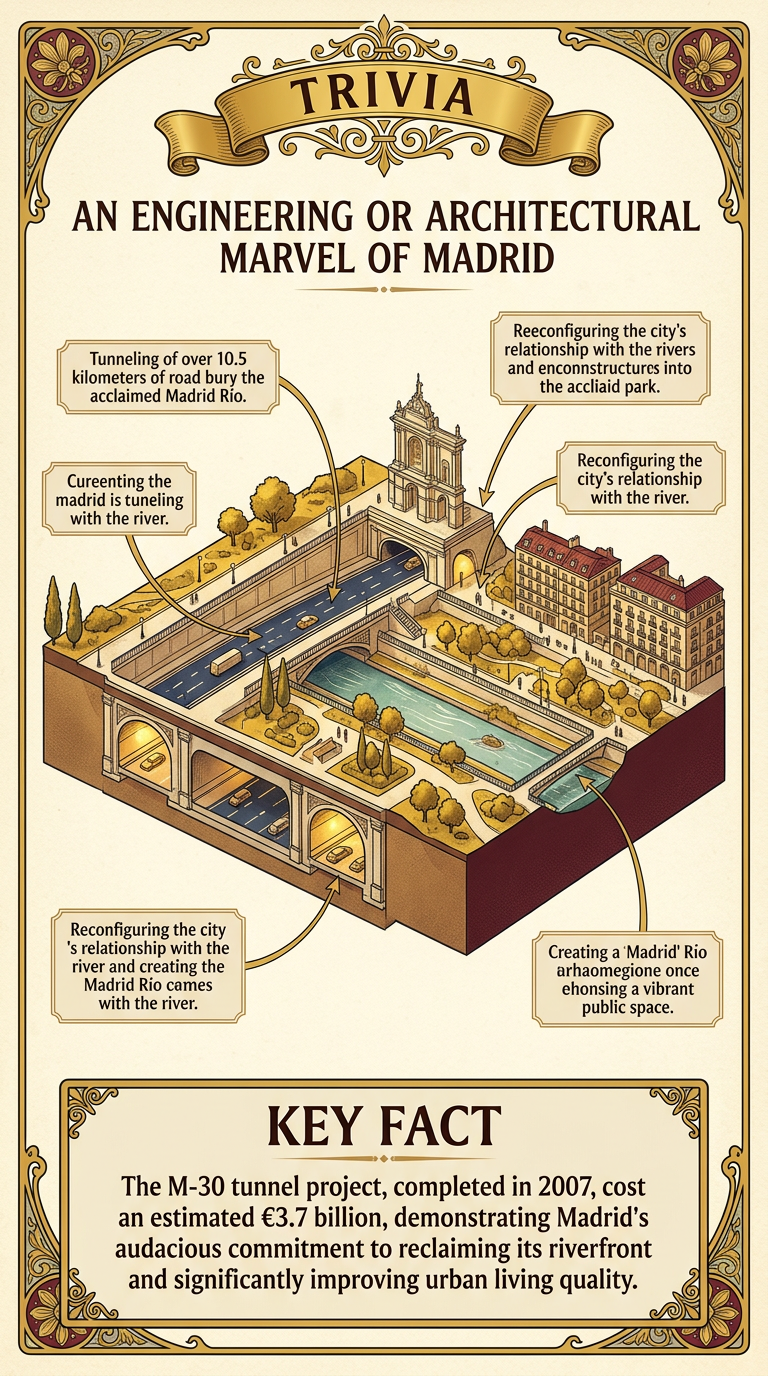
An Engineering or Architectural Marvel of Madrid
While Madrid boasts centuries-old palaces and iconic plazas, some of its most remarkable achievements lie in modern urban engineering and visionary architectural projects that have reshaped the city.
- The M-30 ring road project involved burying over 10.5 kilometers of highway, creating one of Europe's largest urban tunneling efforts.
- This massive undergrounding project paved the way for Madrid Río, a sprawling urban park built directly atop the former highway route.
- Madrid Río transformed the Manzanares riverbanks, adding 1.2 million square meters of green space and 13 new pedestrian bridges.
- The iconic Arganzuela Footbridge, designed by Dominique Perrault, winds like a double helix across the park, connecting both sides of the river.
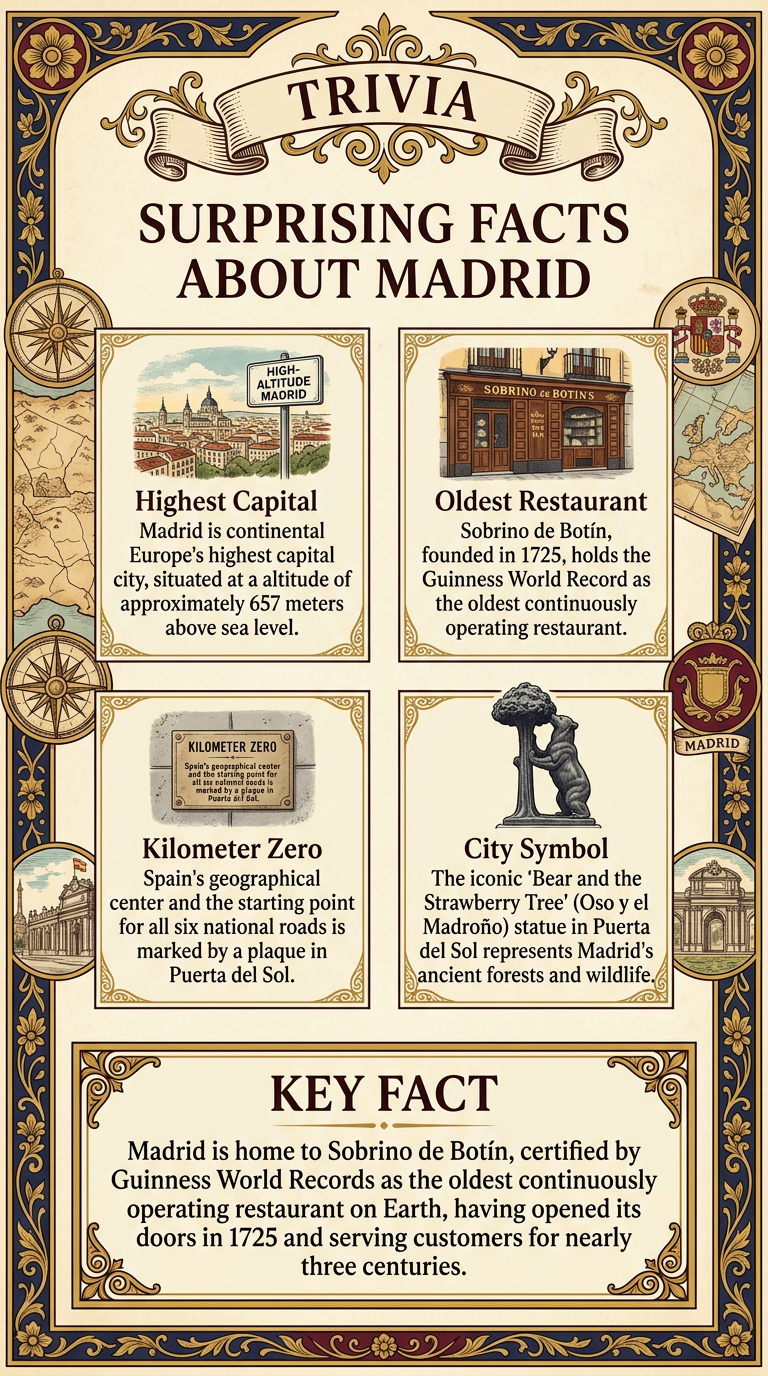
Surprising Facts About Madrid
Beyond its reputation for flamenco and bullfighting, Madrid holds a wealth of intriguing and often unexpected characteristics that defy typical tourist assumptions.
- Highest Capital: Madrid is continental Europe's highest capital city, situated at an altitude of approximately 657 meters above sea level.
- Oldest Restaurant: Sobrino de Botín, founded in 1725, holds the Guinness World Record as the oldest continuously operating restaurant.
- Kilometer Zero: Spain's geographical center and the starting point for all six national roads is marked by a plaque in Puerta del Sol.
- City Symbol: The iconic 'Bear and the Strawberry Tree' (Oso y el Madroño) statue in Puerta del Sol represents Madrid's ancient forests and wildlife.
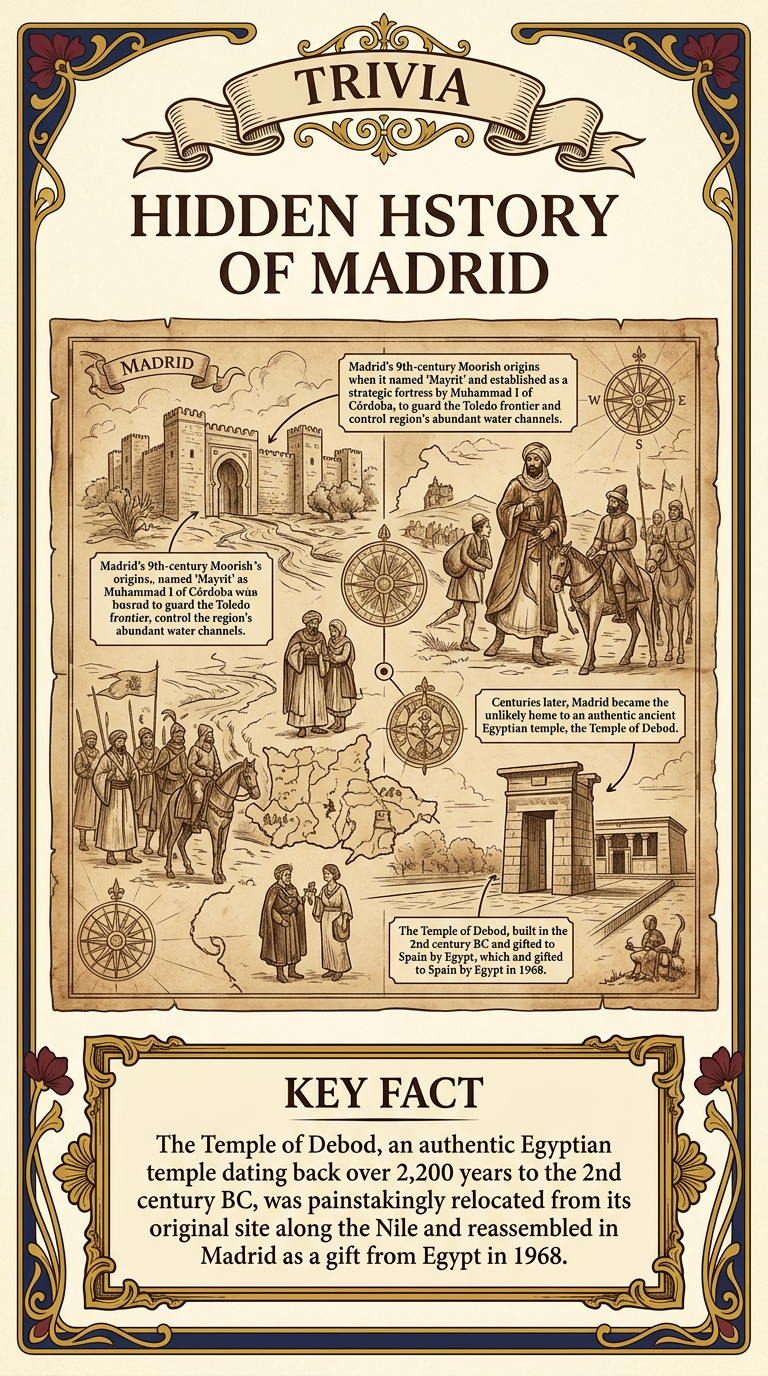
Hidden History of Madrid
Beneath Madrid's grand boulevards and plazas lie layers of history, revealing ancient origins, powerful monarchical secrets, and incredible journeys of cultural artifacts.
- Madrid's original name, 'Mayrit,' is Arabic, signifying its founding as a Muslim fortress in the 9th century to control water sources.
- The ancient Egyptian Temple of Debod, dating from the 2nd century BC, was dismantled in Egypt and rebuilt piece-by-piece in a Madrid park in 1970.
- The Convento de las Descalzas Reales, founded in 1559, served as a royal convent housing immense wealth and an extraordinary, often unseen, art collection.
- The crown on the Real Madrid football club's emblem was removed during the Second Spanish Republic (1931-1939) and only restored after the Civil War.
More Madrid Secrets
The World-Class Prado Museum
Home to one of the world's finest collections of European art, the Museo del Prado is an essential Madrid experience. Established in 1819, its vast halls showcase masterpieces from the 12th century to the early 20th century, primarily focusing on Spanish, Italian, and Flemish schools.
Highlights include Velázquez's 'Las Meninas,' Goya's 'The Third of May 1808,' El Greco's 'The Nobleman with his Hand on his Chest,' and Hieronymus Bosch's 'The Garden of Earthly Delights.' With over 8,200 drawings and 7,600 paintings, the Prado offers an unparalleled journey through artistic genius.
Madrid's 'Siglo de Oro' (Golden Age)
During the 16th and 17th centuries, Madrid became the epicenter of Spain's 'Siglo de Oro,' a period of extraordinary flourishing in arts and literature. As the capital of a global empire, the city attracted brilliant minds who shaped Spanish culture for centuries to come.
Literary giants like Miguel de Cervantes, Lope de Vega, and Calderón de la Barca penned their timeless works here, while artists such as Diego Velázquez and El Greco redefined painting. This era cemented Madrid's place not just as a political power but as a vital creative hub that left an indelible mark on Western civilization.
Becoming a True 'Gato' of Madrid
Madrileños, especially those with deep roots in the city, affectionately refer to themselves as 'Gatos' (Cats). This unique nickname is said to originate from the 1085 reconquest of Madrid from Moorish rule, when a Castilian soldier heroically scaled the city walls like a cat, leading the Christian forces to victory.
Today, to be considered a true 'Gato,' tradition dictates that your parents and even your grandparents must have been born in Madrid. It's a badge of honor, signifying generations of connection to the city's vibrant spirit and unique identity.
More Madrid Content Coming Soon
We're crafting a complete guide for Madrid. Stay tuned!
Explore More Trivia