
Mecca is the spiritual center of Islam - where 2 billion Muslims face during daily prayers and where millions gather for the world's largest annual pilgrimage. These facts help non-Muslims understand the profound significance of this sacred city.
Hajj: The World's Largest Pilgrimage
Hajj is one of the Five Pillars of Islam - every able Muslim must perform it once in their lifetime:
- 2-3 million pilgrims gather over 5 days each year
- All wear simple white garments (Ihram) - equality before God
- The pilgrimage dates move 11 days earlier each year (lunar calendar)
- Saudi Arabia allocates Hajj visas by country quota
- Wait times for Hajj can be 10+ years in some countries
The Kaaba: Islam's Most Sacred Site
The cube-shaped Kaaba is the point toward which all Muslims pray and the center of the Hajj pilgrimage:
- Believed built by Prophet Ibrahim (Abraham) and his son Ismail
- The Black Stone (Hajar al-Aswad) is embedded in one corner
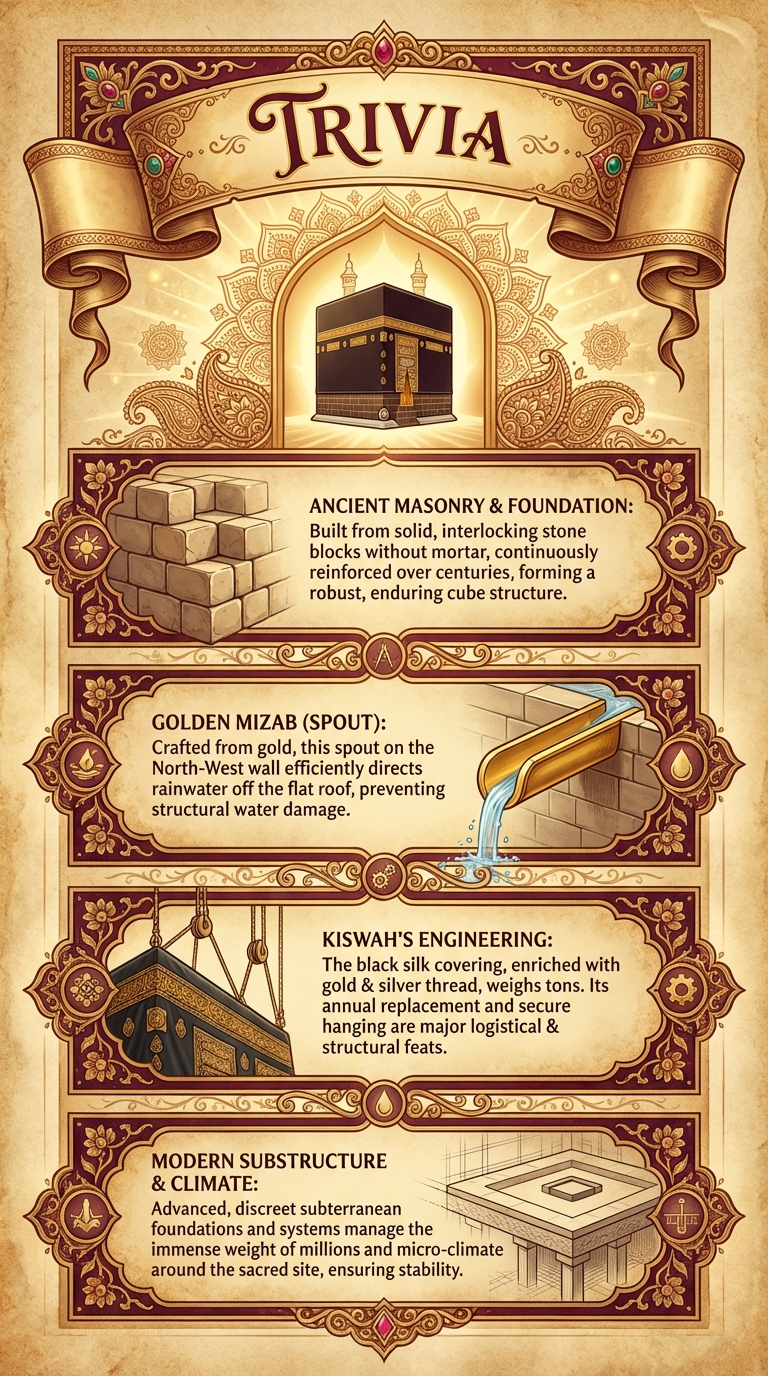
- The Kiswah (black cloth covering) is replaced annually
- Old Kiswah is cut and given to foreign dignitaries
- The Kaaba is approximately 13 meters high
Masjid al-Haram: The Largest Mosque
The Grand Mosque surrounding the Kaaba is the largest mosque in the world by a massive margin:
- Capacity: 4 million worshippers during Hajj
- Area: 356,800 square meters (88 acres)
- Air-conditioned with advanced crowd management systems
- The clock tower complex (Abraj Al-Bait) looms nearby
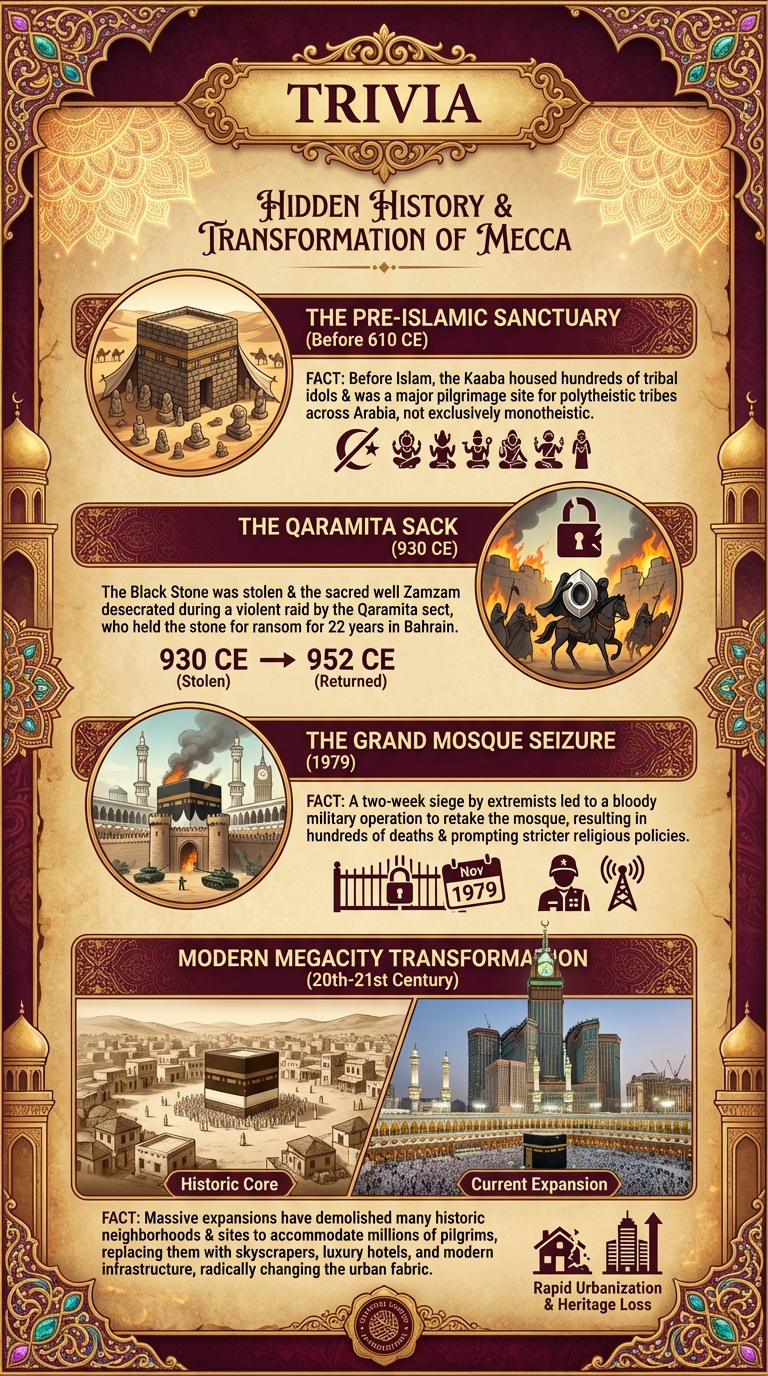
- Continuous expansion projects since the 1950s
More Sacred City Facts
The Direction of Prayer (Qibla)
Muslims worldwide face Mecca during the five daily prayers. The Qibla direction varies by location - in North America you face northeast, in Europe you face southeast. Modern apps and compasses help Muslims find the exact direction. The Kaaba itself has no specific direction - worshippers pray from all sides.
Did you know? Airlines often mark Qibla direction on in-flight entertainment systems!
Zamzam Water
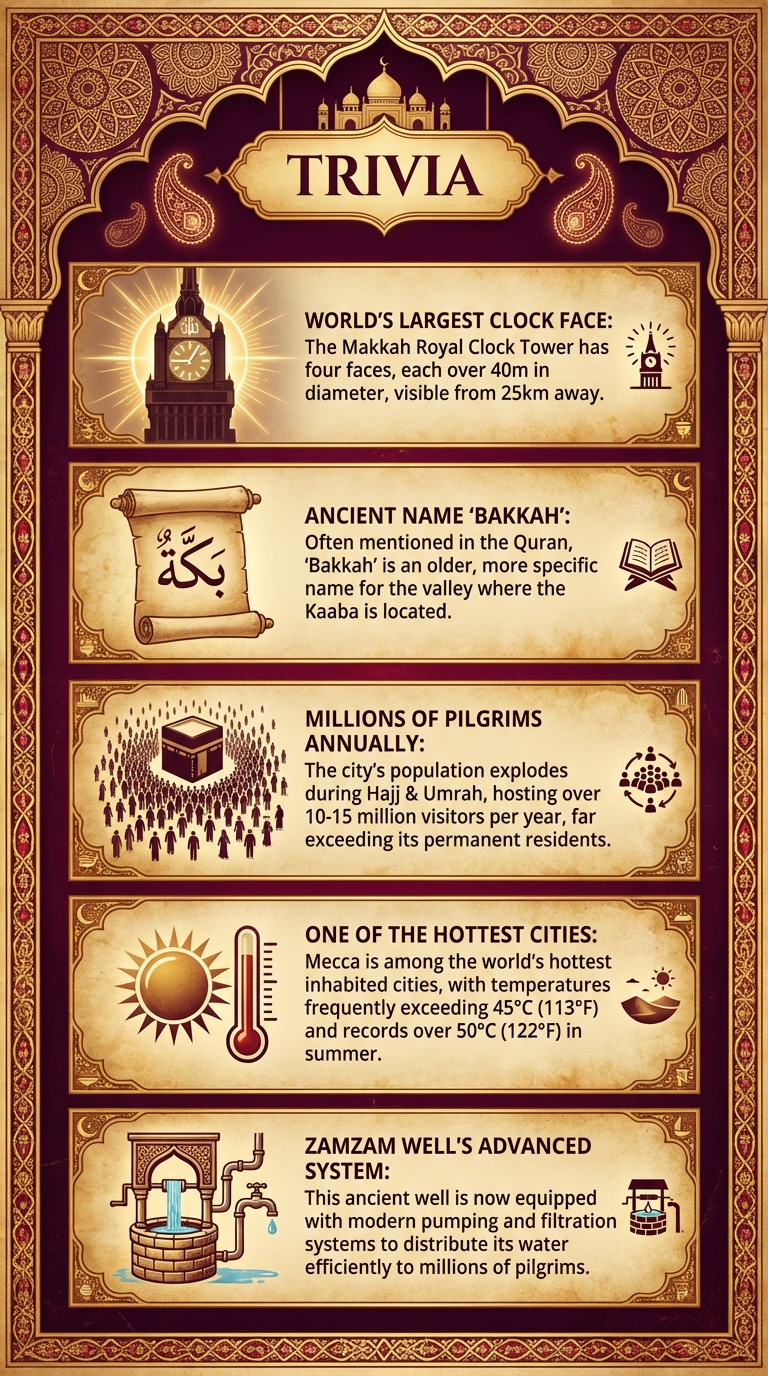
The Zamzam well has been flowing for over 4,000 years - believed to have miraculously appeared for Hajar (Hagar) and baby Ismail. Pilgrims drink from it and carry bottles home. Scientists confirm the well has never dried up despite millions drawing from it annually.
Non-Muslims Cannot Enter
Mecca is closed to non-Muslims - checkpoints verify identity, and penalties for non-Muslim entry are strict. This has been the rule for 1,400 years. The restriction extends to a large area called the Haram, not just the mosque. Medina has less strict rules (non-Muslims can visit but not enter the mosque).
Want More About the Sacred Cities?
Get our complete guide with spiritual preparation and practical information for pilgrims.
Ebook Coming Soon