
Mount Abu, Rajasthan's only hill station, offers a surprising escape from the desert heat, but its true allure lies in secrets deeper than its cool climate. From marble marvels carved with impossible precision to ancient legends that shaped dynasties, this serene retreat holds stories that truly defy expectation.
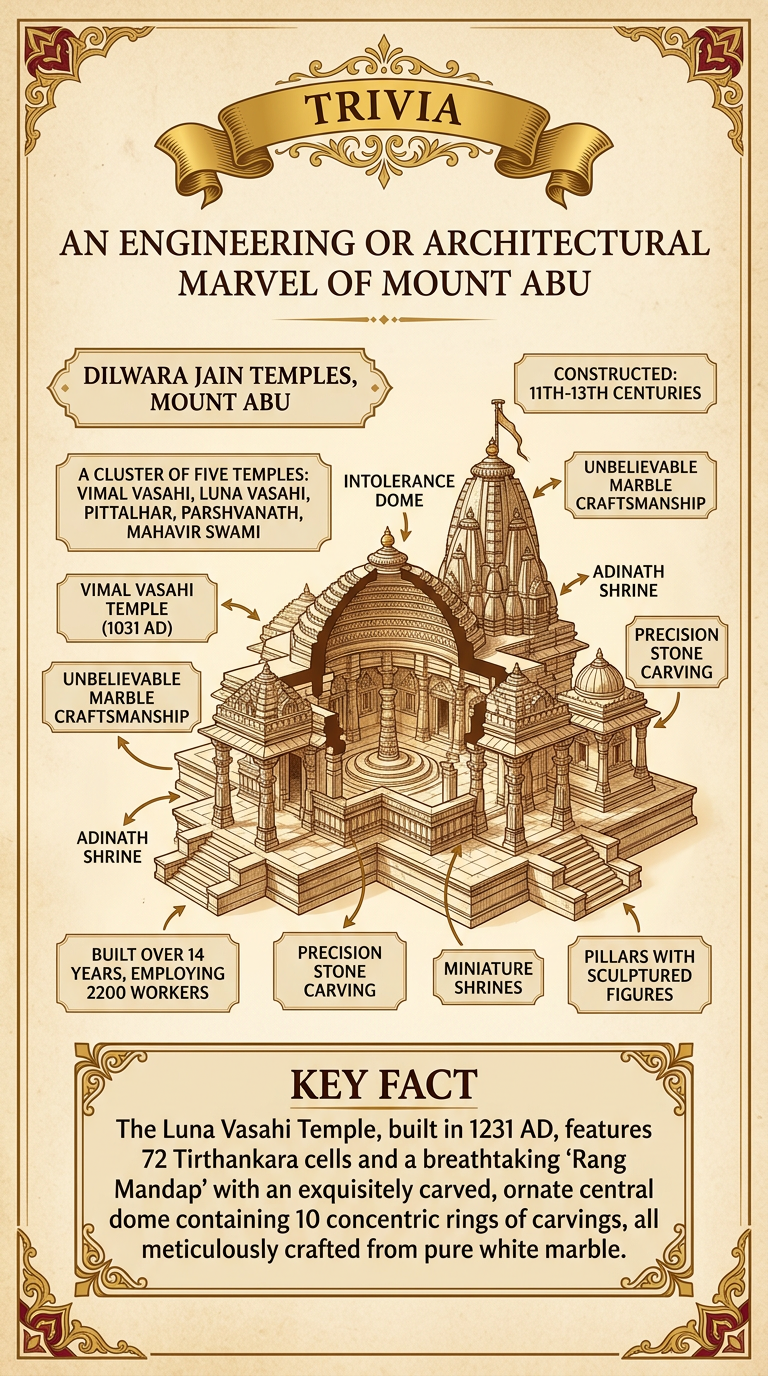
An Engineering or Architectural Marvel of Mount Abu
The Dilwara Jain Temples are not just places of worship; they are poetic masterpieces carved from marble, showcasing unparalleled craftsmanship that baffles modern engineers and art historians alike.
- Transparent Marble: Some sections of the marble carvings are so thin and polished that they appear translucent, allowing light to pass through them.
- Seamless Assembly: Despite being built from hundreds of individual marble pieces, the temples feature joints so precisely fitted that no mortar or adhesive is visibly used, creating a monolithic illusion.
- Intricate Ceilings: The famous Vimal Vasahi temple's central dome boasts a spectacular pendant, carved from a single block of marble, appearing to hang unsupported with its delicate, concentric rings.
- Ancient Tools, Modern Precision: Constructed between the 11th and 13th centuries using only basic chisels and hammers, the temples exhibit an accuracy in carving and detail that rivals modern laser-cut precision.
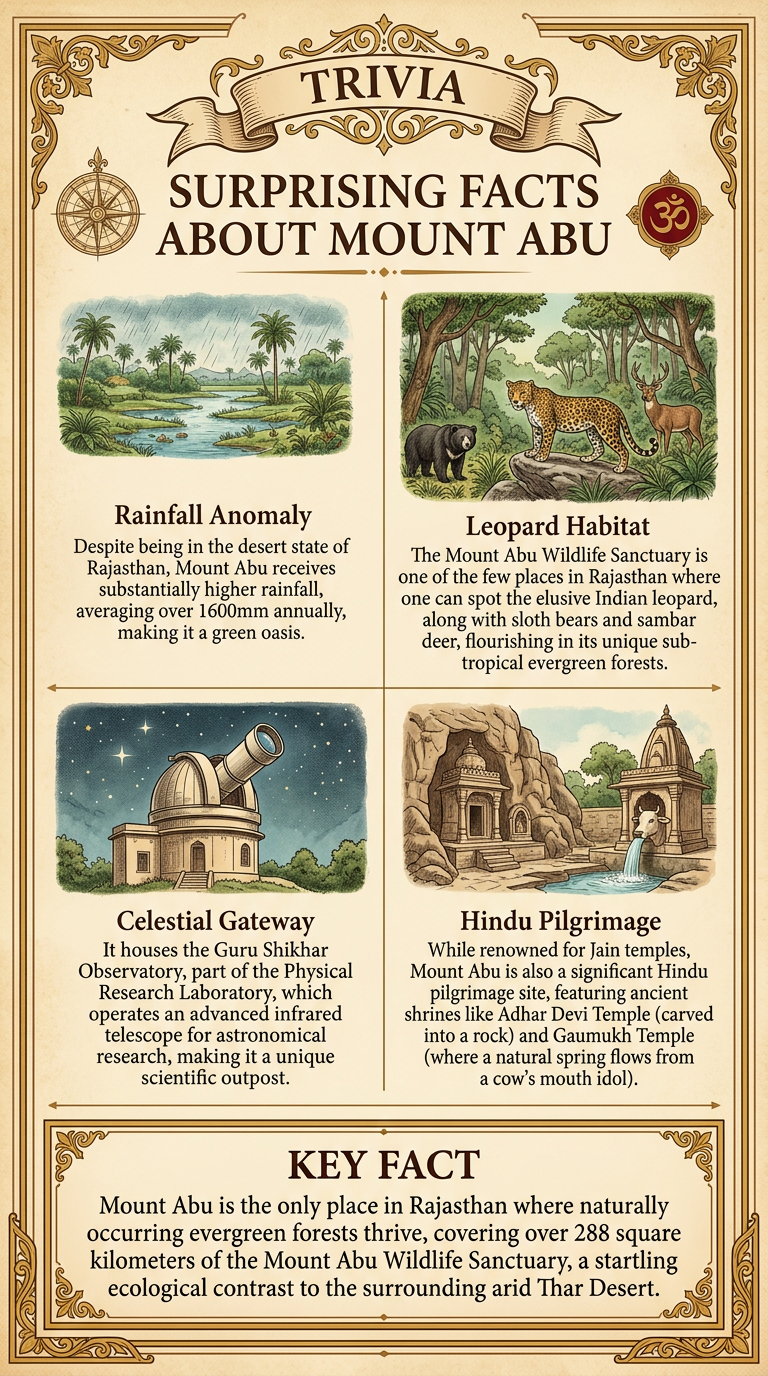
Surprising Facts About Mount Abu
Beyond its cool climate and religious sites, Mount Abu holds a tapestry of surprising facts that often go unnoticed by the casual visitor, revealing its multi-faceted charm.
- **Rainfall Anomaly:** Despite being in the desert state of Rajasthan, Mount Abu receives substantially higher rainfall, averaging over 1600mm annually, making it a green oasis.
- **Leopard Habitat:** The Mount Abu Wildlife Sanctuary is one of the few places in Rajasthan where one can spot the elusive Indian leopard, along with sloth bears and sambar deer, flourishing in its unique sub-tropical evergreen forests.
- **Celestial Gateway:** It houses the Guru Shikhar Observatory, part of the Physical Research Laboratory, which operates an advanced infrared telescope for astronomical research, making it a unique scientific outpost.
- **Hindu Pilgrimage:** While renowned for Jain temples, Mount Abu is also a significant Hindu pilgrimage site, featuring ancient shrines like Adhar Devi Temple (carved into a rock) and Gaumukh Temple (where a natural spring flows from a cow's mouth idol).
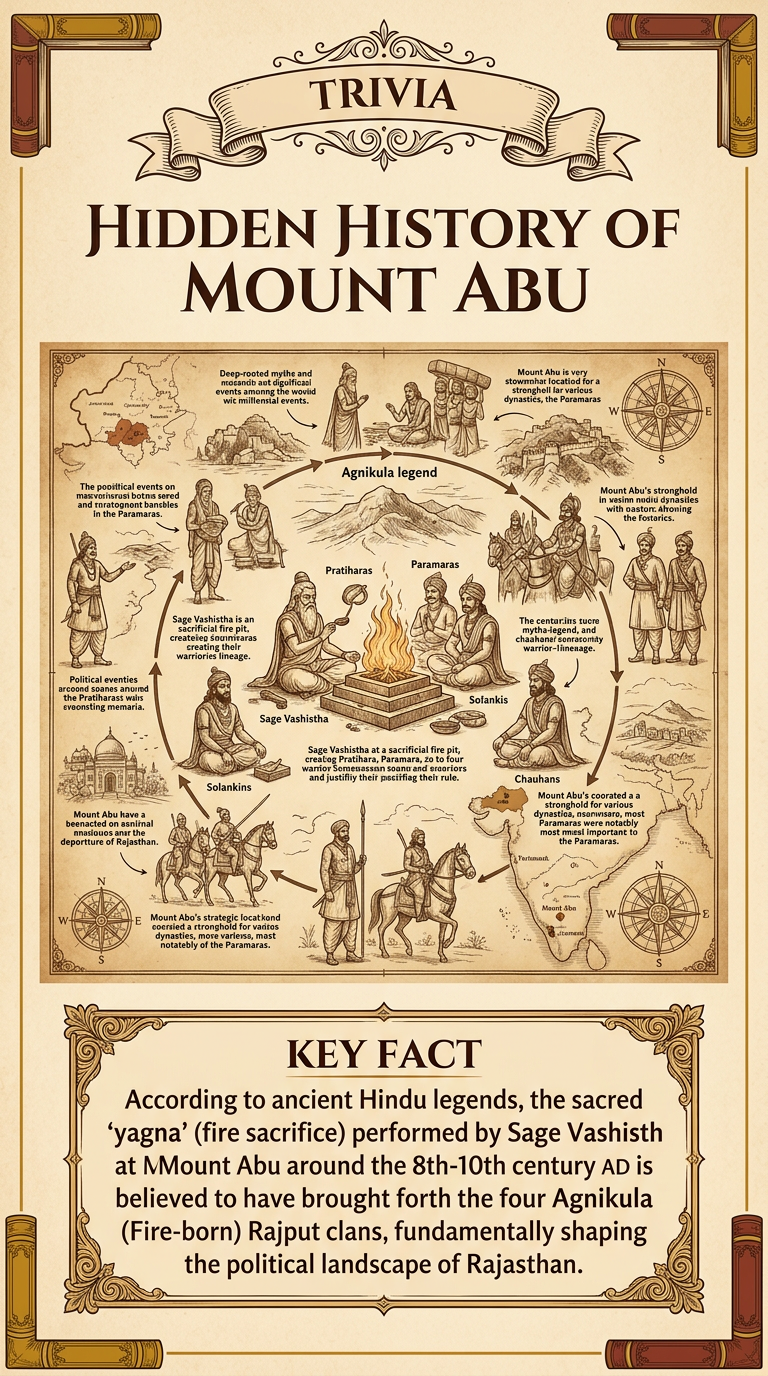
Hidden History of Mount Abu
Mount Abu's serene beauty often masks a vibrant, sometimes tumultuous past, filled with ancient legends, powerful rulers, and strategic importance that shaped a significant part of Rajasthan's history.
- Agnikula Legend: Mount Abu is the fabled birthplace of the four Agnikula Rajput clans, originating from a sacred fire pit.
- Ancient Ascetics: It served as a secluded retreat for numerous revered Hindu sages, including Vashistha, who performed penance and established hermitages here.
- Paramara Dynasty Stronghold: For centuries, it was the capital and principal stronghold of the Paramara dynasty, who extensively patronized art and architecture.
- British Summer Capital: During the British Raj, Mount Abu functioned as the summer capital of the Rajputana Agency, offering a cool escape and strategic administrative base.
More Mount Abu Secrets
Nakki Lake: A Lake Carved by Nails?
Legend has it that Nakki Lake, the heart of Mount Abu, was not naturally formed but dug out by gods using their nails (nakh in Hindi) to escape the demon Bashkali. This mythical origin adds a mystical aura to its serene waters.
While geological evidence points to a natural formation, the romantic legend persists, making it a beloved spot for boating and a testament to the region's rich folklore.
Global Spiritual Hub: Brahma Kumaris
Mount Abu is the international headquarters of the Brahma Kumaris World Spiritual University, a global spiritual movement. Established in 1937, their 'Om Shanti Retreat Centre' and 'Madhuban' campus attract thousands of followers and visitors worldwide, seeking spiritual enlightenment and peace amidst the tranquil hills.
Guru Shikhar: Rajasthan's Highest Peak
Standing tall at an elevation of 1,722 meters (5,650 feet), Guru Shikhar is not just Mount Abu's highest point but also the highest peak in the entire Aravalli Range and the state of Rajasthan. It offers breathtaking panoramic views and houses a temple dedicated to Dattatreya, an incarnation of Vishnu.
More Mount Abu Content Coming Soon
We're crafting a complete guide for Mount Abu. Stay tuned!
Explore More Trivia