
Munich, often celebrated for its vibrant Oktoberfest and traditional Bavarian charm, holds far more intriguing secrets than meets the eye. Beyond the beer halls and historic squares, this dynamic city is a surprising blend of futuristic engineering, peculiar customs, and a history rich with hidden narratives waiting to be uncovered.
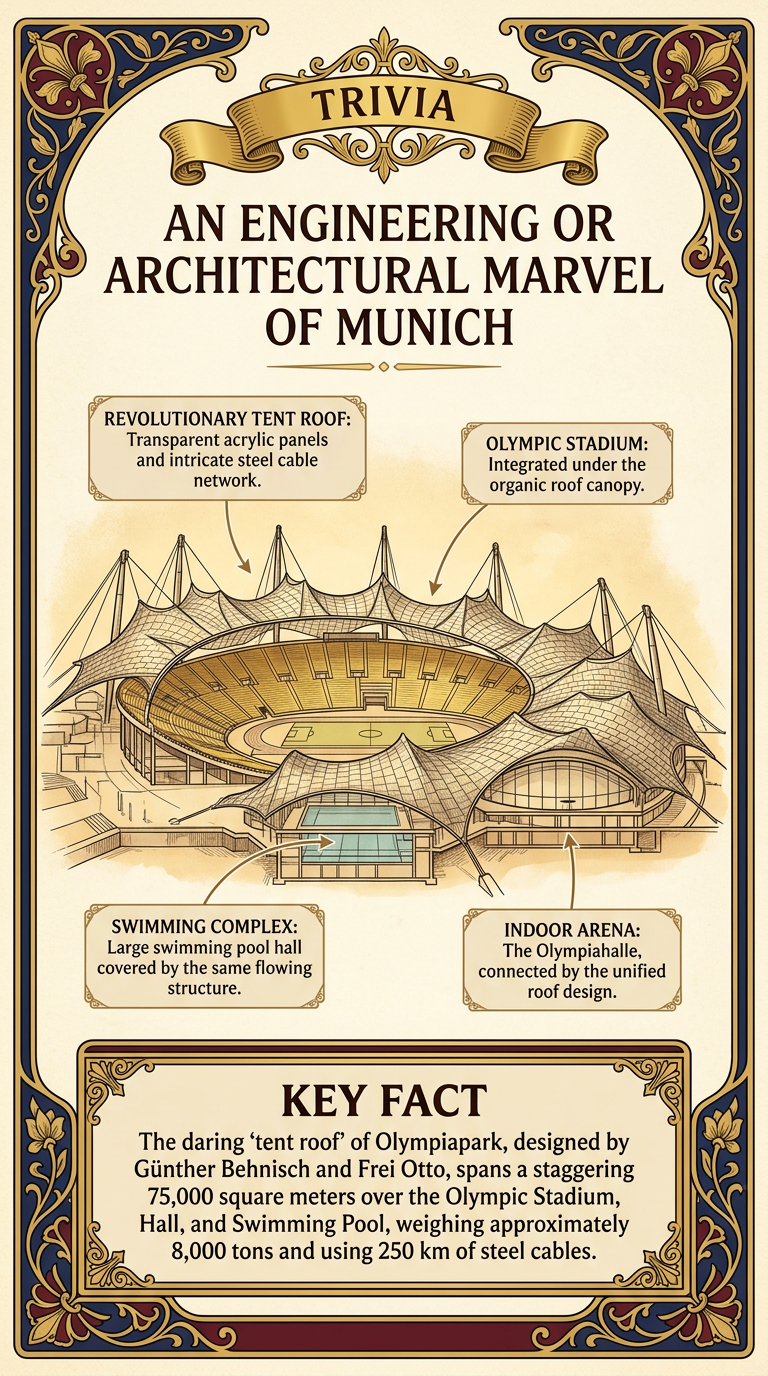
An Engineering or Architectural Marvel of Munich
Witness a testament to visionary design at Olympiapark, a site that defied conventional architecture to create a landscape of interconnected wonder.
- The iconic tent roof structure, covering over 75,000 square meters, was inspired by the Alps and consists of lightweight acrylic glass panels suspended by steel cables.
- The entire park was deliberately designed to be car-free, promoting pedestrian movement and an integrated natural landscape, a revolutionary concept for the 1972 Olympics.
- The Olympic Village was ingeniously planned with terraced housing units and green spaces, later converted into sought-after residential areas, ensuring a sustainable post-Games legacy.
- The Olympic Tower offers panoramic views from its 291-meter height and famously houses a revolving restaurant, making it an engineering feat for its time.
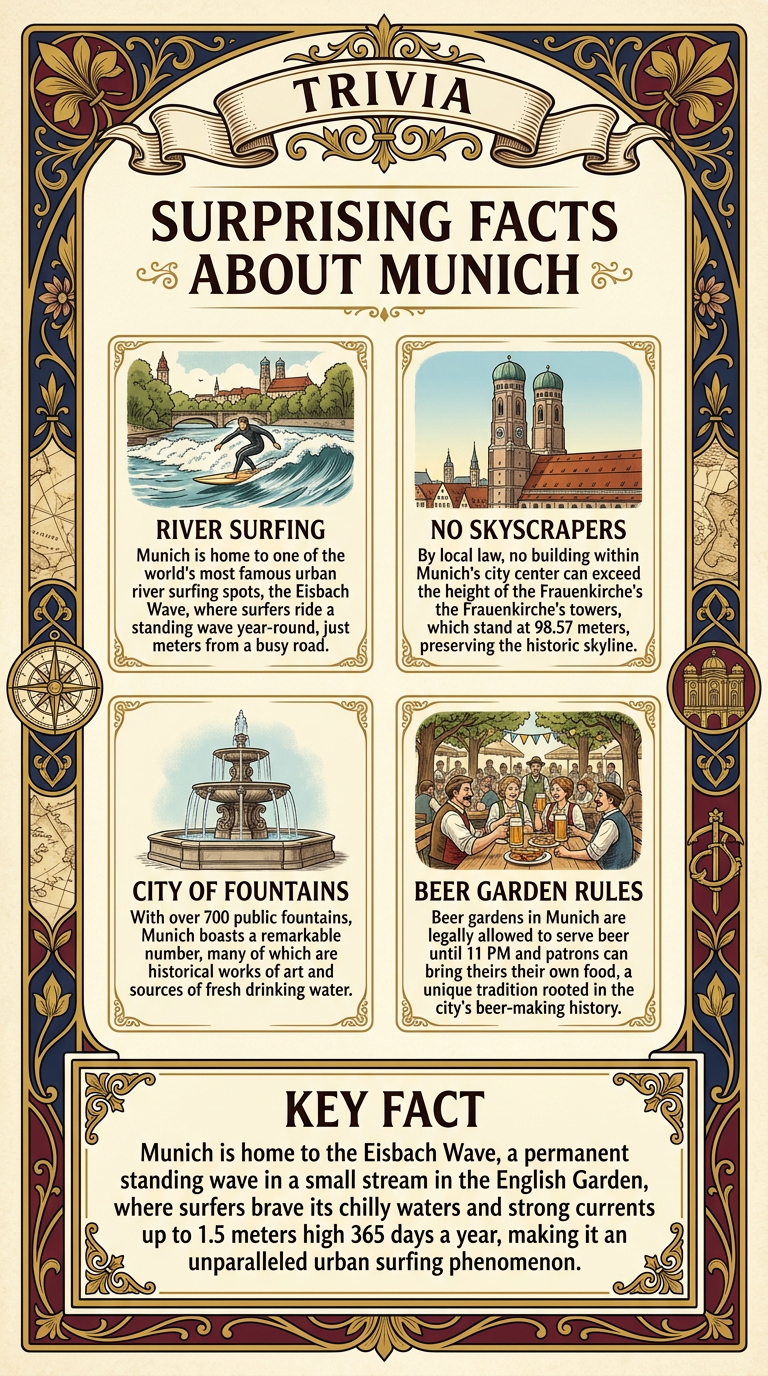
Surprising Facts About Munich
Munich is a city full of delightful contradictions and unexpected quirks that challenge common perceptions.
- **River Surfing**: Munich is home to one of the world's most famous urban river surfing spots, the Eisbach Wave, where surfers ride a standing wave year-round, just meters from a busy road.
- **No Skyscrapers**: By local law, no building within Munich's city center can exceed the height of the Frauenkirche's towers, which stand at 98.57 meters, preserving the historic skyline.
- **City of Fountains**: With over 700 public fountains, Munich boasts a remarkable number, many of which are historical works of art and sources of fresh drinking water.
- **Beer Garden Rules**: Beer gardens in Munich are legally allowed to serve beer until 11 PM and patrons can bring their own food, a unique tradition rooted in the city's beer-making history.
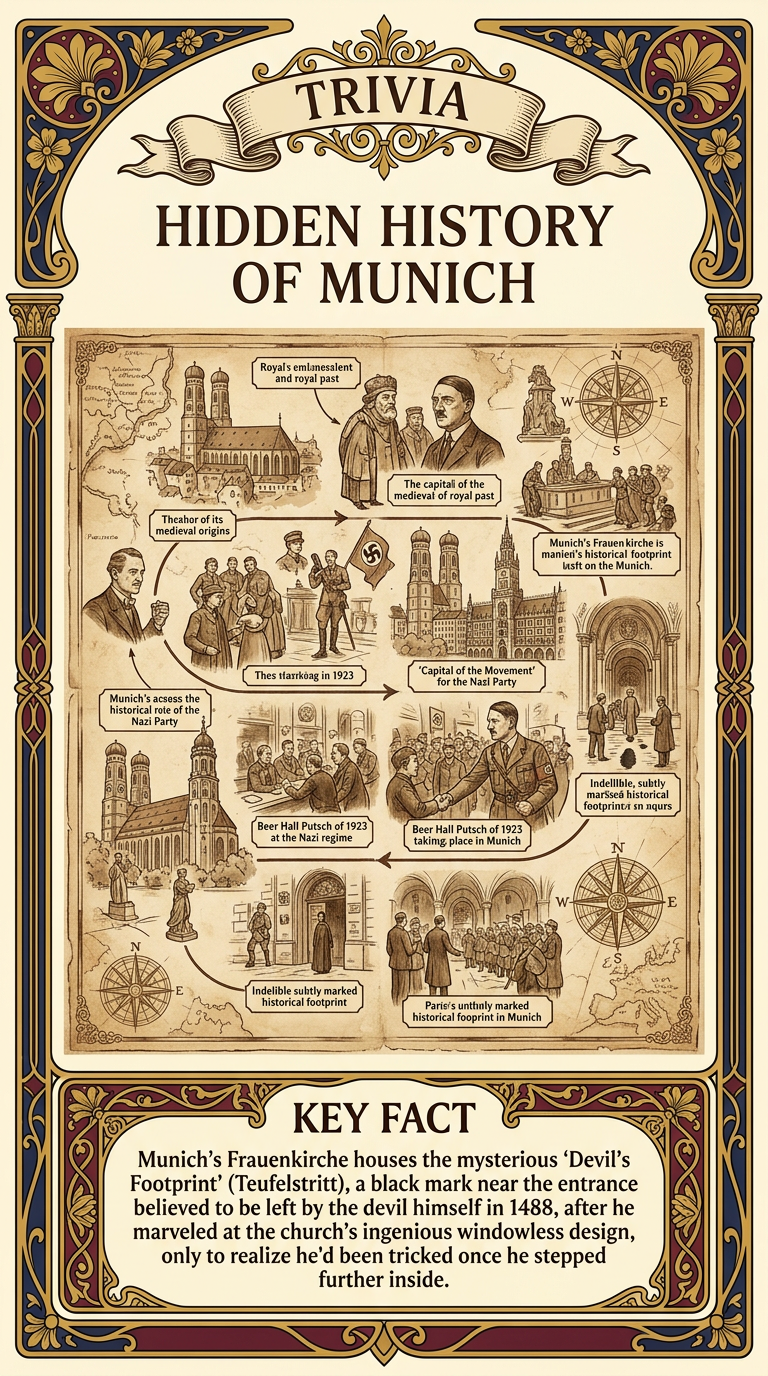
Hidden History of Munich
Dive beneath the surface of Munich's grandeur to uncover the lesser-known historical secrets and intriguing tales that shaped its identity.
- Munich was the 'Capital of the Movement' for the Nazi Party, a dark chapter often overlooked, with many significant early Nazi events occurring in the city, including the Beer Hall Putsch in 1923.
- Beneath the vibrant streets lie extensive networks of bunkers and tunnels, constructed during WWII to protect citizens from Allied bombing raids, some of which still exist today.
- The Devil's Footprint (Teufelstritt) inside the Frauenkirche is shrouded in legend, said to be the devil's own mark left after being tricked by the architect.
- Secret passages and hidden chambers are rumored to connect various Wittelsbach royal residences, enabling discreet movement and escape during times of unrest.
More Munich Secrets
Munich's Beer Purity Law (Reinheitsgebot)
The world-famous Reinheitsgebot, or German Beer Purity Law, was actually established in Munich in 1487 before being adopted across Bavaria in 1516. It dictates that beer can only contain four ingredients: water, malt, hops, and yeast. This ancient law has profoundly influenced Munich's brewing culture, ensuring the exceptional quality and traditional taste of its beers.
This strict adherence to purity means Munich's beer maintains an unparalleled standard, making it a cornerstone of Bavarian identity and a testament to centuries of brewing heritage.
The Glockenspiel's Hidden Choreography
The iconic Glockenspiel in Marienplatz is more than just a clock; it's a mechanical theatre that re-enacts two historical events. At 11 AM and 12 PM (and 5 PM from March to October), 43 bells chime while 32 life-sized figures perform the 'Schäfflertanz' (cooper's dance) – said to have been performed to lift spirits after the plague of 1517 – and a knight's jousting tournament.
The show lasts about 12-15 minutes, featuring knights on horseback, a rooster that crows, and intricate movements, all powered by a complex clockwork mechanism built in 1908.
A Green City: English Garden's Scale
Munich is remarkably green, boasting one of the world's largest urban public parks: the English Garden (Englischer Garten). Spanning 3.7 square kilometers (1.4 square miles), it's larger than New York City's Central Park (3.41 sq km) and London's Hyde Park combined. This expansive green lung offers everything from serene walking paths and beer gardens to river surfing and nudist sunbathing areas, providing an incredible natural escape within the city.
Designed in the late 18th century, it was one of the first public parks in Europe, initially open to all social classes, a revolutionary concept for its time.
More Munich Content Coming Soon
We're crafting a complete guide for Munich. Stay tuned!
Explore More Trivia