
Nestled in the Western Ghats, Munnar is more than just a picturesque hill station; it's a testament to human ingenuity and nature's enduring magic. From its emerald tea carpets to its cloud-kissed peaks, prepare to uncover the engineering marvels, surprising ecological wonders, and captivating hidden histories that make Munnar truly extraordinary.
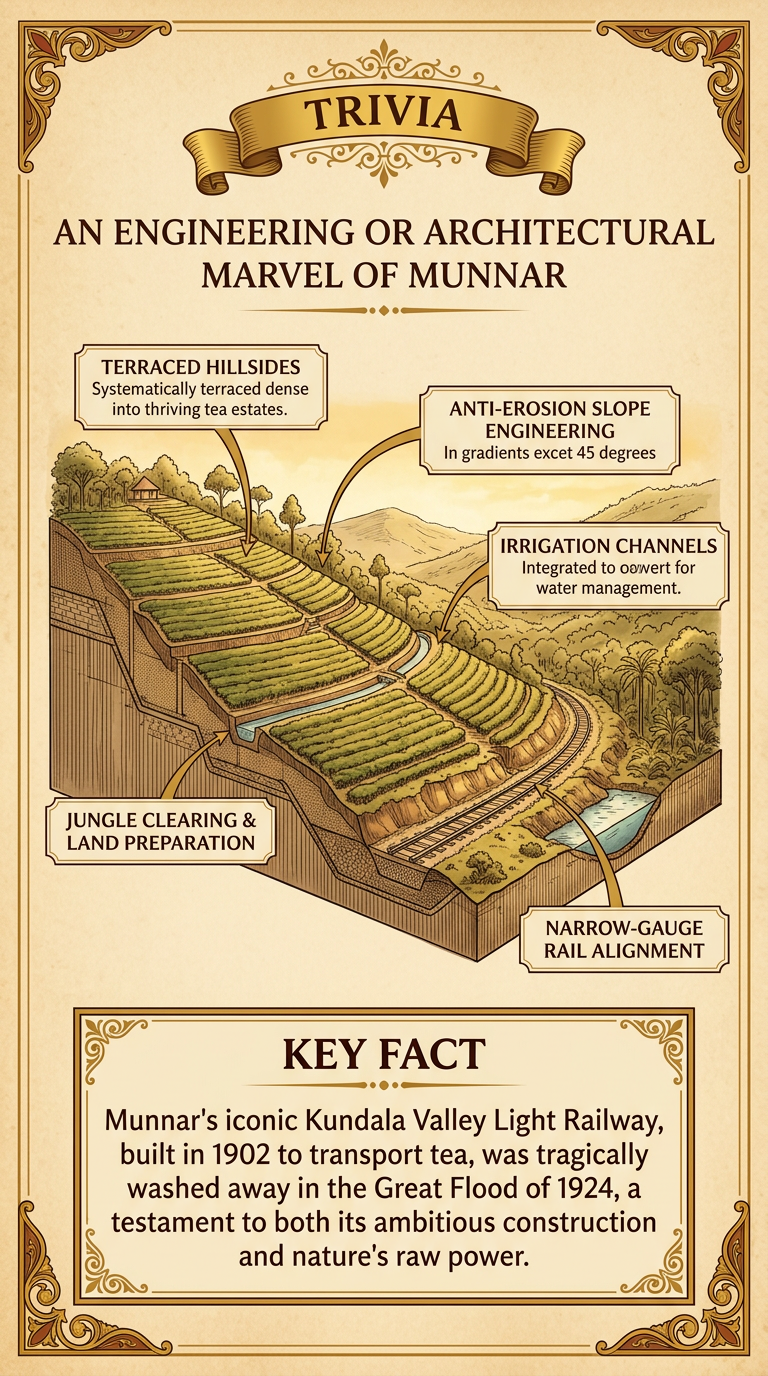
An Engineering or Architectural Marvel of Munnar
The vast, undulating tea plantations of Munnar are not just beautiful landscapes; they represent a monumental feat of engineering, transforming rugged hills into productive agricultural zones. This transformation required significant planning and innovative solutions.
- The terraced tea gardens themselves are an engineering marvel, meticulously carved into steep hillsides to prevent erosion and maximize cultivation space.
- Munnar once boasted a unique Monorail system, followed by a Ropeway, built in the early 20th century to transport processed tea down to the plains for export.
- The hydroelectric projects, like the Mattupetty Dam, were crucial for powering the tea factories and the growing township in the remote hills.
- Early tea factories, some dating back over a century, house intricate machinery and processing lines that were engineered to handle large volumes of tea efficiently.
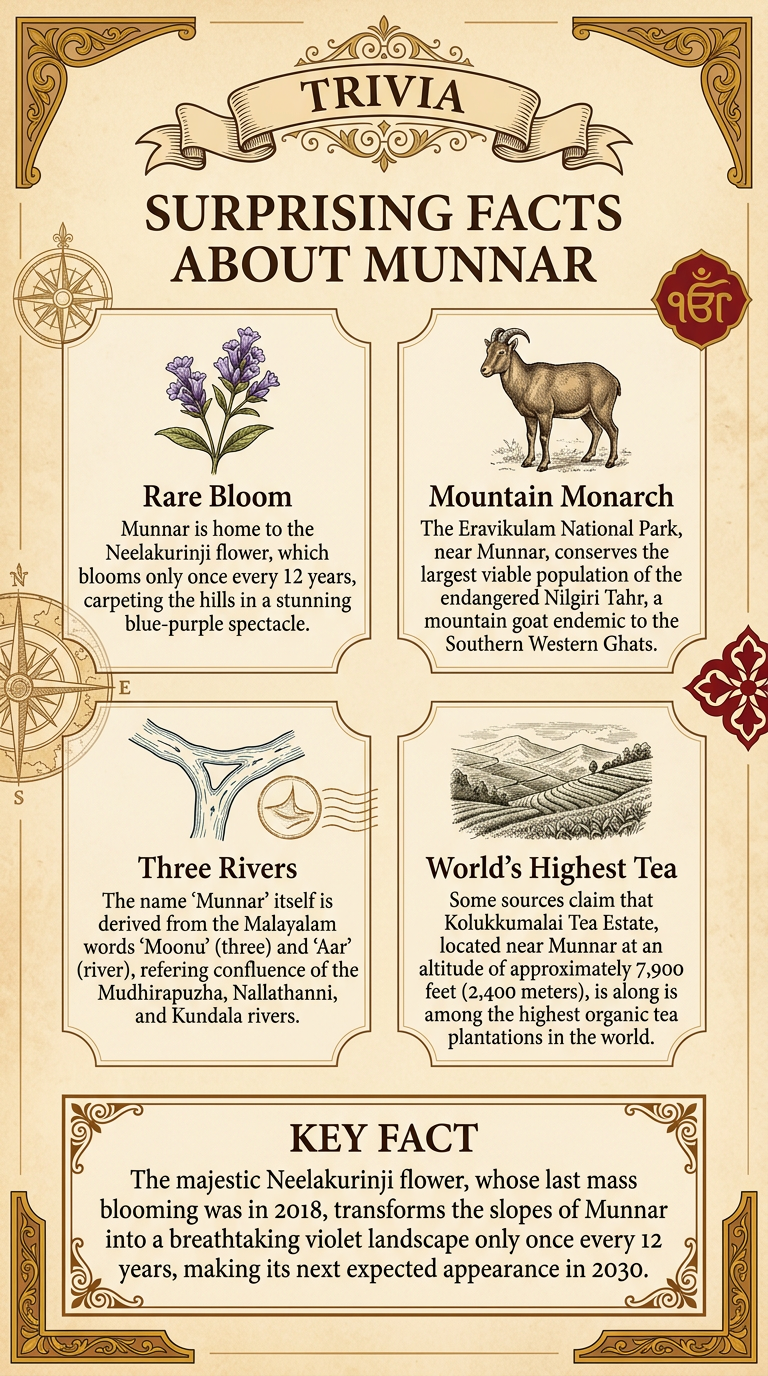
Surprising Facts About Munnar
Beyond its reputation as a tea-producing hub, Munnar harbors a trove of surprising ecological and cultural facts that often escape the casual visitor. Its unique climate and biodiversity contribute to many of its hidden wonders.
- **Rare Bloom**: Munnar is home to the Neelakurinji flower (Strobilanthes kunthiana), which blooms only once every 12 years, carpeting the hills in a stunning blue-purple spectacle.
- **Mountain Monarch**: The Eravikulam National Park, near Munnar, conserves the largest viable population of the endangered Nilgiri Tahr, a mountain goat endemic to the Southern Western Ghats.
- **Three Rivers**: The name 'Munnar' itself is derived from the Malayalam words 'Moonu' (three) and 'Aar' (river), referring to the confluence of the Mudhirapuzha, Nallathanni, and Kundala rivers.
- **World's Highest Tea Estate**: Some sources claim that Kolukkumalai Tea Estate, located near Munnar at an altitude of approximately 7,900 feet (2,400 meters), is among the highest organic tea plantations in the world.
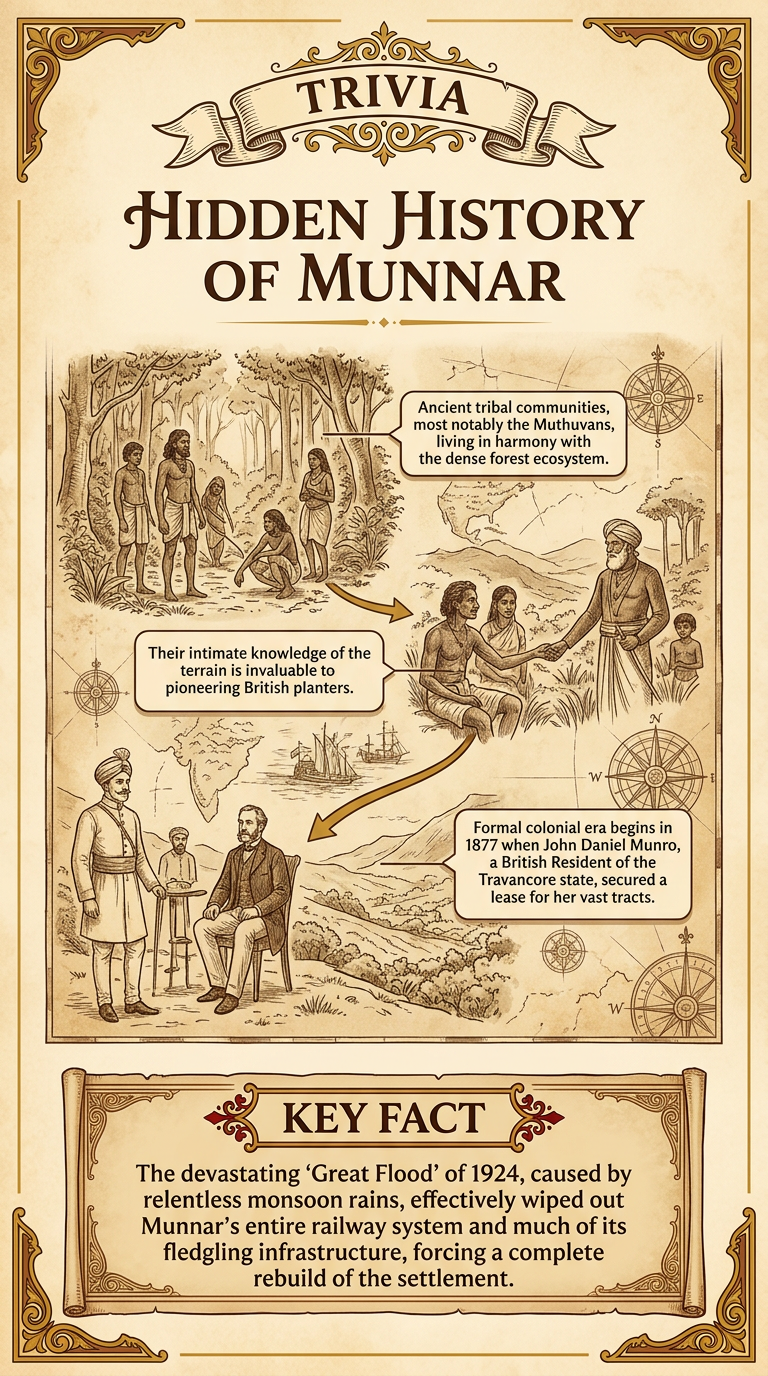
Hidden History of Munnar
Beneath the verdant tea gardens lies a rich tapestry of history, much of it untold or overshadowed by the colonial narrative. Munnar's past is woven with tales of indigenous tribes, British ambition, and nature's devastating power.
- Before the British, the region was sparsely inhabited by indigenous tribes like the Muthuvans, who played a significant role in early explorations and guiding the first planters.
- Munnar's rapid development began in 1877 when John Daniel Munro leased 580 sq. miles of forest land from the Poonjar Royal Family for tea cultivation.
- The 'Great Flood' of 1924 was a catastrophic event that not only destroyed much of Munnar's nascent infrastructure, including its railway, but also significantly impacted the socio-economic fabric of the region.
- Many of the historical bungalows and churches, such as the Christ Church, stand as architectural relics, silently narrating tales of the early British settlers and their lives in this remote outpost.
More Munnar Secrets
The Nilgiri Tahr's Sanctuary
Eravikulam National Park, located about 7 kilometers from Munnar, is the proud sanctuary of the Nilgiri Tahr, an endangered species of mountain goat. This park is a biodiversity hotspot and plays a crucial role in conserving this unique animal.
Visitors have the rare opportunity to spot these agile creatures grazing on the rolling grasslands, often approaching surprisingly close to the observation points.
Spices Beyond Tea
While tea reigns supreme, Munnar's fertile hills are also home to a vibrant array of spice plantations. Tour a spice garden to discover how pepper, cardamom, cinnamon, cloves, and nutmeg are cultivated, understanding their journey from plant to pantry. The aromatic air is a sensory delight, offering a rich insight into Kerala's 'Spice Coast' heritage.
Mystery of the Shola Forests
Munnar's unique ecosystem features patches of dense, stunted evergreen forests called 'Shola forests,' interspersed with rolling grasslands. These high-altitude tropical mountain forests are endemic to the Western Ghats and are vital watersheds, acting like sponges that retain water and slowly release it, nourishing the region's rivers and streams. They harbor unique flora and fauna, many of which are found nowhere else on Earth.
More Munnar Content Coming Soon
We're crafting a complete guide for Munnar. Stay tuned!
Explore More Trivia