
Mysore holds countless fascinating stories and secrets waiting to be discovered. From ancient legends to modern marvels, this destination continues to captivate visitors with its rich heritage.
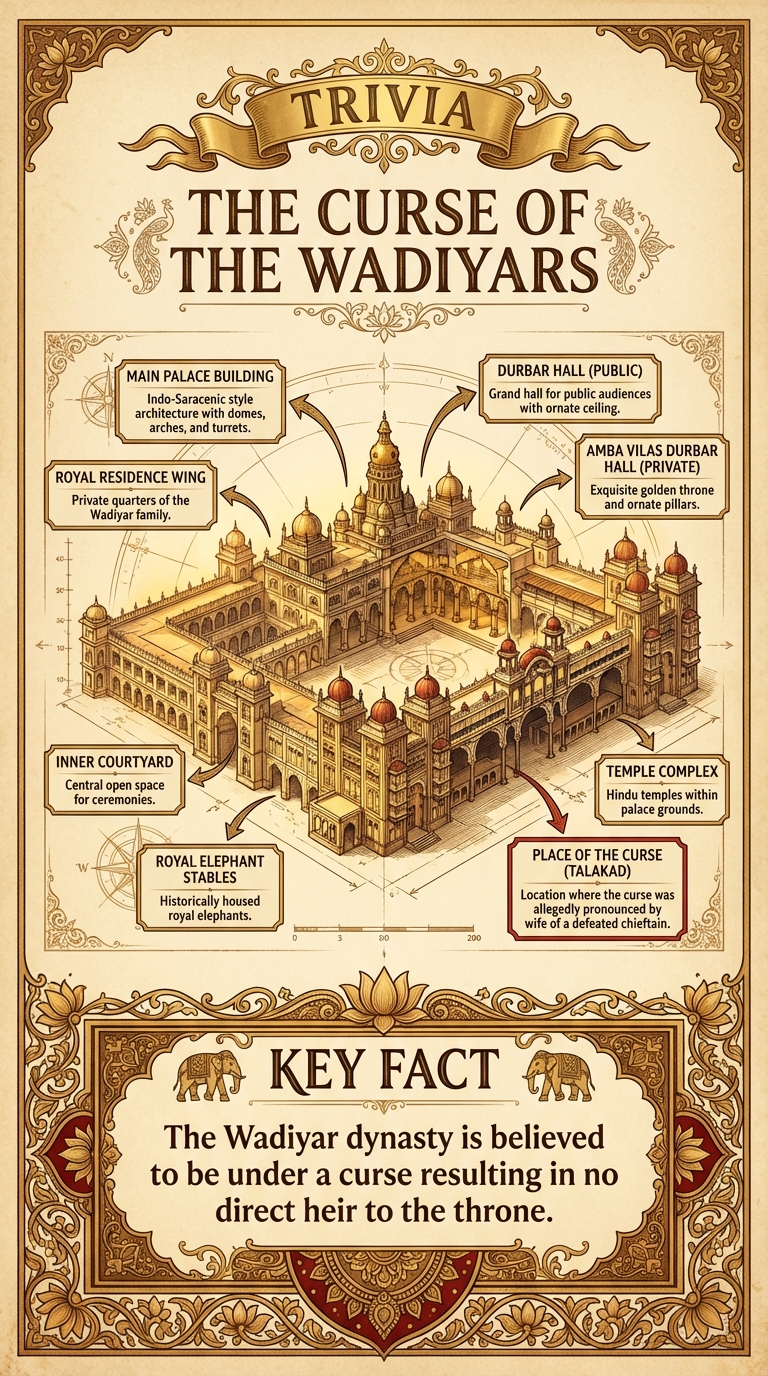
The Curse of the Wadiyars
A popular legend surrounds the Wadiyar dynasty, claiming that they are cursed to never have a direct heir to the throne. This curse is believed to have originated when Alamelamma, a devout follower of the Vijayanagara Empire, was unjustly stripped of her jewels by Raja Wadiyar I. Before she died, she cursed the Wadiyar family, decreeing that they would never have a biological heir, and that the Wadiyar queens would remain childless. Interestingly, the Wadiyar dynasty has, throughout history, often adopted heirs to continue their lineage, contributing to the intrigue and mystery surrounding this curse. Even now, some continue to believe in the significance of Alamelamma's curse impacting the Royal family.
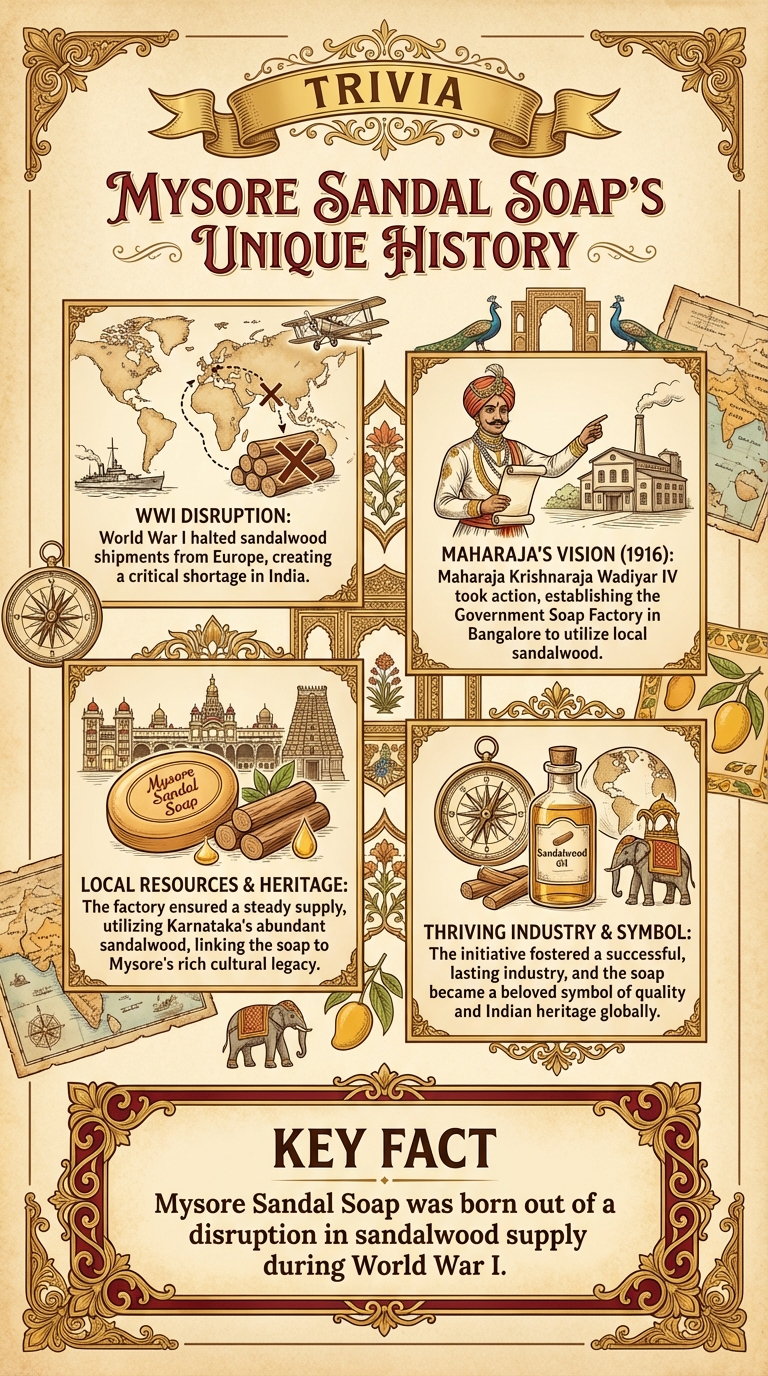
Mysore Sandal Soap's Unique History
Mysore Sandal Soap, a beloved household name in India, has a fascinating origin story tied to World War I. When the war disrupted the supply of sandalwood from Europe, the Maharaja of Mysore, Krishnaraja Wadiyar IV, took a bold initiative. He established the Government Soap Factory in Bangalore in 1916 to utilize the state's abundant sandalwood resources. This not only ensured a local supply of soap but also marked the beginning of a successful industry that continues to thrive today. The distinct fragrance and quality of Mysore Sandal Soap have made it a symbol of Mysore's rich heritage and entrepreneurial spirit.
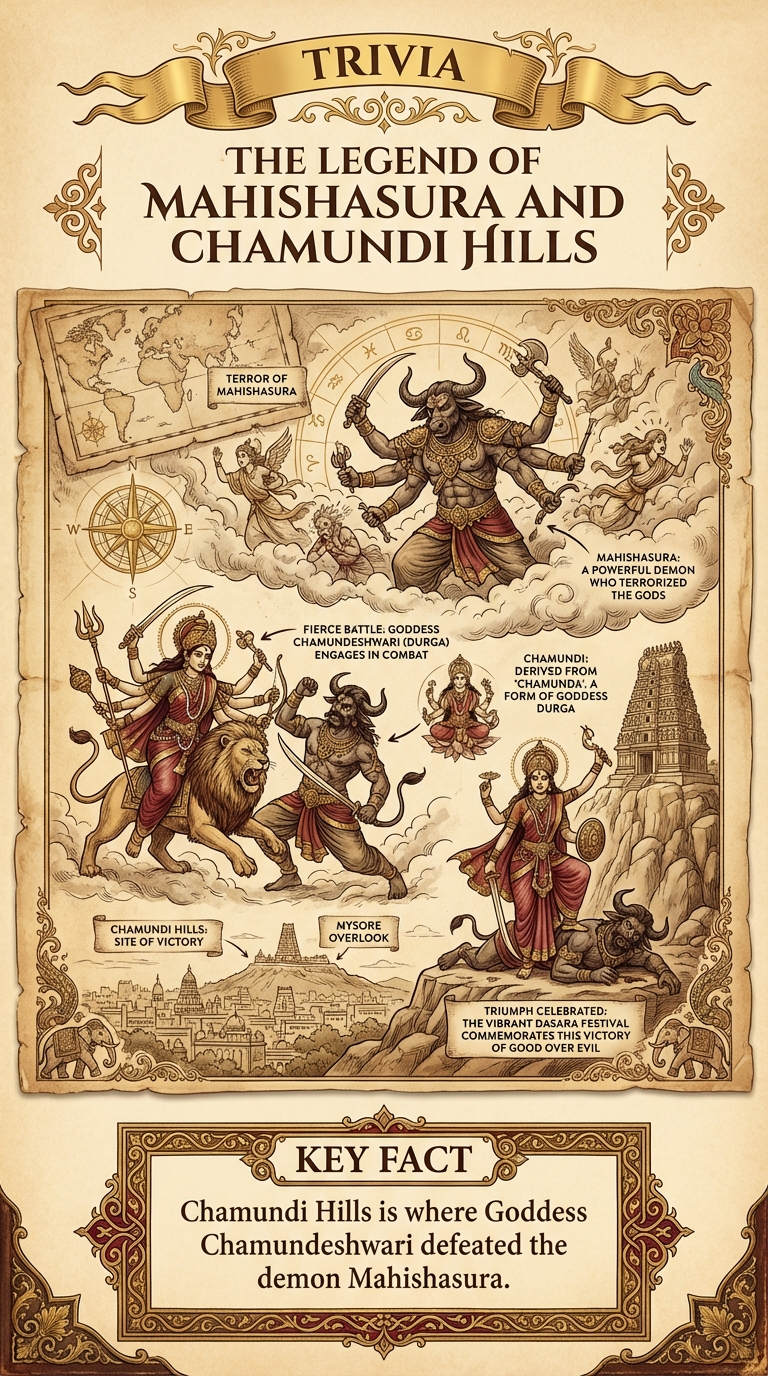
The Legend of Mahishasura and Chamundi Hills
Chamundi Hills, the prominent landmark overlooking Mysore, is named after Goddess Chamundeshwari, who is believed to have slain the demon Mahishasura on these very hills. According to Hindu mythology, Mahishasura was a powerful demon who had terrorized the gods. Goddess Durga, in the form of Chamundeshwari, engaged in a fierce battle with him and ultimately defeated him. The name 'Chamundi' is derived from 'Chamunda,' another name for Durga, and the temple atop the hill commemorates this victory. The vibrant Dasara festival celebrates this triumph of good over evil, further cementing the significance of Chamundi Hills in Mysore's cultural landscape.
Want More Mysore Stories?
Get our complete 80+ page ebook with all the trivia, attractions, and insider tips.
Ebook Coming Soon