
Phuket's postcard-perfect beaches hide a fascinating history - from 500 years of tin mining to Chinese merchants, tsunami devastation, and rebirth. And once a year, the island hosts one of the world's most extreme religious festivals.
The Most Extreme "Vegetarian" Festival
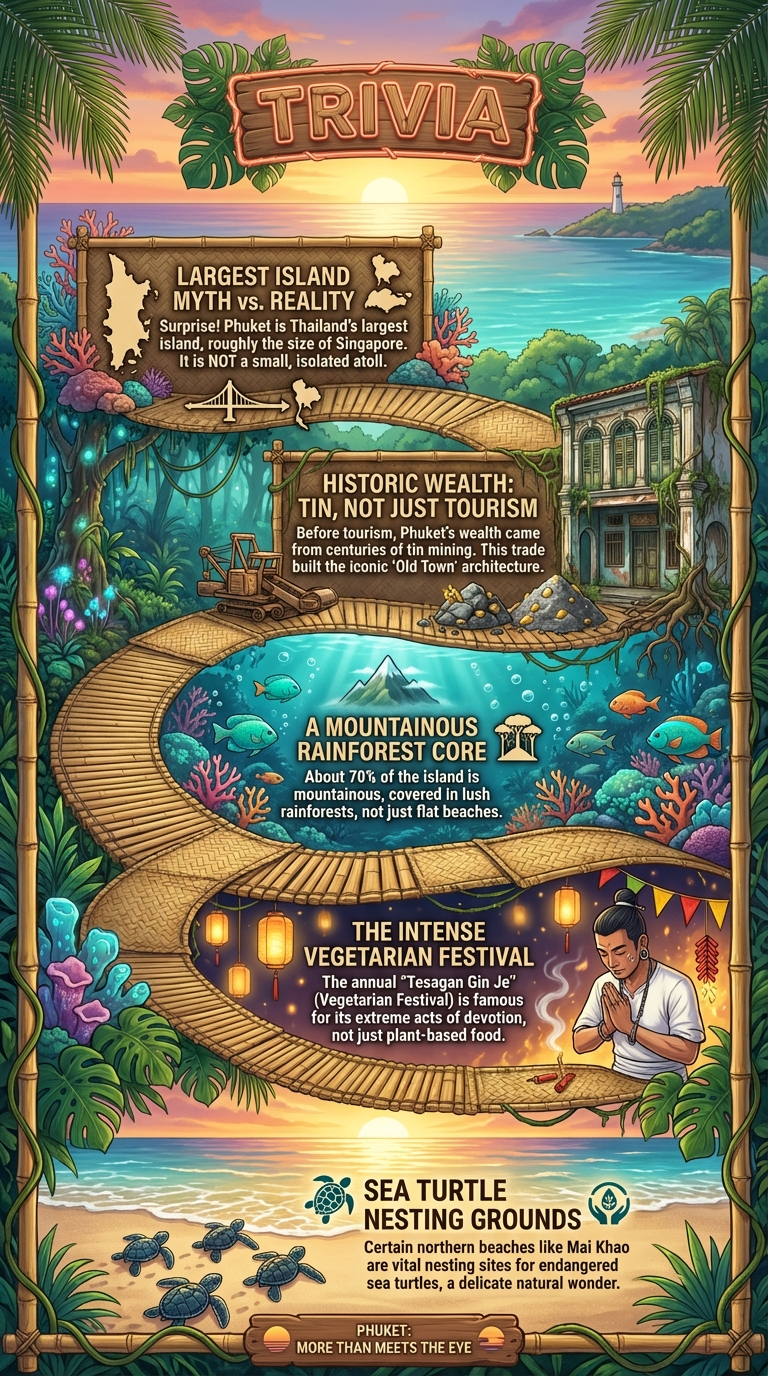
The Phuket Vegetarian Festival (October) is famous for practices that have nothing to do with vegetables:
- Devotees pierce cheeks with swords, skewers, and objects
- Walk on fire and climb ladders made of knife blades
- Claims of no pain and rapid healing due to trance state
- Originated from Chinese opera performers in 1825
- Participants follow strict rules: no meat, sex, or alcohol for 9 days
Rising from the Tsunami
The 2004 Boxing Day tsunami devastated Phuket's west coast. The island's recovery tells a remarkable story:
- Waves up to 10 meters hit Patong and Kamala beaches
- 5,395 deaths in Thailand, many in Phuket
- Warning systems now cover the entire Andaman coast
- Tourism recovered to pre-tsunami levels within 2 years
- Tsunami memorials exist at Kamala and Bang Niang beaches
The Tin Island Legacy
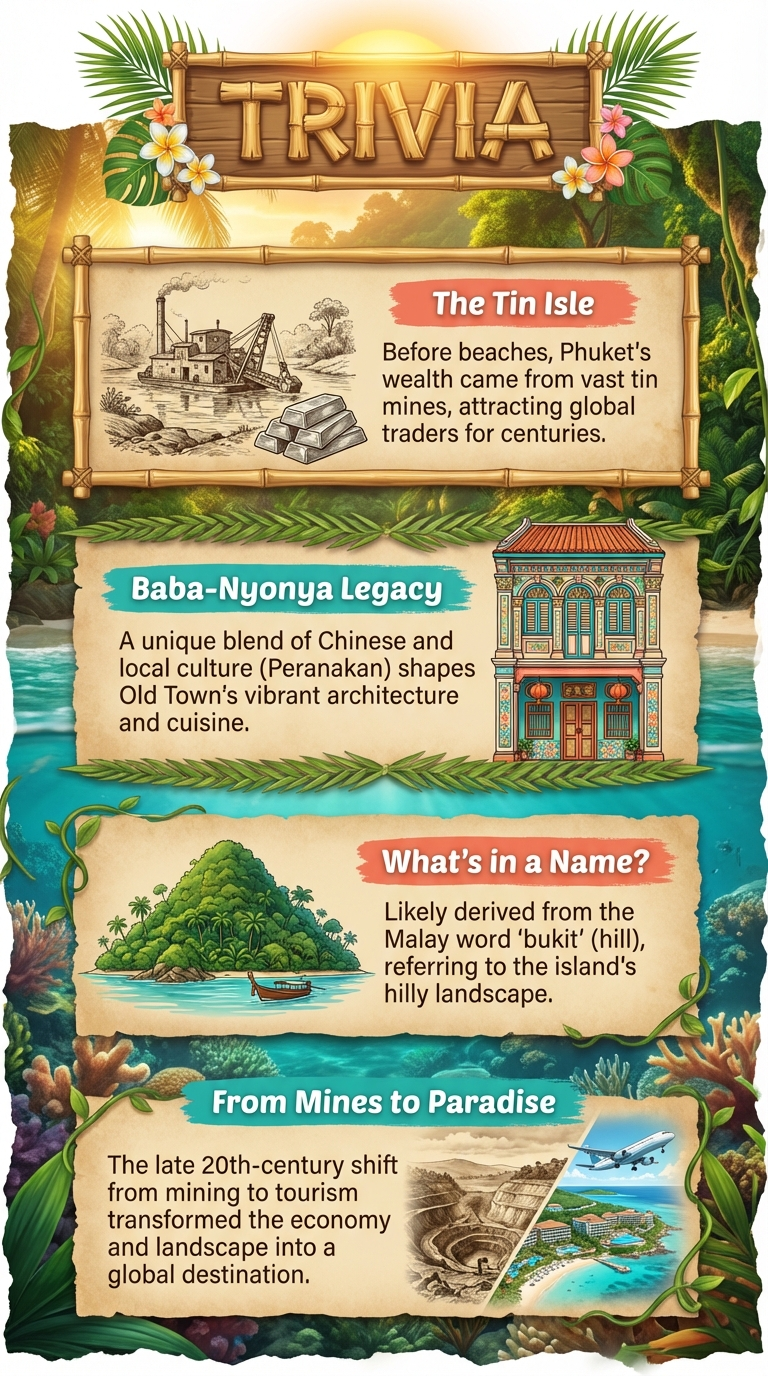
Before beaches, Phuket was famous for tin. The industry shaped the island for 500 years:
- Tin mining began in the 16th century
- Chinese workers immigrated in huge numbers
- Phuket Town's Sino-Portuguese architecture reflects this era
- Tin ran out in the 1980s - tourism took over
- The old mining area is now Kathu waterfall park
More Phuket Secrets
The Heroine Monument
In 1785, Burmese forces invaded Phuket. The governor had just died, so his widow Chan and her sister Mook dressed as male soldiers, rallied the defense, and repelled the invasion after a month-long siege. They're honored with a monument that's now a major landmark - locals offer incense for good luck.
Fun fact: Chan and Mook were given noble titles by the King of Siam!
The Gibbon Rehabilitation Project
Gibbons used for tourist photos are rescued and rehabilitated in Phuket. The project, running since 1992, teaches captive-raised gibbons to swing through trees and survive in the wild. It takes about 4 years to rehabilitate one gibbon. You can visit and support their work.
Not Actually an Island
Phuket is connected to the mainland by bridges - the Sarasin Bridge (1967) and newer Thepkrasattri Bridge (2011). The channel between is only 600 meters wide. Before the bridges, the only way was by ferry, which isolated Phuket and gave it a distinct culture.
Want More Phuket Stories?
Get our complete 80+ page ebook with all the trivia, attractions, and insider tips.
Ebook Coming Soon