
Nestled in the foothills of the Himalayas, Rishikesh is renowned globally as the 'Yoga Capital of the World,' a spiritual sanctuary that draws seekers and adventurers alike. Yet, beneath its tranquil surface and sacred ghats lie layers of surprising facts, ingenious engineering, and ancient histories waiting to be uncovered. Prepare to be amazed by the hidden depths of this extraordinary pilgrimage town.
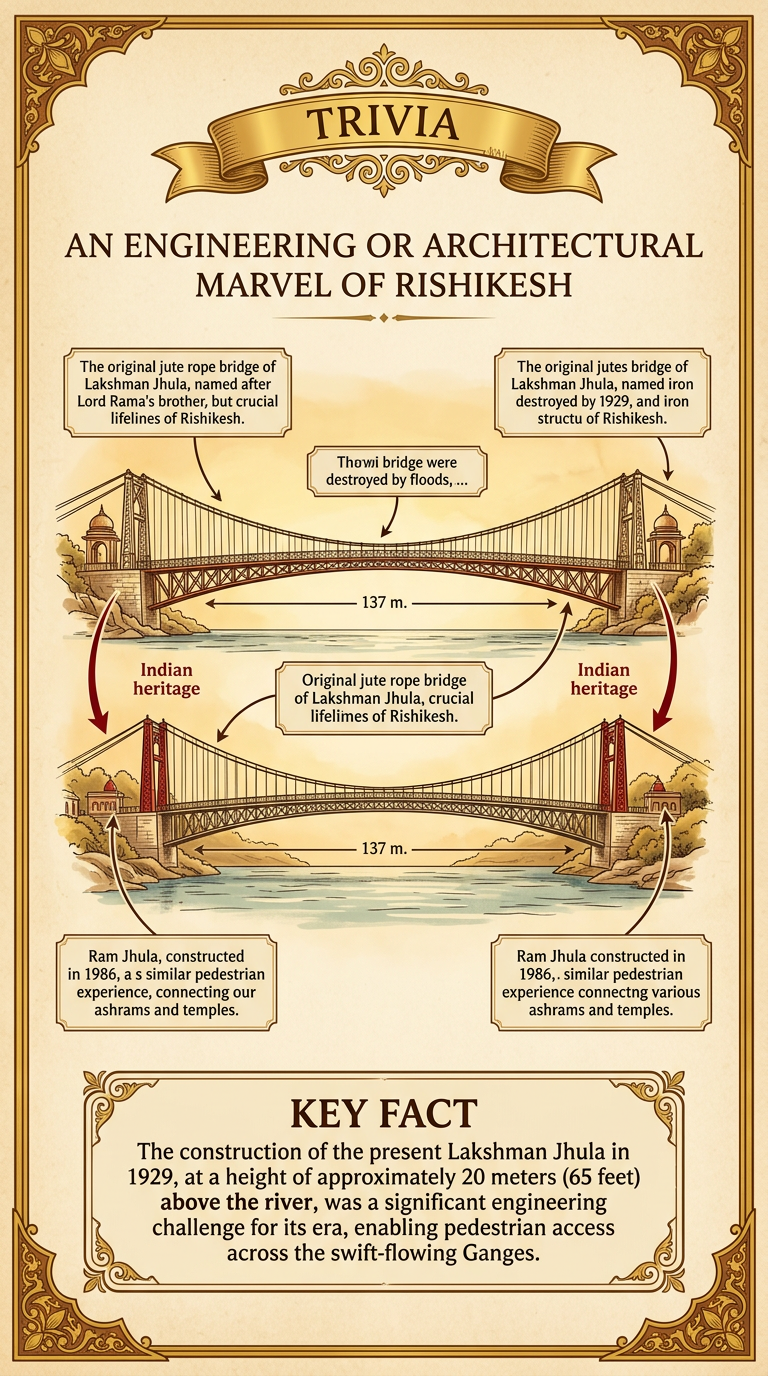
An Engineering or Architectural Marvel of Rishikesh
Rishikesh's iconic suspension bridges are more than just crossings; they are testaments to human ingenuity, connecting not only two banks of the Ganges but also Rishikesh's past with its bustling present.
- The original Lakshman Jhula, a jute rope bridge, was first built in 1889 by Rai Bahadur Sher Singh Negi, later washed away by floods.
- The present Lakshman Jhula, an iron suspension bridge approximately 137 meters (450 feet) long, was constructed in 1929 and stood for over 90 years before its closure for safety in 2019.
- Ram Jhula, a slightly newer and larger suspension bridge measuring about 140 meters (459 feet), was completed in 1986 and provides a similar pedestrian and light vehicle crossing.
- These bridges are engineering feats, designed to withstand the mighty currents of the Ganges and connect vital pilgrimage routes, becoming instant landmarks and symbols of Rishikesh.
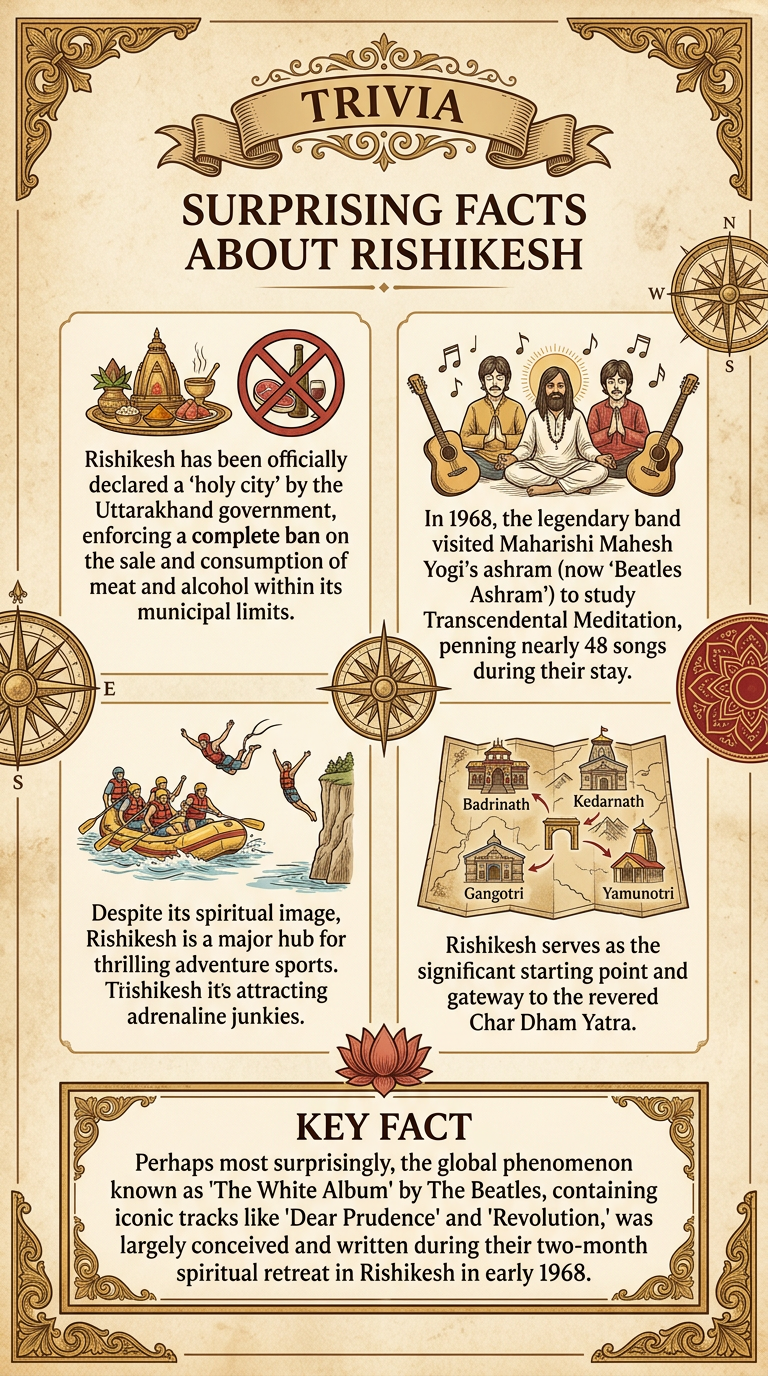
Surprising Facts About Rishikesh
Beyond its serene ashrams and yoga studios, Rishikesh holds several unique distinctions and unexpected facets that challenge conventional perceptions of a spiritual hub.
- **Strictly Vegetarian and Alcohol-Free:** Rishikesh has been officially declared a 'holy city' by the Uttarakhand government, enforcing a complete ban on the sale and consumption of meat and alcohol within its municipal limits.
- **The Beatles' Spiritual Retreat:** In 1968, the legendary band The Beatles famously visited Maharishi Mahesh Yogi's ashram (now known as the 'Beatles Ashram') to study Transcendental Meditation, penning nearly 48 songs during their stay.
- **Adventure Sports Capital:** Despite its spiritual image, Rishikesh is a major hub for thrilling adventure sports like white-water rafting, bungee jumping, and cliff jumping, attracting adrenaline junkies from around the world.
- **Gateway to the Char Dham:** Rishikesh serves as the significant starting point and gateway to the revered Char Dham Yatra, a pilgrimage circuit to four holy sites in the Himalayas: Badrinath, Kedarnath, Gangotri, and Yamunotri.
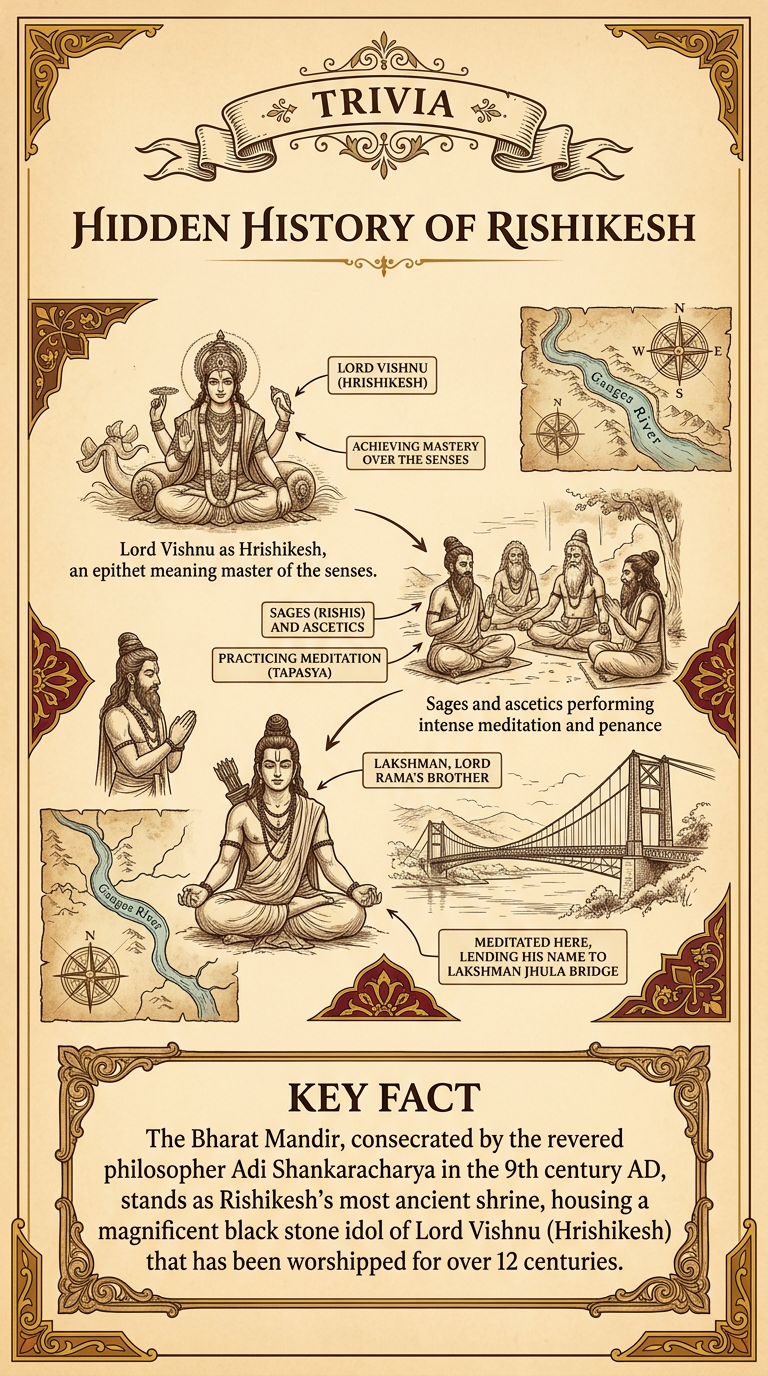
Hidden History of Rishikesh
The origins of Rishikesh are deeply entwined with ancient legends, revered sages, and a spiritual heritage that stretches back millennia, revealing a past richer and more mysterious than often perceived.
- The name 'Rishikesh' is derived from 'Hrishikesh', one of the names of Lord Vishnu, meaning 'lord of the senses', a tribute to the ancient sages who mastered their senses here.
- Legend states that Lord Rama's brother Lakshman performed penance here after slaying the demon Ravana, giving rise to the name of the famous Lakshman Jhula bridge.
- Bharat Mandir, the oldest temple in Rishikesh, dates back to the 9th century AD, originally established by Adi Shankaracharya, making it a pivotal site in Hindu pilgrimage for over 1200 years.
- Ancient texts and legends speak of Rishikesh as the dwelling place of numerous hermits and sages, who meditated in the secluded caves and forests along the Ganges, long before it became a bustling spiritual center.
More Rishikesh Secrets
The Enchanting Ganga Aarti at Parmarth Niketan
Every evening, as dusk descends, the banks of the Ganges at Parmarth Niketan Ashram come alive with the mesmerizing Ganga Aarti. This spiritual ceremony involves hymns, prayers, and a fire ritual, where devotees offer lighted lamps to the river.
The synchronized chanting, the flickering lamps floating on the water, and the scent of incense create an unforgettable, deeply moving experience for thousands of onlookers gathered by the ghats.
A Kaleidoscope of Ashrams and Yoga Schools
Rishikesh is home to hundreds of ashrams and yoga schools, each offering unique philosophies and styles, from traditional Hatha and Ashtanga to modern Vinyasa and Kundalini. Many offer immersive retreats and teacher training programs, attracting students from over 100 countries annually.
Triveni Ghat: Confluence of Three Sacred Rivers
Triveni Ghat is one of Rishikesh's most revered bathing ghats, believed to be the confluence (sangam) of three holy rivers: the Ganges, Yamuna, and the mythical Saraswati. Pilgrims perform ritualistic bathing here, believing it cleanses sins and offers spiritual merit, especially during sunrise.
More Rishikesh Content Coming Soon
We're crafting a complete guide for Rishikesh. Stay tuned!
Explore More Trivia