
Shanghai has reinvented itself multiple times - from fishing village to colonial playground to communist city to the world's largest financial center. It's where China meets the West, and where the future is already being built.
The World's Fastest Commercial Train
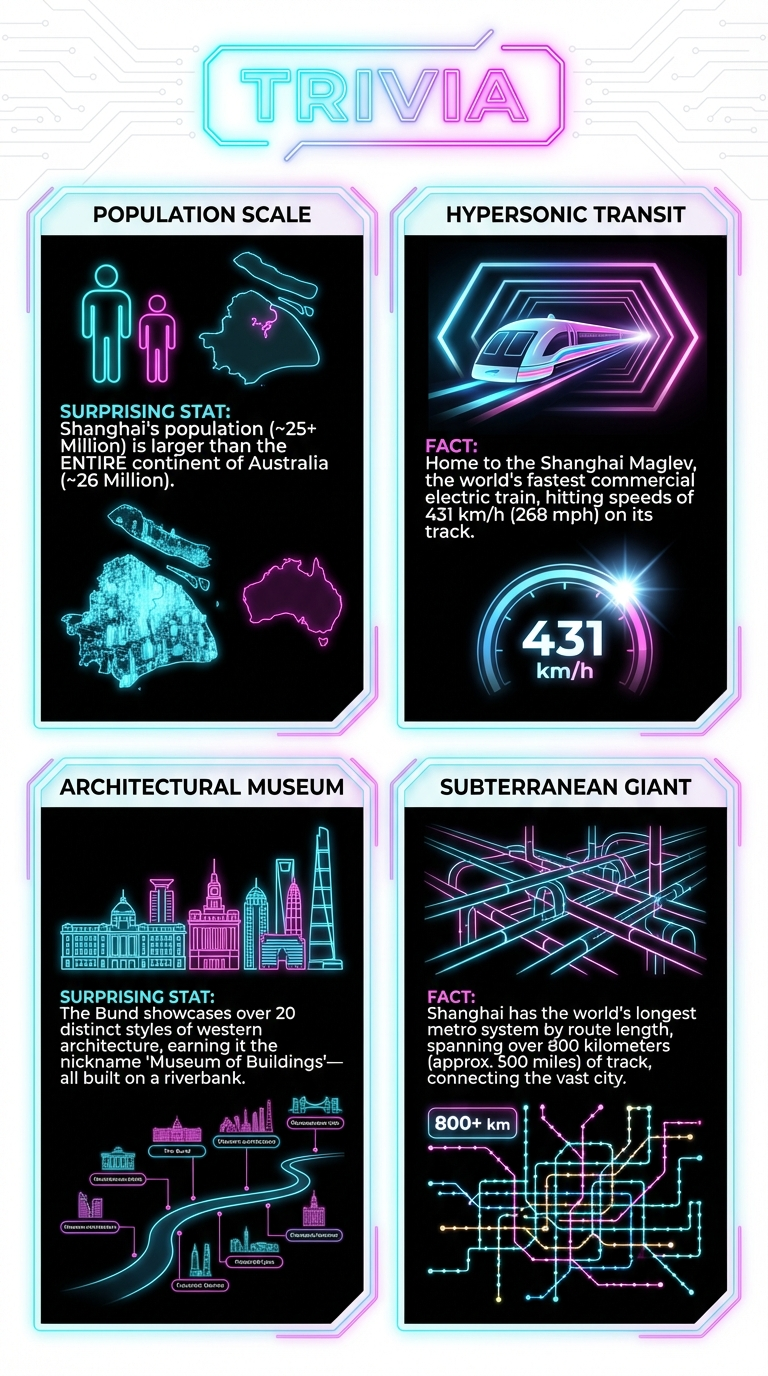
The Shanghai Maglev hits 431 km/h (268 mph) - faster than any commercial train in the world:
- Covers 30km from Pudong Airport to downtown in 7 minutes 20 seconds
- Uses magnetic levitation - floats 10mm above the track
- German technology, opened in 2004
- Cost $1.2 billion for just 30km of track
- Ticket price: ¥50 ($7) - cheaper than a taxi
The Paris of the East
In the 1920s-30s, Shanghai was the world's most cosmopolitan city - a wild mix of cultures, crime, and glamour:
- The Bund was the financial center of Asia
- International zones meant no visa was required to enter
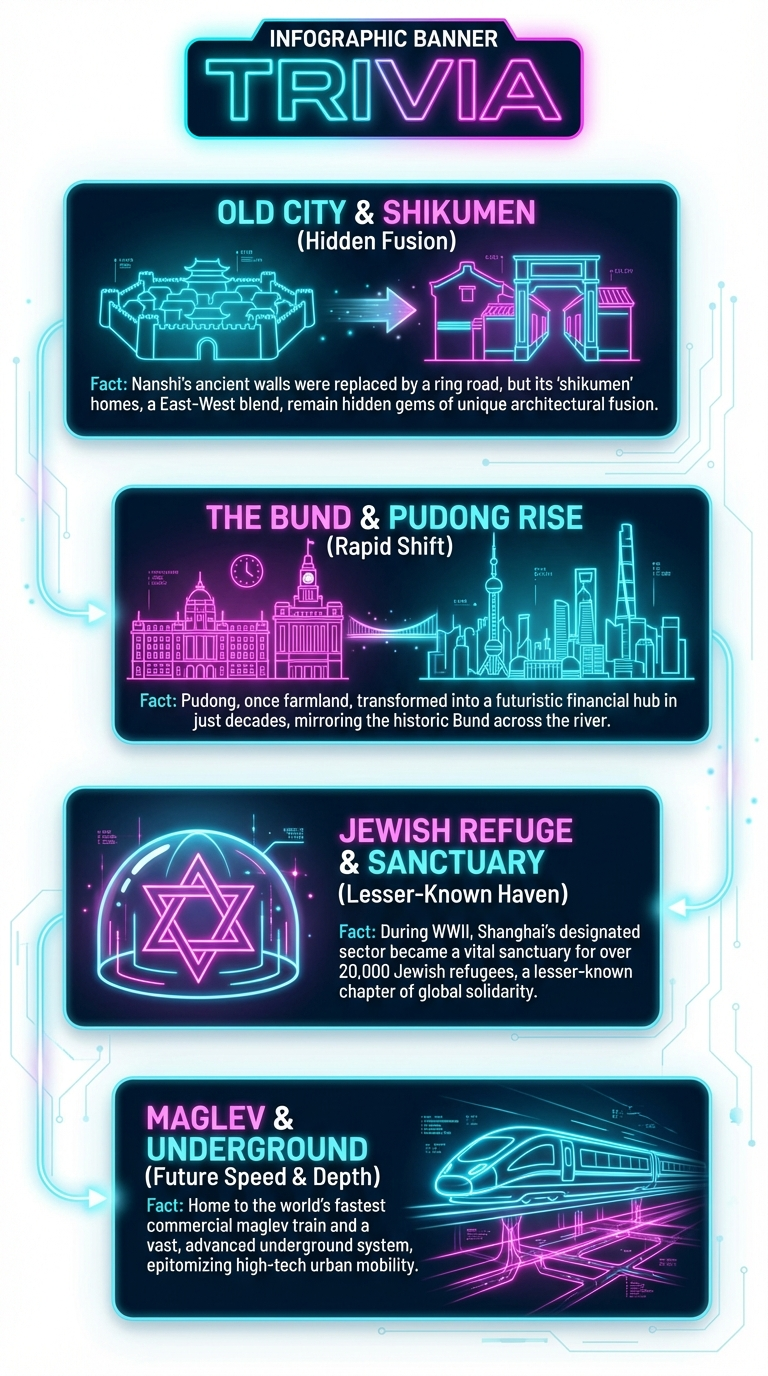
- 20,000 Jewish refugees fled here during WWII
- The "Green Gang" mafia controlled the city's underbelly
- Jazz, opium, and art deco defined the era
Pudong: Farmland to Futuristic
In 1990, Pudong was rice paddies. Today it has more skyscrapers than Manhattan:
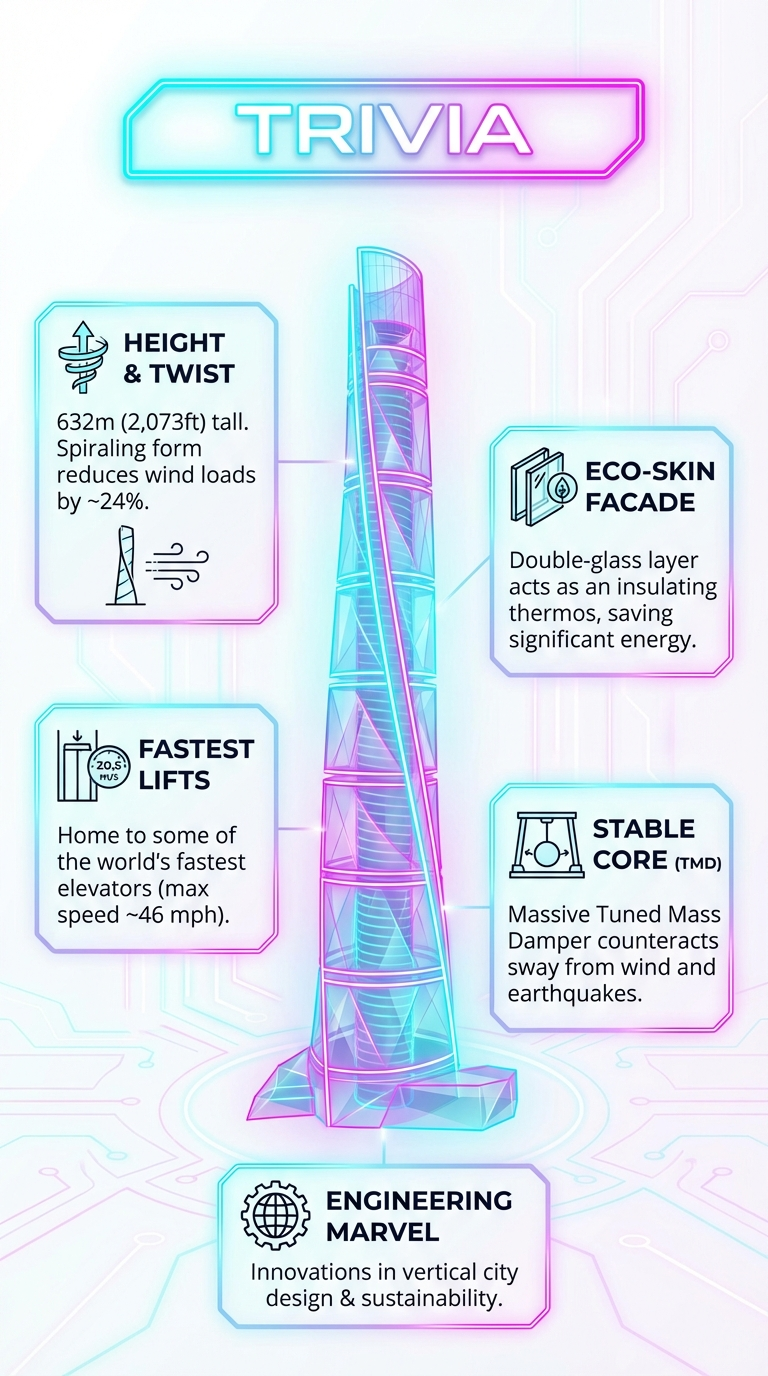
- Shanghai Tower is China's tallest building (632m)
- Pudong has 3 of the world's 15 tallest buildings
- The famous skyline was built almost entirely after 1990
- Shanghai has 3,000+ skyscrapers (NYC has ~257)
- Lujiazui was designated a financial zone in 1990
More Shanghai Secrets
The World's Busiest Port
Shanghai Port is the busiest container port in the world, handling over 47 million TEUs (containers) annually. That's more than the next two largest ports combined. The Yangshan Deep-Water Port was built on islands 32km offshore because the Yangtze River mouth was too shallow for modern ships.
Fun fact: Most of what you buy "Made in China" left through Shanghai!
The Fake Market Capital
Shanghai's markets were once famous for high-quality counterfeits - "AAA" grade copies of luxury goods that were nearly indistinguishable from originals. Crackdowns have reduced this, but some markets (like the basement of the Science and Technology Museum) still quietly operate.
Xiaolongbao: Shanghai's Gift to the World
Soup dumplings (xiaolongbao) were invented in Shanghai's Nanxiang district in the 1870s. The trick? The "soup" is actually gelatinized broth that melts when steamed. Din Tai Fung made them globally famous, but the best are still found in local Shanghai shops.
Want More Shanghai Stories?
Get our complete 80+ page ebook with all the trivia, attractions, and insider tips.
Ebook Coming Soon