
Somnath, a name synonymous with resilience and rebirth, stands as a beacon of faith on India's western coast. More than just a temple, it's a living saga of devotion that has defied countless destructions, rising majestically each time. Prepare to uncover the surprising engineering, hidden histories, and enduring mysteries that make Somnath an extraordinary pilgrimage destination.
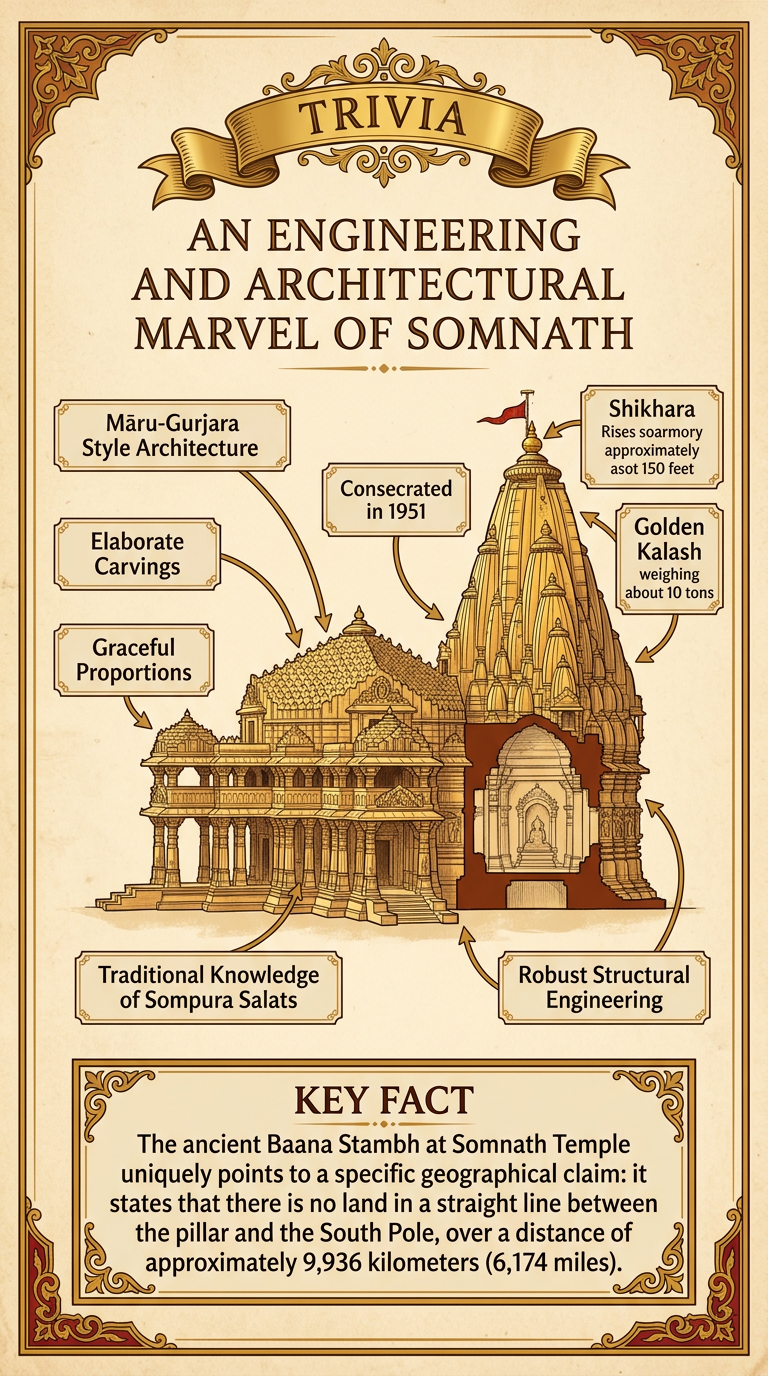
An Engineering and Architectural Marvel of Somnath
The present Somnath Temple is a masterpiece of modern Indian temple architecture, yet it carries the echoes of millennia of design evolution and structural ingenuity.
- Built in the intricate Chaulukya style (also known as Māru-Gurjara style) of temple architecture, characterized by its soaring spires and elaborate carvings.
- Features a unique 'Baana Stambh' (Arrow Pillar) on its sea-facing side, dating back to 6th century CE, which claims an uninterrupted line of sight to the South Pole.
- The current temple's structure incorporates advanced engineering to withstand the harsh coastal environment and potential seismic activity, a lesson learned from its predecessors.
- The shikhara (spire) rises approximately 150 feet high, crowned by a 10-ton kalash and an 8-foot tall flagpole, demonstrating significant structural load-bearing capacity.
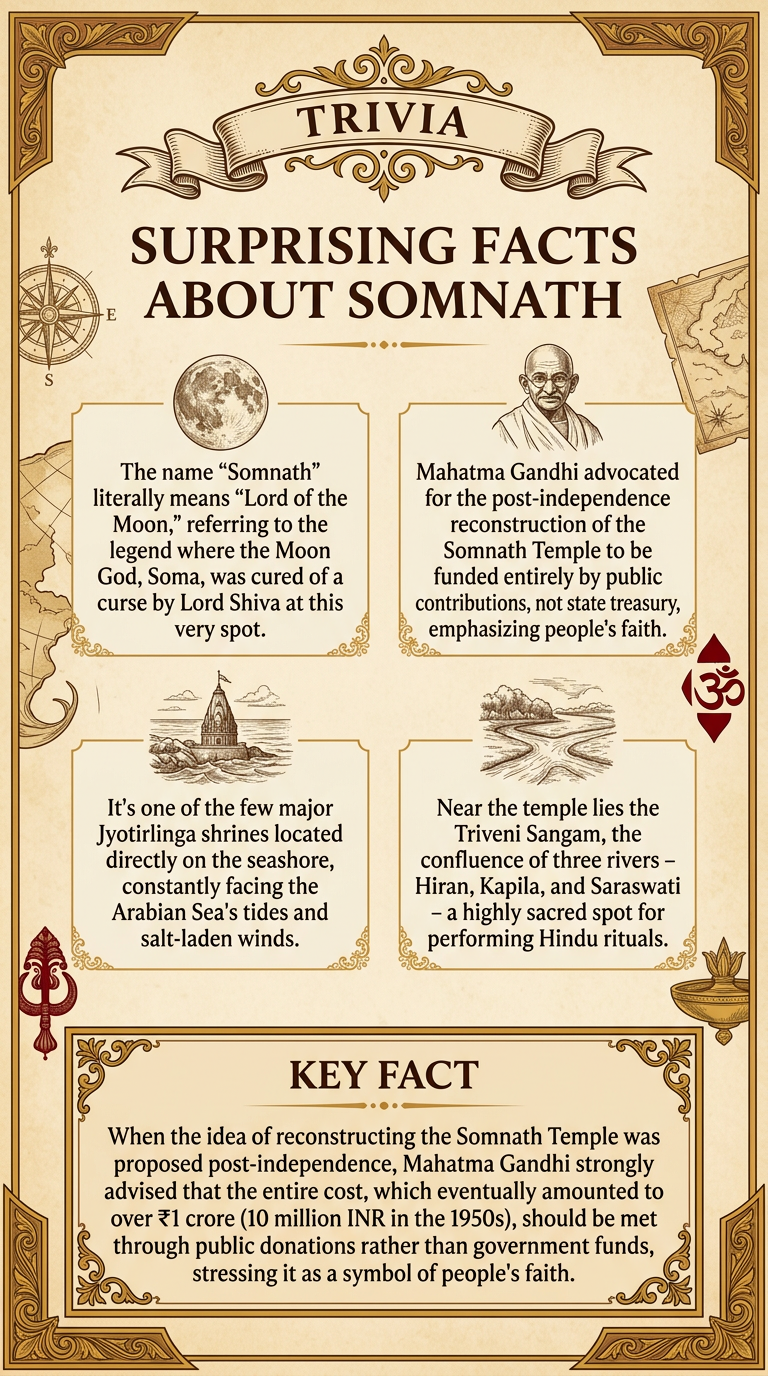
Surprising Facts About Somnath
Beyond its iconic status, Somnath holds several fascinating lesser-known stories and unique distinctions that surprise even seasoned travelers.
- **Lunar Origin**: The name "Somnath" literally means "Lord of the Moon," referring to the legend where the Moon God, Soma, was cured of a curse by Lord Shiva at this very spot.
- **Gandhi's Vision**: Mahatma Gandhi advocated for the post-independence reconstruction of the Somnath Temple to be funded entirely by public contributions, not state treasury, emphasizing people's faith.
- **Coastal Endurance**: It's one of the few major Jyotirlinga shrines located directly on the seashore, constantly facing the Arabian Sea's tides and salt-laden winds.
- **Sacred Confluence**: Near the temple lies the Triveni Sangam, the confluence of three rivers – Hiran, Kapila, and Saraswati – a highly sacred spot for performing Hindu rituals.
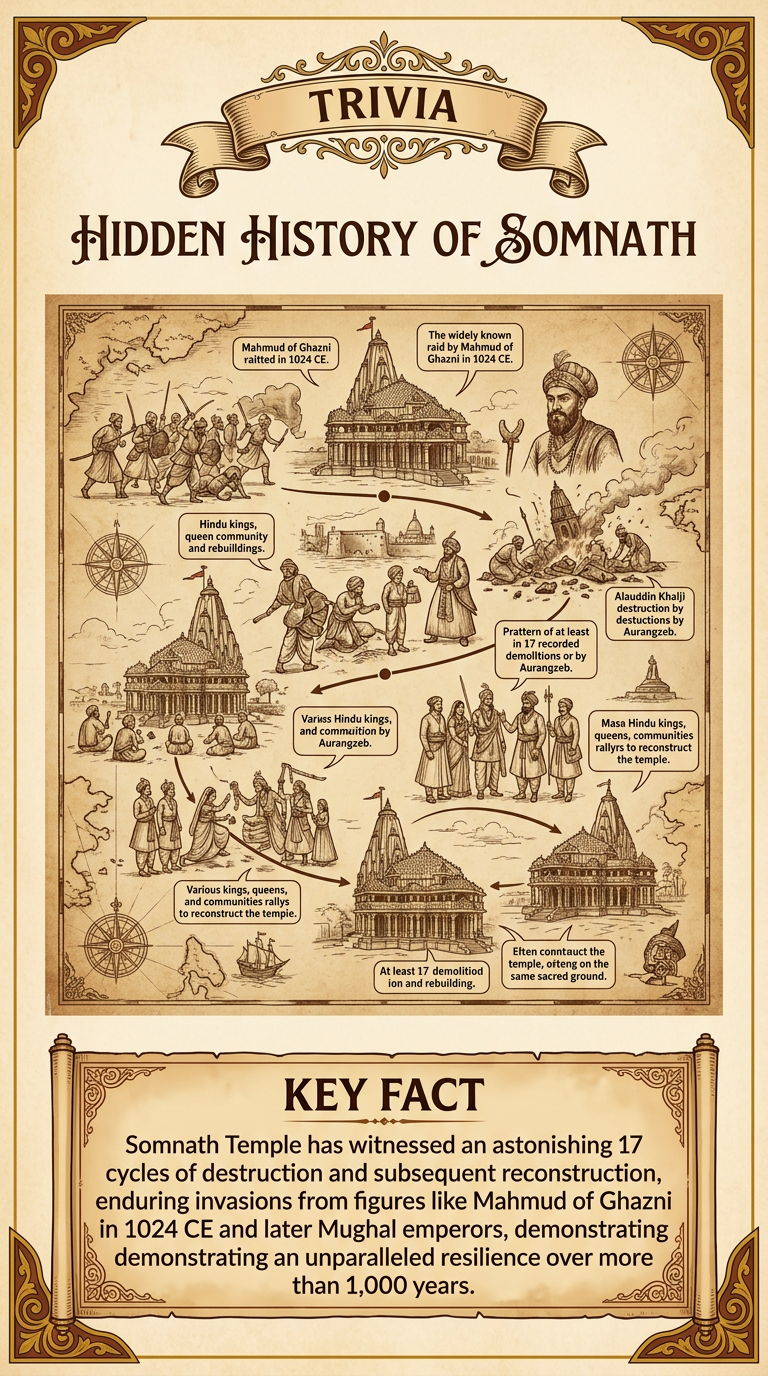
Hidden History of Somnath
The stones of Somnath conceal centuries of stories, from tales of devastating invasions to the persistent efforts of rulers and devotees to restore its glory.
- The temple has been destroyed and rebuilt at least 17 times over a millennium, making it perhaps the most resilient religious structure in India.
- The famous raid by Mahmud of Ghazni in 1024 CE, during which he reportedly plundered immense wealth and destroyed the idol, is just one chapter in its long history of repeated destruction and reconstruction.
- The site is also revered as 'Prabhas Patan,' the place where Lord Krishna is believed to have ended his earthly leela (divine play) and ascended to his heavenly abode.
- The current temple’s reconstruction was inaugurated by India’s first President, Dr. Rajendra Prasad, on May 11, 1951, marking a significant moment for the newly independent nation.
More Somnath Secrets
Triveni Sangam: A Sacred Confluence
Near the Somnath temple, the Triveni Sangam marks the sacred confluence of three rivers: Hiran, Kapila, and the mythical Saraswati. This holy spot is revered in Hindu tradition for performing ancestor rituals (Shraddha) and taking purifying dips, believed to cleanse sins and bring spiritual merit.
It adds another layer of profound spiritual significance to the Somnath pilgrimage, drawing devotees who seek spiritual purification and wish to honor their ancestors at this auspicious junction of waters.
Bhalka Tirth: Lord Krishna's Final Moments
Located about 5 km from Somnath, Bhalka Tirth is a poignant pilgrimage site. It is believed to be the exact spot where Lord Krishna, resting under a pipal tree, was accidentally shot in the foot by a hunter named Jara, who mistook his partially visible foot for a deer.
This incident marked the beginning of Krishna's ascent to his heavenly abode (Dehotsarg), making it a place of immense spiritual gravity for devotees who come to meditate and reflect on the divine journey.
Somnath Museum: Guardians of History
For those curious about the temple's tumultuous past, the Somnath Museum (also known as Somnath Sanskriti Darshan and Exhibition) houses a remarkable collection of archaeological findings, sculptures, and architectural fragments recovered from the various phases of the temple's destruction and reconstruction.
It offers a tangible connection to the temple's long history and the resilience of its cultural heritage, providing invaluable insights into the artistry and devotion that has defined Somnath for millennia.
More Somnath Content Coming Soon
We're crafting a complete guide for Somnath. Stay tuned!
Explore More Trivia