
Towering above the Narmada River, the Statue of Unity is more than just the world's tallest statue; it's a breathtaking testament to India's rich history and engineering prowess. Prepare to uncover fascinating secrets, groundbreaking design, and the surprising stories behind this monumental tribute.
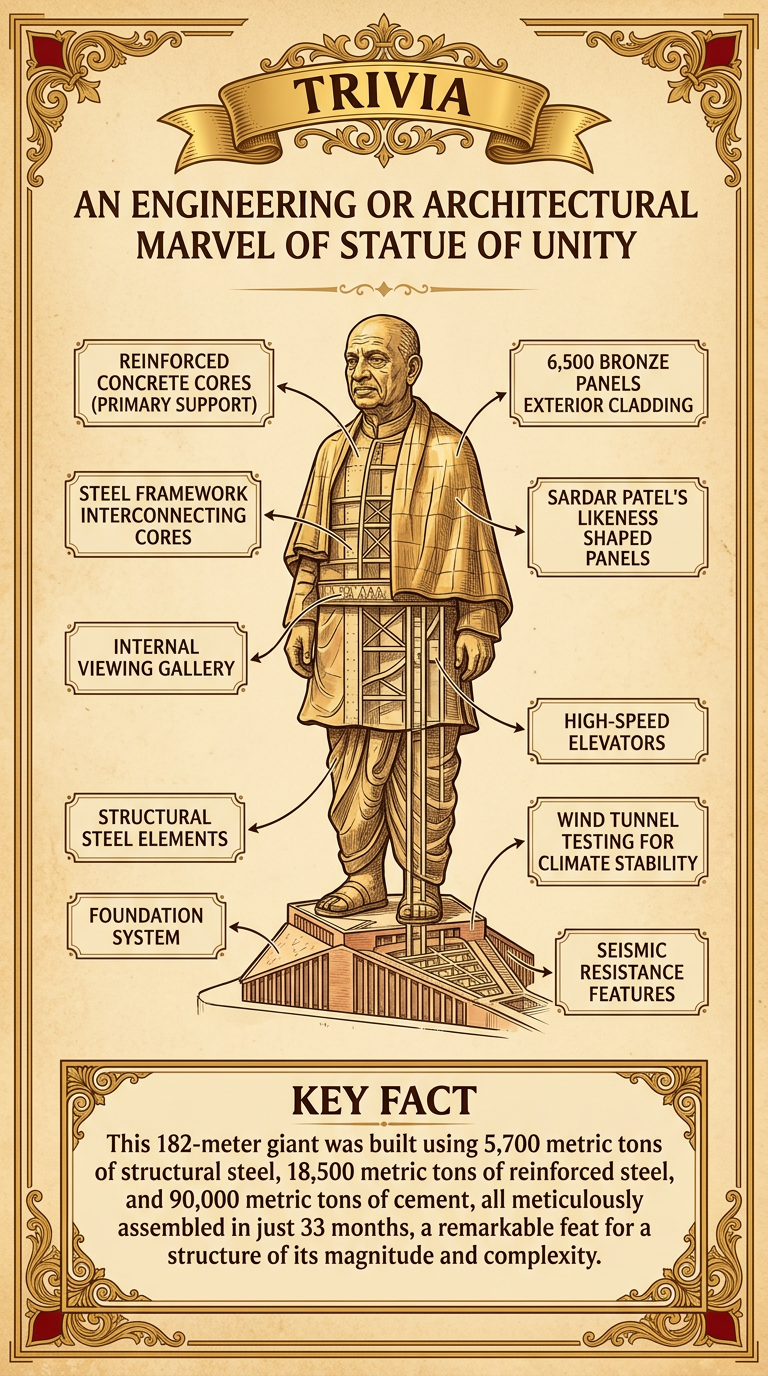
An Engineering or Architectural Marvel of Statue of Unity
The colossal scale of the Statue of Unity demanded unprecedented engineering solutions, pushing the boundaries of construction and design to create a structure of enduring strength and symbolic grandeur.
- The statue stands at a staggering 182 meters (597 feet), making it the tallest in the world, requiring precise planning for stability.
- It features a unique double-skinned structure: an inner reinforced concrete core for strength, clad with an outer layer of bronze panels.
- Engineers designed the statue to withstand extreme weather conditions, including wind speeds of up to 130 km/hr and seismic tremors up to 6.5 on the Richter scale.
- The construction involved an intricate combination of advanced techniques, including 3D scanning, structural steel fabrication, and rapid construction methods.
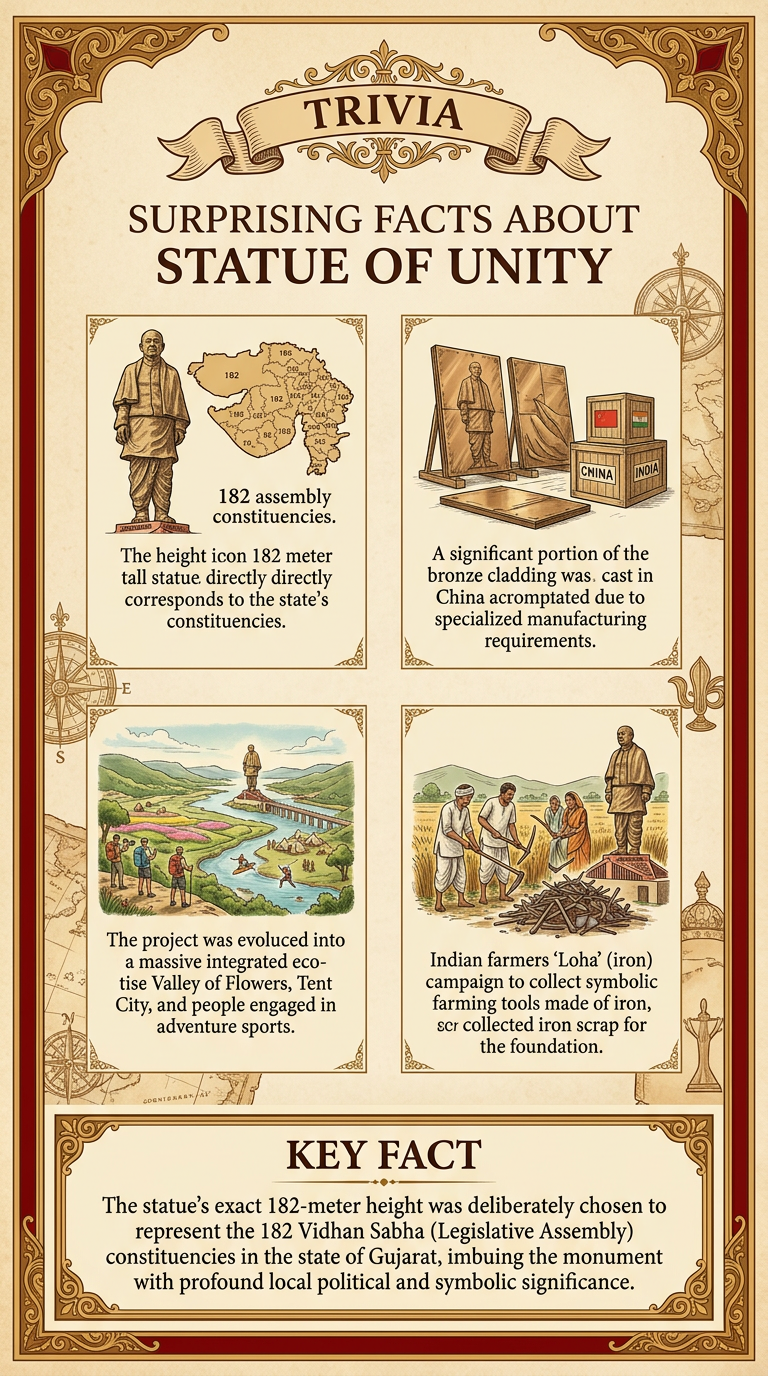
Surprising Facts About Statue of Unity
Beyond its record-breaking height, the Statue of Unity holds several fascinating and lesser-known details that reveal its deeper meaning and the ambitious vision behind its creation.
- **Symbolic Height:** The 182-meter height of the statue is not arbitrary; it directly corresponds to the 182 assembly constituencies of Gujarat state.
- **Bronze Origin Debate:** While a symbol of Indian unity, a significant portion of the bronze cladding was cast in China due to the specialized manufacturing capabilities required for such large panels.
- **Beyond the Statue:** The project quickly evolved into a massive integrated eco-tourism development, featuring attractions like the Valley of Flowers, Tent City, and various adventure sports.
- **'Loha Campaign':** A nationwide 'Loha' (iron) campaign collected iron scrap from millions of Indian farmers' tools to be melted down and used symbolically in the statue's foundation.

Hidden History of Statue of Unity
Delve into the concealed narratives and historical currents that shaped the conceptualization and realization of this monumental tribute to India's 'Iron Man.'
- The project was initiated as a tribute to Sardar Vallabhbhai Patel, recognizing his unparalleled contribution to unifying over 560 princely states into independent India.
- Before construction, a unique 'Statue of Unity Movement' was launched, urging Indian farmers to donate used farm tools for their iron, symbolizing collective ownership.
- The site on Sadhu Bet island in the Narmada River holds indigenous cultural significance, leading to initial debates and considerations regarding local tribal communities.
- The statue is strategically located near the Sardar Sarovar Dam, one of the world's largest dams, which itself has a complex history of development and environmental debate.
More Statue of Unity Secrets
The Valley of Flowers (Bharat Van)
Surrounding the Statue of Unity is the vibrant 'Valley of Flowers,' or Bharat Van, a beautiful landscaped garden spread over 600 acres. It features more than 22 lakh (2.2 million) plants of various species, including flowering plants, shrubs, and trees, creating a stunning visual spectacle, especially during blooming seasons.
The Valley is designed not only for aesthetic appeal but also to promote biodiversity and provide a serene, green environment for visitors, enhancing the overall experience of the monumental statue.
Sardar Sarovar Dam and Narmada River
The Statue of Unity is majestically situated overlooking the Sardar Sarovar Dam, one of the world's largest concrete gravity dams, on the Narmada River. The dam is a lifeline for millions in Gujarat, providing irrigation and drinking water, and generating significant hydropower. Its proximity adds another layer of engineering marvel and historical significance to the site, showcasing India's ambitious infrastructure projects.
The Narmada River itself is considered one of India's seven sacred rivers, revered by pilgrims and central to local culture and spirituality, making the statue's location deeply resonant.
Ekta Cruise & Tent City Narmada
To enhance the visitor experience, the Statue of Unity precinct offers unique attractions like the Ekta Cruise. This scenic river cruise on the Narmada River provides breathtaking panoramic views of the statue from a different perspective, especially during sunrise or sunset, and connects various attractions within the complex. Travelers can also extend their stay by booking accommodations at the luxurious Tent City Narmada, offering glamping experiences with cultural programs, adventure activities, and delicious local cuisine, transforming a day trip into an immersive multi-day adventure.
More Statue of Unity Content Coming Soon
We're crafting a complete guide for Statue of Unity. Stay tuned!
Explore More Trivia