
Nestled high in the Eastern Himalayas, Tawang is a land of profound spirituality and breathtaking vistas that often exceeds all expectations. This remote corner of Arunachal Pradesh holds secrets of ancient history, engineering marvels, and surprising cultural richness waiting to be unearthed by the curious traveler.
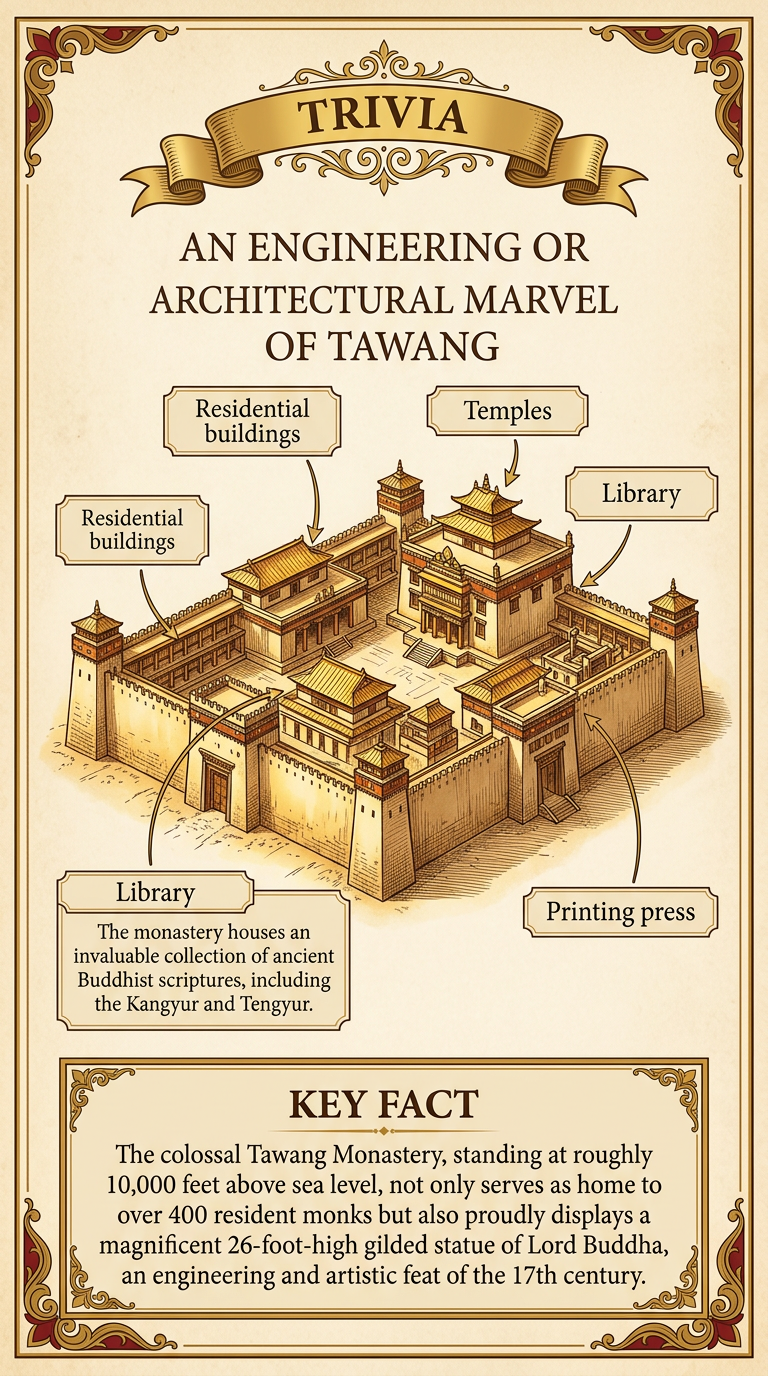
An Engineering or Architectural Marvel of Tawang
Tawang Monastery, also known as 'Galden Namgey Lhatse,' stands as a magnificent testament to ancient craftsmanship and spiritual devotion, a fortress of faith clinging to the mountainside.
- It is the largest monastery in India and the second largest in Asia, following the Potala Palace in Lhasa.
- Founded in 1680-81 AD by Merak Lama Lodre Gyatso, following the instructions of the 5th Dalai Lama.
- The main prayer hall, Dukhang, houses a colossal 8-meter (26-foot) high gilded statue of Lord Buddha, intricately carved and adorned.
- Its strategic location at an altitude of approximately 10,000 feet provided both spiritual sanctity and a natural defensive advantage against invaders.
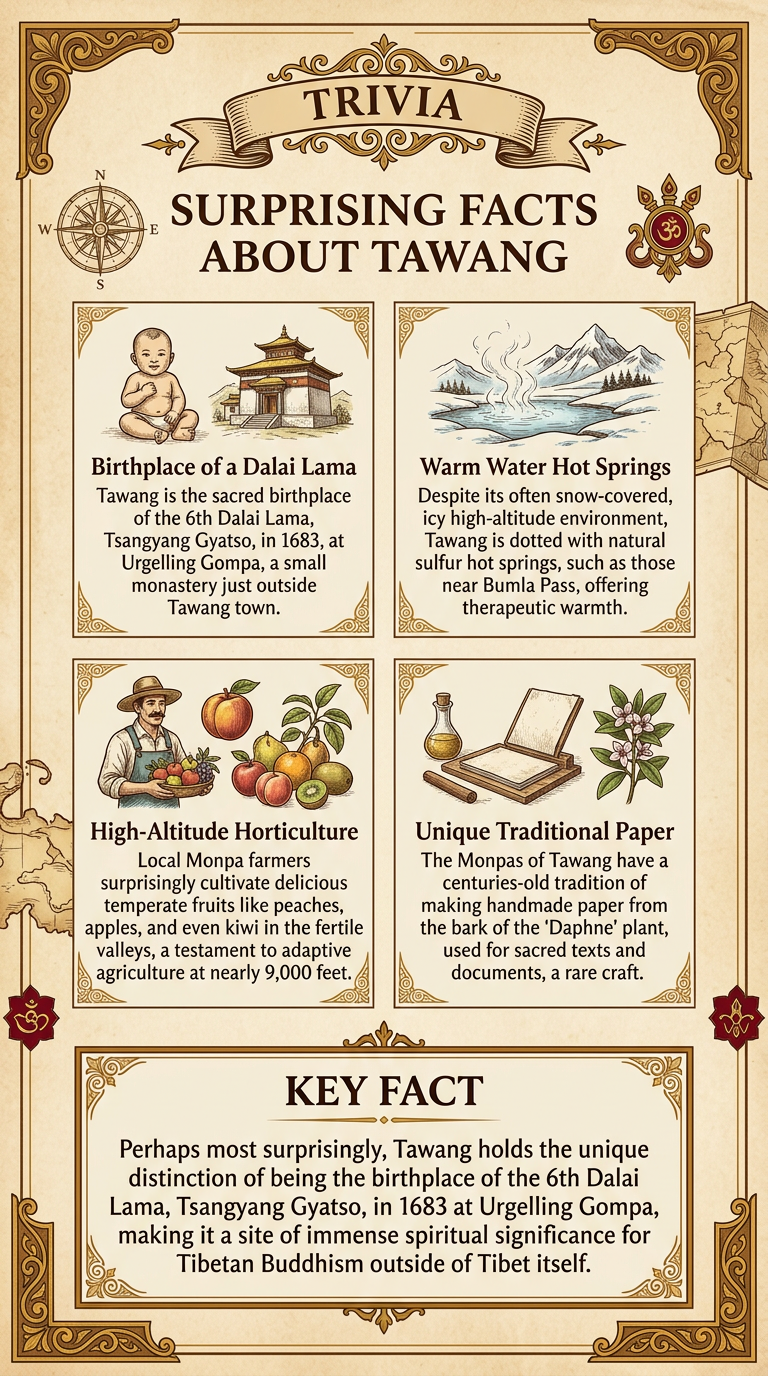
Surprising Facts About Tawang
Beyond its serene facade of monasteries and mountains, Tawang holds a treasure trove of unexpected stories and unique attributes that challenge common perceptions about this remote region.
- **Birthplace of a Dalai Lama:** Tawang is the sacred birthplace of the 6th Dalai Lama, Tsangyang Gyatso, in 1683, at Urgelling Gompa, a small monastery just outside Tawang town.
- **Warm Water Hot Springs:** Despite its often snow-covered, icy high-altitude environment, Tawang is dotted with natural sulfur hot springs, such as those near Bumla Pass, offering therapeutic warmth.
- **High-Altitude Horticulture:** Local Monpa farmers surprisingly cultivate delicious temperate fruits like peaches, apples, and even kiwi in the fertile valleys, a testament to adaptive agriculture at nearly 9,000 feet.
- **Unique Traditional Paper:** The Monpas of Tawang have a centuries-old tradition of making handmade paper from the bark of the 'Daphne' plant, used for sacred texts and documents, a rare craft.
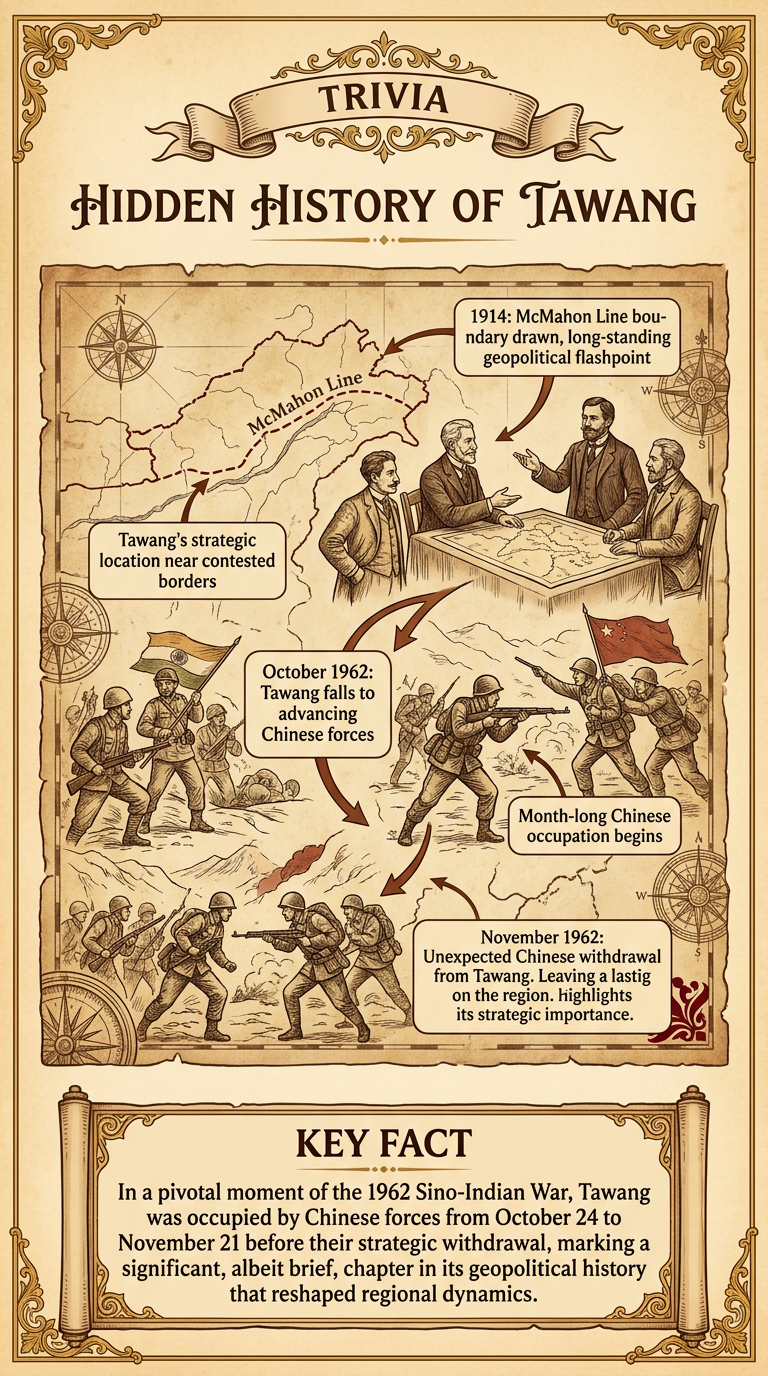
Hidden History of Tawang
Delve beneath the surface of Tawang's tranquil present to uncover layers of ancient conflicts, significant geopolitical roles, and spiritual lineages that have profoundly shaped its destiny over centuries.
- **The McMahon Line Connection:** Tawang's historical claim has been a point of contention due to its strategic location along the disputed India-China border, defined by the McMahon Line.
- **Sino-Indian War of 1962:** Tawang was briefly captured by Chinese forces during the 1962 conflict, with the Chinese unilaterally withdrawing after a short occupation.
- **Ancient Trade Routes:** For centuries, Tawang served as a vital stop on ancient trans-Himalayan trade routes, connecting Tibet, Bhutan, and the plains of Assam, facilitating cultural exchange.
- **The 'Hidden Land' Myth:** Local legends refer to Tawang as part of a 'Beyul,' a hidden sacred land blessed by Guru Rinpoche, believed to be protected from worldly strife and accessible only to the pure-hearted.
More Tawang Secrets
The Monpa Tribe: Guardians of Tawang's Culture
The Monpa are the predominant indigenous community of Tawang, known for their vibrant culture, unique craftsmanship, and deep devotion to Tibetan Buddhism. Their lives are intimately connected to the monastic traditions, and their spiritual practices are central to their identity.
Monpa artistry is celebrated through intricate wooden masks, used in traditional dances, thangka paintings depicting Buddhist deities, and their distinctive hand-woven carpets. They also have a rich tradition of folk dances like the 'Ajilamu' dance, which narrates stories through vibrant costumes and rhythmic movements.
Sela Pass: Gateway to Serenity
At an altitude of approximately 13,700 feet (4,170 meters), Sela Pass is one of the most breathtaking mountain passes in the world, often covered in a pristine blanket of snow for much of the year. It serves as a vital lifeline, connecting Tawang to the rest of India, making it a strategic and visually stunning journey.
Near the summit of the pass lies the stunning Sela Lake, a high-altitude freshwater lake that remains frozen for most of the winter, adding to its ethereal beauty and serving as a revered site for locals. The pass is considered sacred by Buddhists, with legend stating there are 101 lakes in and around Sela Pass.
Jung Falls (Nuranang Falls): A Roaring Spectacle
While many travelers visit Tawang Monastery, fewer venture to the magnificent Nuranang Falls, also known as Jung Falls. Cascading from a height of approximately 100 meters (330 feet), these powerful falls are fed by the Nuranang River and are a truly awe-inspiring sight, particularly during and after the monsoon season.
Nestled amidst lush green forests and often shrouded in mist, the roar of the falls creates a dramatic natural symphony. It's one of Arunachal Pradesh's most spectacular waterfalls and offers a serene, powerful encounter with nature's grandeur, often without the crowds found at more popular attractions.
More Tawang Content Coming Soon
We're crafting a complete guide for Tawang. Stay tuned!
Explore More Trivia