
Toronto, often seen as Canada's modern financial hub, holds a surprising depth of history, engineering marvels, and unexpected cultural quirks beneath its shimmering skyscraper façade. Dive into this trivia to uncover the extraordinary stories and little-known facts that make the 'Six' truly unique.
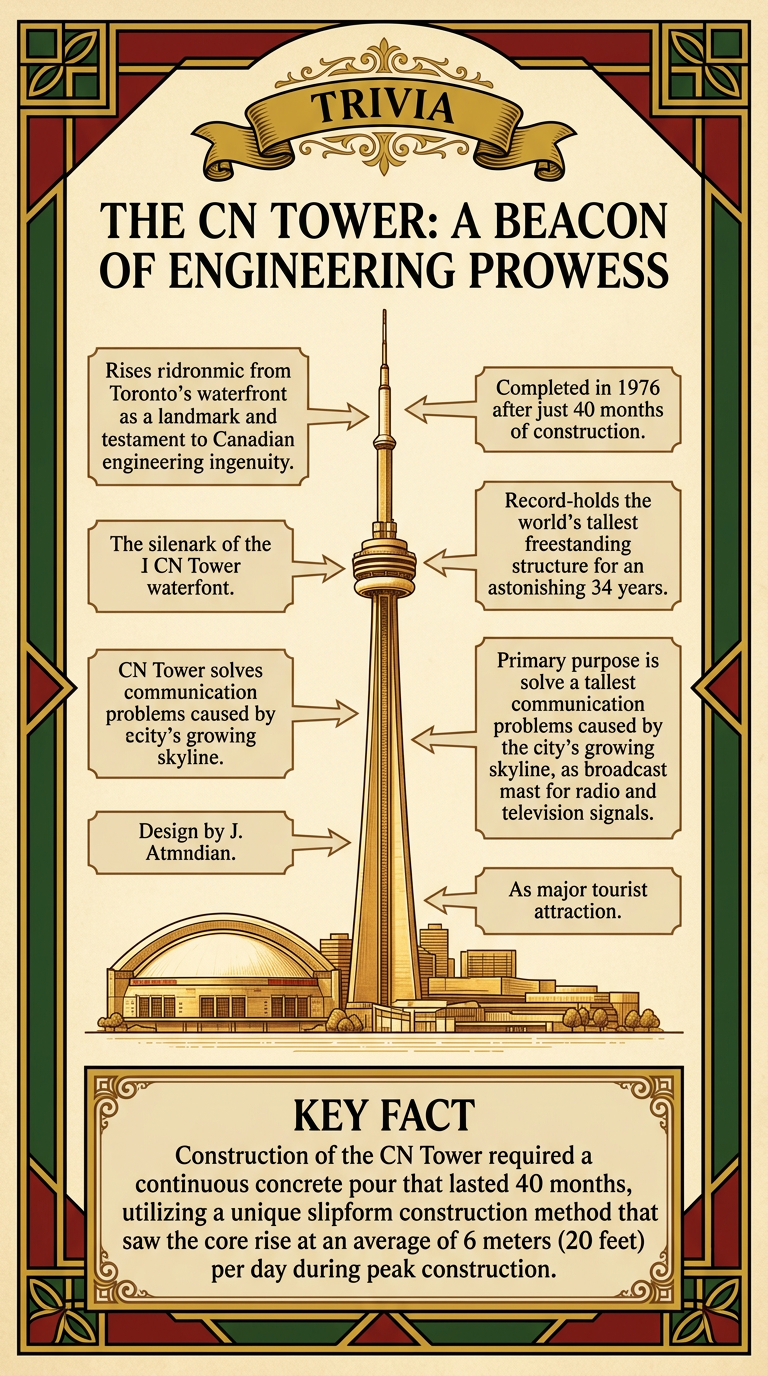
The CN Tower: A Beacon of Engineering Prowess
Standing tall as an iconic symbol of Toronto, the CN Tower is more than just an observation deck; it's a record-breaking feat of engineering that once dominated the global skyline.
- At 553.33 meters (1,815 feet, 5 inches) tall, it was the world's tallest freestanding structure for 34 years after its completion in 1976.
- The Glass Floor on the Main Observation Level is 256 square feet (23.7 square meters) and can withstand the weight of 14 large hippos.
- The CN Tower's 'EdgeWalk' is the world's highest full-circle, hands-free walk, 356 meters (1,168 feet) above the ground.
- It acts as a vital telecommunications hub, providing broadcast signals for over 16 television and FM radio stations in the Greater Toronto Area.
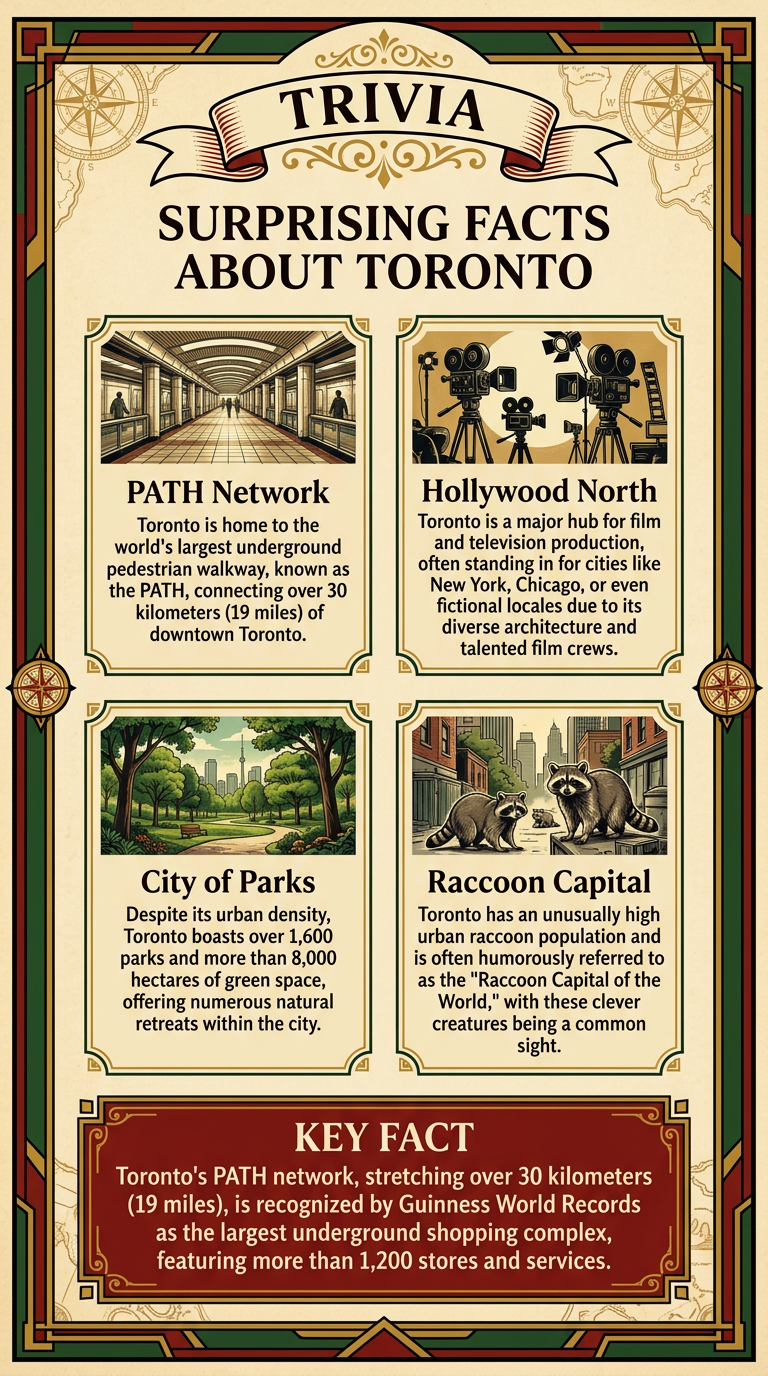
Surprising Facts About Toronto
From its subterranean streets to its unexpected claim to Hollywood fame, Toronto harbors many surprising facts that even locals might not fully appreciate.
- **PATH Network**: Toronto is home to the world's largest underground pedestrian walkway, known as the PATH, connecting over 30 kilometers (19 miles) of downtown Toronto.
- **Hollywood North**: Toronto is a major hub for film and television production, often standing in for cities like New York, Chicago, or even fictional locales due to its diverse architecture and talented film crews.
- **City of Parks**: Despite its urban density, Toronto boasts over 1,600 parks and more than 8,000 hectares of green space, offering numerous natural retreats within the city.
- **Raccoon Capital**: Toronto has an unusually high urban raccoon population and is often humorously referred to as the 'Raccoon Capital of the World,' with these clever creatures being a common sight.
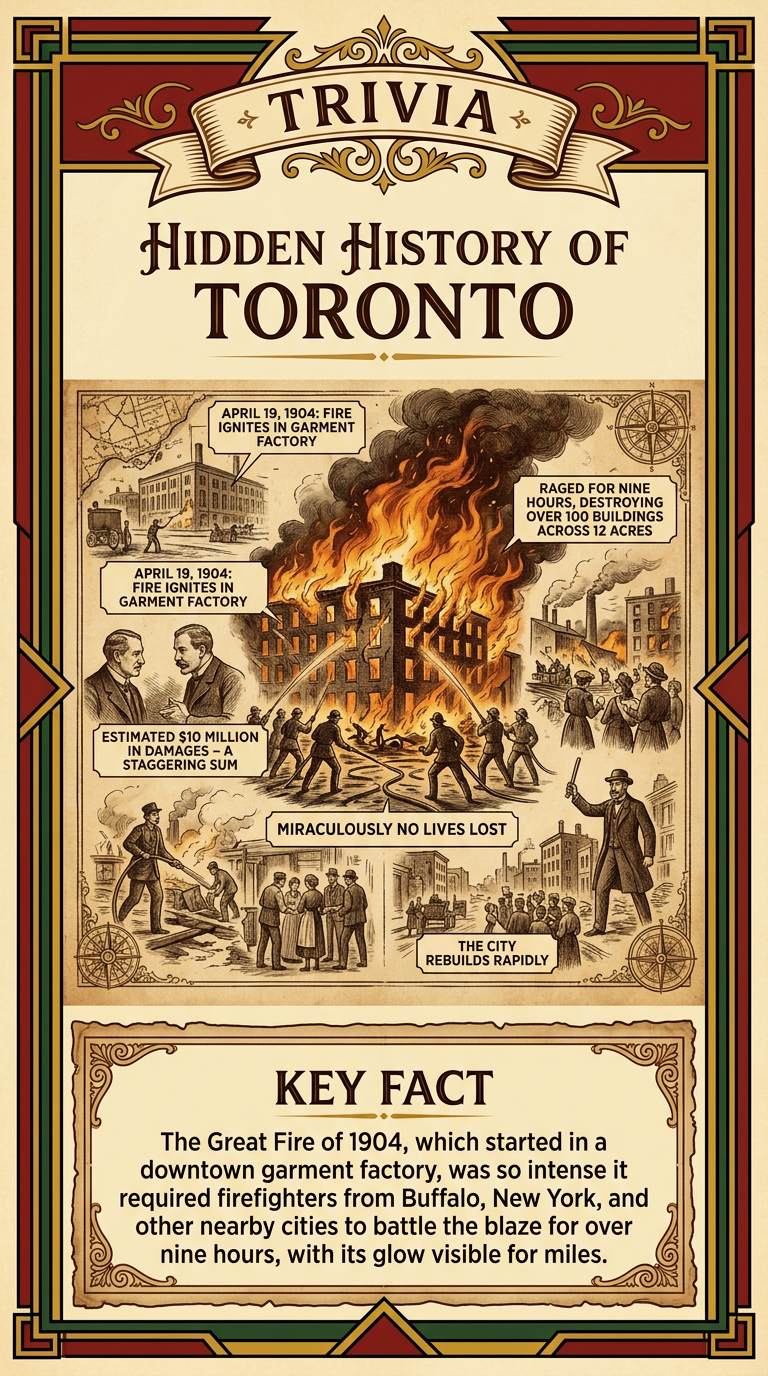
Hidden History of Toronto
Beneath Toronto's modern façade lies a rich tapestry of lesser-known historical events, from devastating fires to complex land dealings and forgotten communities.
- The Great Fire of 1904 ravaged downtown Toronto, destroying over 100 buildings and causing $10 million in damages (over $300 million in today's currency), yet remarkably resulted in no fatalities.
- The original 'Toronto Purchase' of 1787, where British officials acquired vast tracts of land from the Mississaugas of the Credit First Nation, was a contentious deal later subject to significant disputes and renegotiations.
- Many of Toronto's present-day neighbourhoods were once independent villages or towns, like Weston, Mimico, and Leaside, each with its own distinct history before being absorbed into the expanding city.
- Spadina House, a historic mansion built in 1866, offers a glimpse into the life of one of Toronto's most influential early families, the Austins, reflecting the city's Victorian-era elite.
More Toronto Secrets
Toronto's Island Gem: A Car-Free Oasis
Just a short ferry ride from downtown Toronto, the Toronto Islands offer a unique escape from the urban hustle. This chain of small islands is completely car-free, providing a tranquil haven for pedestrians and cyclists.
Home to charming residential communities, beautiful beaches, an amusement park (Centreville), and stunning views of the city skyline, the islands are a popular spot for recreation and relaxation, especially during warmer months.
Kensington Market: A Bohemian Bazaar
Kensington Market is one of Toronto’s most vibrant and eclectic neighborhoods, known for its bohemian spirit and diverse cultural fabric. This designated National Historic Site of Canada is a labyrinth of brightly painted Victorian houses, independent shops selling vintage clothing, artisanal crafts, and a smorgasbord of multicultural eateries. It's a pedestrian-friendly district that regularly hosts street festivals and boasts an ever-changing display of street art and murals, making it a truly unique shopping and dining experience.
The Distillery District: Industrial Charm Reimagined
Step back in time at the Distillery District, a pedestrian-only village of Victorian-era industrial architecture that once housed the Gooderham & Worts Distillery, North America's largest whiskey producer. Lovingly restored, this charming district is now a thriving hub for arts, culture, and entertainment, featuring art galleries, boutiques, unique restaurants, and performance venues, making it a popular spot for both locals and tourists, especially during its famous Christmas Market.
More Toronto Content Coming Soon
We're crafting a complete guide for Toronto. Stay tuned!
Explore More Trivia