
Ujjain holds countless fascinating stories and secrets waiting to be discovered. From ancient legends to modern marvels, this destination continues to captivate visitors with its rich heritage.
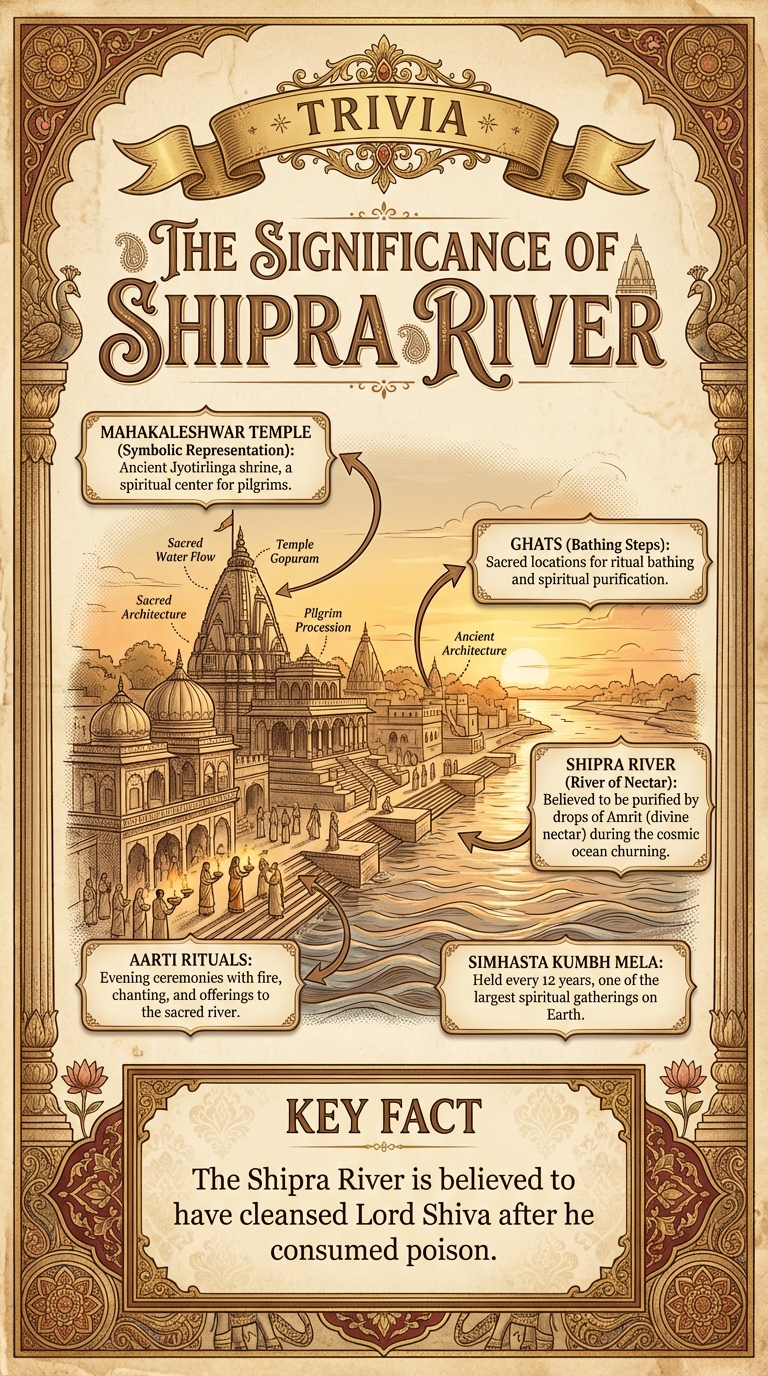
The Significance of Shipra River
The Shipra River holds immense religious significance in Ujjain. It is believed to be the river that cleansed Lord Shiva after he consumed the poison during the Samudra Manthan (churning of the ocean). Taking a dip in the Shipra is considered highly auspicious and is believed to cleanse one's sins. The river is also the lifeline of Ujjain, providing water for irrigation and drinking purposes. The banks of the Shipra come alive during the Kumbh Mela, with millions of devotees thronging to take a holy dip. The river is considered so sacred that it is worshipped as a deity. Despite being relatively small, the Shipra's impact on the spiritual and cultural landscape of Ujjain is undeniable. Locals strongly believe that the river is an avatar of Goddess Lakshmi. The river's importance goes back to centuries and continues even today.
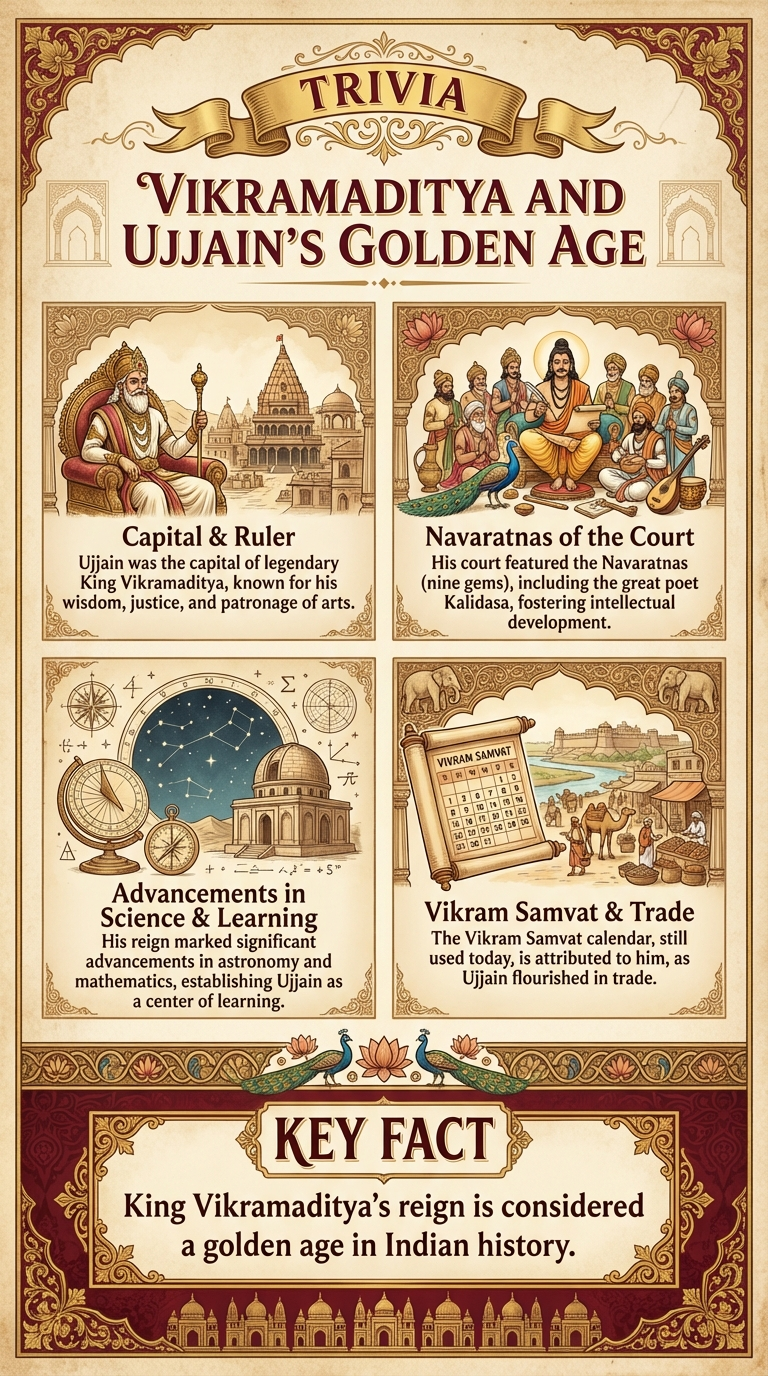
Vikramaditya and Ujjain's Golden Age
Ujjain was the capital of the legendary King Vikramaditya, a renowned ruler known for his wisdom, justice, and patronage of arts and sciences. His reign is considered a golden age in Indian history, marked by significant advancements in astronomy, mathematics, and literature. The famous nine gems (Navaratnas) of his court, including Kalidasa, the great Sanskrit poet, contributed immensely to the cultural and intellectual development of the era. The Vikram Samvat calendar, still widely used in India, is attributed to him. Ujjain flourished as a center of learning and trade during his rule, attracting scholars and merchants from far and wide. The stories and legends of Vikramaditya continue to inspire and resonate with people across India, and the city is inextricably tied to his legacy. Vikramaditya’s reign is still considered a benchmark for good governance and cultural achievement.
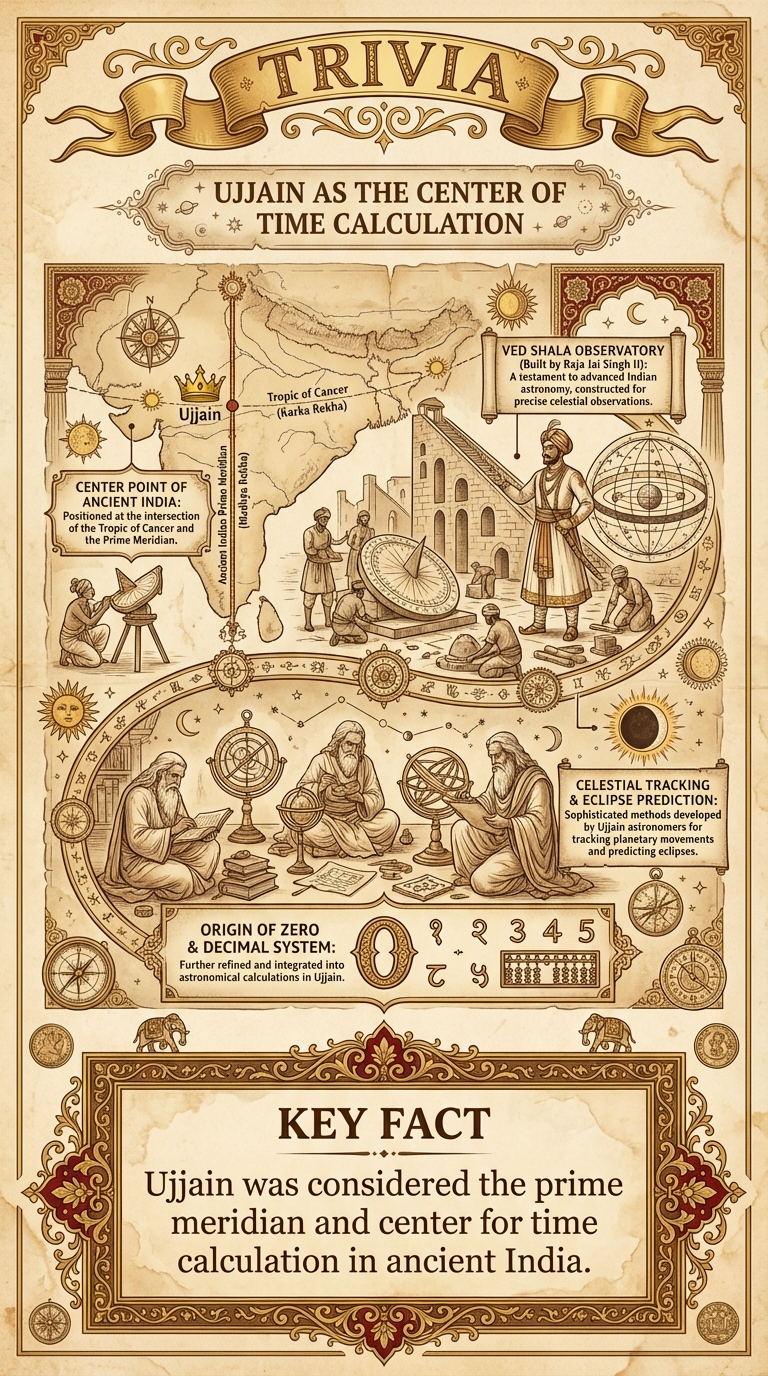
Ujjain as the Center of Time Calculation
In ancient India, Ujjain held a crucial position as the center for calculating time. Its location on the Tropic of Cancer and its proximity to the Prime Meridian (according to ancient Indian calculations) made it ideal for astronomical observations and accurate timekeeping. The Ved Shala, built by Raja Jai Singh II, stands as a testament to Ujjain's advanced understanding of astronomy. The city's astronomers developed sophisticated methods for tracking celestial movements and predicting eclipses. The concept of zero and the decimal system, which originated in India, were further refined in Ujjain. The city's contributions to time calculation and astronomy were instrumental in shaping the development of Indian science and mathematics. The ancient name of the city, Avantika, itself means the 'center point', emphasizing its importance in ancient calculations. This historical significance makes Ujjain a unique and important place in India's scientific history.
Want More Ujjain Stories?
Get our complete 80+ page ebook with all the trivia, attractions, and insider tips.
Ebook Coming Soon