
Vancouver: a city where towering glass skyscrapers meet ancient rainforests, and urban sophistication coexists with wild, untamed beauty. While its stunning natural setting is undeniable, this Pacific gem hides a wealth of surprising stories, engineering feats, and historical twists that often go unnoticed, waiting to be discovered by the curious traveler.
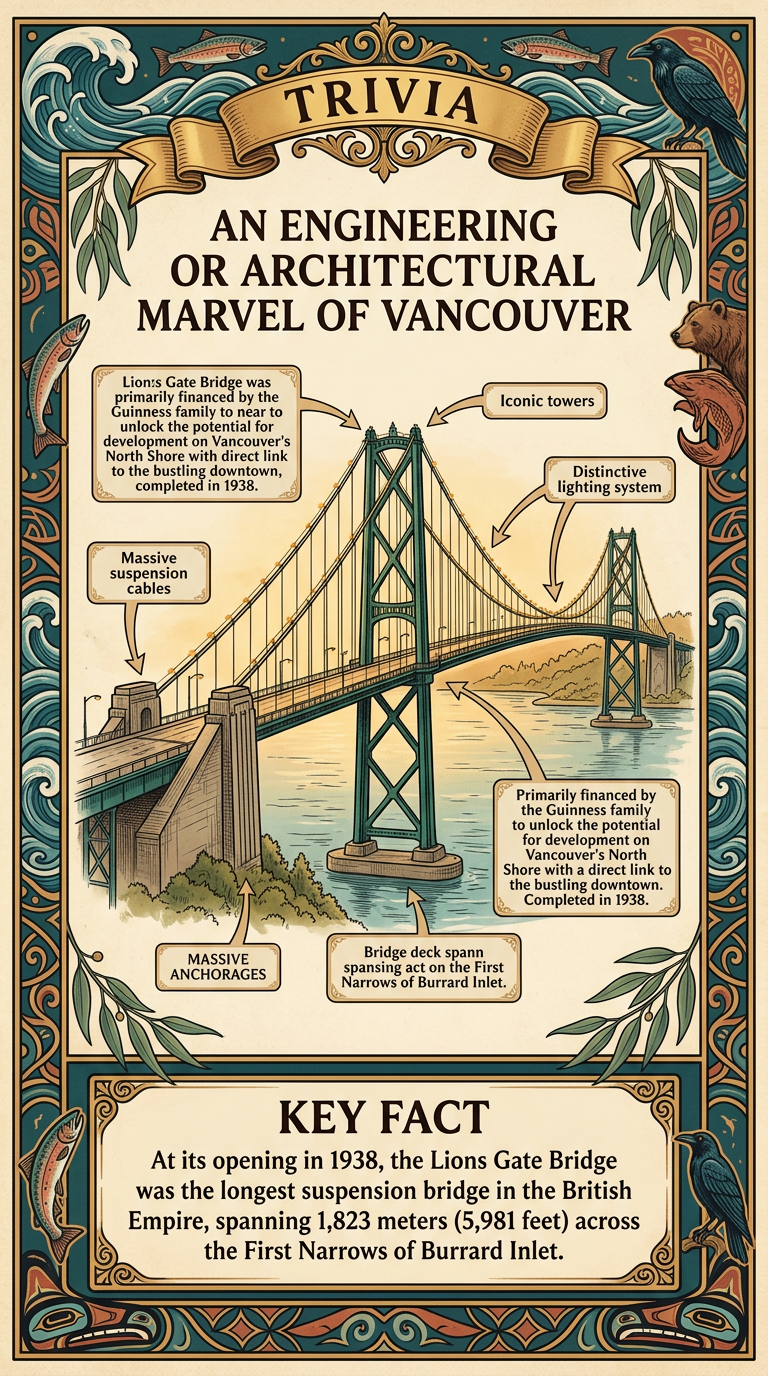
An Engineering or Architectural Marvel of Vancouver
Connecting downtown Vancouver to the North Shore, the Lions Gate Bridge is more than just a transportation artery; it's a testament to audacious engineering and an enduring symbol of the city.
- The bridge was privately funded by the Guinness brewing family, who owned property on the North Shore and wanted to make it more accessible.
- It features distinctive Art Deco towers and was originally illuminated at night by 125 lights, a gift from the Guinness family.
- The bridge famously uses a three-lane reversible system, changing direction based on rush hour traffic flow, a novel solution when it was implemented.
- Designated a National Historic Site of Canada, it stands as an iconic example of 20th-century suspension bridge engineering.
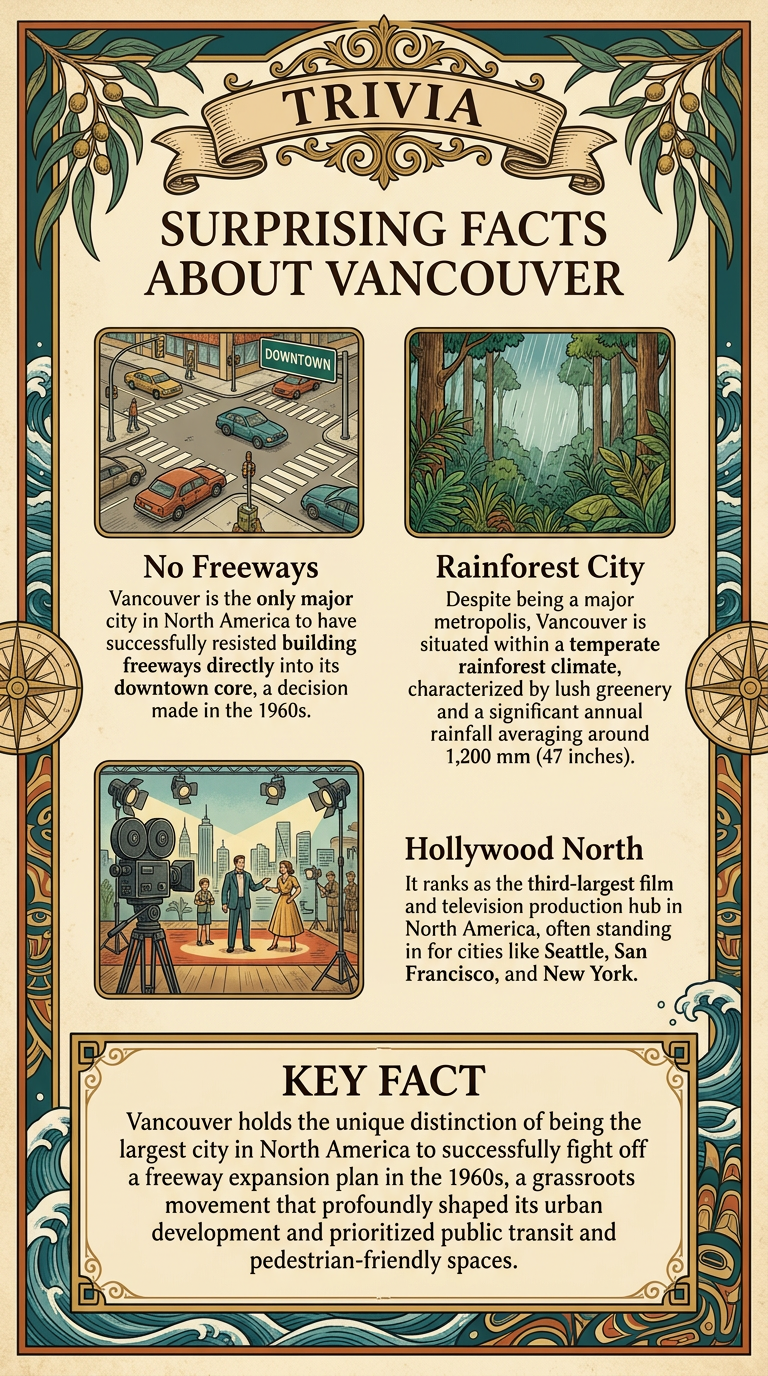
Surprising Facts About Vancouver
Beyond its postcard-perfect scenery, Vancouver holds several distinctions and counter-intuitive realities that often surprise visitors and even some residents.
- **No Freeways:** Vancouver is the only major city in North America to have successfully resisted building freeways directly into its downtown core, a decision made in the 1960s.
- **Rainforest City:** Despite being a major metropolis, Vancouver is situated within a temperate rainforest climate, characterized by lush greenery and a significant annual rainfall averaging around 1,200 mm (47 inches).
- **Hollywood North:** It ranks as the third-largest film and television production hub in North America, often standing in for cities like Seattle, San Francisco, and New York.
- **Green Power:** Over 90% of British Columbia's electricity, which powers Vancouver, comes from clean hydroelectric sources, making it one of the greenest grids globally.
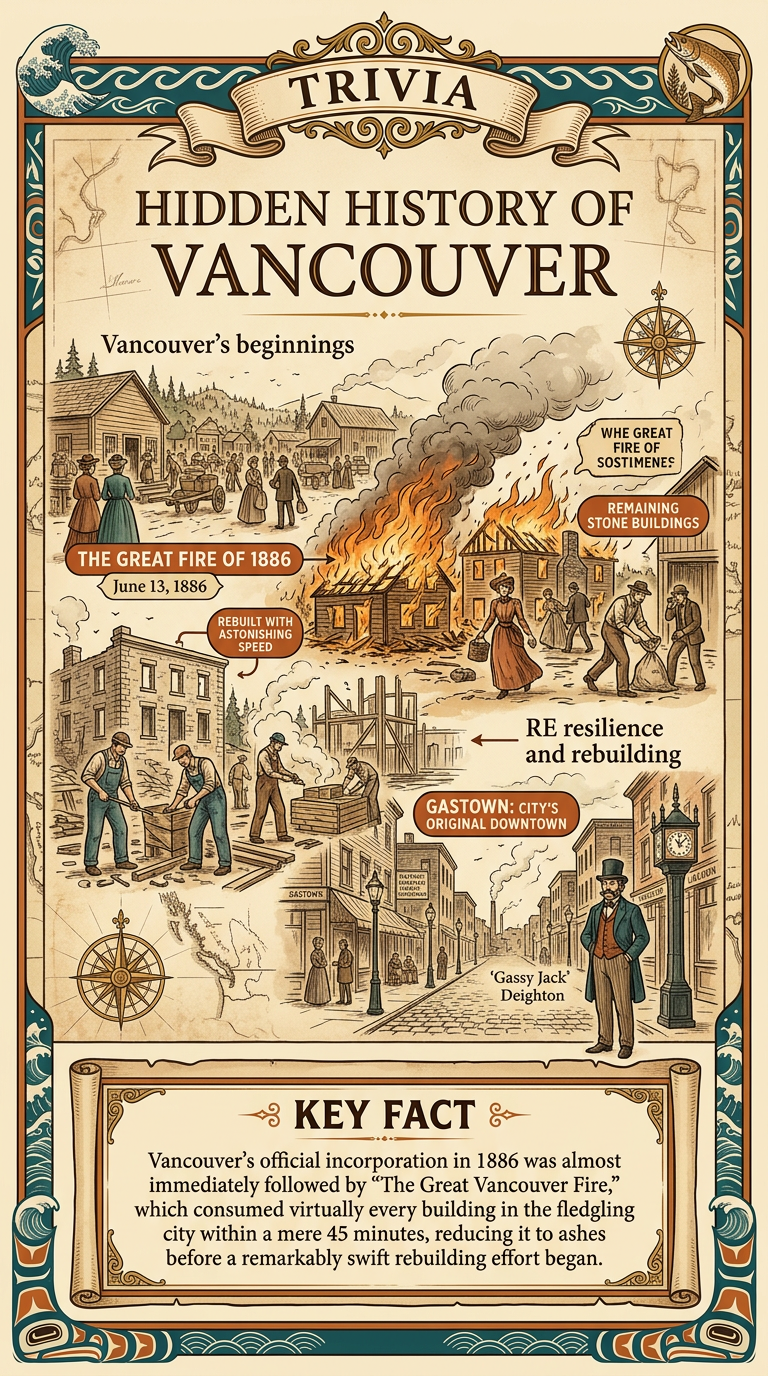
Hidden History of Vancouver
Digging beneath Vancouver's modern facade reveals a past full of dramatic events, forgotten communities, and vibrant pioneering spirit that shaped the city we see today.
- The entire city of Vancouver was burned to the ground in a devastating fire on June 13, 1886, just four months after its incorporation, and was rebuilt within a year.
- Gastown, now a trendy heritage district, is named after 'Gassy' Jack Deighton, a Yorkshire steamboat captain who opened the area's first saloon in 1867, reputedly talking a lot ('gassing').
- Hogan's Alley was a vibrant, predominantly Black community in Vancouver's Strathcona neighbourhood during the early 20th century, serving as a hub for jazz, soul food, and cultural life.
- During World War II, thousands of Japanese Canadians, many from Vancouver, were forcibly removed from their homes and interned by the Canadian government, losing their property and livelihoods.
More Vancouver Secrets
The Mighty Stanley Park Seawall
Stretching over 28 kilometres (17.5 miles), the Vancouver Seawall is the world's longest uninterrupted waterfront path. It offers breathtaking views of the city skyline, North Shore mountains, and Pacific Ocean.
Constructed in sections over many decades, primarily starting in the 1930s, it's a beloved recreational artery for walkers, joggers, cyclists, and rollerbladers, encircling the entirety of Stanley Park and extending beyond.
Vancouver's Rain-Kissed Climate
Often dubbed 'Raincouver' by locals, the city's temperate rainforest climate means it experiences significant rainfall, particularly from October to April. This 'liquid sunshine' is crucial to the region's lush greenery and vibrant natural landscapes, contributing to the misty, ethereal beauty that often characterizes its winters. Average annual precipitation for downtown Vancouver is approximately 1,200 mm (47 inches).
A Mosaic of Languages
Vancouver is one of the most ethnically diverse cities in Canada, a fact reflected in its linguistic landscape. Over 50% of its residents report speaking a language other than English at home, making it a truly multicultural hub. Cantonese, Mandarin, Punjabi, and Tagalog are among the most commonly spoken non-official languages.
More Vancouver Content Coming Soon
We're crafting a complete guide for Vancouver. Stay tuned!
Explore More Trivia