
Wayanad, Kerala's emerald paradise, often surprises visitors with its blend of lush natural beauty and deep historical roots. Beyond its misty mountains and cascading waterfalls, this district holds ingenious engineering marvels, ancient mysteries, and a vibrant cultural tapestry waiting to be uncovered by the curious traveler.
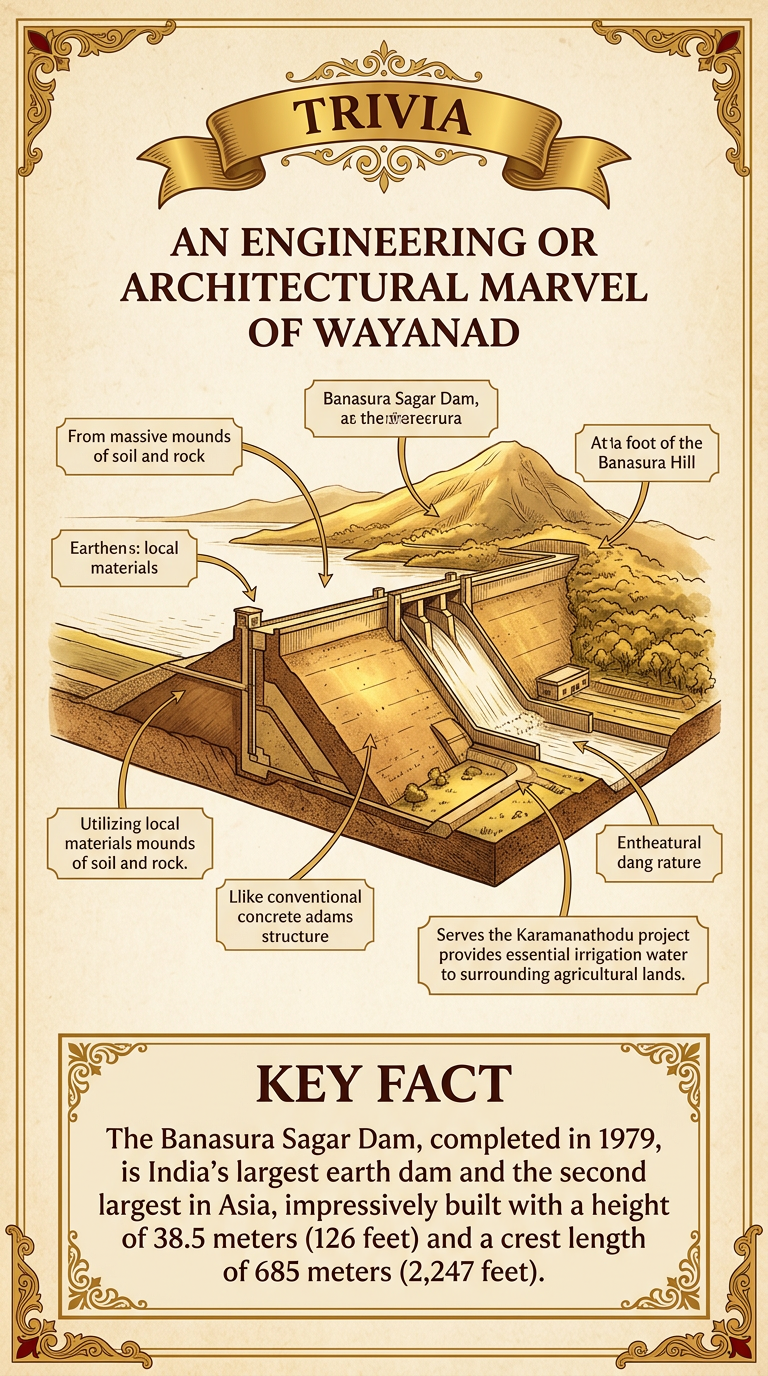
An Engineering or Architectural Marvel of Wayanad
Wayanad is home to a monumental structure that stands as a testament to ingenious engineering, built in remarkable harmony with nature.
- It holds the distinction of being India's largest earth dam, constructed primarily from mud and rocks.
- The dam's reservoir is famous for the numerous small islands that emerge from the water, creating a stunning landscape.
- It plays a crucial role in providing irrigation water and generating hydroelectric power for the region.
- Named after Banasura, the son of the revered mythical King Mahabali, connecting it to local legends.
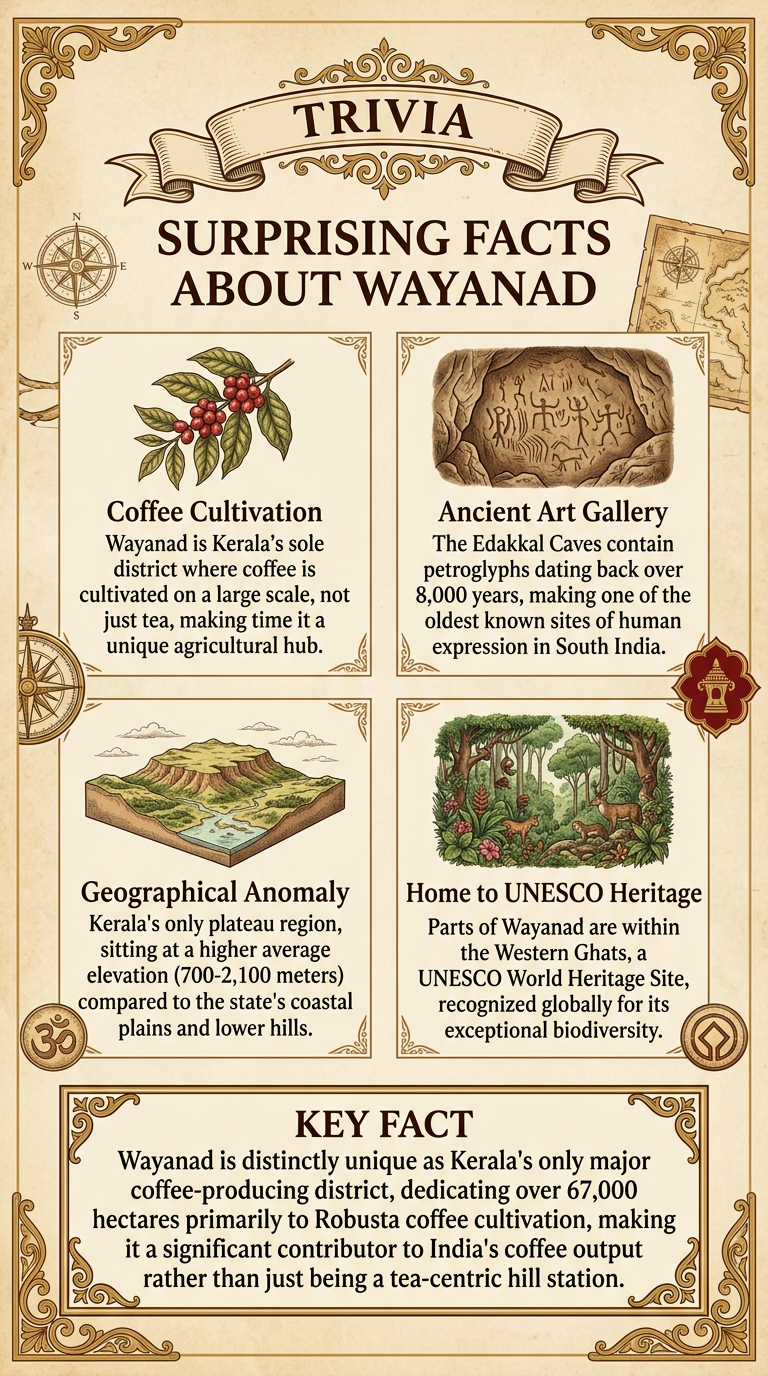
Surprising Facts About Wayanad
Beyond its verdant slopes, Wayanad harbors some truly unexpected facets that challenge conventional perceptions of this serene hill station.
- **Coffee Cultivation:** Wayanad is Kerala's sole district where coffee is cultivated on a large scale, not just tea, making it a unique agricultural hub.
- **Ancient Art Gallery:** The Edakkal Caves contain petroglyphs (rock carvings) dating back over 8,000 years, making them one of the oldest known sites of human artistic expression in South India.
- **Geographical Anomaly:** It is Kerala's only plateau region, sitting at a higher average elevation (700-2,100 meters) compared to the state's coastal plains and lower hills.
- **Home to UNESCO Heritage:** Parts of Wayanad are within the Western Ghats, a UNESCO World Heritage Site, recognized globally for its exceptional biodiversity.
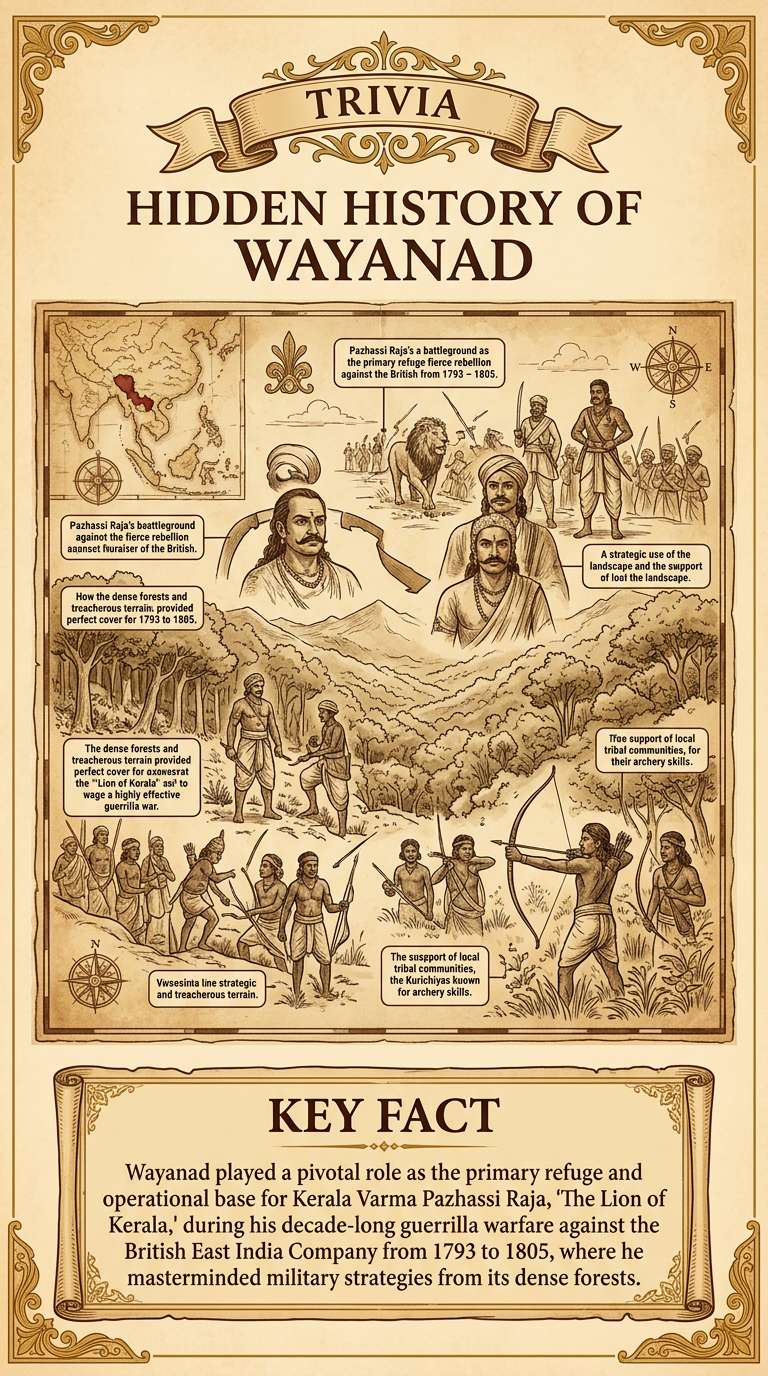
Hidden History of Wayanad
Delve into Wayanad's past and uncover fascinating tales of resistance, ancient civilizations, and untold cultural legacies that shaped this region.
- Wayanad served as the strategic stronghold for Pazhassi Raja's epic guerrilla war against the British East India Company.
- The Edakkal Caves are not just shelters, but ancient communication hubs, with inscriptions in various scripts, hinting at diverse historical visitors.
- Ancient trade routes crisscrossed Wayanad, connecting the Malabar Coast to the Deccan plateau, making it a vital economic corridor for centuries.
- The region is home to several indigenous tribal communities, such as the Paniyas and Kurichiyas, who have maintained unique customs and played crucial roles in historical events.
More Wayanad Secrets
Wayanad's Indigenous Tribes
Wayanad is home to a rich mosaic of indigenous tribal communities, including the Paniyas, Kurichiyas, Adiyas, and Kattunayakans, each possessing distinct cultures, languages, and traditional practices deeply intertwined with the land. These communities have preserved their unique ways of life for centuries, offering a profound insight into Kerala's diverse heritage.
The Kurichiya tribe, in particular, is renowned for their martial prowess and exceptional archery skills, which played a significant role in supporting Pazhassi Raja's formidable resistance against the British during the 18th and 19th centuries.
The Enigmatic Phantom of Chembra Peak
Chembra Peak, Wayanad's highest point soaring at 2,100 meters (6,900 feet) above sea level, is famous not just for its breathtaking panoramic views but also for a natural wonder – the Hridaya Sarassu, a captivating heart-shaped lake. Legend has it that this mystical lake has never dried up, irrespective of the season. Trekkers brave the challenging climb to witness this unique geological formation, making it a symbol of enduring beauty and romance amidst the rugged peaks of the Western Ghats.
A Fragrant Spice Plantation Economy
Wayanad's economy is deeply rooted in its vibrant spice plantations, making it a major agricultural powerhouse beyond just coffee. The district is a significant producer of high-quality black pepper, aromatic cardamom, delicate vanilla, and pungent ginger. This diverse agricultural bounty not only shapes the local economy but also infuses the air with rich, earthy fragrances, attracting travelers seeking an authentic sensory experience of rural Kerala and understanding its deep connection to the global spice trade.
More Wayanad Content Coming Soon
We're crafting a complete guide for Wayanad. Stay tuned!
Explore More Trivia